
Why Forklift Operator Training Matters: Benefits for Your Team
· Updated
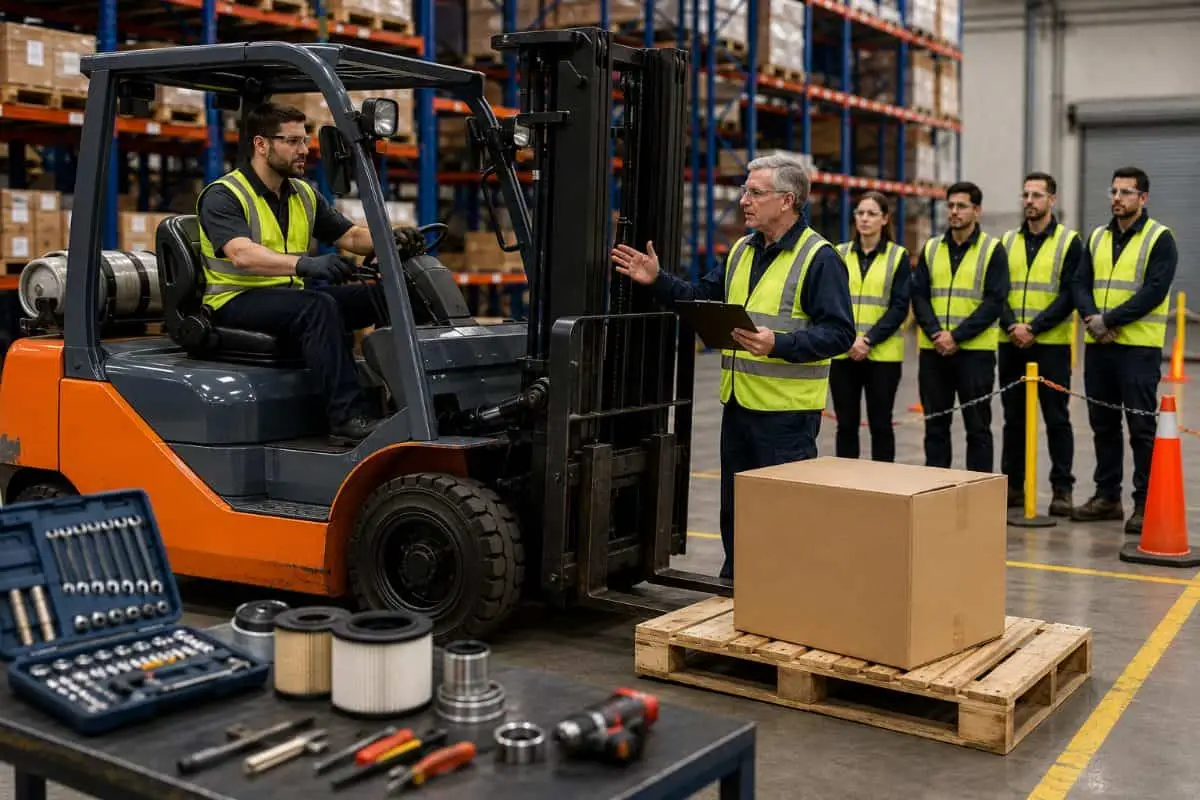
Forklift operator training matters because it gives workers the knowledge and practical skills to control loads, maintain stability, protect pedestrians and respond correctly to workplace hazards. It also helps employers meet their legal duties while reducing equipment damage, stock losses and avoidable downtime.
Holding a forklift licence is only the starting point. Operators also need familiarisation with the specific forklift, attachments, site layout, traffic rules and tasks they will perform. Routine and refresher training then help maintain competency as equipment, workloads and workplace conditions change.
This guide explains the business benefits of initial and ongoing forklift training, the Australian licensing context and what employers should expect from an effective training program.
Why Forklift Operator Training Matters
Forklift operator training reduces the likelihood of unsafe travel, unstable loads, collisions, rollovers and pedestrian incidents. It also teaches operators how to inspect equipment, interpret the capacity plate and work within the forklift’s limitations.
The main benefits include:
- Fewer incidents: Operators learn how to identify hazards and apply safe controls before moving or lifting.
- Legal compliance: Employers can verify that operators hold the required licence and receive suitable workplace instruction.
- Higher productivity: Competent operators move loads smoothly and choose safer, more efficient routes.
- Less equipment damage: Correct braking, steering, lifting and attachment use reduce avoidable wear.
- Better stock protection: Stable loads and controlled handling reduce dropped products and damaged pallets.
- Safer pedestrian interaction: Operators understand exclusion zones, visibility limits and traffic-management procedures.
- Lower downtime exposure: Daily inspections and early fault reporting can prevent equipment from failing during critical work.
- Stronger safety culture: Routine training shows that safe operation is an ongoing team responsibility.
Training should address the behaviours behind the most common forklift accidents, including excessive speed, poor visibility, unstable loads and unsafe interaction with pedestrians.
Operators also need to understand common operator mistakes to train out, rather than relying on experience alone to correct unsafe habits.
Is Forklift Training a Legal Requirement in Australia?
In Victoria, an employee must not perform high-risk forklift work unless they hold the appropriate high-risk work licence. Employers also have duties to provide the information, instruction, training or supervision necessary for employees to work safely.
For a standard forklift truck, the relevant licence class is generally the LF high-risk work licence. The nationally recognised unit TLILIC0003 covers the skills and knowledge required to operate a forklift truck safely, although completing the unit does not by itself issue the licence. The licensing process also includes the required assessment and application through the relevant regulator.
Businesses and prospective operators can review how to get a forklift licence in Australia for an overview of the process.
Licensing Is Not the End of Employer Responsibility
A licence confirms that the holder has demonstrated the required foundation competency. It does not confirm that the person is automatically competent to operate every model, attachment or site configuration.
Work Safe Victoria states that operators may need forklift familiarisation training when the machine differs from the one used during licence training. Familiarisation should cover safe operation, safety features, capacity and load limits, the information plate and pre-start requirements. Site and task training should also address pedestrian controls, traffic management and workplace procedures.
Employers should therefore verify:
- The operator holds the correct and current licence.
- The operator is familiar with the specific forklift.
- The operator understands every attachment they will use.
- The operator knows the site’s traffic-management plan.
- The operator understands exclusion zones and pedestrian controls.
- The operator can complete the required pre-start inspection.
- The operator is competent for the assigned loads and tasks.
- Suitable supervision is provided where required.
Choosing an Appropriate Training Provider
High-risk work licence training and assessment must be completed through appropriately authorised arrangements. The national training register identifies TLILIC0003 as the current unit for operating a forklift truck, and businesses can use the register to check whether an RTO has the relevant unit on its scope.
When reviewing providers, confirm:
- RTO registration
- Authorisation to deliver or assess the relevant unit in Victoria
- Practical training and assessment
- Suitable forklifts and loads
- Coverage of current licensing requirements
- Experience with the equipment used in your industry
- Clear information about assessment and licence application steps
Buy A Fork does not provide the high-risk work licence itself. Its role is to help businesses understand safe forklift selection, ownership and operation.
The Benefits of Forklift Operator Training for Your Team
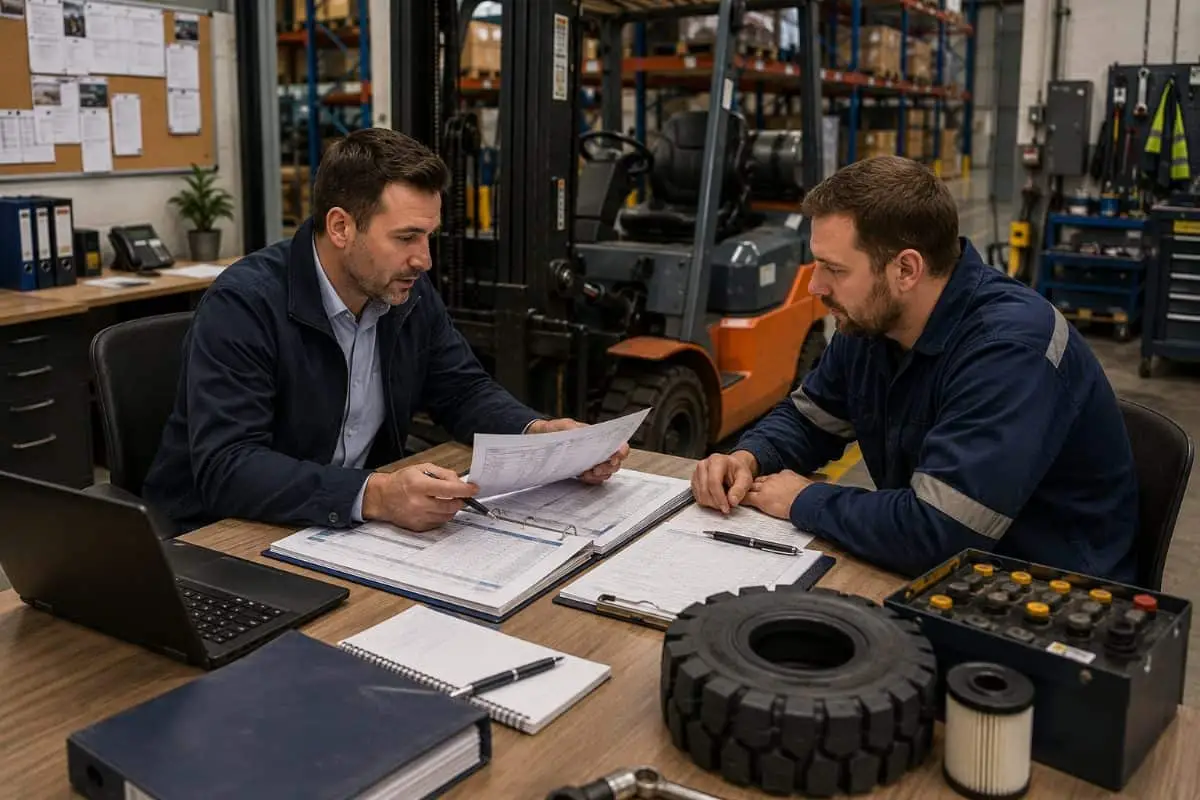
Good forklift training benefits more than the individual operator. It improves how operators, pedestrians, supervisors, maintenance staff and loading teams work around one another.
| Team Benefit | Business Outcome |
|---|---|
| Better hazard awareness | Fewer unsafe interactions and near misses |
| Controlled load handling | Reduced stock, pallet and racking damage |
| Improved pedestrian awareness | Stronger separation between forklifts and people |
| Correct equipment use | Less avoidable tyre, brake, mast and hydraulic wear |
| Consistent operating methods | More predictable productivity across shifts |
| Early defect reporting | Reduced risk of sudden breakdowns |
| Better communication | Clearer coordination during loading and warehouse movement |
| Ongoing competency | Unsafe habits are identified before becoming normal practice |
| Stronger confidence | Operators make safer decisions without unnecessary hesitation |
| Visible safety commitment | Improved trust, morale and accountability |
Safer Work Practices
Training gives operators a consistent method for approaching routine tasks. This includes checking the route, assessing the load, confirming capacity and controlling speed before the forklift moves.
A trained operator is more likely to recognise:
- An unstable or damaged pallet
- A load that blocks forward visibility
- A pedestrian entering the operating area
- A wet or damaged surface
- Insufficient overhead clearance
- An unsuitable attachment
- A load exceeding the machine’s capacity
- A forklift defect that requires isolation
WorkSafe Victoria identifies pedestrian interaction, speed, visibility and loading areas as significant forklift risks that workplaces must control.
Improved Productivity
Safe operation and productive operation are not opposing goals. Competent operators generally waste less time correcting poorly positioned loads, recovering damaged pallets or waiting for preventable faults to be repaired.
Training can improve productivity by helping operators:
- Choose an appropriate travel route
- Position forks correctly
- Approach pallets squarely
- Avoid repeated repositioning
- Stack loads accurately
- Communicate with spotters and loading staff
- Complete checks before a fault causes downtime
- Use attachments correctly
The objective is controlled efficiency, not rushing. Excessive speed reduces the time available to respond to pedestrians, surfaces and changing loads.
Less Damage to Forklifts and Racking
Poor operation can damage tyres, forks, chains, mast rollers, hydraulics and body panels. Frequent impacts can also damage racking, doors, dock areas and stored goods.
Training helps reduce behaviours such as:
- Driving over debris
- Braking harshly
- Turning quickly with elevated loads
- Striking pallet openings
- Dragging forks across the floor
- Using attachments incorrectly
- Overloading the forklift
- Colliding with racking or bollards
- Travelling with the load raised unnecessarily
Equipment damage increases forklift maintenance costs and may remove the machine from service when it is most needed.
Better Load Stability
Operators need to understand that forklift capacity changes with load centre, lift height, attachments and load shape. The rated figure on the machine does not mean every load up to that weight can be handled in every position.
Training should reinforce load stability fundamentals, including:
- Keeping loads centred
- Travelling with the load lowered
- Avoiding sudden turns
- Maintaining safe speed
- Using attachments within their limits
- Checking the capacity plate
- Securing unusual loads
- Assessing slopes and surfaces
Reduced Health Risks
Forklift work can expose operators to vibration, awkward posture, noise, repeated twisting and fatigue. Training can help workers adjust the operating position, enter and leave the machine correctly and report conditions affecting their health.
Businesses should consider both incident risks and longer-term health risks for forklift operators.
Stronger Safety Culture
Routine training makes safety expectations visible and consistent. It also gives workers an opportunity to raise problems with layouts, traffic routes, loads or equipment before an incident occurs.
A stronger safety culture develops when:
- Supervisors follow the same site rules as operators.
- Unsafe shortcuts are corrected consistently.
- Near misses are discussed without blame.
- Operators are encouraged to report defects.
- Training is linked to actual workplace hazards.
- Pedestrians receive relevant awareness training.
- Competency is checked rather than assumed.
Initial Licence vs Routine and Refresher Training
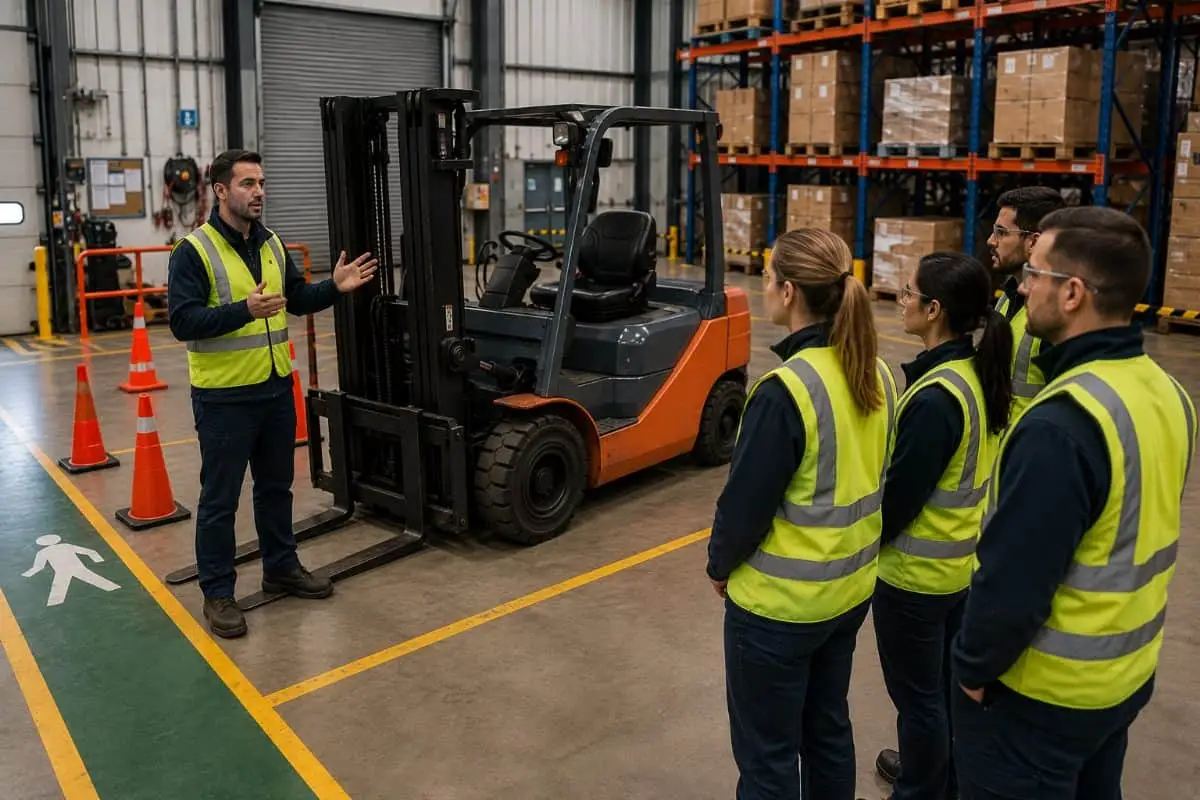
Initial licence training, refresher training and site-specific competency checks serve different purposes. One should not be treated as a replacement for another.
| Training Type | Main Purpose | Who Needs It | Typical Trigger |
|---|---|---|---|
| Initial licence training | Establish the skills and knowledge required for high-risk work licensing | New operators without the required licence | Before performing licensed forklift work |
| Forklift familiarisation | Teach the controls, limits and safety systems of a specific machine | Licensed operators using an unfamiliar model | New forklift, brand, configuration or control system |
| Attachment familiarisation | Teach safe operation with a specific attachment | Operators using clamps, rotators, fork positioners or other attachments | New or changed attachment |
| Site-specific training | Explain workplace hazards, routes, rules and task procedures | Every operator working at the site | Starting at a new workplace or after site changes |
| Verification of competency | Confirm that a worker can safely perform the required task | New starters, contractors or transferred workers | Before unsupervised operation |
| Refresher training | Reinforce correct practice and address skill gaps | Existing operators | Periodic review or identified performance concern |
| Remedial training | Correct a specific unsafe behaviour or competency problem | An operator involved in unsafe conduct | Incident, near miss or failed competency check |
When Refresher Training Is Appropriate
Refresher or additional training should be considered when:
- An operator has been involved in an incident or near miss.
- Unsafe operating behaviour has been observed.
- The operator returns after a long absence.
- A new forklift model is introduced.
- Attachments or load types change.
- The workplace layout changes.
- New pedestrian or traffic controls are introduced.
- The operator changes departments or tasks.
- A competency assessment identifies gaps.
- Procedures or regulatory requirements change.
Work Safe Victoria specifically recognises the need for familiarisation with different forklift models, attachments, tasks and work environments.
Why Routine Training Matters
Experienced operators can still develop unsafe habits. Familiar tasks may encourage shortcuts, while changes to equipment or production can introduce new risks.
Routine training provides a structured opportunity to:
- Revisit core stability principles
- Review actual workplace incidents
- Correct repeated shortcuts
- Update operators on new procedures
- Check pre-start inspection quality
- Reinforce pedestrian separation
- Review load and attachment limits
- Confirm competency on current equipment
Training should be based on observed workplace needs rather than delivered as a generic presentation with no connection to the site.
What a Good Forklift Training Course Covers
A good forklift training program combines theory, practical instruction and assessment. It should prepare the operator to plan the task, inspect the work area, select appropriate equipment, operate safely and shut down correctly.
The nationally recognised TLILIC0003 unit includes planning, preparation, safe performance and pack-up requirements. Its assessment evidence addresses operating speed, load position, surface suitability, data-plate information, loads, racking and manufacturer requirements. (training.gov.au)
Core Theory
The theory component should cover:
- Forklift hazards
- High-risk work responsibilities
- Capacity plates
- Load centres
- Stability
- Centre of gravity
- Attachments
- Workplace communication
- Traffic-management principles
- Pedestrian safety
- Pre-start inspections
- Fault reporting
- Emergency procedures
Practical Operation
Practical instruction should include:
- Entering and leaving the forklift safely
- Adjusting the seat and restraints
- Starting and shutting down
- Steering and braking
- Forward and reverse travel
- Safe turning
- Approaching pallets
- Fork positioning
- Lifting and lowering
- Stacking and de-stacking
- Travelling with a load
- Parking and isolation
- Working around racking and loading areas
Load Handling and Stability
Operators should demonstrate that they can:
- Assess pallet condition
- Estimate or confirm load weight
- Read the capacity plate
- Identify the load centre
- Keep the load stable
- Use the correct mast tilt
- Maintain appropriate travel height
- Handle restricted visibility
- Avoid unsafe slopes
- Recognise when the task exceeds the forklift’s capability
Pedestrian Safety
Forklift training should not focus only on the driver. Operators need to understand the wider traffic-management system, including barriers, intersections, exclusion zones and communication with pedestrians.
WorkSafe Victoria advises workplaces to use traffic-management plans, pedestrian controls and safe operating procedures for loading areas and other shared spaces.
Pre-Operational Inspections
Operators should learn how to inspect the forklift before use and what to do when a defect is found.
The inspection should cover:
- Forks
- Mast and chains
- Tyres
- Hydraulics
- Fluids
- Battery or fuel system
- Brakes
- Steering
- Horn and warning devices
- Seat and restraint
- Lights
- Capacity plate
- Attachments
- Visible damage or leaks
The process is explained in more detail through the daily pre-operational inspection routine and the safety checklist trained operators follow.
Site-Specific Procedures
A licensed operator joining a new workplace still needs local instruction covering:
- Travel routes
- Speed limits
- Pedestrian walkways
- Blind intersections
- Loading docks
- Ramps
- Battery charging or refuelling
- Parking areas
- Emergency procedures
- Restricted zones
- Communication systems
- Site-specific loads and attachments
The Real Cost of Skipping Forklift Training
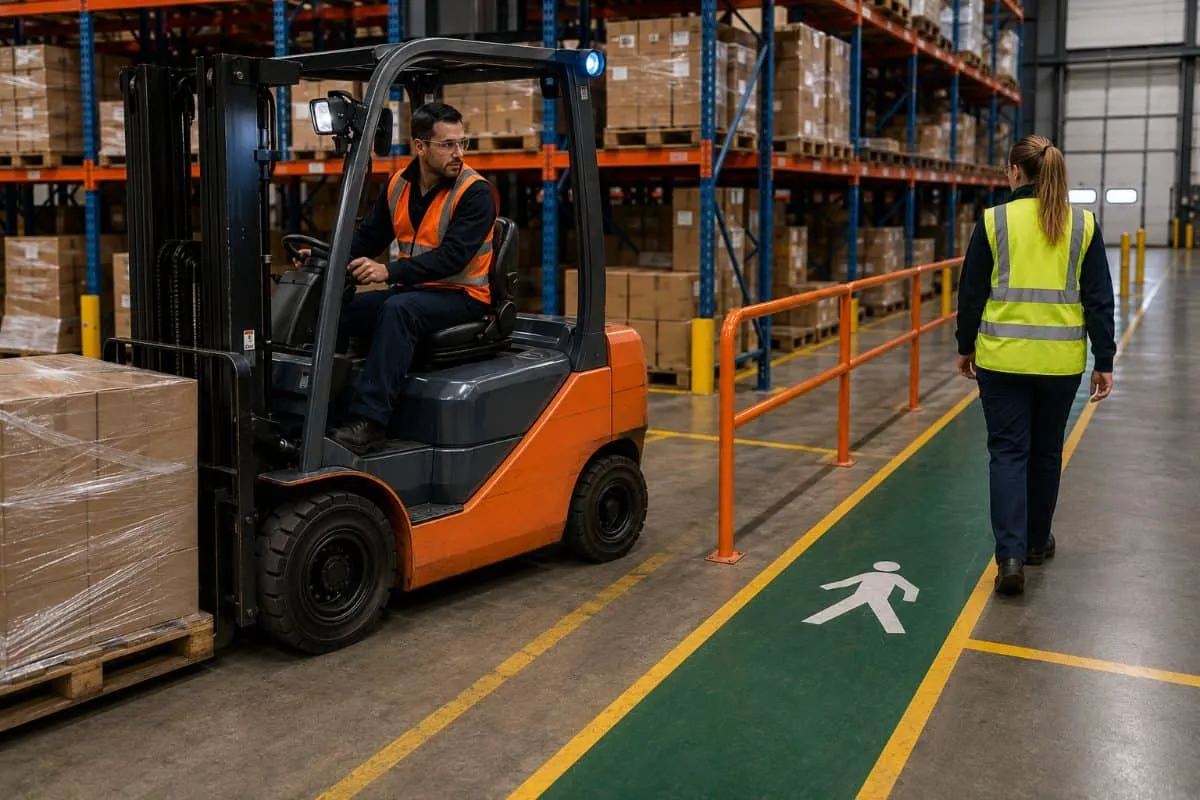
Insufficient training can create costs far beyond the price of a course or refresher session. A single incident may affect workers, equipment, stock, production and customer commitments.
Workplace Incidents
Poorly trained operators may be more likely to:
- Travel too quickly
- Turn with a raised load
- Misjudge clearance
- Carry unstable pallets
- Ignore visibility limits
- Enter pedestrian areas
- Use unsuitable attachments
- Overload the forklift
- Operate on unsafe surfaces
- Continue using defective equipment
Forklift incidents can be severe or fatal. WorkSafe Victoria has repeatedly warned that unstable loads, tip-overs and people working near forklifts can result in death or serious injury.
Equipment and Property Damage
Unsafe operation can damage:
- The forklift
- Racking
- Doors
- Bollards
- Loading docks
- Trucks
- Pallets
- Stock
- Building structures
- Safety barriers
Even minor impacts can require inspections and repairs before racking or equipment is returned to service.
Downtime
An incident can stop more than one forklift. The affected area may need to be isolated while supervisors investigate, damaged stock is cleared and equipment is checked.
Downtime may cause:
- Delayed dispatch
- Production stoppages
- Missed delivery windows
- Overtime
- Replacement-equipment costs
- Customer complaints
- Staff reassignment
- Investigation time
The wider effect is covered in Buy A Fork’s guide to the cost of forklift downtime.
Regulatory and Legal Exposure
Employers have duties to provide a safe working environment, control forklift risks and ensure that workers performing high-risk work hold the appropriate licence. Failure to meet these duties can expose the business to regulatory action, particularly after an incident. (WorkSafe Victoria)
Training records can help show:
- Which instruction was provided
- When it occurred
- Who delivered it
- Which forklift and attachments were covered
- How competency was assessed
- What corrective action followed an incident
- When refresher training is due
Records do not replace effective training, but they support a consistent competency system.
Staff Confidence and Retention
Operators are more likely to feel confident when they understand the equipment and know that supervisors support safe decisions.
Poorly prepared workers may feel pressured to complete tasks they do not fully understand. That can increase stress, hesitation and unsafe improvisation.
How Training Links to Safe, Well-Maintained Machines
Training is most effective when operators are given a forklift that suits the load, surface, aisle and operating environment.
A competent operator cannot make an unsuitable machine safe for a task beyond its capacity or design. Employers should provide equipment with:
- Sufficient rated capacity
- The correct mast and lift height
- Suitable tyres
- Compatible attachments
- Clear capacity information
- Functioning safety features
- Current maintenance
- An appropriate power source
Operators should be trained to identify defects and remove unsafe equipment from service. Daily checks help detect worn forks, hydraulic leaks, damaged tyres, steering problems and warning-system faults before operation.
Businesses can use the forklift maintenance guide and service schedule to connect operator inspections with planned servicing.
Training should also cover the differences between forklift types. An operator familiar with a standard counterbalance forklift may need additional instruction before using a reach truck, high-capacity machine, order picker or specialised attachment.
Businesses upgrading their equipment can browse the full forklift range, compare electric forklifts for indoor work or review available counterbalance forklifts.
Buy A Fork can assist with selecting equipment that matches the application. Visit the Buy A Fork homepage for the current range or contact Buy A Fork to discuss machine capacity, power type and operating requirements.
Frequently Asked Questions
1. How Much Does Forklift Training Cost in Australia?
Forklift training costs vary according to the provider, location, course structure, assessment requirements and whether additional training is needed. Businesses should request a written breakdown from an authorised provider rather than relying on a general national figure. Confirm what is included, such as training, assessment, materials and licence-application guidance.
2. How Long Is a Forklift Training Course?
Course duration depends on the participant’s experience, the provider’s program and the assessment structure. Training must give participants enough time to develop and demonstrate the required knowledge and practical competency. A shorter course is not automatically better if it does not properly prepare the operator.
3. How Much Does It Cost to Get a Forklift Licence in Australia?
The total cost may include training, assessment, application and regulator fees. These vary by jurisdiction and provider. Victorian applicants should verify current fees and requirements with WorkSafe Victoria and the chosen authorised training provider before enrolling.
4. Does a Forklift Licence Mean an Operator Needs No Further Training?
No. A licence establishes the required high-risk work competency, but the operator may still need familiarisation with the specific forklift, attachments, tasks and workplace. Refresher or remedial training may also be necessary after incidents, extended absences, equipment changes or observed unsafe behaviour.
5. How Often Should Forklift Refresher Training Be Completed?
There is no single refresher interval that suits every workplace. Employers should base refresher training on risk, observed performance, changes to equipment or tasks, incidents, near misses and periods away from operating. A documented competency review schedule can help identify when additional instruction is required.
6. What Is a Forklift Verification of Competency?
A verification of competency is a workplace process used to confirm that a licensed operator can safely operate the relevant forklift and perform the required tasks. It may assess pre-start checks, site rules, load handling, attachments, pedestrian controls and emergency procedures. It does not replace the required high-risk work licence.
Conclusion
Forklift operator training protects workers while supporting compliance, productivity and equipment reliability. Initial licensing establishes core competency, but employers must also provide familiarisation, task-specific instruction and supervision suited to the machine and workplace.
Routine and refresher training help correct unsafe habits, prepare operators for new equipment and strengthen communication across the entire warehouse team. The most effective program combines licensed operators, site-specific competency, daily inspections and forklifts matched to the actual task.
Businesses reviewing their equipment alongside operator requirements can browse Buy A Fork’s available forklifts or contact the team for help choosing a machine suited to the workplace.