
Forklift Licence Australia: Cost, Steps and State Rules
· Updated
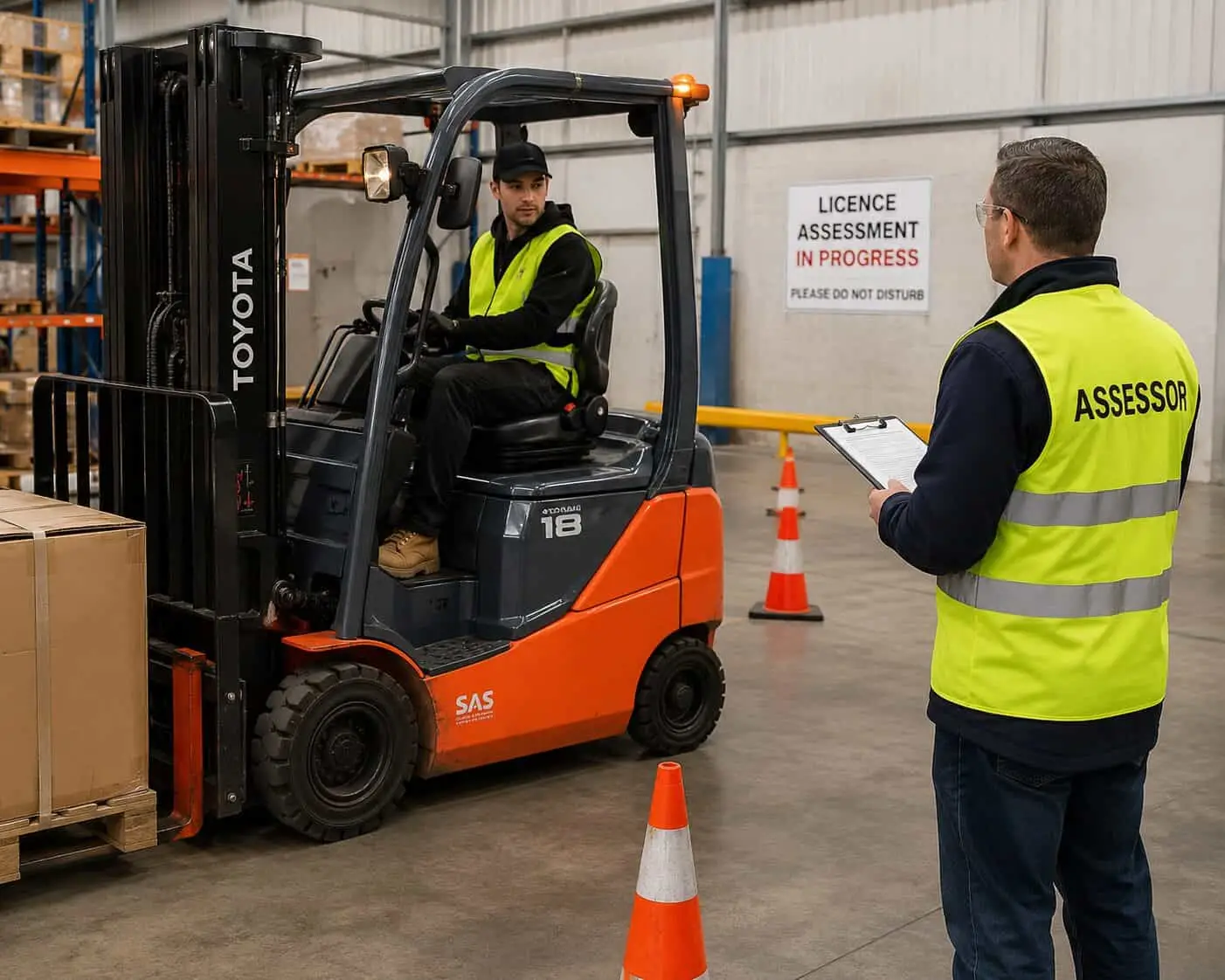
Getting a forklift licence in Australia means completing training and assessment with a registered training organisation, then applying to the work health and safety regulator in your state or territory for the licence itself.
The licence is nationally recognised, so it works across state borders. The application process and the fee are set by each jurisdiction, and they are not the same.
This guide covers who needs one, what it costs, how long it takes, and how the rules differ state by state. It also covers the part most guides skip: what an employer has to do once their operators are licensed.
Do You Need a Forklift Licence in Australia?
Yes. Operating a forklift in an Australian workplace requires a high risk work licence.
It is not optional, it is not covered by an in-house induction, and a driver’s licence has nothing to do with it.
Three things are worth knowing straight away.
- The licence class matters. The forklift truck class and the order picking truck class are separate. Being licensed for one does not licence you for the other.
- Trainees can operate under supervision. Someone undertaking training towards the licence may operate a forklift while directly supervised by a licensed person, within the conditions the regulator sets.
- The licence is nationally recognised. A licence issued in one state is valid in the others, though you notify the regulator when you move.
Confirm the current classes and conditions with Safe Work Australia or your state regulator before relying on any of this, because the framework is updated periodically.
Which Machines Need a Licence and Which Do Not
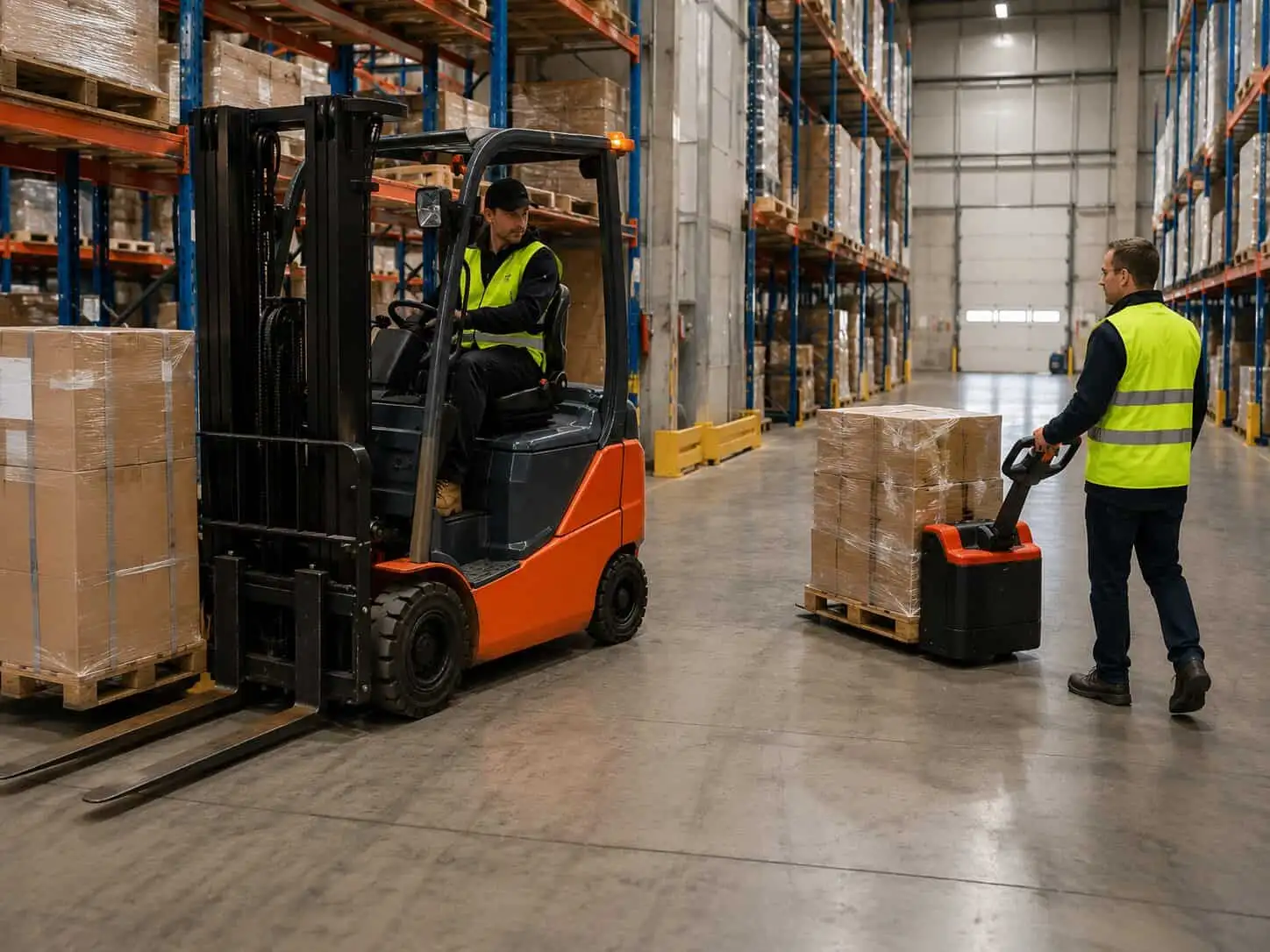
This is the question that catches most businesses out, because the line does not fall where people expect.
A machine that lifts a pallet is not automatically a licensed machine.
|
Machine |
Licence generally required? |
Notes |
|---|---|---|
|
Counterbalance forklift |
Yes |
Forklift truck class. The standard case. |
|
Reach truck |
Yes |
Forklift truck class in most configurations. Confirm for your specific machine. |
|
Order picking forklift truck |
Yes |
Separate class from the forklift truck licence. Being licensed for a forklift does not cover it. |
|
Ride-on pallet jack |
Confirm with the regulator |
Depends on configuration. Do not assume it matches the walkie answer. |
|
Pedestrian electric pallet jack |
Generally no |
Typically falls outside the licence classes, but training and duty of care obligations still apply. |
|
Walkie stacker |
Confirm with the regulator |
Depends on configuration and whether the operator is raised. |
|
Telehandler |
Confirm with the regulator |
Treated differently from a forklift and may fall under a different class. |
The pattern is that machines where the operator rides and lifts to height are generally licensed, and pedestrian-operated ground-level equipment generally is not.
“Generally” is doing real work in that sentence. Check your specific machine with your regulator rather than reasoning by analogy, and remember that no licence requirement does not mean no training requirement.
How to Get a Forklift Licence: the Steps
The pathway is the same in every state, even though the paperwork at the end differs.
- Check you are eligible. There is a minimum age, and you need to be able to complete the training and assessment, which includes written components.
- Book with a registered training organisation. Only an RTO with the relevant unit on its scope can deliver the training and assessment. Buy A Fork does not run courses and does not recommend a specific provider; use the national training register or your regulator’s list to find one near you.
- Complete the training. Most courses combine classroom theory with practical time on a machine. Prior experience shortens the course; complete beginners take longer.
- Pass the assessment. This covers written knowledge and a practical demonstration with an assessor.
- Apply to your state regulator. The RTO issues the assessment paperwork, and you take that to the regulator with identification and the application fee.
The step people misunderstand is the last one. Completing the course does not give you a licence.
It gives you the evidence you need to apply for one, and the application has a separate fee and its own timeframe.
Forklift Licence Requirements: Age, English and Eligibility
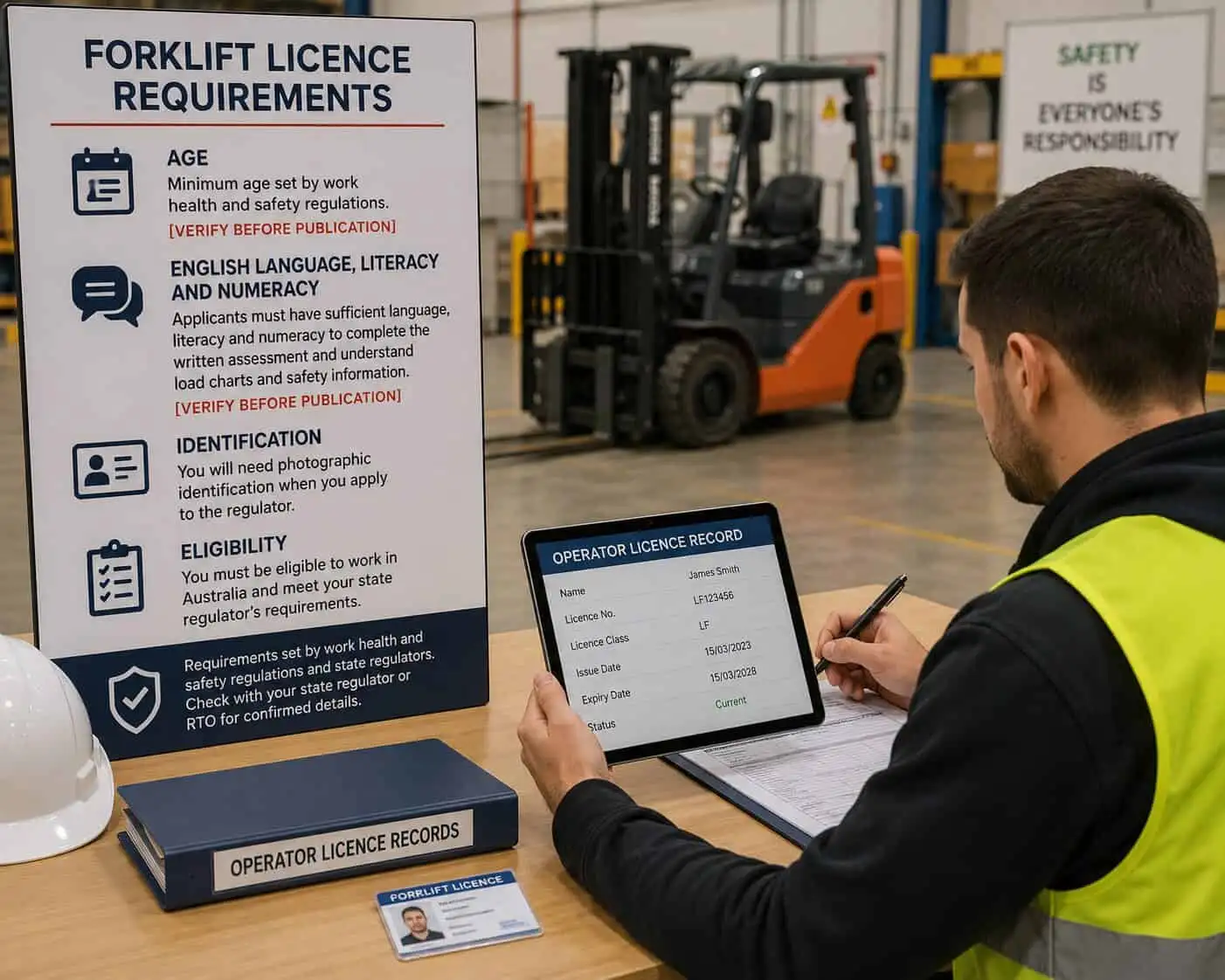
The requirements are consistent nationally in substance, though the detail sits with each regulator.
There is a minimum age, set by the work health and safety regulations rather than by the training provider.
Applicants also need sufficient language, literacy and numeracy to complete the written assessment and to understand load charts and safety information, and RTOs will usually assess this before enrolment. You will need photographic identification when you apply to the regulator.
How Much Does a Forklift Licence Cost in Australia?
The total cost has two separate parts, and most sources conflate them, which is why the numbers people quote to each other vary so widely.
The training and assessment fee is paid to the registered training organisation. It varies by provider, by state and by course length, and a complete beginner doing a longer course will pay more than someone with documented experience doing a shorter one.
The licence application fee is paid to the state or territory regulator when you lodge the application. It is set by the regulator and published on its website.
Several things move the training cost: whether you have prior experience, whether the course runs over one day or several, whether it is delivered at the RTO or on your own site, and whether you need a refresher or a full course.
On-site delivery for a group of operators usually works out lower per head than sending people individually.
How Long Does It Take, and How Hard Is the Test?
Course length depends on experience.
Someone who has never operated a forklift will spend longer on the practical component than someone who has been driving one under supervision at work for months. Most providers offer both a full course and a shorter assessment-only pathway for experienced operators.
On difficulty, the honest answer is that the assessment is not designed to catch people out, but it is not a formality either.
The written component covers load charts, stability, hazard identification and the operator’s legal responsibilities. The practical covers a pre-operational inspection, controlled travel with and without a load, stacking and de-stacking, and safe shutdown.
The two things that most often cause a fail are rushing the pre-operational check and poor load handling technique at height.
Both are practice problems rather than knowledge problems, which is why supervised time on a machine before the assessment makes such a difference, and why proper operator training pays for itself long before anyone sits an assessment.
Forklift Licence Rules by State and Territory
The licence is nationally recognised, but you apply to the regulator in the state or territory where you live.
|
State or territory |
Regulator |
Application fee |
Renewal period |
|---|---|---|---|
|
Victoria |
WorkSafe Victoria |
[VERIFY] |
[VERIFY] |
|
New South Wales |
SafeWork NSW |
[VERIFY] |
[VERIFY] |
|
Queensland |
Workplace Health and Safety Queensland |
[VERIFY] |
[VERIFY] |
|
South Australia |
SafeWork SA |
[VERIFY] |
[VERIFY] |
|
Western Australia |
WorkSafe WA |
[VERIFY] |
[VERIFY] |
|
Tasmania |
WorkSafe Tasmania |
[VERIFY] |
[VERIFY] |
|
Northern Territory |
NT WorkSafe |
[VERIFY] |
[VERIFY] |
|
Australian Capital Territory |
WorkSafe ACT |
[VERIFY] |
[VERIFY] |
This table is the single most valuable thing on the page and it is only valuable if the cells are filled and kept current.
No regulator publishes a national comparison, and no single-state training provider bothers to, which is exactly why the gap exists. Filling it properly, with a visible “last verified” date, is what makes this page worth citing.
If you move interstate, you do not usually need to re-sit the assessment. You notify the regulator in your new state, and the process is set out on each regulator’s site.
Renewing a Forklift Licence
High risk work licences are issued for a set period and have to be renewed before they expire.
The renewal period is set by the regulations, and in most Australian jurisdictions it is commonly five years, though you should confirm the period that applies to your licence with your own regulator.
Renewal is generally an administrative process rather than a re-assessment, provided you apply before the licence expires.
Letting it lapse is where it gets expensive. Depending on how long it has been expired, you may have to complete the training and assessment again rather than simply renewing.
Diarise the expiry a few months out. Employers should be tracking operator licence expiry dates as part of their records rather than relying on individuals to remember.
Can You Use an Overseas Forklift Licence in Australia?
An overseas forklift licence is not directly valid in Australia. You need an Australian high risk work licence to operate a forklift in an Australian workplace, regardless of how much experience you have elsewhere.
Overseas experience is still worth something.
Most registered training organisations offer recognition of prior learning, where documented experience is assessed against the Australian unit of competency and any gaps are filled with targeted training rather than a full course.
In practice that usually means an experienced overseas operator completes a shorter pathway than a beginner, then applies to the regulator in the normal way.
Bring documentation. A licence or certificate from your home country, employment records showing the machines you operated, and any training records all help the RTO assess what you already have. Without documentation the assessment tends to default to the full course.
What Employers Need to Do
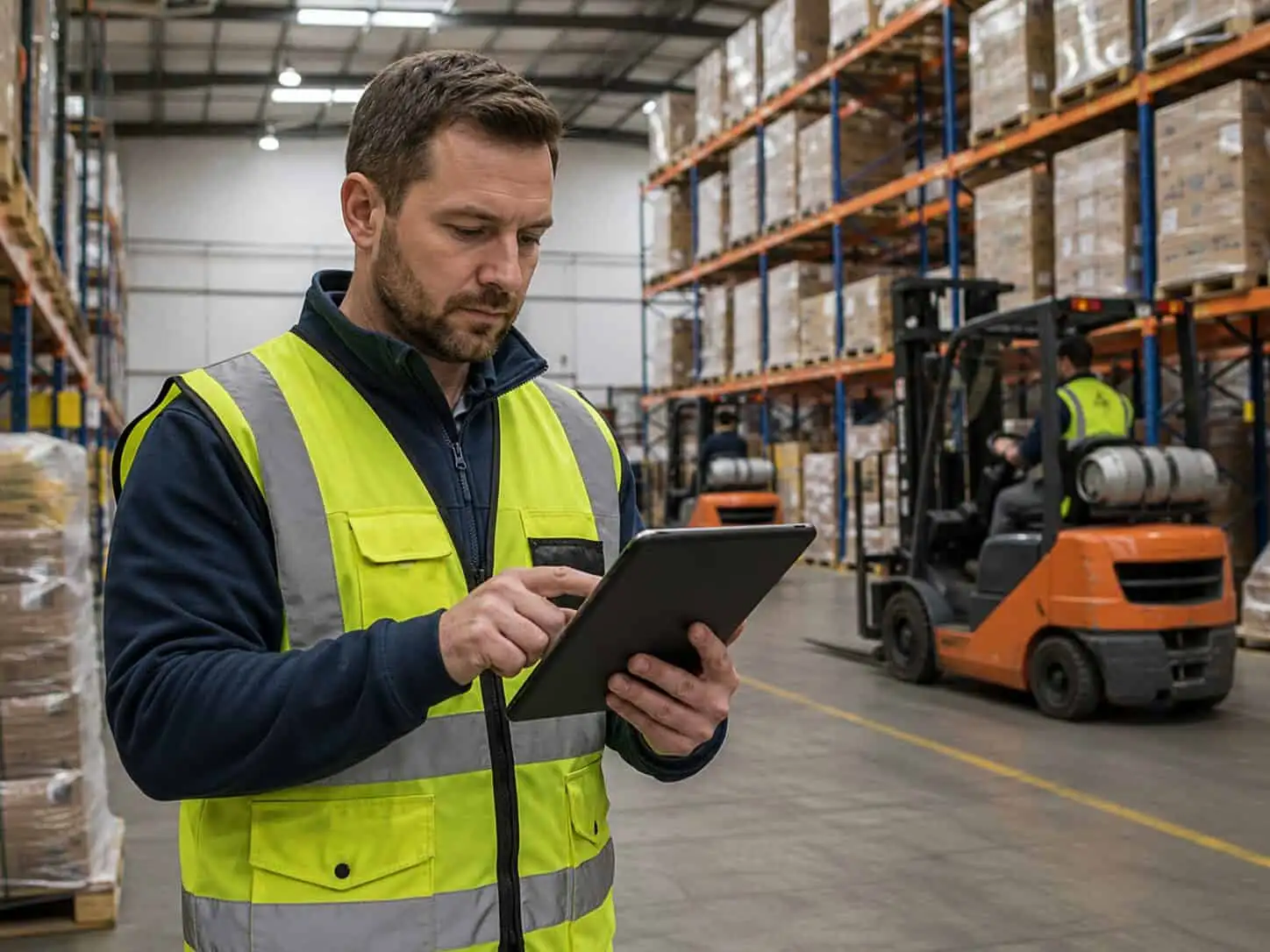
Nearly every guide to forklift licensing is written for the person getting the ticket.
If you are the business owner or the warehouse manager, the licence is the start of your obligations rather than the end of them.
- Verify the licence is current and the right class. Sight the actual licence, check the expiry, and check the class covers the machine you are putting them on. A forklift truck licence does not cover an order picking truck.
- Keep records. Hold copies of operator licences and track expiry dates. This is both a compliance matter and a practical one.
- Provide site-specific familiarisation. A licence says the operator can drive a forklift. It says nothing about your traffic management plan, your racking, your blind corners or the particular machine they will be using.
- Supervise trainees properly. If someone is operating under supervision while working towards a licence, the supervision has to be genuine and the supervisor has to be licensed.
- Make sure the pre-operational inspection actually happens. A documented daily pre-start check is a basic control and one of the first things an inspector will ask about.
- Retrain when the equipment changes. Putting a licensed operator on a substantially different machine, or fitting an attachment, changes the handling and warrants additional familiarisation.
Confirm the current employer duties with WorkSafe Victoria or your state regulator.
Beyond the legal minimum, a documented operator safety routine is what turns a licence into a habit, and it is the difference between a site that has trained operators and one that has safe ones.
The operational case is separate from the compliance one. Training a whole team properly reduces damage to stock, racking and the machines themselves, which is usually where the money shows up first.
Once Your Operators Are Licensed
The other half of a safe operation is the machine.
Buy A Fork sells new and pre-owned forklifts from the Somerton yard with delivery across Melbourne, and every pre-owned unit is inspected and serviced before it goes out.
Working out which machine your newly licensed operators need starts with capacity and aisle width, and the counterbalance forklift guide covers how to size one against real loads rather than against a brochure.
Frequently Asked Questions
1. How much does a forklift licence cost in Australia?
The cost has two parts: the training and assessment fee paid to a registered training organisation, and the licence application fee paid to your state regulator.
The training fee varies with your prior experience, the course length and whether it is delivered on site. Check current RTO pricing and your regulator’s published fee schedule for figures.
2. How long is a forklift licence valid for?
High risk work licences are issued for a set period and must be renewed before expiry. In most Australian jurisdictions the period is commonly five years, but confirm the period that applies to your licence with your own regulator.
Letting a licence lapse can mean redoing the training rather than simply renewing.
3. Is a forklift licence valid in every Australian state?
Yes. High risk work licences are nationally recognised, so a licence issued in one state is valid in the others.
If you move interstate you notify the regulator in your new jurisdiction, but you do not normally re-sit the assessment.
4. Can I use an overseas forklift licence in Australia?
No, an overseas licence is not directly valid here. You need an Australian high risk work licence.
Documented overseas experience can be assessed through recognition of prior learning, which usually shortens the pathway rather than removing it.
5. Do I need a licence to drive a pallet jack?
A pedestrian-operated electric pallet jack generally falls outside the high risk work licence classes, while ride-on units and anything that raises the operator may not.
Training and competency obligations apply either way. Confirm the position for your specific machine with your state regulator.
6. How hard is it to get a forklift licence?
Most people pass, but it is a genuine assessment rather than a formality.
The written component covers load charts, stability and legal responsibilities, and the practical covers inspection, travel, stacking and shutdown. The most common causes of a fail are rushing the pre-operational check and poor load handling at height, both of which improve with supervised practice.
7. Can I operate a forklift while I am still training?
Yes, under direct supervision by a licensed person and within the conditions your regulator sets.
The supervision has to be genuine, and the employer carries responsibility for arranging it properly.