
Top Ways to Enhance Forklift Stability and Safety
· Updated
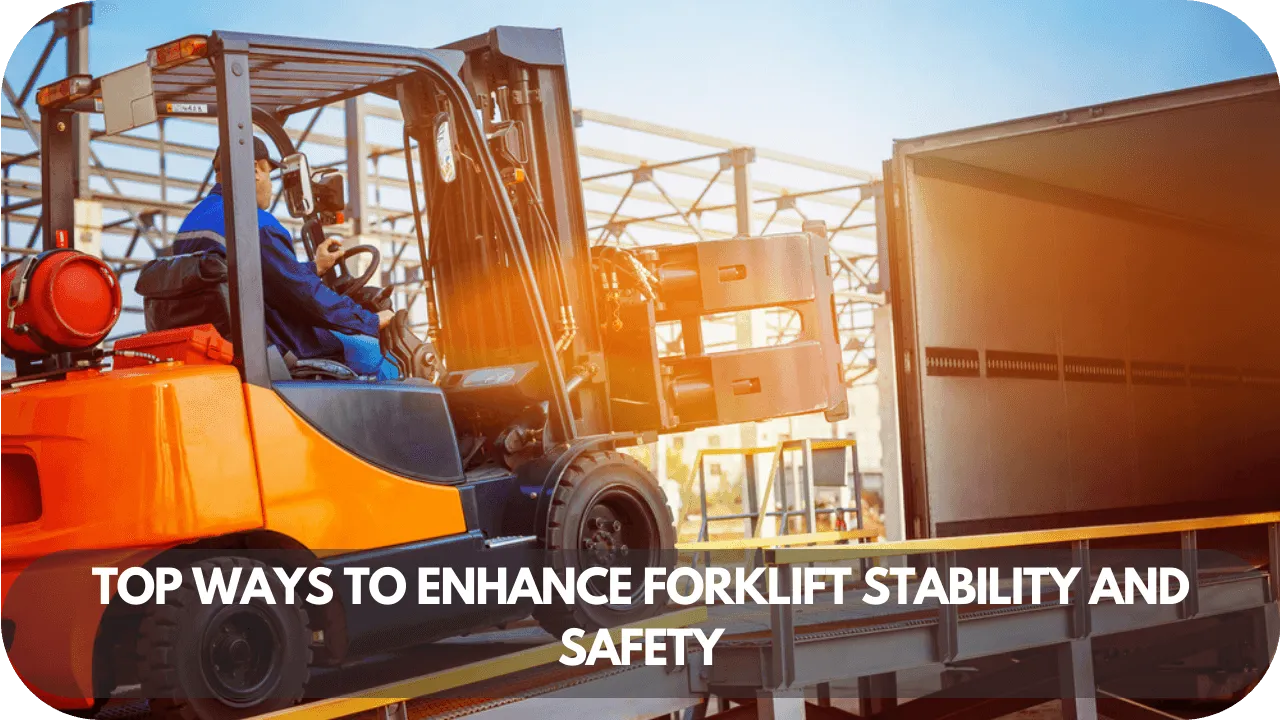
Forklift stability is the foundation of safe operations in any workplace. A single misstep, such as an unbalanced load or improper manoeuvre, can lead to costly accidents and downtime.
Enhancing forklift stability and safety isn’t just about compliance; it’s about protecting your team and ensuring smooth, efficient operations.
Focusing on key practices and tools can significantly reduce risks while improving performance. This guide teaches how to keep your forklifts steady and your workplace secure.
1. Regular Forklift Maintenance and Inspections
Regular forklift maintenance and inspections are essential for stability and safety in the workplace. A poorly maintained forklift can pose serious risks to operators and others nearby. Routine inspections should check for damaged tyres, hydraulic leaks, or malfunctioning brakes.
Inspecting key areas includes the lifting mechanism, battery, tyres, and steering system. Ensure the lifting mechanism operates smoothly, the tyres are undamaged, and the brakes respond effectively.
If problems are found, address them immediately to prevent accidents or breakdowns, which can cause costly downtime.
By staying on top of maintenance, you not only prevent accidents but also extend the life of your forklift. Regular checks help avoid minor issues becoming major problems, ensuring your forklift remains safe and reliable.
2. Proper Forklift Training for Operators
Proper forklift training for operators is crucial to ensure safety and stability. A well-trained operator is less likely to cause accidents or damage equipment. Training should cover load handling, vehicle operation, and safety procedures.
Operators must understand correct load placement and balancing loads to avoid tipping. They should know their forklift’s limitations, such as weight capacity and safe operating speed. Additionally, training in emergency procedures is essential.
Ongoing training and refresher courses help operators stay updated on safety standards and best practices. Operators must also remain aware of their surroundings, including other workers and obstacles, to prevent collisions.
Proper training reduces workplace accidents, improves efficiency, and ensures safety. Don’t wait for an accident—ensure your operators are fully trained and ready.
3. Load Management
Load management is key to forklift stability and safety, but incorrect handling can lead to accidents and tip-overs. Always ensure loads are evenly balanced on the forks and positioned as low as possible to the ground, maintaining the forklift’s centre of gravity.
Operators must be aware of the forklift’s weight limits and avoid overloading. Overloading can destabilise the forklift, making it prone to tipping. It’s also essential to secure loads properly to prevent shifting during movement.
Regularly inspect the forklift and its forks to ensure they are in good condition, as worn forks can make load handling unsafe. Practising proper load management reduces risks, boosts efficiency, and keeps operations running smoothly. Effective load handling is crucial for both safety and productivity in the workplace.
4. Ensuring the Right Forklift for the Job
Ensuring the right forklift for the job is crucial for stability and safety. Not all forklifts are suitable for every task, so it’s essential to match the forklift to the weight, size, and environment of the load.
Consider the capacity of the forklift to ensure it can handle the heaviest load. Exceeding the forklift’s weight limit can lead to tipping or damage.
Also, consider the environment—a narrow warehouse may need a compact forklift, while rough outdoor terrain requires a rugged model with all-terrain tyres.
The height and reach of the forklift are also crucial for tasks involving stacking or lifting loads to greater heights.
5. Clear and Safe Traffic Routes in the Workplace
Precise and safe traffic routes are essential for forklift stability and safety. Marking visible traffic routes with signs and floor markings helps operators navigate safely and avoid pedestrian areas. Keep aisles and walkways free from clutter to prevent accidents and ensure smooth movement.
Adequate lighting is crucial, especially in poorly lit areas, to help operators spot obstacles in advance. Where possible, separate pedestrian and forklift paths to reduce the risk of collisions. Ensure routes are wide enough for forklifts to move safely, especially when carrying large loads.
Clear traffic routes can reduce risks, improve efficiency, and create a safer workplace. Properly planned routes enhance safety and support smoother operations throughout the day.
6. Installing Safety Features and Accessories
Installing safety features and accessories on forklifts is crucial for stability and reducing risks. Key features include the seat belt, which prevents injury during sudden stops or tip-overs, and the roll-over protection system (ROPS), which protects operators in case of a forklift tip.
Warning lights and beepers alert pedestrians and workers to moving forklifts, reducing collision risks. Cameras and mirrors improve visibility, especially in blind spots. Installing stability control systems helps prevent tipping by monitoring load weight and balance.
Fork extensions can assist in handling wider or heavier loads more safely. Adding these safety features and accessories improves forklift stability, ensuring a safer environment for operators and other workers.
7. Maintaining Safety Through Speed Control and Precise Manoeuvring
Speed and manoeuvrability are key to forklift stability and safety, but driving too quickly can lead to accidents, as high speeds reduce the ability to react to obstacles. Speeding also increases the risk of tipping, particularly when turning or moving over uneven surfaces.
Operators should be trained to drive at safe speeds, especially when carrying heavy or unstable loads. Smooth, gradual movements are vital to maintaining control. Sharp turns or sudden shifts can cause instability, so slower, controlled manoeuvres are essential.
Manoeuvrability in tight spaces is also important. Operators should carefully use the forklift’s turning radius to avoid collisions and balance loads. Forklifts with good manoeuvrability allow for precise movements, reducing accidents.
8. Forklift Operator Awareness and Mental Focus
Forklift operator awareness and mental focus are crucial for safety and stability. An alert operator can quickly react to hazards, obstacles, or sudden changes, reducing the risk of accidents.
Operators may need complete focus to cover essential details like load balance, obstacles, or pedestrians.
Operators should remain mentally engaged and avoid distractions, fatigue, or stress, which can impair decision-making. Staying aware of surroundings and checking blind spots before moving is essential.
Regular breaks and adequate rest help maintain focus. Operators should also be trained to anticipate hazards and plan movements carefully. Fostering a safety-conscious culture ensures operators stay vigilant.
9. Addressing Environmental Factors for Enhanced Forklift Safety
Environmental factors significantly impact forklift stability and safety. Uneven or slippery surfaces, like wet or oily floors, can cause forklifts to lose grip and tip over. Regular inspection and maintenance of flooring are essential to prevent these hazards.
Weather conditions also affect stability. Windy weather increases the risk of tipping, particularly with heavy loads, while rain or snow can make surfaces slippery. In these conditions, operators should reduce speed and stay cautious.
The workplace layout plays a key role in safety, too. Narrow aisles or crowded areas raise the risk of collisions, and unclear pathways can confuse operators. Ensuring clear, well-marked spaces helps maintain smooth operations.
By addressing these environmental factors, you can boost forklift stability and enhance safety, reducing accidents in the workplace.
10. Adopting a Culture of Safety at the Workplace
Adopting a culture of safety is key to enhancing forklift stability and overall safety in the workplace. This culture begins with leadership setting an example and emphasising safety as a top priority.
Regular safety training for all employees is essential, covering forklift operation, hazard awareness, and safe loading practices. Ongoing refresher courses ensure everyone stays updated on safety protocols.
Encouraging open communication is vital—workers should feel comfortable reporting hazards or near-misses without fear of retribution. Safety inspections must be routine, with issues fixed promptly.
Recognising and rewarding safe behaviour helps reinforce safety practices, making it an integral part of the workplace. You can improve forklift stability, reduce accidents, and ensure a safer environment by fostering a strong safety culture.
Conclusion
Enhancing forklift stability and safety is essential for preventing accidents and improving workplace efficiency.
You can significantly reduce risks by implementing regular maintenance, proper training, and clear traffic routes. Invest in safety features and foster a culture of safety. Take action today to ensure a safer, more stable forklift operation and a safer working environment.