
Forklift Maintenance Costs in Australia: What to Budget
· Updated
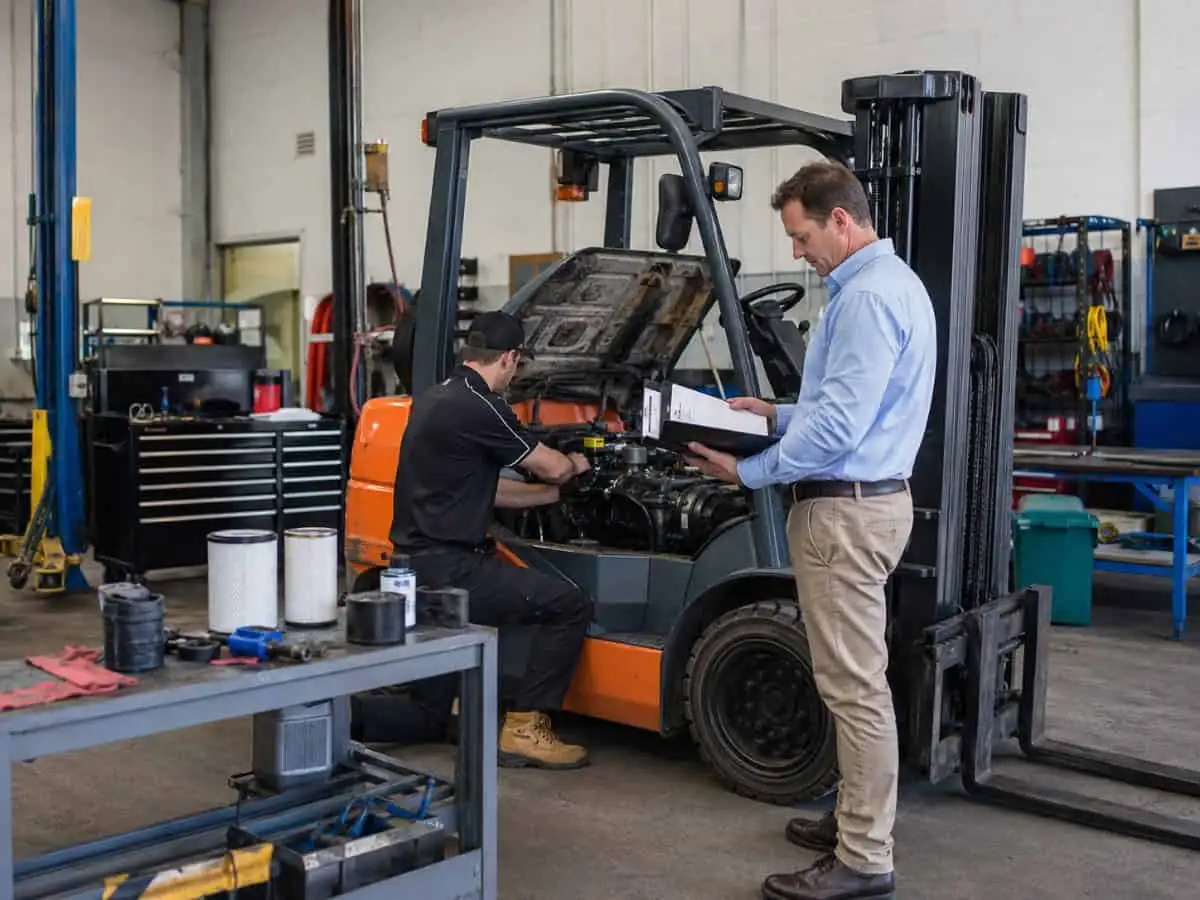
Forklift maintenance costs vary according to the machine’s power type, age, operating hours, condition and working environment. A lightly used electric forklift may require less routine mechanical work than an older LPG or diesel machine, but battery, tyre or electrical repairs can still create major expenses.
The most reliable way to budget is to separate scheduled servicing from wear items, major component replacements and unexpected breakdowns. Businesses should also account for downtime, technician callouts and transport rather than looking only at the price of a basic service.
This guide explains what influences forklift service costs in Australia, where maintenance money is typically spent and how to build a practical annual budget without relying on unrealistic fixed figures.
How Much Does Forklift Maintenance Cost?
There is no single standard forklift maintenance cost because servicing requirements differ substantially between machines and workplaces. The final amount depends on how often the forklift operates, what it handles, where it works and whether developing faults are addressed early.
The main cost drivers include:
- Power type: Electric, LPG and diesel forklifts have different service components and replacement risks.
- Operating hours: A forklift used across multiple shifts normally requires more frequent servicing than a lightly used machine.
- Age and condition: Older equipment may need more repairs, even when routine servicing is completed.
- Working environment: Dust, moisture, cold storage, rough ground and corrosive materials can accelerate component wear.
- Parts required: Batteries, tyres, brakes, hydraulic components and mast parts can add significantly to the total.
- Labour: Technician time depends on the service scope, machine accessibility and complexity of the fault.
- Callout or transport: Mobile servicing and workshop transport can affect the final invoice.
- Downtime: Lost productivity may cost more than the repair itself when the forklift is essential to operations.
A routine service may include inspections, adjustments, lubrication, fluid checks and replacement of selected consumables. It does not normally cover every worn or failed component discovered during the visit.
Businesses needing procedural guidance rather than cost planning should use the forklift maintenance guide and service schedule. This page remains focused on the financial side of ownership.
What Drives Forklift Maintenance Costs?
Two forklifts of the same capacity can produce very different maintenance expenses. A machine moving clean packaged goods for a few hours each day is exposed to different wear than one carrying building materials outdoors across long shifts.
| Cost Driver | How It Affects Maintenance Spending |
|---|---|
| Power source | Electric machines avoid many engine service items, while LPG and diesel forklifts require combustion-engine maintenance |
| Daily operating hours | Longer use increases service frequency and wear on tyres, brakes, mast components and batteries |
| Equipment age | Older machines may experience more hose, seal, bearing, electrical and drivetrain failures |
| Load intensity | Heavy or repetitive lifting increases stress on hydraulics, forks, chains and mast rollers |
| Working surface | Rough or damaged floors accelerate tyre, wheel, steering and suspension-related wear |
| Environment | Dust, moisture, cold temperatures and corrosive products can damage components and connections |
| Operator practices | Harsh braking, fast cornering and poor load handling increase wear and damage |
| Parts availability | Older or specialised models may require more expensive parts or longer sourcing times |
| Technician access | Remote callouts, restricted work areas or difficult diagnostics can increase labour requirements |
| Maintenance history | Missed servicing often allows minor problems to develop into larger repairs |
Power Type
Electric forklifts generally have fewer engine-related parts because they do not require engine oil, spark plugs, exhaust components or conventional fuel-system servicing. However, battery condition, electrical controls, drive motors and charger compatibility can create major costs.
LPG forklifts require regular attention to the engine, cooling system, ignition, fuel components and exhaust. Diesel machines need similar engine servicing, with additional attention to fuel injection, filtration and emissions-related components where fitted.
Businesses comparing equipment types can review the current electric forklift range and counterbalance forklift range to understand how different configurations affect ownership requirements.
Operating Hours and Duty Cycle
A forklift used occasionally may be serviced less frequently than a machine operating continuously across two or three shifts. High-hour equipment experiences greater wear on:
- Tyres and wheels
- Mast rollers
- Lift chains
- Hydraulic seals
- Brakes
- Steering components
- Seats and controls
- Batteries or engines
Service planning should therefore be based on both calendar intervals and operating hours.
Age and Previous Condition
An older forklift is not automatically unreliable. A properly maintained high-hour machine can outperform a newer forklift with a poor service history.
However, ageing equipment may require increasing attention to:
- Hydraulic hoses
- Electrical connectors
- Engine seals
- Cooling systems
- Bearings
- Mast components
- Steering parts
- Drive motors
- Transmission components
Buyers evaluating ownership costs should compare used vs new forklifts rather than assuming that the lower purchase price always creates the lowest overall cost.
Working Environment
Outdoor yards, cold stores, dusty factories and wet loading areas place additional demands on equipment.
For example:
- Dust can block filters and affect cooling.
- Moisture can damage electrical connections.
- Cold storage can reduce battery performance.
- Uneven surfaces accelerate tyre and steering wear.
- Corrosive materials can damage metal and hydraulic components.
Selecting a forklift that is properly configured for the environment helps reduce avoidable maintenance.
Forklift Maintenance Cost Components
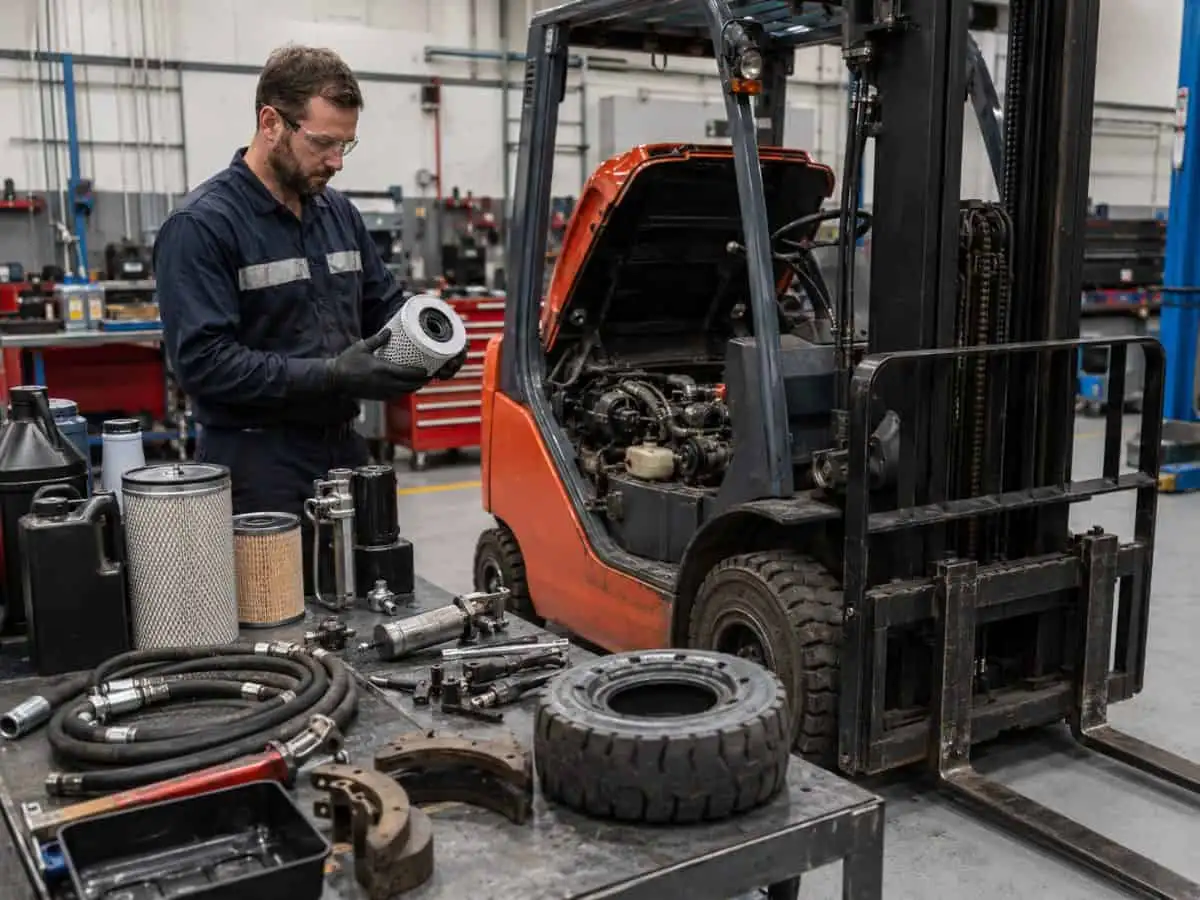
Forklift maintenance spending can be divided into routine servicing, wear items, major components, labour and operational costs.
| Component | What It May Cover | Budget Consideration |
|---|---|---|
| Routine servicing | Inspections, lubrication, adjustments, fluid and filter changes | Predictable when servicing is scheduled |
| Tyres and wheels | Cushion, pneumatic, solid or polyurethane tyre replacement | Surface and operator behaviour strongly affect wear |
| Battery and charger | Testing, cell repairs, connectors, charger work or replacement | Can be a major electric-forklift expense |
| Hydraulic system | Hoses, seals, cylinders, valves, pumps and fluid | Leaks should be addressed before greater damage occurs |
| Mast and chains | Rollers, chains, carriage, bearings and adjustments | Heavy lifting and poor lubrication increase wear |
| Brakes | Pads, shoes, drums, discs, cables and adjustments | Frequent stopping and ramps increase demand |
| Engine and transmission | Filters, ignition, cooling, fuel and drivetrain components | Relevant mainly to LPG, petrol and diesel equipment |
| Electrical system | Switches, sensors, controllers, wiring and displays | Diagnosis may require specialist equipment |
| Labour | Inspection, diagnosis, fitting, testing and reporting | Complexity and time influence the final cost |
| Callout and transport | Mobile technician attendance or forklift transport | Important when workshop access is limited |
| Downtime | Lost output, delayed orders and replacement-equipment needs | Often overlooked in maintenance budgets |
1. Routine Service Items
Routine maintenance may include:
- Fluid-level checks
- Engine oil and filter replacement
- Fuel and air filters
- Lubrication
- Brake inspection
- Steering checks
- Mast-chain inspection and adjustment
- Hydraulic leak checks
- Tyre inspection
- Battery and charger checks
- Warning-light and safety-device testing
The exact service scope depends on the forklift and manufacturer recommendations.
2. Tyres
Tyre life is influenced by the surface, load, travel distance, braking and cornering behaviour. Replacing tyres before they become severely worn can protect stability, ground clearance and other forklift components.
The full replacement process and wear indicators are covered in the guide to changing and replacing forklift tyres.
3. Batteries
The battery can be one of the largest ownership expenses for an electric forklift. Cost depends on battery chemistry, voltage, capacity, charger compatibility and installation requirements.
Businesses should plan for testing and eventual replacement rather than treating the battery as a permanent component. Review the factors affecting forklift battery replacement cost before buying or budgeting for electric equipment.
4. Hydraulic Components
Forklifts rely heavily on hydraulics for lifting, tilting and operating attachments. Small leaks may develop into larger failures when hoses, seals or cylinders are not repaired promptly.
Hydraulic maintenance can include:
- Hose replacement
- Cylinder resealing
- Valve repairs
- Pump repairs
- Fluid replacement
- Attachment-hose servicing
5. Labour and Callouts
Labour cost depends on the time needed to inspect, diagnose, dismantle, repair and test the forklift.
A planned workshop service is generally easier to budget than an urgent callout for a stopped machine. Costs may also rise when:
- The forklift is in a remote location.
- Access around the machine is restricted.
- Parts must be ordered urgently.
- The fault requires advanced diagnosis.
- Work must be completed outside standard hours.
- The machine needs transport to a workshop.
Planned Maintenance vs Breakdown Repair Costs
Scheduled maintenance creates more predictable spending and gives technicians an opportunity to identify developing faults before they stop the forklift.
Breakdown repairs are less predictable and may involve:
- Emergency labour
- Express parts delivery
- Equipment transport
- Replacement forklift hire
- Delayed production
- Missed deliveries
- Overtime
- Customer-service problems
| Planned Maintenance | Breakdown Repair |
|---|---|
| Scheduled around operations | Occurs with little warning |
| Easier to budget | Cost is uncertain |
| Minor wear may be identified early | Secondary damage may already have occurred |
| Parts can be ordered in advance | Urgent parts may be harder to source |
| Downtime can be controlled | Downtime may interrupt critical work |
| Supports service records | Can indicate gaps in preventative maintenance |
A low maintenance budget is not necessarily an efficient budget. Delaying routine work can convert a manageable seal, hose or bearing issue into a more expensive hydraulic, mast or drivetrain failure.
The broader commercial consequences are explained in the cost of forklift downtime.
Businesses seeking predictable servicing may benefit from reviewing available forklift service plans. A service plan does not remove every repair cost, but it can make inspections and routine maintenance easier to schedule.
Electric vs LPG vs Diesel: Which Costs More to Maintain?
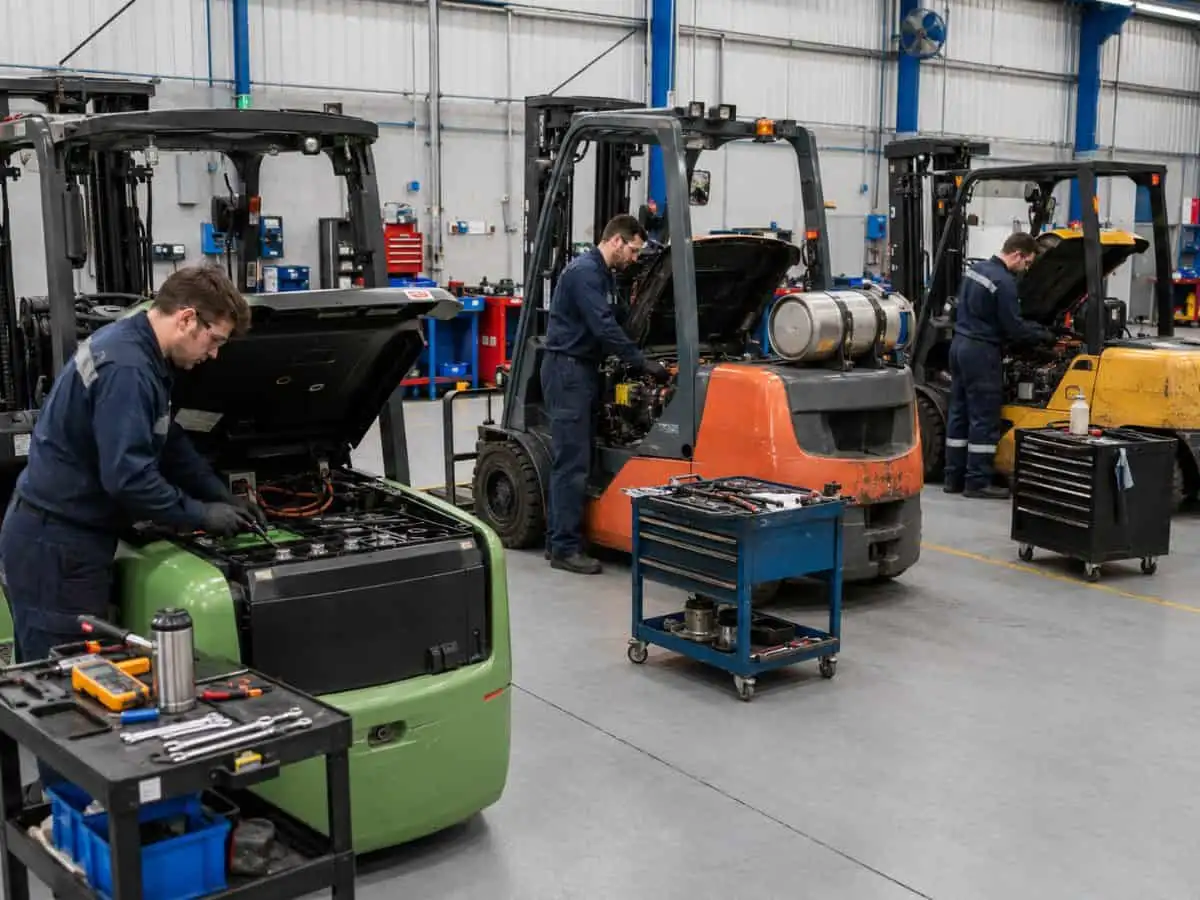
Electric forklifts usually require fewer routine engine-related service items than LPG or diesel machines. However, this does not mean they are automatically cheaper in every operation.
| Maintenance Factor | Electric | LPG | Diesel |
|---|---|---|---|
| Engine servicing | Not required | Required | Required |
| Fuel-system maintenance | Not applicable | LPG components require inspection | Diesel fuel system and filters require servicing |
| Battery maintenance | Major consideration | Small starting battery only | Small starting battery only |
| Charger maintenance | Required | Not applicable | Not applicable |
| Cooling system | Limited or model-dependent | Required | Required |
| Exhaust components | Not applicable | May require attention | May require attention |
| Routine fluids | Generally fewer | Engine and hydraulic fluids | Engine, cooling and hydraulic fluids |
| Major cost risk | Traction battery, charger and controls | Engine, transmission and fuel system | Engine, cooling, injection and transmission |
| Typical environment | Indoor and clean operations | Mixed indoor and outdoor use | Outdoor and heavy-duty work |
Electric Forklifts
Electric machines can reduce routine servicing because they have fewer moving engine components. Common maintenance areas include:
- Battery
- Charger
- Electrical connectors
- Drive and lift motors
- Controllers
- Brakes
- Tyres
- Hydraulics
- Mast components
Battery condition has a major influence on total ownership cost. A low-priced used electric forklift with a weak battery may require substantial additional spending soon after purchase.
LPG Forklifts
LPG equipment can suit businesses needing fast refuelling and mixed operating environments. Maintenance commonly covers:
- Engine oil and filters
- Spark plugs and ignition
- LPG hoses and connections
- Cooling system
- Exhaust
- Transmission
- Hydraulics
- Brakes and tyres
Correct tuning and regular servicing can also support cutting running costs.
Diesel Forklifts
Diesel forklifts are generally used for outdoor and demanding applications. Their maintenance may include:
- Engine oil and filters
- Fuel filters
- Cooling system
- Injection components
- Air intake
- Transmission
- Hydraulic system
- Exhaust system
- Tyres and steering
The working environment often contributes significantly to diesel-forklift maintenance. Dust, rough surfaces and heavy loads may increase spending beyond routine engine servicing.
New vs Used Forklift Maintenance Costs
New forklifts usually have fewer immediate repair needs and may include manufacturer or dealer warranty coverage. Their servicing can be easier to forecast during the early ownership period.
Used forklifts normally have a lower purchase price but require closer examination of their:
- Service history
- Operating hours
- Battery or engine condition
- Mast wear
- Tyres
- Brakes
- Hydraulics
- Steering
- Electrical system
A professionally inspected and prepared used forklift can still offer strong value. The purchase decision should account for expected repairs rather than focusing only on the advertised price.
When comparing machines, calculate:
Purchase price + immediate repairs + expected maintenance + energy or fuel + tyres + downtime
This gives a more useful comparison than purchase price alone.
Businesses considering used equipment can browse the full forklift range and compare the condition, power type and application of available machines.
Where a better-condition machine sits slightly above the available cash budget, forklift finance options may be preferable to buying cheaper equipment with greater repair exposure.
How to Budget for Forklift Maintenance
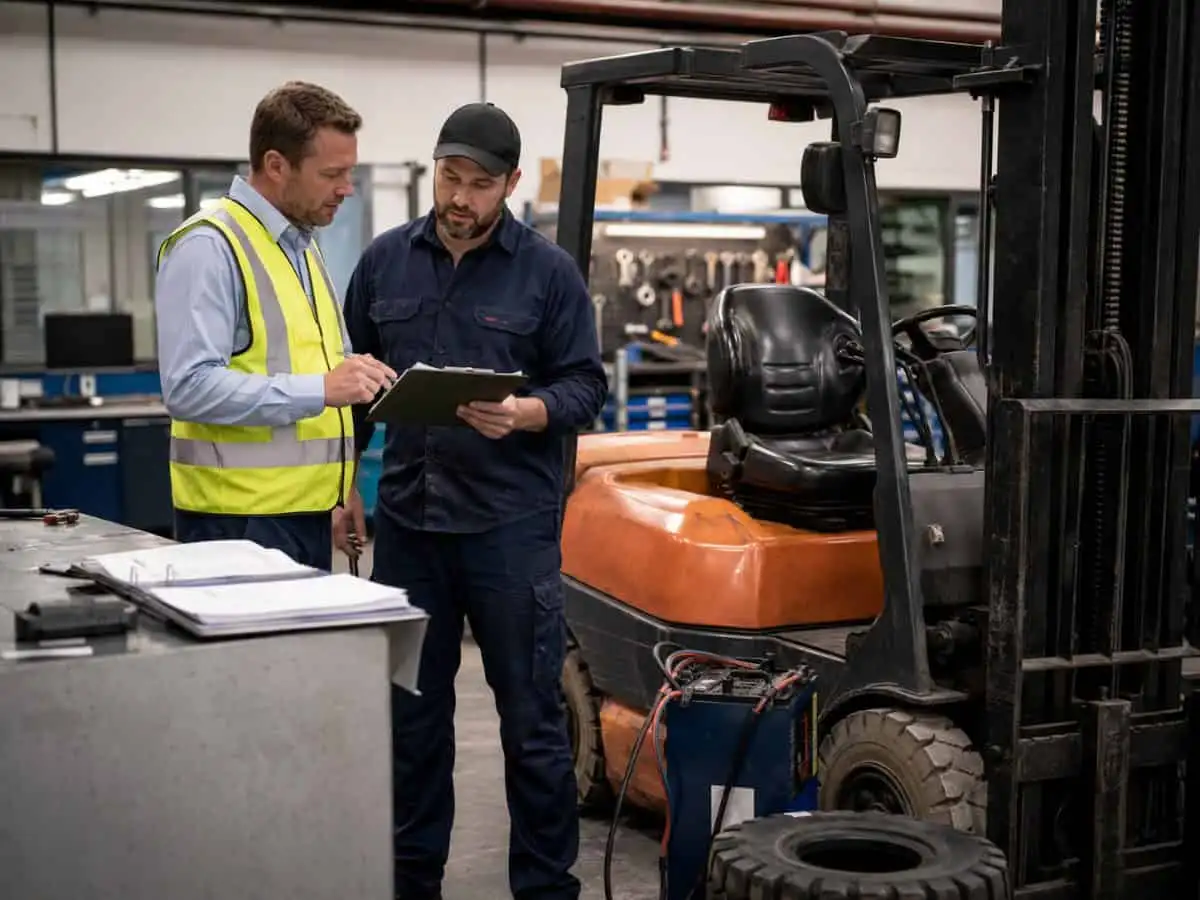
A forklift maintenance budget should cover predictable servicing, wear items, major replacements and unexpected downtime.
1. List Every Forklift
Record each machine’s:
- Brand and model
- Year
- Power type
- Rated capacity
- Current operating hours
- Average hours per month
- Working environment
- Service history
- Warranty status
- Known defects
This creates a clear starting point for budgeting.
2. Review the Service Schedule
Use the manufacturer’s recommendations and operating hours to identify when each forklift will need scheduled maintenance.
Do not assume every machine can follow the same calendar. A high-use forklift may reach its service interval much sooner than a lightly used machine.
3. Separate Routine and Major Costs
Create separate budget categories for:
- Scheduled servicing
- Tyres
- Batteries
- Brakes
- Hydraulic repairs
- Mast and chain work
- Engine or transmission repairs
- Charger maintenance
- Callouts and transport
- Replacement-equipment hire
Separating these categories prevents a major battery or tyre expense from being mistaken for normal routine servicing.
4. Build a Repair Reserve
Set aside a contingency amount for unexpected faults. The reserve should reflect the machine’s age, hours, condition and importance to daily operations.
An older forklift that supports critical production should normally have a larger contingency allowance than a lightly used backup machine.
5. Plan for Tyres and Batteries
Tyres and traction batteries are significant ownership items that should be forecast separately.
Record:
- Current tyre wear
- Battery age
- Battery test results
- Charger condition
- Expected usage
- Replacement lead times
Planning these replacements reduces the risk of being forced into an urgent purchase.
6. Include Downtime
Estimate what happens when the forklift is unavailable.
Consider:
- Lost production
- Delayed loading
- Staff waiting time
- Rental equipment
- Overtime
- Transport changes
- Customer delays
This may justify spending more on preventative maintenance or holding backup equipment.
7. Track Actual Spending
Record every service, repair, part and callout against the individual forklift.
Review the data regularly to identify:
- Increasing annual maintenance
- Repeated faults
- High tyre consumption
- Battery decline
- Excessive downtime
- Machines approaching replacement
The relationship between age, application and useful life is covered further in what affects forklift lifespan.
8. Review Repair Versus Replacement
A forklift should not be replaced simply because it needs maintenance. However, replacement may become more practical when:
- Breakdowns are frequent.
- Parts are difficult to source.
- The machine no longer suits the application.
- Safety defects are recurring.
- Downtime is disrupting operations.
- Repairs approach the value of the equipment.
- Fuel or energy use is excessive.
The decision should consider future ownership costs, not only the latest repair invoice.
How to Reduce Forklift Maintenance Costs
Maintenance costs can be reduced by preventing avoidable wear and identifying defects early.
- Complete daily inspections: Check tyres, forks, chains, fluids, leaks, controls and safety devices before operation. Use a structured forklift pre-operational inspection rather than relying on informal checks.
- Follow the service schedule: Delayed servicing can allow minor wear to damage more expensive components.
- Train operators properly: Harsh braking, overloading, fast cornering and incorrect attachment use increase maintenance.
- Keep floors and yards in good condition: Potholes, debris and damaged joints accelerate tyre and steering wear.
- Match the machine to the job: Using indoor equipment on unsuitable outdoor surfaces increases damage.
- Maintain batteries correctly: Charging, watering and cooling practices affect battery life.
- Repair hydraulic leaks early: Small leaks can develop into hose, cylinder or pump failures.
- Track fault patterns: Repeated repairs may reveal an operating, training or application problem.
- Use suitable tyres: The correct tyre for the surface can reduce vibration, punctures and component damage.
- Schedule maintenance during quiet periods: Planned downtime costs less than an unexpected stoppage.
- Keep service records: Accurate records support diagnosis, resale and replacement decisions.
- Use appropriate service support: A technician familiar with the model may diagnose faults faster.
Buy A Fork provides access to inspected equipment and practical ownership resources. Visit the Buy A Fork homepage to review available options, or contact Buy A Fork when maintenance costs are influencing a repair or replacement decision.
Frequently Asked Questions
1. How Much Does It Cost to Service a Forklift?
Forklift service cost depends on the machine’s power type, operating hours, age and the work required. A routine inspection and service costs less than a visit involving tyres, hydraulic repairs, battery work or major engine components. Request a written scope that separates labour, parts, callout and additional repairs.
2. How Much Should I Budget for Forklift Maintenance Per Year?
Set the annual budget according to each forklift’s hours, age, condition, duty cycle and environment. Include scheduled servicing, tyres, batteries, repairs, technician callouts and downtime. High-use or older equipment should generally have a larger reserve than lightly used newer machines.
3. Is an Electric or Diesel Forklift Cheaper to Maintain?
Electric forklifts usually have fewer routine mechanical service items because they do not have a diesel engine, fuel system or exhaust. However, traction-battery and charger repairs can be expensive. Diesel forklifts need more routine engine servicing but may remain better suited to demanding outdoor work.
4. Does a Forklift Service Plan Save Money?
A service plan can improve cost predictability and reduce the likelihood of missed maintenance. Whether it saves money depends on the coverage, machine use and exclusions. Review what is included, how breakdown repairs are handled and whether parts, labour and callouts are covered.
5. Are Used Forklifts More Expensive to Maintain?
Used forklifts may need more repairs as components age, but condition and service history matter more than age alone. A professionally prepared used forklift with documented maintenance can cost less to own than a newer neglected machine. Battery, tyres, mast and hydraulic condition should be checked before purchase.
6. What Is the Biggest Maintenance Cost on a Forklift?
The largest cost depends on the forklift type. An electric machine may require a traction battery or electrical-control repair. LPG and diesel machines may face major engine or transmission work. Tyres, hydraulics and downtime can also become substantial costs across any power type.
Conclusion
Forklift maintenance cost should be treated as a planned ownership expense rather than an occasional repair bill. The amount depends on power type, operating hours, age, environment and the condition of major components such as tyres, batteries, hydraulics and the mast.
Build a separate allowance for routine servicing, wear items, major replacements and unexpected downtime. Accurate service records will also show when maintenance remains economical and when replacing the forklift offers better long-term value.
Businesses reviewing repair costs against replacement options can compare the full range of available forklifts or contact Buy A Fork to discuss equipment suited to their workload and budget.