
Used vs New Forklifts: Pros, Cons and Myths Debunked
· Updated
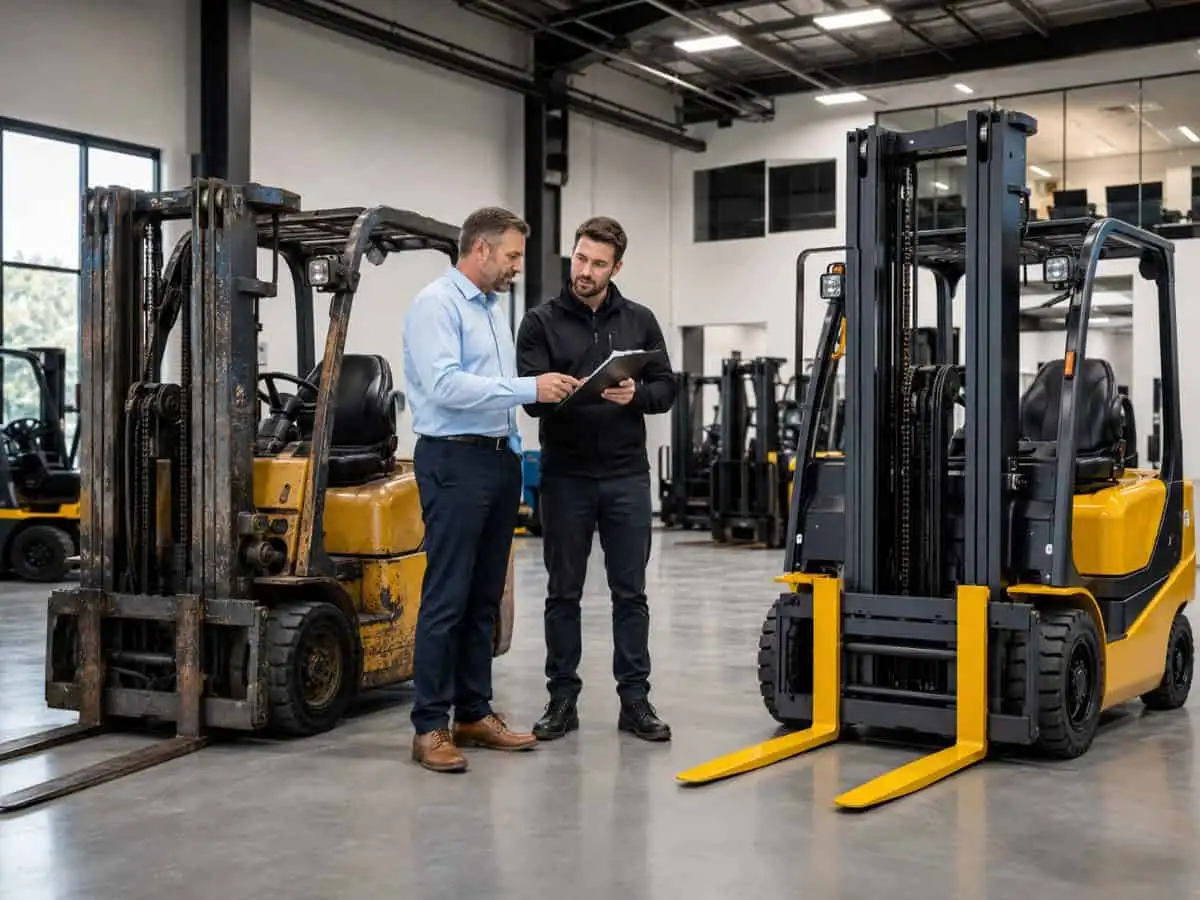
Buy a used forklift when budget, faster availability and lower depreciation matter most, particularly for moderate-hours or intermittent work. Buy new when the forklift will operate intensively, an exact specification is required or full manufacturer warranty and current technology justify the higher investment.
A professionally inspected pre-owned forklift is not automatically less reliable or capable than a new machine. Its value depends on condition, service history, operating hours, application and dealer preparation. New equipment reduces uncertainty but usually requires more upfront capital and experiences greater early depreciation.
This guide compares used vs new forklifts, debunks common second-hand equipment myths and explains how to assess the complete ownership cost before purchasing.
Should You Buy a Used or New Forklift?
Choose a used forklift when the machine will operate moderate hours, the task is well understood and a suitable inspected unit is available within budget. Choose new when utilisation is high, downtime is especially costly or the business needs a precise mast, capacity, attachment, battery or safety configuration.
| Business Requirement | Used Forklift May Be Better | New Forklift May Be Better |
|---|---|---|
| Limited purchase budget | Yes | No |
| Immediate availability | Often | Depends on stock and lead time |
| Moderate or intermittent use | Yes | May be unnecessary |
| High daily utilisation | Possible with the right machine | Often preferable |
| Exact custom specification | Limited by available stock | Yes |
| Full manufacturer warranty | Usually limited | Yes |
| Latest safety technology | Model-dependent | More likely |
| Lower early depreciation | Yes | No |
| Known operating history | Depends on records | Yes |
| Established application | Yes | Yes |
| Uncertain future workload | Often lower-risk financially | Higher capital exposure |
A used machine is often the practical choice for workshops, smaller warehouses, seasonal operations and businesses adding backup capacity. A new forklift may be easier to justify in multi-shift operations where reliability, exact configuration and predictable early ownership are critical.
Before comparing prices, choose the right forklift for your business according to load weight, lift height, surface, aisle width and duty cycle. A cheaper machine is not good value when it cannot safely perform the required work.
Businesses ready to assess available options can browse new and used stock.
Used vs New Forklifts: Pros and Cons
The main differences between used and new forklifts involve initial cost, depreciation, warranty, condition, technology and availability.
| Buying Factor | Used Forklift | New Forklift |
|---|---|---|
| Upfront cost | Usually lower | Usually higher |
| Depreciation | Initial depreciation has largely occurred | Greater depreciation during early ownership |
| Warranty | Dealer-specific and often shorter | Full manufacturer coverage may apply |
| Condition | Varies by history and preparation | New and unused |
| Availability | Often ready from current stock | Factory or configuration lead times may apply |
| Technology | Depends on model year | Current controls and safety systems |
| Specification choice | Limited to available machines | Can often be configured for the application |
| Maintenance risk | May rise with age and hours | Generally lower during early ownership |
| Service history | Must be reviewed | Starts with the buyer |
| Resale | Quality machines may retain useful value | Higher future resale value but higher original cost |
| Finance | Commonly available | Commonly available |
| Best use | Budget-led and moderate-use applications | Intensive use and exact-specification applications |
1. Used Forklift Advantages
A used forklift may offer:
- Lower capital outlay: Less cash is tied up in equipment.
- Reduced depreciation exposure: The steepest decline in value may already have occurred.
- Faster availability: Existing stock may be prepared and delivered sooner.
- Established brands within budget: Buyers may access a better-known industrial model for the price of new entry-level equipment.
- More capacity for the budget: A used counterbalance or warehouse forklift may provide greater capability than a new light-duty machine at the same price.
- Practical backup capacity: Used equipment can support peak periods or cover servicing without the expense of another new machine.
- Potential resale value: Recognised brands in good condition may remain attractive to future buyers.
Businesses working within a fixed ceiling can compare used forklifts under $15,000 before deciding whether a new machine offers enough additional value.
2. Used Forklift Disadvantages
Potential disadvantages include:
- Unknown previous operating conditions
- Higher operating hours
- Older battery or engine systems
- Less remaining warranty
- Increased repair exposure
- Limited choice of mast, capacity and attachments
- Older safety or efficiency technology
- Possible cosmetic wear
- Greater need for inspection and testing
Work Safe Victoria recommends reviewing the maintenance, inspection and use history of a second-hand forklift before purchase. It also advises that the machine be inspected and serviced before operation, as additional costs may be needed for seats, restraints, information plates, electrical faults, mechanical defects or structural repairs.
3. New Forklift Advantages
A new forklift may offer:
- Full manufacturer warranty
- No previous operating wear
- Known maintenance starting point
- Current battery, control and safety technology
- Greater specification choice
- Lower immediate repair exposure
- Better energy or fuel efficiency on some current models
- Easier integration with fleet-management systems
- Longer remaining economic life
4. New Forklift Disadvantages
Potential disadvantages include:
- Higher purchase price
- Greater early depreciation
- Longer lead time for some configurations
- Higher finance commitment
- Paying for technology the operation may not need
- More capital tied up in equipment
- Lower financial flexibility when workload changes
Used Forklift Myths Debunked
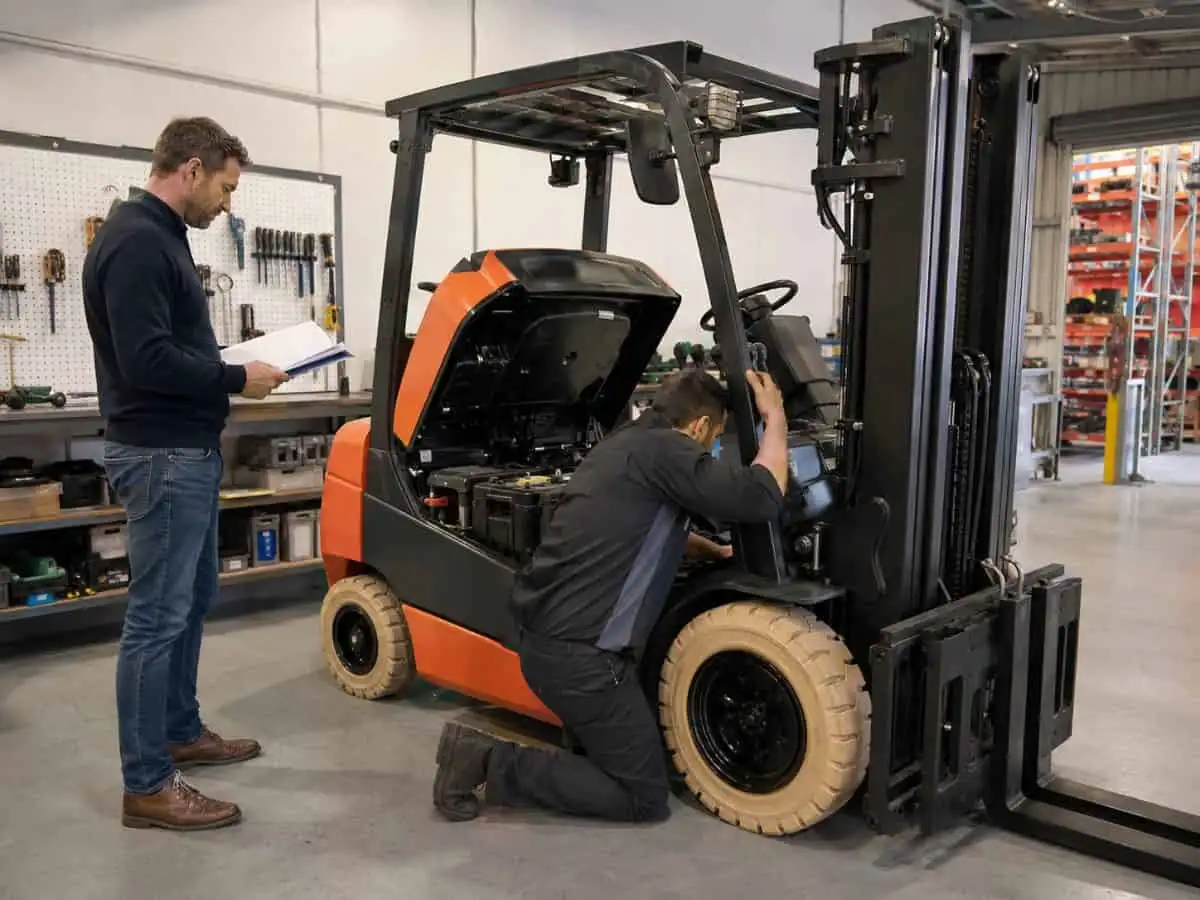
Several common assumptions make buyers dismiss used forklifts before assessing the actual machine.
| Myth | Fact |
|---|---|
| All used forklifts are unreliable | Reliability depends on condition, maintenance history, application and preparation |
| Used forklifts never include a warranty | Dealer-sold machines may include written warranty coverage |
| A low purchase price always hides major faults | A professional inspection can identify repair and condition risks |
| Used forklifts cannot handle demanding work | Correctly specified industrial machines can remain capable after years of service |
| New forklifts always cost less to maintain overall | Total cost depends on utilisation, depreciation, finance, service and resale |
| Used forklifts have no resale value | Well-maintained recognised brands may retain demand |
| High hours automatically mean the forklift is worn out | Duty cycle and maintenance matter alongside the hour reading |
Myth: All Used Forklifts Are Unreliable
A forklift does not become unreliable simply because it has had a previous owner. Machines maintained to schedule and used within their design limits can continue providing dependable service.
Reliability should be assessed through:
- Service history
- Operating hours
- Previous application
- Mast and chain condition
- Hydraulic performance
- Tyres
- Brakes and steering
- Engine, transmission or battery condition
- Loaded testing
- Parts availability
The guide to what affects a forklift’s lifespan explains why operating environment and maintenance can matter more than age alone.
Myth: Used Forklifts Do Not Come With a Warranty
Warranty depends on the seller and purchase terms. A dealer-prepared used forklift may include coverage for specified components, while a private sale may provide little practical protection.
Confirm:
- Warranty duration
- Components covered
- Labour coverage
- Travel or transport costs
- Battery exclusions
- Claim procedures
- Conditions that may void coverage
Do not rely on verbal assurances. Ask for the complete terms in writing.
Myth: Used Forklifts Always Have Hidden Costs
Any forklift can produce unplanned costs. The risk is higher when a used machine is purchased without inspection, service records or a loaded test.
Hidden-cost exposure can be reduced by checking:
- Immediate servicing needs
- Tyre condition
- Battery test results
- Hydraulic leaks
- Mast wear
- Brake condition
- Charger inclusion
- Attachment compatibility
- Delivery
- Warranty
- Parts support
Use the complete guide on how to inspect a used forklift before making a purchase decision.
Myth: Used Forklifts Are Only Suitable for Small Jobs
A pre-owned forklift can still be suitable for demanding warehouse, manufacturing, construction or outdoor work when its capacity and configuration match the application.
The buyer must verify:
- Rated capacity
- Residual capacity at height
- Load centre
- Mast configuration
- Tyres
- Power source
- Attachments
- Duty cycle
- Surface suitability
A used high-capacity industrial forklift may provide more capability than a small new machine purchased simply because it is unused.
Myth: Used Forklifts Have Poor Resale Value
Resale depends on the brand, condition, hours, configuration and market demand.
A recognised forklift with complete records and regular maintenance may remain desirable. Poorly specified or neglected equipment can lose value regardless of whether it was originally purchased new or used.
Why Pre-Owned Can Be the Smarter Investment
A well-selected pre-owned forklift can produce a faster return because the business spends less upfront while gaining the handling capacity needed to improve operations.
1. Lower Initial Capital Requirement
A lower purchase cost leaves more business capital available for:
- Stock
- Staff
- Warehouse improvements
- Vehicles
- Marketing
- Repairs
- Additional equipment
- Seasonal cash flow
The best financial decision is not always the lowest-cost forklift. It is the machine that performs the required work without unnecessary capital exposure.
2. Softer Depreciation
New equipment commonly experiences its greatest loss in value during the earlier part of ownership. A used buyer purchases after some of that decline has already occurred.
This may help when:
- The business expects to upgrade again.
- The workload may change.
- The machine is needed for a defined project.
- Long-term utilisation is uncertain.
- Resale flexibility matters.
3. Faster Payback
A lower investment can shorten the period needed for productivity gains to recover the purchase cost.
A forklift may create value by:
- Reducing manual handling
- Unloading vehicles faster
- Improving racking access
- Reducing product damage
- Supporting higher order volume
- Cutting equipment hire
- Reducing double-handling
4. Better Equipment for the Available Budget
Buying used may allow access to:
- A higher-capacity machine
- A better-established brand
- A more suitable mast
- Pneumatic tyres
- Side shift
- A stronger battery
- Greater lift height
- Better dealer preparation
The comparison should always be between machines that can perform the same work. Comparing a new pallet stacker with a used full-sized counterbalance forklift solely by price can be misleading because their capabilities differ.
For smaller warehouse equipment, the same principles apply when comparing used vs new electric pallet jacks or used vs new electric stackers.
What a Forklift Really Costs Over Its Life
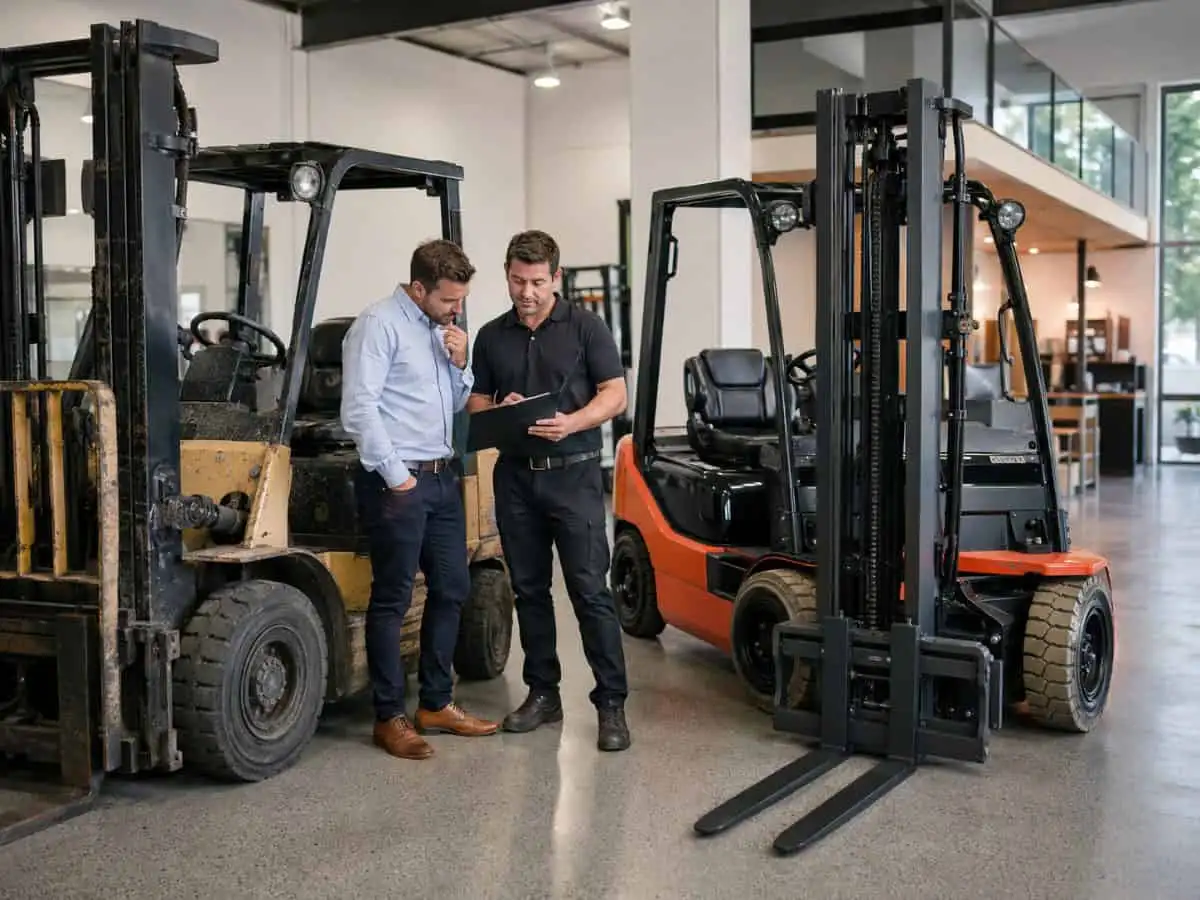
Purchase price is only one part of total cost of ownership.
| Cost Component | Used Forklift Consideration | New Forklift Consideration |
|---|---|---|
| Purchase | Lower initial cost | Higher initial cost |
| Finance | Smaller amount may be financed | Larger commitment |
| Depreciation | Usually slower from the used purchase price | Greater early depreciation |
| Routine servicing | Depends on model and hours | Required from the beginning |
| Repairs | Higher uncertainty | Lower early exposure |
| Tyres | Condition must be checked | New at delivery |
| Battery | Age and condition are critical | New, subject to warranty terms |
| Fuel or energy | Depends on design and application | Current technology may improve efficiency |
| Downtime | Condition and support affect risk | Warranty may reduce repair exposure |
| Resale | Lower entry cost may reduce loss | Higher resale amount but higher original spend |
1. Maintenance
Older equipment may require more repairs, but this does not mean it automatically costs more overall.
Compare:
Purchase cost + finance + servicing + repairs + energy or fuel + tyres + downtime − resale value
The guide to forklift maintenance costs explains how power source, hours, environment and component wear influence the budget.
2. Battery or Fuel
For an electric forklift, review:
- Battery chemistry
- Battery age
- Capacity test
- Charger compatibility
- Runtime
- Replacement exposure
- Charging infrastructure
For LPG or diesel, consider:
- Fuel consumption
- Refuelling arrangements
- Engine servicing
- Cooling system
- Exhaust-related maintenance
- Indoor-use restrictions
Buyers comparing power systems can review diesel, electric and LPG forklifts.
3. Downtime
A low-priced forklift becomes expensive when it cannot work.
Downtime costs can include:
- Delayed deliveries
- Production stoppages
- Rental equipment
- Overtime
- Missed orders
- Technician callouts
- Parts delays
- Staff waiting time
Dealer support, common parts and a suitable backup plan should therefore form part of the buying decision.
How to Buy a Used Forklift With Confidence
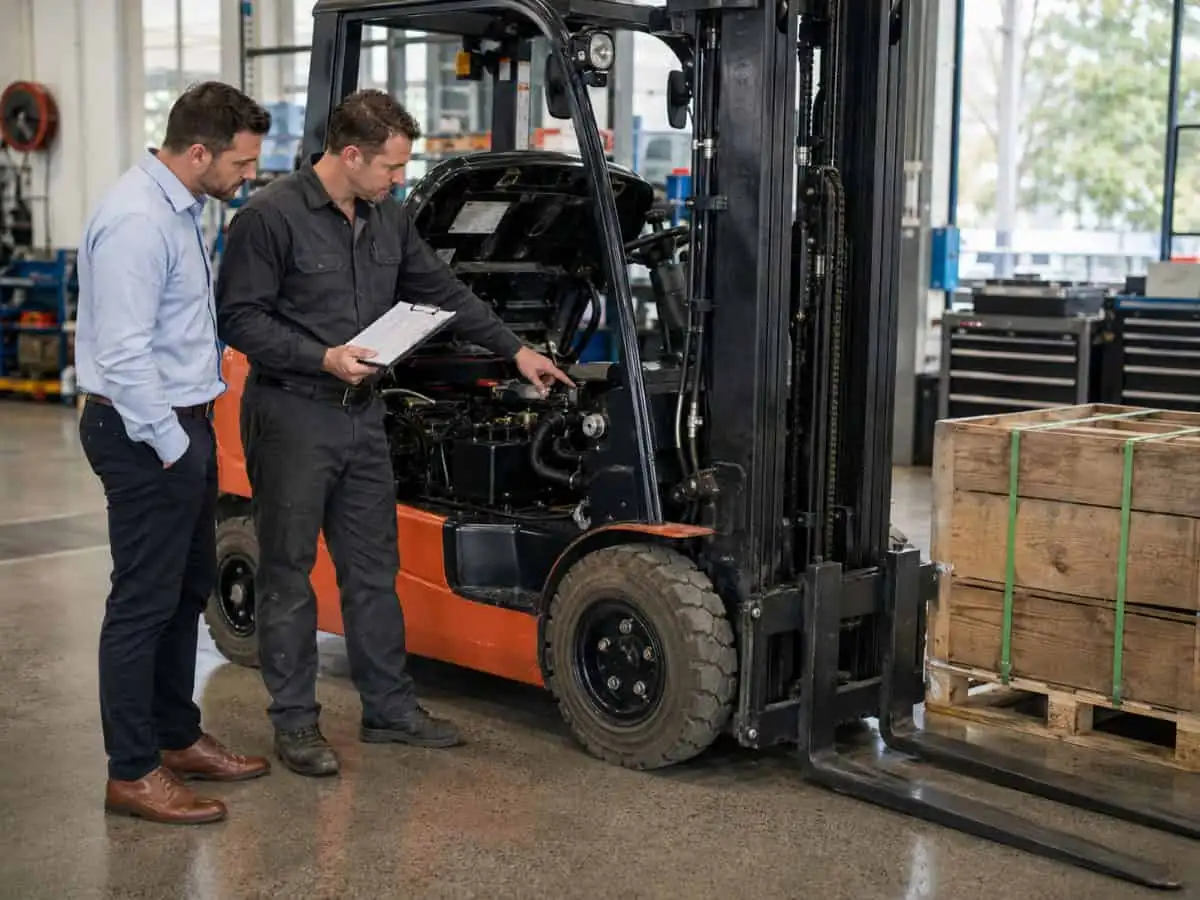
A structured inspection reduces uncertainty and helps the buyer compare the complete cost rather than the advertised price.
1. Confirm the Required Specification
Record:
- Maximum load weight
- Load dimensions
- Load centre
- Required lift height
- Aisle width
- Door clearance
- Surface
- Indoor or outdoor use
- Daily operating hours
- Attachments
Do not allow available stock to redefine the task.
2. Verify the Machine’s Identity
Check:
- Manufacturer
- Model
- Serial number
- Year
- Capacity plate
- Mast
- Tyres
- Attachments
- Charger where applicable
The capacity plate must match the actual configuration.
3. Review Operating Hours
Hours provide context, not a complete verdict.
Compare the hour reading with:
- Seat and pedal wear
- Control condition
- Service history
- Previous shift pattern
- Engine or battery condition
- Major repair records
4. Check the Service History
Look for evidence of:
- Scheduled servicing
- Fluid and filter changes
- Brake work
- Mast and chain maintenance
- Hydraulic repairs
- Battery servicing
- Major engine or transmission repairs
- Safety inspections
5. Inspect Major Components
Check the:
- Forks
- Mast
- Lift chains
- Carriage
- Hydraulic hoses
- Cylinders
- Tyres
- Wheels
- Brakes
- Steering
- Seat and restraint
- Warning devices
- Overhead guard
- Chassis
- Engine, transmission or battery
6. Test the Forklift Under Load
A forklift may travel normally without a load but show faults during lifting.
The test should confirm:
- Smooth lifting
- Controlled lowering
- Load holding
- Mast operation
- Steering
- Braking
- Direction changes
- Transmission response
- Battery performance
- Warning systems
7. Review Dealer Preparation
Ask what has been completed before sale, including:
- Inspection
- Basic service
- Repairs
- Tyres
- Battery testing
- Cleaning
- Safety checks
- Loaded testing
Work Safe Victoria advises that the same suitability assessment used for new equipment should also apply to second-hand forklifts. The forklift should suit the load, site conditions, operator and identified workplace risks.
8. Confirm Warranty and Support
Request written confirmation of:
- Warranty
- Service inclusion
- Delivery
- Battery and charger
- Attachments
- Repair responsibilities
- Parts availability
- Trade-in terms
Suppliers of second-hand plant also have duties concerning information about faults and the plant’s condition. (Safe Work Australia)
Businesses can review pre-owned forklifts in Melbourne or contact Buy A Fork to discuss available equipment and inspection requirements.
New Forklift Advantages Worth Paying For
A new forklift is often worth the additional cost when the business needs high utilisation, precise configuration and minimal early uncertainty.
1. Full Warranty Coverage
A manufacturer warranty can improve budgeting during the initial ownership period. Buyers must still understand:
- Covered components
- Service obligations
- Operating exclusions
- Battery coverage
- Labour
- Travel
- Claim procedures
2. Exact Specification
New equipment may be configured with the required:
- Capacity
- Mast
- Lift height
- Fork length
- Attachments
- Tyres
- Battery
- Cabin
- Warning systems
- Telematics
This can be valuable in specialised operations where a near-match is not sufficient.
3. Latest Safety and Efficiency Features
Current models may include improved:
- Visibility
- Operator-presence systems
- Stability controls
- Speed management
- Pedestrian detection
- Battery systems
- Energy management
- Diagnostic tools
- Fleet reporting
WorkSafe Victoria recommends ensuring a purchased or hired forklift includes required safety features and suits the load, site and operator.
4. No Unknown Operating History
The buyer controls servicing, operators and application from the first day. This removes uncertainty about previous overloading, impacts, poor charging or missed maintenance.
5. Lower Early Repair Exposure
Unexpected repairs are generally less likely during the early life of correctly maintained new equipment. This may be important when the forklift is central to production or dispatch.
Buyers can compare new and used counterbalance forklifts or review electric forklifts for indoor operations.
Finance and Tax for Used and New Forklifts
Both new and used forklifts may be eligible for business equipment finance, subject to the lender, applicant and equipment.
Common structures may include:
- Chattel mortgage
- Equipment loan
- Commercial hire purchase
- Lease arrangements
- Low-documentation finance for eligible applicants
Compare:
- Deposit
- Interest rate
- Fees
- Repayment term
- Balloon or residual payment
- Total financed cost
- Security
- Early payout terms
- Tax treatment
Businesses can explore options to finance a new or used forklift, but approval and terms vary.
Instant Asset Write-Off and Depreciation
Australian tax treatment depends on the business, asset cost, turnover, purchase date and the income year in which the forklift is first used or installed ready for use.
The ATO confirms that eligible instant asset write-off arrangements can apply to both new and second-hand assets, but eligibility and limits have changed over time. Businesses should check the current rules for the relevant income year rather than relying on an older threshold. (Australian Taxation Office)
A forklift costing more than the applicable immediate deduction limit may still be depreciated under the relevant tax rules. Obtain advice from a qualified accountant before treating a purchase as tax-deductible or selecting finance based on an expected deduction.
Tax benefits should support a sound equipment decision, not justify buying a machine that does not suit the workplace.
Frequently Asked Questions
1. Is It Better to Buy a Used or New Forklift?
Buy used when budget, faster availability and lower depreciation matter most and a properly inspected machine suits the task. Buy new when utilisation is high, an exact specification is needed or full manufacturer warranty and current technology justify the additional cost.
2. Are Used Forklifts Reliable?
Used forklifts can be reliable when they have been maintained correctly, inspected professionally and matched to the application. Review service history, hours, mast, hydraulics, tyres, brakes, power system and loaded performance before purchase.
3. Do Used Forklifts Come With a Warranty?
Some dealer-sold used forklifts include warranty coverage, but the duration, components and exclusions vary. Private sales may offer no meaningful warranty. Request written terms covering parts, labour, batteries, travel and claims.
4. How Much Do You Save Buying a Used Forklift?
Savings vary by age, model, hours, condition and specification. Compare equivalent machines rather than relying on a general percentage. Include immediate repairs, tyres, battery condition, servicing, delivery, finance and resale when calculating the real saving.
5. How Many Hours Is High for a Used Forklift?
There is no universal maximum. Hours must be assessed alongside duty cycle, service history, operating environment and component condition. A maintained higher-hour forklift may be a better purchase than a lower-hour machine with poor records or demanding previous use.
6. Do Used Forklifts Hold Their Value?
A well-maintained forklift from a recognised brand can retain useful resale value. Demand is influenced by capacity, power type, mast, hours, service history, battery or engine condition and parts availability.
7. Can You Finance a Used Forklift Like a New One?
Used forklifts can often be financed, subject to lender criteria, equipment age, condition and the applicant’s financial position. Rates, deposits and loan terms may differ from new-equipment finance, so compare the complete repayment cost.
Conclusion
The used vs new forklift decision should be based on utilisation, specification, condition and complete ownership cost. Used equipment often suits budget-conscious businesses, moderate workloads and buyers wanting to limit depreciation. New forklifts are stronger candidates for intensive operations, exact configurations and warranty-critical applications.
Do not reject a pre-owned forklift because of its age alone, and do not assume a new machine automatically provides better value. Inspect the equipment, calculate service, energy, tyre and downtime costs, then compare the expected resale position.
Businesses can browse Buy A Fork’s new and used forklift range or contact the team to compare suitable machines, warranty options and finance.