
Best Used Forklifts Under $15,000 in Australia
· Updated
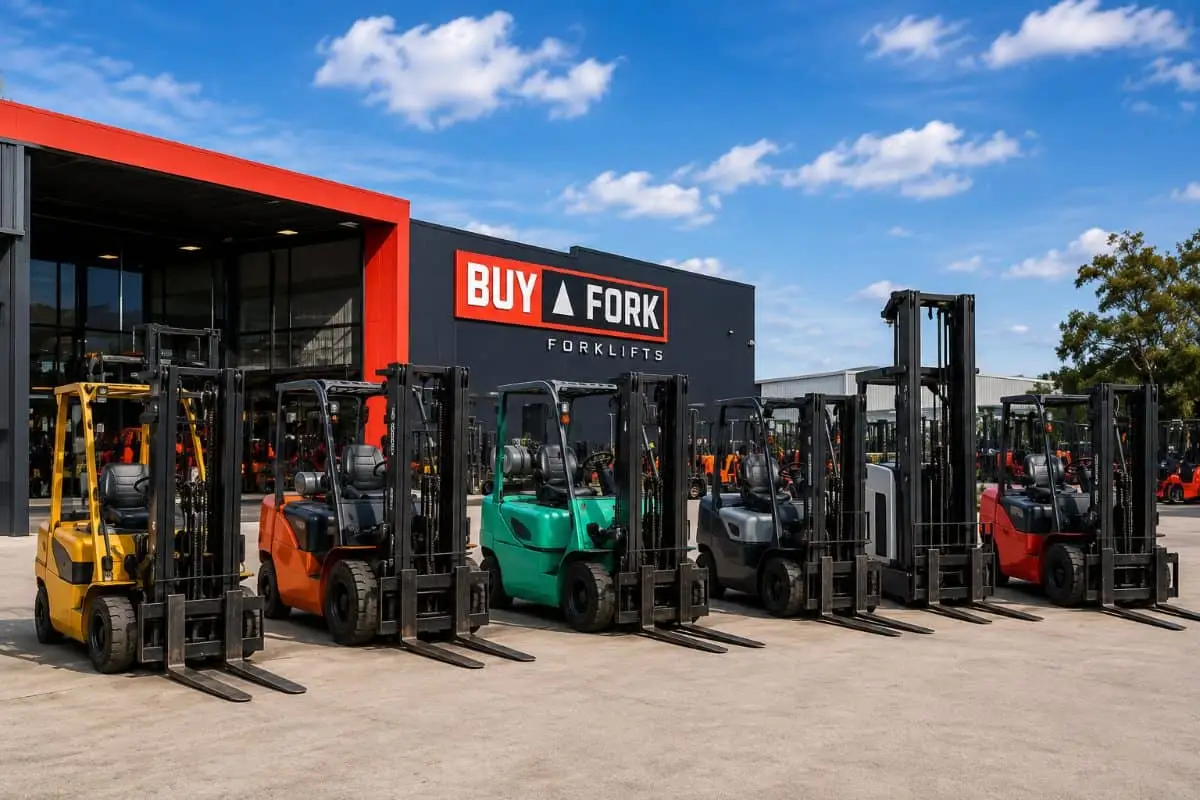
A budget of $15,000 can buy a capable used forklift for light to medium warehouse, workshop, trade or yard work. The most realistic options are older LPG counterbalance forklifts, compact electric counterbalances, pallet-handling equipment and selected walkie stackers.
At this price, buyers should expect trade-offs in age, operating hours, appearance or mast configuration. The goal is not to find the newest forklift available. It is to find a properly inspected machine with the right capacity, a documented service history and no expensive faults waiting to appear.
This guide explains what used forklifts under $15,000 can realistically offer, which types provide the strongest value and what to inspect before committing your budget.
What Can You Buy for Under $15,000?
For under $15,000, buyers can generally find older used forklifts in approximately the 1.0 to 2.5-tonne capacity classes. Common options include LPG counterbalance forklifts for general handling, compact electric models for indoor work and smaller pallet-handling machines.
Machines within this price range are often around eight to fifteen years old, although older and newer examples can appear. Operating hours may range from several thousand to well above 10,000 depending on the previous duty cycle, maintenance and type of equipment.
Price alone does not reveal condition. A high-hour forklift with complete maintenance records may be a safer purchase than a low-hour machine that has been neglected, stored poorly or used in a demanding environment.
Your $15,000 budget may realistically cover:
- Older LPG counterbalance forklifts: Often suitable for pallet handling, loading vehicles and mixed indoor-outdoor work where ventilation is appropriate.
- Compact electric counterbalance forklifts: Commonly suited to warehouses, workshops and enclosed facilities.
- Electric pallet jacks: Suitable for moving palletised goods at floor level.
- Walkie stackers: Useful for occasional pallet stacking and smaller storage operations.
- Older stand-up counterbalance machines: Suitable for compact warehouse layouts and container-entry applications.
- Selected diesel forklifts: Possible at this budget, although condition, age and outdoor suitability require careful review.
A buyer working with a lower ceiling can also compare what you can buy under $10,000 before deciding whether the additional budget delivers worthwhile capacity, condition or mast improvements.
Best Used Forklifts Under $15,000
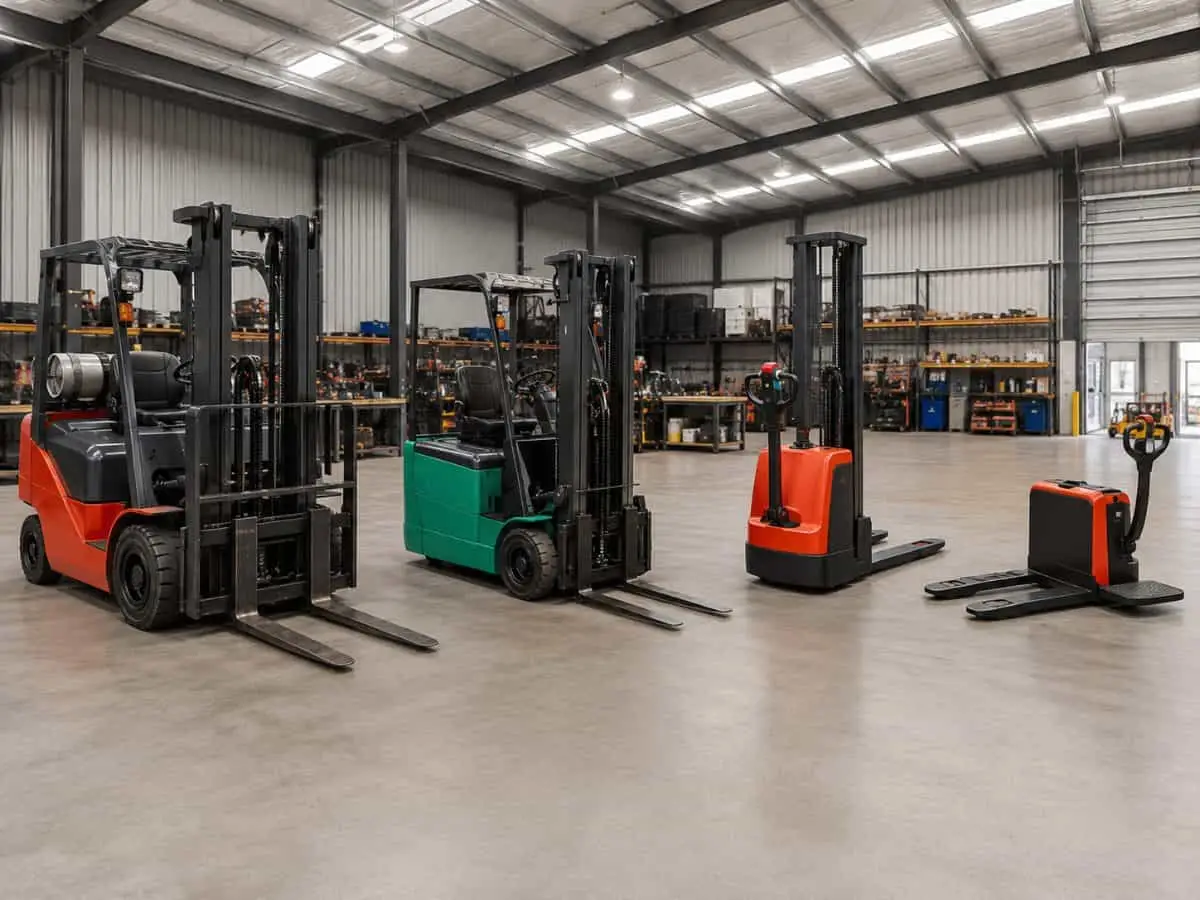
The best choice depends on the load, working environment and number of hours the machine must operate. A cheap used forklift in Australia only represents value when it is suitable for the actual task.
| Forklift Type | Typical Capacity at This Budget | Typical Use | What to Expect Under $15,000 |
|---|---|---|---|
| LPG counterbalance forklift | Around 1.5 to 2.5 tonnes | General warehousing, loading, workshops and mixed environments | Older established-brand machine with practical capacity and conventional controls |
| Electric counterbalance forklift | Around 1.0 to 1.8 tonnes | Indoor warehouses, manufacturing and clean operations | Compact older model; battery condition is a major buying factor |
| Stand-up electric counterbalance | Around 1.2 to 1.8 tonnes | Tight aisles, loading docks and container-entry work | Older specialised machine that may offer strong manoeuvrability |
| Walkie stacker | Around 1.0 to 1.5 tonnes | Light stacking, small warehouses and occasional use | Simpler equipment with lower lift and travel capability than a full forklift |
| Electric pallet jack | Around 1.5 to 2.5 tonnes | Ground-level pallet movement | Affordable material-handling option but cannot replace a forklift for high stacking |
| Reach or compact warehouse forklift | Around 1.2 to 1.8 tonnes | Racking and narrow warehouse aisles | Older units may be available, but battery, mast and electronic condition need close inspection |
| Diesel counterbalance forklift | Around 1.5 to 2.5 tonnes | Outdoor yards, farms and trade businesses | Older machine, potentially with higher hours and greater engine-maintenance needs |
These are broad buying ranges rather than guarantees. Capacity, age, mast height, battery condition and current availability change from one machine to another.
The best approach is to browse the full used range and compare the available machines against your load and operating requirements.
LPG Counterbalance Forklifts
An LPG counterbalance forklift is often one of the strongest all-round choices below $15,000. It can handle common palletised loads, refuel quickly and work across covered loading areas and outdoor spaces.
LPG models may suit:
- Small warehouses
- Mechanical workshops
- Trade suppliers
- Manufacturing businesses
- Loading and unloading vehicles
- Businesses with mixed indoor and outdoor work
Indoor use requires appropriate ventilation and site controls. An LPG forklift should not be treated as an emission-free machine.
Electric Counterbalance Forklifts
A compact electric counterbalance forklift may suit buyers who work primarily indoors and do not require a large-capacity machine.
The purchase decision should include the battery and charger. A forklift priced comfortably below budget may become expensive if it immediately needs a replacement battery, charger repairs or electrical work.
Electric models may suit:
- Indoor warehouses
- Food and packaged-goods operations
- Small manufacturing sites
- Enclosed workshops
- Businesses wanting quieter equipment
- Operations with an existing charging area
The used electric forklift buying guide explains the battery, charger and electrical checks that should be completed before purchase.
Walkie Stackers
A walkie stacker can provide good value when the business needs to raise pallets but does not require the travel speed, capacity or versatility of a seated counterbalance forklift.
Stackers are commonly used for:
- Occasional pallet stacking
- Small storage rooms
- Light warehouse work
- Loading areas with limited space
- Businesses transitioning from manual pallet handling
Check the maximum lift height, rated capacity at height and floor condition. A stacker that meets the pallet weight but cannot reach the required racking level is not a suitable purchase.
Electric Pallet Jacks
An electric pallet jack is one of the most affordable powered material-handling options. It can move palletised goods efficiently across a warehouse floor but cannot place pallets into elevated racking.
This equipment may be enough for businesses that only need to:
- Move pallets between work areas
- Load or unload suitable vehicles
- Transfer stock across a warehouse
- Reduce manual pallet-jack handling
- Support a larger forklift fleet
Do not buy a pallet jack simply because it is cheaper if the business also needs stacking or outdoor operation.
Reach and Stand-Up Warehouse Forklifts
Older reach trucks and stand-up counterbalance forklifts may occasionally fall within the budget. These machines can offer excellent manoeuvrability in warehouse applications, but their specialised components require careful inspection.
Check the:
- Battery and charger
- Reach mechanism
- Mast rollers
- Lift chains
- Electronic controls
- Steering system
- Operator platform
- Load wheels
- Side-shift function
A low purchase price can quickly lose its appeal if a specialised electrical or mast repair is required.
Best Counterbalance Picks Under $15,000
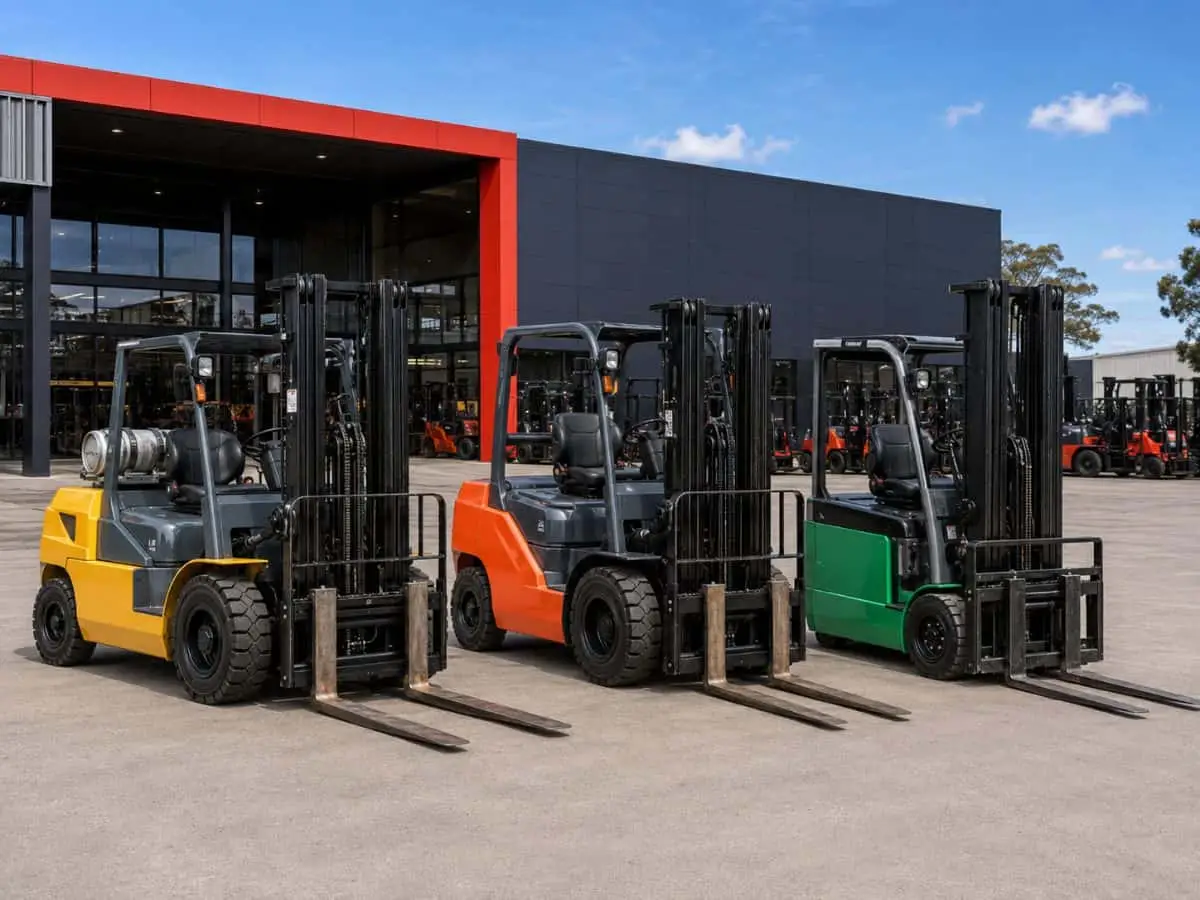
Counterbalance forklifts remain the most versatile choice for many buyers because they can travel, lift, stack and load without requiring specialised racking layouts.
Buyers can compare current used counterbalance forklifts by power source, capacity and mast configuration.
1. Toyota Counterbalance Forklifts
Toyota is widely recognised in the Australian used-forklift market. Older Toyota forklifts often remain desirable because of their familiar operation, established service network and resale appeal.
A Toyota below $15,000 may be older or have higher hours than a similarly priced machine from another manufacturer. Buyers should decide whether the brand premium is justified by condition and service history.
2. Crown Counterbalance Forklifts
Crown is well known for warehouse equipment and electric material-handling machines. Used Crown counterbalance forklifts can provide solid value when the mast, transmission, hydraulics and electrical systems have been maintained.
Check that local technicians can service the exact model and that required parts remain available.
3. Clark Counterbalance Forklifts
Clark has a long history in counterbalance forklift manufacturing. Used Clark LPG machines may offer practical load capacity and mast configurations at a competitive price.
Condition should remain the priority. Check steering play, transmission response, mast wear, brakes and evidence of regular servicing.
4 Mitsubishi Counterbalance Forklifts
Mitsubishi counterbalance forklifts are commonly used across warehousing, manufacturing and industrial applications. Older LPG and electric models may offer a useful balance between purchase price and capability.
Review parts access, service records and the condition of the engine or battery system before purchase.
5. Komatsu Electric Forklifts
Compact Komatsu electric forklifts may suit light warehouse and workshop applications. They can provide quiet indoor operation and straightforward pallet handling.
Battery age is especially important. The machine itself may be mechanically sound while the battery has limited capacity remaining.
6. Nissan Counterbalance Forklifts
Older Nissan LPG or diesel forklifts can appeal to budget buyers seeking conventional controls and practical industrial equipment.
Diesel models should generally be considered for outdoor use. LPG may provide more flexibility for businesses moving between open and covered areas.
6. Hyster Counterbalance Forklifts
Hyster produces forklifts for warehouse and industrial applications. Used machines can offer sturdy construction, but buyers should assess how heavily the forklift was used in its previous workplace.
A machine from a demanding yard or manufacturing environment may have more wear than one of a similar age used for light indoor pallet movement.
Brand should be one part of the decision, not the whole decision. The most reliable purchase is usually the machine with the correct specifications, verified service history and strongest current condition. Buyers comparing several manufacturers can review more affordable, reliable forklift options.
What Moves the Price Within Your Budget?
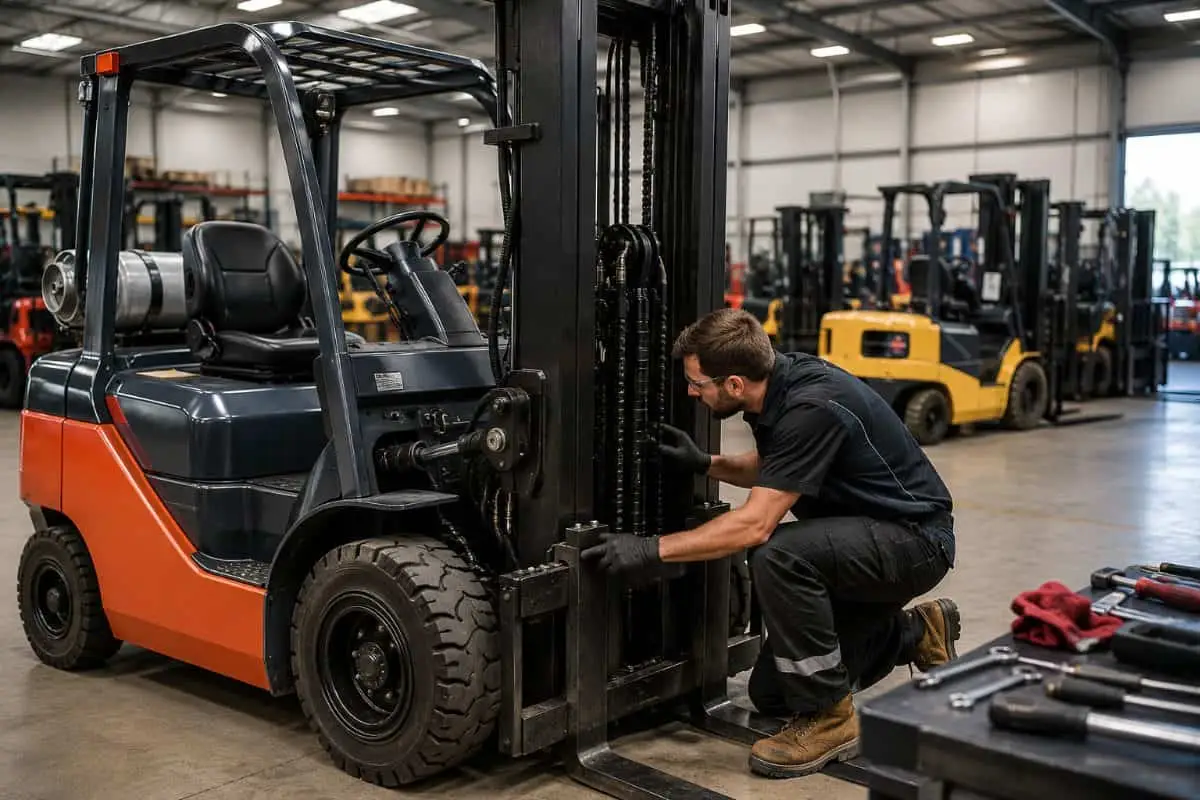
Two forklifts with the same rated capacity can have very different prices. The difference may reflect age, condition, hours, mast configuration, fuel type or recent refurbishment.
Operating Hours
The hour meter provides useful context but should not be treated like a car odometer.
Forklift hours need to be considered alongside:
- Duty cycle
- Previous environment
- Service frequency
- Load type
- Operator behaviour
- Time spent idling
- Major component replacement
- Accuracy of the hour meter
A high-hour forklift with complete records may be more dependable than a low-hour machine with missing history.
Age
Newer machines often cost more, but age alone does not determine reliability. A well-maintained older forklift may still have substantial working life.
Age becomes more important when:
- Electronic components are obsolete
- Model-specific parts are difficult to obtain
- The battery is near the end of its life
- Safety equipment has been damaged
- Service documentation is unavailable
Mast Type and Lift Height
A triplex or container-entry mast may cost more than a basic standard mast because it can provide greater lift or pass through restricted overhead spaces.
Confirm:
- Required maximum lift height
- Lowered mast height
- Free-lift requirement
- Doorway clearance
- Container-entry requirement
- Racking beam heights
- Residual capacity at height
Do not pay extra for a specialised mast that the operation does not need.
Tyres
Tyre condition can affect the purchase price and immediate ownership cost. Forklift tyres are expensive, particularly when several require replacement at the same time.
Check for:
- Chunking
- Flat spots
- Cracks
- Uneven wear
- Tyres worn to the safety line
- Damage from sharp surfaces
- Incorrect tyre types for the application
Fuel Type
LPG, diesel and electric forklifts have different pricing patterns.
An older LPG forklift may deliver more capacity for the budget. An electric forklift may have fewer engine-related service items, but the condition of its battery can significantly affect value. Diesel forklifts may be affordable when older, but repairs to the engine, cooling or fuel system can increase ownership costs.
Battery Condition
For an electric forklift, the battery may represent a substantial part of the machine’s value.
Ask for:
- Battery age
- Battery capacity test
- Charging history
- Watering and maintenance records
- Charger details
- Signs of corrosion
- Damaged cells or connectors
- Expected operating time per charge
Brand and Parts Availability
Recognised brands may cost more because buyers expect stronger resale demand, parts access or service support.
A less expensive brand can still be worthwhile when local technicians can maintain it and replacement parts are readily available.
Attachments
Side shift, fork positioners, clamps and other attachments can add value. They can also affect capacity and introduce additional hydraulic components that need inspection.
The forklift’s capacity plate should reflect the fitted attachment.
| Price Driver | Likely Effect on Price | What the Buyer Should Check |
|---|---|---|
| Lower operating hours | May increase price | Confirm hour-meter accuracy and service history |
| Newer manufacturing year | Usually increases price | Compare condition rather than age alone |
| Container-entry or triplex mast | May increase price | Confirm the added lift or clearance is required |
| Good tyres | Supports a higher price | Estimate immediate replacement costs |
| Healthy electric battery | Can significantly increase value | Request a battery test and charger check |
| Recognised brand | May carry a premium | Compare parts access, support and resale |
| Useful attachment | May increase price | Check operation and revised capacity plate |
| Documented service history | Supports buyer confidence | Review invoices, inspections and repair records |
New vs Used at This Price
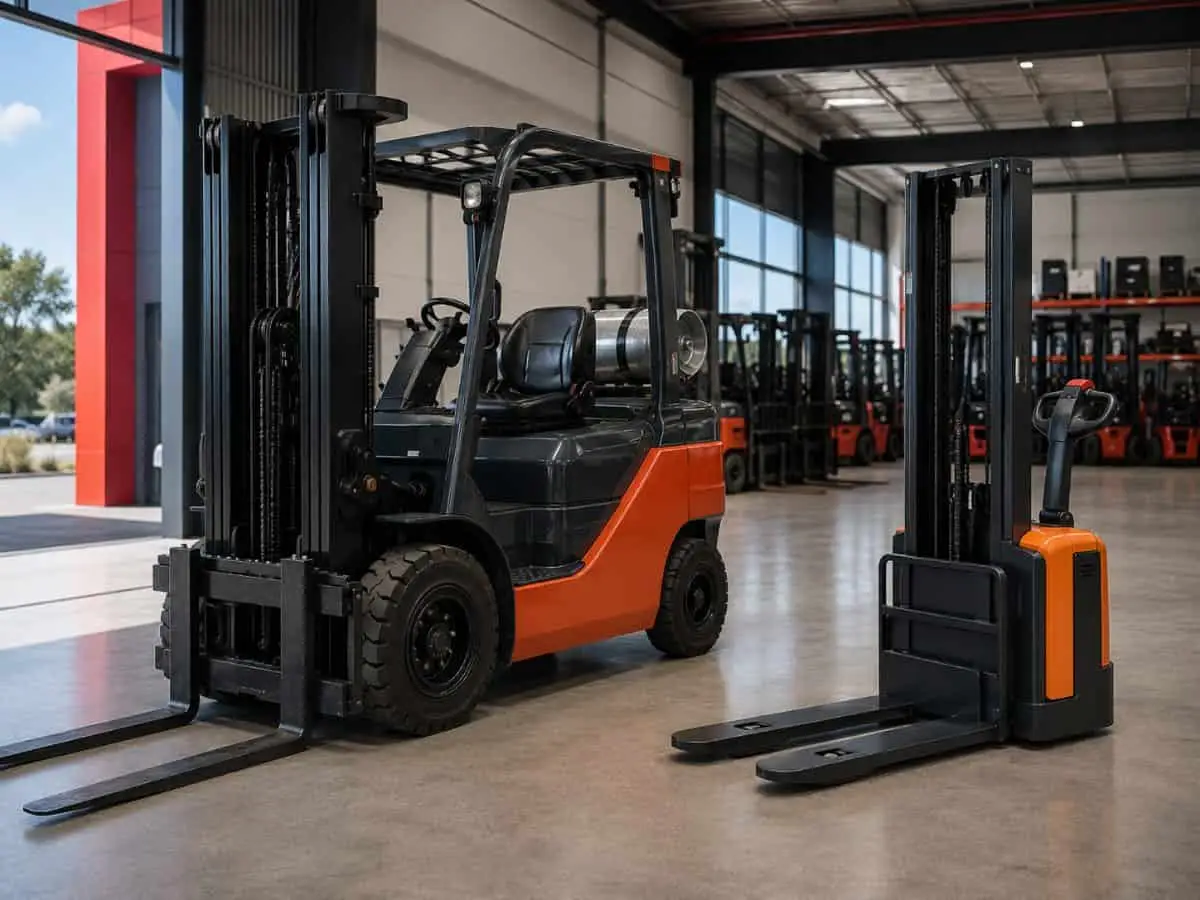
At approximately $15,000, a used machine can provide greater capacity and capability than many new entry-level material-handling options.
| Buying Factor | Used Equipment at $15,000 | New Equipment at $15,000 |
|---|---|---|
| Equipment type | May include a full counterbalance forklift | More likely to include a pallet jack, stacker or basic light-duty unit |
| Capacity | May offer practical general-purpose capacity | May be limited by size and equipment category |
| Brand | Established industrial brands may be available | Budget or entry-level brands may be more common |
| Condition | Requires inspection and service-history review | New condition with no previous operating wear |
| Warranty | Depends on seller and purchase terms | Manufacturer warranty may apply |
| Technology | Older controls and battery systems | Newer controls and current technology |
| Immediate repairs | Possible depending on condition | Less likely during early ownership |
| Depreciation | Much of the initial depreciation has already occurred | Greater early depreciation may apply |
| Suitability | May offer more machine for the money | May force a compromise on capacity or capability |
Used equipment is often the stronger choice when the business needs a full-sized forklift but has a limited budget.
New equipment may be more suitable when:
- The required task is light
- A pallet jack or stacker is sufficient
- The business prioritises a manufacturer warranty
- The equipment will be used infrequently
- The buyer wants current technology
- Long-term ownership is planned
The correct choice depends on the job. The differences are covered further in used vs new forklifts compared.
How to Inspect a Used Forklift Before You Buy
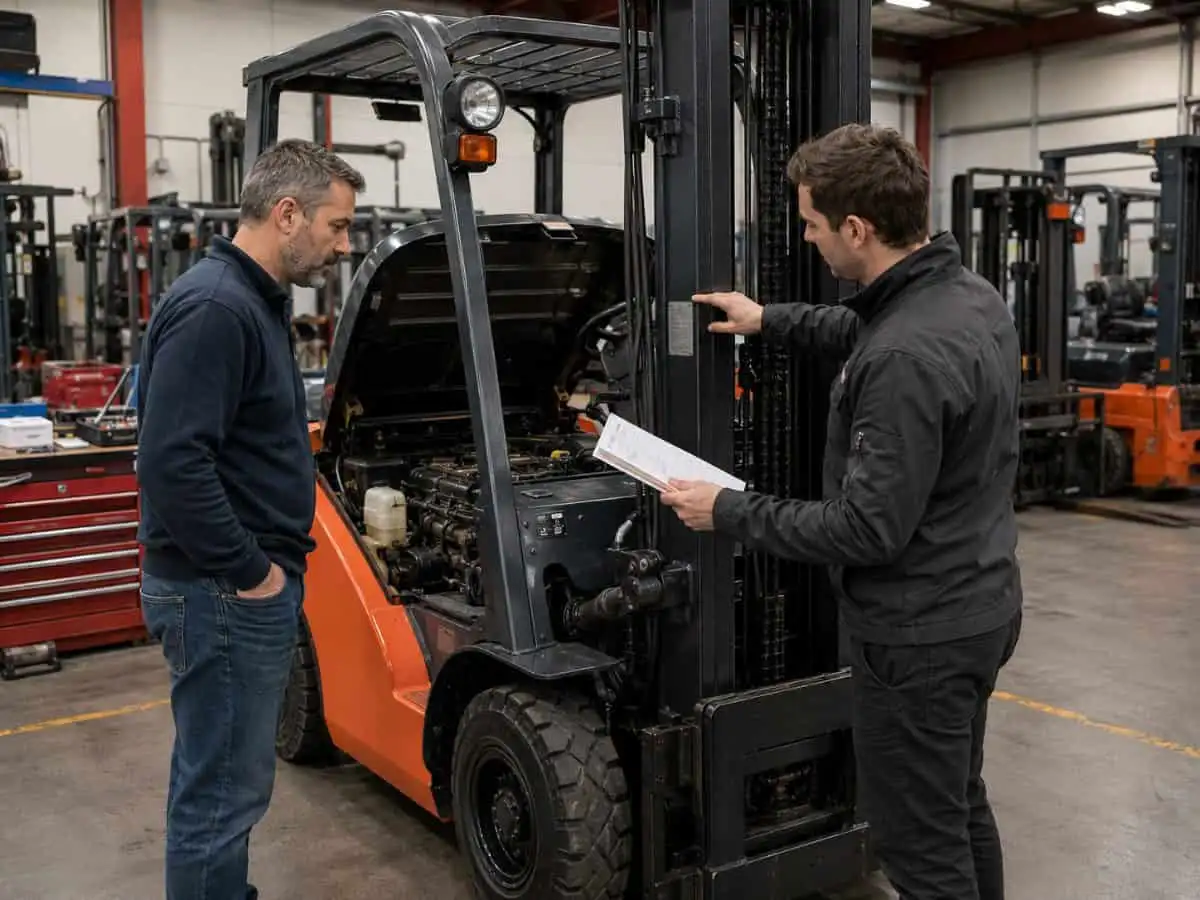
A pre-purchase inspection protects the budget from hidden repairs and unsuitable equipment.
1. Confirm the Model and Capacity
Record the:
- Manufacturer
- Model
- Serial number
- Manufacturing year
- Rated capacity
- Load centre
- Mast type
- Maximum lift height
- Fitted attachments
Check the capacity plate and make sure it is readable. Do not rely only on a seller’s description.
2. Review the Hour Meter
Check whether the displayed hours appear consistent with the wear on the seat, pedals, steering wheel and controls.
An unusually low hour reading on a heavily worn machine deserves further investigation.
3. Request Service Records
Look for evidence of:
- Scheduled servicing
- Fluid and filter changes
- Brake repairs
- Hydraulic work
- Mast and chain maintenance
- Battery servicing
- Major engine or transmission repairs
- Safety inspections
Missing records do not automatically make the forklift unsuitable, but they increase uncertainty.
4. Inspect the Forks
Check for:
- Cracks
- Bent blades
- Uneven fork height
- Worn fork heels
- Damaged locking pins
- Mismatched forks
- Unauthorised welding or repairs
Damaged forks should be assessed professionally.
5. Inspect the Mast and Chains
Raise and lower the mast while listening for unusual noise and watching for uneven movement.
Check:
- Mast channels
- Rollers
- Lift chains
- Carriage
- Hydraulic cylinders
- Hose routing
- Side-shift operation
- Excessive movement or binding
6. Check for Leaks
Inspect beneath and around the forklift for:
- Hydraulic oil
- Engine oil
- Coolant
- Transmission fluid
- Fuel
- Battery electrolyte
Fresh cleaning can temporarily hide a leak. Operate the forklift, then inspect it again.
7. Assess the Tyres and Wheels
Check tyre wear, wheel damage and missing or loose wheel nuts. Uneven tyre wear may indicate alignment, steering or axle problems.
8. Test the Steering and Brakes
The forklift should steer smoothly without excessive play, binding or unusual noise.
Test the:
- Service brake
- Parking brake
- Steering response
- Direction controls
- Accelerator
- Travel controls
Testing should take place in a controlled area.
9. Inspect the Engine or Battery
For LPG and diesel forklifts, check:
- Starting performance
- Exhaust smoke
- Engine noise
- Cooling system
- Fluid condition
- Fuel-system leaks
- Transmission response
For electric forklifts, check:
- Battery condition
- Charger compatibility
- Connectors
- Cables
- Corrosion
- Fault codes
- Drive performance
- Battery runtime
10. Complete a Test Lift
Test the forklift with a suitable load. A machine may operate normally without weight but show hydraulic, mast or drive problems under load.
Check that it can:
- Lift smoothly
- Hold the load without drifting
- Tilt correctly
- Travel under load
- Brake predictably
- Operate without warning lights or unusual sounds
Buy A Fork’s 14-step used forklift inspection provides a more detailed pre-purchase process.
LPG, Electric or Diesel on a Budget?
The right power type depends on the workplace rather than price alone.
| Power Type | Main Budget Advantage | Main Cost Risk | Best Suited To |
|---|---|---|---|
| LPG | Practical capacity and fast refuelling | Engine servicing and ongoing fuel costs | Mixed indoor and outdoor work with suitable ventilation |
| Electric | Quiet operation and no tailpipe emissions | Battery and charger replacement | Indoor warehouses and manufacturing |
| Diesel | Strong outdoor performance | Engine, cooling and fuel-system repairs | Yards, farms and outdoor industrial work |
LPG Forklifts
LPG is often the most versatile counterbalance option within a $15,000 budget. It can work for long periods with quick cylinder changes and may provide more capacity than a similarly priced electric machine.
Consider:
- Fuel availability
- Ventilation
- Engine condition
- Cooling-system condition
- LPG system inspection
- Indoor-air requirements
Electric Forklifts
Electric equipment may reduce engine-related maintenance and suit enclosed workplaces.
Budget for:
- Battery testing
- Charger installation
- Charging time
- Electrical supply
- Battery replacement
- Suitable charging space
A low-cost electric forklift with a weak battery may be more expensive overall than a higher-priced machine with a healthy battery.
Diesel Forklifts
Diesel forklifts are generally better suited to outdoor use. They may suit farms, building-material yards and trade businesses operating on open sites.
Check:
- Cold starting
- Exhaust smoke
- Cooling system
- Engine oil
- Fuel leaks
- Transmission performance
- Tyres and ground clearance
Older diesel equipment should not be selected for enclosed indoor work simply because its purchase price is attractive.
Buying With Confidence
Buying from a forklift dealer can provide more protection than purchasing an uninspected private machine.
Warranty
Ask what the warranty covers, how long it lasts and what exclusions apply. A warranty may cover specific components rather than every fault.
Request the warranty terms in writing before purchase.
Service Support
Confirm that the seller can service the machine after delivery and source the required parts. Local support becomes especially important when the forklift is essential to daily operations.
Eligible Buy A Fork purchases may include a free six-month basic service, subject to the applicable terms and conditions. Confirm the exact inclusion for the selected machine before purchasing.
Trade-Ins
A trade-in can reduce the amount that needs to be paid upfront and remove the difficulty of selling an existing forklift privately.
Provide accurate details about the old machine, including:
- Model
- Year
- Hours
- Capacity
- Fuel type
- Mast
- Condition
- Known faults
- Service history
Delivery
Forklift transport requires suitable equipment and planning. Confirm whether delivery is included, the delivery area and any access restrictions at the destination.
The site should have enough space for unloading and a suitable surface for the forklift.
Finance
A machine slightly above the original budget may provide better value if it has lower hours, a healthier battery, stronger service support or the exact mast needed.
Businesses that prefer to preserve working capital may be able to finance a used forklift rather than choosing an unsuitable machine based only on the upfront price.
Before signing, confirm:
- Purchase price
- GST treatment
- Warranty
- Service inclusion
- Delivery
- Finance costs
- Battery and charger inclusion
- Attachments
- Trade-in value
- Repair responsibilities
- Terms and conditions
FAQ
1. How Much Does a Used Forklift Cost in Australia?
Used forklift prices in Australia vary according to capacity, age, hours, fuel type, mast, battery condition and brand. Basic pallet-handling equipment may cost several thousand dollars, while newer counterbalance and reach forklifts can cost well above $20,000. A $15,000 budget generally targets older light to medium-capacity equipment.
2. What Can You Get for Under $15,000?
Under $15,000, buyers can commonly consider older LPG counterbalance forklifts, compact electric counterbalances, electric pallet jacks and walkie stackers. Capacity is often around 1.0 to 2.5 tonnes, depending on equipment type. Exact age, hours and specifications vary with available stock.
3. Is a Used Forklift Worth It?
A used forklift can be worthwhile when it is properly inspected, correctly sized and supported by service records. It can provide more capacity and capability than new entry-level equipment at the same price. A neglected or unsuitable used forklift can create high repair costs, so condition matters more than the initial saving.
4. How Many Hours Is Too Many on a Used Forklift?
There is no universal hour limit. Forklift life depends on duty cycle, maintenance, environment and equipment type. A machine with more than 10,000 hours may still be serviceable if it has been maintained properly. Hours should be assessed alongside service records, component condition and a test under load.
5. What Is the Cheapest Reliable Forklift Brand?
There is no single cheapest reliable brand. Toyota, Crown, Clark, Mitsubishi, Komatsu, Nissan and Hyster all have used models worth considering. The best value depends on current condition, service history, parts availability and suitability for the job rather than the badge alone.
6. Should I Buy LPG or Electric Under $15,000?
Choose LPG when you need quick refuelling, general counterbalance capability and mixed indoor-outdoor use with suitable ventilation. Choose electric for enclosed warehouses, quiet operation and no tailpipe emissions. Electric buyers must include battery and charger condition in the budget.
7. Do Used Forklifts Come With a Warranty?
Some dealer-sold used forklifts include a warranty, while private sales may not. Coverage, duration and exclusions vary. Ask for the warranty terms in writing and confirm whether labour, parts, transport and major components are covered.
Conclusion
Used forklifts under $15,000 can provide strong value when capacity, condition and application are assessed carefully. Focus on the service history, mast, tyres, hydraulics, power system and test-lift performance rather than age or brand alone. Compare the complete ownership cost, including transport, servicing and battery needs, then choose the machine that can safely perform the required work without stretching beyond its rated limits.