
How Long Do Forklifts Last? Lifespan by Hours and Care
· Updated
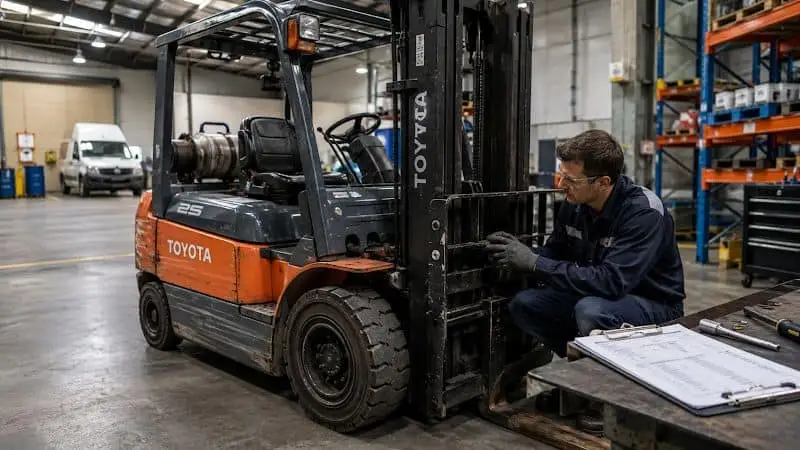
Most forklifts reach an important repair-or-replace decision point at around 8,000 to 12,000 operating hours, but this is an economic planning range rather than a fixed expiry date.
Toyota Material Handling states that many forklifts need replacement at around 10,000 hours, with some demanding applications reaching that point at 8,000 hours or less. Australian material-handling guidance also commonly places average forklift life around 10,000 to 12,000 hours.
A clean electric forklift with strong maintenance records may remain productive beyond 10,000 hours. A poorly maintained LPG or diesel forklift may become uneconomical much earlier.
The hour meter matters, but it should always be considered alongside:
- Maintenance history
- Fuel or power type
- Operating environment
- Load intensity
- Shift pattern
- Operator behaviour
- Battery condition
- Parts availability
- Current repair costs
How Long Do Forklifts Last?
A practical lifespan benchmark for many forklifts is approximately 8,000 to 12,000 operating hours before maintenance costs, downtime and major component wear begin to influence replacement decisions.
That does not mean a forklift automatically becomes unsafe or unusable at 10,000 hours. Toyota distinguishes between a forklift’s useful life and its economic life:
- Useful life: How long the machine can physically continue operating and being repaired.
- Economic life: How long it remains financially sensible to maintain instead of replacing.
A forklift may still operate at 15,000 hours but be past its economic life if repair bills and downtime are affecting productivity. Another machine may remain cost-effective at the same hours because it has worked in a clean warehouse and received consistent servicing.
Forklift Lifespan by Power Type
The table below is a buying and replacement-planning guide, not a manufacturer guarantee. Actual lifespan depends heavily on the application.
| Forklift type | Practical hour-based planning guide | What commonly determines its lifespan |
|---|---|---|
| Electric forklift | Around 10,000 hours and potentially beyond with good care | Battery condition, drive motors, controllers, wiring, mast wear and charging practices |
| LPG forklift | Review economic viability closely from about 8,000 to 10,000 hours | Engine wear, transmission, cooling system, LPG system, hydraulics and maintenance history |
| Diesel forklift | Review economic viability closely from about 8,000 to 12,000 hours | Engine, transmission, cooling system, hydraulics and severity of outdoor work |
| Electric reach truck | Often assessed around the same 8,000 to 12,000-hour planning window | Traction battery, mast rollers, reach carriage, steering electronics and load wheels |
| Heavy-duty forklift | May exceed normal counterbalance benchmarks when built and maintained for intensive work | Structural fatigue, drivetrain wear, hydraulics, load intensity and parts support |
Electric forklifts can sometimes remain economical for longer because they have fewer combustion-engine components. Toyota notes that electric machines generally require less maintenance than internal combustion forklifts because they do not need engine oil, filters and similar engine-related service items.
However, the traction battery has its own lifespan and may need replacement before the forklift itself is retired. Crown states that a properly maintained lead-acid forklift battery commonly provides about 1,000 to 1,500 charging cycles, while lithium-ion battery life depends on the specific system and charging practices.
Is 5,000 or 7,000 Hours a Lot for a Forklift?
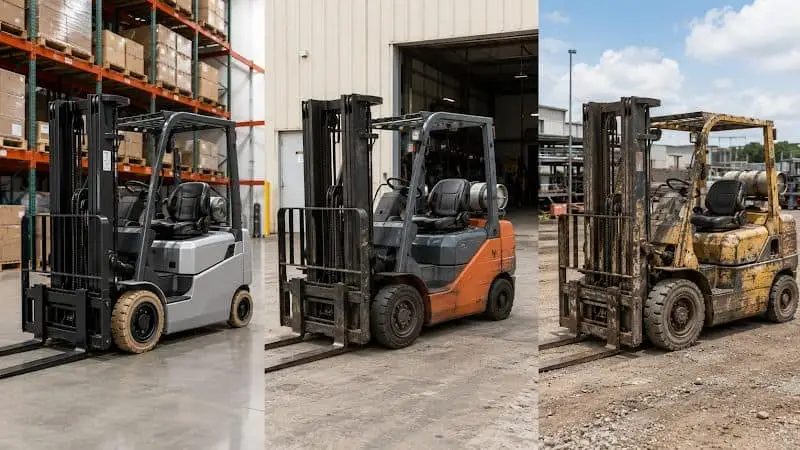
Five thousand hours is not automatically a high reading for a forklift. Seven thousand hours represents established use, but it is not necessarily near the end of the machine’s life.
The meaning of the number depends on what happened during those hours.
A forklift with 7,000 hours of light indoor pallet handling, scheduled maintenance and careful operation may be a better purchase than a 4,000-hour machine that has carried heavy loads over rough outdoor ground.
How to Interpret Forklift Hours
| Recorded hours | General buyer interpretation | What to investigate |
|---|---|---|
| Under 2,000 hours | Relatively low use | Confirm the hour meter is genuine and check whether long periods of storage affected the battery, seals or tyres |
| 2,000 to 5,000 hours | Moderate use | Review servicing, tyres, brakes, mast wear and battery condition |
| 5,000 to 7,000 hours | Established working life | Expect normal wear and inspect major components carefully |
| 7,000 to 10,000 hours | Higher-hour territory | Maintenance records, application history and upcoming repairs become increasingly important |
| 10,000 to 12,000 hours | Common economic-life decision point | Compare repair costs, downtime and expected remaining use against replacement |
| Over 12,000 hours | High hours | Buy or retain only when condition, service support and operating economics remain acceptable |
These bands should not be used as automatic pass or fail rules. Toyota’s approximate 10,000-hour replacement benchmark is an average planning point, not a mechanical limit.
Is 5,000 Hours a Lot?
For many forklifts, 5,000 hours is a mid-life reading rather than an end-of-life figure.
At this stage, a buyer should look beyond routine cosmetic condition and inspect:
- Lift chains
- Mast rollers
- Hydraulic cylinders
- Steering components
- Brakes
- Drive axle
- Transmission
- Cooling system
- Tyres and load wheels
- Battery and charger on electric units
A 5,000-hour machine with a complete service history may still have substantial working life remaining.
Is 7,000 Hours a Lot?
Seven thousand hours is significant enough to justify a thorough inspection, but it does not make the forklift a poor purchase.
At this point, ask:
- Has the forklift worked one shift or multiple shifts?
- Was it used indoors or outdoors?
- Were loads close to its rated capacity?
- Has the battery already been replaced?
- Has the engine or transmission undergone major work?
- Are there recurring electrical or hydraulic faults?
- Which major components are likely to require replacement next?
A well-maintained 7,000-hour forklift can be good value when the price reflects its condition and expected future maintenance.
Forklift Hours Matter More Than Calendar Age
Forklifts are better assessed by operating hours than by age alone.
A ten-year-old forklift used for two hours each weekday may have fewer operating hours than a three-year-old machine running across two or three shifts.
Calendar age still matters because:
- Rubber hoses and seals deteriorate over time
- Batteries age even when use is limited
- Corrosion can develop during storage
- Older electronic parts may become harder to source
- Safety and productivity features improve between generations
- Previous service records may be incomplete
The best assessment considers both age and hours.
Hours vs Years: How to Convert Forklift Life Honestly
To estimate calendar life, calculate how many hours the forklift operates each year.
Example 1: One Full Shift
A forklift operating:
- 8 hours per day
- 5 days per week
- 50 weeks per year
would record up to:
8 × 5 × 50 = 2,000 hours per year
At that rate:
| Operating hours | Approximate calendar time |
|---|---|
| 5,000 hours | 2.5 years |
| 7,000 hours | 3.5 years |
| 10,000 hours | 5 years |
| 12,000 hours | 6 years |
This assumes the hour meter records the complete shift. In practice, operators may spend part of the day away from the forklift, and different machines record hours in different ways.
Example 2: Light Daily Use
A forklift operating:
- 3 hours per day
- 5 days per week
- 50 weeks per year
would record approximately:
3 × 5 × 50 = 750 hours per year
At that rate, reaching 10,000 hours would take more than 13 years.
Example 3: Two-Shift Operation
A forklift operating:
- 14 hours per day
- 5 days per week
- 50 weeks per year
could record:
14 × 5 × 50 = 3,500 hours per year
It could reach 10,000 hours in less than three years.
This does not mean the forklift will automatically require replacement after three years. It means servicing, component replacement and economic-life decisions will arrive much sooner than they would in a light-use application.
Check What the Hour Meter Records
Not all hour meters work in exactly the same way.
Depending on the model, the meter may record:
- Key-on time
- Engine-running time
- Traction motor operation
- Hydraulic pump operation
- Active working time
- A combination of operating functions
Before comparing two used forklifts, confirm what each machine records.
Also check for signs that the meter may have been replaced or altered:
- Meter age does not match the forklift
- Display appears significantly newer than surrounding controls
- Service records show higher previous hours
- Wear is inconsistent with the displayed reading
- Hour history is missing
- The dashboard or controller has been replaced
The hour meter should be checked alongside the service history, physical wear and diagnostic records. The detailed used forklift inspection process covers the battery, mast, hydraulics, tyres, controls and documents that should be reviewed before purchase.
Do Electric Forklifts Last Longer Than LPG or Diesel Forklifts?
Electric forklifts can have a longer economic life in suitable applications because they have fewer moving drivetrain components and no combustion engine.
An electric forklift does not require:
- Engine oil changes
- Spark plug replacement
- Exhaust-system repairs
- LPG-system servicing
- Diesel fuel-system maintenance
- Engine cooling-system maintenance
Toyota states that electric forklifts generally need less maintenance because they have fewer components than internal combustion models.
However, the comparison is not as simple as saying electric always lasts longer.
An electric forklift’s lifespan can be shortened by:
- Poor battery watering
- Incorrect charging
- Deep discharge
- Opportunity charging an unsuitable lead-acid battery
- Overheating
- Corroded terminals
- Damaged cables
- Moisture entering electrical systems
- Controller faults
- Unsuitable outdoor use
An LPG or diesel forklift may outlast a neglected electric machine when the engine-powered unit has been properly serviced and used in the environment it was designed for.
The Forklift and Its Battery Have Separate Lifespans
When assessing an electric forklift, separate the condition of the truck from the condition of its traction battery.
The forklift body, mast, motors and controllers may have many useful hours remaining even when the battery is near the end of its life.
A lead-acid traction battery should be assessed for:
- Manufacture date
- Charging history
- Cell condition
- Electrolyte levels
- Corrosion
- Cable damage
- Connector condition
- Heat damage
- Runtime
- Voltage drop under load
Crown notes that properly maintained lead-acid batteries commonly deliver around 1,000 to 1,500 charging cycles. Regular watering and cleaning are necessary to avoid premature failure.
Correct forklift battery watering helps prevent exposed plates, overheating, loss of capacity and early cell damage.
A weak battery does not always mean the complete forklift should be replaced. The decision depends on the cost of a replacement battery, the truck’s overall condition and how long the business plans to keep it.
What Shortens a Forklift’s Lifespan?
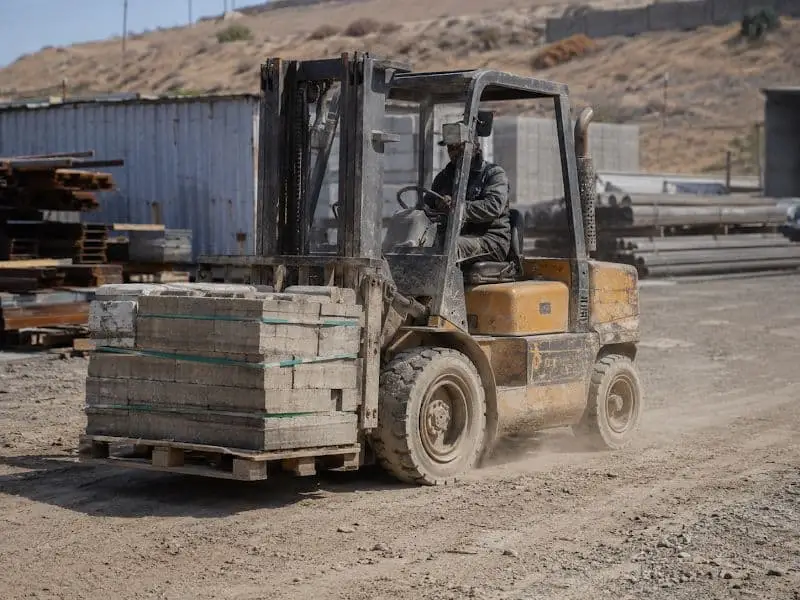
Several factors can move a forklift towards the lower end of the normal hour range.
Overloading: Places Excessive Stress on Major Components
Repeatedly lifting above the forklift’s rated or residual capacity increases stress on:
- Mast channels
- Lift chains
- Hydraulic cylinders
- Drive axle
- Steering axle
- Tyres
- Frame
- Transmission
Even when the forklift continues operating, repeated overloading can accelerate wear and create safety risks.
Aggressive Driving: Increases Impact and Drivetrain Wear
Harsh acceleration, abrupt braking, fast direction changes and high-speed cornering place unnecessary stress on the forklift.
Impacts can damage:
- Mast assemblies
- Tyres and wheels
- Steering components
- Overhead guards
- Forks
- Carriages
- Racking
- Electronic sensors
Adaptalift identifies aggressive and careless operation as a major factor affecting forklift lifespan.
Skipped Servicing: Allows Small Faults to Become Major Repairs
A minor hydraulic leak, worn bearing or damaged hose may be inexpensive to address early.
When maintenance is delayed, the same problem can lead to:
- Pump failure
- Contaminated hydraulic oil
- Cylinder damage
- Engine overheating
- Transmission wear
- Electrical faults
- Unexpected downtime
Crown recommends aligning planned maintenance with actual forklift usage rather than relying only on fixed calendar dates.
Tyre Neglect: Transfers Shock Into the Forklift
Worn, flat-spotted or damaged tyres increase vibration through the chassis and mast.
This can accelerate wear in:
- Wheel bearings
- Mast rollers
- Steering systems
- Operator compartments
- Electronic components
- Load-handling systems
Tyres should be replaced based on condition and manufacturer wear limits, not only when the forklift becomes difficult to drive.
Harsh Environments: Accelerate Corrosion and Contamination
Forklifts generally wear faster in:
- Salty coastal sites
- Chemical facilities
- Foundries
- Timber yards
- Construction sites
- Quarries
- Stone yards
- Cold stores
- Wet areas
- Dusty manufacturing facilities
Dust can block radiators and contaminate moving systems. Moisture can affect wiring and electronics. Salt and chemicals can corrode frames, fasteners and electrical connections.
Rough Ground: Increases Structural and Mechanical Stress
Potholes, broken concrete, yard transitions and uneven surfaces increase impact loads.
A forklift designed for smooth warehouse floors may deteriorate quickly when used continually in a rough yard.
The tyre type, ground clearance and forklift design must match the surface.
Excessive Idling: Adds Hours Without Productive Work
An LPG or diesel forklift may record operating hours while idling.
Long idling periods add wear, consume fuel and bring forward hour-based service intervals without moving more pallets.
Review workflows that leave forklifts running while operators wait for loads, paperwork or truck access.
Poor Battery Care: Shortens Electric Forklift Life
Incorrect charging and watering can damage a lead-acid battery long before the forklift reaches the end of its mechanical life.
Common problems include:
- Watering before charging
- Overwatering
- Allowing plates to become exposed
- Using unsuitable water
- Interrupting charging cycles
- Deep discharging
- Charging in excessive heat
- Ignoring damaged connectors
Incorrect Attachments: Change Capacity and Wear Patterns
Clamps, rotators, fork positioners and extended forks add weight and can change the forklift’s residual capacity.
An attachment that is not properly matched or reflected on the capacity plate can contribute to overloading and uneven wear.
Poor Repairs: Create Recurring Faults
Temporary wiring fixes, incorrect parts and unauthorised structural repairs may keep a forklift moving briefly but create larger reliability and safety issues.
Used buyers should be cautious of:
- Twisted electrical connections
- Bypassed safety switches
- Welded forks
- Unapproved mast repairs
- Missing guards
- Mixed battery cells
- Incorrect hoses or fittings
- Warning lights that have been disabled
What Extends a Forklift’s Life?
Forklift lifespan is influenced by decisions made throughout the machine’s ownership.
Follow Hour-Based Service Intervals
Service the forklift according to:
- Manufacturer recommendations
- Operating hours
- Application intensity
- Environment
- Fuel type
- Previous repair history
A forklift working in dust, heat, moisture or multiple shifts may need attention sooner than a lightly used indoor machine.
A practical forklift maintenance routine helps keep tyres, fluids, chains, brakes, batteries and safety systems under regular review.
Complete Daily Pre-Start Checks
Operators should inspect the machine before each shift.
Checks commonly include:
- Forks
- Lift chains
- Tyres
- Hydraulic leaks
- Hoses
- Fluid levels
- Warning devices
- Brakes
- Steering
- Seat belt
- Battery or fuel system
- Capacity plate
- Safety guards
Early reporting gives the maintenance team an opportunity to act before a fault becomes more expensive.
Match the Forklift to the Application
A forklift lasts longer when it is designed for the work.
Confirm:
- Load capacity
- Residual capacity
- Mast height
- Tyre type
- Ground clearance
- Indoor or outdoor rating
- Dust and moisture protection
- Operating temperature
- Shift duration
- Attachment requirements
Consistently using an undersized forklift can increase wear even when the machine is not visibly overloaded.
Train Operators Properly
Operator training should cover more than basic licence requirements.
Drivers should understand:
- Capacity limits
- Smooth acceleration and braking
- Safe direction changes
- Correct fork positioning
- Battery charging
- LPG cylinder handling
- Fault reporting
- Pre-start inspections
- Site speed limits
- Surface hazards
Operators should never continue using a forklift that has developed an unusual noise, warning light, leak or change in handling.
Keep the Machine Clean
Regular cleaning helps technicians identify:
- Hydraulic leaks
- Cracks
- Loose fasteners
- Corrosion
- Damaged wiring
- Fluid contamination
- Radiator blockage
Cleaning is especially important in dusty, salty, food-processing and chemical environments.
Keep Complete Service Records
A detailed history helps owners identify recurring issues and plan replacement.
Records should include:
- Operating hours
- Scheduled services
- Repairs
- Tyre changes
- Battery tests
- Attachments
- Fault codes
- Safety inspections
- Accident damage
- Major component replacement
These records also improve buyer confidence when the forklift is eventually sold.
Replace Wear Parts Before They Damage Other Components
Delaying a relatively small repair can place additional stress on more expensive systems.
Examples include:
- Worn tyres increasing mast vibration
- Damaged seals contaminating hydraulic systems
- Loose chains affecting load stability
- Blocked radiators causing overheating
- Corroded battery terminals increasing resistance and heat
- Worn bearings damaging wheel assemblies
When Has a Forklift Reached the End of Its Economic Life?
A forklift has reached the end of its economic life when keeping it operational costs more than replacing it with a safer and more productive machine.
This point may arrive before the forklift becomes mechanically impossible to repair.
Warning signs include:
- Repair costs rising each year
- Repeated breakdowns
- Long waits for parts
- Frequent production interruptions
- Major engine, transmission or battery work approaching
- Safety systems becoming difficult to maintain
- Operators losing confidence in the machine
- Fuel or energy consumption increasing
- The forklift no longer matching the workload
- Rental equipment regularly being needed during repairs
Toyota explains that useful life and economic life are different. A machine may still be repairable after it stops making financial sense to keep it.
Rebuild, Keep or Replace?
The hour meter alone cannot answer whether a forklift should be rebuilt or replaced.
| Decision | When it may make sense | Main questions |
|---|---|---|
| Keep operating | The forklift is reliable, safe and inexpensive to maintain | Is downtime low? Are parts available? Does it still suit the job? |
| Complete targeted repairs | One known component has failed but the rest of the machine is sound | Will the repair provide several more productive years? |
| Rebuild major systems | The frame, mast and core machine are strong, and replacement equipment is expensive or difficult to source | What is the full rebuild cost? What warranty applies? |
| Replace with another used forklift | The current unit is unreliable, but the workload does not justify a new machine | Can a lower-hour used unit reduce downtime and maintenance? |
| Replace with a new forklift | The forklift is critical, heavily used or no longer suitable for the application | Will productivity, warranty and lower downtime justify the investment? |
Keep the Forklift When:
- It passes safety inspections
- Downtime remains manageable
- Parts are readily available
- Repair costs are predictable
- It still has sufficient capacity
- Operators can use it safely and comfortably
- No major cluster of repairs is approaching
Consider a Rebuild When:
- The frame and mast are structurally sound
- The machine suits a specialised application
- A major engine, transmission or battery replacement would restore dependable operation
- Replacement units are difficult to source
- The rebuild includes a clear scope and warranty
- The total cost is substantially below suitable replacement equipment
Replace the Forklift When:
- Several major systems need work at the same time
- Repairs are becoming more frequent
- Downtime affects customers or production
- Parts are obsolete or difficult to source
- Safety-related defects keep returning
- The forklift no longer meets capacity or lift-height requirements
- A battery, controller and mast overhaul are all approaching
- Rental costs are increasing during breakdowns
Compare expected repairs against broader forklift maintenance costs, downtime and the value of the work the machine performs.
The decision becomes clearer when several of the recognised signs that a forklift fleet needs upgrading appear at the same time.
How Much Should High Hours Affect the Price?
A higher hour reading should usually affect the price, but there is no fixed discount for each additional 1,000 hours.
Value depends on:
- Make and model
- Rated capacity
- Mast height
- Battery condition
- Service records
- Tyres
- Attachments
- Engine or motor condition
- Transmission condition
- Warranty
- Parts support
- Resale demand
A 9,000-hour forklift with a recently replaced battery, documented servicing and a warranty may be worth more than a 5,000-hour machine that needs tyres, mast repairs and electrical work.
Price should reflect the expected cost of the next stage of ownership.
Should You Buy a High-Hour Forklift?
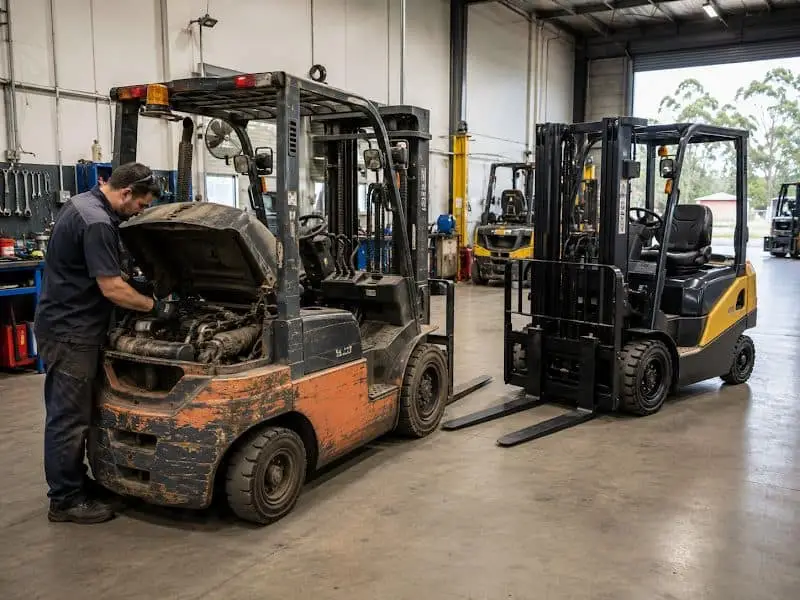
A high-hour forklift can still be a sensible purchase when:
- The application is light
- The purchase price is appropriate
- Service records are complete
- Major components have been tested
- Parts remain available
- The forklift will not be operationally critical
- Repairs can be completed locally
- The seller provides a meaningful warranty
A high-hour machine may be unsuitable when:
- It will work multiple shifts
- Downtime would stop production
- The battery condition is unknown
- Major repairs are already due
- The hour-meter history is unclear
- The forklift has worked in a corrosive environment
- It has recurring electrical or transmission faults
- Replacement parts have long lead times
Buyers deciding between equipment ages should compare the strengths and risks of used and new forklifts rather than judging the options only by purchase price.
Forklift Lifespan Checklist for Used Buyers
Before buying a used forklift, confirm:
- The displayed hours
- How the meter records operating time
- Whether the hour meter has been replaced
- Service-history consistency
- Previous operating environment
- Shift pattern
- Normal load weight
- Battery age and capacity
- Engine and transmission condition
- Mast and chain wear
- Hydraulic leakage
- Tyre condition
- Fault-code history
- Parts availability
- Warranty coverage
- Expected upcoming repairs
The number of hours should support the buying decision, not replace a full inspection.
Make Forklift Hours Part of the Full Buying Decision
Forklift lifespan is best measured in operating hours, but no hour reading can predict remaining life by itself.
Around 8,000 to 12,000 hours is a useful economic planning range for many forklifts. Five thousand hours generally represents moderate use, while 7,000 hours should prompt a closer review of maintenance and component condition. At 10,000 hours and above, repair costs, downtime and the application become more important than the meter alone.
The best used forklift is not always the one with the lowest hours. It is the machine that has the right capacity, a verifiable history, manageable future repairs and enough reliable working life to justify its price.
Frequently Asked Questions
1. How Many Hours Is Too Many for a Used Forklift?
There is no single number that makes a forklift too old to buy.
More than 10,000 hours is generally considered a high reading and should trigger a close review of maintenance history, major components and repair economics. Toyota uses around 10,000 hours as an average replacement-planning point, while demanding applications may reach that point earlier.
A well-maintained high-hour forklift may still suit light work. A poorly maintained lower-hour machine may be the greater risk.
2. Is 5,000 Hours High for a Forklift?
Five thousand hours usually represents moderate use rather than the end of the forklift’s life.
At this stage, examine the mast, tyres, brakes, hydraulics, battery or engine, service records and previous application. Condition matters more than the number alone.
3. Is 7,000 Hours a Lot for a Forklift?
Seven thousand hours is a meaningful amount of use, but it is not automatically excessive.
It should be treated as a point where maintenance history, environment and upcoming major repairs matter more. A clean indoor electric forklift may have substantial life remaining at 7,000 hours, while a heavily used outdoor forklift may be approaching an expensive repair period.
4. Do Electric Forklifts Last Longer?
Electric forklifts can last longer in suitable applications because they have fewer drivetrain components and do not require combustion-engine maintenance.
Their total ownership life still depends on battery care, charging practices, electrical condition, workload and environment. The battery may need replacement before the forklift itself is retired.
5. How Often Should a Forklift Be Serviced?
The correct interval depends on the manufacturer, model, fuel type, hours and operating environment.
Service scheduling should follow the manufacturer’s instructions and may need to be shortened for multiple shifts, dust, moisture, extreme temperatures or heavy loads. Crown notes that maintenance can be aligned directly with operating hours and equipment utilisation.
6. Does Replacing the Battery Extend an Electric Forklift’s Life?
Yes, when the rest of the forklift is in sound condition.
A new battery can restore runtime and lifting performance, but it will not correct worn mast components, damaged motors, controller faults or structural problems. Test the complete machine before approving a battery replacement.
7. When Is a Forklift Rebuild Worth It?
A rebuild may be worthwhile when the frame, mast and core systems are sound, the machine suits the application and the repair cost is well below the cost of a suitable replacement.
The rebuild should include a defined scope, realistic downtime estimate and warranty. Replacing one major component may not be economical when several other systems are also near the end of their service life.
8. Can a Forklift Last 20,000 Hours?
Yes, some forklifts can exceed 20,000 hours, particularly when they are built for intensive applications and maintained carefully.
However, reaching 20,000 hours does not prove that keeping the machine was economical. The business may have spent more on repairs and downtime than it would have spent on an earlier replacement.
9. Does Low Use Guarantee a Longer Forklift Life?
No.
Low-hour forklifts can still suffer from:
- Battery deterioration
- Corrosion
- Perished hoses and seals
- Poor storage
- Neglected servicing
- Rodent damage to wiring
- Obsolete parts
- Long periods without proper charging
A low hour reading is valuable only when the forklift’s condition supports it.