
How High Should A Load Be Carried On A Forklift?
· Updated
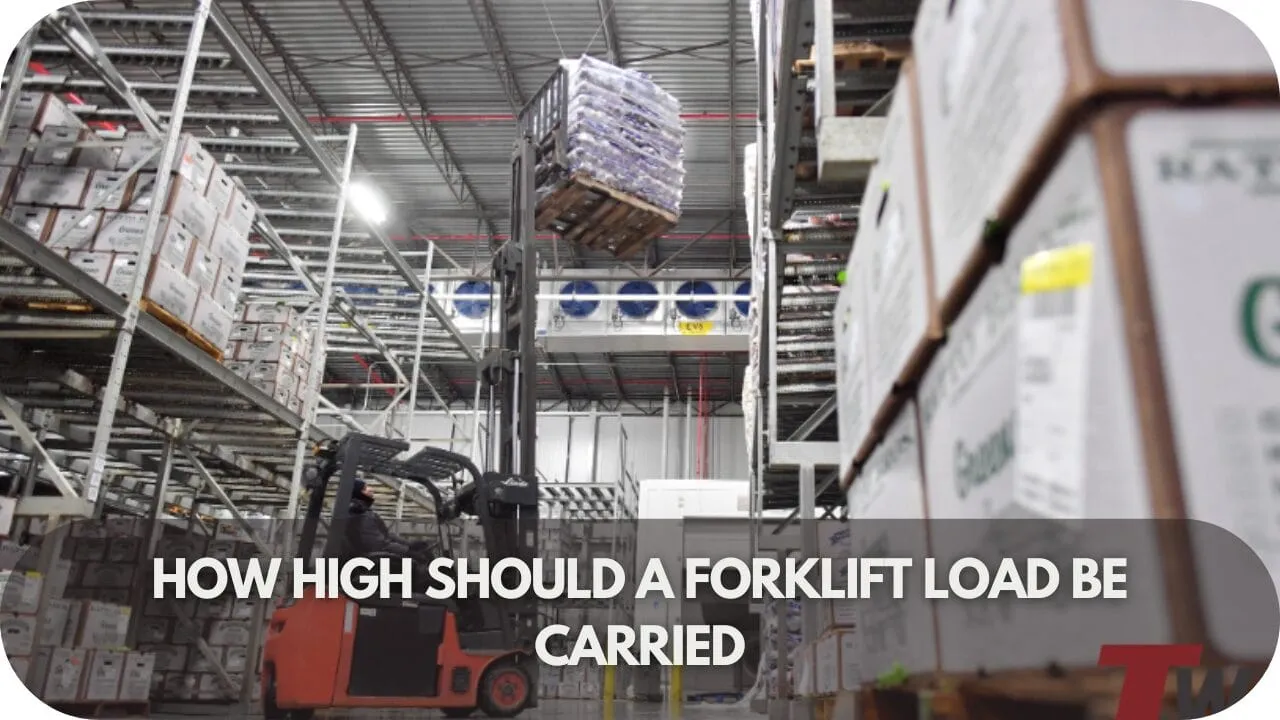
Ever wondered why forklift operators always keep their loads close to the ground? It’s not just a random habit—it’s a vital safety measure. A small mistake in load height can lead to tipping, damaged goods, or serious accidents.
Whether you’re new to forklifts or a seasoned pro, knowing the right load height can make a huge difference in both safety and efficiency.
In this lively guide, we’ll break down exactly how high a load should be carried on a forklift and share smart tips to keep your operations smooth and secure!
How High Should A Load Be Carried On A Forklift?
The recommended height for carrying a load on a forklift is just above ground level—usually 4 to 6 inches. This height ensures stability during transport, lowers the risk of tipping, and provides clear visibility for the operator.
Recommended Load Height During Transport
When transporting a load, forklifts should maintain the forks at a height of approximately 4 to 6 inches (10 to 15 cm) from the ground. This specific range is ideal because it keeps the load low enough to minimise tipping risks while ensuring the forks don’t scrape the floor.
Maintaining this height provides optimal stability by lowering the centre of gravity, which helps the forklift remain steady when turning or moving across uneven surfaces.
Additionally, keeping the load low improves the operator’s visibility, reducing the likelihood of collisions with obstacles or pedestrians.
Carrying the load too close to the ground can lead to fork damage caused by contact with debris or uneven flooring, making it crucial to adhere to the recommended height.
How High Should A Load Be Carried On A Forklift?
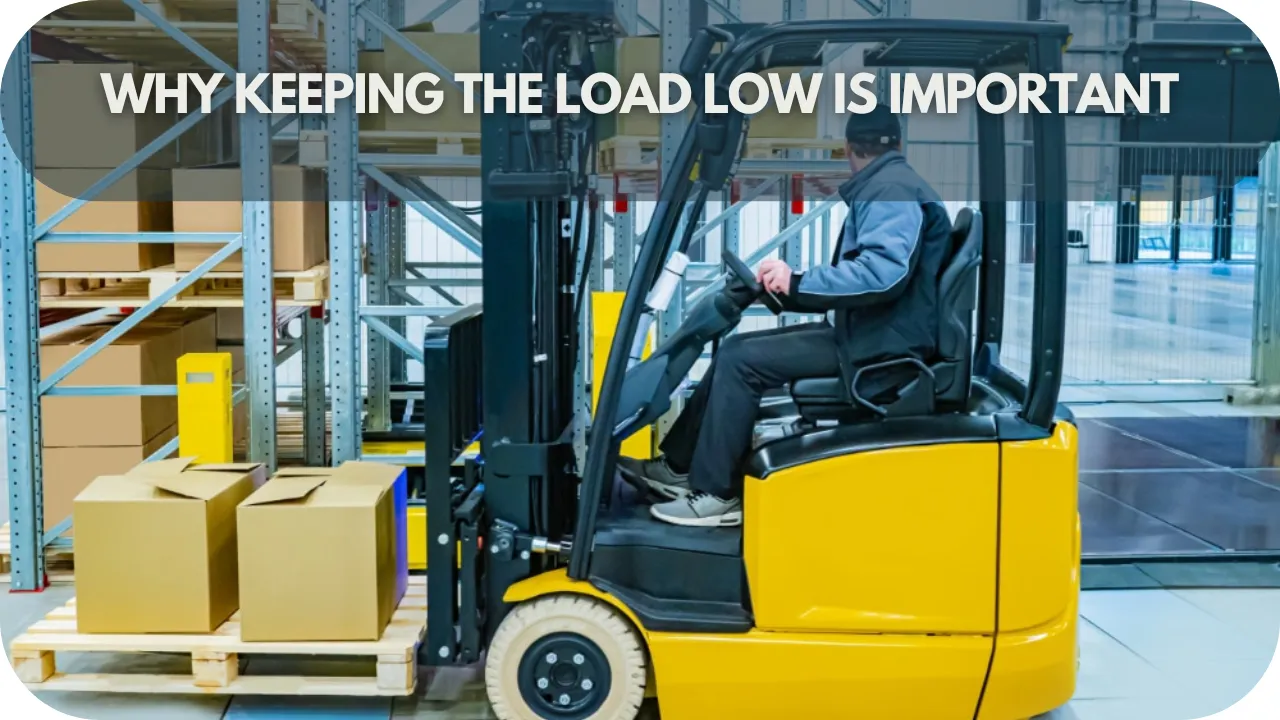
Maintaining a low load height while operating a forklift is not merely a safety recommendation but a crucial practice that directly impacts both personnel safety and operational efficiency.
Keeping loads low helps reduce tipping hazards, as forklifts can easily become top-heavy when loads are carried too high, making them prone to tipping, particularly during turns or when navigating inclines.
Additionally, lower load heights protect the load itself, as elevated loads are more likely to shift or fall, potentially causing product damage or injury to nearby workers.
By keeping the load low, operators also improve the forklift’s manoeuvrability, making it easier to handle, especially in tight spaces or during sharp turns.
Moreover, maintaining a low load height enhances compliance with safety regulations, such as those outlined by OSHA, which stress the importance of proper load handling to minimise accidents and ensure safe operations.
When Higher Load Heights Are Necessary
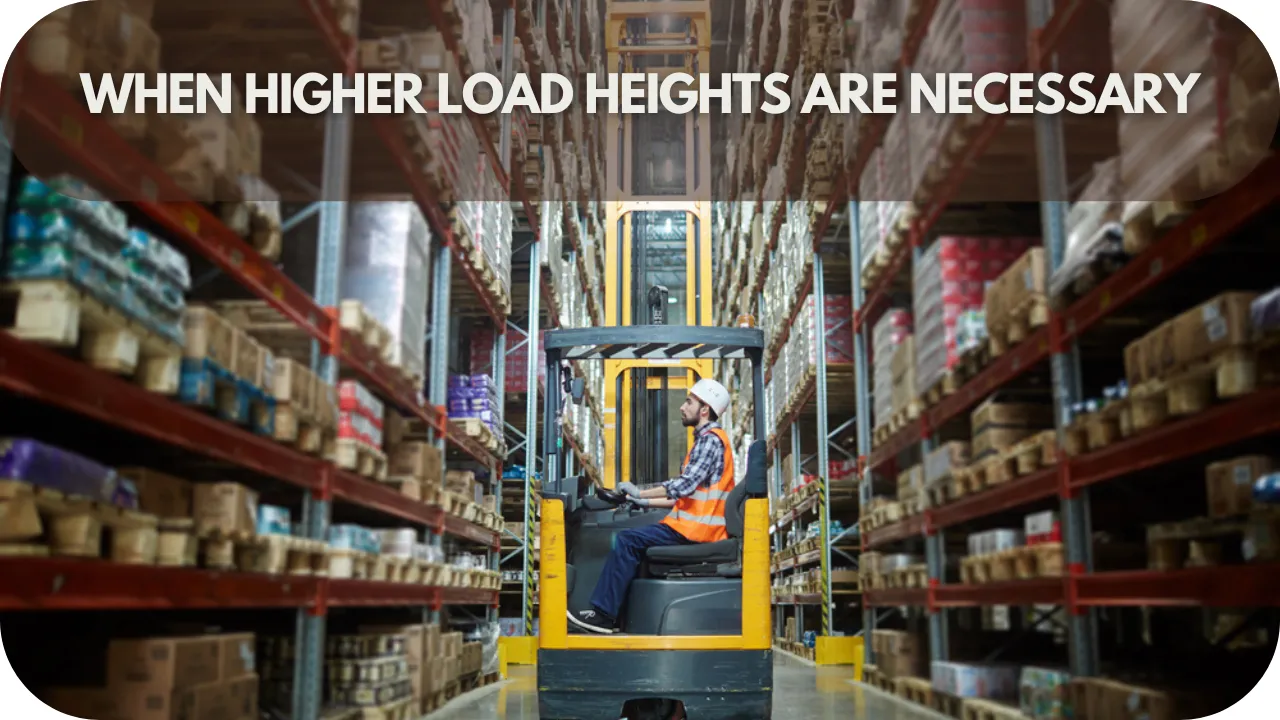
Picture this: your storage facility is at capacity, yet the need for efficiency and organisation grows. Higher load heights become the solution you didn’t know you needed. By maximising vertical space, businesses can optimise storage, reduce clutter, and improve accessibility. Here are scenarios where higher load heights are necessary
1. Warehouse Optimisation
In warehouses with vertical storage systems, higher load heights are critical to access inventory stored on upper racks. This is especially common in facilities with limited floor space but ample ceiling height, where vertical storage maximises capacity.
2. Construction Projects
Construction sites often require forklifts to lift heavy materials such as pallets of bricks, timber, or steel beams to elevated platforms or scaffolding. Higher load heights ensure materials can be delivered directly to the required levels, improving efficiency.
3. Retail and Distribution Centres
Big-box retailers and distribution hubs often utilise tall shelving units to store products. Forklifts with higher load heights are essential for placing and retrieving inventory from the uppermost shelves.
4. Shipping and Logistics
High-capacity shipping docks may use taller stacking for containers or pallets to optimise space. Forklifts with extended lift capabilities are required to handle these taller stacks safely and efficiently.
5. Cold Storage Facilities
In refrigerated warehouses, higher load heights allow for dense vertical stacking to minimise energy usage by maximising storage within a compact space.
6. Industrial Manufacturing
Production facilities often have large machinery or assembly lines positioned at higher levels. Forklifts with extended lift heights help transport parts or materials directly to these elevated points.
7. Event and Stage Setup
For venues with large stages or elevated setups, higher load heights are necessary to lift lighting, sound equipment, or stage props to overhead trusses or platforms.
8. Agricultural Applications
Farms and agricultural facilities often need to stack hay bales, feed bags, or other materials on taller storage units. Forklifts with higher load heights are vital for these tasks.
9. Aviation and Aerospace
In aircraft maintenance hangars, higher load heights are used to transport tools or equipment to elevated areas, such as wings or fuselage sections.
10. Outdoor Storage Yards
Higher load heights are necessary in outdoor storage yards, particularly for stacking materials like lumber, piping, or construction equipment to maximise ground usage.
Common Mistakes to Avoid
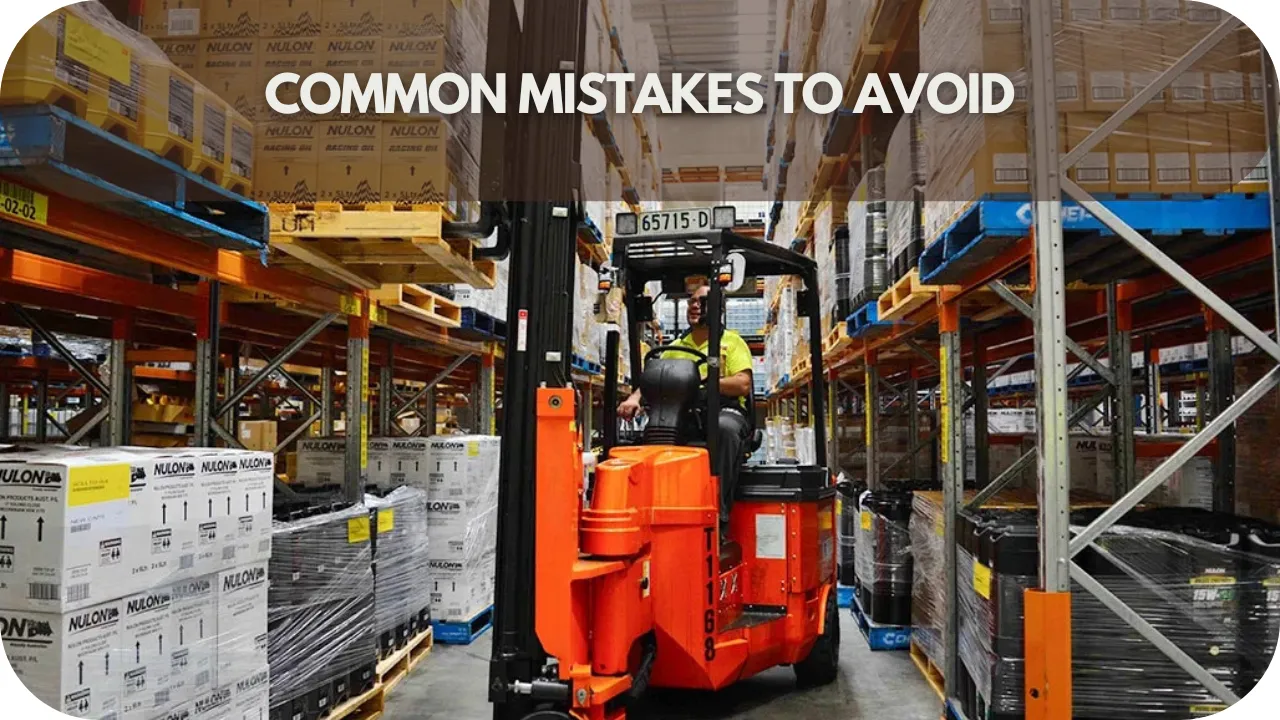
Even experienced forklift operators can fall into bad habits that compromise safety. Here are some common mistakes to watch out for:
- Carrying Loads Too High: Lifting a load higher than necessary increases the risk of tipping the forklift and decreases stability.
- Ignoring Overhead Obstacles: Failing to account for low ceilings, beams, or pipes can lead to collisions and damage.
- Overloading Forklift Capacity: Exceeding the forklift’s load limit while lifting high can compromise its balance and functionality.
- Improper Load Positioning: Placing the load unevenly on the forks causes instability, especially at higher heights.
- Not Lowering Loads While Moving: Transporting loads at elevated heights can reduce visibility and increase the risk of tipping over.
- Neglecting Fork Adjustment: Incorrect spacing of forks for the load’s width can lead to slips or falls when lifting high.
- Skipping Pre-Check Inspections: Operating a forklift with worn or malfunctioning hydraulics can make high load handling dangerous.
- Speeding While Carrying a High Load: Moving too quickly with an elevated load height can lead to accidents due to sudden stops or turns.
- Failing to Follow the Centre of Gravity Guidelines: Not aligning the load with the forklift’s centre of gravity may result in instability.
- Ignoring Load Type and Balance: Failing to consider whether the load is stable or likely to shift can make elevated transport risky.
Factors That Affect the Height of Loads on a Forklift
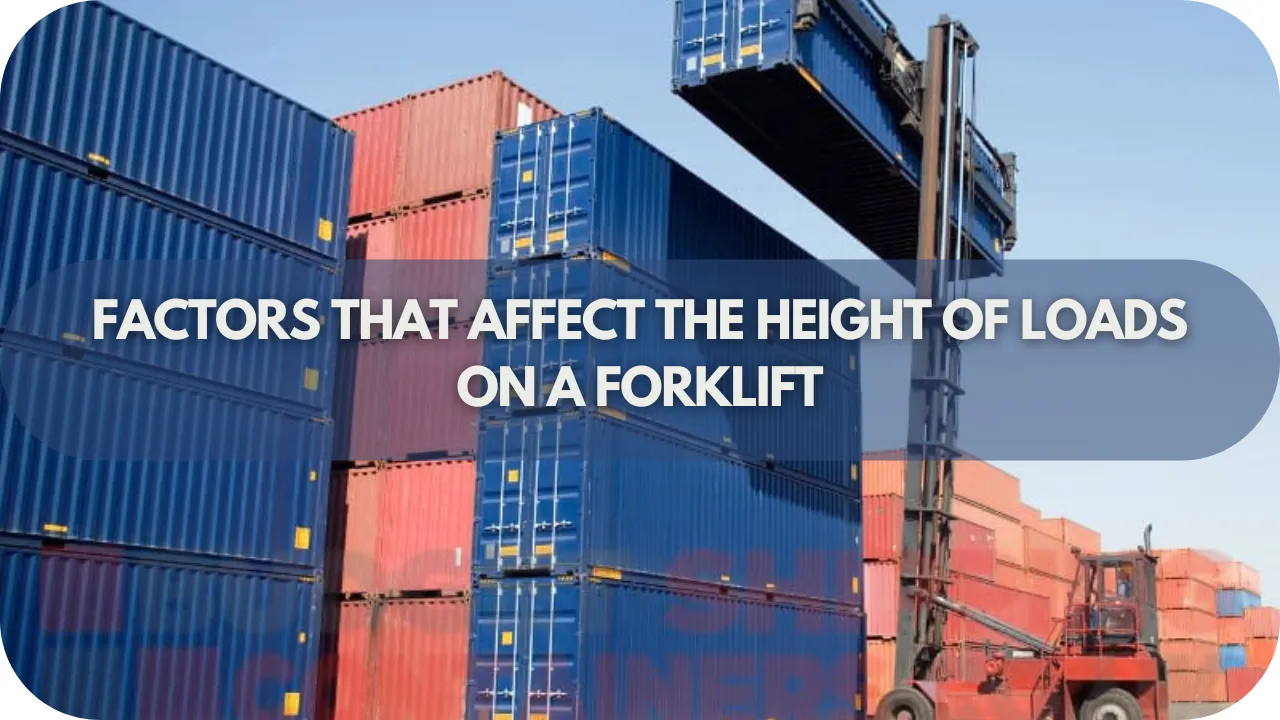
Several factors should be taken into account when deciding how high to carry a load on a forklift. These factors contribute to the overall stability and safety of both the operator and the surrounding personnel. Let’s look at the most important of these factors:
1. Load Stability and Weight Distribution
The most important consideration when determining the height at which a load should be carried is ensuring the stability of the forklift. The centre of gravity plays a significant role in the overall balance of the forklift.
If the load is carried too high, the forklift’s centre of gravity shifts, which can make it prone to tipping. Proper weight distribution across the forks is essential to maintaining a stable centre of gravity.
When transporting a load, it is advisable to keep the load as low as possible, especially when the forklift is turning or navigating narrow aisles. High lifts are only necessary when moving the load to higher storage areas.
2. Forklift Model and Lift Capacity
The type of forklift used determines how high a load can be safely lifted. Different forklifts are designed for different lift capacities and heights.
For example, counterbalance forklifts, which are most commonly used in warehouses, are equipped to lift heavy loads to varying heights. However, there are restrictions on how high the load can be carried safely, depending on the forklift’s design. Those limits are printed on the machine’s capacity plate, and reading the forklift load chart is the only reliable way to know what a specific machine can lift at a given height.
- Standard Forklifts: These typically have a maximum lifting height between 10 to 15 feet.
- Reach Trucks: Reach trucks are designed for high shelving and can lift loads higher than standard forklifts, sometimes exceeding 40 feet. In such cases, loads are typically carried at waist height for better stability and control.
- Order Pickers: These forklifts are often used in environments where the forklift operator needs to access specific items on high shelves. They can carry loads to high shelving heights, but the load is typically carried at a moderate height while the operator is elevated.
The higher the lift, the greater the risk of instability. Therefore, it’s vital to always be aware of the forklift’s maximum safe lifting height and adhere to the manufacturer’s guidelines.
3. Floor Condition and Environmental Factors
The type of surface on which the forklift operates affects the height at which the load should be carried. If the floor is uneven or rough, carrying the load too high could make the forklift prone to tipping over. A stable, smooth surface can handle slightly higher lifts, as it reduces the risk of instability.
For environments where forklifts are navigating outside, such as construction sites or areas with gravel or dirt surfaces, carrying loads lower to the ground is recommended for maximum safety. Forklifts used on these surfaces are generally equipped with wider wheels to prevent tipping.
4. Operator’s Experience and Comfort
The experience of the forklift operator is another crucial factor. An experienced forklift operator is more likely to adjust their driving habits, including the height of the load, according to the task.
For example, they will be aware of the appropriate height to carry a load during tight turns, fast movements, or when navigating narrow aisles. Load height and forklift travel speed work together here, because the risk of a tip-over climbs when both increase at once.
Operators should also be comfortable with adjusting the height of the load during transport. When navigating areas with obstacles, the operator may lower the load to avoid hitting overhead barriers or shelves. That judgement comes with training, and the forklift licence requirements in Australia set out what an operator needs before getting on the machine.
5. Warehouse and Storage Configuration
The layout of the warehouse or facility also determines how high loads should be carried. If the forklift is navigating between racks with limited overhead clearance, the load may need to be carried at a lower height to prevent collision with shelves or other obstacles.
Forklift operators should always be aware of the storage configurations and any potential obstructions above the load.
In high-bay warehouses, for instance, loads need to be raised to clear the shelves while still maintaining a safe height to avoid excessive tilt.
Best Practices for Safe Load Handling
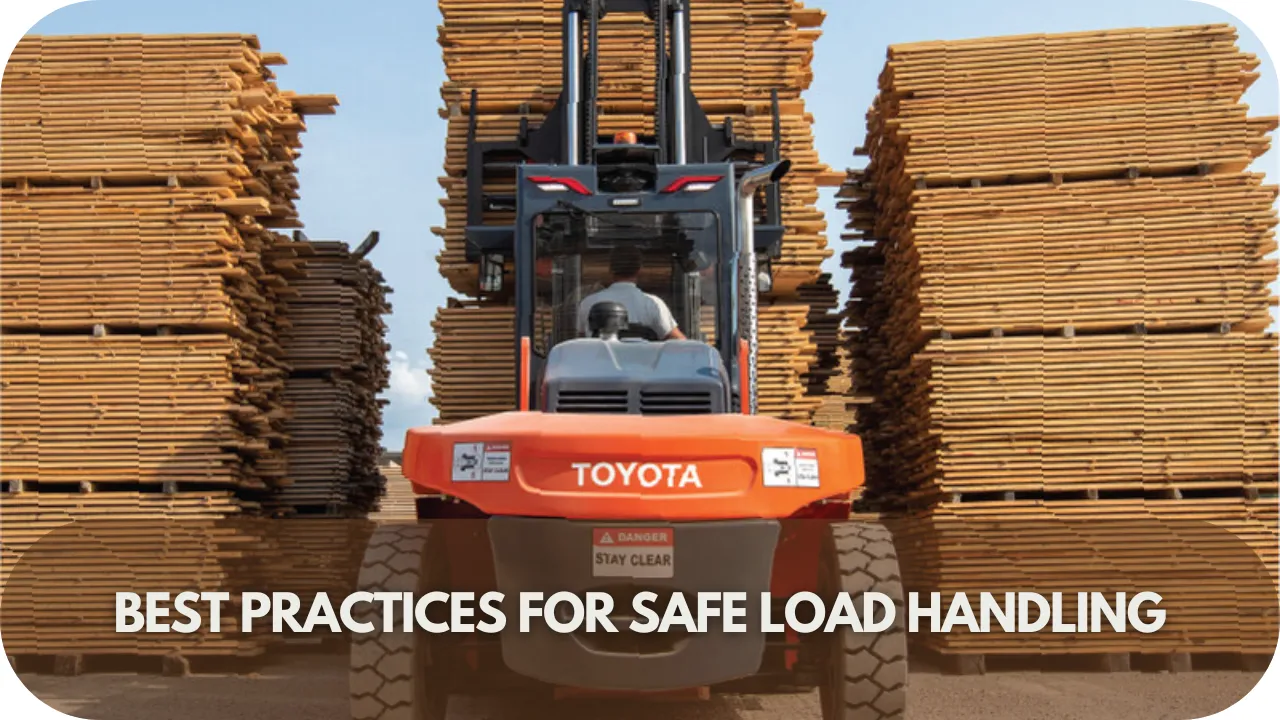
Safe load handling is a combination of proper technique, equipment maintenance, and operator vigilance. Warning devices play a part as well, and forklift blue safety lights are now common wherever pedestrians and machines share the same floor. Here are some best practices to ensure safety during forklift operations:
- Inspect the Forklift Regularly: Routine inspections of the forks, mast, and hydraulic systems help prevent mechanical issues during load handling.
- Centre the Load on the Forks: Always ensure the load is centred and evenly distributed across the forks to maintain balance.
- Tilt the Mast Back Slightly: Tilting the mast slightly backwards during transport helps stabilise the load and prevents forward tipping.
- Observe Speed Limits: Maintain a safe speed when transporting loads, especially in areas with pedestrian traffic or tight corners.
- Be Aware of Overhead Hazards: When lifting loads to higher shelves, always check for overhead obstructions such as pipes, beams, or electrical wires.
- Communicate with Others: Operators should use horn signals when approaching blind corners or intersections and maintain communication with nearby workers to prevent accidents.
- Follow Proper Training and Certification Requirements: Forklift operators should undergo comprehensive training and receive certification to ensure they understand best practices for load handling.
Frequently Asked Questions
1. How high should a load be carried on a forklift?
Carry the load as low as practicable while still clearing the ground and any obstructions, with the mast tilted back to hold the load against the backrest. Travelling with the load raised lifts the combined centre of gravity and is a leading cause of tip-overs. Confirm the specific practice for your site against Safe Work Australia and WorkSafe Victoria guidance.
2. Why do the forks need to stay low while travelling?
A forklift is stable only while the combined centre of gravity of the machine and load stays inside its stability triangle. Raising the load moves that centre of gravity upward, which reduces the margin before the machine tips, especially in a turn.
3. Should the mast be tilted when carrying a load?
Yes. Tilting the mast back holds the load against the backrest and stops it sliding forward off the forks. The load should be tilted back only enough to stabilise it, not so far that visibility or control suffers.
4. How high should the forks be when travelling without a load?
The same principle applies. Keep the empty forks low enough to be clear of the ground and any floor obstruction, and low enough that they do not create a hazard for people working nearby.
5. Does the safe travel height change on a ramp or slope?
Yes. On a gradient the load should be kept on the uphill side and the machine driven with extra care, because the effective centre of gravity shifts. Check your site’s specific procedure for ramps with your safety adviser.
Conclusion
Safety starts with the right equipment! Proper load handling is crucial for preventing accidents and ensuring smooth operations, but having a reliable forklift is just as important. Whether you need a forklift for your warehouse, construction site, or factory, investing in quality machinery can make all the difference.
Ready to enhance your workplace efficiency and safety? Visit our store today and buy a forklift built for performance and durability!