
Choosing the Right Forklift Capacity: A Practical Guide
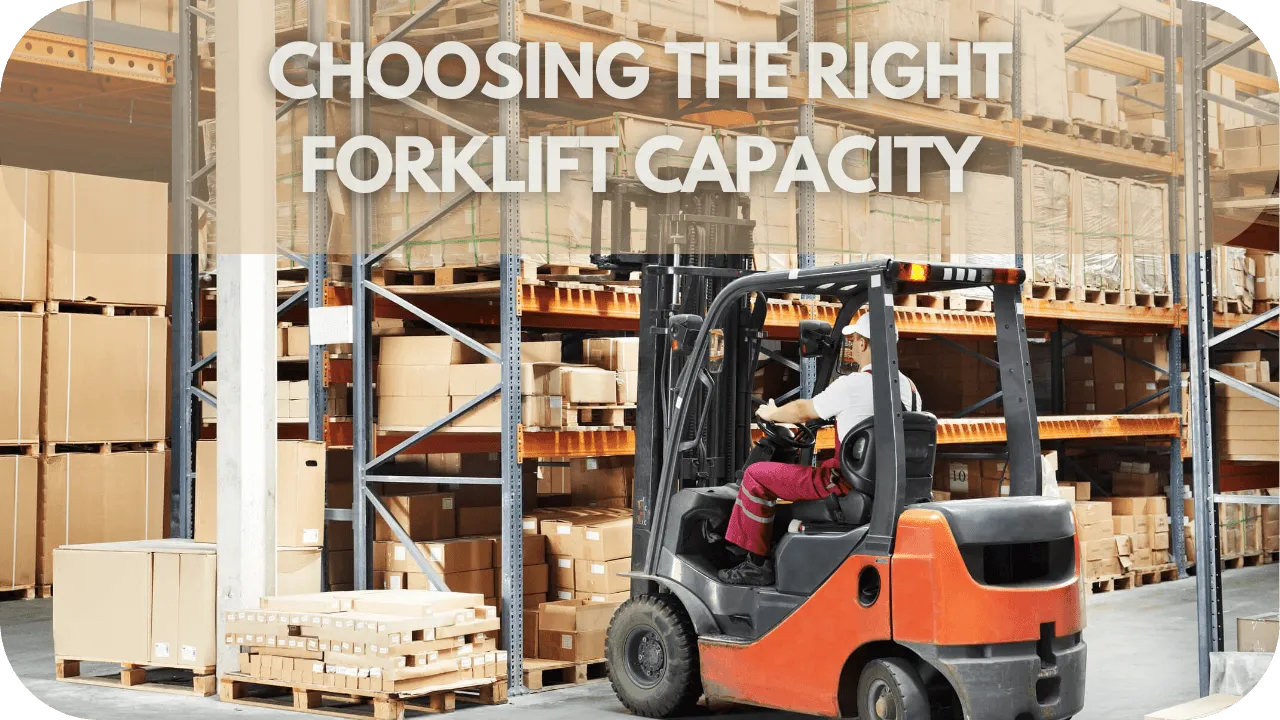
Choosing the right forklift capacity can be tricky, and getting it wrong can lead to safety issues and inefficiency.
In fact, overloading a forklift is responsible for over 25% of warehouse accidents! When you choose the wrong capacity, you risk expensive repairs and, even worse—workplace injuries.
But don’t worry! In this guide, we’ll break down everything you need to know to select the perfect forklift capacity for your needs, ensuring safety, efficiency, and productivity every time. Let’s get it right!
Factors to Consider When Choosing Forklift Capacity
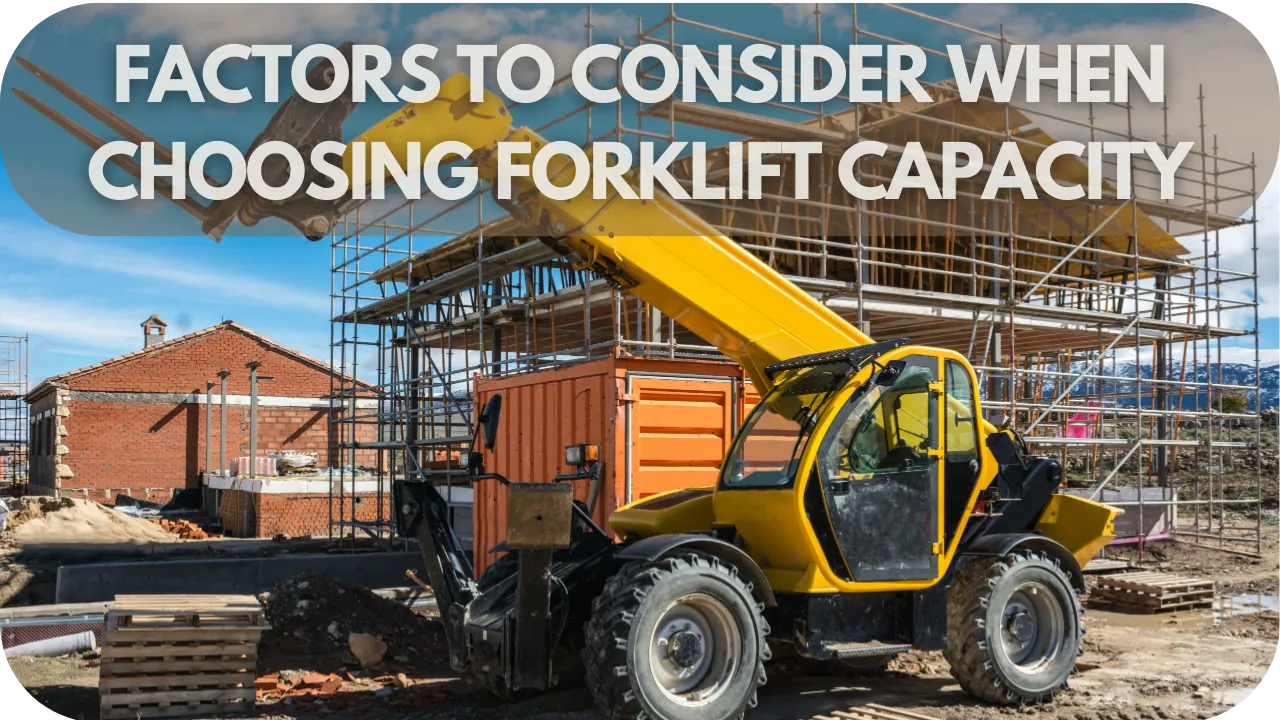
Selecting the right forklift capacity involves evaluating several key factors to ensure optimal safety, performance, and efficiency. Here’s what you need to consider:
1. Load Weight
The weight of your load is a fundamental factor when choosing the right forklift capacity. You must consider the average and maximum weight the forklift will handle during daily operations. Exceeding the forklift’s rated capacity can lead to accidents, tipping, and costly equipment damage.
At the same time, selecting a forklift with excessive capacity might result in unnecessary expenses. It’s important to account for the heaviest load you’ll lift and ensure the forklift has a comfortable margin for safety. Remember that adding attachments, such as clamps or extensions, may reduce the adequate capacity.
2. Load Dimensions
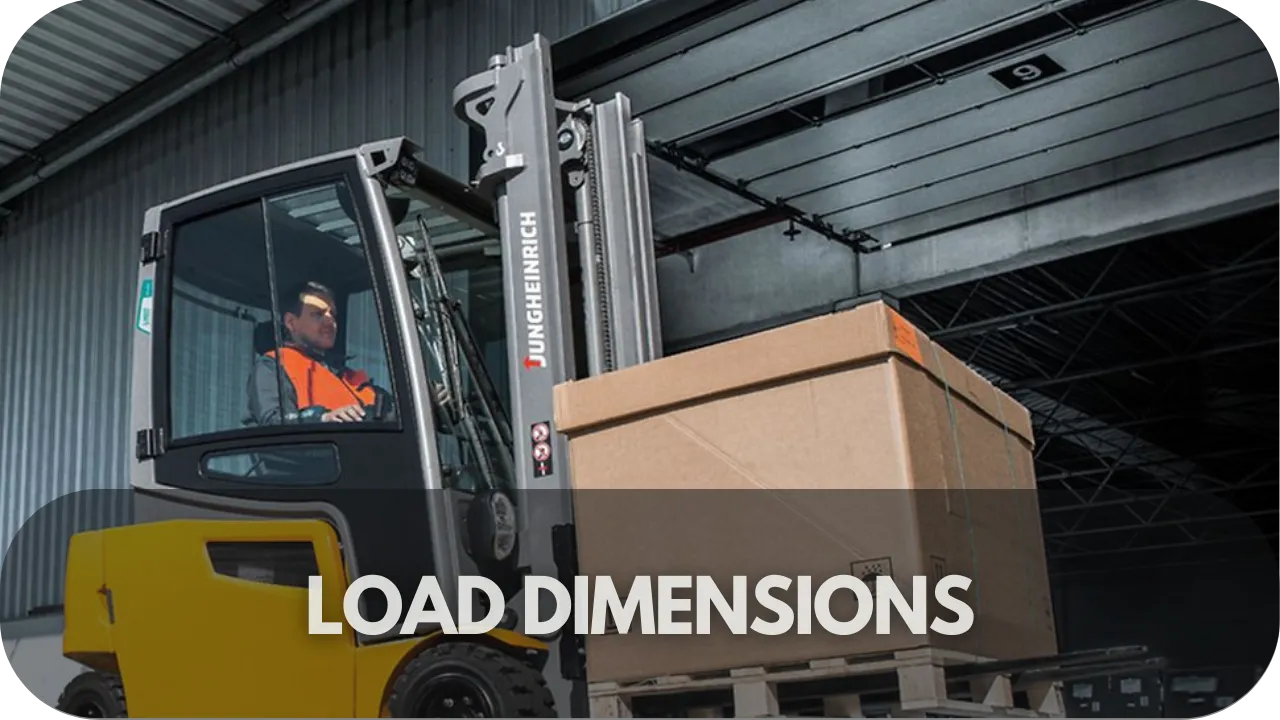
Load dimensions, including size and shape, can significantly impact forklift capacity and operational safety. More extensive or irregularly shaped loads may affect the forklift’s centre of gravity, even when the weight is within acceptable limits. For example, wide or long loads can shift balance, increasing the risk of tipping.
Unevenly distributed loads also create instability, making it crucial to select a forklift that accommodates the specific dimensions of your materials. Additionally, sure loads may require specialised attachments, which can further reduce the adequate capacity of the forklift.
Consider how your load will be handled—on pallets, stacked, or bulk-loaded—when determining the forklift type and capacity.
3. Lift Height Requirements
The height at which loads must be lifted is critical in choosing forklift capacity. A forklift’s rated capacity decreases as the lift height increases because higher loads shift the centre of gravity, reducing stability.
Selecting a forklift with a capacity that accounts for this reduction is essential for high stacking or storage operations.
Forklifts with adjustable masts and counterbalance mechanisms are better suited for elevated lift tasks. Ignoring lift height requirements can result in unsafe conditions, such as tipping or damage to the load.
Always check the forklift’s capacity plate to ensure safe and efficient operation, which provides details about its capabilities at different lift heights.
4. Operating Environment
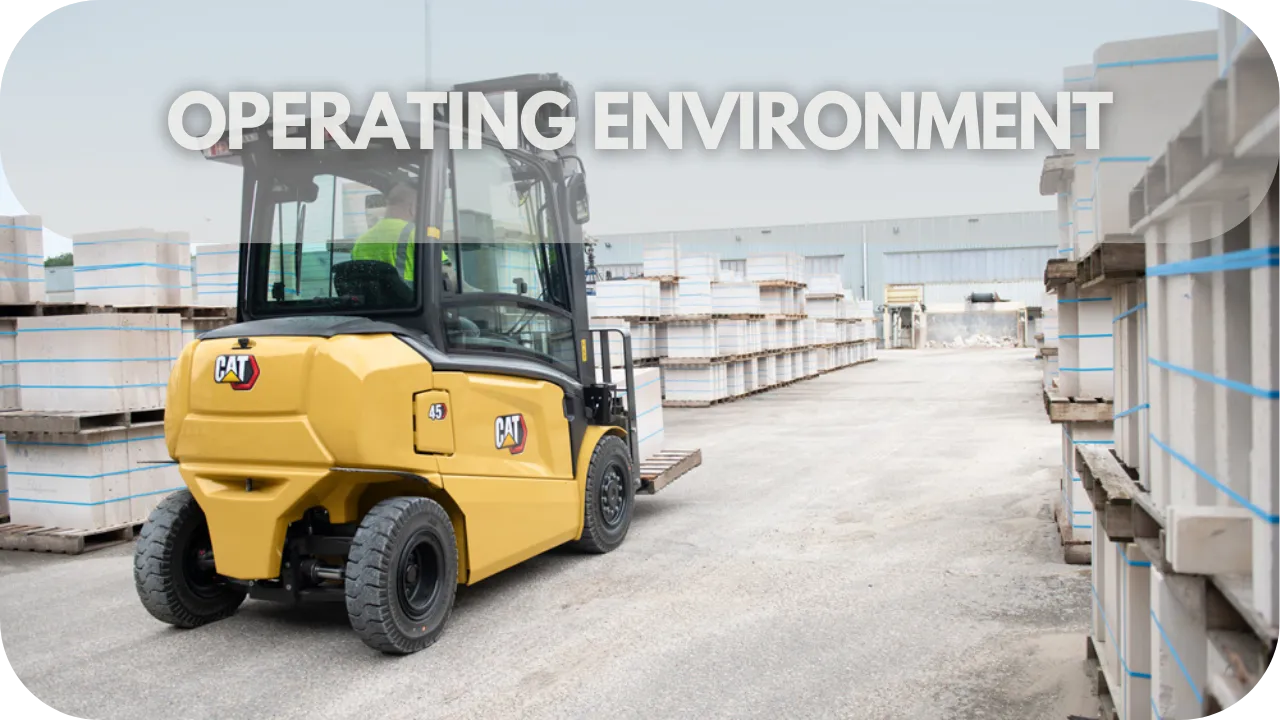
The environment in which the forklift will operate considerably influences the capacity required. Outdoor operations, especially those on uneven or rough terrain, often require forklifts with higher capacity and stability to handle challenging conditions.
Pneumatic-tyre forklifts, for example, are better suited for outdoor use, providing durability and balance.
Conversely, indoor operations in warehouses or retail environments might focus on forklifts with lower capacities that are compact and manoeuvrable to navigate tight spaces. Additionally, the width of the aisles, turning radii, and floor conditions should be considered when selecting the appropriate forklift capacity.
5. Safety Regulations
Adhering to safety regulations is paramount when selecting forklift capacity. Overloading a forklift can lead to severe accidents, equipment failure, and potential legal issues. Staying within the manufacturer’s recommended capacity limits is crucial to ensure workplace safety.
Operators should be appropriately trained to understand the importance of load balance, centre of gravity, and weight restrictions. Additionally, check the forklift’s capacity plate for accurate load specifications, including attachment adjustments.
Regular maintenance and safety checks ensure the forklift operates within its capacity parameters.
Common Forklift Capacities and Their Applications
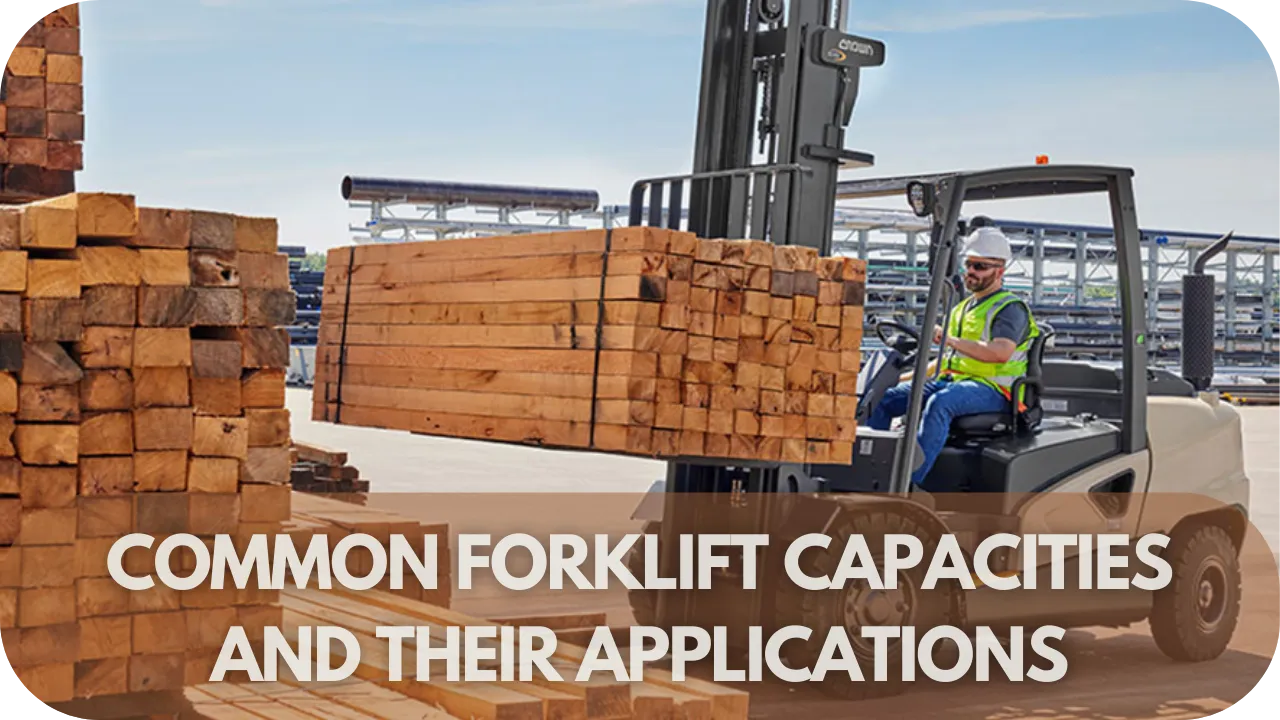
Forklift capacities typically range from light-duty to heavy-duty models, each designed for specific applications.
1. Standard Forklift (1.5 – 5 Ton Capacity)
The standard forklift, with a capacity ranging from 1.5 to 5 tonnes, is one of the most widely used types in warehouses, distribution centres, and construction sites. Its versatility allows it to lift medium-weight loads and perform various tasks, such as moving pallets, stacking goods, and handling bulky materials.
This forklift is ideal for use in tight spaces where manoeuvrability is important, thanks to its relatively compact design. It’s commonly used in environments that require moderate lifting capacities, such as retail warehouses or small industrial operations.
2. Heavy-Duty Forklift (5 – 15 Ton Capacity)
Heavy-duty forklifts, with capacities ranging from 5 to 15 tonnes, are designed to handle larger and heavier loads. These forklifts are typically used in manufacturing facilities, construction sites, and large warehouses where industrial equipment or construction materials need to be moved.
The higher lifting capacity allows these machines to move massive loads like steel beams, concrete blocks, and large machinery. They often come with advanced features such as higher-powered engines, larger wheels, and reinforced frames to handle the strain of heavy lifting.
3. Rough Terrain Forklift (2 – 6 Ton Capacity)
Rough terrain forklifts are designed for off-road use and are equipped with larger, more durable tyres to navigate uneven, rugged surfaces. With a capacity range of 2 to 6 tonnes, these forklifts are commonly used in construction sites, outdoor warehouses, and agricultural settings.
They are built to withstand harsher conditions such as dirt, gravel, and slopes, making them ideal for moving materials like lumber, bricks, and heavy machinery.
4. Counterbalance Forklift (1.5 – 10 Ton Capacity)
Counterbalance forklifts are the most commonly used type for general-purpose material handling in indoor and outdoor environments. Their design features a weight at the back of the forklift to balance the load in front. These forklifts come in a range of capacities from 1.5 to 10 tonnes and can handle tasks like lifting pallets, stacking products, and unloading trucks.
The counterbalance design allows these forklifts to operate without needing additional support legs, providing excellent manoeuvrability and stability, especially in narrow aisles or tight spaces. They are frequently used in retail, logistics, and light manufacturing industries.
5. Telehandler (2 – 4 Ton Capacity)
Telehandlers, or telescopic handlers, have lifting capacities ranging from 2 to 4 tonnes and are unique due to their extendable arm, which allows them to reach higher and further than traditional forklifts. These machines are widely used in construction, agriculture, and industrial applications where materials need to be moved vertically or across difficult terrain.
Telehandlers are often equipped with different attachments, such as buckets, hooks, and pallet forks, to provide versatility for handling a wide variety of tasks. Their ability to lift and extend makes them ideal for stacking goods at higher elevations or unloading materials from the back of trucks or trailers.
6. Pallet Jack (0.5 – 2 Ton Capacity)
Pallet jacks, also known as pallet trucks, are small, lightweight forklifts with capacities ranging from 0.5 to 2 tonnes. They are designed to move pallets and smaller loads across short distances, typically within warehouses or retail environments. Pallet jacks are available in manual or electric models and are known for their ease of use and compact size, making them ideal for cramped spaces.
They do not have to lift heights like traditional forklifts but are highly effective in transporting materials across flat surfaces. Pallet jacks are essential in environments where larger forklifts cannot operate due to limited space or when only low-level lifting is required.
7. Stacker Forklift (1 – 3 Ton Capacity)
Stacker forklifts, with lifting capacities between 1 and 3 tonnes, are designed for use in environments with limited space. They are ideal for stacking goods and materials at greater heights than a standard pallet jack but without the larger lifting capacity of traditional forklifts.
They are particularly useful in tight aisles or areas with height constraints, providing increased storage capacity in areas where floor space is limited. Many models are available in both manual and electric versions to suit different operational needs.
How to Calculate the Right Forklift Capacity
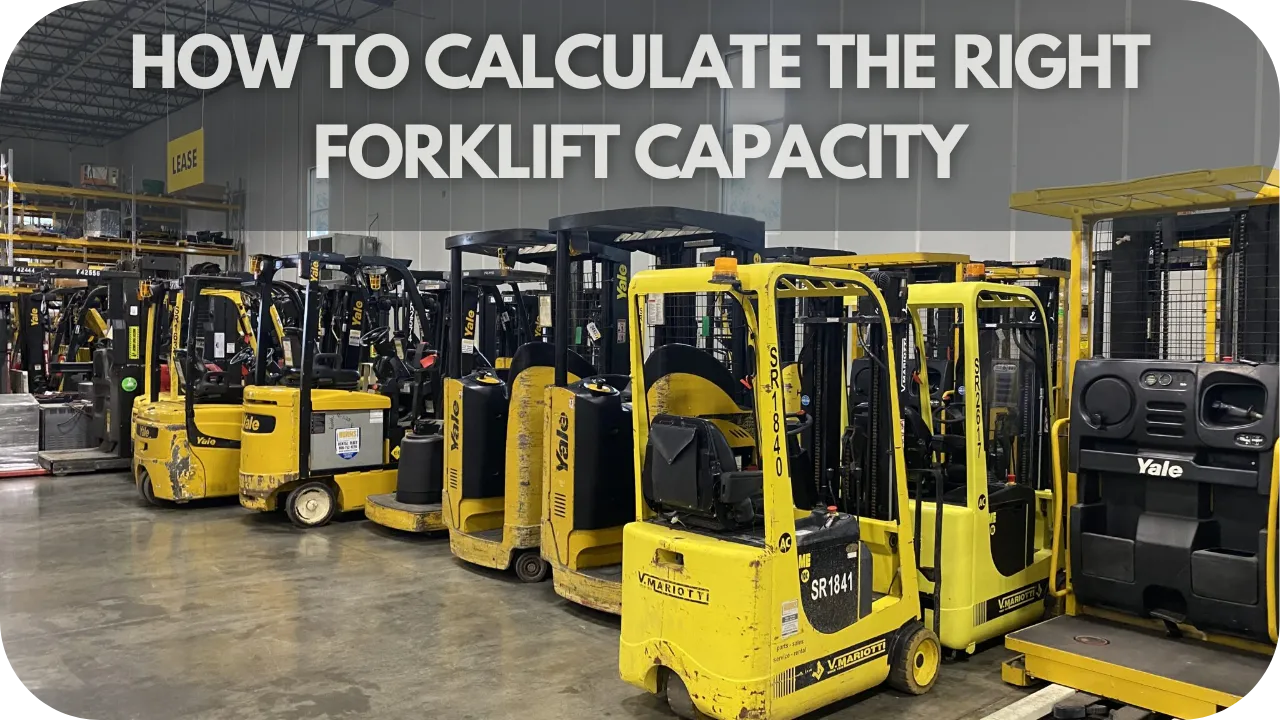
Selecting the right forklift capacity is vital for safe and efficient material handling. Follow these five steps to determine the appropriate forklift capacity for your needs:
Step 1: Calculate the Load Weight
The first step is to determine the total weight of the load, including the pallet or any other material the forklift will be lifting. Ensure that the weight is evenly distributed and that the forklift can handle the combined load.
Formula:
Load Weight = Weight of material + Weight of the pallet
Step 2: Measure the Load Centre
The load centre refers to the distance from the forklift’s front axle to the load’s centre of gravity. This is crucial because forklifts have a standard load centre, typically 500mm. If the load’s centre of gravity is farther from the forklift, it may require a higher capacity to maintain stability.
Formula:
Load Centre = Distance from the front axle to the centre of gravity of the load
Step 3: Determine the Lift Height
Next, calculate how high the forklift needs to lift the load. The higher the lift, the less weight a forklift can lift. Check the forklift’s load chart to ensure that it can lift the load safely at the required height, as the capacity decreases with increased lift height.
Step 4: Evaluate the Operating Environment
Consider the terrain and the environment in which the forklift will operate. For rough terrain or outdoor use, a forklift with a higher weight capacity may be needed for stability. If the workspace is tight, you may also need a smaller, more compact forklift to navigate the area while handling the required load.
Step 5: Consult the Load Chart and Choose a Safety Margin
Consult the forklift’s load chart, which outlines its lifting capacity based on load centre and lift height. It’s always recommended to select a forklift with a capacity 10-20% higher than your calculated need to ensure safety and to account for any unforeseen variations in load or handling.
Tips for Ensuring Long-Term Efficiency with Your Forklift
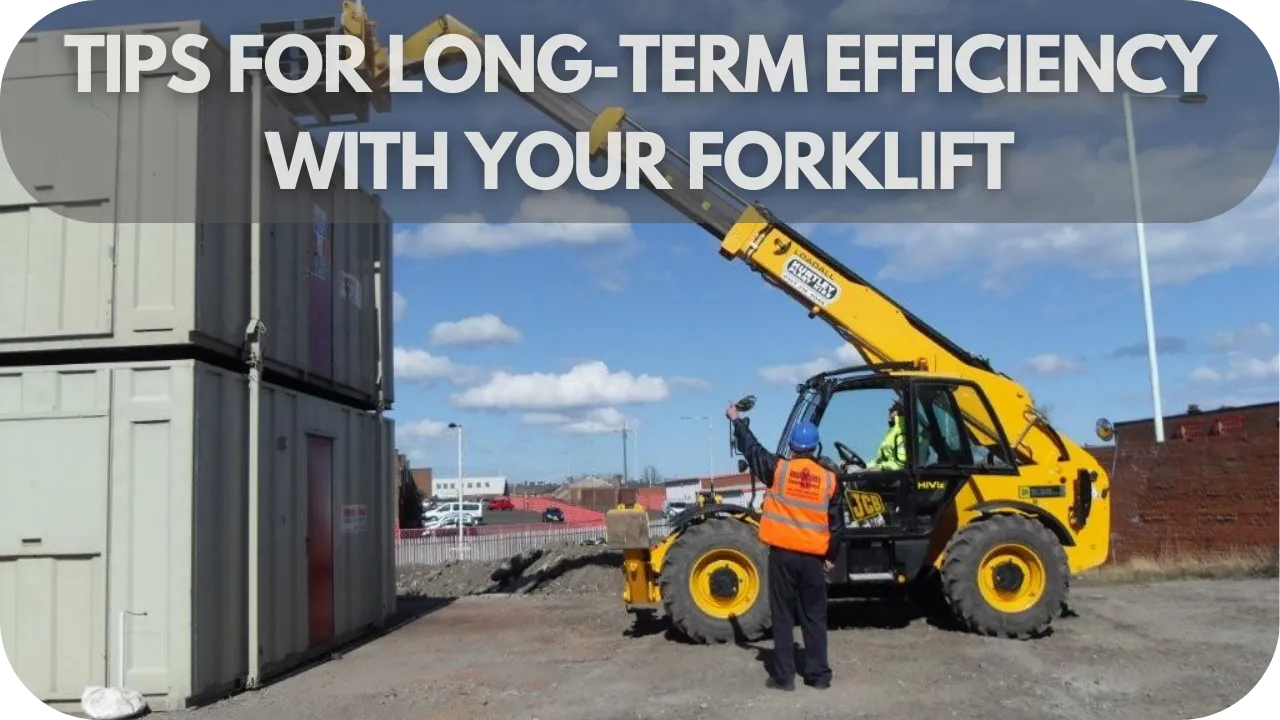
Selecting the right forklift capacity is essential for safe and efficient operations. A mismatch can lead to accidents, reduced productivity, and unnecessary costs.
Below are the key factors to ensure your forklift meets your load requirements and enhances workplace performance:
- Perform Regular Maintenance: Schedule routine inspections and servicing to keep the forklift in top condition and prevent costly breakdowns.
- Train Operators Properly: Ensure all operators are well-trained in safe and efficient forklift usage, including understanding capacity limits and proper handling techniques.
- Monitor tyres: Check tyres regularly for wear and tear, as damaged tyres can reduce stability and efficiency. Use the appropriate tyres for your operating environment.
- Inspect Attachments: Regularly check attachments like clamps or extensions for damage or wear, as they can affect performance and capacity.
- Use the Correct Forklift for the Job: Match the capacity, size, and features to the specific tasks and environment to avoid overloading or inefficiency.
- Implement Battery Care Practices: Ensure batteries are charged correctly and not over-discharged for electric forklifts. Keep terminals clean and ensure proper water levels in lead-acid batteries.
- Keep Workspaces Organised: Maintain clear pathways and storage areas to reduce unnecessary manoeuvring and improve operational efficiency.
- Monitor Fuel Consumption: For internal combustion forklifts, track fuel use and promptly address any inefficiencies or engine issues.
- Conduct Daily Pre-Operational Checks: Ensure operators inspect forklifts for visible issues before starting work to catch problems early.
- Plan for Future Needs: Anticipate operational growth or changing requirements to ensure your forklift fleet meets your evolving demands.
Mistakes to Avoid When Choosing Forklift Capacity
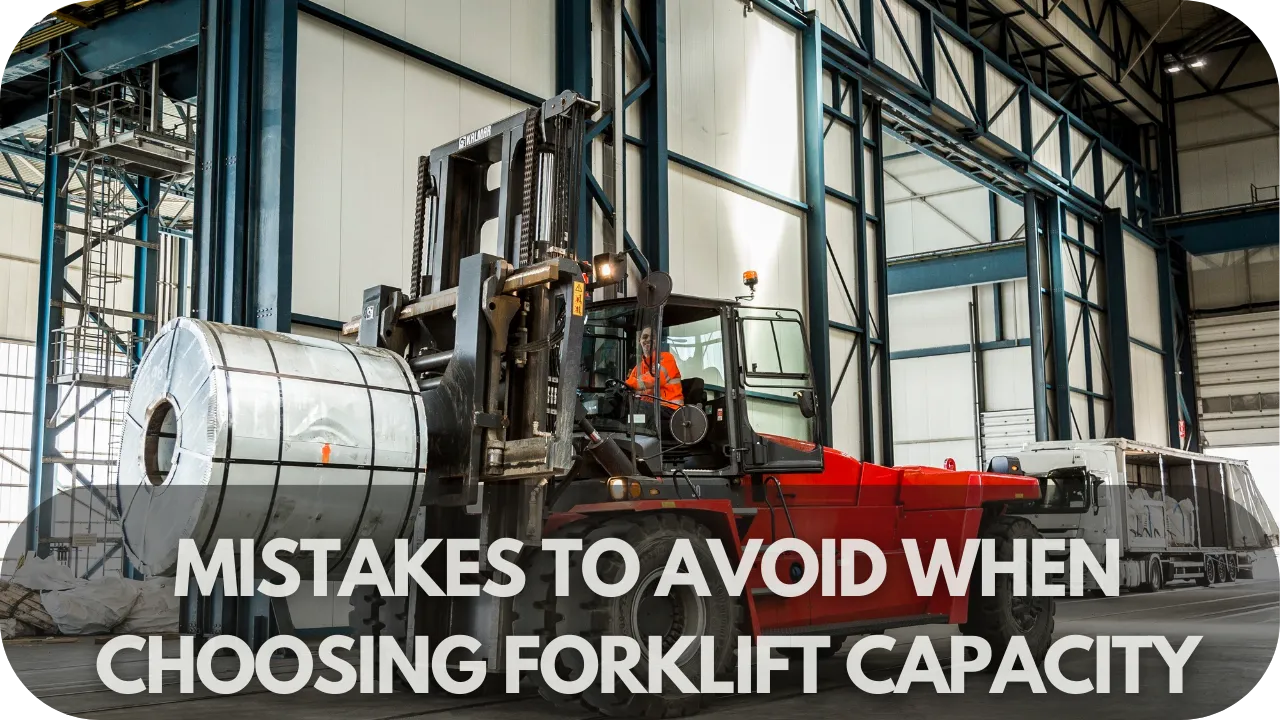
When choosing forklift capacity, there are several key mistakes to avoid to ensure safety and efficiency.
One of the most common errors is underestimating load requirements. Failing to assess the weight and dimensions of your heaviest load accurately can result in choosing a forklift with insufficient capacity, leading to accidents and equipment damage.
Similarly, ignoring lift height needs is a critical mistake. Forklift capacity decreases as the lift height increases, so failing to account for this can cause instability and unsafe lifting practices.
Another standard error is overloading the forklift. Exceeding the manufacturer’s recommended capacity is dangerous and can result in tipping, equipment failure, and workplace injuries.
Neglecting the impact of attachments like clamps or extensions can also reduce a forklift’s adequate capacity. These attachments can be heavy and affect the overall balance and safety of the lift. Choosing a forklift without considering the operating environment is another mistake.
Furthermore, failing to plan for future needs can limit long-term operational efficiency. Over time, your workload or operating environment may change, and choosing a forklift that can handle growth is essential.
Finally, skipping proper safety training for operators increases the risk of misuse, making accidents more likely.
Conclusion
Selecting the right forklift capacity is key to preventing accidents and boosting productivity. You can avoid costly mistakes and inefficiencies by considering your workload and environment.
Ready to find the perfect forklift? Browse our collection for a selection that matches your exact needs!