
Electric Pallet Jack Buying Guide for Australian Sites
· Updated
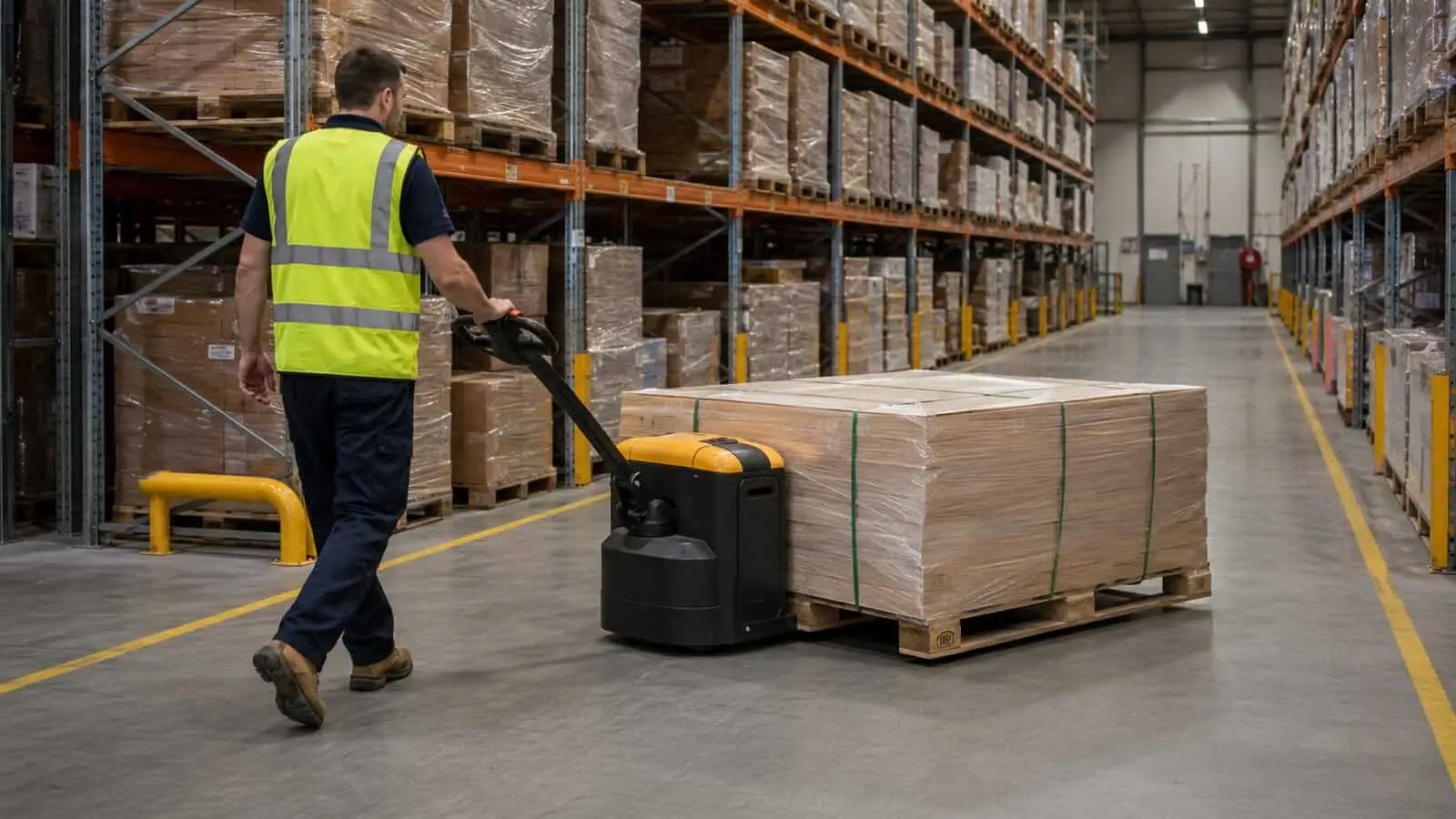
An electric pallet jack is usually the first piece of powered handling equipment a business buys.
The questions that stall the purchase are almost always the same three: does someone need a licence to drive it, what does it cost, and is it actually worth stepping up from a manual jack.
This guide answers those first, then works through capacity, fork width and battery choice so you can specify the right machine rather than the cheapest one.
What Is an Electric Pallet Jack?
An electric pallet jack is a powered pallet truck with a motorised drive and a powered lift, used to move palletised loads at ground level.
The operator either walks alongside it controlling a tiller handle, which is the walkie configuration, or stands on a platform, which is the ride-on configuration.
It is worth being precise about where the category stops, because the three machines either side of it get confused constantly.
- A manual pallet jack has no motor. The operator pumps the handle to lift and pushes the load by hand.
- An electric pallet jack lifts the pallet just clear of the floor and drives it. It does not stack.
- A walkie stacker looks similar but has a mast, so it lifts pallets to height and puts them into racking.
If you need to put a pallet on a rack beam, you need a stacker or a forklift. Where an electric pallet jack stops and a walkie stacker starts is the boundary most buyers get wrong.
Do You Need a Licence to Operate an Electric Pallet Jack in Australia?
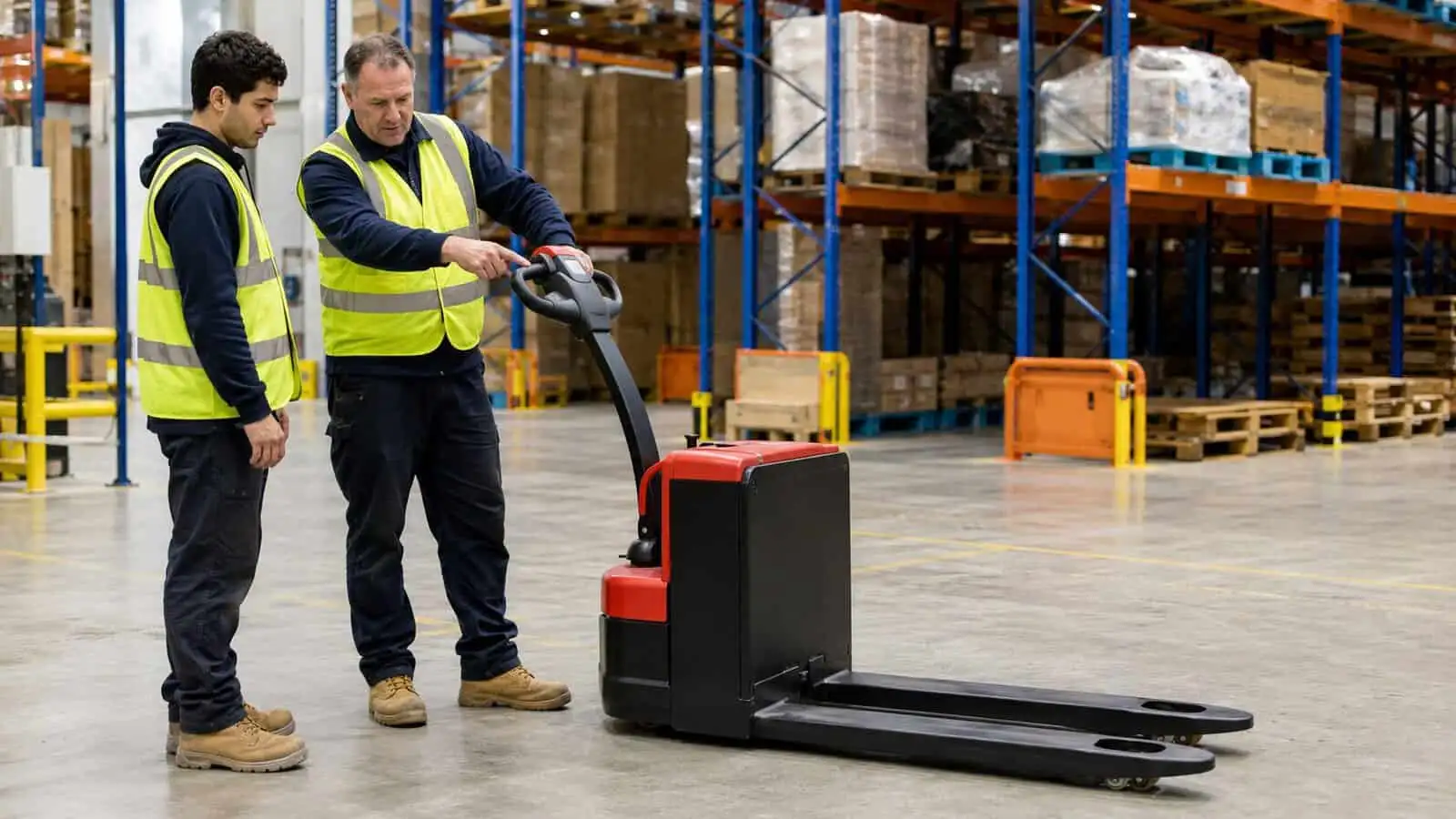
A pedestrian-operated electric pallet jack generally does not require a high risk work licence, but that is not the same as requiring nothing.
The high risk work licence classes in Australia cover forklift trucks and order-picking forklift trucks. A powered pallet truck where the operator walks alongside typically falls outside those classes.
What does apply, in every case, is the employer’s duty to make sure the operator is trained and competent for the equipment they are using, along with the general duties around safe use of powered mobile plant.
That obligation does not disappear because a licence is not required.
Where the machine changes, the answer can change with it. A ride-on unit, an order picker or anything with a mast that raises the operator is a different proposition and may fall inside a licence class.
Confirm the position for your specific machine and your state with Safe Work Australia or your state regulator before you put anyone on it.
Sites running forklifts alongside pallet jacks need to know where the high risk work licence classes begin, because the two machines sit on opposite sides of that line.
Walkie, Ride-On or Stacker: Which One Do You Actually Need?
The choice comes down to distance travelled and whether anything needs to go up.
Short runs and ground-level work suit a walkie. Long runs across a big site favour a ride-on, because operator fatigue becomes the limiting factor before machine capability does.
Anything that has to be stacked needs a mast.
| Machine | What it does | Lifts to height | Typical use | Licence considerations |
|---|---|---|---|---|
| Manual pallet jack | Hand-pumped lift, pushed by the operator | No | Occasional pallet moves, small sites, flat floors | None, but manual handling risk is real |
| Walkie electric pallet jack | Powered drive and lift, operator walks alongside | No | Regular pallet movement over short to medium distances | Generally outside the licence classes; training still required |
| Ride-on electric pallet jack | Powered drive and lift, operator stands on a platform | No | High throughput, long travel distances, order consolidation | Confirm with the regulator; the answer can differ from a walkie |
| Walkie stacker | Powered drive and lift with a mast | Yes | Light racking work in tight spaces | Confirm with the regulator based on configuration |
The practical differences between a jack and a stacker come down to one thing: whether the load ever leaves the floor.
If it does, sizing a pallet stacker is a different exercise, because lift height and mast type enter the calculation.
Are Electric Pallet Jacks Worth It?
For most sites moving more than a handful of pallets a day, yes.
The case rests on throughput and injury risk rather than on the machine being faster in a straight line.
A manual jack is fine for occasional use on a flat, smooth floor. It stops being fine when the loads are heavy, the floor has a gradient, the distances are long, or the same person is doing it all shift.
Manual handling injuries are expensive, and whether an electric pallet jack pays for itself usually turns on how many pallets move in a shift and who is moving them.
The honest counter-argument is that a powered jack introduces a battery to charge, a machine to service and a slightly larger footprint. On a site doing two pallet moves a week, that overhead is not worth carrying.
Capacity, Fork Length and Fork Width: Getting the Fit Right
Three dimensions decide whether a pallet jack works on your site, and getting any of them wrong is expensive to unwind.
Capacity should be specified against your heaviest pallet, not your average one. A machine sized to the average will spend its life being overloaded, and overloading damages the hydraulics and the drive long before it does anything dramatic.
Fork length needs to match your pallets. Standard Australian pallets and Euro pallets are different sizes, and if you handle both, the forks need to suit the longer one without overhanging the shorter one badly.
Fork width is the one buyers overlook. Standard-width forks suit open pallet racking and general warehouse work.
Narrow forks exist specifically for tight aisles, confined truck bodies and narrow doorways, and the difference between the two matters when the space is genuinely constrained. Measure your narrowest working point before you specify.
We do not publish capacity or dimension figures for machines we have not specified, because they vary by model. Tell us the pallet type, the heaviest load and the tightest space, and we will match the machine to them.
Lithium or Lead Acid for a Pallet Jack?
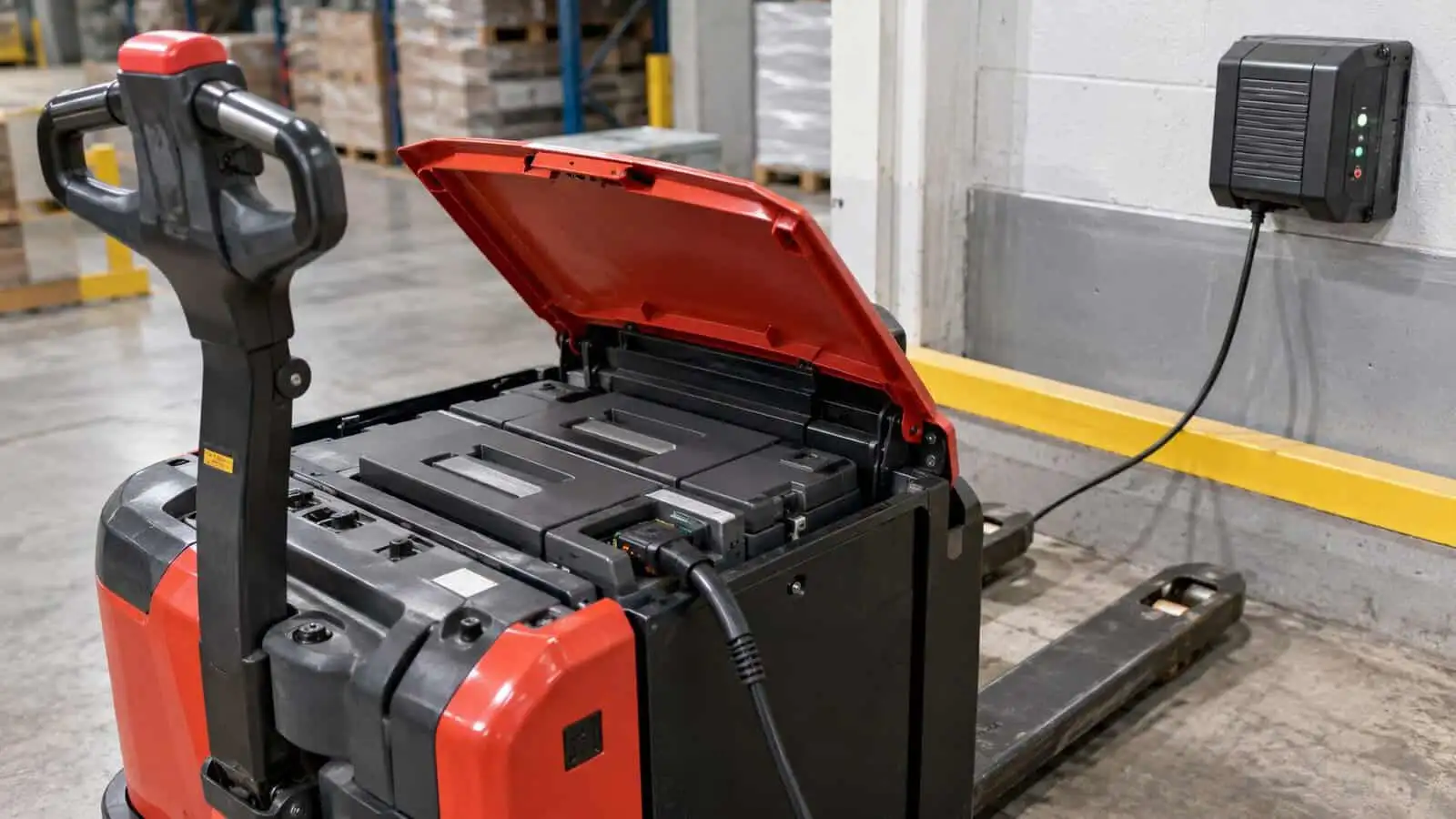
The battery decision at this equipment class is different from the same decision on a counterbalance forklift, because the batteries are smaller and lithium units have become common at entry price points.
Lithium suits multi-shift operations and sites with no room for a dedicated charging area, because it tolerates partial charging during breaks without damage.
Lead acid still makes sense on single-shift sites with an overnight charge, a tighter upfront budget, and existing charging infrastructure already in place.
The choice between lithium and lead acid turns on your shift pattern, not on which technology is newer.
How Much Does an Electric Pallet Jack Cost in Australia?
Price depends on capacity, configuration and battery type, and the spread across the category is wide enough that a single figure would mislead you.
What is worth understanding is what moves the number.
- Ride-on versus walkie: a ride-on platform adds cost and is only worth it when travel distances justify it.
- Lithium versus lead acid: lithium carries a higher upfront cost and removes the second battery, the swap gear and the charging room.
- Narrow forks: a specialist width usually costs more than the standard.
- New versus pre-owned: the largest single variable, and where most of the value sits for a first powered jack.
- Capacity class: higher capacity means a heavier frame and stronger hydraulics.
Buy A Fork sells both new and pre-owned electric pallet jacks, and the Somerton team can quote against a real machine once they know the loads and the space.
New or Used: What to Check on a Pre-Owned Unit
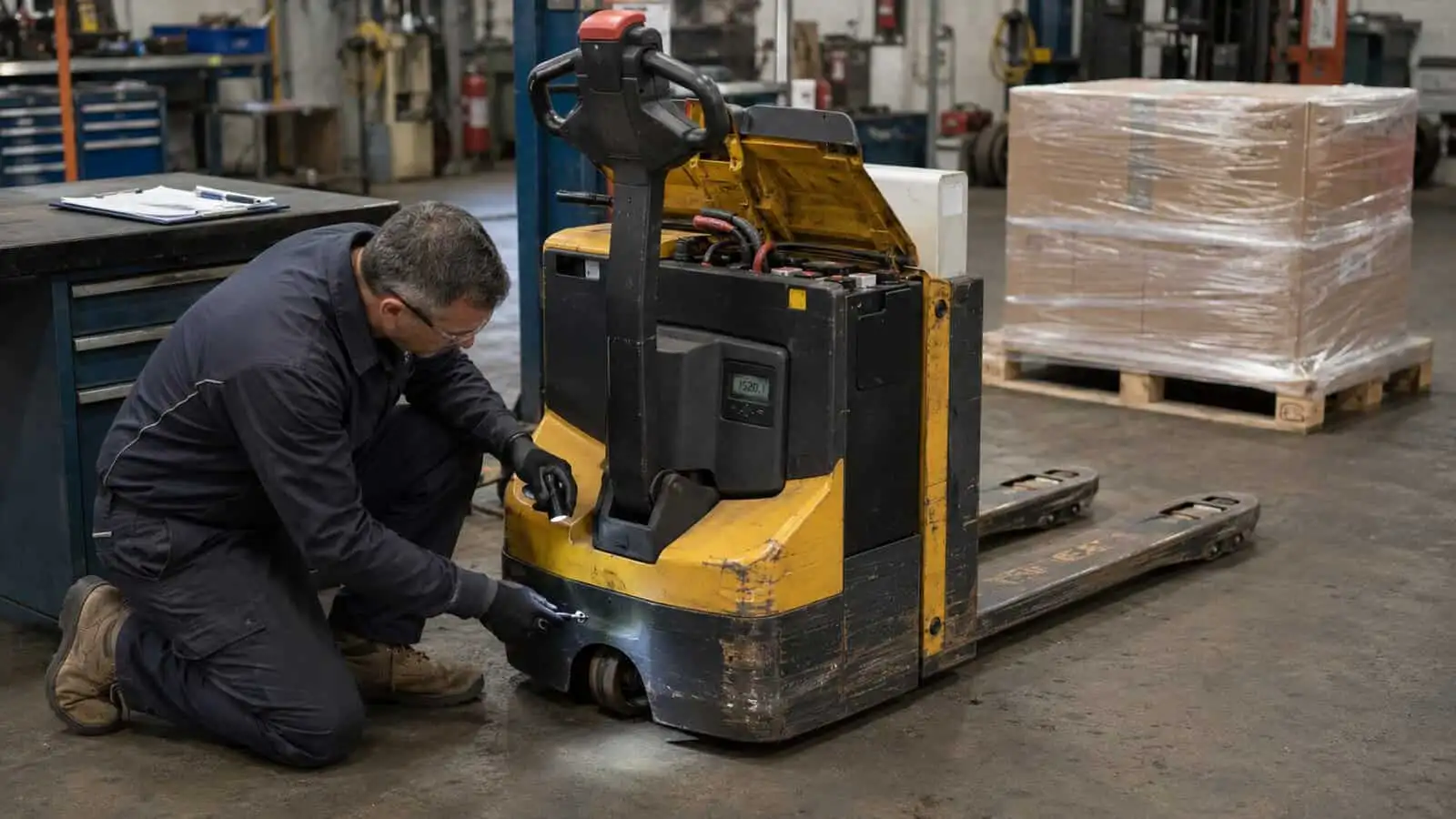
A pre-owned electric pallet jack is often the right buy, provided you check the things that actually cost money to fix.
- Battery age and condition. On a used unit the battery is frequently the largest replacement cost, which is why the case for buying used rather than new rests almost entirely on it.
- Hours on the machine. Hours tell you more than the model year about how much life is left in the drive and hydraulics.
- Fork condition. Check for bending, cracking and wear at the heel. Damaged forks are not a cosmetic issue.
- Load wheels and drive wheel. Worn wheels make the machine hard to steer and chew through floors.
- Lift and lower under load. Test it with a real pallet, not empty. Hydraulic problems show up under weight.
- Service history. Ask for it, and check it matches the hour meter.
Maintenance and Servicing
An electric pallet jack needs very little compared with a forklift, but the little it needs is not optional.
Keep the battery charged correctly for its chemistry, keep the load wheels clean and free of strapping and shrink wrap, and check the forks and the lift function as part of a regular walkaround.
Most of keeping a pallet jack running is keeping debris out of the load wheel axles, which is the single most common cause of premature failure and entirely preventable.
Browsing the Range
Buy A Fork stocks new and pre-owned equipment from the Somerton yard, with delivery across Melbourne.
The electric pallet jack range covers the walkie and ride-on configurations across the common capacity classes.
Where the job involves stacking rather than just moving, the electric stackers are the machines to look at instead.
Frequently Asked Questions
1. Do you need a licence for an electric pallet jack in Australia?
A pedestrian-operated electric pallet jack generally falls outside the high risk work licence classes, which cover forklift trucks and order-picking forklift trucks.
Training and competency obligations still apply under general work health and safety duties, and a ride-on unit may be treated differently, so confirm the position for your specific machine with Safe Work Australia or your state regulator.
2. What is the difference between an electric pallet jack and a pallet stacker?
An electric pallet jack lifts a pallet just clear of the floor to move it, while a stacker has a mast and lifts pallets to height for racking.
If you need to put a pallet on a rack beam, a jack will not do it.
3. How long does an electric pallet jack battery last on a charge?
Runtime depends on the battery capacity, the load weight and how much of the shift is spent lifting rather than travelling.
Rather than relying on a general figure, size the battery against your actual duty cycle, and consider lithium if the machine needs to run through more than one shift.
4. Can an electric pallet jack be used on a ramp?
Gradient limits vary by machine and are stated by the manufacturer, and they are lower than most people expect once a load is on the forks.
Check the rated gradient for the specific model before using it on a ramp or a loading dock incline.
5. What fork width should I choose?
Standard width suits general warehouse and racking work, while narrow forks exist for tight aisles, confined truck bodies and narrow doorways.
Measure the tightest point the machine has to pass through and specify from that, not from the pallet size.
6. Are electric pallet jacks suitable for outdoor use?
Most are designed for smooth indoor floors.
Rough or wet outdoor surfaces need a machine specified for it, and running a standard indoor unit outside will shorten the life of the wheels and the drive.