
Electric Pallet Jack vs Walkie Stacker: Which One Should You Buy for Your Warehouse?
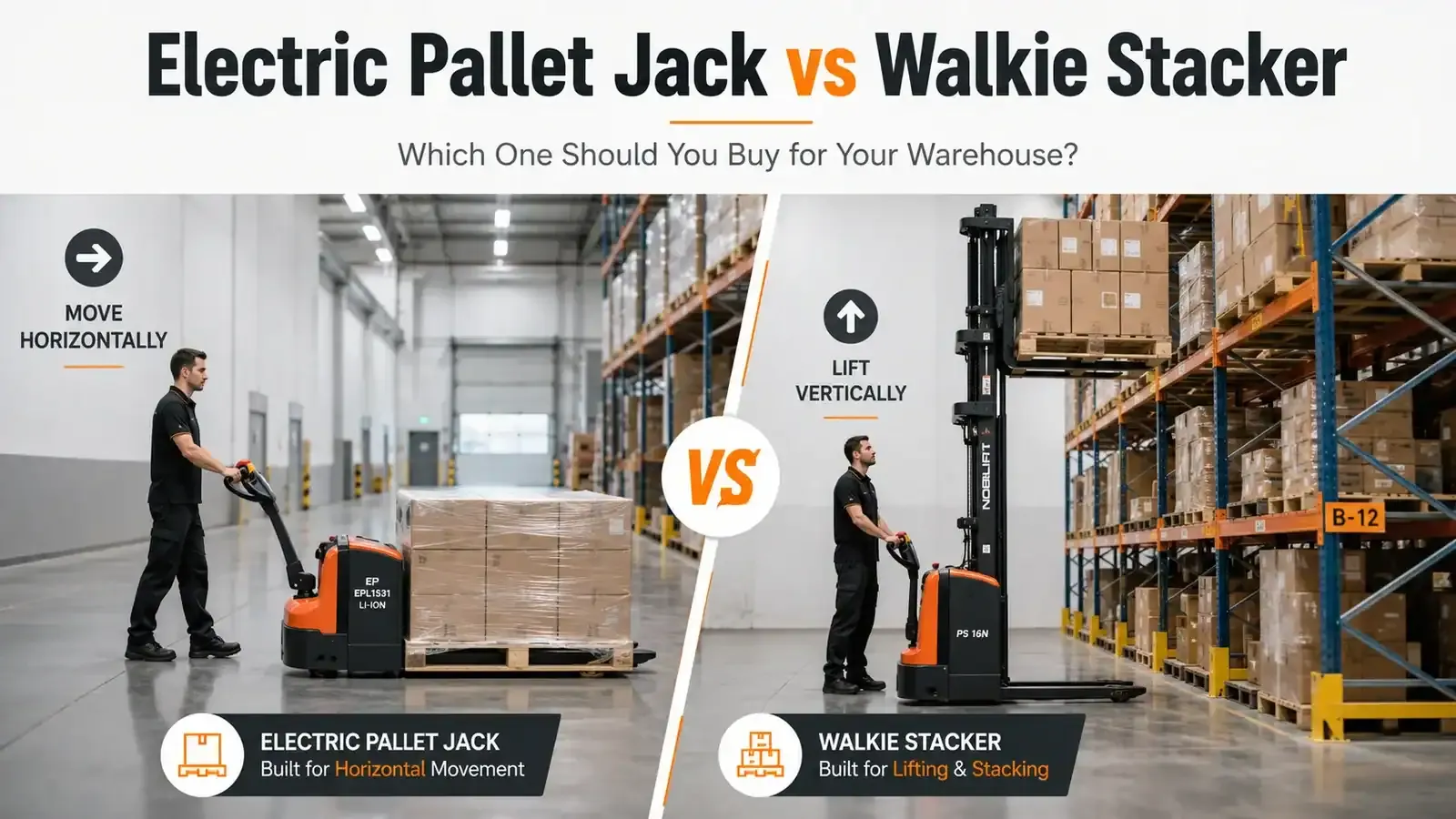
Choosing between an electric pallet jack and a walkie stacker is not just a question of price. It comes down to how your warehouse moves stock, how high pallets need to be lifted, and how much space your team has to work with.
Both machines can make pallet handling faster and safer. But they are built for different jobs. Before you buy, it is worth knowing where each machine fits, where it falls short, and which one suits your daily workflow.
Which One Should You Buy?
If your warehouse mainly moves pallets across flat floors, an electric pallet jack is usually the better buy. It is simpler, more affordable and built for fast horizontal pallet movement in loading areas, stockrooms and short warehouse routes.
If your team needs to lift pallets onto racking, stack goods above floor level or make better use of vertical storage, a walkie stacker is the better choice. It gives you the movement of a pallet jack with the added lifting ability of a compact mast.
The right choice depends on four things: lift height, load weight, aisle space and daily usage. Buy for the task your team performs most often, not just the machine with the lowest price.
| Warehouse Need | Better Choice |
| Moving pallets across flat floors | Electric pallet jack |
| Loading and unloading at ground level | Electric pallet jack |
| Lifting pallets onto racking | Walkie stacker |
| Stacking goods above floor level | Walkie stacker |
| Lower upfront equipment cost | Electric pallet jack |
| Compact lifting in tight warehouse spaces | Walkie stacker |
What Is an Electric Pallet Jack?
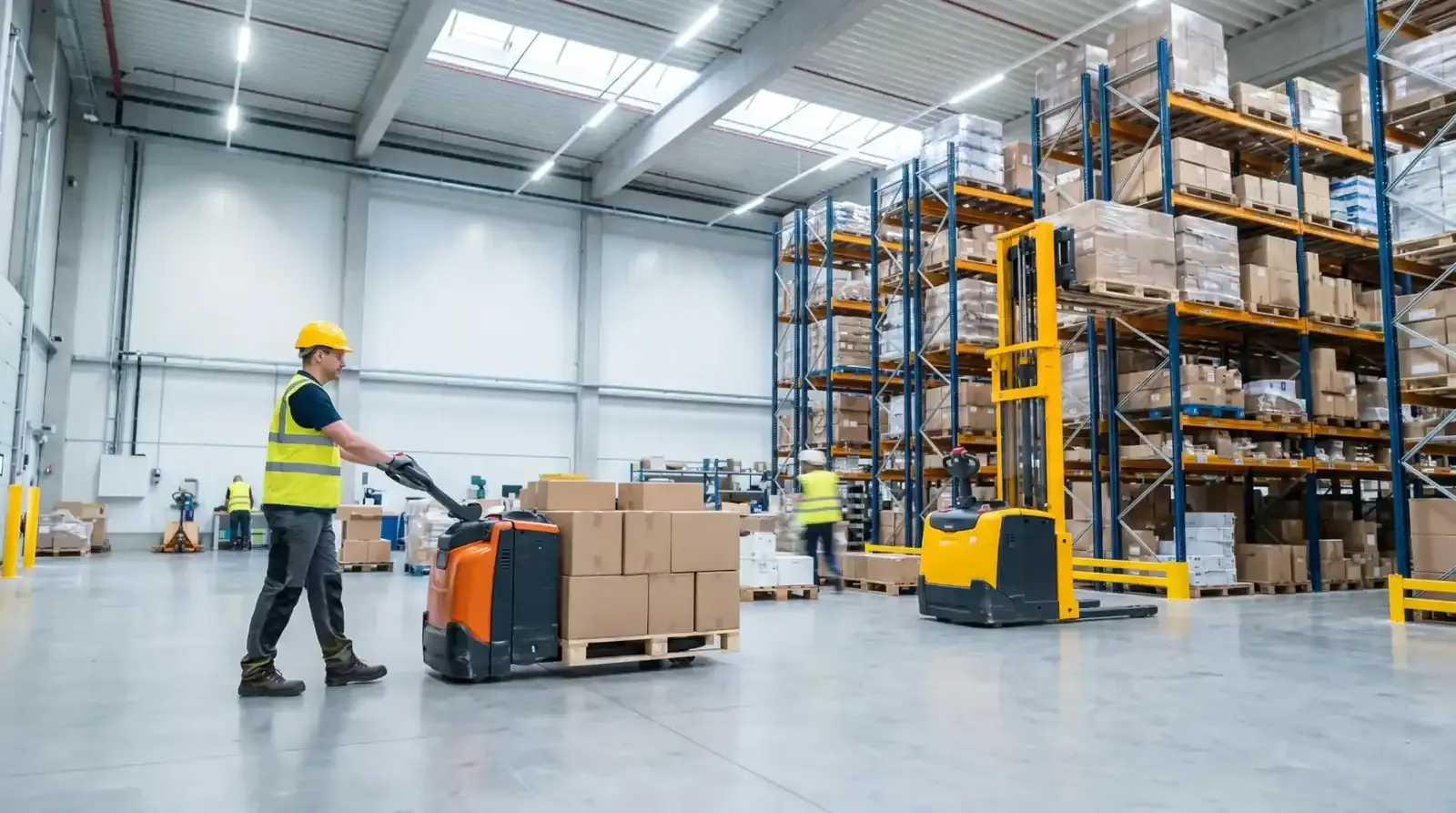
An electric pallet jack is a powered pallet mover designed to move palletised goods across flat warehouse floors. Instead of relying on manual force, it uses an electric motor to help the operator move heavier loads with less physical effort.
Its main job is horizontal pallet transport. The forklift lifts a pallet high enough to clear the floor, then the machine moves it from one area to another. This makes it useful for loading zones, stockrooms, short warehouse routes, dispatch areas and retail back-of-house spaces.
An electric pallet jack is not built for high stacking. If your team needs to lift pallets into racking, it will usually fall short. But if the daily task is moving pallets quickly, safely and repeatedly at ground level, it can be one of the most practical machines to buy. You can also compare current electric pallet jack options based on capacity, lift height, power type and price.
What Is a Walkie Stacker?
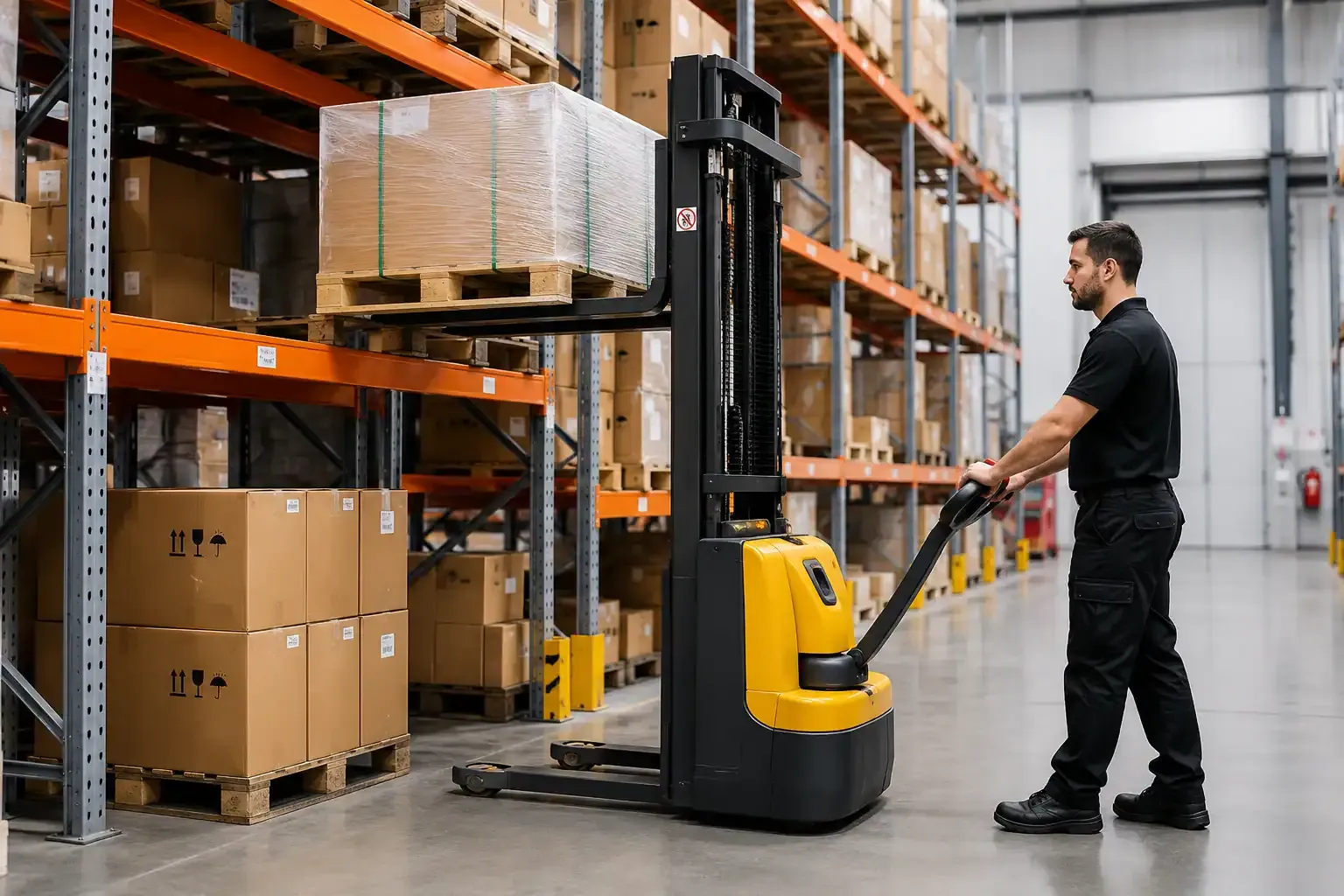
A walkie stacker is a pedestrian-operated lifting machine used to move, raise and stack palletised goods. Unlike an electric pallet jack, it has a mast that allows the forks to lift pallets above ground level.
Its main advantage is vertical pallet handling. That makes it useful in warehouses where stock needs to be placed onto low to medium-height racking, stacked in storage areas or moved through tighter spaces where a larger forklift may not be practical.
A walkie stacker can suit smaller warehouses, retail storage areas, dispatch zones and businesses that need more lifting ability without moving straight to a full forklift. It is not always the best choice for heavy outdoor work or high-volume forklift tasks, but it can be a smart option when your team needs compact lifting power. For businesses comparing used equipment, electric pallet stackers are worth reviewing once the stacking height becomes part of the job.
Electric Pallet Jack vs Walkie Stacker: Main Differences
The biggest difference is simple: an electric pallet jack is made for moving pallets, while a walkie stacker is made for moving and lifting pallets. Both can reduce manual handling, but they suit different warehouse jobs.
An electric pallet jack works best when pallets stay at floor level. A walkie stacker becomes more useful when stock needs to be lifted onto racking, stacked above the floor or handled in tighter areas where a full forklift may not be practical.
| Factor | Electric Pallet Jack | Walkie Stacker |
| Main purpose | Moving pallets across flat floors | Moving, lifting and stacking pallets |
| Lift height | Low lift only | Medium to higher lift, depending on model |
| Best suited for | Loading areas, dispatch zones, stockrooms and short transport routes | Racking areas, storage zones and compact warehouse spaces |
| Space requirements | Very compact and easy to manoeuvre | Compact, but mast height and turning space matter |
| Cost | Usually the more affordable option | Usually costs more due to the lifting capability |
| Operator use | Simple for regular pallet movement | Requires more care because loads are lifted higher |
| Forklift alternative | Limited | Can replace some light forklift tasks |
| Best buying reason | You need faster pallet movement | You need vertical storage and stacking ability |
The right choice depends on the work your team does most often. If pallets only need to move from one point to another, a pallet jack may be enough. If the job involves height, racking or stacking, a walkie stacker is usually the better fit.
When Should You Choose an Electric Pallet Jack?
An electric pallet jack suits warehouses where pallets need to move often, but not very high. Think delivery bays, dispatch lanes, stockrooms, retail storage areas and short runs between receiving and packing zones.
The main advantage is speed without the strain of a manual pallet jack. Operators can shift heavier loads with less effort, which helps during busy receiving periods or repeat movements across the same floor area. For businesses handling daily pallet traffic, that can make a noticeable difference to workflow.
Price also matters. When lifting height is not part of the job, paying extra for a walkie stacker may not make sense. A pallet jack keeps the setup simpler while still giving your team powered movement.
Before buying, check the pallet weights, floor surface, battery condition and turning space.
When Should You Choose a Walkie Stacker?
A walkie stacker is the better choice once pallets need to leave the floor. If your warehouse uses racking, stores goods above ground level, or stacks stock to save space, a pallet jack will quickly feel limited.
This type of machine works well in smaller warehouses where a full forklift may be too large or unnecessary. It gives operators the ability to move pallets through tight areas, then raise them into position without needing a bigger counterbalance forklift for every task.
A walkie stacker can also suit businesses that are growing into more organised storage. Instead of spreading stock across the floor, you can start using vertical space more efficiently. That matters in busy warehouses where space is often just as valuable as equipment.
The main checks are lift height, load capacity, mast clearance and aisle width.
Cost, Lift Height and Capacity: What Should You Check Before Buying?
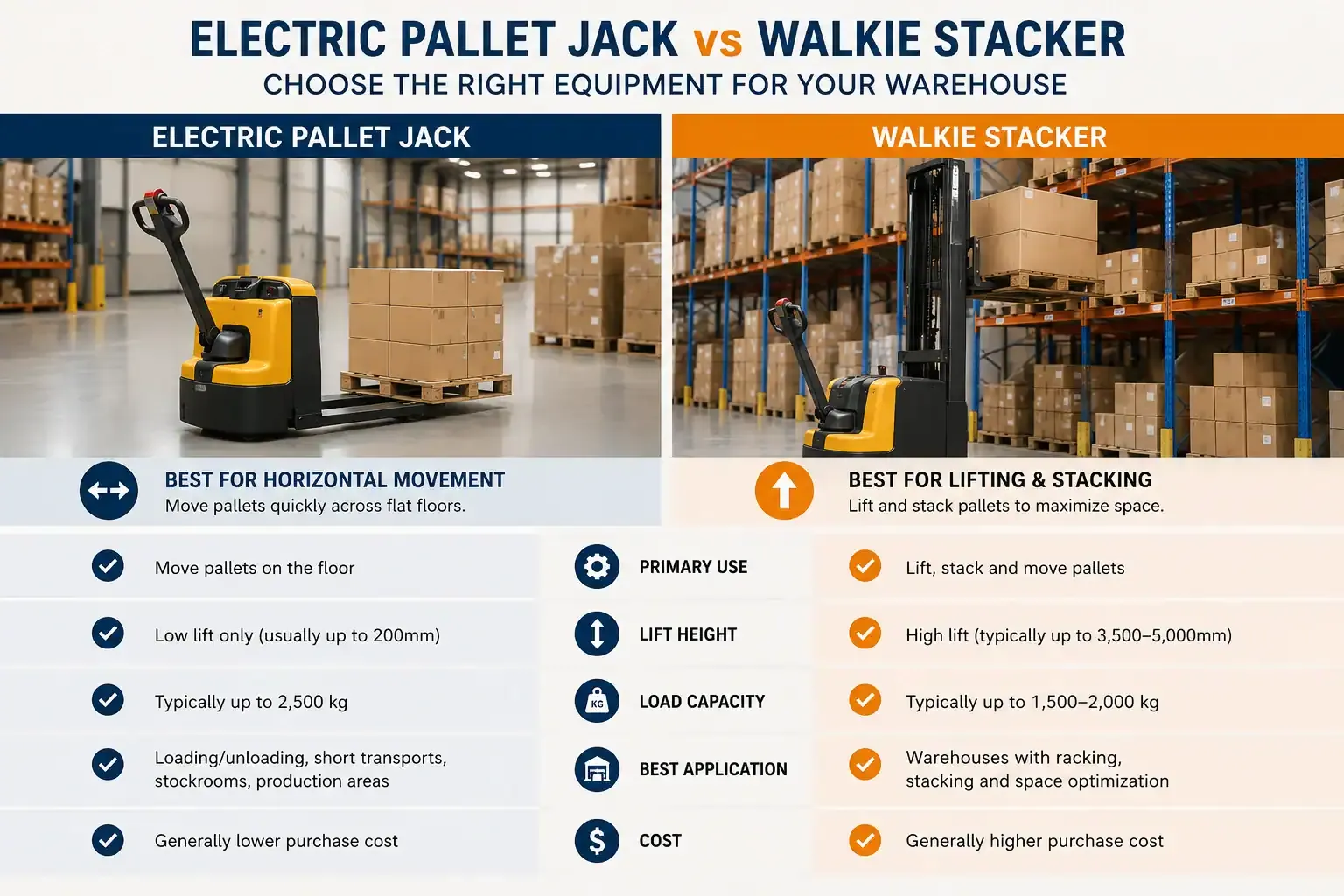
Price should not be the first thing you judge. A cheaper machine can become expensive if it cannot lift high enough, carry the right weight, or handle the pace of your warehouse.
Start with load capacity. Check the heaviest pallet your team moves on a normal day, not just the average load. If your stock weight changes often, leave room for a safer margin instead of buying a machine that only just meets the number.
Lift height matters even more when comparing a pallet jack with a walkie stacker. A pallet jack only needs to clear the floor. A stacker needs to reach your racking height, fit under doorways, and move safely through the areas where it will be used.
Battery condition is another big one, especially with used electric equipment. Ask how the battery performs under daily use, how long it holds charge, and whether the charger is included.
You should also check aisle width, turning space, floor condition, mast clearance, service history and warranty.
Which One Is Better for Small Warehouses?
For a small warehouse, the better choice depends on how stock is stored. If pallets stay on the floor and the main job is moving goods between receiving, storage and dispatch, an electric pallet jack is usually enough. It keeps movement simple, takes up little room and avoids paying for lifting ability you may not use.
A walkie stacker starts to make more sense when floor space is tight and pallets need to go onto racking. It gives a smaller warehouse more storage flexibility without jumping straight into a larger forklift.
The main thing is not the warehouse size alone. A compact site with racking may need a stacker, while a larger site with ground-level stock may only need pallet jacks. Look at how your team actually works each day, then match the machine to the space, pallet weight and storage height.
Can a Walkie Stacker Replace a Forklift?
A walkie stacker can cover some forklift jobs, but it should not be treated as a direct replacement in every warehouse.
For lighter indoor work, it can handle pallet stacking, short-distance movement and low to medium racking tasks quite well. That makes it useful for smaller operations that need lifting ability without the size, cost or turning space of a larger forklift.
The limits show up with heavier loads, outdoor surfaces, long travel distances, high racking or constant all-day use. In those cases, a forklift or reach truck will usually be more suitable.
So the question is not whether a stacker can replace a forklift completely. It is whether your daily work is light enough, compact enough and low enough for a stacker to handle safely.
Common Mistakes When Choosing Between the Two
One common mistake is buying the cheaper machine before checking what the work actually involves. An electric pallet jack may look like the better deal, but it will not help if pallets need to be placed onto racking.
Some businesses make the opposite mistake and buy a walkie stacker when all they need is quick ground-level movement. That adds cost, training considerations and machine complexity without giving much extra value.
Lift height is another detail that gets missed. A stacker needs to reach the racking safely, but it also needs enough clearance through doors, loading areas and low roof sections.
Battery condition also deserves attention, especially with used equipment. A machine may look suitable on paper, but weak battery performance can slow down daily work.
Before choosing, check pallet weight, aisle width, floor condition, lift height and how often the machine will be used. Those details matter more than the category name.
Final Recommendation: Which One Should You Buy?
Choose an electric pallet jack when the work is mostly about moving pallets quickly across flat indoor floors. It is the cleaner choice for loading areas, dispatch runs, stockrooms and warehouses where pallets do not need to be stacked.
Choose a walkie stacker when height becomes part of the job. If your team needs to lift pallets onto racking, stack goods safely, or make better use of limited floor space, the extra lifting ability is worth considering.
For heavier loads, higher racking, or more demanding daily use, a forklift may be the better long-term option. You can compare the wider used forklift range once your capacity, lift height and space requirements are clear.
FAQs
1. What is the main difference between an electric pallet jack and a walkie stacker?
An electric pallet jack is mainly used to move pallets across flat floors. A walkie stacker can move pallets too, but it also lifts them higher for stacking or racking. The difference comes down to height.
2. Can an electric pallet jack lift pallets onto racking?
No. An electric pallet jack only lifts a pallet high enough to move it safely across the floor. If pallets need to go onto racking, a walkie stacker, reach truck or forklift will be more suitable.
3. Is a walkie stacker better than an electric pallet jack?
Not always. A walkie stacker is better when lifting and stacking are part of the job. An electric pallet jack is better when your team only needs quick, simple pallet movement at ground level.
4. Which option is cheaper to buy?
An electric pallet jack usually costs less because it has a simpler job. A walkie stacker often costs more because it includes a mast and lifting system. The better value depends on what your warehouse actually needs.
5. Should I buy used or new equipment?
Used equipment can be a smart choice if the machine has the right capacity, lift height, battery condition and service history. Before comparing used warehouse equipment, write down your pallet weight, aisle space and daily usage.