
Pallet Stacker Buying Guide for Warehouses: How to Choose the Right Model
· Updated
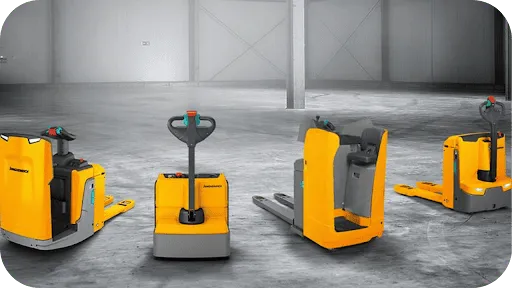
Warehouses lose thousands each year by choosing the wrong material handling equipment. A pallet stacker looks simple, but the wrong model can slow picking, strain staff, and clog already tight aisles.
Too small and it struggles. Too big and it wastes space and money. Add rising labour costs and safety pressure, and the wrong choice hurts fast. Really fast!
This guide breaks down pallet stacker types, key features, and buying factors that actually matter. You will know exactly what suits your warehouse, workload, and future growth.
What Is a Pallet Stacker?
A pallet stacker is a compact material handling machine designed to lift, move, and stack palletised loads within warehouses and storage facilities. It is commonly used where space is limited and full-sized forklifts are unnecessary or impractical.
Pallet stackers are built to handle lighter to medium loads while offering precise control in narrow aisles and confined working areas.
Unlike pallet jacks, pallet stackers can raise pallets to racking heights, making them suitable for stacking, order picking, and short-distance transport. They are available in manual, semi-electric, and fully electric models, allowing businesses to match equipment to workload frequency and budget.
Pallet stackers are widely used in warehouses, retail back-of-house areas, and distribution centres where efficiency, safety, and space utilisation matter. For operations handling frequent pallet movement without heavy lifting demands, pallet stackers provide a practical and cost-effective alternative to traditional forklifts.
Types of Pallet Stackers Explained
This section explains the main pallet stacker types used in warehouses, helping you choose the right model based on workload, space, and daily operational demands.
1. Manual Pallet Stackers
Manual pallet stackers use hydraulic lifting and manual pushing, making them suitable for low-volume tasks. They work best in small warehouses where loads are light, lift heights are modest, and usage is occasional rather than continuous.
2. Semi-Electric Pallet Stackers
Semi-electric pallet stackers combine electric lifting with manual travel, reducing operator strain while remaining cost-effective. They suit warehouses handling moderate pallet volumes that require frequent stacking without the expense of fully powered movement.
3. Electric Pallet Stackers
Electric pallet stackers feature powered lift and travel functions, making them ideal for daily warehouse operations. Electric pallet stackers like BT SWE120S and Linde 1t electric 10- 12 series 1172 improve productivity, reduce fatigue, and provide consistent performance in narrow aisles and high-use stacking environments.
Key Factors to Consider Before Buying a Pallet Stacker
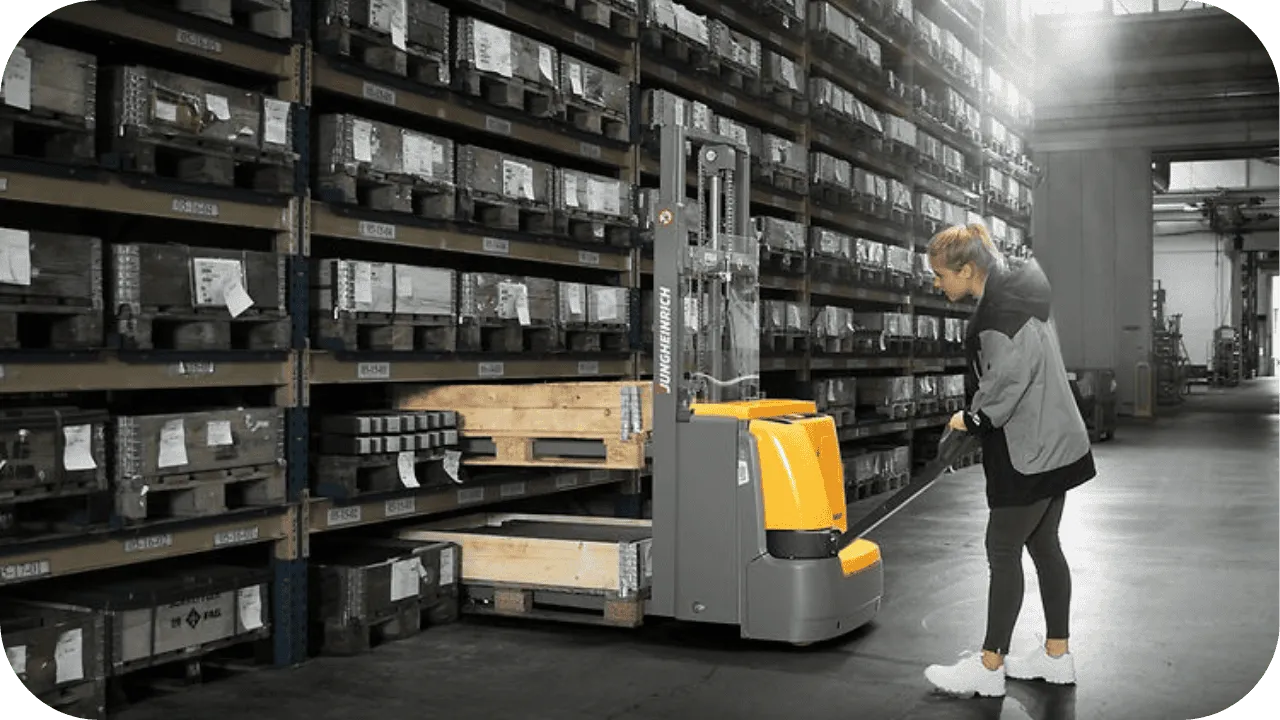
These are the key factors that determine whether a pallet stacker will perform safely, efficiently, and reliably within your warehouse environment over time.
1. Load Capacity Requirements
Understanding the maximum pallet weight you handle is essential. Choosing a stacker with insufficient capacity compromises stability, increases wear, and raises safety risks, especially when lifting loads to higher racking levels during daily warehouse operations.
2. Required Lift Height
Lift height must match your highest racking level. Selecting a pallet stacker with a limited lift range restricts storage efficiency, forces manual handling, and prevents full use of available vertical warehouse space.
3. Aisle Width and Turning Space
Warehouse layout directly affects stacker suitability. Narrow aisles require compact designs and tight turning radii to operate safely, avoid collisions, and maintain efficient pallet movement in confined warehouse environments.
4. Frequency of Use
Usage frequency determines whether manual, semi-electric, or electric models are appropriate. High-use operations benefit from powered stackers that reduce operator fatigue and maintain productivity throughout long shifts.
5. Floor Conditions and Surface Quality
Uneven floors, ramps, or damaged surfaces affect stability and performance. Choosing a pallet stacker designed for your floor conditions ensures safer handling, smoother operation, and reduced maintenance requirements over time.
Why Warehouses Use Pallet Stackers
These are the main reasons warehouses rely on pallet stackers to improve efficiency, safety, and space utilisation without the cost or size of full forklifts.
- Space efficiency: Pallet stackers operate effectively in narrow aisles and confined layouts, allowing warehouses to maximise storage density without expanding floor space or reconfiguring racking systems.
- Lower operating costs: Compared to forklifts, pallet stackers have lower maintenance, initial and running costs, making them a practical choice for light to medium pallet handling tasks.
- Improved workplace safety: Controlled lifting and compact design reduce collision risk, improve visibility, and minimise manual handling injuries during everyday warehouse operations.
- Ease of use: Pallet stackers are simple to operate, require minimal training, and suit a wide range of staff, improving flexibility across warehouse teams.
- Versatile daily applications: From stacking and picking to short-distance transport, pallet stackers support multiple warehouse tasks without needing separate equipment.
Common Warehouse Applications for Pallet Stackers
These are the most common warehouse tasks where pallet stackers provide safe, efficient, and space-saving material handling solutions for daily operations.
- Pallet stacking and de-stacking: Pallet stackers lift pallets onto racking or floor stacks, improving vertical storage use while reducing manual handling and maintaining stable, controlled movement in tight warehouse spaces.
- Order picking operations: Stackers support picking at low to mid racking heights, allowing operators to access stock safely and efficiently without using full-sized forklifts.
- Short-distance pallet transport: Ideal for moving pallets between receiving, storage, and dispatch areas, pallet stackers offer controlled movement over short distances within confined warehouse layouts.
- Back-of-house retail storage: Compact design allows safe pallet handling in retail stockrooms where space is limited, and manoeuvrability is critical.
- Light manufacturing material handling: Pallet stackers move raw materials and finished goods efficiently within production areas, supporting smooth workflow without requiring heavy lifting equipment.
Common Mistakes Warehouses Make When Buying a Pallet Stacker
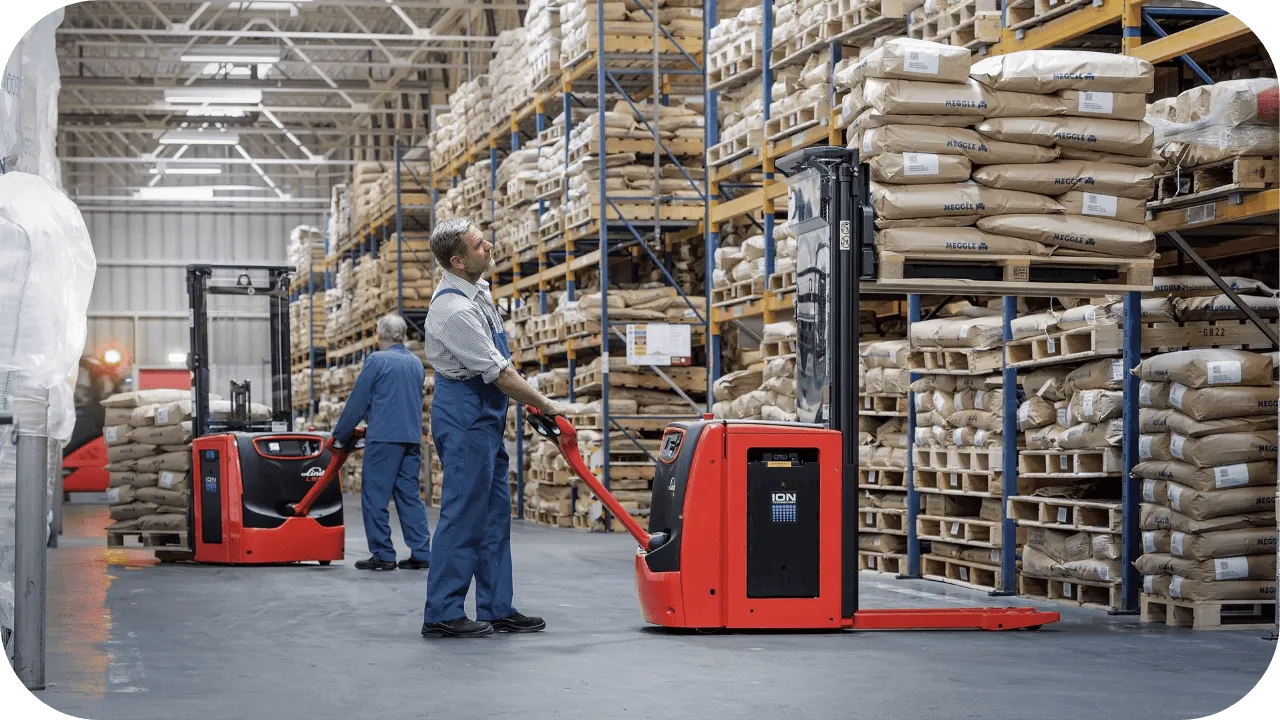
These are the most common mistakes warehouses make when buying pallet stackers, often leading to inefficiency, safety risks, and unnecessary replacement costs.
- Choosing insufficient lift height: Selecting a stacker that cannot reach required racking levels limits storage use, forces manual handling, and reduces overall warehouse efficiency.
- Underestimating load capacity: Buying a stacker with low capacity creates stability issues, accelerates wear, and increases safety risks when handling fully loaded pallets.
- Ignoring aisle width requirements: Failing to assess turning space results in poor manoeuvrability, collision risks, and operational bottlenecks in narrow warehouse layouts.
- Selecting manual models for high use: Using manual stackers for frequent tasks leads to operator fatigue, slower workflows, and reduced productivity over time.
- Overlooking battery and charging needs: Not planning charging access and battery capacity causes downtime and disrupts daily warehouse operations.
Why Warehouses Choose Buy A Fork
Warehouses choose Buy A Fork because they need practical equipment advice backed by real industry experience, not generic recommendations.
Every warehouse operates differently, with varying aisle widths, racking heights, load weights, and daily handling demands. Buy A Fork takes the time to understand these details before recommending any pallet stacker.
By offering a wide range of new and used pallet stackers, warehouses can select equipment that fits both operational requirements and budget expectations. Each unit is carefully assessed to ensure reliability, safety, and suitability for warehouse environments.
Beyond supply, Buy A Fork provides ongoing servicing, maintenance support, and expert guidance, 6 month service warranty, helping warehouses reduce downtime and extend equipment lifespan.
For warehouses across Melbourne, Buy A Fork delivers dependable pallet handling solutions, honest advice, and long-term support that keep operations running efficiently and safely.
Conclusion
Choosing the right pallet stacker comes down to understanding how your warehouse really operates, from lift heights and load weights to space and daily usage.
The right model improves safety, efficiency, and long-term operating costs, while the wrong choice creates limitations and downtime. Taking the time to assess your needs before buying makes a measurable difference.
If you want expert guidance and reliable equipment matched to your operation, Contact Buy A Fork today and get advice that helps you choose with confidence.