
Tips for Choosing the Perfect Forklift for Narrow Aisles
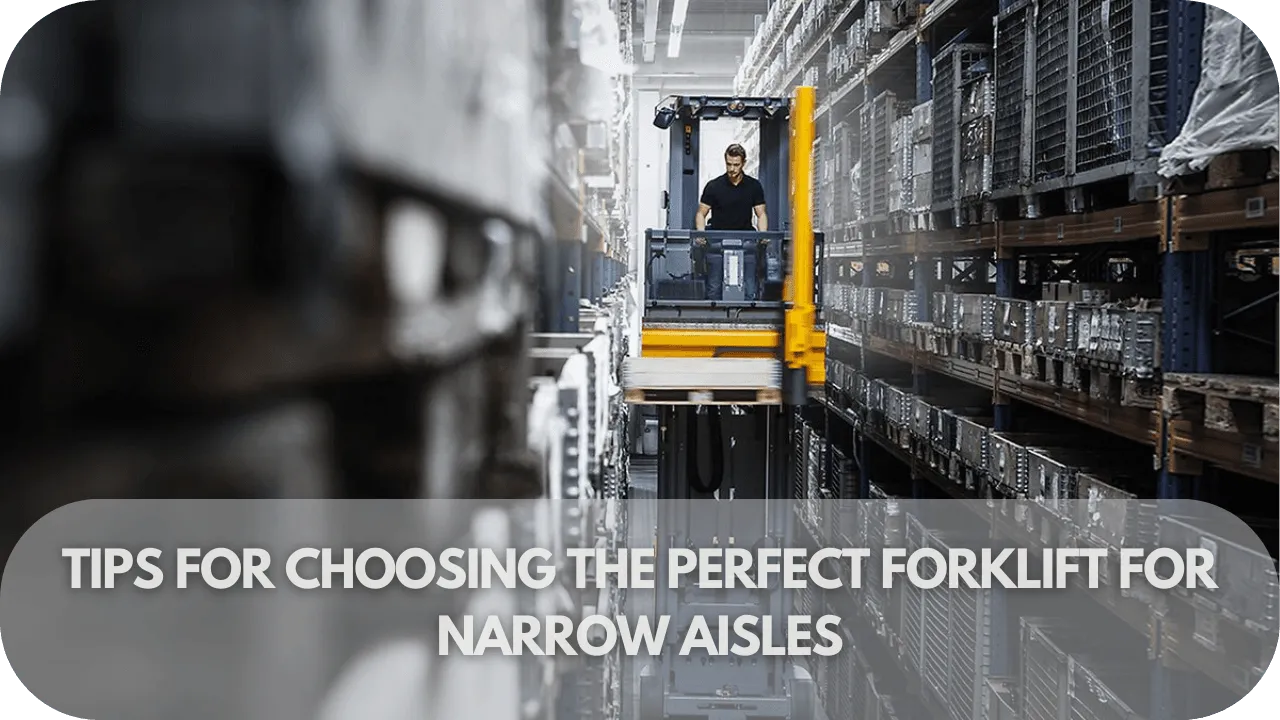
Maximising space is essential for improving efficiency, reducing costs, and ensuring safety when managing a warehouse or distribution centre. However, narrow aisles present a significant challenge when storing inventory and operating equipment.
The right forklift can make all the difference in making the most of these tight spaces. Let’s review the key factors when selecting the right forklift for narrow aisles, from assessing aisle dimensions to evaluating forklift types.
1. Assess the Dimensions of Your Aisles
Before selecting a forklift, it’s crucial to assess the dimensions of your warehouse aisles. Narrow aisle forklifts are typically designed for aisle widths ranging from 1.6 to 2.5 metres, but every warehouse has its unique layout.
Accurate measurements will help you determine which forklift models will comfortably fit in your space while providing the best performance. If your aisles are even narrower, specialised forklifts designed to operate in spaces as tight as 1.3 metres, such as Very Narrow Aisle (VNA) forklifts, are available.
Knowing your aisle dimensions will ensure you select a forklift that fits and operates efficiently, improving space utilisation and warehouse flow.
2. Consider the Turning Radius
The turning radius of a forklift is one of the most important factors to consider when operating in narrow aisles. A forklift with a smaller turning radius can navigate tight spaces more efficiently, ensuring smooth and efficient operations.
In warehouses with limited space, selecting a forklift with a tight turning radius can prevent potential damage to goods, racking systems, or the forklift itself.
Forklifts with rear-wheel steering tend to be more manoeuvrable in confined spaces, making them particularly effective in narrow aisles. This feature allows for smoother turns, optimising time and space during operations.
3. Select the Right Lift Height and Capacity
When choosing a forklift for narrow aisles, it’s essential to consider lift height and load capacity. The height of your racking systems and the weight of your stored goods should guide your decision.
Many narrow aisle forklifts, such as reach trucks and VNA forklifts, are specifically designed to reach high shelves and heavy loads, often lifting items to 12 metres or more.
However, forklifts that can achieve these heights may have slightly reduced load capacities compared to standard forklifts, so selecting a model that can handle the typical weight of the items you move is crucial.
Matching the lift height and load capacity to the specific needs of your warehouse will ensure the forklift can perform its job effectively and safely.
A forklift that can lift heavy loads to great heights is essential in high-bay warehouses where vertical space is maximised. Similarly, choosing the right load capacity will help prevent forklift overload and ensure optimal performance.
4. Evaluate Power Source Options
The power source of your forklift plays a significant role in its performance, operational cost, and suitability for your warehouse environment. Forklifts typically operate on one of three power sources: electric, internal combustion (IC), or lithium-ion batteries.
Electric forklifts are the most common for narrow aisle applications. These forklifts are quieter, produce zero emissions, and require less maintenance than IC models. They are ideal for indoor environments such as warehouses where air quality and noise levels are concerned.
However, you must consider the charging needs of electric forklifts. If your operation requires continuous use, you may need to invest in sufficient charging infrastructure to ensure minimal downtime.
Lithium-ion battery technology, which is becoming increasingly popular, offers even faster charging times, longer battery life, and more consistent performance than traditional lead-acid batteries.
5. Choose the Right Forklift Type
When operating in narrow aisles, selecting the correct type of forklift is crucial for maximising space and operational efficiency. Reach trucks are an excellent option for warehouses with narrow aisles, typically ranging from 1.6 to 2.5 metres wide.
These forklifts have a unique mast design that allows the forks to extend beyond the wheelbase, enabling operators to reach high shelves.
Reach trucks are ideal for high-density storage and environments with tall racking systems, making them versatile for various warehouse operations.
For highly tight aisles (as narrow as 1.3 metres), Very Narrow Aisle (VNA) forklifts are the best choice. VNA forklifts are designed to operate in ultra-narrow aisles, making them ideal for warehouses where storage density is paramount.
Order pickers are another excellent choice for warehouses where picking individual items from elevated shelves is frequent. These compact forklifts allow operators to elevate themselves with the forks, providing better access to high racking for order picking.
They are ideal for low- to medium-lift operations and offer excellent manoeuvrability in tight spaces.
6. Focus on Operator Comfort and Safety
Operator comfort and safety are essential when selecting a forklift for narrow aisles. To ensure comfort during long shifts, forklifts should offer ergonomic features like adjustable seats, user-friendly controls, and clear sightlines.
Proper ergonomics boosts productivity and reduces fatigue-related accidents, especially in tight spaces. Visibility is also crucial, as narrow aisles obstruct the operator’s line of sight.
Forklifts with clear mast visibility, overhead guards with transparent panels, or cameras enhance safety by improving sightlines, reducing the risk of damage to goods or equipment.
Modern forklifts also have advanced safety features, including load sensors, automatic speed reduction during turns, and anti-collision systems. These technologies help prevent accidents, ensuring a safer environment for operators and inventory in confined spaces.
7. Consider the Total Cost of Ownership
When purchasing a forklift, the total cost of ownership (TCO) is an essential consideration beyond the initial purchase price. TCO includes the purchase and ongoing expenses such as maintenance, energy, and depreciation.
Electric forklifts generally have lower operating costs than internal combustion models because they have fewer moving parts and require less frequent maintenance. However, it’s essential to consider the cost of charging infrastructure and the potential need for battery replacements over time.
Maintenance costs should also be factored in. Forklifts require regular maintenance to ensure they operate efficiently and safely. Choosing a forklift with low maintenance requirements can help reduce long-term operational costs.
Additionally, consider how long the forklift will likely last and its expected resale value if you plan to upgrade or replace it. This will help you gauge its overall value and impact on your warehouse operations.
8. Don’t Forget About After-Sales Support
Reliable after-sales support is essential when investing in forklifts, especially for narrow aisle operations. Look for a supplier that offers comprehensive service packages, including preventative maintenance, repair services, and emergency support.
A strong after-sales support system can help you minimise downtime, extend the life of your forklift, and ensure consistent performance.
Moreover, check if the supplier provides operator training to ensure your team can operate the forklift safely and efficiently. Well-trained operators will improve safety and enhance productivity by reducing operational errors.
Lastly, having access to a reliable network for spare parts ensures that you can quickly address any issues that may arise, preventing disruptions to your operations.
Conclusion
Choosing the right forklift for narrow aisles is key to improving warehouse efficiency, safety, and space utilisation. You can optimise your operations by considering aisle dimensions, turning radius, lift height, and forklift type.
Prioritising operator comfort, safety, and long-term costs will further enhance productivity. If you’re ready to make the right choice for your warehouse, start assessing forklift options today and find the perfect fit for your needs.