
Electric Pallet Jacks vs. Electric Stackers: Key Differences
· Updated
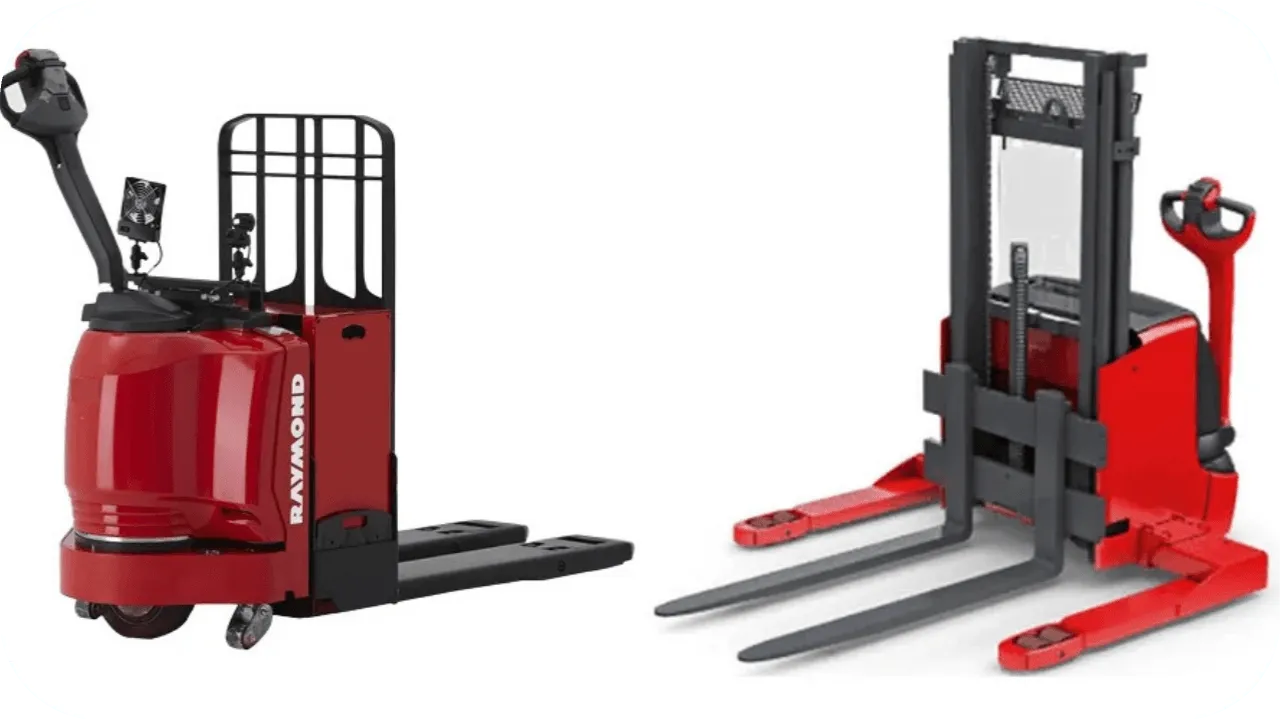
Electric pallet jacks and stackers are vital tools in material handling, but they serve distinct functions. While pallet jacks are designed for moving heavy loads across short distances at ground level, stackers are built to lift and stack pallets at varying heights.
Understanding these key differences is crucial for businesses to select the right equipment, ensuring operational efficiency, safety, and optimal warehouse space utilisation.
Choosing wisely can enhance productivity and streamline warehouse processes.
What Is an Electric Pallet Jack?
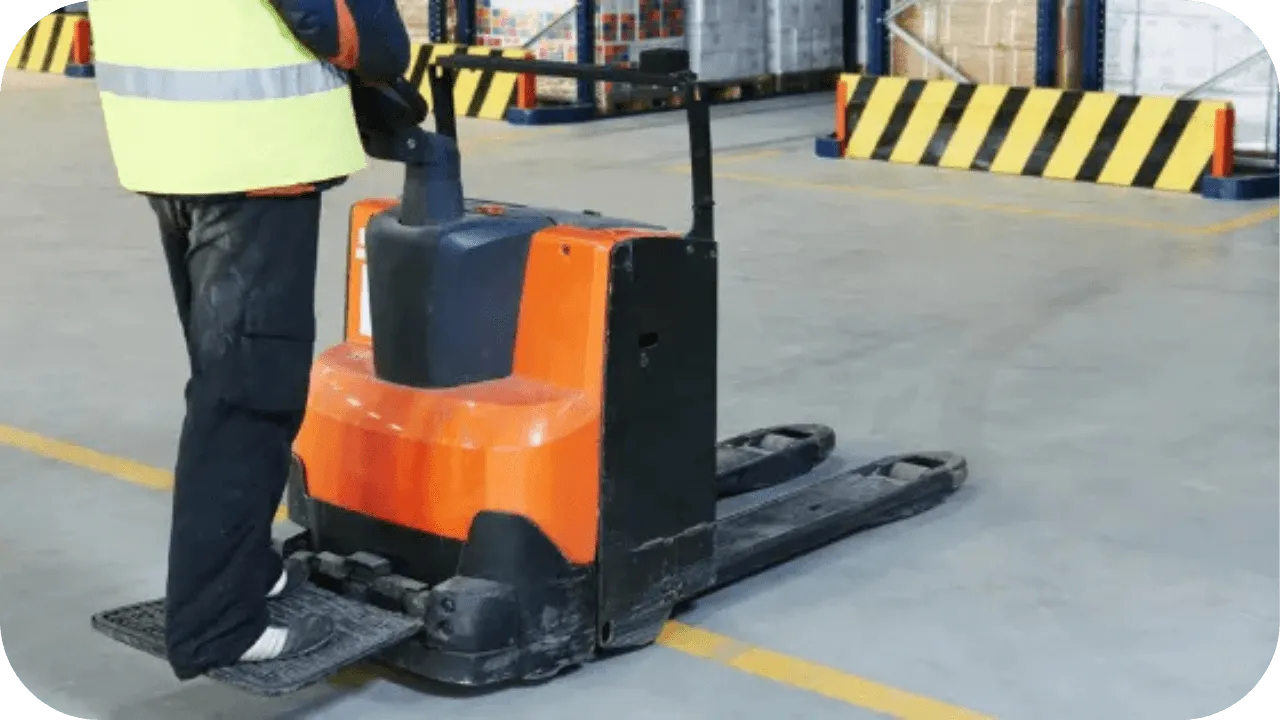
An electric pallet jack, also known as an electric pallet truck or powered pallet jack, is a motorised tool for lifting and transporting pallets over short distances. Unlike manual pallet jacks, it features an electric motor that assists with movement and lifting, reducing physical strain on the operator.
Electric pallet jacks are commonly used in warehouses, retail stores, and distribution centres. They facilitate the efficient movement of heavy loads. They are available in walk-behind and ride-on models and offer varying levels of speed and control.
These machines are ideal for low-level material handling but cannot stack pallets at height. Their compact design allows easy manoeuvrability in tight spaces, improving productivity in busy environments.
Electric pallet jacks are an efficient, ergonomic, and cost-effective solution for businesses that want to streamline ground-level pallet transportation.
What Is an Electric Stacker?
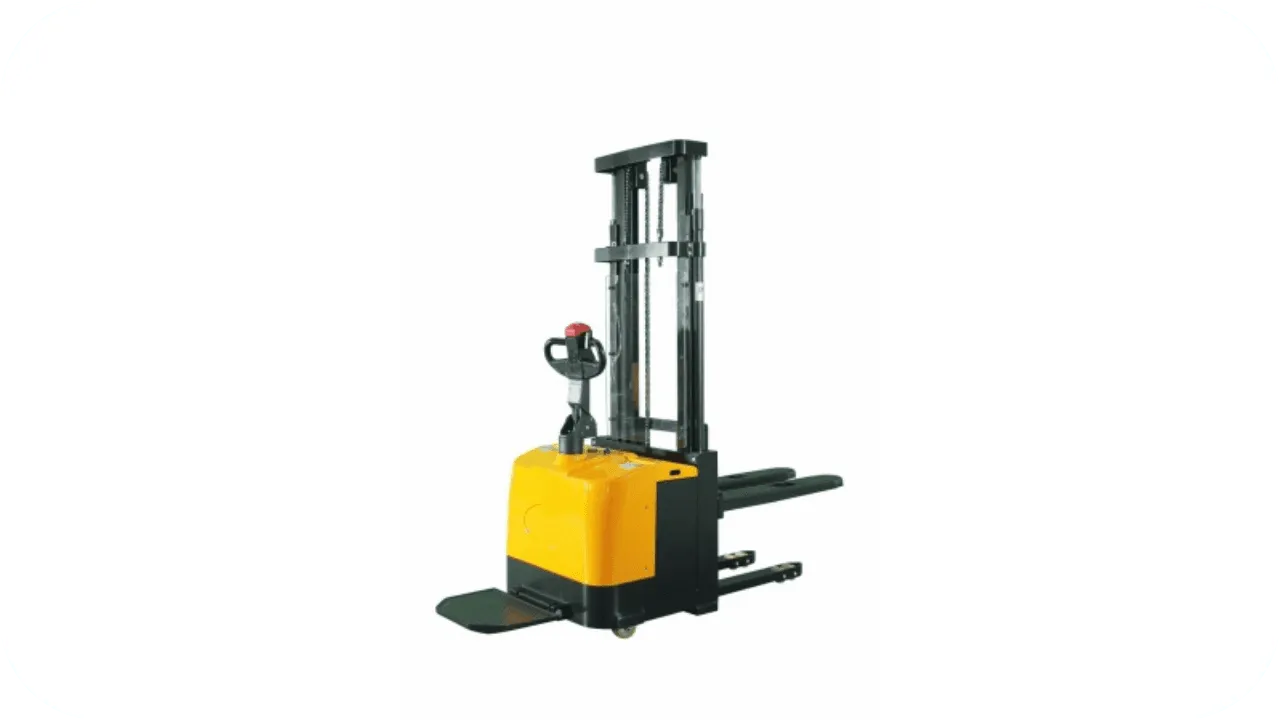
An electric stacker is a motorised material-handling machine designed to lift, transport, and stack pallets at various heights. Unlike electric pallet jacks, which only move loads at ground level, electric stackers feature powered lifting mechanisms that allow operators to place pallets on racks or shelves.
These machines are commonly used in warehouses, factories, and retail stockrooms, where vertical storage is essential. Electric stackers come in different types, including straddle stackers, counterbalance stackers, and ride-on models, each suited for specific load capacities and space constraints.
Electric stackers offer better lifting height and precision control, which are ideal for stacking goods in narrow aisles and high-storage areas. While they require more space and investment than pallet jacks, they significantly increase warehouse efficiency and optimise storage capacity.
An electric stacker is the perfect solution for improving workflow and safety for businesses with racking systems and frequent stacking needs.
Key Differences Between Electric Pallet Jacks and Electric Stackers
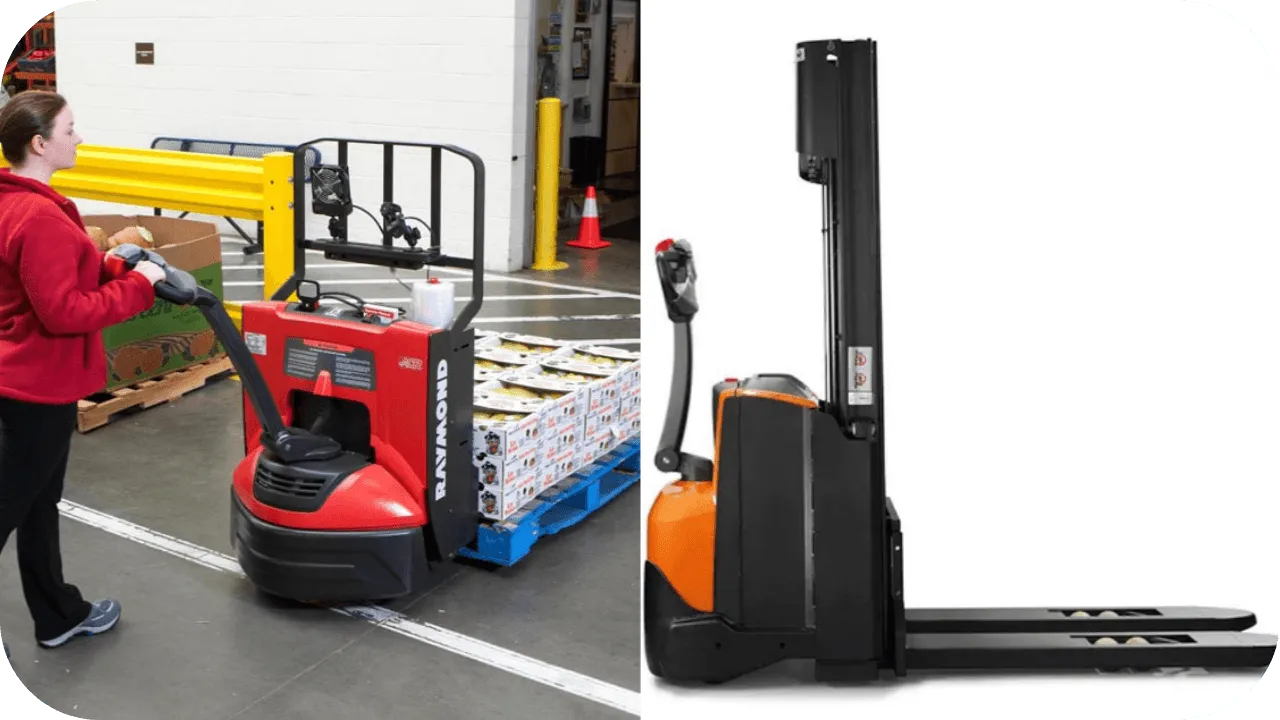
Choosing between an electric pallet jack and an electric stacker isn’t just about lifting pallets—it’s about maximising efficiency, safety, and warehouse productivity. Let’s break down their key differences.
1. Purpose & Functionality
An electric pallet jack is built for ground-level transport, making it perfect for warehouses, distribution centres, and retail environments where goods need to be moved quickly over short distances. These machines are not designed for stacking, as their lift height is minimal.
In contrast, an electric stacker is engineered for movement and vertical stacking, making it essential for warehouses with racking systems. Powerful lifting capabilities allow operators to store and retrieve pallets at multiple heights, optimising vertical space.
2. Lifting Capacity & Height
Electric pallet jacks typically lift pallets just a few inches off the ground, enough for transport but not for stacking. Their weight capacities usually range between 1,500 kg and 3,500 kg, making them strong but limited in height.
Electric stackers, however, offer substantial vertical lift, with models capable of reaching between 3 to 5 metres, sometimes even more. While their weight capacities can be slightly lower than pallet jacks (ranging from 1,000 kg to 2,500 kg), they excel in efficient storage and retrieval in multi-tiered warehouse setups.
3. Operation & Maneuverability
Electric pallet jacks are known for their ease of operation. They are compact and lightweight and can effortlessly navigate tight spaces. They are ideal for environments where quick pallet movement is required, such as supermarket stockrooms and small warehouses.
On the other hand, electric stackers require more clearance and stability due to their taller masts. While some models are compact, they generally need wider aisles to accommodate lifting and stacking functions. Advanced models may have counterbalance designs, which allow for better weight distribution and safety when lifting heavy loads at height.
4. Load Handling
If your warehouse operations involve moving goods from one point to another, an electric pallet jack is a practical and cost-effective choice. It speeds up loading and unloading, reducing manual labour and workplace strain.
Electric stackers, however, are built for precision stacking. Whether you manage a warehouse, cold storage facility, or manufacturing plant, an electric stacker allows you to use space more efficiently by safely and efficiently placing goods in high racks.
5. Cost & Investment
Regarding investment, electric pallet jacks are the more affordable option, with lower upfront costs and minimal maintenance requirements. They are perfect for businesses without stacking functionality and looking for a budget-friendly material-handling solution.
Electric stackers are more expensive due to their advanced lifting mechanisms and more powerful battery systems. However, they offer a greater long-term return on investment for warehouses that rely on vertical storage to maximise floor space and operational efficiency.
Pros and Cons of Electric Pallet Jacks
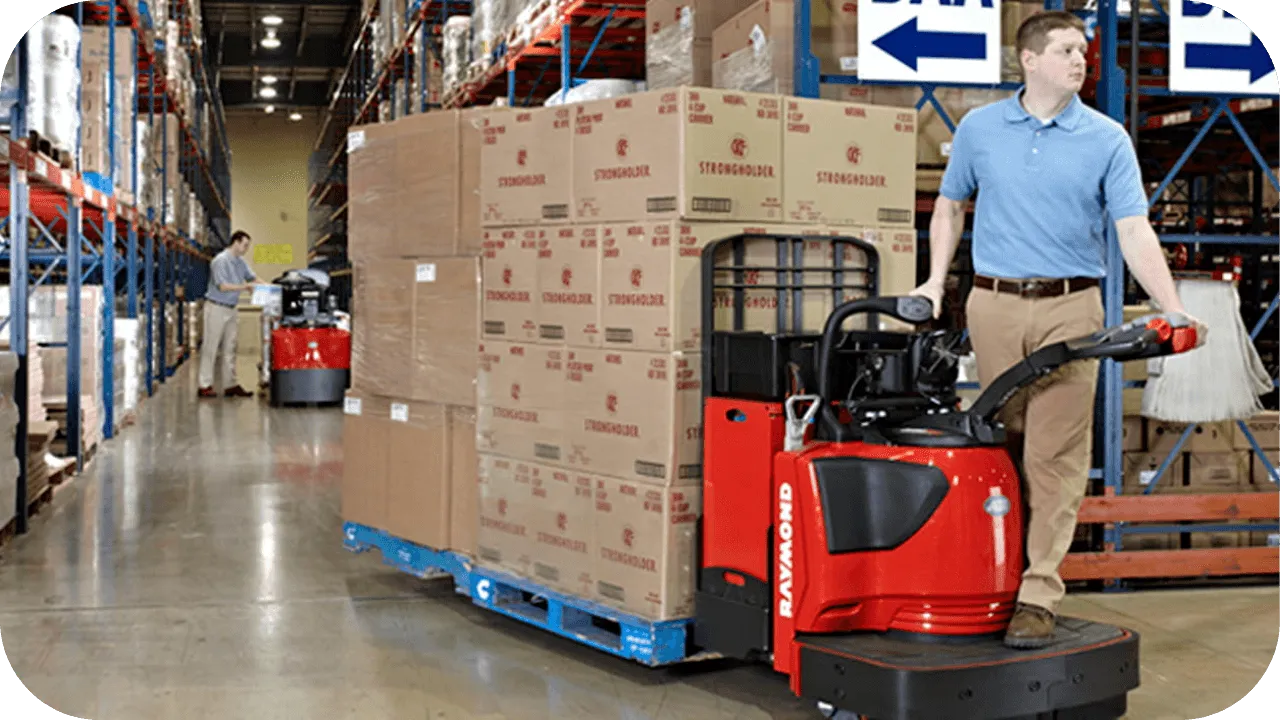
Here are the benefits and limitations of electric pallet jacks:
| Pros of Electric Pallet Jacks | Cons of Electric Pallet Jacks |
| Easy to Operate – Requires minimal training, making it ideal for fast-paced environments. | No Stacking Capability – Can only move loads horizontally, restricting warehouse vertical storage potential. |
| Compact & Maneuverable – Designed for tight spaces like retail aisles, small warehouses, and stockrooms. | Limited Lift Height – Raises pallets just a few inches, which is insufficient for high-storage racking. |
| Cost-Effective – More affordable than stackers, with lower maintenance and operational costs. | Lower Load Stability – Pallets may shift during transport on uneven surfaces without a mast for vertical support. |
| Reduces Physical Strain – Powered movement minimises the need for manual lifting and pushing. | Not Ideal for Long Distances – While motorised, they are best suited for short-distance pallet movement. |
| Fast & Efficient – Speeds up loading and unloading operations, improving workflow. |
Pros and Cons of Electric Stackers
Here are the benefits and limitations of Electric Stackers:
| Pros of Electric Stackers | Cons of Electric Stackers |
| Stacking & Storage – Can lift loads to 3-5 metres, maximising vertical storage. | More Expensive – Higher upfront cost due to advanced lifting mechanisms and powerful batteries. |
| More Versatile – Moves and stacks pallets, providing added functionality. | Larger & Less Maneuverable – Requires more clearance and aisle space than pallet jacks. |
| Space-Saving – Ideal for warehouses with limited floor space that need vertical storage solutions. | More Maintenance – Additional components like lifting masts and hydraulics increase upkeep needs. |
| Better Load Stability – Equipped with a mast for vertical support, ensuring safe lifting. | Longer Training Time – Operators need more training to handle lifting and stacking safely. |
| Improved Safety – Features such as automated braking and height controls reduce accidents. |
How to Choose the Right Equipment for Your Needs
Selecting between an electric pallet jack and an electric stacker isn’t just about cost—it’s about optimising efficiency, safety, and productivity. Consider these factors before making your decision:
- Warehouse Space & Layout: An electric stacker is ideal for narrow aisles and tall racking facilities, while a pallet jack is better suited for smaller spaces with frequent pallet movement.
- Lifting Requirements: Do you need to lift pallets higher than ground level? Get an electric stacker. If moving loads at floor height is your main task, an electric pallet jack is sufficient.
- Load Capacity: Compare the weight limits of both machines. If you need to move heavier pallets over long shifts, look for models with higher load capacities.
- Operational Speed & Frequency: Pallet jacks are best for quick and frequent transport jobs. While versatile, stackers require more precision and time when lifting loads.
- Budget & Long-Term ROI: Electric pallet jacks are cheaper upfront, but a stacker provides better long-term value if your warehouse relies on vertical storage.
- Ease of Use & Training: Pallet jacks require minimal training, whereas stackers need operator certification for safe usage. Consider your team’s skill level before choosing.
- Maintenance & Durability: Pallet jacks have fewer mechanical parts, meaning lower maintenance costs. Stackers, with hydraulic lifts and masts, require regular servicing.
Which One Should You Choose?
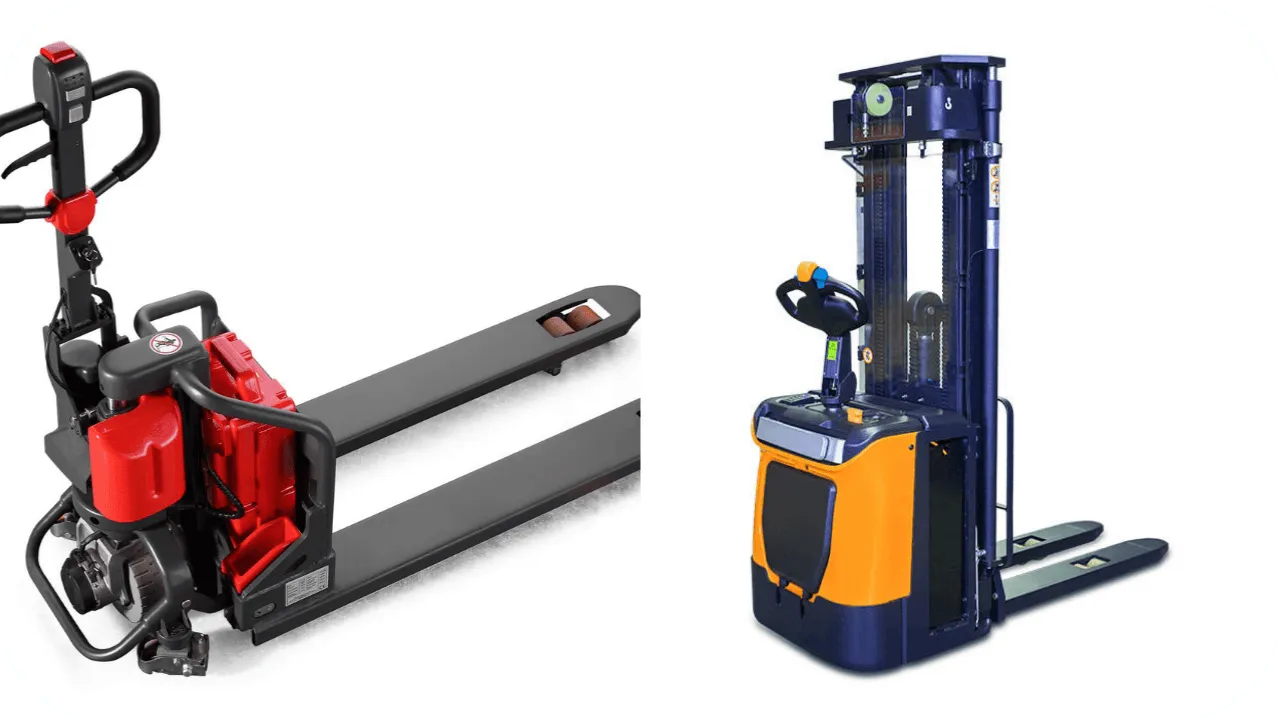
The decision between an electric pallet jack and an electric stacker depends on your warehouse’s operation. An electric pallet jack is a cost-effective and easy-to-use solution to move heavy pallets over short distances.
Pallet jacks are perfect for businesses that need quick and frequent pallet transport, such as retail stores, small warehouses, and manufacturing plants. With minimal maintenance and training requirements, they are ideal for fast and efficient ground-level movement.
On the other hand, if your business requires lifting and stacking pallets, an electric stacker is a smarter investment. These machines help maximise vertical storage by lifting loads to high racks, making them perfect for warehouses with limited floor space.
While they come at a higher cost, their ability to optimise storage and improve warehouse organisation makes them invaluable in high-volume environments. If your operations involve racking, shelving, or vertical inventory management, an electric stacker is the best choice for long-term efficiency.
Conclusion
Ready to optimise your warehouse operations? Whether you need electric pallet jacks or stackers, Buy a Fork offers high-quality, reliable forklifts to suit your needs. Visit us today to view our range and find the perfect equipment to boost your productivity. Don’t wait—upgrade your warehouse with the right tools now at Buy a Fork!