
High Reach Forklifts: Lift Heights, Types and How to Choose the Right One
· Updated
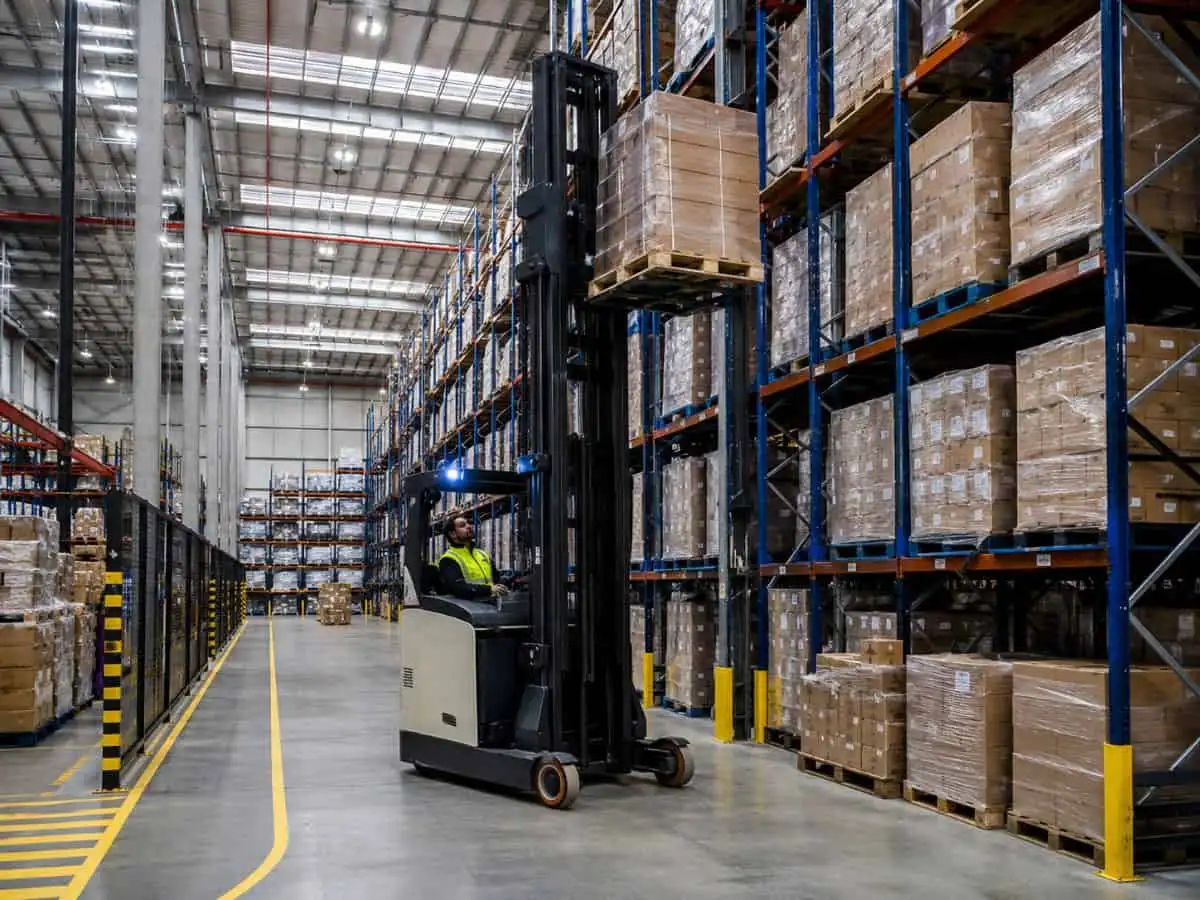
A high reach forklift is an electric warehouse forklift designed to place and retrieve pallets from tall racking while operating in narrower aisles than a standard counterbalance forklift. Depending on the model and configuration, modern reach trucks can lift beyond 10 metres, with selected Australian models reaching approximately 13 metres or more.
Lift height alone does not determine whether a machine is suitable. Buyers must also confirm its residual capacity at the required height, load centre, aisle requirement, mast configuration, battery, floor conditions and attachment rating.
Crown’s current Australian reach-truck range includes models with published lift heights from approximately 11.2 metres to 13.56 metres, while Toyota states that selected Reflex reach trucks can reach up to 13 metres. These are model-specific maximums rather than universal figures for every high reach forklift.
What Is a High Reach Forklift?
A high reach forklift is a specialised reach truck designed to lift pallets into high warehouse racking. It normally uses a compact electric chassis and a mast or reach mechanism that extends the forks towards the rack while the main forklift remains within the aisle.
Unlike a counterbalance forklift, which carries its load in front of the front axle and balances it with weight at the rear, a reach truck draws the load towards its chassis during travel. This allows it to work within a smaller turning area.
High reach forklifts are commonly used for:
- High-bay pallet storage
- Narrow warehouse aisles
- Distribution centres
- Manufacturing warehouses
- Cold storage
- Retail inventory facilities
- High-density racking
- Double-deep storage
- Indoor pallet movement
They are usually battery-electric because most applications take place indoors on relatively smooth floors.
Businesses comparing warehouse equipment can review double reach trucks or compare the top narrow aisle forklifts.
How Does a High Reach Forklift Work?
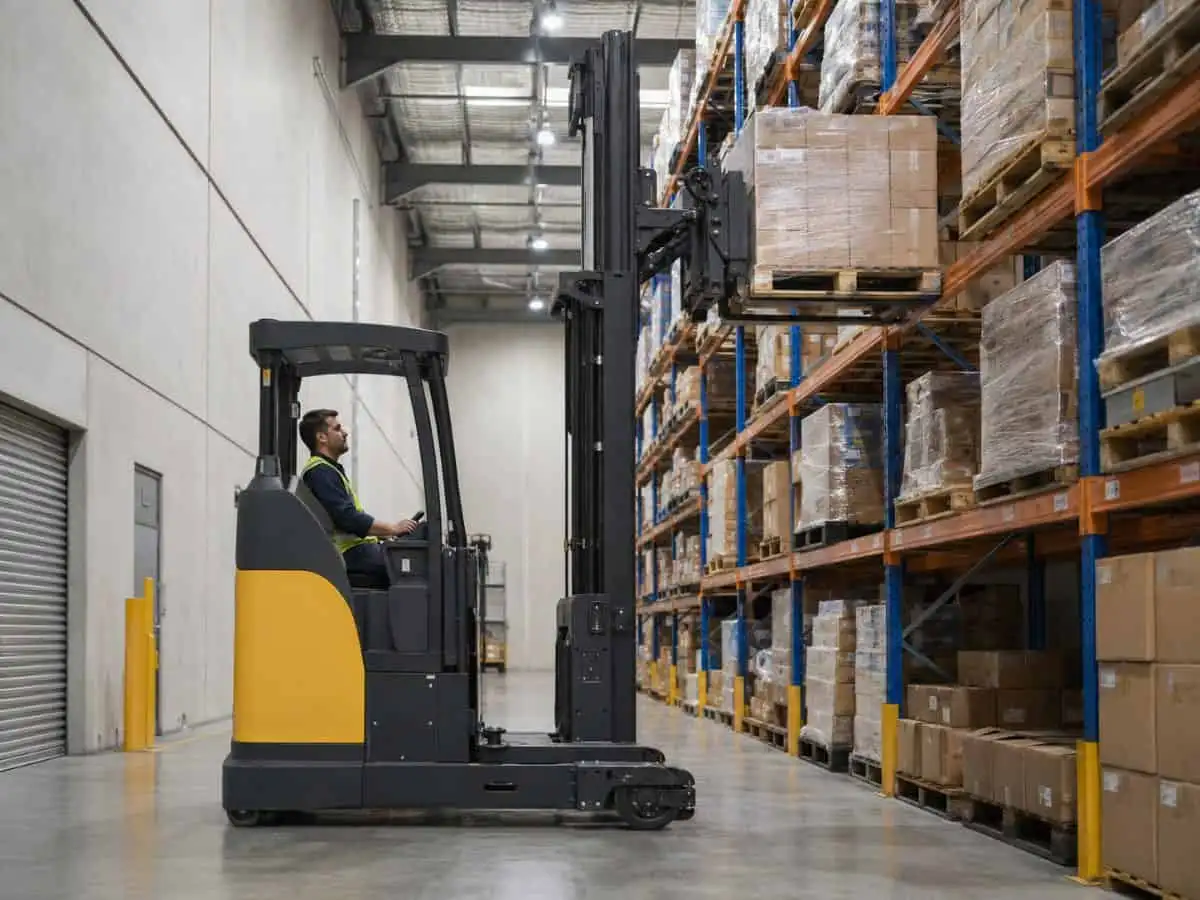
A reach truck usually has load wheels or support legs extending in front of the chassis. The load is positioned between or above these supports during travel.
Depending on the model, the forklift may use:
- A moving mast
- A pantograph reach mechanism
- A telescoping fork system
- A deep-reach mechanism
- A rotating turret attachment
- A raising operator compartment
To retrieve a pallet, the operator normally:
- Enters the aisle and aligns the forklift with the rack position.
- Raises the carriage to the required level.
- Extends the forks or mast towards the load.
- Enters the pallet securely.
- Lifts the pallet clear of the rack beam.
- Retracts the load towards the chassis.
- Lowers it to a safe travel position.
- Exits the aisle with the load low and stable.
The exact sequence depends on the machine, racking and workplace procedure.
How High Can a High Reach Forklift Lift?
High reach forklifts commonly operate across lift-height bands ranging from moderate warehouse racking to high-bay storage above 10 metres.
| Approximate Lift-Height Band | Typical Application | Main Buying Consideration |
|---|---|---|
| Up to 5 metres | Small warehouses and lower pallet racking | A stacker or compact reach truck may be sufficient |
| 5 to 8 metres | General warehouse racking | Confirm mast height and aisle width |
| 8 to 10 metres | Medium to high warehouse storage | Capacity at height becomes increasingly important |
| 10 to 13 metres | High-bay distribution centres | Floor condition, visibility and residual capacity are critical |
| Above 13 metres | Specialised high-bay or VNA facilities | Requires application-specific equipment and warehouse planning |
Current Australian examples show how much model capability can vary:
- Crown lists its RR/RD reach trucks at up to 11,225 mm.
- Crown lists its RM/RMD MonoLift models at up to 12,825 mm.
- Crown lists its ESR sit-down reach trucks at up to 13,560 mm.
- Toyota states that selected advanced Reflex reach trucks can lift up to 13 metres.
- Toyota lists its Reflex HN models at up to 10 metres.
These maximum figures do not mean that every configuration can carry its full nominal capacity at maximum height.
What Is Residual Capacity?
Residual capacity is the load a forklift can safely handle in its actual configuration at a particular lift height and load centre.
A forklift advertised as a 2,000 kg model may not be able to lift 2,000 kg to its maximum height. Available capacity may decrease when:
- Lift height increases
- The load centre moves forward
- Longer forks are installed
- A side shift or attachment is fitted
- The mast configuration changes
- The load is unusually long
- A deep-reach mechanism is extended
- The load is uneven or offset
WorkSafe Victoria warns that loads exceeding the forklift and attachment’s rated safe working capacity create serious risk. Attachments and their effect on capacity must also be reflected on the forklift’s information or load-capacity plate.
Example of Capacity Derating
The figures below illustrate the principle only. They are not a load chart for a real forklift.
| Lift Position | Illustrative Available Capacity |
|---|---|
| Low lift | 2,000 kg |
| Mid-level lift | 1,750 kg |
| Higher rack level | 1,450 kg |
| Maximum configured height | 1,100 kg |
Never estimate capacity from a generic table. Use the capacity plate and manufacturer load chart for the specific forklift, mast, load centre and attachment.
The guide explaining how to read a forklift load capacity chart covers the relationship between load weight, centre and lift height.
Types of High Reach Forklift
1. Single-Reach Truck
A single-reach truck handles pallets stored one position deep. It provides direct access to every pallet location and is the most common high reach configuration.
Best for:
- Selective pallet racking
- High stock-keeping-unit variety
- Frequent pallet retrieval
- Distribution warehouses
- Medium and high lift heights
Advantages:
- Direct access to each pallet
- Compact aisle requirement
- Wide model availability
- Suitable for frequent stacking cycles
- Easier inventory access than double-deep storage
Limitations:
- Lower storage density than double-deep racking
- Mainly suited to indoor floors
- Less versatile outdoors than a counterbalance forklift
2. Double-Deep Reach Truck
A double-deep reach truck can place one pallet behind another using extended forks or a deep-reach mechanism.
Best for:
- High-volume stock lines
- Batch storage
- Warehouses prioritising pallet density
- Double-deep racking systems
Advantages:
- More pallet positions within the same building
- Fewer aisles may be required
- Strong use of vertical and horizontal space
Limitations:
- The front pallet blocks direct access to the rear pallet.
- Residual capacity may be lower when fully extended.
- Inventory rotation requires more planning.
- The reach system adds mechanical complexity.
Review the separate guide to double-deep forklifts before changing the racking layout.
3. Sit-Down High Reach Truck
A sit-down reach truck gives the operator a seated position and may suit longer shifts or operations involving more travel.
Best for:
- Long warehouse shifts
- High-bay storage
- Mixed travel and stacking
- Larger distribution centres
Crown’s Australian ESR sit-down range is currently listed with capacities up to 2,000 kg and lift heights up to 13,560 mm, depending on configuration.
4. Stand-Up Reach Truck
A stand-up reach truck commonly uses a side-stance or partially side-facing operator position. It allows easy entry and exit and can improve visibility in both travel directions.
Best for:
- Frequent pallet cycles
- Shorter travel routes
- Narrow aisles
- Operators entering and leaving the machine regularly
5. Very Narrow Aisle Man-Up Truck
A man-up VNA forklift raises the operator’s compartment with the load-handling system.
It can support:
- Full-pallet placement
- Case picking at height
- High-bay inventory access
- Very narrow aisle layouts
These machines require specialist planning, appropriate operator protection and clear emergency-lowering procedures.
6. Man-Down VNA Truck
The operator remains at floor level while cameras, sensors or positioning aids support pallet placement at height.
Best for:
- Full-pallet high-bay storage
- Guided VNA aisles
- Facilities where manual picking at height is not required
7. Turret Truck
A turret truck rotates or traverses its fork assembly towards either side of the aisle. The forklift itself does not need to turn across the aisle to face the rack.
Best for:
- Very narrow aisles
- Maximum storage density
- High-bay warehouses
- Wire- or rail-guided systems
8. Articulated Forklift
An articulated forklift uses a pivoting mast or articulated chassis to turn the load towards the rack.
It may provide greater flexibility between:
- Narrow warehouse aisles
- Loading docks
- Suitable outdoor surfaces
- Receiving and dispatch areas
It can reduce the need for separate indoor and outdoor forklifts, but buyers must confirm surface suitability, lift capacity and service support.
9. High-Level Order Picker
An order picker raises the operator to retrieve cartons, components or individual products directly from racking.
It differs from a conventional reach truck because its main purpose is order picking rather than full-pallet storage.
The required high-risk work licence can also differ. Safe Work Australia distinguishes a forklift truck from an order-picking forklift where the operator’s controls rise with the lifting media.
When Should You Use a High Reach Forklift in Narrow Aisles?
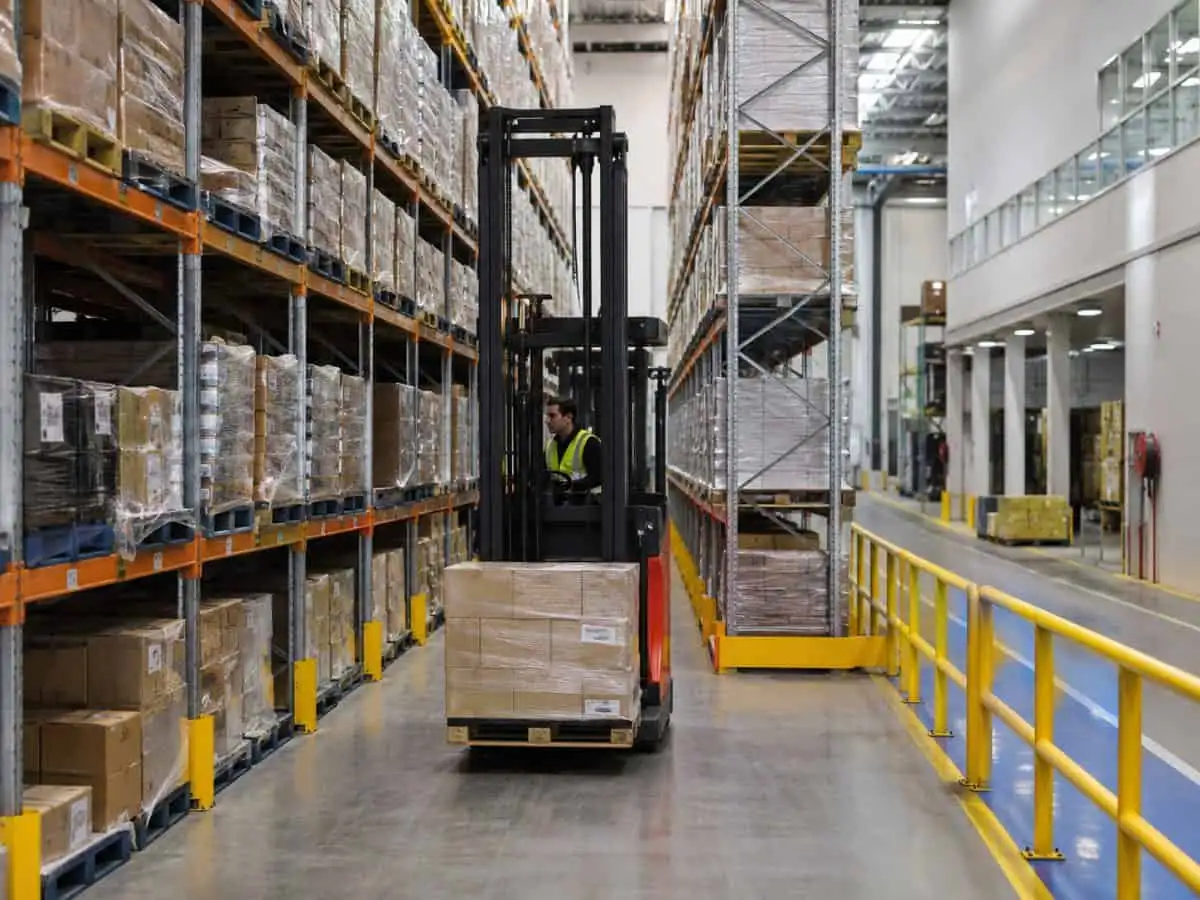
Use a high reach forklift when the warehouse needs to combine tall racking with reduced aisle space.
It can be appropriate when:
- A counterbalance forklift requires too much turning room.
- Pallets are stored above standard warehouse heights.
- Additional pallet positions are needed within the existing building.
- Most work takes place indoors.
- The floor is smooth and level.
- Pallet dimensions are consistent.
- The racking is designed for the loads.
- Operators complete frequent storage and retrieval cycles.
1. Storage-Density Benefits
Narrower aisles can allow:
- More racking runs
- More pallet positions
- Better use of vertical space
- Reduced need for a larger warehouse
- Shorter internal travel routes
- Higher inventory capacity
The benefit should be calculated against the additional costs of specialised equipment, floor requirements, batteries and racking.
2. Aisle Width Must Match the Actual Machine
Do not design an aisle around a general statement that reach trucks work in narrow spaces.
Required aisle width depends on:
- Forklift chassis
- Turning radius
- Pallet width
- Pallet depth
- Load overhang
- Rack clearances
- Mast and reach mechanism
- Guidance system
- Safety allowance
The supplier should calculate the working aisle using the actual forklift and load.
3. Wire and Rail Guidance
Very narrow aisle trucks may use:
- Wire guidance: Sensors follow a signal wire embedded in the floor.
- Rail guidance: Guide rollers follow rails installed at the base of the racking.
- Electronic guidance: Sensors or positioning systems assist with aisle travel.
- Free-ranging steering: The operator steers without fixed guidance.
Guidance may improve positioning and allow tighter clearances, but it requires additional infrastructure and maintenance.
High Reach Forklift vs Counterbalance Forklift
| Feature | High Reach Forklift | Counterbalance Forklift |
|---|---|---|
| Main environment | Indoor warehouse | Indoor or outdoor, depending on model |
| Aisle requirement | Narrower | Wider |
| Lift height | Strong high-rack capability | Model dependent |
| Load position | Retracts towards chassis | Carried in front of the front axle |
| Surface suitability | Smooth warehouse floors | More tyre and surface options |
| Vehicle loading | Limited by model and site | Commonly used |
| Outdoor work | Usually limited | Stronger overall versatility |
| Storage density | High | Lower |
| Operator position | Stand-up, side-stance or seated | Usually forward-facing and seated |
| Power | Usually electric | Electric, LPG or diesel |
A counterbalance forklift is usually more versatile across loading docks, vehicles and yards. A high reach forklift is a warehouse storage specialist.
High Reach Forklift vs Standard Reach Truck
The terms are often used interchangeably. In practice, “high reach forklift” generally describes a reach truck selected or configured for higher racking.
A standard reach truck may be suitable for:
- Medium-height racking
- Single-shift work
- General warehouse storage
- Lower capital budgets
A high reach configuration may provide:
- A taller mast
- Higher residual capacity
- Better elevated visibility
- Height-selection systems
- Mast cameras
- Enhanced stability control
- Greater battery capacity
- More specialised warehouse integration
The distinction should be based on the machine’s specification rather than its marketing name.
High Reach Forklift vs Pallet Stacker
A pallet stacker may be sufficient where loads are lighter, travel distances are short and racking is relatively low.
A high reach forklift is generally better when:
- Lift height is greater.
- Pallet movements are frequent.
- Travel distances are longer.
- Throughput is higher.
- Operator ride-on comfort matters.
- Residual capacity at height is critical.
The reach truck vs pallet stacker comparison explains where each machine fits.
How to Choose the Right High Reach Forklift
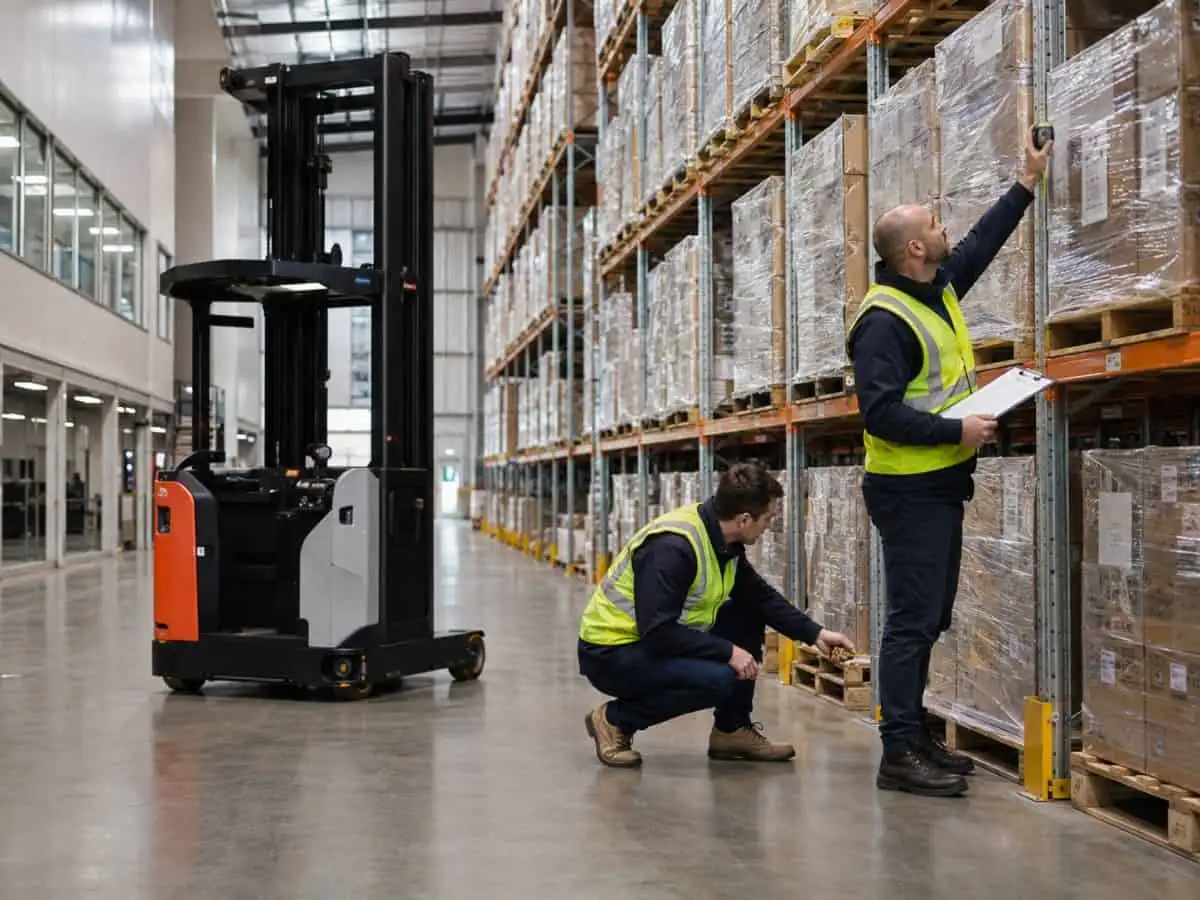
1. Measure the Required Lift Height
Measure from the floor to the highest required fork position.
Include:
- Top rack-beam height
- Pallet base
- Load clearance
- Roof structure
- Sprinkler clearances
- Mast movement
- Placement allowance
Do not choose a machine whose maximum published lift height only just reaches the highest pallet position.
2. Confirm Residual Capacity
Provide the supplier with:
- Maximum load weight
- Load dimensions
- Load centre
- Required height
- Fork length
- Attachment
- Pallet type
Ask for written capacity confirmation for the actual configuration.
3. Measure the Working Aisle
Measure the narrowest clear space between obstructions, accounting for:
- Rack protectors
- Pallet overhang
- Columns
- Barriers
- Fire equipment
- Damaged racking
- Protruding stock
- Pedestrian controls
4. Assess Floor Flatness
Small floor variations become more significant as lift height increases.
Inspect for:
- Cracks
- Uneven joints
- Slopes
- Surface deterioration
- Drainage channels
- Changes in level
- Debris
- Moisture
- Poor traction
A specialist assessment may be required for high-bay or VNA installations.
5. Select the Reach Configuration
Choose between:
- Single reach
- Double deep
- Moving mast
- Pantograph reach
- Turret system
- Articulated design
- Man-up configuration
The racking and inventory system should determine the configuration.
6. Check Collapsed Mast Height
A mast capable of reaching tall racking may also have a substantial collapsed height.
Confirm clearance beneath:
- Doorways
- Mezzanines
- Roof structures
- Dock doors
- Sprinklers
- Pipes
- Lighting
- HVAC systems
7. Choose the Battery System
High reach forklifts are generally electric.
Lead-Acid Batteries
Advantages include:
- Established technology
- Broad service support
- Availability across used equipment
- Potential battery-change capability
Considerations include:
- Longer charging periods
- Watering and maintenance
- Charging ventilation
- Dedicated charging space
- Battery-change equipment where required
Lithium-Ion Batteries
Advantages may include:
- Opportunity charging
- Reduced routine battery maintenance
- Consistent performance across the charge cycle
- Faster charging with a compatible system
Considerations include:
- Higher initial cost
- Charger compatibility
- Battery-management requirements
- Specialist repair support
Compare the total battery and charging system rather than the forklift alone.
8. Estimate Daily Throughput
Record:
- Pallet movements per hour
- Travel distance
- Lift cycles
- Shift length
- Peak workload
- Break periods
- Charging opportunities
- Number of machines
A compact lower-cost machine may become a bottleneck in a high-throughput warehouse.
9. Assess Operator Comfort
High-level work requires concentration and precise control.
Check:
- Operator position
- Seat or stance
- Steering
- Control layout
- Visibility through the mast
- Cameras
- Height indicators
- Vibration
- Cabin access
- Cold-store protection
- Emergency lowering
Operators should test shortlisted machines where possible.
10. Compare Safety Technology
Depending on the model, options may include:
- Lift-height selection
- Mast cameras
- Load-weight indication
- Travel-speed reduction at height
- Stability controls
- Aisle positioning
- Pedestrian warning lights
- Access control
- Impact monitoring
- Pre-start check systems
Technology supports safe operation but does not replace training, supervision or traffic separation.
11. Check Parts and Service Support
Confirm:
- Local technician availability
- Battery support
- Mast and chain servicing
- Diagnostic capability
- Parts lead times
- Tyre availability
- Camera and sensor support
- Emergency callout options
Specialised equipment can remain out of service longer when local expertise is limited.
12. Compare New and Used Equipment
A used high reach forklift may suit the business when:
- The mast matches the racking.
- Residual capacity is confirmed.
- The battery has been tested.
- Records are available.
- The floor and aisle suit the machine.
- Parts and servicing are locally available.
New equipment may be preferable when:
- An exact mast is required.
- Racking is being designed around the truck.
- Utilisation is intensive.
- Current battery technology is important.
- Cameras or guidance are required.
- Full warranty is necessary.
The broader guide on how to choose the right forklift can help establish the initial specification.
High Reach Forklift Safety at Height
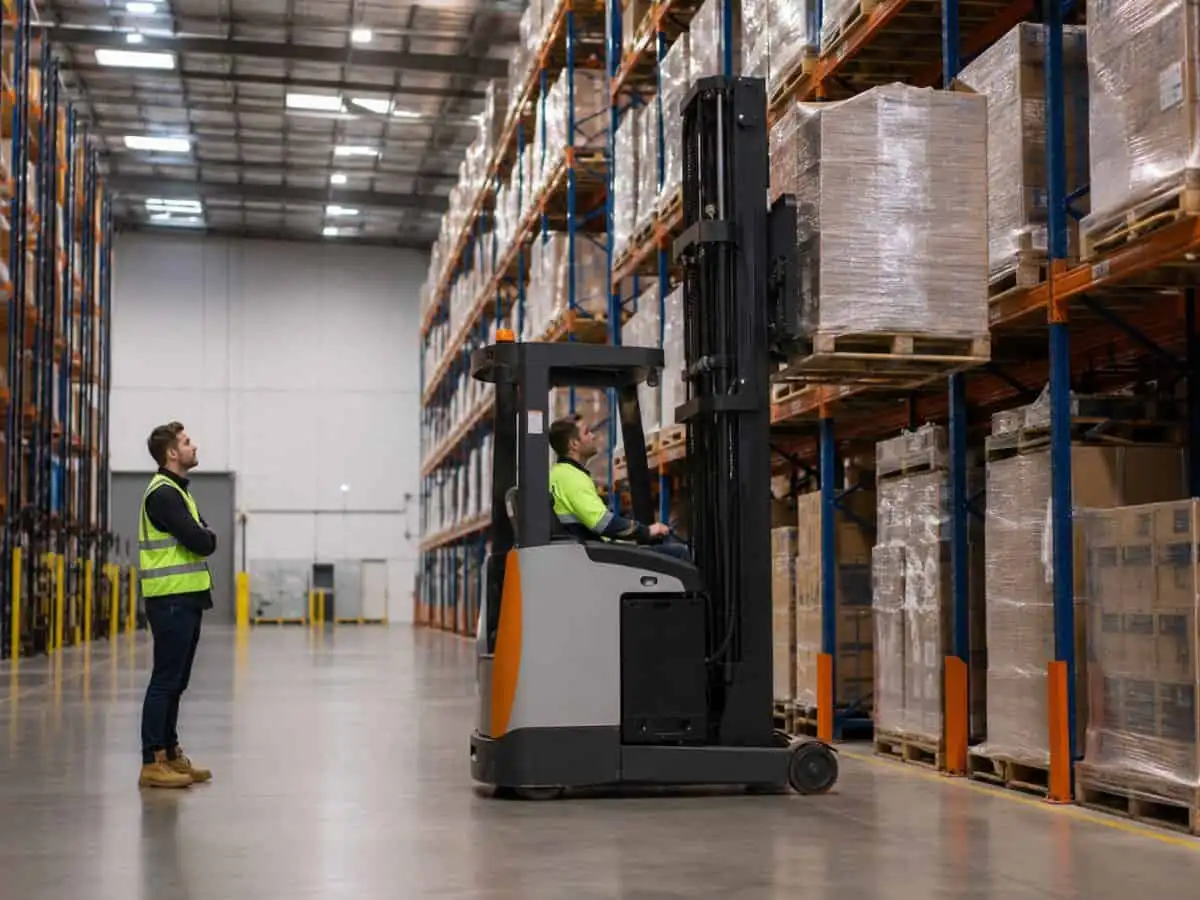
High lift height increases the importance of load stability, floor condition, visibility and correct capacity assessment.
1. Follow the Capacity Plate
The operator should confirm:
- Load weight
- Load centre
- Required height
- Attachment rating
- Mast configuration
- Approved capacity
Do not assume that the forklift can lift its nominal capacity to every rack level.
2. Keep Loads Stable
Check that:
- The pallet is sound.
- The load is secured.
- Weight is evenly distributed.
- Fork spacing supports the pallet.
- The load does not exceed the backrest or safe dimensions.
- Loose goods cannot fall.
WorkSafe Victoria identifies falling loads, overloading and unstable pallets among significant forklift hazards.
3. Travel With the Load Lowered
A raised load raises the combined centre of gravity and can reduce stability. Lower the load to the manufacturer’s recommended travel position before moving.
4. Maintain Clear Aisles
Keep aisles free from:
- Loose wrapping
- Broken pallets
- Spills
- Debris
- Parked equipment
- Protruding stock
- Pedestrians
5. Separate Pedestrians
Use:
- Physical barriers
- Dedicated walkways
- Controlled crossings
- Warning systems
- Exclusion zones
- Traffic procedures
- Supervision
WorkSafe Victoria’s guidance emphasises separating forklifts and pedestrians and controlling falling-load, crushing and tip-over risks.
6. Complete Daily Checks
Before each shift, inspect:
- Forks
- Mast
- Chains
- Hydraulics
- Tyres
- Brakes
- Steering
- Seatbelt
- Warning systems
- Battery
- Capacity plate
- Attachments
What Licence Is Required?
Most ride-on reach trucks fall within the forklift-truck high-risk work licence class. Safe Work Australia defines that class as use of a forklift truck other than an order-picking forklift truck. (Safe Work Australia)
An order-picking forklift where the operator’s controls rise with the lifting media falls within the separate order-picking forklift classification. (Safe Work Australia)
The correct licence depends on the machine’s design and operating function, not simply how high it lifts. Confirm the Victorian requirement with WorkSafe Victoria and provide site-specific familiarisation for the actual forklift.
Frequently Asked Questions
1. How High Can a High Reach Forklift Lift?
Many high reach forklifts lift between approximately 8 and 13 metres, although lower and higher configurations are available. Current Australian manufacturer ranges include reach trucks exceeding 13 metres. The available height depends on the mast, chassis and model. (crown.com)
2. What Is a High Reach Forklift Used For?
A high reach forklift stores and retrieves pallets from tall warehouse racking while operating in narrower aisles than a standard counterbalance forklift. It is commonly used in distribution, manufacturing, retail and cold-storage warehouses.
3. Is a High Reach Forklift the Same as a Reach Truck?
A high reach forklift is generally a reach truck selected or configured for taller racking. The terms are often used interchangeably, but not every reach truck has the mast, residual capacity or features required for high-bay work.
4. Can a High Reach Forklift Be Used Outdoors?
Most high reach forklifts are designed for smooth indoor floors. Selected outdoor reach-truck models exist, but surface, tyres, weather protection and stability must be confirmed. Toyota, for example, currently lists an outdoor Reflex reach model developed for outdoor operation. (Toyota Material Handling Australia)
5. How Much Can a High Reach Forklift Lift at Full Height?
The answer depends on the specific load chart. Maximum capacity commonly decreases as lift height or load centre increases. Use the forklift’s capacity plate and manufacturer data rather than its nominal capacity.
6. What Is the Difference Between Single and Double Reach?
A single-reach truck handles pallets stored one position deep. A double-deep truck extends further to access a second pallet behind the first, increasing storage density but reducing direct pallet access.
7. What Licence Do You Need to Operate a High Reach Forklift?
A conventional ride-on reach truck generally requires the relevant forklift-truck high-risk work licence. A man-up order-picking machine may require the separate order-picking forklift class. Confirm the exact classification for the machine with the applicable regulator. (Safe Work Australia)
Conclusion
A high reach forklift allows warehouses to combine tall racking with narrower aisles, improving storage density without requiring a larger building. Single-reach trucks suit selective racking, double-deep machines increase pallet density and VNA or turret trucks support the tightest high-bay layouts.
Do not select a machine from its maximum lift-height figure alone. Confirm residual capacity, load centre, aisle width, floor flatness, collapsed mast height, battery strategy and service support for the actual workplace.
After measuring the site and defining the loads, compare available double reach trucks and Raymond reach trucks for narrow aisles against the required lift height and capacity.