
Diesel vs Electric vs LPG Forklifts: Full Comparison for Australian Buyers
· Updated
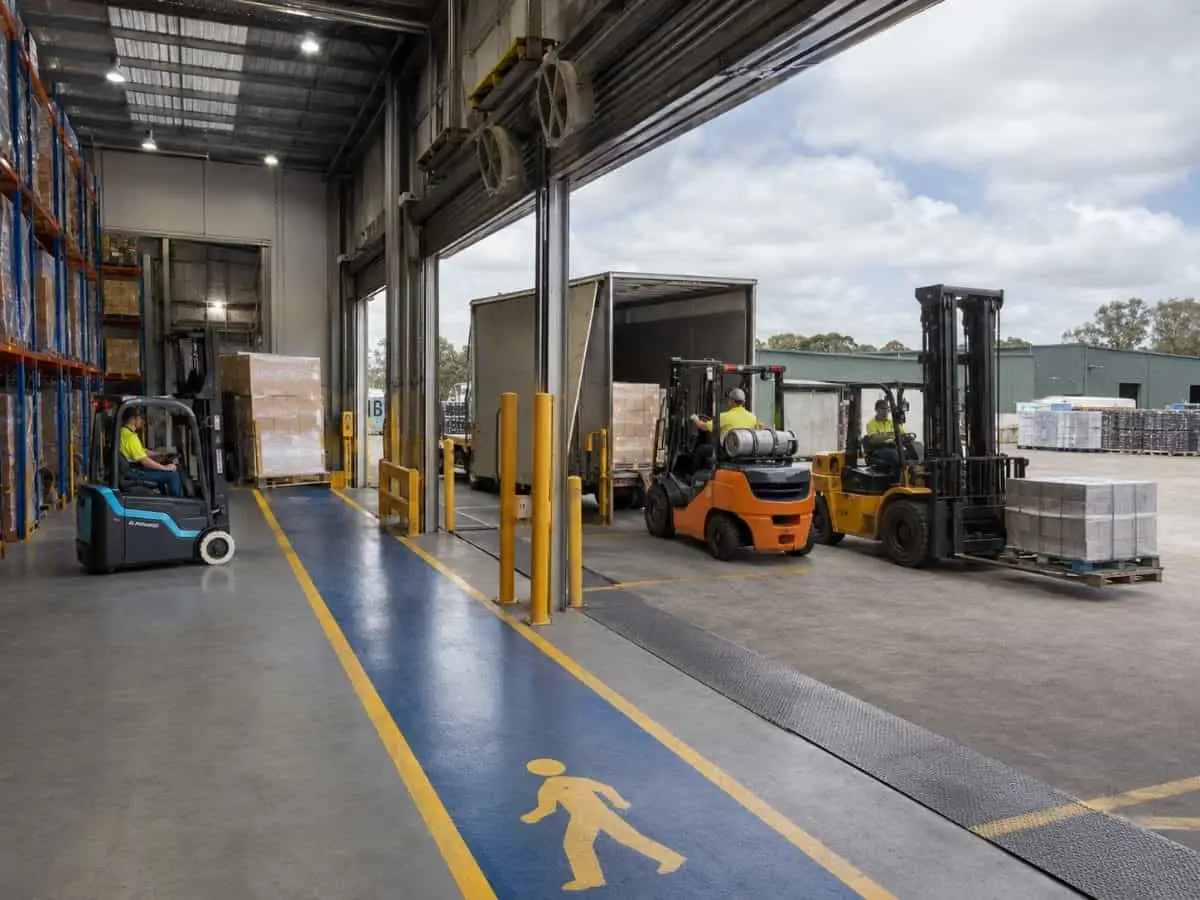
Choose an electric forklift for clean indoor work, lower noise and predictable daily charging. Choose LPG when the machine must move between ventilated indoor areas and outdoor yards with quick cylinder changes. Choose diesel for demanding outdoor work, rough surfaces and sustained heavy-duty operation.
The correct choice still depends on load weight, lift height, shift length, ventilation, charging or refuelling access, surface conditions and maintenance support. WorkSafe Victoria advises businesses to consider the operating environment and whether a combustion or electric power system suits the task before buying or hiring a forklift. Combustion engines produce exhaust emissions, so enclosed workplaces may require additional ventilation controls.
This guide compares the three main forklift fuel types without relying on fixed running-cost estimates that can quickly become inaccurate as electricity, LPG and diesel prices change.
Diesel, Electric or LPG Forklift? The Short Answer
Choose according to the primary working environment:
- Electric forklift: Best for warehouses, food distribution, retail storage, manufacturing and other indoor operations where low noise and no tailpipe emissions are priorities.
- LPG forklift: Best for businesses needing one forklift to work across ventilated indoor areas, loading docks and outdoor yards.
- Diesel forklift: Best for outdoor construction, timber yards, transport depots and heavy industrial work requiring sustained power and rough-surface capability.
A mixed fleet may provide better results than forcing one fuel type across every task. An operation could use electric equipment indoors, LPG around loading areas and diesel equipment for heavier outdoor work.
Businesses comparing available machines can browse the full forklift range.
Diesel vs Electric vs LPG Forklifts Compared
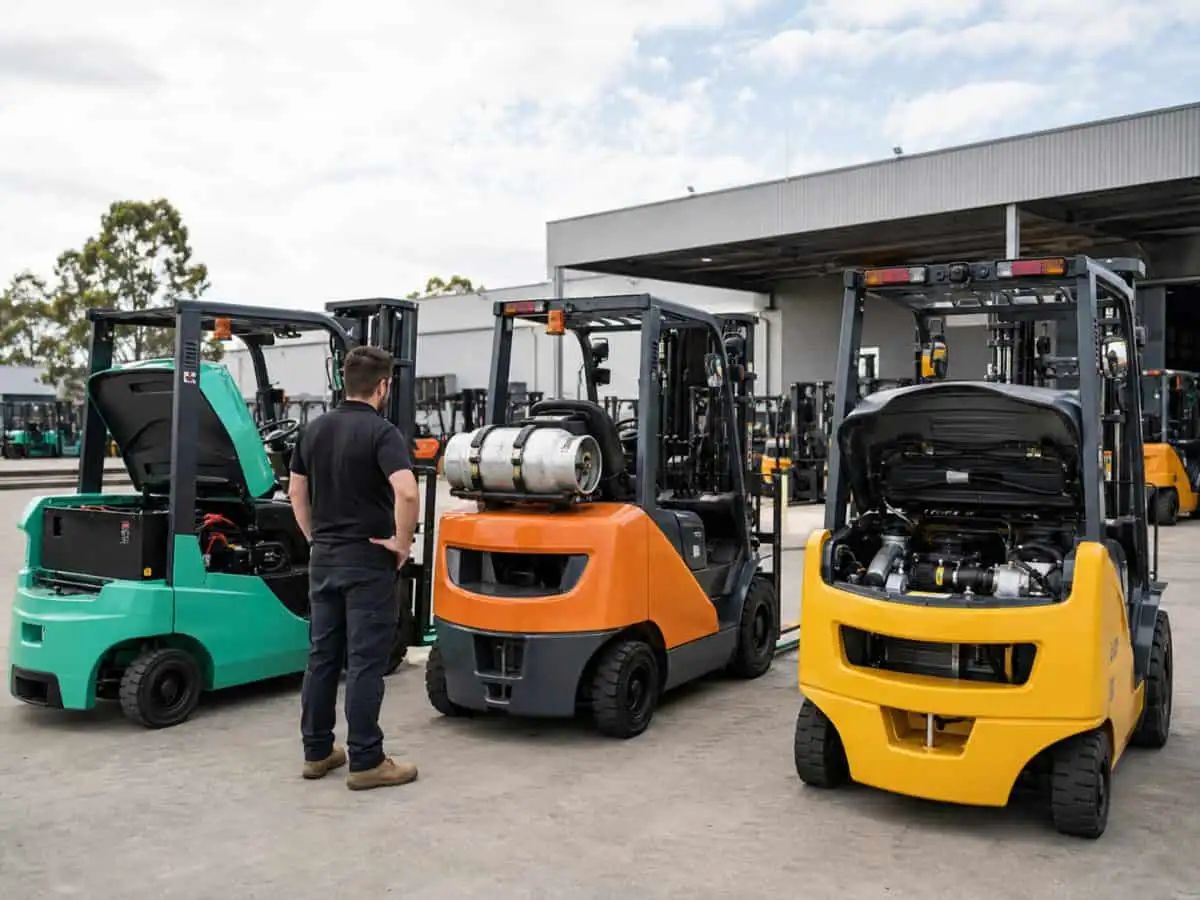
| Comparison Factor | Electric Forklift | LPG Forklift | Diesel Forklift |
|---|---|---|---|
| Best environment | Indoor and controlled surfaces | Ventilated indoor and outdoor areas | Primarily outdoor and heavy industrial areas |
| Tailpipe emissions | None at the forklift | Combustion exhaust | Diesel exhaust and particulate matter |
| Noise | Generally lowest | Moderate | Generally highest |
| Initial purchase cost | Often higher, particularly with battery and charger | Often moderate | Often moderate |
| Energy or fuel cost | Commonly favourable for regular indoor use | Depends on cylinder price and consumption | Depends on diesel price and workload |
| Refuelling or charging | Requires charging time or battery strategy | Fast cylinder replacement | Fast refuelling |
| Maintenance | Fewer engine-related service items | Combustion-engine and LPG-system maintenance | Combustion-engine and fuel-system maintenance |
| Heavy outdoor work | Limited by model, tyres and weather protection | Suitable for moderate mixed work | Usually strongest option |
| Indoor air quality | Strongest choice | Ventilation and emissions controls required | Generally unsuitable without rigorous risk controls |
| Long or multiple shifts | Needs charging, spare battery or opportunity-charging plan | Cylinder swaps support continuous work | Refuelling supports continuous work |
| Cold-store use | Suitable models are available, but battery performance and condensation need planning | Model and ventilation dependent | Usually not preferred indoors |
| Fuel storage | Charging area and electrical infrastructure | Approved cylinder storage and handling area | Fuel storage and spill controls |
| Operator comfort | Low vibration and noise on many models | Moderate vibration and noise | More engine noise and vibration |
| Resale | Depends on battery condition and market demand | Broad general-purpose demand | Strong demand in outdoor industries |
| Best fit | Clean indoor fleet | Flexible mixed-use fleet | Heavy outdoor fleet |
The comparison is not absolute. Tyres, chassis size, mast, attachment, battery technology and engine specification can change how an individual forklift performs.
Electric Forklifts: Pros, Cons and Best Uses
Electric forklifts use a rechargeable traction battery rather than an internal-combustion engine.
1. Advantages of Electric Forklifts
- No tailpipe emissions: There is no exhaust produced at the forklift during operation.
- Lower operating noise: This can improve communication and working conditions inside enclosed facilities.
- Fewer engine service items: There is no engine oil, exhaust system or combustion fuel system to maintain.
- Smooth control: Electric drive systems generally provide precise low-speed movement.
- Indoor suitability: They work well in warehouses where exhaust accumulation is a concern.
- Regenerative systems: Some machines recover energy during braking or lowering.
- Compact configurations: Electric systems are widely used in counterbalance, reach, stacker and order-picking equipment.
Electric forklifts are often the strongest choice for enclosed workplaces because combustion-powered forklifts can produce fumes that accumulate indoors. WorkSafe Victoria specifically identifies petrol, diesel and gas forklifts operating inside areas such as loading docks, shipping containers and cold stores as an environmental hazard requiring risk assessment and controls.
2. Disadvantages of Electric Forklifts
- Higher purchase cost may apply once the battery and charger are included.
- The workplace needs a suitable charging area and electrical supply.
- Charging can create downtime without an appropriate fleet plan.
- Battery replacement can be a major ownership expense.
- Battery performance depends on condition, charging practices and application.
- Standard warehouse models may not suit rough outdoor surfaces.
- Poor charging practices can shorten battery life.
3. Best Uses for Electric Forklifts
Electric forklifts commonly suit:
- Indoor warehouses
- Food and beverage facilities
- Retail distribution
- Manufacturing
- Pharmaceutical storage
- Cold stores using suitable equipment
- Multi-level or suspended floors where equipment weight has been assessed
- Businesses with predictable shifts and overnight charging
The actual electricity consumed depends on forklift size, battery, load, travel distance and duty cycle. Review the guide to electricity used per hour before modelling operating costs.
LPG Forklifts: Pros, Cons and Best Uses
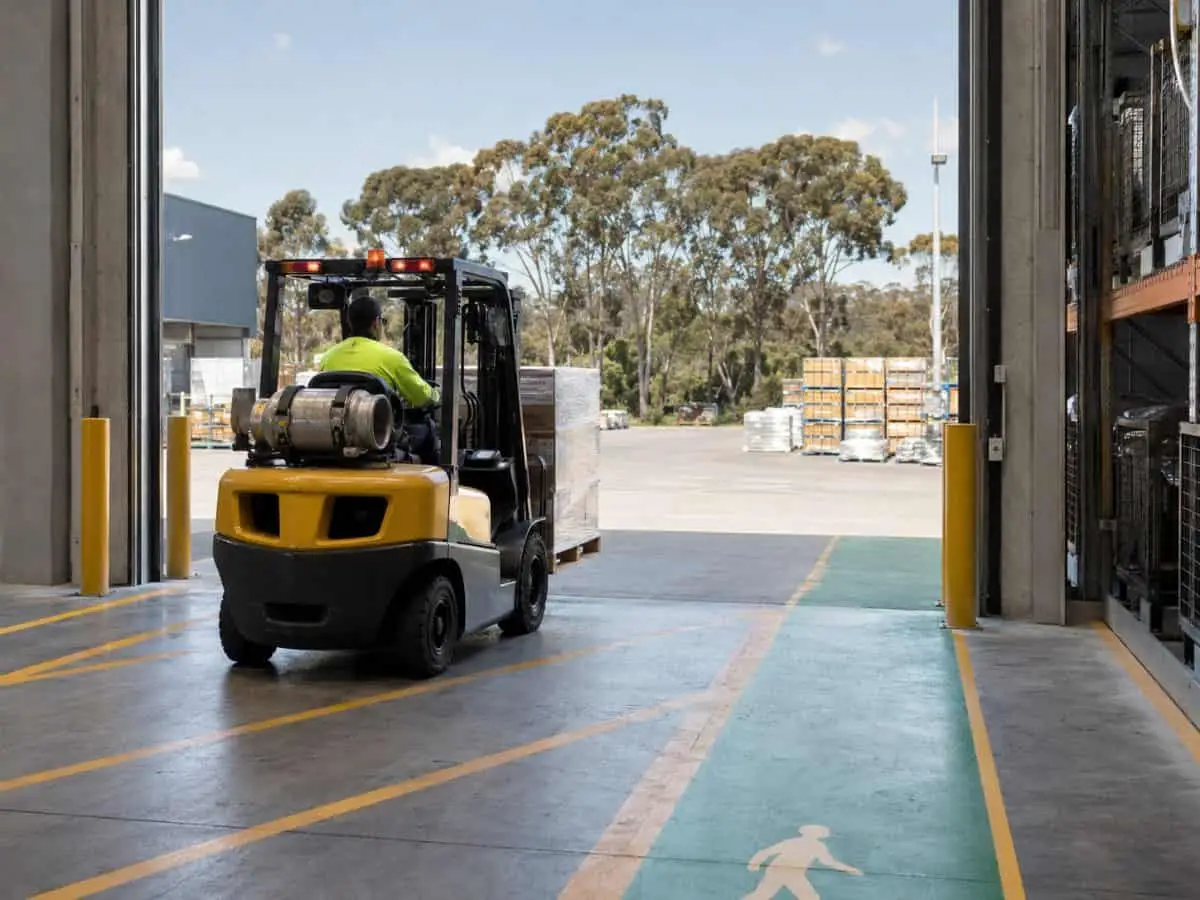
LPG forklifts use liquefied petroleum gas stored in a removable cylinder, usually mounted at the rear of the machine.
1. Advantages of LPG Forklifts
- Indoor and outdoor flexibility: Suitable models can transition between ventilated buildings and yards.
- Fast cylinder changes: A depleted cylinder can be replaced faster than charging a conventional battery.
- Consistent performance: The machine does not experience the same gradual voltage decline associated with some battery systems.
- Lower initial infrastructure requirement: A large charging installation may not be needed.
- Broad model availability: LPG is common in counterbalance forklifts.
- Responsive acceleration: Useful around loading docks and general material-handling areas.
2. Disadvantages of LPG Forklifts
- Exhaust emissions still require ventilation and exposure controls.
- The business needs compliant cylinder storage and handling arrangements.
- Operators changing cylinders require training and suitable protective equipment.
- Cylinder availability and delivery need to be managed.
- The combustion engine requires routine servicing.
- Fuel leaks present a fire and health risk.
- Operating noise is normally higher than electric equipment.
WorkSafe Victoria says LPG cylinders should only be exchanged or stored in designated locations, and cylinder changes should be completed by trained and authorised people. Gloves should be provided to reduce freeze-burn risk, and the cylinder must be secured in the correct orientation. (WorkSafe Victoria)
LPG is a flammable dangerous gas. WorkSafe Victoria has also warned against filling portable forklift cylinders from service-station vehicle LPG dispensers.
3. Best Uses for LPG Forklifts
LPG forklifts commonly suit:
- Loading docks
- Warehouses with adequate ventilation
- Manufacturing facilities
- Building-supply businesses
- Wholesale distribution
- Operations moving regularly between indoor and outdoor areas
- Businesses needing fast refuelling without a large battery fleet
Read more about LPG advantages for indoor use, including the ventilation and air-quality limitations that still apply.
Diesel Forklifts: Pros, Cons and Best Uses
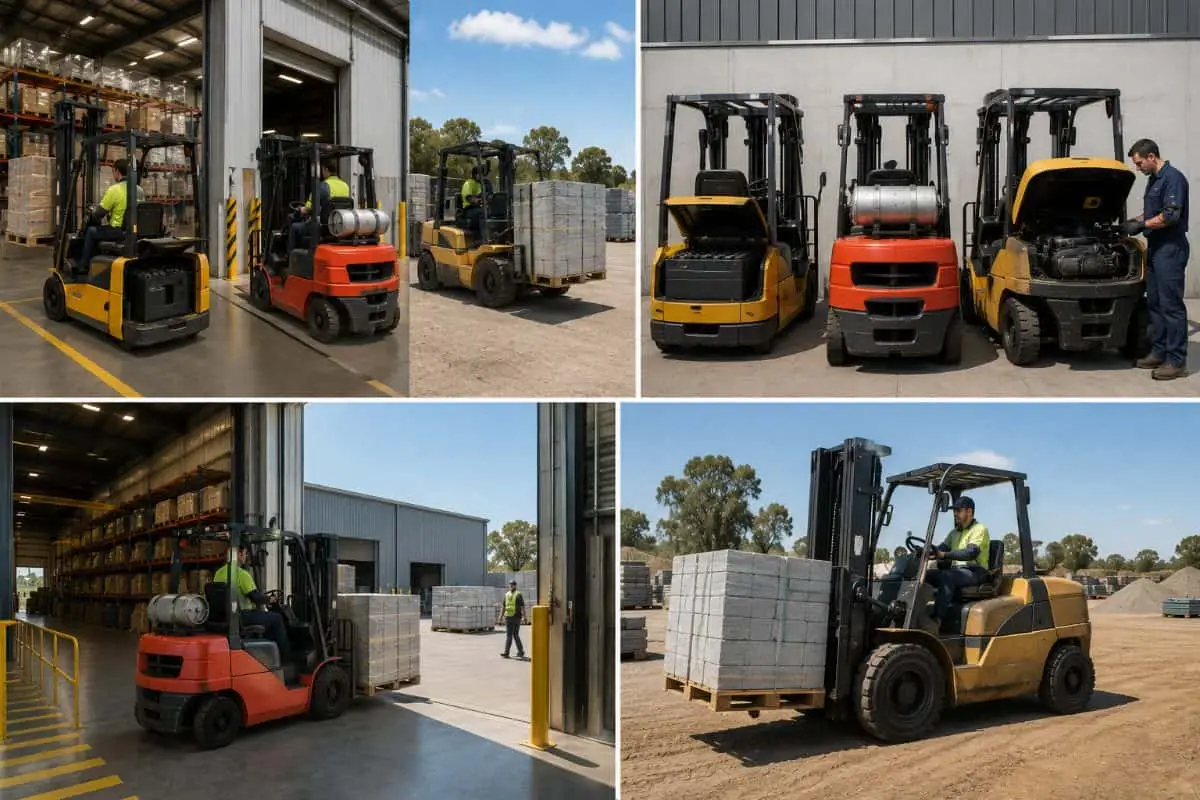
Diesel forklifts use compression-ignition engines and are commonly selected for demanding outdoor applications.
Advantages of Diesel Forklifts
- Strong heavy-duty performance: Suitable models can handle demanding loads and longer duty cycles.
- Outdoor suitability: Pneumatic-tyre and higher-clearance configurations work well on suitable yards.
- Fast refuelling: The machine can return to work quickly.
- Long operating periods: Appropriate fuel arrangements support extended shifts.
- Wide range of capacities: Diesel is common in larger counterbalance and heavy industrial forklifts.
- Established service support: Diesel maintenance expertise and parts are broadly available.
Disadvantages of Diesel Forklifts
- Diesel exhaust presents serious health risks.
- Enclosed or poorly ventilated operation can create dangerous exposure.
- Engines are noisier than electric drive systems.
- More combustion-related maintenance is required.
- Fuel storage and spill controls are needed.
- Idling wastes fuel and increases emissions.
- Diesel models may be unsuitable for clean indoor industries.
WorkSafe Victoria identifies forklifts as a source of workplace diesel exhaust and warns that exposure may be higher where diesel equipment operates in enclosed or poorly ventilated areas. Diesel exhaust can cause immediate irritation and longer-term heart, lung and cancer risks. (WorkSafe Victoria)
Safe Work Australia’s June 2026 guide also identifies forklift drivers and loading-dock workers among those who may be exposed to diesel engine emissions and states that exposure can harm lung health and contribute to cancer. (Safe Work Australia)
Best Uses for Diesel Forklifts
Diesel forklifts commonly suit:
- Construction sites
- Timber and building-supply yards
- Freight depots
- Shipping and transport areas
- Heavy manufacturing yards
- Agricultural operations
- Outdoor loading and unloading
- Large-load applications
Businesses considering limited indoor operation should first review the risks of using a diesel forklift indoors.
Forklift Running Costs Compared
There is no reliable universal hourly figure for electric, LPG or diesel forklifts. The result depends on local energy prices, forklift size, load weight, shift pattern, idle time, maintenance condition and operator behaviour.
| Cost Area | Electric | LPG | Diesel |
|---|---|---|---|
| Energy or fuel | Electricity and charging losses | LPG cylinder supply | Diesel consumption |
| Routine servicing | Battery, electrical and mechanical systems | Engine, LPG system and mechanical components | Engine, fuel, cooling and mechanical systems |
| Major replacement | Traction battery and charger | Engine or LPG-system components | Engine, transmission or emissions components |
| Infrastructure | Charger, electrical supply and charging area | Cylinder storage and exchange area | Fuel storage or delivery arrangement |
| Downtime | Recharge or battery change | Cylinder swap | Refuelling |
| Operator behaviour | Aggressive travel increases energy use | Idling increases fuel use | Idling and heavy acceleration increase fuel use |
| Resale factor | Battery condition strongly affects value | Engine condition and hours | Engine condition, hours and application history |
1. Electric Running Costs
Electric can be economical where:
- Electricity pricing is favourable.
- The battery is correctly sized.
- Charging is well managed.
- The forklift works regular indoor shifts.
- Battery life is protected through correct use.
Include eventual battery replacement when calculating total ownership cost.
2. LPG Running Costs
LPG cost depends on:
- Cylinder price
- Delivery charges
- Machine consumption
- Idle time
- Cylinder-change labour
- Storage requirements
- Engine condition
An inefficient or poorly maintained LPG engine may consume more fuel than expected.
3. Diesel Running Costs
Diesel expenditure depends on:
- Litres consumed per hour
- Idle time
- Load intensity
- Surface condition
- Engine condition
- Fuel price
- Maintenance
- Emissions controls
The guide to diesel used per hour explains the operational factors that influence consumption.
Total Ownership Cost
Compare:
Purchase + finance + energy or fuel + servicing + repairs + infrastructure + downtime − resale value
A lower-priced forklift can become the more expensive option when its fuel use, maintenance exposure or downtime is high.
Indoor vs Outdoor Use and Emissions
1. Electric Forklifts Indoors
Electric equipment produces no exhaust at the forklift, making it generally preferable where indoor air quality is a major consideration.
The workplace must still manage:
- Battery charging
- Electrical hazards
- Hydrogen release from relevant battery types
- Spill response
- Battery handling
- Charger protection
- Pedestrian separation
WorkSafe Victoria says charging and refuelling areas should be well ventilated and equipped with suitable emergency equipment, including eyewash facilities, spill kits and firefighting equipment. Chargers should also be protected from forklift impacts.
2. LPG Forklifts Indoors
An LPG forklift is not emissions-free. Indoor use requires an assessment of:
- Building ventilation
- Number of combustion forklifts
- Shift length
- Engine maintenance
- Exhaust accumulation
- Carbon monoxide risk
- Loading-dock conditions
- Cold-store or container work
WorkSafe Victoria identifies gas-powered forklifts as a potential source of indoor fume accumulation, particularly in enclosed areas.
3. Diesel Forklifts Indoors
Diesel should not be selected for routine enclosed operation without a detailed risk assessment and effective controls. Simply opening a door may not adequately control diesel particulate matter or other emissions.
Controls may involve:
- Substituting electric equipment
- Relocating diesel work outdoors
- Capturing exhaust at the source
- Mechanical ventilation
- Reducing operating time
- Preventing unnecessary idling
- Maintaining engines
- Monitoring exposure
The most effective control is often eliminating or substituting the diesel source where reasonably practicable. WorkSafe Victoria recommends reviewing the operating environment, whether the area is enclosed and how many diesel engines are operating when assessing exposure risk.
Downtime: Recharging vs Refuelling vs Cylinder Changes
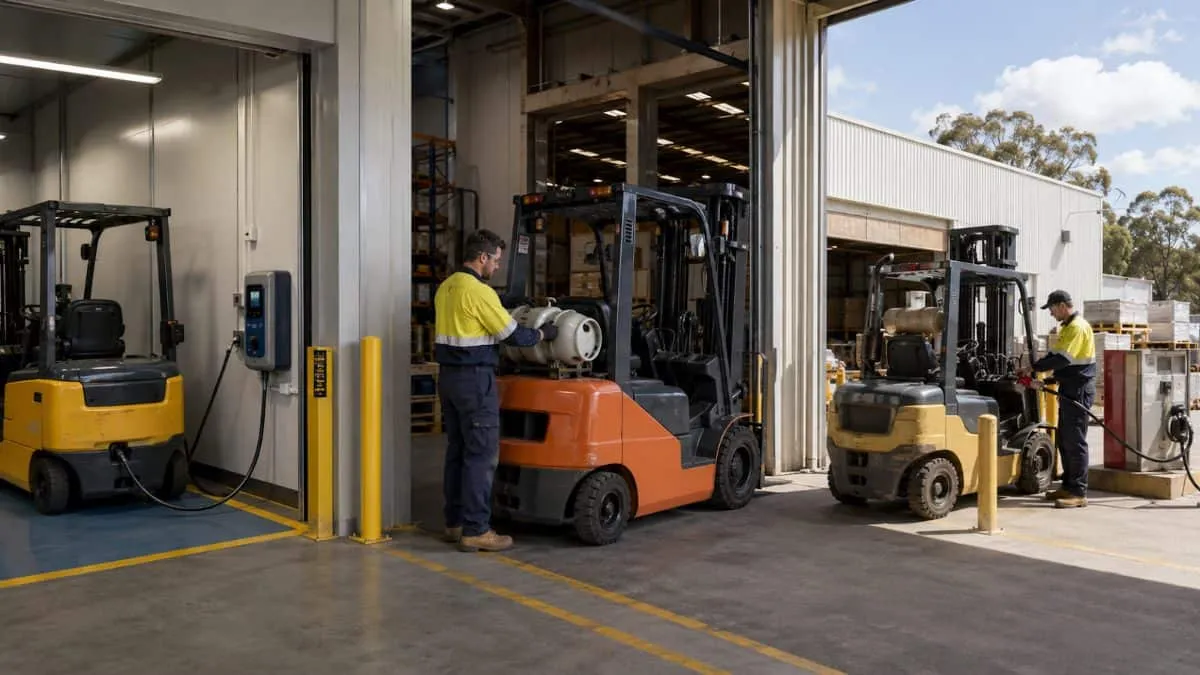
1. Electric Forklift Charging
Options include:
- Overnight charging
- Opportunity charging during breaks
- Fast charging with a compatible system
- Spare battery changeover
- Lithium-ion charging between tasks
Charging strategy must match the shift pattern. A single battery may suit one predictable shift but be inadequate for continuous multi-shift operation.
2. LPG Cylinder Changes
An LPG cylinder can usually be exchanged quickly, but the process requires:
- Trained workers
- Suitable gloves
- A designated ventilated area
- Correct cylinder orientation
- Secure mounting
- Leak checks
- Compliant storage
WorkSafe Queensland maintains specific guidance on attaching LPG cylinders to forklifts, while WorkSafe Victoria requires designated exchange and storage areas and authorised workers. (WorkSafe Queensland)
3. Diesel Refuelling
Diesel forklifts can be refuelled quickly where the business has:
- Safe fuel storage
- Spill controls
- Fire protection
- Authorised workers
- A suitable outdoor refuelling area
- Fuel-delivery arrangements
Quick refuelling can support long shifts, but idle time and unnecessary engine operation increase both cost and emissions.
Maintenance Differences
1. Electric Forklift Maintenance
Typical areas include:
- Traction battery
- Charger
- Cables and connectors
- Drive motors
- Controllers
- Brakes
- Steering
- Hydraulics
- Mast and chains
- Tyres
Electric forklifts have fewer combustion-engine service items, but batteries and electronic controls require specialist assessment.
2. LPG Forklift Maintenance
Typical areas include:
- Engine oil and filters
- Cooling system
- Spark or ignition components
- LPG regulator and fuel system
- Hoses and connections
- Exhaust
- Hydraulics
- Transmission
- Mast and chains
Fuel-system faults should only be handled by qualified people.
3. Diesel Forklift Maintenance
Typical areas include:
- Engine oil and filters
- Fuel filters
- Cooling system
- Belts and hoses
- Injectors
- Air intake
- Exhaust
- Transmission
- Hydraulics
- Mast and chains
Poor maintenance can increase fuel use and emissions.
Regardless of power type, WorkSafe Victoria recommends pre-operational checks at the start of each shift, before first daily use and when the operator changes. Unsafe forklifts should be locked out, and maintenance should be completed by a suitably competent technician.
Which Forklift Fuel Type Should You Choose?
Use the following scenario guide.
| Business Scenario | Strongest Starting Option | Reason |
|---|---|---|
| Enclosed warehouse | Electric | No forklift tailpipe emissions and lower noise |
| Food or pharmaceutical facility | Electric | Cleaner operating environment |
| Mixed indoor and outdoor work | LPG | Flexible operation with rapid cylinder changes |
| Heavy outdoor loads | Diesel | Strong heavy-duty capability |
| Continuous multi-shift indoor work | Electric with charging strategy or LPG | Depends on charging infrastructure and ventilation |
| Construction yard | Diesel | Outdoor capability and demanding duty cycle |
| Loading dock and warehouse | LPG or electric | Depends on ventilation, travel distance and workload |
| Quiet residential-area operation | Electric | Lower operating noise |
| Limited electrical infrastructure | LPG or diesel | Avoids a substantial charging installation |
| Sustainability priority | Electric | Supports zero tailpipe operation and renewable electricity use |
| Irregular low-hour use | Used LPG, diesel or electric | Condition and infrastructure may matter more than fuel |
| Cold-store warehouse | Suitable electric model | Avoids combustion exhaust indoors |
Choose Electric When
- Most work is indoors.
- Daily hours are predictable.
- Charging can be installed.
- Low noise matters.
- Tailpipe emissions are unacceptable.
- The business can manage battery care.
Choose LPG When
- The forklift moves between indoors and outdoors.
- Fast refuelling matters.
- The building has adequate ventilation.
- Cylinder supply is reliable.
- A general-purpose counterbalance forklift is needed.
Choose Diesel When
- Most work is outdoors.
- Loads and duty cycles are demanding.
- Surfaces are rough or uneven.
- Fast refuelling is important.
- Exhaust exposure can be controlled by keeping work outside.
Businesses prioritising emissions reduction can also compare eco-friendly forklift options.
New vs Used Fuel-Type Considerations
A used electric forklift may appear affordable but require an expensive battery replacement. Request a battery capacity report and confirm charger compatibility.
A used LPG forklift should be checked for:
- Engine condition
- LPG-system leaks
- Regulator condition
- Cylinder mounting
- Exhaust performance
- Service history
A used diesel forklift should be checked for:
- Cold-start behaviour
- Smoke
- Injector or fuel-system problems
- Oil and coolant leaks
- Cooling-system condition
- Hours and previous workload
The same selection process applies when buying second-hand equipment. WorkSafe Victoria recommends reviewing the machine’s maintenance, inspection and use history and having it inspected and serviced before operation.
Electric vs Diesel and Electric vs LPG
The three-fuel comparison gives the broad decision. The following guides cover the most common two-way choices in more detail:
- Review electric versus diesel forklifts in depth when choosing between clean indoor operation and heavier outdoor capability.
- Compare electric versus LPG running costs when both options could suit a warehouse or loading-dock application.
What About Hydrogen Forklifts?
Hydrogen fuel-cell forklifts are an emerging alternative for high-throughput fleets. They combine electric drive with rapid hydrogen refuelling and no tailpipe exhaust other than water at the vehicle.
However, suitability depends on:
- Fleet scale
- Hydrogen supply
- Refuelling infrastructure
- Capital cost
- Site engineering
- Maintenance support
- Safety procedures
For most small and medium Australian businesses, electric battery, LPG and diesel equipment remain more accessible. Hydrogen should be assessed as a complete fleet and infrastructure project rather than a direct single-machine replacement.
Frequently Asked Questions
1. Which Forklift Fuel Type Is Cheapest to Run?
Electric is often the lowest-cost option for regular indoor work when charging is well managed and battery replacement is included in the calculation. The result depends on electricity, LPG and diesel prices, utilisation, maintenance and infrastructure. Compare total ownership cost rather than fuel alone.
2. Is Electric or LPG Better Indoors?
Electric is normally the stronger indoor choice because it produces no tailpipe emissions at the forklift. LPG can be used in suitable indoor applications, but combustion exhaust, ventilation, engine condition and exposure must be assessed and controlled.
3. Can You Use a Diesel Forklift Indoors?
Diesel forklift operation indoors can expose workers to harmful exhaust and particulate matter, especially in enclosed or poorly ventilated workplaces. Substitution with electric equipment should be considered before relying on ventilation or administrative controls.
4. Which Forklift Type Lasts the Longest?
There is no universal winner. Lifespan depends on operating hours, workload, maintenance, environment and component condition. Electric forklifts avoid engine wear but depend heavily on battery care. LPG and diesel engines can remain serviceable for many hours when maintained correctly.
5. Are LPG Forklifts Being Phased Out?
There is no general Australian ban phasing out LPG forklifts. Some businesses are moving to electric equipment to reduce emissions, noise and fuel handling, but LPG remains an available option where its flexibility and fast refuelling suit the operation.
6. What Is the Best Forklift for Indoor and Outdoor Use?
LPG is often the most flexible single-machine option for ventilated indoor and outdoor work. However, an electric forklift designed for outdoor surfaces may be preferable where charging is available and the outdoor work is moderate.
7. Do Electric Forklifts Have Enough Power for Heavy Loads?
Electric forklifts are available in a wide range of capacities, including heavy industrial models. Suitability must be confirmed using the specific forklift’s capacity plate, load centre, mast, attachment and required lift height.
Conclusion
Electric forklifts are generally best for clean indoor operations, LPG forklifts provide practical indoor-outdoor flexibility, and diesel forklifts remain well suited to demanding outdoor work.
Do not choose based only on the purchase price or the fuel used per hour. Compare ventilation, charging or storage infrastructure, maintenance, downtime, operator conditions and residual capacity for the real application.
Combustion-powered forklifts require particular attention indoors because diesel, LPG and petrol exhaust can accumulate in enclosed spaces. Electric equipment removes tailpipe exhaust at the forklift but still requires safe charging, battery handling and maintenance controls.
After defining the operating environment, load and shift pattern, compare the available full forklift range to identify suitable electric, LPG and diesel options.