
Eco-Friendly Forklifts: Electric Options and Environmental Benefits
· Updated
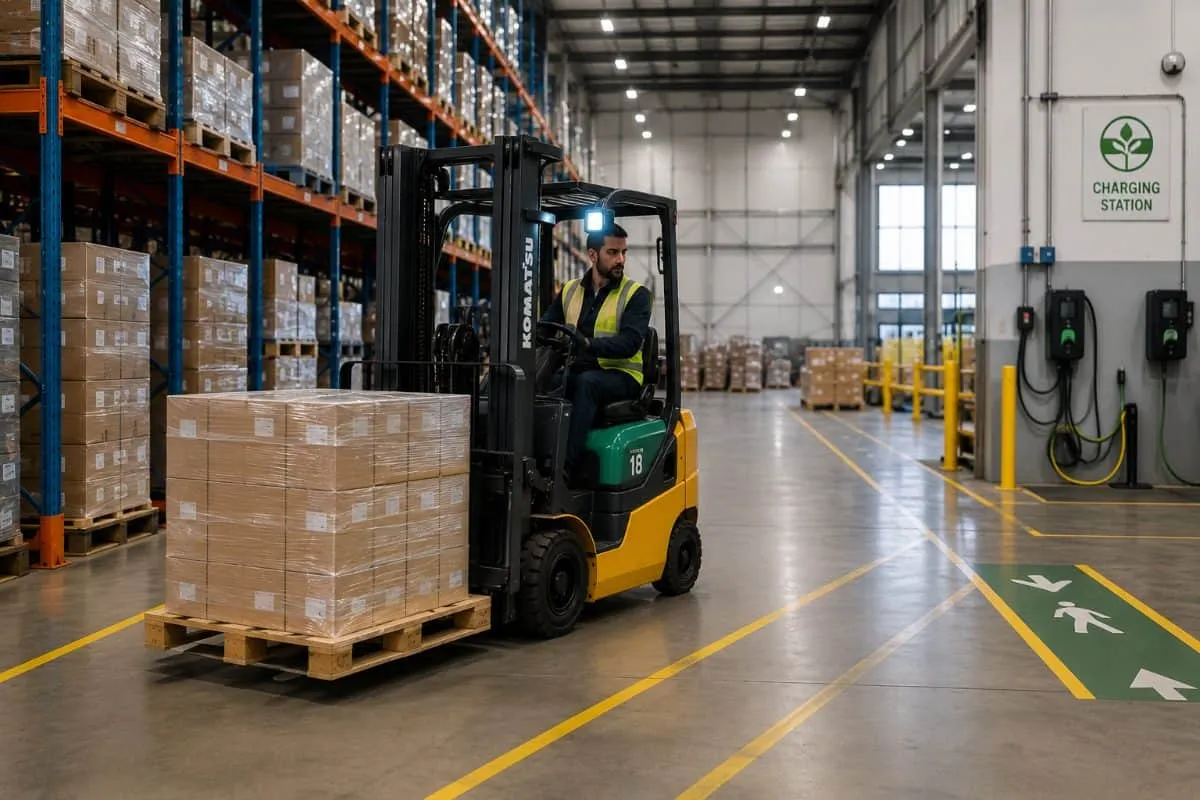
An eco-friendly forklift reduces the environmental impact of moving materials through lower emissions, efficient energy use, quieter operation and responsible battery or fuel management. For most indoor businesses, an electric forklift is the leading option because it produces no tailpipe emissions while operating.
However, choosing a greener forklift involves more than replacing diesel or LPG with a battery. Businesses should consider how electricity is generated, what battery technology is used, how efficiently the forklift operates and how the equipment will be maintained and recycled at the end of its working life.
This guide explains what makes a forklift environmentally friendly, compares electric, LPG and diesel machines, and outlines practical ways Australian businesses can reduce the impact of their material-handling operations.
What Is an Eco-Friendly Forklift?
An eco-friendly forklift is a machine selected and operated to reduce emissions, energy consumption, noise, fluid waste and environmental harm across its working life. Electric forklifts are generally the most environmentally friendly option at the point of use, particularly inside warehouses and manufacturing facilities.
The environmental performance of a forklift depends on several factors.
- Power source: Electric machines avoid the direct combustion of diesel, petrol or LPG during operation.
- Tailpipe emissions: Battery-electric forklifts do not produce exhaust fumes at the forklift itself.
- Energy efficiency: Efficient motors, charging systems and operating practices reduce wasted energy.
- Battery type: Lithium-ion and lead-acid batteries have different charging, maintenance and lifecycle characteristics.
- Operating environment: Indoor, outdoor, cold-storage and heavy-duty applications may require different solutions.
- Maintenance: Correct servicing helps engines, motors, tyres and hydraulic systems operate efficiently.
- Equipment lifespan: Keeping a suitable forklift in safe, productive service can reduce premature replacement.
- End-of-life management: Batteries, oils, tyres, metal parts and electronic components should be handled through appropriate recycling or disposal channels.
An environmentally friendly forklift must also be suitable for the task. Selecting an electric model that cannot complete the required shift may lead to inefficient charging, frequent battery changes or the need for additional equipment.
Businesses ready to consider available machines can review electric forklifts for sale based on capacity, mast type and intended application.
Electric vs Diesel vs LPG: Emissions and Environmental Impact
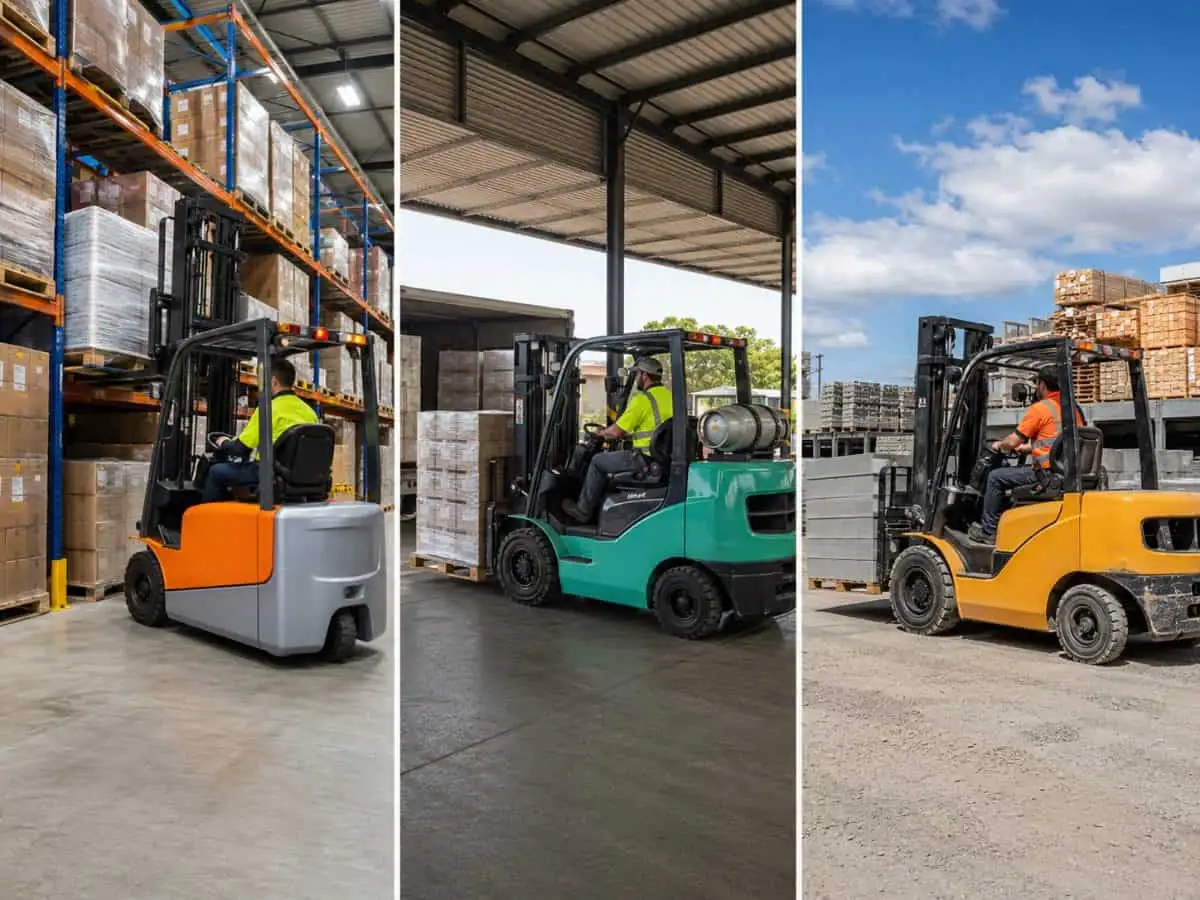
Electric, diesel and LPG forklifts can all perform valuable material-handling work, but their environmental impacts are different.
| Environmental Factor | Electric Forklift | LPG Forklift | Diesel Forklift |
|---|---|---|---|
| Tailpipe emissions | No tailpipe emissions during operation | Produces combustion emissions | Produces combustion emissions, including particulate matter |
| Indoor air quality | Well suited to indoor environments when battery charging is managed correctly | Requires suitable ventilation and workplace controls | Generally better suited to outdoor or open environments |
| Operating noise | Usually quieter | More engine noise than electric | Usually the loudest of the three options |
| Energy source | Grid electricity, onsite solar or renewable electricity arrangements | LPG fuel | Diesel fuel |
| Routine fluids | No engine oil or engine coolant on most battery-electric models | Requires engine fluids and servicing | Requires engine fluids and servicing |
| Idling impact | Electric motor does not need to idle like a combustion engine | Fuel may be wasted during unnecessary idling | Fuel and emissions may increase during unnecessary idling |
| Battery or fuel storage | Requires charging equipment and battery-management procedures | Requires safe cylinder storage and handling | Requires compliant fuel storage and refuelling |
| Lifecycle considerations | Battery production, electricity source and recycling affect overall impact | Fuel production, transport and combustion affect overall impact | Fuel production, transport, combustion and particulate emissions affect overall impact |
| Typical application | Warehouses, manufacturing, food operations and distribution centres | Mixed indoor and outdoor work where controls are suitable | Outdoor yards, construction materials and demanding industrial work |
1. Electric Forklifts
Electric forklifts have no exhaust pipe and produce no tailpipe emissions while travelling or lifting. This makes them particularly useful in enclosed warehouses, food facilities and workplaces where indoor air quality is important.
Their overall environmental impact still depends on the electricity used for charging, battery production, battery life and end-of-life recycling.
2. LPG Forklifts
LPG forklifts generally produce fewer visible exhaust emissions than older diesel machines, but they still burn fuel and release combustion gases. They require adequate ventilation and should not be treated as emission-free equipment.
They can be practical for businesses that need a forklift to move between indoor and outdoor areas, especially where rapid refuelling is important.
3. Diesel Forklifts
Diesel forklifts are commonly selected for outdoor work, rougher surfaces and demanding applications. They produce exhaust emissions and are not normally the first choice for enclosed indoor environments.
Where diesel remains operationally necessary, businesses can reduce its impact through proper maintenance, reduced idling, suitable ventilation and correct equipment sizing.
A broader operational comparison is available in Buy A Fork’s full diesel versus electric versus LPG comparison. Businesses deciding specifically between battery and diesel power can also compare electric versus diesel forklifts.
Environmental Benefits of Switching to Electric Forklifts
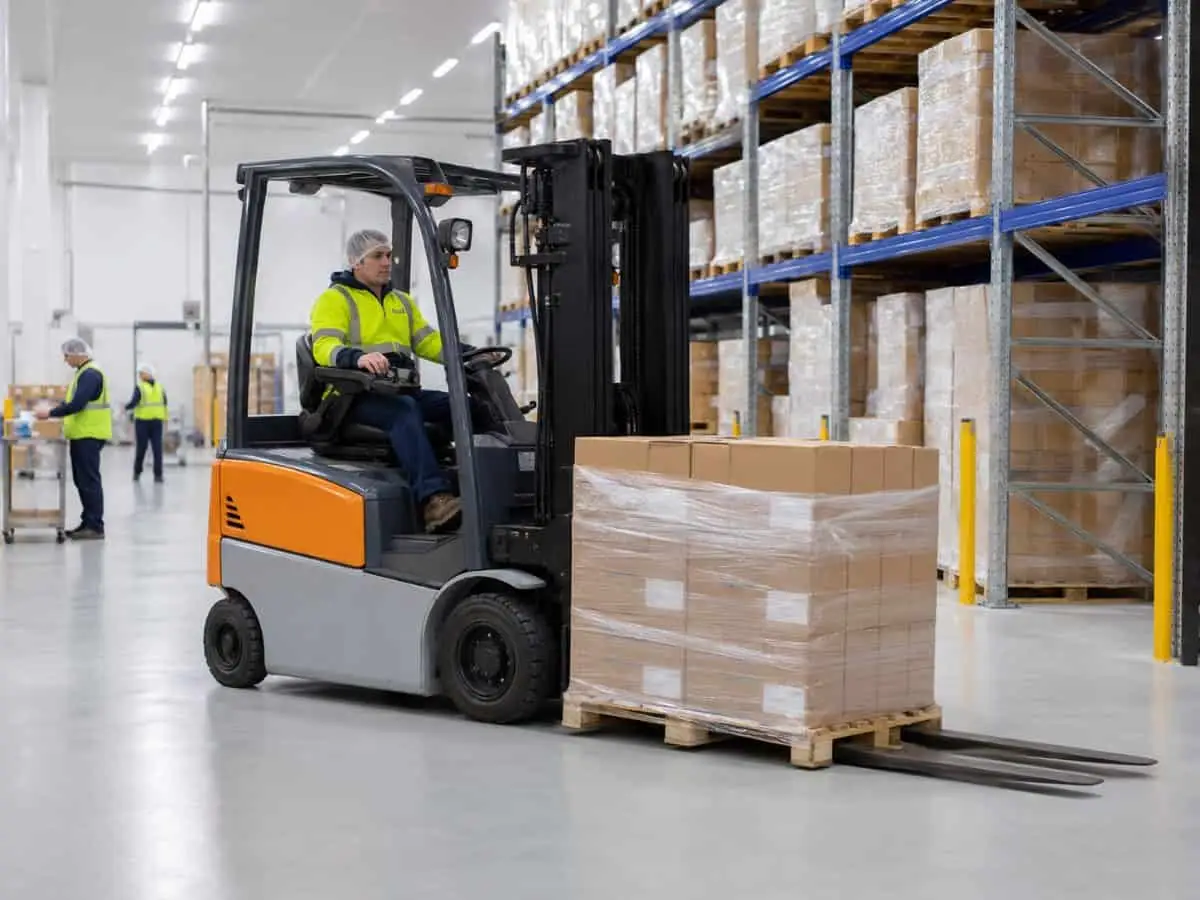
The main electric forklift environmental benefits relate to tailpipe emissions, indoor air quality, operating noise, energy use and reduced dependence on engine fluids.
Zero Tailpipe Emissions During Operation
Electric forklifts do not burn diesel, petrol or LPG while operating. They therefore produce no tailpipe emissions at the point where workers, stock and equipment are located.
This distinction is especially important inside enclosed buildings. Replacing an internal combustion forklift with a suitable electric model removes one direct source of exhaust from the operating area.
Zero tailpipe emissions do not mean that the forklift has no environmental footprint. Electricity generation, battery manufacturing and equipment production still need to be considered.
Cleaner Indoor Working Areas
Removing combustion exhaust from an indoor material-handling operation can support cleaner air and reduce the ventilation burden associated with fuel-powered equipment.
This can be particularly valuable in:
- Food and beverage facilities
- Cold stores
- Pharmaceutical warehouses
- Retail distribution centres
- Manufacturing plants
- Enclosed loading areas
- Warehouses with regular pedestrian activity
Businesses researching suitable indoor equipment can compare the top electric forklifts for indoor use.
Lower Operating Noise
Electric drivetrains are generally quieter than diesel or LPG engines. Lower machine noise may improve communication between workers and reduce noise across busy indoor operations.
Electric forklifts still create sound from tyres, hydraulics, warning devices, lifting components and contact with loads. They are quieter, not silent.
Efficient Energy Use
Electric motors convert stored electrical energy into movement without relying on continuous fuel combustion. Many electric forklifts also use energy-management systems designed to match power delivery to the task.
The amount of electricity used depends on:
- Forklift size
- Load weight
- Travel distance
- Lift height
- Surface condition
- Operator behaviour
- Battery condition
- Shift length
- Charger efficiency
- Use of heating or cold-store equipment
Businesses planning their charging costs can review how much electricity a forklift uses per hour.
Fewer Engine Fluids and Service Items
A battery-electric forklift does not require the same engine oil, spark plugs, fuel filters or exhaust-system maintenance as an internal combustion machine.
Electric forklifts still require maintenance. Hydraulic oil, brakes, tyres, mast chains, steering components, electrical systems and batteries must be inspected and serviced.
The benefit is a reduction in engine-related fluids and components, rather than the removal of maintenance altogether.
Opportunities to Use Renewable Electricity
Businesses with onsite solar or renewable electricity arrangements may be able to reduce the emissions associated with forklift charging.
Charging schedules can also be planned around operational demand, available solar generation or lower-demand periods. The practical result depends on the site’s electrical capacity, energy contract, solar system and fleet schedule.
The Environmental Impact of Forklifts and How to Reduce It
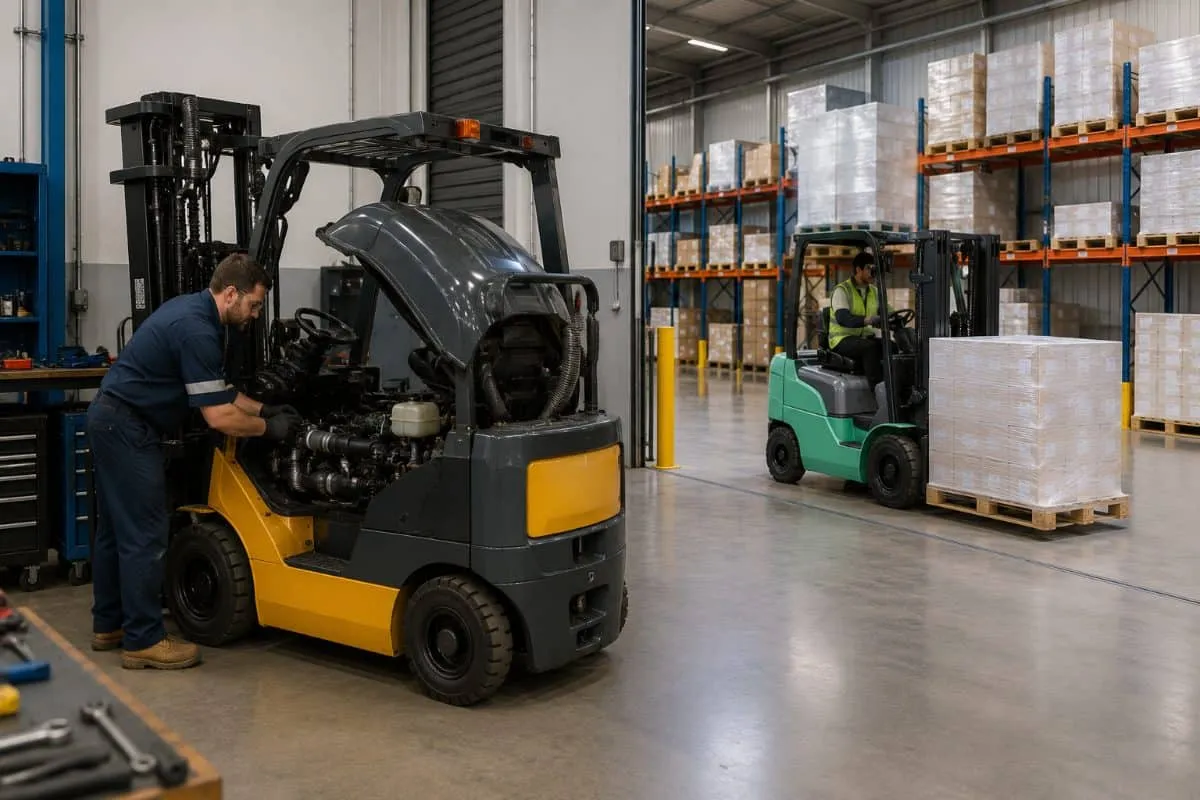
The environmental impact of a forklift extends beyond the fuel or electricity used during a shift. Manufacturing, transport, servicing, replacement parts, tyres, batteries, fluids and end-of-life disposal all contribute to the machine’s lifecycle footprint.
Businesses may not be able to remove every impact immediately, but operational changes can reduce unnecessary emissions and waste.
Diesel Exhaust and Particulate Matter
Diesel engines release a mixture of gases and fine particles through their exhaust. Exposure risk can increase when diesel equipment operates in enclosed or poorly ventilated areas.
Australian workplace safety guidance emphasises controlling exposure to diesel engine exhaust through measures such as eliminating the source where practical, using lower-emission equipment, maintaining engines and providing appropriate ventilation.
Replacing an indoor diesel forklift with an electric model may remove the diesel exhaust source from that task. Where diesel equipment remains necessary, it should be used in an environment suited to its emissions and ventilation requirements.
Unnecessary Idling
Leaving an LPG or diesel forklift idling consumes fuel without completing productive work. It also creates emissions, noise and engine wear.
Businesses can reduce idling by:
- Training operators to shut down equipment during extended inactive periods
- Improving loading schedules
- Keeping staging areas organised
- Reducing delays at docks
- Providing the right forklift for each task
- Tracking fuel use and idle time where monitoring systems are available
Electric forklifts do not idle in the same way. Their motors draw power when required, although lights, displays and auxiliary systems may still consume energy while the forklift is switched on.
Poor Maintenance
A neglected forklift may consume more fuel or electricity than a well-maintained machine. Low tyre pressure, dragging brakes, worn components, dirty filters and poor battery condition can reduce efficiency.
Preventative maintenance should address:
- Tyre condition and pressure where applicable
- Brake adjustment
- Battery condition
- Charger performance
- Cooling systems
- Air and fuel filters
- Hydraulic leaks
- Mast condition
- Engine tuning
- Warning lights and fault codes
Hydraulic oil, engine fluids and batteries must be handled correctly to prevent leaks, contamination or inappropriate disposal.
Inefficient Equipment Selection
Using an oversized forklift for light work may consume more energy and require more space than necessary. An undersized forklift may work at its limits, complete tasks slowly or require additional trips.
The machine should be selected according to:
- Actual load weight
- Load centre
- Required lift height
- Duty cycle
- Travel distance
- Aisle width
- Surface condition
- Indoor or outdoor use
- Attachments
- Charging or refuelling access
Operator Behaviour
Acceleration, braking, cornering and lifting habits influence energy use and component wear. Trained operators can reduce unnecessary travel, avoid harsh movements and identify developing faults before they cause larger problems.
Efficient operation should never override forklift safety. Loads must remain within the rated capacity, travel speeds must suit the site and workplace procedures must be followed.
Extending Useful Equipment Life
Replacing equipment too early creates additional manufacturing and disposal impacts. Keeping a suitable forklift in productive service through correct maintenance may reduce unnecessary replacement.
However, extending equipment life should not mean continuing to use an unsafe, inefficient or unsuitable machine. A replacement may be justified when an older forklift has high emissions, frequent failures or major components that are no longer economical to repair.
Are Electric Forklifts Always Greener?
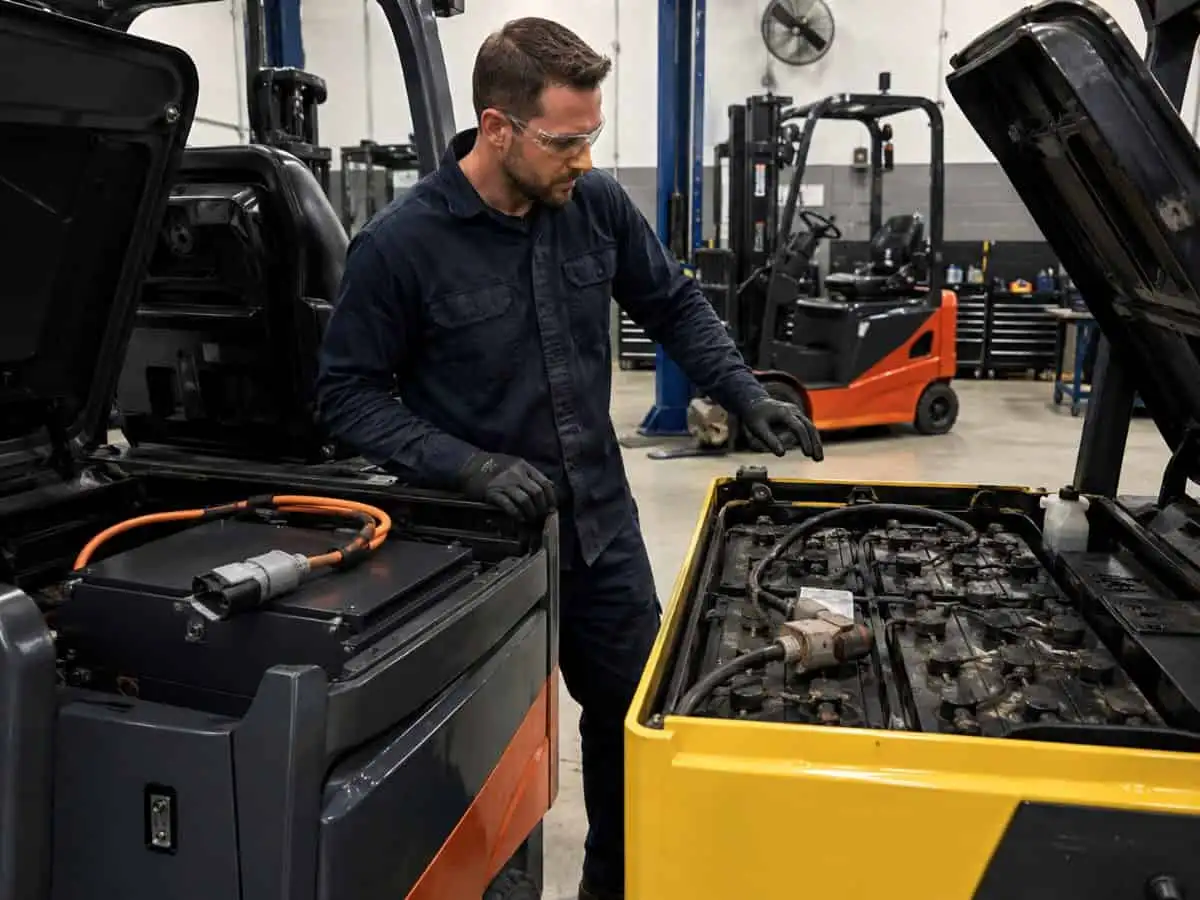
Electric forklifts are usually the cleanest option at the point of operation, but their complete environmental impact depends on how they are manufactured, charged, maintained and recycled.
1. Grid Electricity Versus Renewable Charging
An electric forklift produces no tailpipe emissions, but the electricity used to charge it may come from a mixture of renewable and fossil-fuel generation.
Charging from onsite solar or a verified renewable electricity arrangement can reduce the emissions associated with operation. Charging from a more emissions-intensive electricity supply still shifts emissions away from the forklift itself, rather than removing them entirely.
Electricity generation is only one consideration. The forklift’s efficiency, battery life, charger efficiency and working schedule also affect overall energy use.
2. Battery Production
Producing forklift batteries requires raw materials, energy, transport and manufacturing. These impacts occur before the forklift begins operating.
A battery that remains productive for its expected service life will generally make better use of those resources than one that fails early because of poor charging, overheating, incorrect watering or unsuitable use.
3. Battery Recycling and End-of-Life Management
Forklift batteries should not be placed in general waste. Lead-acid and lithium-ion batteries require different handling, storage, transport and recycling procedures.
Businesses should ask the battery supplier or forklift dealer:
- Who is responsible for collecting the old battery
- Whether the battery can be recycled
- How damaged batteries should be stored
- What transport requirements apply
- Whether replacement or refurbishment is available
- What documentation is provided at disposal
4. Lithium-Ion Versus Lead-Acid Batteries
Both battery types can power environmentally friendly forklifts, but their practical characteristics differ.
| Environmental Consideration | Lithium-Ion Battery | Lead-Acid Battery |
|---|---|---|
| Charging | Supports opportunity charging on suitable systems | Commonly charged through longer scheduled cycles |
| Maintenance | Usually sealed with no routine watering | Requires watering and regular maintenance |
| Charging area | May reduce the need for battery-changing infrastructure | Often requires a managed charging and ventilation area |
| Energy efficiency | Generally has lower charging losses | May lose more energy during charging |
| Service life | Can provide a long cycle life when correctly managed | Life depends strongly on charging, watering and discharge practices |
| Materials | Requires lithium and other battery materials | Contains lead and sulphuric acid |
| End-of-life | Requires a suitable lithium battery recycling pathway | Established lead recycling pathways are widely used |
| Initial cost | Usually higher | Usually lower |
| Best fit | Multi-shift or opportunity-charging applications | Predictable shifts with established battery maintenance processes |
Lithium-ion is not automatically the greener answer for every business. A well-maintained lead-acid battery used in a suitable application may be more practical than purchasing lithium technology that the operation does not need.
The decision should account for shift structure, charging opportunities, battery life, electricity use, and recycling arrangements. Buy A Fork’s guide to lithium-ion versus lead-acid batteries explains the operational differences in more detail.
Beyond Electric: Hydrogen and Other Low-Emission Options
Hydrogen fuel-cell forklifts generate electricity onboard and produce no conventional tailpipe exhaust at the point of use. They can be refuelled more quickly than many battery-electric forklifts, which may suit large fleets operating across multiple shifts.
However, hydrogen material-handling infrastructure remains limited in Australia. Production method, fuel availability, storage requirements, site investment and fleet size all affect whether it is practical.
Hydrogen is therefore more relevant to large, centralised operations that can justify dedicated refuelling infrastructure than to most small and medium Australian warehouses.
Other ways to reduce emissions may include:
- Using renewable electricity for battery charging
- Replacing older internal combustion machines with newer, more efficient equipment
- Matching each forklift to its actual duty
- Using electric pallet trucks or stackers for lighter tasks
- Improving warehouse layouts to reduce travel
- Reducing unnecessary idling
- Maintaining tyres, batteries and drivetrains correctly
For most Melbourne businesses seeking a commercially available low-emission forklift today, battery-electric equipment remains the most accessible option.
Choosing an Eco-Friendly Forklift for Your Business
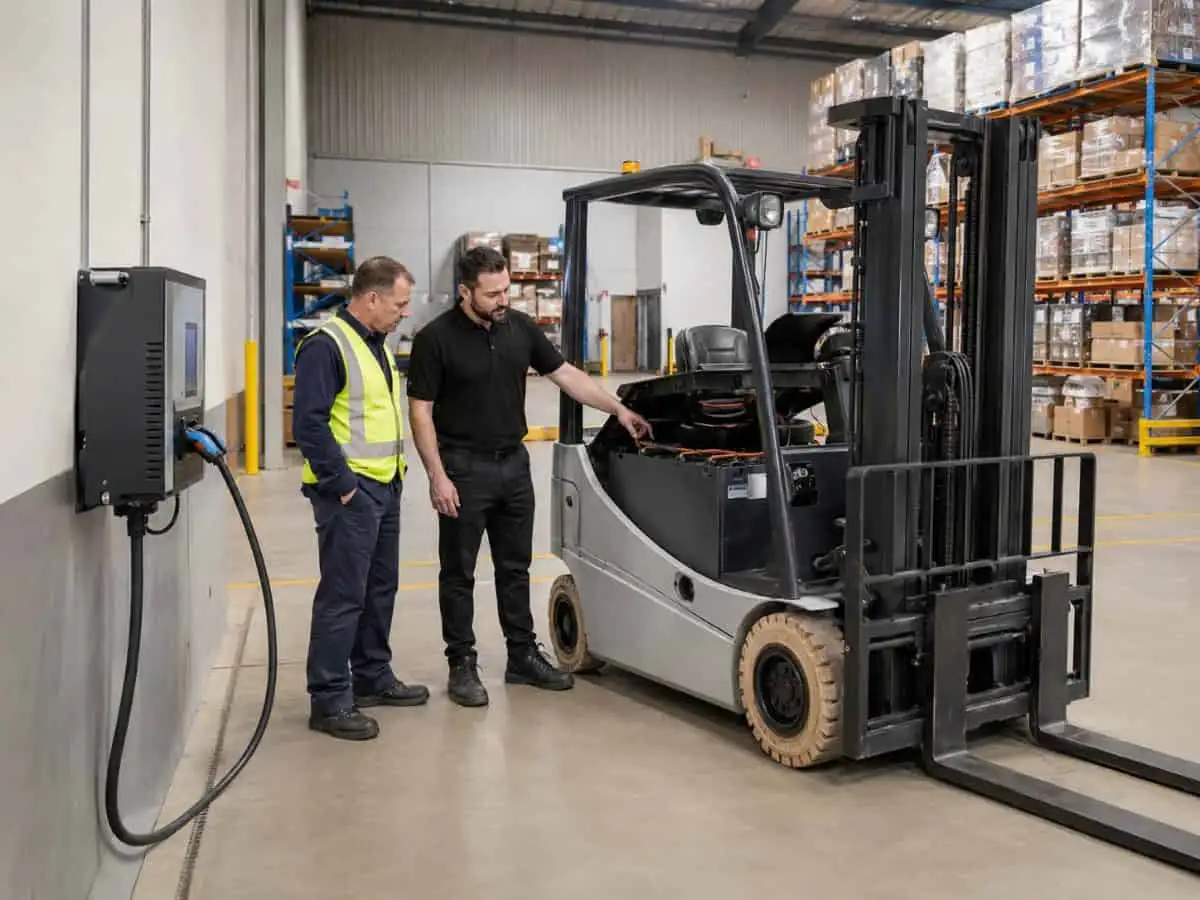
The best eco-friendly forklift is one that reduces environmental impact while safely completing the required work. Choosing solely by power source can result in an unsuitable or inefficient purchase.
Use the following checklist when comparing options.
1. Define the Duty Cycle
Determine how many hours the forklift will operate, how often it will lift and whether it must work across multiple shifts.
A light single-shift operation may have different battery requirements from a high-throughput distribution centre with limited downtime.
2. Confirm the Working Environment
Consider whether the forklift will operate:
- Indoors
- Outdoors
- Across both environments
- In cold storage
- Around food or sensitive products
- On smooth concrete
- On uneven or wet surfaces
Electric forklifts are commonly suited to indoor use, but tyre type, weather protection and ground clearance may affect outdoor suitability.
3. Calculate the Required Capacity
Use the actual load weight, load dimensions, lift height and attachment requirements. Do not select capacity from pallet weight alone.
An attachment or high lift can change the forklift’s available capacity. The capacity plate must reflect the final configuration.
4. Assess the Charging Setup
Before buying an electric forklift, confirm:
- Available electrical supply
- Charger requirements
- Charger location
- Ventilation requirements for the selected battery
- Space around the charging area
- Shift timing
- Opportunity-charging needs
- Access to onsite solar
- Procedures for damaged or end-of-life batteries
Infrastructure costs should be included in the purchase decision.
5. Compare Battery Technologies
Lead-acid may suit businesses with predictable shifts and an established maintenance routine. Lithium-ion may suit operations needing faster charging, opportunity charging or reduced daily battery maintenance.
The correct choice depends on how the forklift will actually be used.
6. Consider the Total Cost of Ownership
Compare more than the purchase price. Include:
- Electricity or fuel
- Scheduled servicing
- Battery replacement
- Charger installation
- Tyres
- Hydraulic maintenance
- Engine maintenance
- Downtime
- Resale value
- End-of-life recycling
An electric forklift may have a higher initial cost than an older fuel-powered machine but lower routine engine-maintenance requirements.
7. Match the Forklift to Sustainability Goals
Decide what the business is trying to achieve.
Possible goals include:
- Removing diesel equipment from indoor areas
- Improving indoor air quality
- Reducing operating noise
- Lowering fuel consumption
- Using onsite solar
- Reducing maintenance fluids
- Supporting internal sustainability reporting
- Replacing an ageing, inefficient fleet
Clear goals make it easier to measure whether the chosen forklift produces a meaningful improvement.
8. Inspect Used Electric Equipment Carefully
A used electric forklift may reduce purchase costs and extend the working life of existing equipment, but the battery and charger require careful inspection.
Check:
- Battery age and condition
- Remaining battery performance
- Charger compatibility
- Connectors and cables
- Corrosion
- Fault codes
- Mast and hydraulic condition
- Tyres and brakes
- Service history
- Parts availability
The used electric forklift buying guide covers the main checks before purchase.
Businesses needing a seated warehouse machine can also compare the available electric counterbalance range.
FAQ
1. What Is the Most Environmentally Friendly Forklift?
A battery-electric forklift charged with low-emission or renewable electricity is generally the most environmentally friendly widely available option. It produces no tailpipe emissions during operation and is usually quieter than diesel or LPG equipment. Its complete impact still depends on battery production, charging efficiency, maintenance and recycling.
2. Are Electric Forklifts Really Better for the Environment?
Electric forklifts can reduce direct workplace emissions, noise and the use of engine oils and fuel. Their overall environmental benefit depends on the electricity source, battery lifespan, equipment efficiency and end-of-life recycling. They are generally most beneficial when correctly sized, efficiently charged and used for suitable applications.
3. Do Electric Forklifts Produce Zero Emissions?
Electric forklifts produce zero tailpipe emissions while operating because they do not burn fuel onboard. They are not completely emission-free across their lifecycle. Electricity generation, battery production, equipment manufacturing, transport and recycling can still create environmental impacts.
4. Is a Lithium-Ion Battery More Eco-Friendly Than Lead-Acid?
Lithium-ion batteries can be more energy-efficient, require less routine maintenance and support opportunity charging. Lead-acid batteries have established recycling systems and may suit predictable, lower-intensity operations. The greener choice depends on battery life, charging source, duty cycle, maintenance and responsible recycling.
5, Can Eco-Friendly Forklifts Handle Heavy Work?
Yes. Electric forklifts are available for many demanding warehouse and industrial applications. The machine must have the correct capacity, battery, tyres, mast and attachment configuration. Some outdoor or highly specialised heavy-duty tasks may still be better suited to other power sources.
6. Do Electric Forklifts Save Money as Well as Emissions?
Electric forklifts can reduce fuel use and eliminate several engine-related service items. Potential savings depend on electricity prices, charging infrastructure, battery replacement, duty cycle and the cost of the alternative fuel-powered machine. Buyers should compare total ownership costs rather than purchase price alone.
7. Should I Replace Every Diesel or LPG Forklift With Electric?
Not automatically. Electric forklifts are well suited to many indoor and mixed operations, but every application should be assessed separately. Outdoor surfaces, long shifts, remote work, heavy loads and limited charging access may affect the decision. A staged replacement plan may be more practical than changing the entire fleet at once.
Conclusion
An eco friendly forklift should reduce environmental impact without compromising safety, capacity or productivity. For most enclosed warehouses and manufacturing facilities, electric forklifts provide the clearest benefits through zero tailpipe emissions, quieter operation and fewer engine-related fluids.
Their environmental performance still depends on the source of charging electricity, battery type, equipment efficiency and end-of-life recycling. Electric should therefore be treated as part of a wider sustainability strategy rather than a complete solution on its own.
Businesses can also reduce forklift emissions by selecting the correct machine, limiting unnecessary idling, improving operator practices and maintaining equipment properly. The best result comes from matching the forklift, battery and charging setup to the site’s real workload and long-term sustainability goals.