
When Is the Best Time to Buy a Forklift in Australia?
· Updated
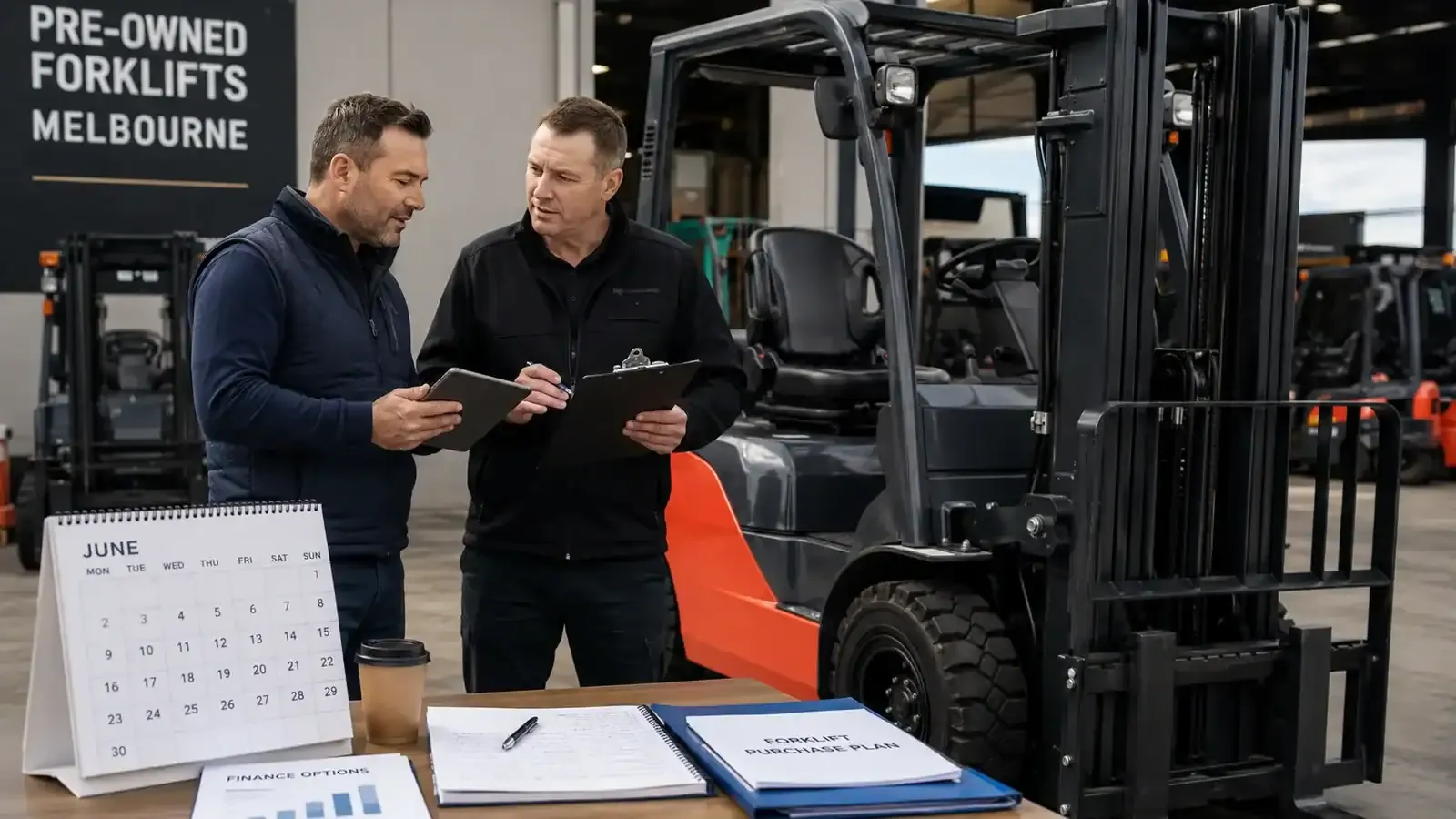
The best time to buy a forklift in Australia is usually before 30 June, during a genuine model or stock clearance, or several months before your busiest operating period. However, the right timing ultimately depends on when the forklift can reduce downtime, support growth or replace an unreliable machine.
Buying before the end of the financial year may provide tax or depreciation benefits, subject to current Australian Taxation Office rules. Purchasing ahead of a seasonal peak gives your business time to arrange finance, complete delivery, train operators and identify any servicing needs before demand increases.
Waiting for a particular month is not worthwhile when forklift breakdowns, rental expenses or insufficient capacity are already costing the business more than ownership would.
When Is the Best Time to Buy a Forklift in Australia?
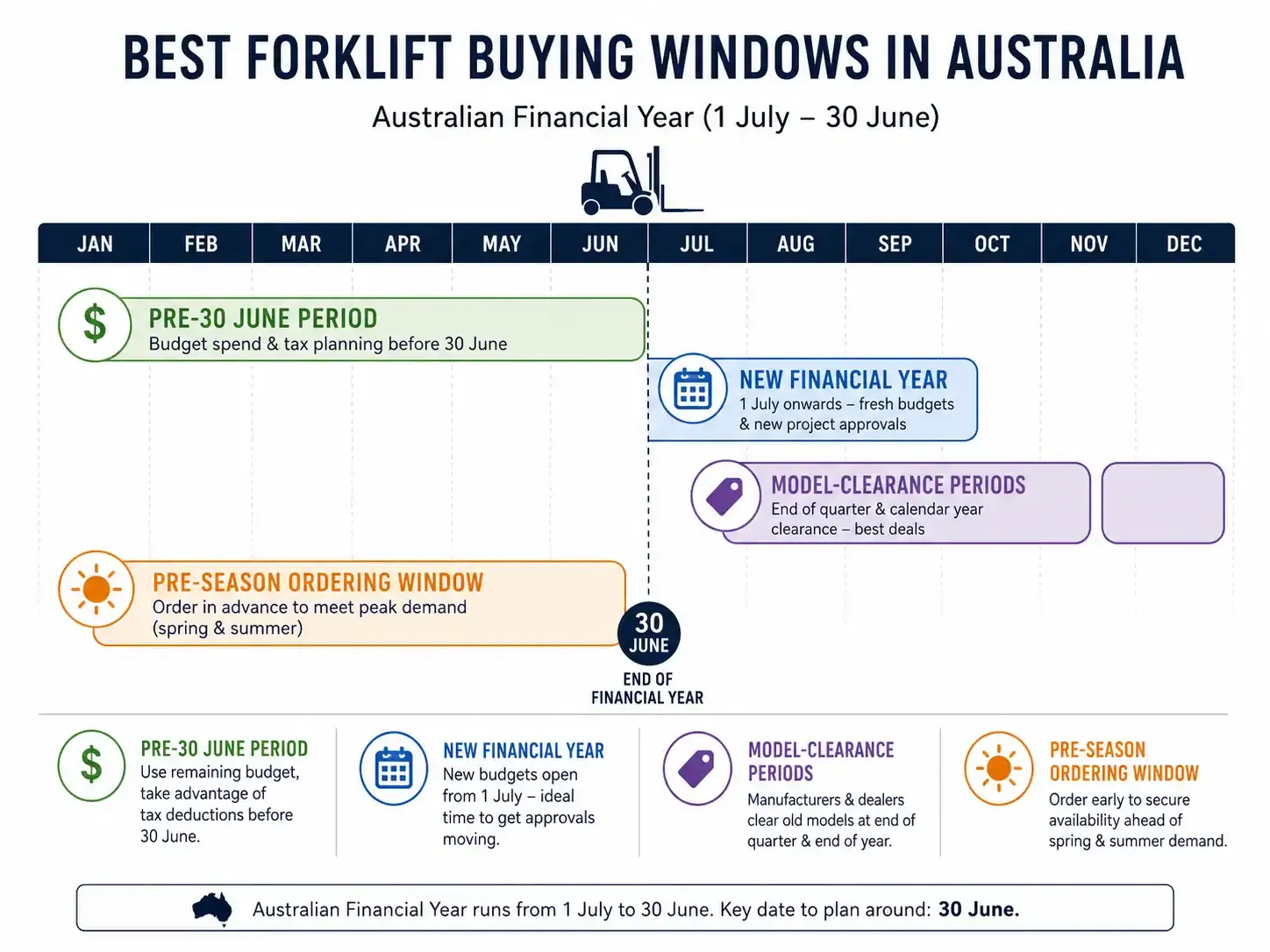
The three strongest forklift buying windows are:
- Before 30 June: This may allow an eligible business to claim available deductions or depreciation in the current financial year.
- During stock or model-changeover periods: Dealers may be more motivated to move older, ex-demonstration or superseded stock.
- Before your seasonal peak: Buying early gives you time to inspect, finance, deliver and prepare the forklift before workloads increase.
There is no guaranteed month when every forklift becomes cheaper. Prices depend on stock availability, equipment condition, model demand, exchange rates, shipping costs and dealer inventory.
The best buying decision balances purchase timing with operational need. A good deal on the wrong forklift is still a poor investment.
Buying a Forklift Before 30 June
The period leading up to 30 June is one of the most common times for Australian businesses to purchase equipment.
Businesses may be finalising annual capital expenditure, replacing older assets or assessing whether a purchase qualifies for available tax deductions.
Why 30 June Matters
Australia’s financial year runs from 1 July to 30 June.
Purchasing an eligible forklift before 30 June may allow a business to claim depreciation or an available asset write-off in that financial year. Eligibility depends on the business, the forklift’s cost, when it becomes ready for use and the tax rules applying at that time.
The main potential benefits include:
- Bringing forward an eligible tax deduction.
- Using an approved capital expenditure budget before year end.
- Replacing an ageing asset before the next financial year.
- Aligning repayments with the new financial year.
- Improving capacity before the second half of the calendar year.
- Taking advantage of EOFY stock availability or finance campaigns.
The tax benefits of buying before 30 June should always be considered alongside the forklift’s operational value. A tax deduction reduces taxable income. It does not make an unsuitable or unnecessary forklift free.
The Forklift Usually Needs to Be Ready for Use
Paying a deposit or signing a purchase agreement shortly before 30 June may not be enough to claim a deduction in that financial year.
Under the ATO’s instant asset write-off rules, an eligible asset generally needs to be first used or installed ready for use during the relevant income year.
For a forklift, this can make the following dates important:
- The purchase date.
- The settlement date.
- The delivery date.
- The date the forklift arrives at the workplace.
- The date it is available for business use.
- The date any necessary preparation or installation is completed.
A forklift ordered on 28 June but delivered in July may fall into the following financial year. Confirm the treatment with your accountant before relying on an EOFY deduction.
Check the Current Threshold
The instant asset write-off threshold and eligibility rules have changed several times.
For the 2025–26 income year, the ATO stated that eligible small businesses with aggregated annual turnover below $10 million could immediately deduct the business portion of eligible assets costing less than $20,000. The limit applied per asset.
Legislation was introduced in June 2026 to make the $20,000 threshold permanent from 1 July 2026. At the time of publication, businesses should still verify the measure’s final legal status and current ATO guidance before purchasing.
Forklifts costing at or above the applicable threshold may still qualify for depreciation through the relevant business depreciation rules. The deduction may simply be spread over time rather than claimed immediately.
Do Not Leave an EOFY Purchase Until the Final Week
Purchasing in May or early June is generally safer than waiting until the final days before 30 June.
An earlier purchase provides time to:
- Compare suitable forklifts.
- Complete an inspection.
- Arrange finance.
- Review the service history.
- Confirm the warranty.
- Prepare the forklift.
- Organise transport.
- Resolve site-access problems.
- Ensure the machine is available for use.
Demand for equipment, finance approvals and transport can increase near the end of the financial year. Starting earlier reduces the risk of missing the deadline or accepting an unsuitable forklift because time has run out.
End-of-Year and Model-Changeover Opportunities
The end of the calendar year and periods when manufacturers release updated models can create worthwhile buying opportunities.
Dealers may want to move:
- Older new stock.
- Superseded models.
- Ex-demonstration forklifts.
- Trade-in machines.
- Equipment returned from rental fleets.
- Machines occupying limited yard or warehouse space.
These opportunities are not guaranteed. A dealer with low stock and strong demand may have little reason to reduce prices.
What Is a Model-Changeover Forklift?
A model-changeover forklift is usually a new or demonstration machine from a range that has been updated or replaced.
The older model may still be reliable and suitable for the job. The difference may involve:
- Updated controls.
- Revised styling.
- New battery technology.
- Additional safety features.
- Improved displays.
- Changes to engine or emissions systems.
- A different mast or chassis configuration.
A superseded model can provide good value when parts, servicing and technical support remain available.
Do not assume that an older model is automatically a bargain. Compare the specification, warranty, capacity, condition and total price with current alternatives.
Questions to Ask About Clearance Stock
Before purchasing a clearance or ex-demonstration forklift, ask:
- Why is the forklift being discounted?
- Is it new, used or ex-demonstration?
- Has it previously been registered or placed into service?
- How many operating hours has it completed?
- When did the warranty begin?
- Is the full manufacturer warranty included?
- Are parts readily available?
- Does the forklift have the correct mast and attachments?
- Has it been stored indoors or outdoors?
- Is delivery included?
- Has the battery been maintained while in storage?
A discount only creates value when the forklift is suitable for your site and has dependable after-sales support.
Forklift Buying Calendar for Australian Businesses
The best buying period varies by industry, financial planning cycle and seasonal workload.
| Period | What to consider | Best action |
| January to February | Review the previous year’s downtime, capacity and rental costs | Identify replacement or expansion requirements |
| March to April | Begin EOFY planning and speak with your accountant | Set a budget and compare suitable forklift types |
| May to mid-June | Strongest practical EOFY purchasing window | Inspect, finance and arrange delivery |
| Late June | Limited time remains for delivery and preparation | Buy only if the forklift is suitable and can be ready in time |
| July to August | New financial year budgets become available | Reassess deferred purchases and available stock |
| September to October | Prepare for summer, retail, logistics or agricultural peaks | Secure equipment before seasonal demand increases |
| November to December | Calendar-year stock reviews and possible clearances | Compare ex-demo, used and superseded stock |
| Any month | Downtime, safety risks or capacity shortages are increasing | Buy when delaying would cost more than purchasing |
This calendar is a planning guide rather than a promise of lower prices. Your workload, available stock and the machine’s condition should carry more weight than the month shown on the calendar.
Buy Before Your Busy Season, Not During It
The best operational time to buy a forklift is before the workload increases.
Buying during the peak period can leave the business dealing with:
- Limited available stock.
- Longer delivery times.
- Urgent finance decisions.
- Higher short-term rental costs.
- Insufficient operator training.
- Unplanned maintenance.
- Production or dispatch delays.
- Pressure to accept the wrong specification.
A business should ideally begin reviewing its forklift requirement two to four months before the expected increase in demand. More time may be necessary for new, imported or specialised forklifts.
Seasonal Industries That Need Earlier Planning
Seasonal forklift demand is common in:
- Agriculture.
- Produce packing.
- Food and beverage distribution.
- Retail warehousing.
- Ecommerce fulfilment.
- Christmas logistics.
- Building materials.
- Landscaping supplies.
- Event equipment.
- Manufacturing with contract-based peaks.
For example, a retailer expecting higher order volumes in November should not wait until November to find a forklift. The machine should ideally be delivered, inspected and operating before the seasonal workforce and stock levels increase.
Allow Time for More Than Delivery
Purchasing a forklift involves more than moving the machine from the dealer to your site.
Allow time for:
- Application assessment.
- Forklift selection.
- Mechanical inspection.
- Finance approval.
- Servicing or preparation.
- Attachment fitting.
- Transport.
- Operator familiarisation.
- Workplace traffic planning.
- Pre-start and maintenance procedures.
A forklift that arrives one day before peak demand gives the business little time to identify issues or adjust operating processes.
Seasonal Operations: Buy New, Buy Pre-Owned or Hire?
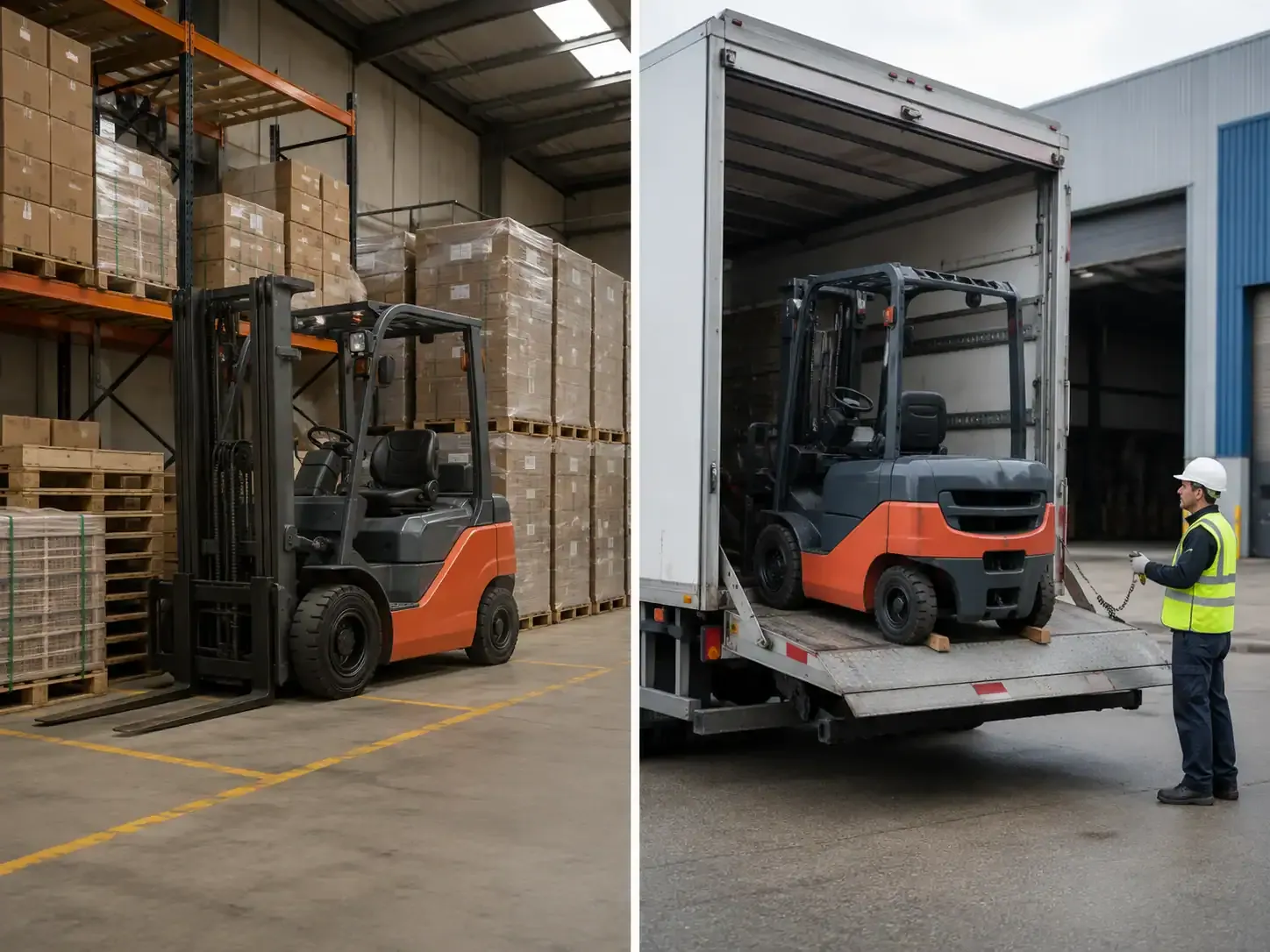
Businesses with seasonal demand often need to decide whether to purchase a forklift or hire one temporarily.
The answer depends on how often the peak occurs, how long it lasts and whether the forklift will remain useful after the season.
| Option | Best suited to | Main advantage | Main limitation |
| New forklift | High annual usage and long-term specialised work | Warranty, predictable condition and exact specification | Highest upfront cost |
| Pre-owned forklift | Recurring seasonal demand and ongoing lower-level use | Lower purchase cost and softer depreciation | Condition must be carefully assessed |
| Short-term hire | One-off projects or brief unpredictable peaks | No long-term ownership commitment | Repeated hire can become expensive |
| Long-term rental | Businesses wanting predictable monthly costs | Maintenance may be included | The business does not own the asset |
When a Pre-Owned Forklift Makes Sense
A pre-owned forklift is often the strongest option for a business with a recurring seasonal peak.
It may make sense when:
- The busy season returns every year.
- The forklift will still be used occasionally outside the peak.
- Rental costs are accumulating.
- The business has somewhere appropriate to store the machine.
- The required forklift type is unlikely to change.
- A reliable, properly serviced machine is available.
- The business wants an asset it can later sell or trade.
Used forklifts usually require less upfront capital than equivalent new machines. They have also passed through much of the sharp early depreciation associated with new equipment.
Businesses working with a tighter budget can compare reliable used forklifts under $15,000 when assessing whether ownership is realistic.
When Hiring May Be Better
Hiring may be more practical when:
- The peak is very short.
- The requirement is unlikely to return.
- The business is testing a new contract.
- The required forklift is highly specialised.
- Storage space is unavailable.
- The future warehouse location is uncertain.
- The business cannot support maintenance and ownership costs.
A detailed comparison of renting versus buying can help calculate whether repeated rental payments are still providing value.
Compare the Full Cost
Do not compare the purchase price with one month of rental.
Calculate the expected cost across several years.
For ownership, include:
- Purchase price.
- Finance interest.
- Servicing.
- Tyres.
- Battery replacement or fuel.
- Insurance.
- Registration or transport where applicable.
- Storage.
- Repairs.
- Resale value.
For hiring, include:
- Monthly or weekly rental.
- Delivery and collection.
- Damage charges.
- Usage limits.
- Additional attachments.
- Seasonal rate changes.
- Contract termination fees.
- Repeated hire across future peaks.
If the business expects to hire the same forklift every year, ownership may become more economical than repeated rental.
Is It Better to Buy a New or Used Forklift?
The best timing can also depend on whether you are buying new or used.
Buy New When You Need an Exact Specification
A new forklift may be preferable when you need:
- A specific lift height.
- An unusual capacity.
- A particular attachment.
- Cold-storage preparation.
- Explosion protection.
- Lithium-ion charging.
- Special tyres.
- Advanced safety systems.
- A narrow overall width.
- A complete manufacturer warranty.
The limitation is lead time. A factory-order forklift can take considerably longer than an in-stock used machine.
If the forklift is needed for a known contract or seasonal peak, begin the process early.
Buy Used When Availability and Value Matter
A used forklift may be available for faster delivery and at a lower purchase price.
It can suit businesses that:
- Need equipment quickly.
- Have a limited capital budget.
- Want a recognised brand at a lower price.
- Need a backup forklift.
- Have recurring seasonal work.
- Plan to trade up as the business grows.
The choice between used versus new forklifts should account for expected operating hours, warranty, service history, application and downtime risk.
Do not purchase a used forklift based only on age or operating hours. A higher-hour machine with consistent maintenance can be a better purchase than a low-hour forklift with no service records.
Stock Availability Can Be More Important Than the Calendar
Used forklift supply changes continuously.
A suitable machine may become available because another business:
- Trades up to a larger forklift.
- Changes fuel type.
- Closes a warehouse.
- Returns rental equipment.
- Reconfigures its fleet.
- Completes a major contract.
- Switches to automated handling.
When a forklift matches your load, lift height, aisle space, operating environment and budget, waiting for a theoretical sale can mean losing the machine to another buyer.
This is especially true for:
- Container-mast forklifts.
- Low-hour electric forklifts.
- High-capacity machines.
- Compact three-wheel electrics.
- Forklifts with specialised attachments.
- Well-maintained recognised brands.
- Used lithium-ion forklifts.
The right forklift at a fair price may be a better purchase than a cheaper forklift that only partially suits the operation.
Finance Can Affect the Best Time to Buy
The best buying date may depend on available cash flow and finance approval rather than the calendar.
Businesses can use equipment finance to spread the forklift cost while retaining working capital.
Common structures may include:
- Chattel mortgage.
- Equipment loan.
- Finance lease.
- Commercial hire purchase.
- Low-documentation finance.
- Rental or rent-to-own arrangements.
The right structure depends on the business, lender, trading history, deposit, credit position and tax treatment.
Reviewing available forklift finance options early can help establish an affordable budget before you begin negotiating for a machine.
Arrange Finance Before the Deadline
Do not assume finance can be completed immediately because a forklift is available.
The lender may request:
- ABN details.
- Identification.
- Bank statements.
- BAS records.
- Financial statements.
- A purchase invoice.
- Equipment details.
- Proof of insurance.
- A deposit.
- Director or personal guarantees.
Pre-approval can make it easier to act when suitable stock becomes available. It can also prevent an EOFY or seasonal purchase from being delayed by missing documentation.
Do Not Let Finance Approval Set the Forklift Budget
Being approved for a larger amount does not mean the business should spend it.
Choose the forklift that safely satisfies:
- Maximum load weight.
- Required lift height.
- Load centre.
- Aisle width.
- Door clearance.
- Operating surface.
- Daily usage.
- Indoor or outdoor conditions.
Extra capacity, size or technology may increase repayments without creating additional business value.
Signs You Should Buy a Forklift Now
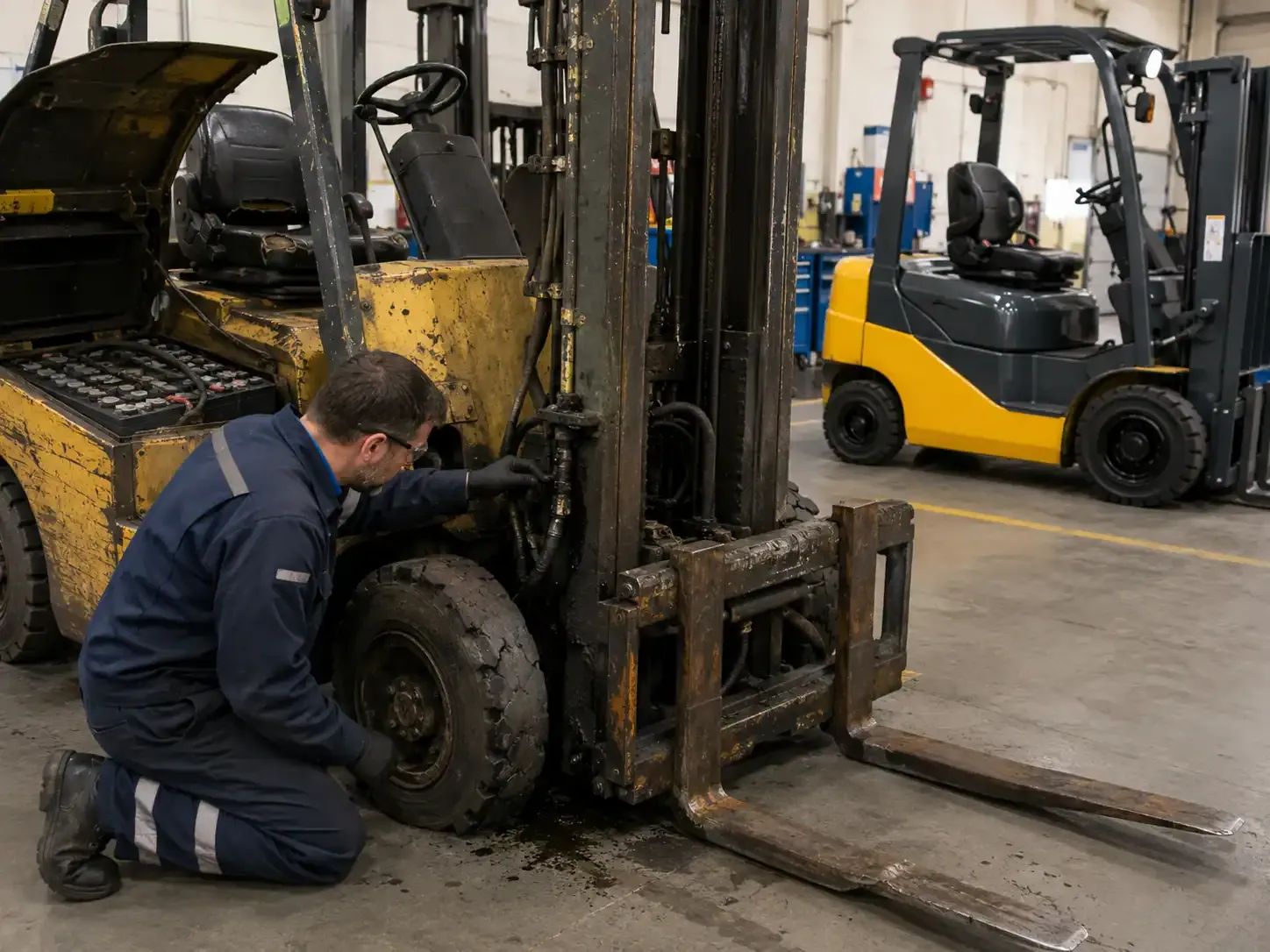
Some operational problems make the month irrelevant.
Waiting for EOFY or a possible clearance can cost more than purchasing immediately.
1. Repair Costs Are Increasing
An older forklift may require more frequent work on:
- Hydraulics.
- Brakes.
- Steering.
- Mast rollers.
- Lift chains.
- Tyres.
- Batteries.
- Chargers.
- Engines.
- Transmissions.
Review the total repair cost over the previous 12 to 24 months. Also count the effect of downtime, rental replacement and delayed work.
2. Downtime Is Affecting Customers
It may be time to buy when forklift failures are causing:
- Late deliveries.
- Missed dispatch cut-offs.
- Production stoppages.
- Driver waiting charges.
- Labour overtime.
- Unsafe manual handling.
- Lost contracts.
- Customer complaints.
A business with only one forklift is particularly exposed. One major fault can stop receiving and dispatch at the same time.
3. The Existing Forklift No Longer Has Enough Capacity
Business growth can make an older forklift unsuitable even when it still operates reliably.
Warning signs include:
- Loads approaching rated capacity.
- New products with longer load centres.
- Higher warehouse racking.
- Heavier attachments.
- More outdoor travel.
- Larger delivery vehicles.
- Increased daily operating hours.
Never continue lifting loads that exceed the forklift’s capacity plate.
4. You Are Hiring Equipment Regularly
Repeated forklift hire can indicate that demand is no longer temporary.
Review:
- Total annual rental payments.
- Delivery and collection fees.
- Number of hire periods.
- Length of each hire.
- Whether the same machine is repeatedly required.
- Whether hired equipment is available during peak periods.
Ownership may provide better long-term value when the requirement is predictable and recurring.
5. The Business Has Secured a New Contract
A confirmed contract may justify purchasing equipment before work begins.
The forklift should be selected according to the contract’s:
- Load types.
- Pallet dimensions.
- Storage height.
- Expected volume.
- Operating hours.
- Site conditions.
- Contract duration.
Avoid buying solely on forecast growth that has not yet been secured.
6. Safety Features or Condition Are No Longer Acceptable
Replacement should not be delayed when the existing forklift has:
- Structural damage.
- Unreliable brakes.
- Worn forks.
- Serious hydraulic leaks.
- An unreadable capacity plate.
- A damaged overhead guard.
- Missing restraints.
- Repeated steering faults.
- Parts that are no longer available.
The signs it is time to upgrade your fleet include rising costs, reduced reliability and equipment that no longer matches the workplace.
How Far Ahead Should You Order a Forklift?
The required lead time depends on whether the forklift is in stock, used, new or factory ordered.
In-Stock Pre-Owned Forklift
An in-stock pre-owned machine can often be prepared more quickly, but time may still be required for:
- Inspection.
- Servicing.
- Painting.
- Tyre replacement.
- Battery testing.
- Attachment fitting.
- Finance approval.
- Transport.
Allow at least several weeks where possible rather than assuming immediate delivery.
In-Stock New Forklift
A new forklift already held in Australia may be available relatively quickly.
Confirm whether it still requires:
- Pre-delivery inspection.
- Mast installation.
- Attachment fitting.
- Battery commissioning.
- Registration.
- Dealer preparation.
- Transport.
Factory-Order Forklift
A factory-order machine can require a much longer lead time.
Delays may involve:
- Manufacturing.
- International shipping.
- Customs clearance.
- Port congestion.
- Local transport.
- Compliance.
- Attachment installation.
- Dealer preparation.
Start several months ahead when the forklift must have a specific configuration or arrive before a fixed operational deadline.
A Practical Forklift Buying Timeline
Use this timeline when planning an EOFY, seasonal or growth-related purchase.
Three to Six Months Before You Need the Forklift
- Confirm the business requirement.
- Measure loads and aisles.
- Compare forklift types.
- Review finance options.
- Set the budget.
- Assess new and used alternatives.
Two to Three Months Before
- Inspect available machines.
- Request formal quotes.
- Review service records.
- Confirm residual capacity.
- Check warranty coverage.
- Apply for finance.
Four to Eight Weeks Before
- Select the forklift.
- Finalise finance.
- Arrange insurance.
- Schedule servicing or preparation.
- Confirm delivery access.
- Book operator training where necessary.
One to Four Weeks Before
- Complete delivery.
- Conduct a workplace risk assessment.
- Familiarise operators with the machine.
- Establish charging or refuelling procedures.
- Add the forklift to the maintenance schedule.
- Monitor its performance before peak use.
Businesses purchasing their first machine can use the guide to buying your first forklift to compare practical entry-level options and avoid common purchasing mistakes.
Questions to Ask Before Buying
Before choosing a purchase date, answer the following questions:
- What is the heaviest load?
- What is the load centre?
- How high must the load be lifted?
- What is the narrowest aisle?
- Will the forklift work indoors, outdoors or both?
- What surface will it travel over?
- How many hours will it operate each day?
- Is the forklift required for a fixed seasonal peak?
- Is suitable stock available now?
- How long will finance and delivery take?
- Is a tax deduction driving the decision?
- Has an accountant confirmed eligibility?
- Is buying cheaper than continued rental?
- What will downtime cost if the existing forklift fails?
- Does the business have licensed and trained operators?
A clear answer to these questions matters more than trying to predict the lowest-priced week of the year.
Buy When the Timing Supports the Business
The best time to buy a forklift is when the machine can start creating more value than it costs.
Before 30 June may be attractive for tax planning. Calendar-year and model-changeover periods may present stock opportunities. Buying several months before a seasonal peak can protect the business from shortages, rushed decisions and operational disruption.
However, the strongest buying signal is not a date. It is a clear business requirement.
When repair bills, rental expenses, downtime or insufficient capacity are affecting the operation, delaying the purchase can be more expensive than acting now. Define the job, confirm the budget and choose a forklift that will be ready before it is urgently needed.
Frequently Asked Questions
1. Is It Better to Buy a Forklift at the End of the Financial Year?
Buying before the end of the financial year can be beneficial when the forklift is already needed and the business qualifies for a current deduction or depreciation benefit. Confirm the applicable tax rules and ensure the forklift is first used or installed ready for use by the required date.
2. Should I Buy a Forklift Before 30 June for Tax Purposes?
Only buy before 30 June when the forklift meets a genuine business need. Available tax deductions can reduce taxable income, but they do not recover the entire purchase cost. Speak with an accountant before relying on an instant asset write-off or depreciation claim.
3. Do Forklift Prices Drop at a Particular Time of Year?
There is no guaranteed period when all forklift prices fall. Opportunities may arise around EOFY, calendar-year stock reviews, model changes or fleet clearances. Stock condition and suitability should carry more weight than the advertised discount.
4. Is December a Good Time to Buy a Forklift?
December may provide access to stock-clearance or ex-demonstration equipment as some dealers review inventory before the calendar year ends. However, holiday closures, transport availability and reduced staffing can affect delivery timing.
5. Is It Cheaper to Buy or Hire a Forklift for a Busy Season?
Hiring may be cheaper for a one-off or very short peak. Buying may provide better long-term value when the seasonal requirement returns every year or the forklift remains useful outside the peak period.
6. Why Are Pre-Owned Forklifts Suitable for Seasonal Work?
Pre-owned forklifts have a lower entry cost than equivalent new machines and have already experienced much of their early depreciation. This can make ownership more practical when the machine works intensively during a seasonal peak and less frequently during the rest of the year.
7. How Long Does Forklift Delivery Take?
Delivery can range from a relatively short period for an available pre-owned forklift to several months for a factory-order machine. Preparation, finance, attachments, transport and site access can all affect the final delivery date.
8. When Should I Replace an Ageing Forklift?
Consider replacement when repair costs are increasing, downtime is affecting customers, required parts are difficult to obtain or the forklift no longer has enough capacity for the work. Safety-related defects should be addressed immediately.
9. Should I Wait for EOFY If My Forklift Is Failing Now?
No. If the current forklift is unsafe, unreliable or causing expensive downtime, waiting for a possible tax advantage or discount may cost more than replacing it immediately.
10. Can I Claim a Used Forklift as a Business Tax Deduction?
A used forklift may qualify for depreciation or an available instant asset write-off when the business and asset meet the applicable rules. Eligibility depends on current tax legislation, asset cost, business use and when the forklift becomes ready for use.
11. Is EOFY the Best Time to Finance a Forklift?
EOFY can be suitable when the business has confirmed its budget and tax position, but finance processing may become busier near 30 June. Applying earlier can reduce delays and give the business more time to compare lenders.