
Best Forklifts for Startups: Pre-Owned Picks and Buying Tips
· Updated
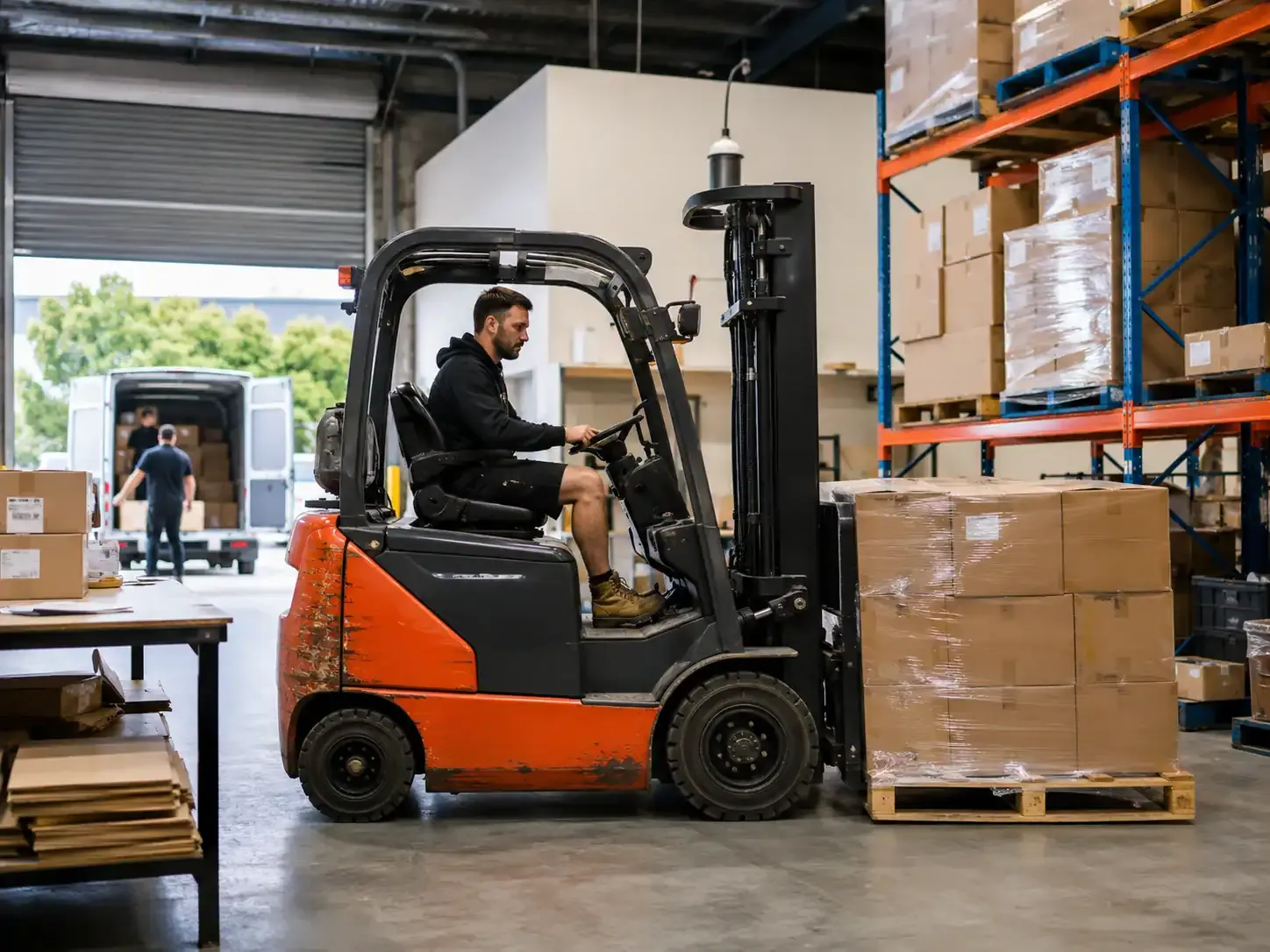
For most startups, a properly inspected pre-owned forklift is the most practical first purchase. It reduces the upfront investment, protects working capital and avoids much of the early depreciation associated with buying new equipment.
The best first forklift depends on the work. A small LPG or electric counterbalance forklift suits general loading and warehouse duties, while an electric pallet jack or walkie stacker may be enough for a startup moving lighter pallets indoors.
Before buying, confirm your maximum load weight, lift height, aisle width, operating surface and daily usage. The cheapest machine is not good value if it cannot safely complete the job or causes repeated downtime.
Should a Startup Buy a New or Used Forklift?
For most startups, a well-maintained used forklift is the better first buy. It preserves cash for stock, staff, marketing and premises while still giving the business access to reliable materials-handling equipment.
A new forklift may be worthwhile when the machine will operate for long shifts, downtime would severely affect production or the application requires a specialised specification that is difficult to find in the used market.
The decision should be based on operating risk and total cost, not simply whether the business can afford the initial purchase.
New vs Used Forklifts for a Startup
| Factor | Pre-owned forklift | New forklift |
| Upfront cost | Usually lower | Usually higher |
| Effect on startup cash flow | Preserves more working capital | Ties up more cash or borrowing capacity |
| Depreciation | Much of the steep early depreciation has already occurred | Usually experiences the greatest depreciation in its first years |
| Availability | Often available for faster delivery | May involve manufacturer or import lead times |
| Warranty | Depends on the dealer and individual machine | Usually includes a longer manufacturer warranty |
| Specification choice | Limited to available stock | Can often be ordered in the preferred configuration |
| Maintenance risk | Depends heavily on condition and history | Generally lower during the early ownership period |
| Best suited to | Budget-conscious startups with clear operating needs | High-use operations requiring maximum predictability |
A complete comparison of used vs new forklifts can help you decide whether the lower entry cost of a used machine outweighs the warranty and specification advantages of buying new.
Best Pre-Owned Forklifts for a Startup Warehouse
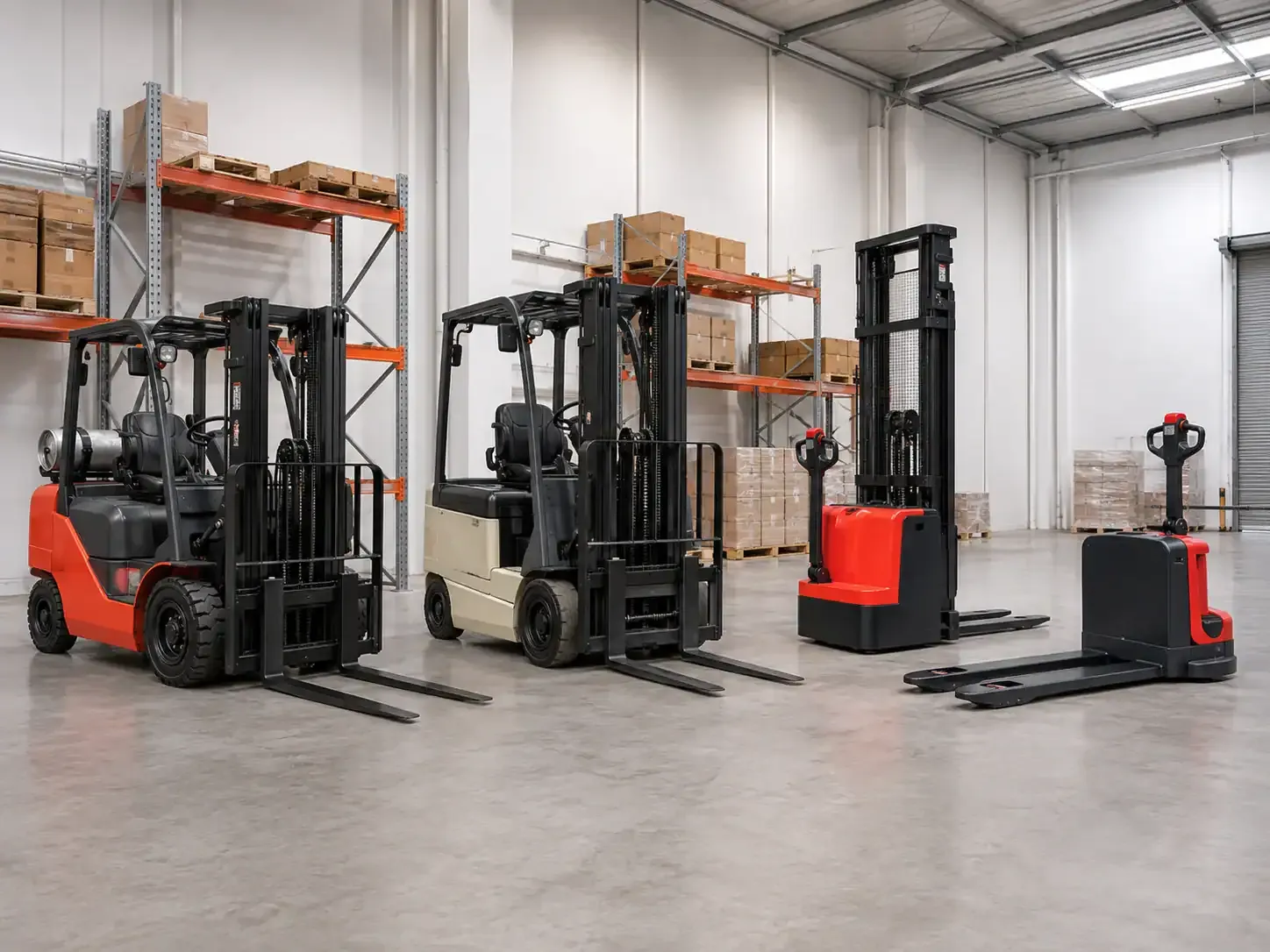
The best forklift for a startup is usually the smallest machine that can safely manage the heaviest load, highest lift and most demanding operating condition.
The following categories cover the most common needs of ecommerce businesses, light manufacturers, trades, distributors and small warehouses.
The capacity ranges below are indicative. Actual specifications vary by make, model, mast, load centre and attachments.
| Machine type | Typical capacity range | Best suited to | Why it suits a startup |
| Compact LPG counterbalance | 1.5 to 2.5 tonnes | Loading trucks and mixed warehouse duties | Versatile, fast to refuel and widely available used |
| Electric counterbalance | 1.5 to 2.5 tonnes | Indoor warehouses and production areas | Quiet, no tailpipe emissions and suitable for regular indoor lifting |
| Electric pallet jack | 1.5 to 3 tonnes | Ground-level pallet movement | Lower entry cost and simple solution for light warehouse tasks |
| Walkie stacker | 1 to 1.6 tonnes | Low and medium racking | Compact and more affordable than a full counterbalance forklift |
| Compact reach truck | 1.4 to 2 tonnes | Narrow aisles and higher warehouse racking | Uses storage space efficiently |
| Diesel counterbalance | 2 to 3.5 tonnes | Outdoor yards and construction supplies | Durable option for outdoor loads and longer travel |
| Stand-up counterbalance | 1.5 to 2 tonnes | Busy warehouses with restricted turning areas | Compact design with direct pallet access |
1. Compact LPG Counterbalance Forklift
A 1.5 to 2.5 tonne LPG counterbalance forklift is one of the strongest all-round options for a startup.
It can handle:
- Truck loading and unloading.
- Pallet transport.
- General warehouse stacking.
- Dispatch work.
- Mixed indoor and outdoor movement.
- Raw materials and finished products.
LPG forklifts can be refuelled quickly by changing the cylinder, reducing the need to schedule charging periods. They are especially practical where one machine must cover receiving, storage and dispatch.
Indoor use requires adequate ventilation and appropriate workplace controls because an LPG engine produces exhaust emissions.
A compact LPG forklift may suit:
- Small wholesalers.
- Building suppliers.
- Light manufacturers.
- Trade businesses.
- Furniture and appliance warehouses.
- Startups moving between a warehouse and loading yard.
Its main limitation is aisle space. A counterbalance forklift normally needs more room to turn than a reach truck or walkie stacker.
2. Electric Counterbalance Forklift
An electric counterbalance forklift is often the best first forklift for an indoor startup warehouse.
It provides the direct pallet access and driving position of a conventional forklift without tailpipe emissions. Electric models are also quieter than LPG or diesel machines, which can be valuable in enclosed warehouses and production facilities.
An electric counterbalance forklift may suit:
- Ecommerce fulfilment.
- Food storage.
- Packaging businesses.
- Indoor manufacturing.
- Retail distribution.
- Warehouses operating near offices or customer areas.
Buyers must assess the battery carefully. A low purchase price can become expensive if the battery has limited runtime and needs replacement soon after purchase.
Ask for:
- A battery condition report.
- The battery manufacture date.
- Expected runtime.
- Charger compatibility.
- Charging voltage and power requirements.
- Information about previous charging and maintenance.
Lithium-ion batteries support faster and opportunity charging, while lead-acid batteries may have a lower purchase cost but require more charging discipline and maintenance.
3. Electric Pallet Jack
An electric pallet jack is often the best entry-level option when a startup only needs to move pallets at ground level.
It can transport palletised products between:
- Receiving and storage areas.
- Packing and dispatch zones.
- Production lines.
- Cool rooms.
- Retail backrooms.
- Loading docks.
It does not provide the lift height of a counterbalance forklift or stacker. However, there is little value in paying for a full forklift when the business does not need to place pallets in racking.
Startup businesses can compare current electric pallet jacks for light warehouse tasks before committing to a larger machine.
An electric pallet jack is particularly useful for:
- New ecommerce businesses.
- Small food distributors.
- Retail operations.
- Warehouses using floor-level storage.
- Businesses receiving tailgate deliveries.
- Startups working from shared industrial premises.
4. Walkie Stacker
A walkie stacker provides a middle ground between a pallet jack and a full forklift.
It can move pallets and lift them into low or medium-height storage positions while occupying less space than a counterbalance forklift.
A walkie stacker may be suitable when:
- Pallets are relatively light.
- Travel distances are short.
- The floor is smooth and level.
- Aisle space is restricted.
- The forklift will only be used occasionally.
- Loads do not need to be handled outdoors.
- The required lift height is moderate.
Check the pallet design before buying. Some stackers have support legs that must fit beneath or around the pallet, which can make them unsuitable for certain closed-bottom pallets or floor layouts.
5. Compact Reach Truck
A reach truck may be the best first forklift for a startup that needs to maximise vertical storage in a narrow warehouse.
Its mast or fork carriage reaches forward to collect the pallet. The truck can therefore operate in narrower aisles than many counterbalance forklifts.
Reach trucks suit:
- High warehouse racking.
- Smooth indoor floors.
- Narrow aisles.
- Ecommerce fulfilment.
- Third-party logistics.
- Fast-growing stock ranges.
They are not normally the first choice for outdoor yards, rough surfaces or regular truck loading.
A reach truck can also be more expensive and specialised than a basic pallet stacker. Startups should only choose one when the racking height and warehouse layout justify it.
6. Diesel Counterbalance Forklift
A compact diesel forklift is suitable for startups that primarily operate outdoors.
Typical applications include:
- Timber and building materials.
- Landscaping supplies.
- Construction storage.
- Steel and fabrication.
- Agricultural products.
- Outdoor manufacturing yards.
Diesel forklifts generally provide strong performance over longer working periods. However, their exhaust emissions and noise make them unsuitable for many enclosed environments.
A startup operating both indoors and outdoors may find an LPG or suitable electric model more flexible.
7. Stand-Up Counterbalance Forklift
A stand-up counterbalance forklift can suit a startup that needs direct pallet access but has less turning space than a conventional sit-down model requires.
The operator stands sideways within the compartment, making it easier to enter and exit during repetitive picking or loading work.
This configuration may suit:
- Beverage distribution.
- Dock work.
- Food warehouses.
- Compact loading areas.
- High-cycle pallet handling.
- Operations involving frequent mounting and dismounting.
The business should confirm that operators are comfortable with the control arrangement and receive familiarisation training for the specific model.
Why Second-Hand Forklifts Suit Startups
A used forklift allows a startup to acquire essential equipment without committing as much cash to an asset that may not yet be used at full capacity.
Lower Entry Cost
Pre-owned equipment usually costs less than an equivalent new machine.
This allows a startup to retain more cash for:
- Inventory.
- Warehouse rent.
- Staffing.
- Delivery vehicles.
- Marketing.
- Shelving and racking.
- Packaging equipment.
- Emergency reserves.
For a young business, maintaining working capital can be more valuable than owning the newest forklift available.
Less Exposure to Early Depreciation
New equipment usually loses value fastest during its early years.
A pre-owned forklift has already passed through much of this initial depreciation period. Although it will continue to lose value, the decline may be less severe than for a brand-new machine.
The actual resale value will depend on the brand, condition, hours, service history and market demand.
Faster Availability
Used forklifts are often available for inspection and delivery as soon as preparation, payment and transport are complete.
A new forklift may need to be ordered in a particular configuration, especially when the buyer requires a specific mast, attachment, tyre or battery arrangement.
Faster delivery can matter when a startup is opening a warehouse, starting a contract or moving into larger premises.
More Capacity for the Same Budget
Buying pre-owned can allow a startup to obtain a better-established brand, greater lift capacity or more suitable mast without moving beyond its equipment budget.
The best value is not necessarily the machine with the highest specification. Extra capacity can increase purchase, servicing, tyre and energy costs.
The goal is to purchase enough capability for the workload, with a reasonable allowance for growth.
Easier to Trade Up as the Business Grows
A startup’s first warehouse may be very different from the operation it runs three years later.
A carefully selected pre-owned machine can meet the immediate need without locking the business into an expensive long-term specification. It may later be traded for a higher-capacity forklift, reach truck or additional warehouse equipment.
Lower-Risk Way to Test the Requirement
A young business may not yet know:
- How many hours the forklift will operate.
- Whether stock volumes will continue growing.
- Whether the warehouse layout will change.
- Whether customers will require different pallet sizes.
- Whether more outdoor work will be added.
A used machine provides a more affordable way to establish the real operating pattern before investing in newer or more specialised equipment.
Businesses comparing purchase costs can review affordable, reliable options for small businesses before deciding what level of equipment their workload justifies.
How Much Should a Startup Spend on Its First Forklift?
A startup’s budget should reflect the work the machine must perform and the cost of downtime.
These price bands are general guides. Used forklift availability, condition and pricing change frequently.
| Approximate budget | What a startup may find | Best suited to |
| Under $10,000 | Electric pallet jacks, walkie stackers, older LPG forklifts and occasional compact electric machines | Light or occasional use |
| $10,000 to $15,000 | Older compact counterbalance forklifts and better-equipped pallet equipment | Small warehouses with moderate duties |
| $15,000 to $25,000 | Broader choice of serviced counterbalance forklifts, reach trucks and electric machines | Regular daily operation |
| Above $25,000 | Newer used forklifts, lower-hour machines or specialised configurations | Higher-use or more demanding operations |
Under $10,000
A budget below $10,000 can buy useful warehouse equipment, but buyers need realistic expectations.
The strongest options often include:
- Powered pallet jacks.
- Walkie stackers.
- Older LPG forklifts.
- Compact electric machines.
- Backup equipment.
These machines may suit low-volume handling, occasional deliveries or ground-level pallet movement.
A full counterbalance forklift at this price may have higher operating hours, an older battery, more wear or limited warranty coverage. The breakdown of what you can actually buy under $10,000 explains where the practical limits sit.
From $10,000 to $15,000
This budget can open access to compact counterbalance forklifts and better-quality warehouse equipment.
A buyer may find:
- LPG forklifts between approximately 1.5 and 2 tonnes.
- Compact electric forklifts.
- Higher-lift walkie stackers.
- Older diesel machines.
- Better-supported dealer stock.
Availability changes, so the startup should not build its purchasing plan around one advertised machine. Use the budget to define the category and required condition, then compare current pre-owned forklifts under $15,000.
From $15,000 to $25,000
This is often a more realistic budget for a startup that needs a counterbalance forklift every day.
The business may have access to a wider choice of:
- Recognised brands.
- Lift heights.
- Fuel types.
- Container masts.
- Side shifts.
- Better batteries.
- Dealer-prepared machines.
- Warranty and service support.
Spending more can reduce operating risk, but only when the higher price reflects better condition, suitability and after-sales support.
Above $25,000
A budget above $25,000 may bring newer used machines, lower operating hours, lithium battery systems, specialised attachments or higher-capacity forklifts into consideration.
A startup should still avoid buying unnecessary capability. A larger forklift requires more operating space and may have higher energy, tyre and servicing costs.
Consider Running Costs, Not Just the Purchase Price
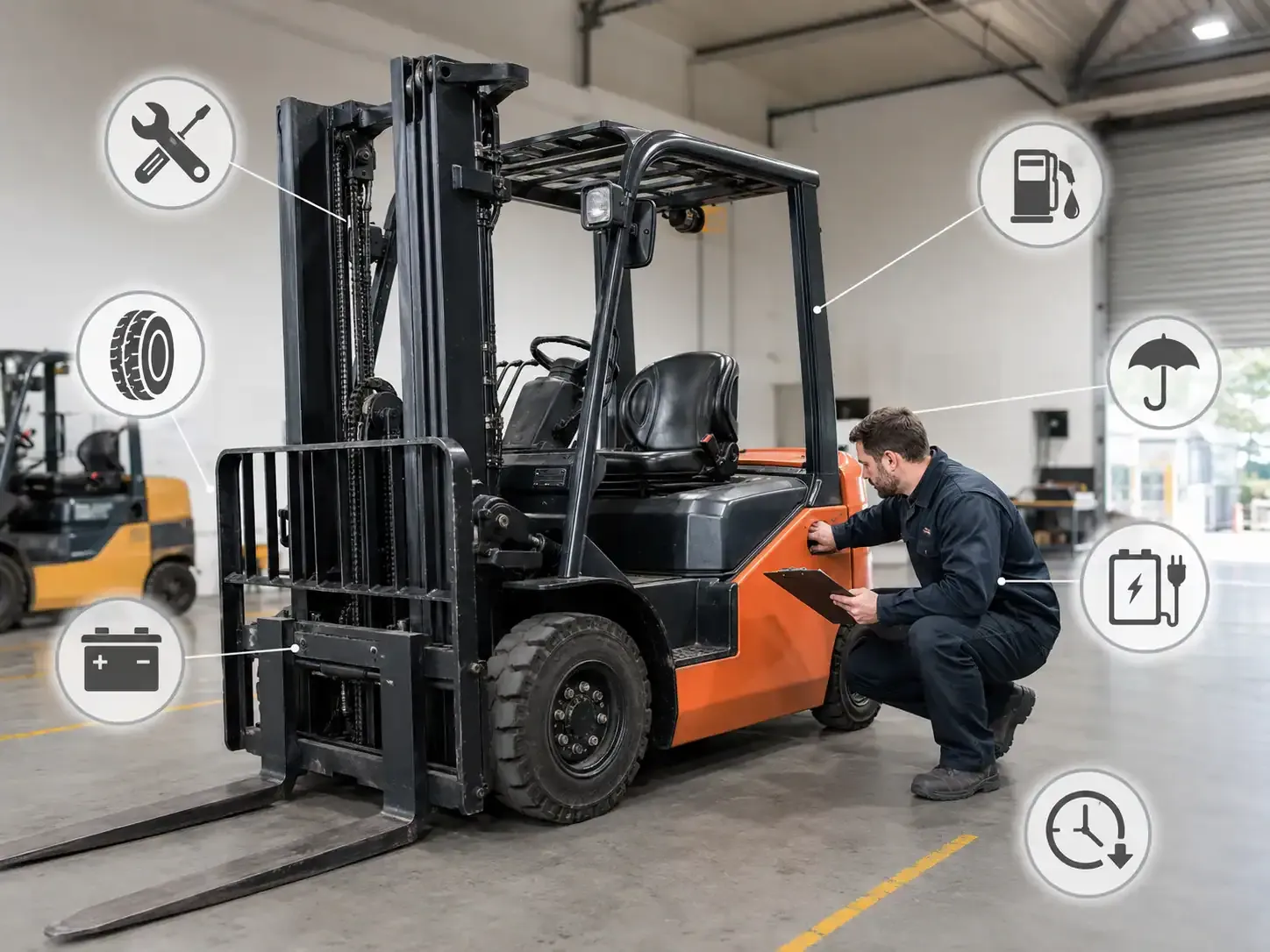
The purchase price is only one part of forklift ownership.
A startup should calculate what the machine will cost to operate, maintain and keep available.
| Cost area | What to assess |
| Scheduled servicing | Service interval, labour, filters, fluids and inspection costs |
| Repairs | Age, hours, parts availability and previous maintenance |
| Tyres | Current wear, replacement type and operating surface |
| Battery | Runtime, charger, maintenance and future replacement cost |
| Fuel | LPG or diesel consumption and storage requirements |
| Electricity | Charging requirements, electrical supply and energy use |
| Insurance | Equipment cover, liability and site requirements |
| Training | High risk work licensing and model-specific familiarisation |
| Delivery | Transport to the warehouse and access for unloading |
| Downtime | Lost orders, delayed production or rental replacement costs |
Servicing and Repairs
Ask when the next service is due and what work has recently been completed.
A machine with a lower purchase price may need immediate work on:
- Brakes.
- Tyres.
- Lift chains.
- Mast rollers.
- Hydraulic hoses.
- Steering components.
- Batteries.
- Chargers.
- LPG systems.
- Diesel engines.
A startup with one forklift has no backup machine. Reliability may therefore matter more than it does for a large warehouse with a full fleet.
Battery Costs
The battery is one of the most important components to inspect on an electric forklift.
A weak battery may:
- Deliver insufficient runtime.
- Charge unevenly.
- Overheat.
- Require frequent watering.
- Reduce productivity.
- Need replacement soon after purchase.
Confirm whether the charger is included and whether the site has the correct electrical connection.
Tyres
Tyres affect stability, traction, operator comfort and ground clearance.
Check for:
- Cuts.
- Flat spots.
- Chunking.
- Uneven wear.
- Low tread.
- Damage around the rim.
- Tyres worn beyond the manufacturer’s safety line.
The tyre type must suit the operating surface. Smooth warehouse tyres may not be appropriate for rough outdoor concrete, gravel transitions or wet yards.
Downtime
Downtime is often the largest hidden cost for a startup.
If the forklift is responsible for receiving every delivery and loading every outgoing order, one breakdown can affect the whole operation.
Dealer support, available parts and an appropriate warranty may be worth more than a small saving on the purchase price.
How to Choose Your First Forklift
Choosing the right forklift begins with the work, not the brand or advertised price.
1. Record the Maximum Load Weight
Find the heaviest pallet, stillage, material pack or product the forklift will handle.
Do not rely on average weight. The machine must safely manage the heaviest planned load.
Also record:
- Load length.
- Load width.
- Weight distribution.
- Pallet type.
- Whether loads are stable or irregular.
- Any planned attachments.
Long or uneven loads can reduce effective capacity even when their total weight is below the forklift’s advertised rating.
2. Measure the Required Lift Height
Measure the highest point where a pallet must be placed.
Include:
- The top racking beam.
- Pallet height.
- Clearance above the load.
- Sprinklers.
- Lights.
- Roof structures.
- Other overhead obstructions.
Ask the seller to confirm the forklift’s residual capacity at the required height. A forklift may not retain its full rated capacity when the mast is extended.
3. Measure the Aisles and Doorways
Record:
- Narrowest aisle.
- Turning space.
- Door height.
- Door width.
- Loading dock dimensions.
- Container entrance height.
- Overhead guard clearance.
- Mast height when lowered.
A forklift can have the correct capacity and still be unusable if it cannot turn into the aisle or pass through a doorway.
4. Decide Between Indoor and Outdoor Use
For enclosed indoor environments, an electric forklift is usually the strongest starting point.
For mixed indoor and outdoor work, LPG may provide greater flexibility, subject to ventilation and emissions controls.
For predominantly outdoor lifting, diesel may be appropriate.
Also assess:
- Rain exposure.
- Surface condition.
- Ramps.
- Gradients.
- Drainage channels.
- Concrete transitions.
- Gravel or loose material.
5. Match the Machine to the Floor
Compact electric forklifts, pallet jacks and reach trucks generally perform best on smooth, level floors.
Outdoor yards may require:
- Greater ground clearance.
- Pneumatic-profile tyres.
- A four-wheel chassis.
- Better traction.
- Weather protection.
A standard warehouse forklift is not a rough-terrain machine.
6. Estimate Daily Usage
Record how many hours the forklift will operate each day.
- Occasional use: A walkie stacker, pallet jack or older serviced forklift may be sufficient.
- Regular daily use: Reliability, battery runtime and service support become more important.
- Multi-shift use: The startup may need a newer machine, lithium charging, spare batteries or a quick-refuelling LPG model.
7. Allow for Realistic Growth
Choose a forklift that can support expected growth without buying far beyond the current requirement.
A modest capacity allowance may be sensible. Doubling the required capacity “just in case” can lead to:
- Higher purchase costs.
- Wider turning requirements.
- Increased energy use.
- More expensive tyres.
- Reduced warehouse manoeuvrability.
8. Check Operator and Licence Requirements
Confirm who will operate the machine and whether they hold the correct licence.
The business must also provide familiarisation and workplace-specific instruction, even when the operator already holds a high risk work licence.
How to Buy a Used Forklift Without Getting Burned
A low advertised price should never replace a proper inspection.
1. Confirm the Application Before Inspecting Machines
Give the dealer accurate information about:
- Load weights.
- Lift heights.
- Aisle widths.
- Door clearances.
- Operating surface.
- Daily hours.
- Indoor or outdoor use.
- Attachments.
- Budget.
This prevents time being wasted on forklifts that cannot safely perform the work.
2. Check the Capacity Plate
The capacity plate should be present, legible and relevant to the forklift’s current mast and attachments.
Confirm:
- Rated capacity.
- Load centre.
- Maximum lift height.
- Mast configuration.
- Attachment details.
- Truck identification.
Do not buy a forklift with a missing or questionable capacity plate until the correct information has been confirmed.
3. Review the Service History
Service records can indicate whether the forklift received regular preventive maintenance or was only repaired after faults appeared.
Look for records covering:
- Scheduled services.
- Hydraulic repairs.
- Brake work.
- Battery tests.
- Engine maintenance.
- Transmission work.
- Tyre replacement.
- Mast and chain inspections.
Operating hours should be considered alongside condition and maintenance. A higher-hour machine with a strong service history may be a better purchase than a lower-hour forklift with no records.
4. Inspect the Forks and Mast
Check the forks for:
- Cracks.
- Repairs.
- Uneven height.
- Excessive heel wear.
- Bent blades.
- Damaged locking pins.
Inspect the mast for:
- Bent channels.
- Loose rollers.
- Damaged hoses.
- Hydraulic leaks.
- Worn chains.
- Jerky lifting.
- Unusual noises.
5. Test the Forklift Under Load
A forklift may appear to operate correctly without a load but show problems when lifting real weight.
Where possible, test:
- Lifting.
- Lowering.
- Mast tilt.
- Side shift.
- Steering.
- Brakes.
- Forward and reverse travel.
- Parking brake.
- Warning devices.
- Hydraulic performance.
The load used for testing must remain within the forklift’s rated capacity.
6. Check the Battery or Engine
For an electric forklift, inspect:
- Battery age.
- Corrosion.
- Cables.
- Connectors.
- Cell condition.
- Charger operation.
- Runtime test results.
For LPG or diesel equipment, check:
- Cold starting.
- Exhaust smoke.
- Fluid leaks.
- Engine noise.
- Transmission response.
- Cooling system.
- Service records.
7. Confirm the Warranty and Support
Ask what the warranty covers, how long it lasts and what exclusions apply.
Also confirm:
- Who performs warranty repairs.
- Whether mobile service is available.
- Where parts are sourced.
- Whether transport is covered.
- How quickly service support can respond.
- Whether a replacement machine is available during major repairs.
The complete process for inspecting a used forklift before you buy can help first-time buyers assess the machine systematically.
8. Be Careful With Private Sales
A private sale may have a lower asking price, but the buyer may need to arrange:
- Mechanical inspection.
- Transport.
- Initial servicing.
- Repairs.
- Replacement tyres.
- Compliance documentation.
- Battery testing.
- Warranty alternatives.
Private purchases may suit experienced buyers with in-house mechanical support. A startup relying on one forklift will usually benefit more from a dealer-prepared machine with service backup.
Forklift Finance, Tax and Delivery for Startups
A startup does not always need to pay the full forklift price upfront.
Available finance structures can include chattel mortgages, leases and low-documentation finance. Approval, deposits, interest rates and required trading history vary by applicant and lender.
Chattel Mortgage
With a chattel mortgage, the business purchases the forklift and the lender takes a security interest over it until the loan is repaid.
This structure may suit businesses that:
- Want to own the forklift.
- Plan to retain it for several years.
- Prefer fixed repayments.
- Want to preserve working capital.
- May benefit from available business tax deductions.
Low-Documentation Finance
Low-documentation finance may help newer businesses or sole traders that do not yet have two full years of financial statements.
Lenders may still request:
- An active ABN.
- GST registration.
- Bank statements.
- BAS records.
- Identification.
- Credit history.
- A deposit or guarantor.
Low-documentation does not mean automatic approval. Rates and conditions may also differ from standard business finance.
Buy A Fork provides access to forklift finance options in Australia through its finance partner, including chattel mortgage, lease and low-documentation structures. ant Asset Write-Off
Tax treatment should be confirmed with an accountant before purchasing.
The Australian Government announced a permanent $20,000 instant asset write-off for eligible small businesses with turnover up to $10 million from 1 July 2026. However, as of 13 July 2026, the ATO states that this measure is not yet law.
Eligibility also depends on factors including asset cost, business use and when the asset is first used or installed ready for use. uy a forklift solely because you expect a tax deduction. The machine still needs to suit the business and generate sufficient operational value.
Delivery and Trade-Ins
Before signing the purchase agreement, confirm:
- Delivery cost.
- Delivery distance.
- Site access.
- Unloading arrangements.
- Delivery date.
- Whether training or handover is included.
- Whether an existing machine can be traded in.
Buy A Fork currently advertises a free pallet jack valued at $499, free local delivery within 10 km and a free six-month basic service with forklift purchases, subject to terms and conditions. Trade-ins and flexible finance are also advertised. Confirm the inclusions for the specific machine before purchase. u Need a Licence to Operate a Forklift?
Yes. In Victoria, an operator generally needs an LF high risk work licence to operate a standard forklift truck, including most counterbalance forklifts.
WorkSafe Victoria lists LF as the forklift truck operation licence class. Applicants must complete training through a registered training organisation, pass the assessment and submit their licence application. cence applies to order-picking forklifts where the operator’s controls elevate with the load carriage.
Holding a licence does not replace workplace training. Employers must still provide the information, instruction, training and supervision required for the operator to use the specific forklift safely in that workplace. p should also establish:
- Pre-start inspection procedures.
- Pedestrian separation.
- Traffic routes.
- Speed limits.
- Loading and unloading rules.
- Battery charging or fuel-storage procedures.
- Fault reporting.
- Maintenance scheduling.
- Key control.
- Operator authorisation.
Buying Your First Forklift from Buy A Fork
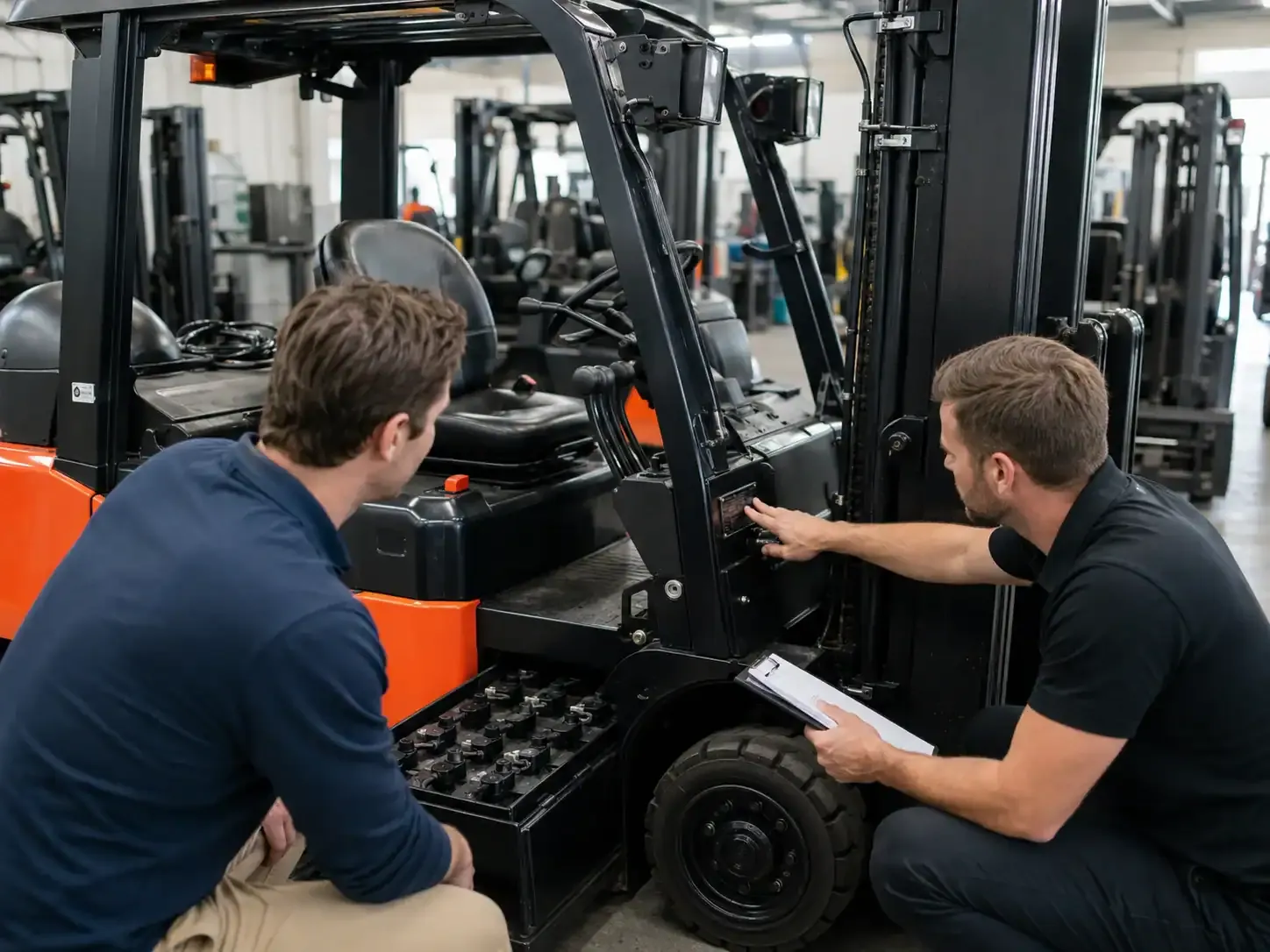
Buy A Fork supplies new and pre-owned materials-handling equipment for startups, warehouses, manufacturers, retailers and trade businesses across Melbourne and Victoria.
Rather than choosing a forklift from the model name alone, provide the team with:
- Maximum load weight.
- Load dimensions.
- Required lift height.
- Narrowest aisle.
- Door and container clearances.
- Operating surface.
- Indoor or outdoor use.
- Daily operating hours.
- Preferred fuel type.
- Available budget.
These details help identify a machine that can perform the work safely without adding unnecessary cost or size.
You can browse the full range of forklifts to compare available counterbalance forklifts, electric pallet equipment, stackers and warehouse machines. Current inventory changes as units are prepared and sold.
Choose the Job Before Choosing the Forklift
A startup’s first forklift should solve its current materials-handling problem without consuming more capital than necessary.
For many young businesses, that means buying a dealer-inspected pre-owned forklift rather than ordering a new machine. A compact LPG or electric counterbalance forklift suits general warehouse work, while pallet jacks and stackers can provide a lower-cost solution for lighter indoor tasks.
Start with the load, lift height, aisle width and operating environment. Then compare condition, running costs, service support and finance. A machine that fits the job and remains available is worth far more than the cheapest forklift in the market.
Frequently Asked Questions
1. What Is the Best First Forklift for a Small Business?
A compact 1.5 to 2.5 tonne counterbalance forklift is a practical first machine for businesses that need to unload trucks, transport pallets and stack goods. An electric pallet jack or walkie stacker may be better when loads are lighter and work stays indoors.
2. Should a Startup Buy a Used Forklift?
A properly inspected used forklift is often the most practical choice for a startup because it requires less upfront capital and has already passed through much of its early depreciation. Condition, service history, suitability and dealer support are more important than age alone.
3. How Much Should a Startup Spend on Its First Forklift?
The budget depends on the job. Under $10,000 commonly buys pallet equipment, stackers and older forklifts for lighter work. Startups needing a dependable counterbalance forklift for daily use may need to consider approximately $15,000 to $25,000 or more.
4. Is a New or Used Forklift Better for a Small Warehouse?
A used forklift is usually better when the business has limited capital and can find a serviced machine that matches the application. A new forklift may be better for long shifts, specialised specifications or operations where unexpected downtime would be extremely costly.
5. What Forklift Is Best for a Small Ecommerce Warehouse?
An electric pallet jack suits ground-level pallet movement, while a walkie stacker can lift lighter pallets into low racking. An electric counterbalance forklift may be necessary when the business regularly unloads trucks, handles heavier products or uses conventional pallet racking.
6. Can an Electric Pallet Jack Replace a Forklift?
An electric pallet jack can replace a forklift when the business only needs to transport pallets at ground level. It cannot place pallets into elevated racking or perform the full range of loading tasks handled by a counterbalance forklift.
7. Do I Need a Forklift Licence for a Small Business Warehouse?
The size of the business does not remove the licensing requirement. In Victoria, an operator generally needs an LF high risk work licence to operate a standard forklift truck. Workplace-specific training and supervision are also required.
8. Can a New Business Finance a Used Forklift?
Potentially. Newer businesses may qualify for standard or low-documentation equipment finance depending on their ABN history, GST registration, financial records, bank statements, credit profile and available deposit.
9. Is an Older Forklift With Low Hours a Good Buy?
Not automatically. Low hours can be attractive, but buyers should also consider age-related deterioration, battery condition, seals, hoses, tyres, service history and how the machine was stored. A newer forklift with higher hours and consistent servicing may be the better machine.
10. What Is the Biggest Mistake First-Time Forklift Buyers Make?
The biggest mistake is buying on price before confirming the application. A forklift must safely handle the actual load, reach the required height, fit the available aisles and operate on the workplace surface.