
Order Picker Forklifts: Types, Uses and How to Choose
· Updated
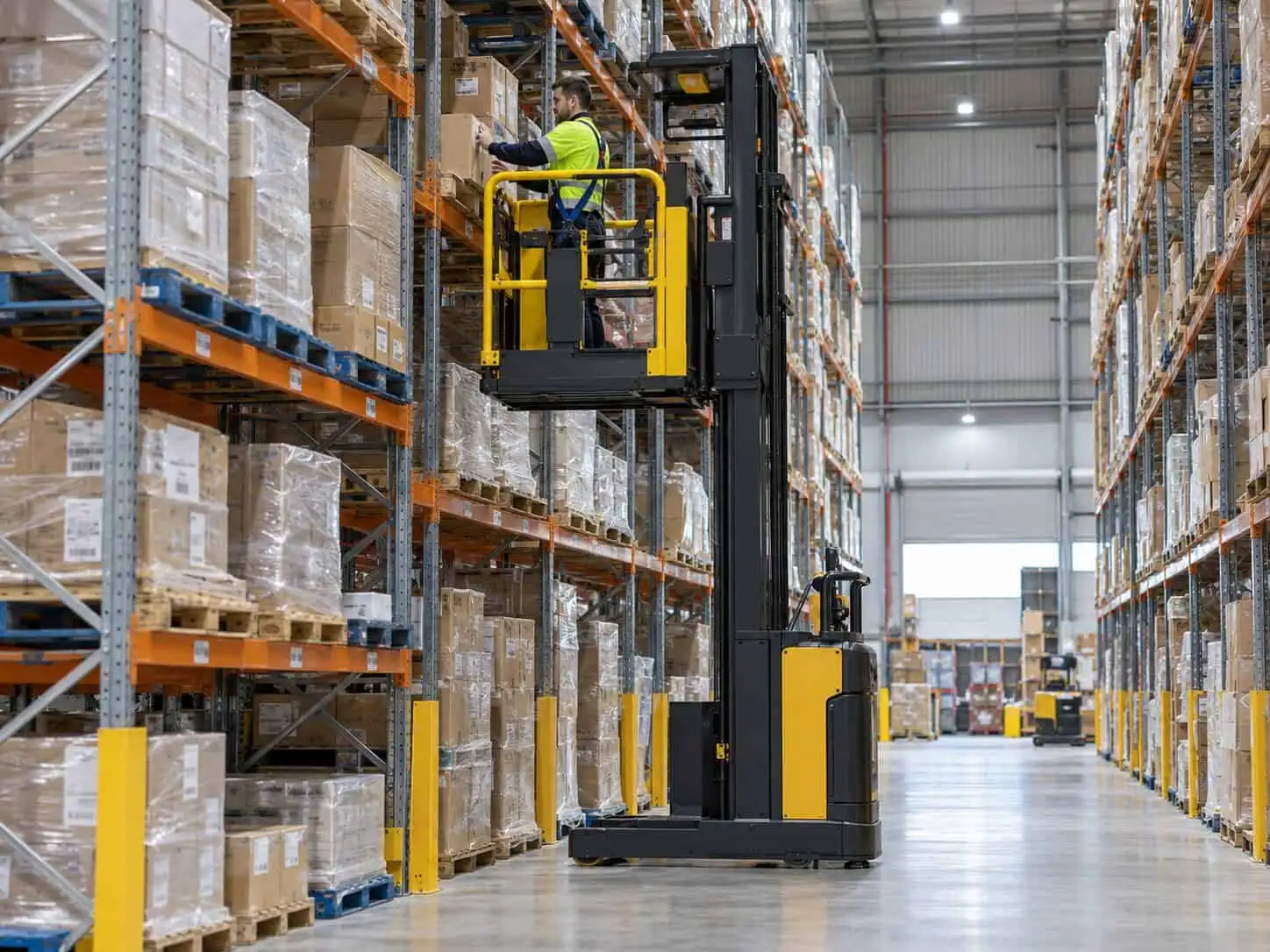
An order picker forklift is the machine that takes the operator up to the stock rather than bringing the stock down to the operator. That one difference decides the licence class, the fall protection obligations, the aisle width and the capacity you can expect.
It also creates the confusion this guide exists to clear up. Low-level and high-level order pickers are sold as two variants of one machine and they behave like two different machines, with different rules attached to each.
What follows: what the machine actually is, how the two types split, why capacity falls sharply as the platform rises, what licence an Australian operator needs, and how to specify one against your own pick face.
What Is an Order Picker Forklift?
An order picker is a warehouse forklift where the operator rides up with the load, so individual cartons and items can be picked from racking rather than whole pallets being moved. The operator platform and the controls travel with the forks, which is what separates it from every other machine in a warehouse.
That single design difference decides everything else about the machine. Because the operator goes up, the machine is built around a person standing at height rather than around gross lifting, so capacities are modest and the emphasis falls on stability, visibility and platform safety.
The distinction that matters commercially is simple. If you are moving full pallets, you want a reach truck or a counterbalance. If you are breaking pallets down and picking cases to fill orders, you want an order picker. Most operations that buy the wrong machine have misread which of those two jobs they actually do.
Low-Level and High-Level Order Pickers
These are described as two variants of one machine and they are closer to two different machines. The split runs through the licence, the training, the fall protection and the price.
A low-level order picker keeps the operator at or near floor level. The forks lift the pallet to a comfortable working height so the picker is not bending, but the person stays on the ground. These handle the first level or two of racking and are essentially a powered pallet truck with a lifting platform.
A high-level order picker raises the operator with the load, into the second, third and fourth levels of racking and beyond. This is the machine people usually mean by the term, and it is the one with the licensing and fall protection obligations attached.
|
Low-level order picker |
High-level order picker |
|
|
Operator position |
Stays at floor level |
Rises with the load carriage |
|
Typical working range |
Ground and first rack level |
Second level upward, to 9m and beyond |
|
Australian licence |
Generally none where the platform does not elevate the operator |
LO high risk work licence |
|
Fall protection |
Not applicable |
Harness and anchor point required |
|
Aisle requirement |
Narrow |
Very narrow, from around 1,270mm |
Aisle figure from the Crown SP 3500 series specification sheet. Licence positions are summarised from state regulator guidance and should be confirmed with your own regulator, as set out below.
The capacity figures on high-level machines look low until you understand what they are for. Crown’s SP 3500 series is rated at 1.0 tonne or 1.25 tonne at a 600mm load centre, which is ample for case picking and nowhere near enough for pallet movement. That is deliberate.
Why an Order Picker Lifts Less the Higher It Goes
This is the specification most buyers miss, and it is published plainly by the manufacturers if you know to look for it.
Take the Crown SP 3511. Rated at 1.25 tonnes, it reaches 6,095mm carrying that full rating. Configured to reach 9,295mm, the capacity falls to 550kg. The machine gains just over three metres of height and loses more than half its lifting capacity to get there.
The same pattern appears on the SP 3512, which carries 1.0 tonne to 6,200mm and 825kg to 6,860mm. Height and capacity trade against each other on every machine of this type, because the higher the load and the operator sit, the more the combined centre of gravity works against stability.
The practical consequence is that you cannot specify an order picker on capacity alone or on height alone. You specify on capacity at the height you actually pick from, and you get that figure from the chart for the specific machine and mast. Rated capacity is always quoted at a reference point, and on this class of machine the gap between the reference figure and the working figure is wider than on almost anything else in the warehouse.
Where an Order Picker Fits Against a Reach Truck and a Pallet Stacker
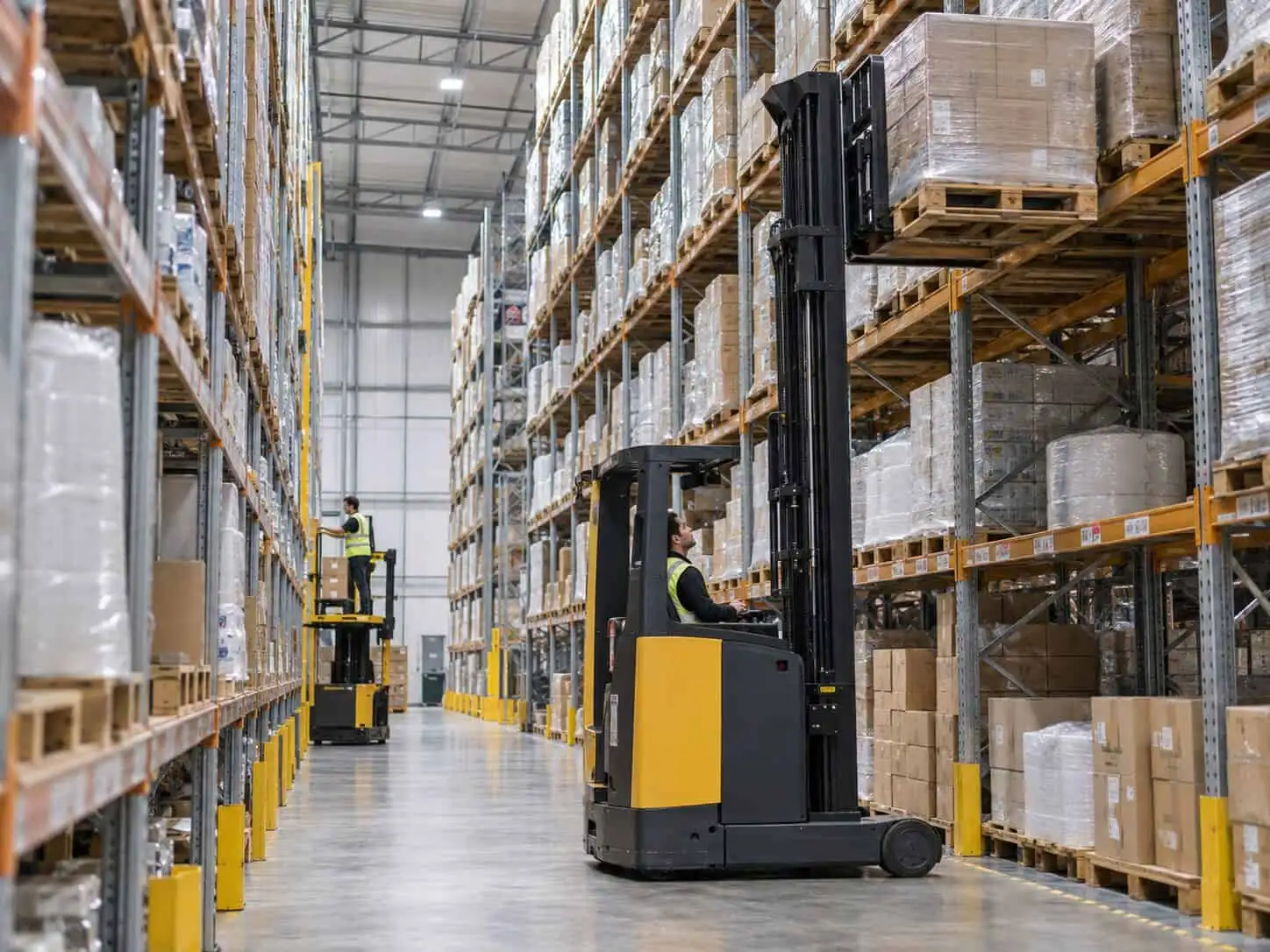
The deciding question is whether you are moving pallets or picking cases, and most warehouses do both. That is why these machines are usually bought as a pair rather than as alternatives.
A reach truck replenishes. It brings full pallets from goods inward and places them into the racking, and it does so at heights an order picker cannot match on capacity. A pallet stacker does a lighter version of the same job at lower heights and lower cost. An order picker then works the face of that racking, breaking those pallets down into orders.
Where the choice genuinely is either-or is in smaller operations picking from the first two levels only. There, a good pallet stacker with a raised platform may do everything a low-level picker would, and one machine is cheaper than two. The overlap between reach trucks, pallet stackers and counterbalance forklifts is wider at low heights and disappears entirely above about four metres.
The aisle figures also push in one direction. An order picker working in 1,270mm and a reach truck needing somewhere north of 2,500mm cannot share a layout without the aisle being sized for the reach truck. If the racking is going in fresh, that is a decision to make before the steel arrives rather than after.
Do You Need a Licence to Operate an Order Picker in Australia?
Yes for a high-level machine, and generally no for a low-level one, and the reason for the split is written into the licence definitions themselves.
Australia’s high risk work licensing uses two relevant classes. The LF class covers a powered industrial truck with a mast and an elevating load carriage carrying fork arms that can be raised 900mm or more above the ground, and it specifically excludes pedestrian-operated trucks and pallet trucks. That is the standard forklift licence, and it does not cover order pickers.
The LO class covers an order-picking forklift truck, defined by the operator’s controls being part of the load carriage and elevating with it. That definition is the reason the low-level and high-level split matters so much: the trigger is not how high the forks go, it is whether the operator goes up with them. Turret trucks used in very narrow aisle work fall into the same class.
So an operator moving to a high-level picker from a counterbalance needs a separate licence, not an extension of the one they hold. A business running both machine types needs both classes represented on the floor. Getting a forklift licence in Australia follows the same process for either class, through a registered training organisation and the state regulator.
Fall protection is the second obligation and it is separate from the licence. An operator working at height on an elevating platform needs a harness and a rated anchor point on the machine, and the anchor has to be inspected like any other height safety equipment.
These summaries are drawn from state regulator guidance current at the time of writing. Licence classes and their boundaries are set nationally and administered by each state, so confirm the position with Safe Work Australia and WorkSafe Victoria, or your own state regulator, before you buy or roster anyone onto a machine.
How to Choose an Order Picker for Your Warehouse
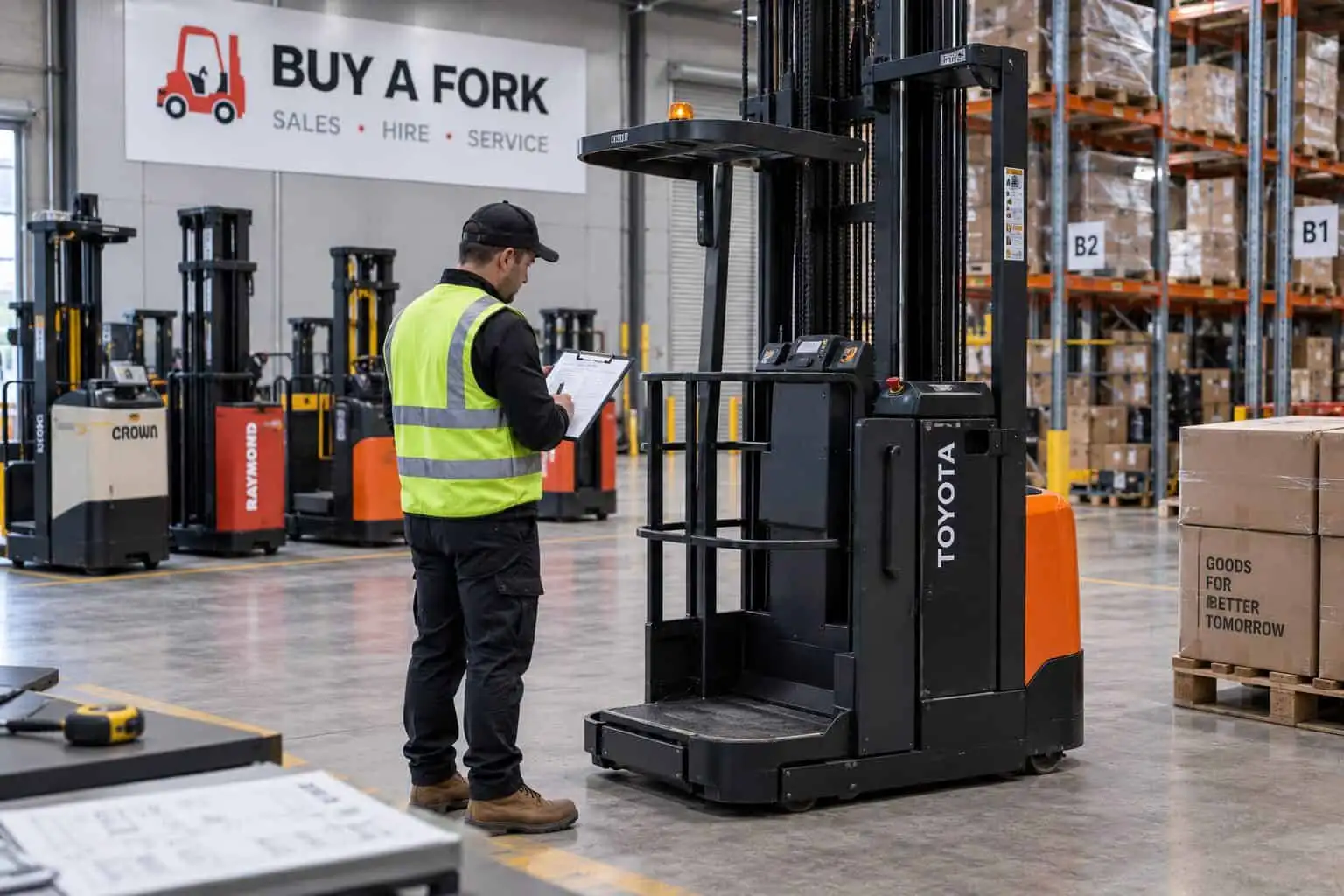
Six things decide the specification, and they should be settled in roughly this order.
- Working height at the top pick face: measure to the highest level you pick from, not the top of the racking, since replenishment happens with a different machine.
- Capacity at that height: take the residual figure from the chart for the specific mast, because as the Crown SP 3511 shows, it can be less than half the headline rating.
- Aisle width: confirm the published minimum against the pallet you actually run, then add working clearance rather than designing to the minimum.
- Shift length and battery capacity: picking is a high duty cycle with constant lifting and lowering, so a battery sized for a counterbalance’s duty will not carry a picking shift.
- Floor condition: an operator working at eight or nine metres feels every joint and undulation in the slab, and floor tolerance limits usable height more often than the machine does.
- Pick rate: lift and lower speed matters more than travel speed on short aisle runs, and it is the specification that shows up in daily throughput.
Battery choice deserves a note of its own. The Crown SP 3500 runs a 24 volt system with between 500 and 800 amp hours, and the battery alone weighs at least 690kg, which is part of the machine’s ballast rather than an add-on. Lithium and lead-acid behave differently across a long picking shift, particularly where opportunity charging during breaks is part of the plan.
Compact Order Pickers for Tight Warehouses
The compact end of this class is genuinely small. The Crown SP 3511 and SP 3521 are 1,020mm to 1,070mm wide with a head length under two metres, and they work in a minimum aisle of 1,270mm.
To put that in context, the aisle requirement is close to the width of the pallet being picked from. Nothing else in a warehouse operates in that little space, and it is why order pickers appear in buildings where the floor area was fixed years ago and the only direction left to grow is upward.
What you give up is versatility. A machine that narrow cannot handle a full pallet, cannot go outside, and cannot substitute for a counterbalance when something needs shifting in the yard. Narrow aisle equipment generally trades flexibility for floor space, and the trade only makes sense when the floor space is genuinely the constraint.
Keeping an Order Picker Reliable
Order pickers fail differently to counterbalance machines because they work differently. The duty cycle is thousands of short lifts rather than hundreds of long travels, so wear concentrates in the mast, the chains and the lift hydraulics rather than in the drivetrain.
The daily pre-start should cover the platform gate and any interlocks, the harness anchor point, the mast chains for stretch and even tension, hydraulic hoses for weeping, and the lift and lower function through its full travel rather than just at the bottom. Anything that behaves differently at height is a fault, not a quirk.
Hours on the meter are a weaker predictor of condition here than on other machines, because an order picker can accumulate low hours while doing an enormous number of lift cycles. What drives maintenance cost is duty cycle rather than age, and on this class the two diverge more than most.
Specifying an Order Picker for a Melbourne Operation
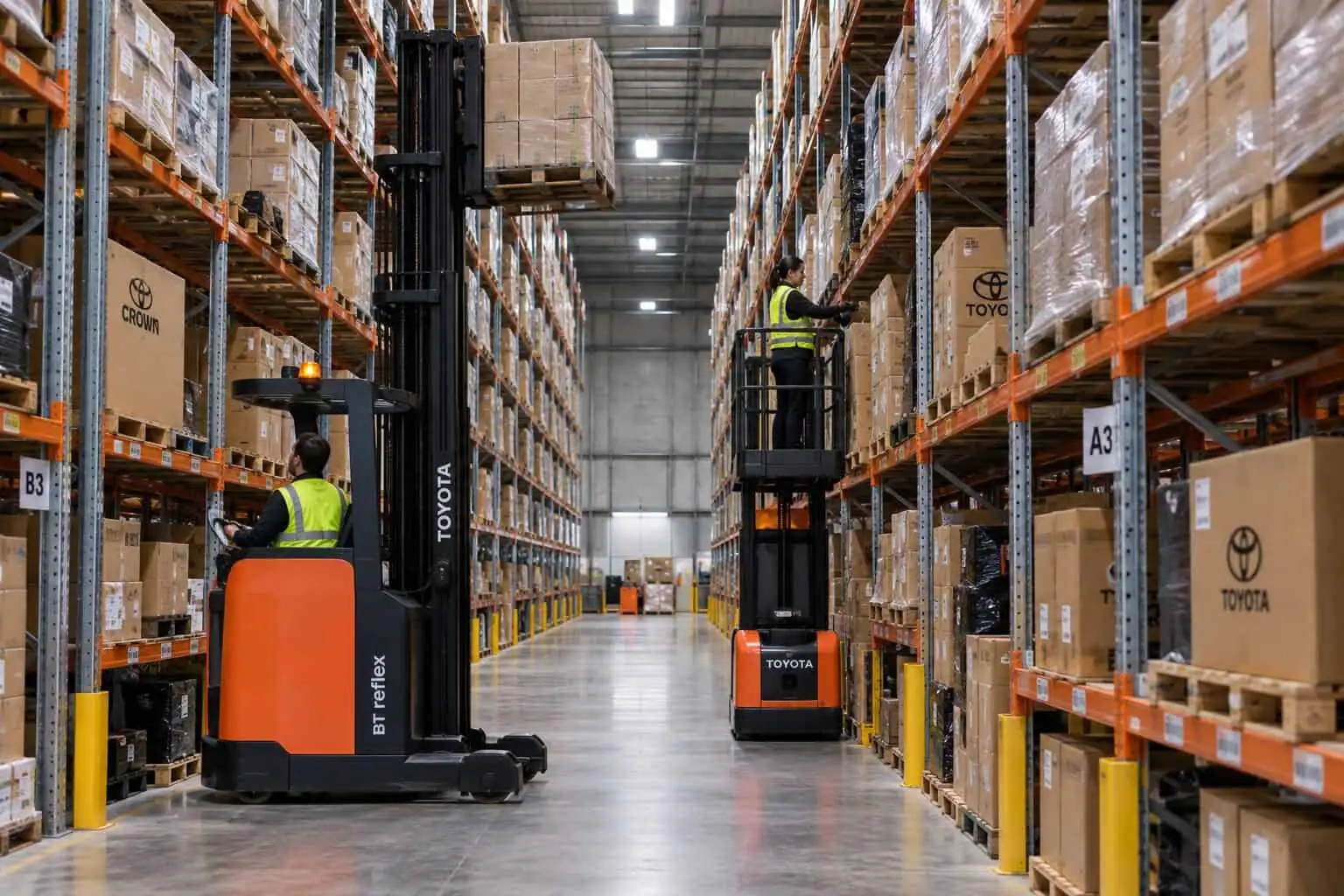
Three numbers get you most of the way to a specification: the height of your top pick face, the weight of a full picked load at that height, and the clear width of your narrowest aisle. With those, the shortlist narrows quickly.
The fourth question is whether an order picker is the right answer at all. Plenty of operations that ask about one are better served by a pallet stacker and a change to the pick face layout, and that is a cheaper answer worth ruling out first. We would rather tell you that than sell you a machine that sits idle.
If the picking is genuinely happening above the second level, the machine pays for itself in pick rate and in the floor area the narrow aisle releases. Talk to us with those three measurements and we can work through what suits, including where a used machine makes better sense than new.
Frequently Asked Questions
1. What is the difference between an order picker and a forklift?
On a standard forklift the operator stays in the seat and the forks move. On an order picker the operator rises with the load carriage, so they can pick individual items from racking at height. That difference changes the licence class, the fall protection requirement and the capacity the machine is built for.
2. How high can an order picker lift?
High-level machines commonly reach between six and ten metres. The Crown SP 3511 reaches 6,095mm at its full 1.25 tonne rating and 9,295mm in a configuration rated at 550kg. The height available always depends on the capacity you need at the top of that range.
3. Do you need a licence for an order picker in Australia?
A high-level order picker requires an LO high risk work licence, which is a separate class from the LF forklift licence. The trigger is the operator’s controls elevating with the load carriage. A low-level machine that keeps the operator on the ground generally does not require an LO licence, but confirm the position with your state regulator for the specific machine.
4. Can an order picker work in a narrow aisle?
Yes, and it is the machine class best suited to it. The Crown SP 3500 series specifies a minimum aisle of 1,270mm, which is narrower than any reach truck or counterbalance will manage. Allow more than the published minimum in a working layout.
5. How much can an order picker lift?
Typically between 1.0 tonne and 1.25 tonne at the rated load centre, which suits case picking rather than pallet handling. That figure falls substantially at full mast height, so the number that matters is the residual capacity at your top pick level.
6. Is an order picker the same as a stock picker?
Yes. Stock picker is the term used in some regulator guidance and by some manufacturers for the same machine, and both fall under the LO licence class along with turret trucks used in very narrow aisle warehousing.