
Affordable Forklifts in Australia: Best New and Used Options
· Updated
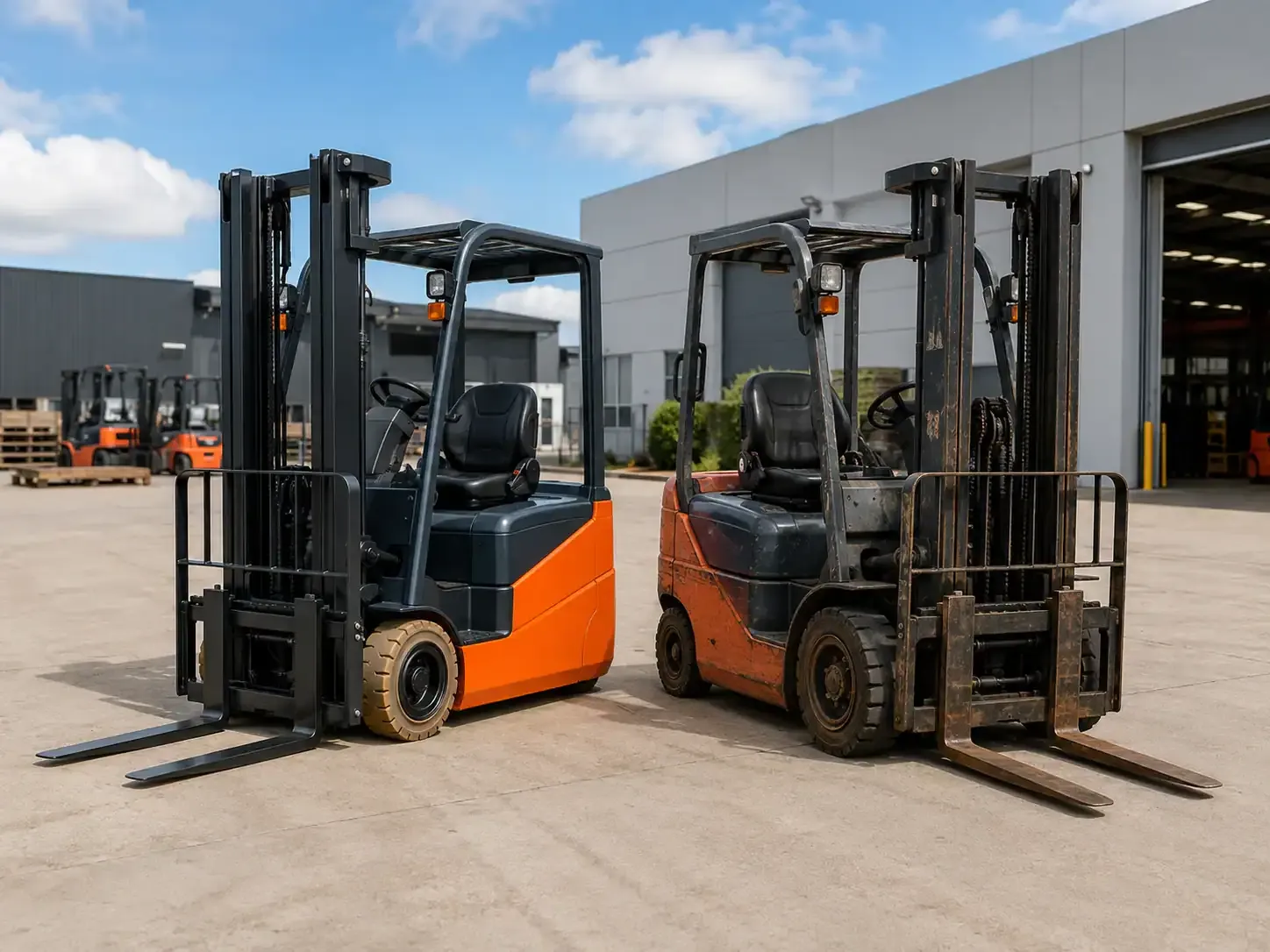
An affordable forklift is not simply the machine with the lowest advertised price. It is the forklift that can safely handle your workload while keeping purchase, finance, maintenance, energy, downtime and resale costs under control.
For many Australian businesses, a properly inspected used forklift offers the best balance of price and capability. A new value-brand forklift may be more economical when predictable servicing, warranty coverage and zero operating hours are more important than minimising the initial purchase cost.
What Counts as an Affordable Forklift in Australia?
An affordable forklift is a machine that delivers the required capacity, lift height and operating performance at the lowest practical total cost of ownership.
This definition matters because a cheap forklift can become expensive if it requires frequent repairs, consumes excessive fuel or cannot complete the work efficiently. Paying slightly more for the right machine may reduce costs over its working life.
The main costs to consider are:
- Purchase price: The amount paid for the forklift, attachments, battery, charger and other required equipment.
- Finance costs: Interest, fees, deposit requirements and the length of the finance agreement.
- Servicing: Scheduled maintenance, replacement filters, fluids, brakes and hydraulic components.
- Fuel or energy: Electricity, LPG or diesel consumed during normal operation.
- Tyres: Replacement frequency depends on the tyre type, floor surface, load and operating environment.
- Repairs: Older or poorly maintained machines may require unplanned mechanical or electrical work.
- Downtime: A forklift that regularly breaks down can delay orders, loading and production.
- Resale value: Established brands and well-maintained machines may retain more value when sold or traded.
Buyers working below five figures should first consider what you can buy under $10,000. This price point may suit businesses considering pallet equipment, stackers or older compact machines rather than a late-model, high-capacity forklift.
Increasing the budget can provide access to a wider selection of used forklifts under $15,000, although capacity, mast height, operating hours and condition will still influence what is available.
New vs Used: Which Is More Affordable?
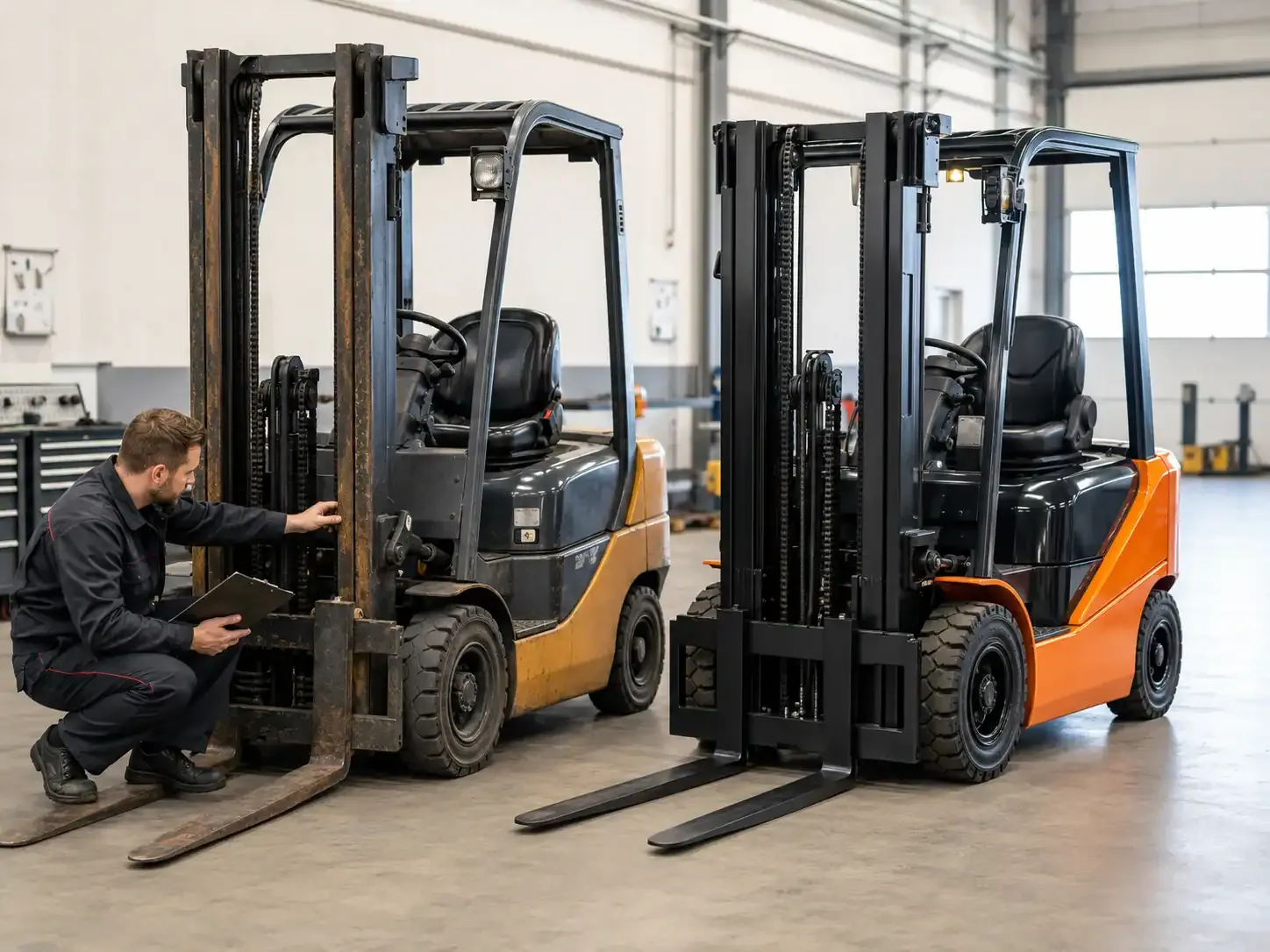
A used forklift normally has the lower upfront cost. A new forklift provides zero operating hours, current technology and more predictable early ownership. Most buyers land somewhere in the counterbalance range, whichever way that decision goes.
The more affordable choice depends on how often the machine will operate, how costly downtime would be and whether the available used machines match the site.
| Factor | New forklift | Used forklift |
| Upfront cost | Usually higher | Usually lower |
| Operating hours | Zero or delivery hours only | Varies by age and previous use |
| Warranty | Manufacturer or dealer warranty | Dealer warranty varies by machine |
| Early maintenance | Generally predictable | Depends on condition and service history |
| Technology | Latest controls, batteries and safety features | May use older but proven systems |
| Depreciation | Higher during early ownership | Much of the initial depreciation may have occurred |
| Availability | May involve ordering or configuration | In-stock machines may be available sooner |
| Best suited to | Frequent use and businesses requiring predictable performance | Budget-conscious buyers and light to moderate applications |
A new machine may produce better value when it will operate for several shifts, support time-sensitive production or remain in the fleet for many years.
Used equipment is often more economical for occasional loading, backup use, seasonal demand or businesses that need greater capacity without the price of a new equivalent.
The full comparison between used versus new forklifts can help clarify which option better matches your operating hours and risk tolerance.
Best Affordable New Forklift Options
New forklifts do not always need to be premium-priced. Value-focused brands and compact electric equipment can provide a lower entry point while retaining the benefits of buying new.
Baoli Counterbalance Forklifts
Baoli manufactures electric, LPG and diesel forklifts aimed at buyers seeking practical features without paying for every premium option.
For small businesses, manufacturers and warehouses, Baoli value for money comes from combining new-machine condition with straightforward specifications and a choice of power sources.
A Baoli forklift may suit buyers who want:
- A new forklift with zero previous operating hours
- Common counterbalance capacities
- Electric, LPG or diesel options
- Modern controls and safety features
- Warranty and dealer support
- A lower price point than some premium-brand equivalents
The right model still needs to be selected according to load weight, load centre, lift height, aisle width and operating surface.
Budget Electric Counterbalance Forklifts
A compact electric counterbalance forklift can be a cost-effective option for indoor warehouses, food distribution sites and businesses working around staff or customers.
Electric forklifts avoid tailpipe emissions at the point of use and generally have fewer routine engine service requirements than internal combustion machines. However, buyers must include the battery, charger, charging area and possible future battery replacement in their calculations.
A three-wheel electric forklift may also reduce the turning space needed in congested warehouses.
Entry-Level Electric Pallet Equipment
A full-size forklift is not always necessary. An electric pallet truck or walkie stacker may be a more affordable solution when the work mainly involves:
- Moving pallets at floor level
- Loading or unloading tailgate vehicles
- Stacking to low or moderate heights
- Replenishing warehouse racking
- Moving products through compact pick-and-pack areas
Choosing smaller equipment when it can safely complete the work reduces both the purchase price and the space required for operation.
Best Affordable Used and Pre-Owned Options
Used forklifts are central to the affordable forklift market because they allow buyers to access established brands, higher capacities and specialised warehouse equipment at a lower initial cost than comparable new machines. What is on the floor changes weekly, so the used forklifts currently in stock are the practical starting point.
Used Toyota Forklifts
Toyota forklifts are widely used across Australian warehouses, factories and logistics sites. Their popularity can make servicing knowledge, replacement parts and pre-owned stock easier to find.
A used Toyota may be a sensible long-term purchase when it has:
- A documented service history
- Operating hours consistent with its age
- No significant mast, chassis or hydraulic damage
- Suitable tyres for the operating surface
- A healthy battery on electric models
- A dealer inspection and clear warranty terms
Used Nissan Forklifts
Nissan counterbalance forklifts can offer practical value for general warehouse, yard and loading work. Older Nissan machines may remain useful when they have been properly serviced and are matched to a realistic duty cycle.
Buyers should inspect the engine or battery, transmission, cooling system, mast channels, hydraulic cylinders and steering components before making a decision.
Used Crown Forklifts
Crown is particularly well represented in electric warehouse equipment, including reach trucks, pallet movers and counterbalance forklifts.
A pre-owned Crown forklift may suit distribution centres and e-commerce warehouses that need compact electric equipment without purchasing a new high-specification machine.
Other Reliable Pre-Owned Brands
Mitsubishi, Komatsu, Clark and similar established manufacturers may also provide strong value. The badge alone, however, does not make a forklift reliable.
A well-maintained forklift from one recognised brand is generally a safer budget choice than a neglected machine from another brand with a stronger reputation.
How Many Hours Are Acceptable on a Used Forklift?
There is no single operating-hour limit that makes a forklift suitable or unsuitable.
Hours should be assessed together with:
- The forklift’s age
- Previous operating environment
- Number of shifts worked
- Service records
- Load history
- Signs of impact damage
- Mast and hydraulic condition
- Battery test results
- Availability of replacement parts
A higher-hour forklift with complete maintenance records may offer better value than a lower-hour machine that has been poorly serviced or used in a harsh environment.
Ask whether the displayed hours can be supported by service records and whether major components have already been repaired or replaced.
Affordable Forklifts by Use Case
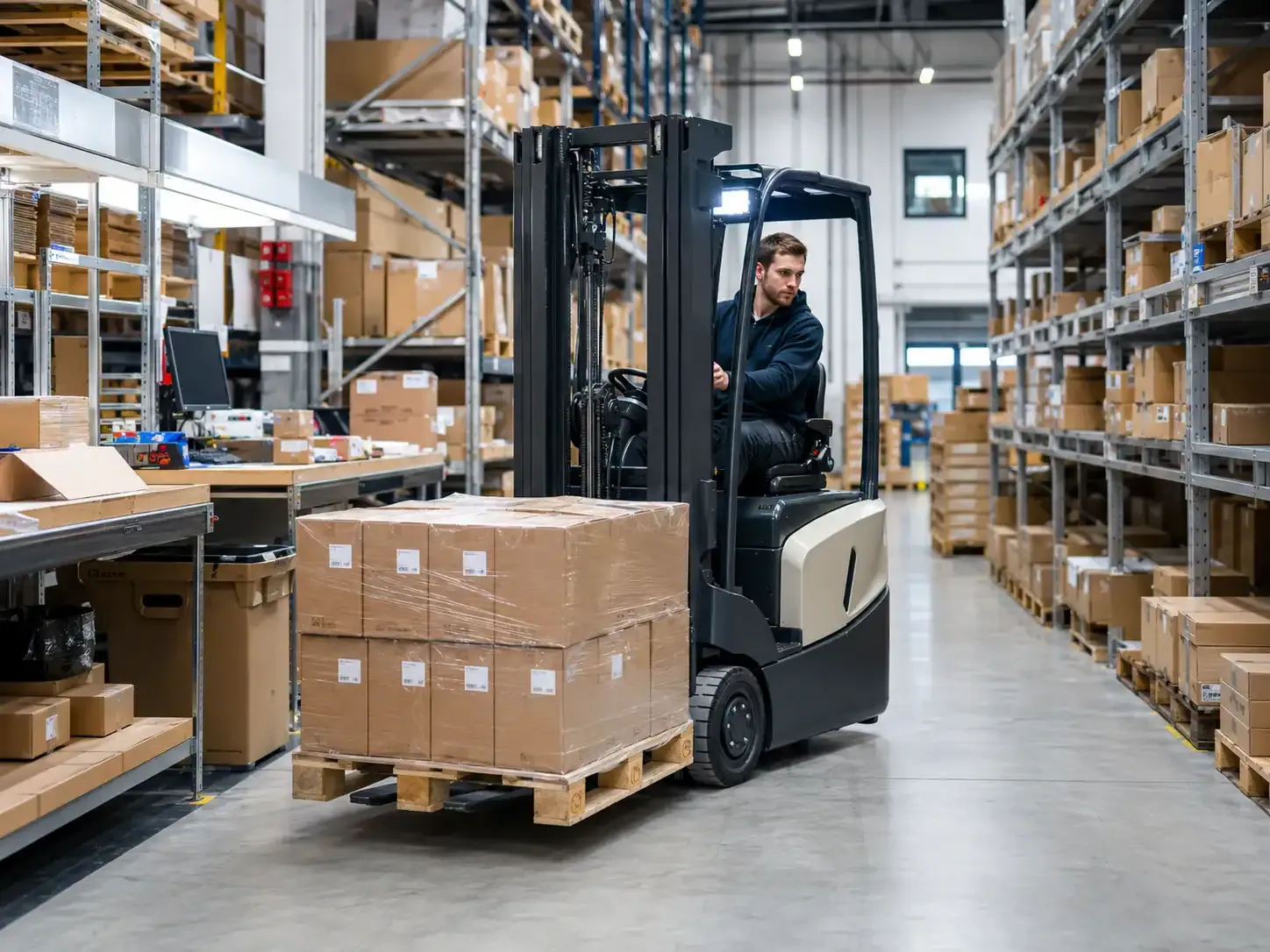
The lowest-cost forklift is only affordable when it suits the work. Buying the wrong machine can create additional labour, unsafe handling, damaged stock and an early need to replace the equipment.
| Use case | Recommended affordable option | Why it may suit |
| Small business or startup | Used electric or LPG counterbalance, pallet truck or walkie stacker | Lower entry cost and enough capability for light to moderate work |
| E-commerce warehouse | Compact electric counterbalance, electric pallet truck or walkie stacker | Suitable for frequent indoor pallet movement and restricted spaces |
| Distribution centre | Used electric counterbalance, reach truck or reliable LPG forklift | Supports higher pallet throughput without necessarily buying new |
| Tight warehouse aisles | Three-wheel electric forklift, reach truck or compact stacker | Reduced turning space and improved manoeuvrability |
| Outdoor yard | Used LPG or diesel counterbalance | Better suited to outdoor surfaces and longer travel distances |
| Occasional loading | Used counterbalance forklift with suitable capacity | Avoids paying for new equipment that will operate infrequently |
Small Businesses and Startups
Startups should avoid paying for capacity, height or attachments they will not use. The machines that sell most often are usually the safest first purchase, because parts and servicing are straightforward.
For occasional pallet unloading or stock movement, a used counterbalance forklift, walkie stacker or electric pallet truck may meet the requirement at a lower cost. The best forklifts for startups are generally simple to operate, easy to service and closely matched to the company’s current workload.
It is still sensible to allow some room for growth. A machine that is already operating at its maximum capacity may need to be replaced as loads become heavier or storage heights increase.
E-Commerce Warehousing
E-commerce warehouses often prioritise manoeuvrability, quiet operation and frequent movement between receiving, storage, picking and dispatch areas.
Affordable options may include:
- Compact electric counterbalance forklifts
- Electric pallet trucks
- Walkie stackers
- Used reach trucks
- Three-wheel electric forklifts
Electric machines are particularly useful in enclosed warehouses, but the charging routine must support the expected operating hours. A low-cost forklift that repeatedly runs out of charge during dispatch periods will not remain economical.
Distribution Centres
Distribution centres usually place greater demands on forklifts through longer operating hours, heavier pallet volumes and time-sensitive loading schedules.
An affordable distribution-centre forklift must be reliable enough to maintain throughput. Suitable choices may include:
- Used electric counterbalance forklifts for indoor loading
- Used LPG forklifts for mixed indoor and outdoor work
- Reach trucks for high warehouse racking
- Double pallet handlers for suitable high-volume operations
- Electric pallet movers for dock-to-storage transport
Condition and dealer support become especially important because the cost of downtime may quickly exceed the saving achieved by purchasing the cheapest available machine.
Tight or Narrow Aisles
Manoeuvrability can be more important than purchase price in a restricted warehouse.
A forklift with a wide turning circle may require larger aisles, reduce storage density or create repeated repositioning. Three-wheel electric counterbalance forklifts, reach trucks and compact stackers can make better use of limited space. An electric stacker is often the cheapest way out of an aisle-width problem.
Before purchasing, record:
- The narrowest aisle width
- Rack-to-rack clearance
- Turning areas
- Doorway dimensions
- Overhead restrictions
- Required lift height
- Pallet dimensions
- Maximum load weight
The selected forklift must be able to turn, stack and travel safely within the actual site layout, not just fit through the warehouse door.
Total Cost of Ownership: Keeping a Forklift Affordable Long Term
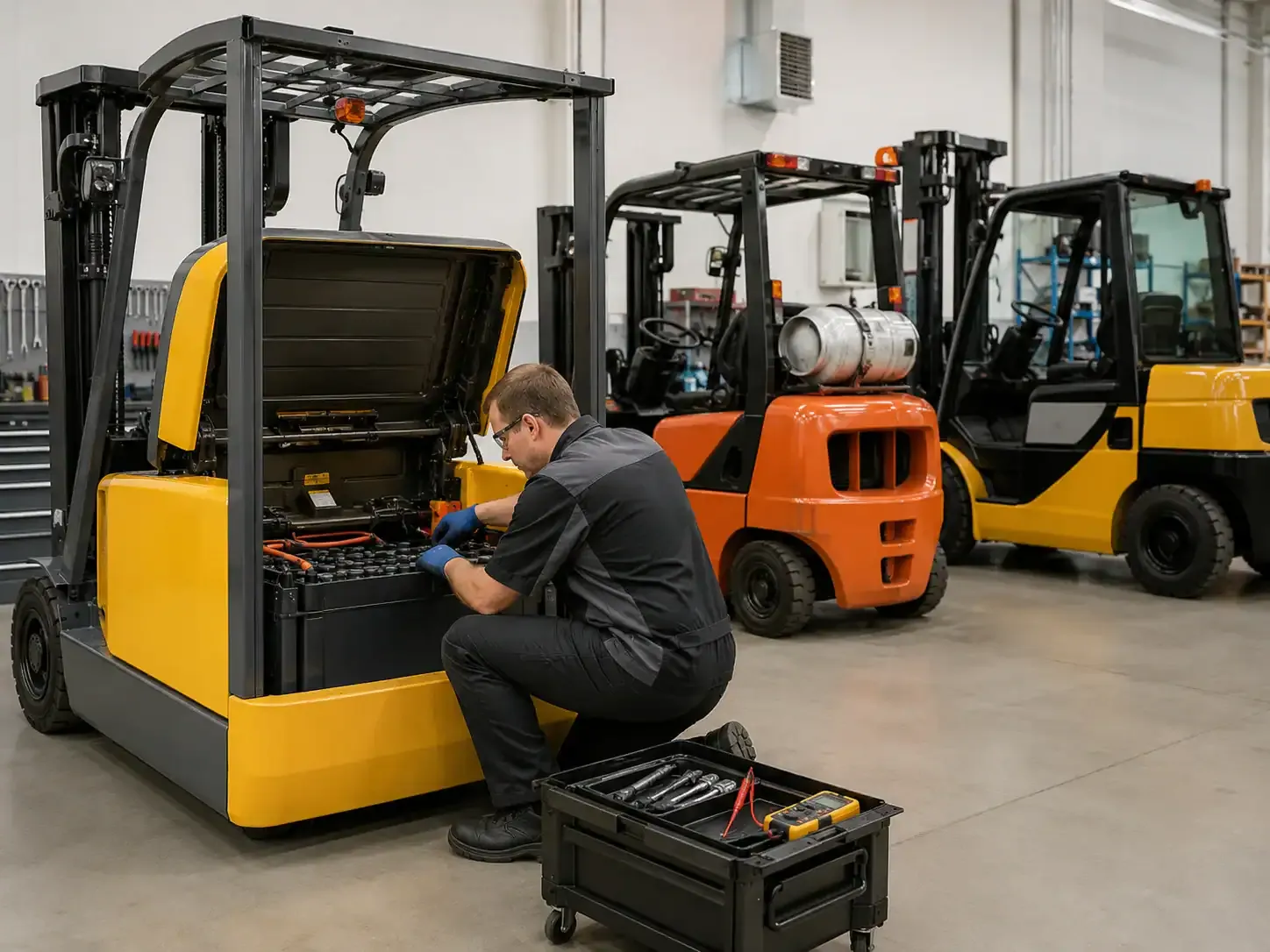
Purchase price is only one part of forklift affordability. Energy consumption, servicing, tyres, repairs and downtime continue for as long as the machine remains in use.
| Power type | Typical cost characteristics | Often best suited to |
| Electric | Lower routine powertrain servicing, electricity costs and no tailpipe emissions at the point of use; battery and charger costs must be included | Indoor warehouses, food facilities and e-commerce sites |
| LPG | Quick refuelling and flexible indoor-outdoor use; ongoing cylinder, engine and servicing costs | Warehouses, loading areas and mixed applications |
| Diesel | Strong outdoor performance and convenient refuelling; fuel, engine servicing and emissions make it less suitable indoors | Yards, construction supply and outdoor operations |
Servicing
Preventive maintenance is normally less expensive than emergency repairs and lost operating time.
Check the manufacturer’s service intervals and ask the dealer what maintenance has been completed before delivery. Filters, fluids, brakes, steering, hydraulics and safety systems should be included in the maintenance plan.
Tyres
Tyre choice affects operating cost, comfort, traction and stability.
Solid tyres can reduce puncture-related downtime, while pneumatic tyres may provide better cushioning on rough outdoor surfaces. Premature tyre wear may also indicate harsh operation, incorrect tyre selection or poor floor conditions.
Electric Forklift Batteries
The battery can represent a significant part of the value of a used electric forklift.
Ask for information about:
- Battery age
- Battery chemistry
- Remaining capacity
- Charging performance
- Cell condition
- Charger compatibility
- Maintenance history
- Replacement cost
A low-priced electric forklift with a weak battery may require substantial additional spending soon after purchase.
Downtime
Downtime is often overlooked because it does not appear on the forklift’s sales invoice.
When a machine is unavailable, a business may need to delay dispatches, hire replacement equipment, pay staff for unproductive time or arrange urgent repairs. Businesses that depend on one forklift should place greater value on reliability, warranty support and local servicing.
How to Buy Affordably Without Cutting Corners
A tight budget should not mean purchasing an unsafe or unsuitable machine. Use the following checks before committing to an affordable forklift.
1. Confirm the Required Capacity
Identify the heaviest load and its load centre. Do not select a machine based only on its headline capacity because lift height, attachments and load dimensions can reduce its rated capacity.
2. Measure the Site
Record aisle widths, door heights, floor conditions, gradients, rack heights and loading areas. These measurements will help determine the correct forklift type, mast and turning radius.
3. Inspect the Forklift
Check the forks, mast, lift chains, hydraulic cylinders, hoses, tyres, brakes, steering, seat restraint, warning devices and overhead guard.
Arrange an independent inspection when buying privately or when adequate mechanical information is unavailable.
4. Review Its Service History
Look for consistent servicing rather than relying only on low displayed hours. Missing records, unexplained repairs and long gaps between services increase uncertainty.
5. Check the Battery and Charger
For electric machines, confirm that the battery can support the expected shift and that the charger is compatible with the site’s electrical supply.
6. Confirm the Warranty
Ask what the warranty covers, how long it applies and whether there are usage limits, exclusions or servicing conditions. Warranty inclusions may differ between machines.
7. Consider Finance
Paying the entire purchase cost upfront is not the only option. Buy A Fork’s forklift finance options are provided through Ausloans, which can compare suitable finance products across a panel of Australian lenders. Approval, rates and terms depend on the applicant and lender. Trade-In
Trading an existing forklift may reduce the amount that needs to be financed or paid. Provide accurate details about the machine’s age, hours, capacity, condition and service history to obtain a realistic assessment.
9. Include Delivery and Added Value
At the time of writing, Buy A Fork listings advertise a free six-month service, a free pallet jack valued at $499 and free local delivery. Warranty details and eligibility can vary, so confirm the inclusions, delivery area and applicable terms for the machine being considered. Timing
The tax treatment of business equipment depends on current legislation, business eligibility and when the asset is installed ready for use.
The possible tax benefits of buying before 30 June may influence purchase timing, but buyers should check the latest Australian Taxation Office guidance and obtain advice for their circumstances before relying on a deduction. r Safety Requirements
Affordability does not replace workplace safety obligations. Forklift trucks are classed as high-risk work, and operators generally need the appropriate high-risk work licence. Employers must also provide suitable information, instruction, training and supervision. es should refer to WorkSafe Victoria’s forklift guidance when selecting and operating equipment.
Compare Affordable Forklifts for Your Site
The best affordable forklift is the machine that completes the required work safely without creating unnecessary maintenance, energy or downtime costs.
Before choosing, compare the forklift’s capacity, mast height, operating hours, condition, power source, manoeuvrability and warranty. Buyers can browse the full forklift range to compare current new and pre-owned equipment across different capacities, brands and applications.
Frequently Asked Questions
1. What Is the Cheapest Type of Forklift to Buy?
Pedestrian-operated electric pallet trucks and basic walkie stackers are generally cheaper than full-size counterbalance or reach forklifts.
They can be economical when the work involves moving pallets at floor level or stacking to modest heights. They should not be selected when the required load, lift height or travel distance exceeds their design.
For a full-size forklift, an older but professionally inspected used counterbalance machine will usually have a lower initial price than a new equivalent.
2. How Much Does a Used Forklift Cost in Australia?
Used forklift prices vary widely. Pedestrian pallet equipment can sit in the low thousands, while full-size counterbalance forklifts, reach trucks and newer high-capacity machines require a larger budget.
Age, hours, capacity, lift height, mast type, attachments, power source, battery condition and warranty all affect the price. Current stock should be compared on specification and condition rather than price alone.
3. Is It Cheaper to Buy a New or Used Forklift?
A used forklift is normally cheaper to purchase. A new forklift may be more economical over time when it operates frequently, when downtime is expensive or when the business intends to keep it for many years.
The best comparison includes depreciation, maintenance, energy, finance, warranty and likely resale value.
4. What Is the Most Reliable Budget Forklift Brand?
Toyota, Crown, Nissan, Mitsubishi, Komatsu and Clark all have established machines in the Australian pre-owned market. Baoli can provide a value-focused option for buyers considering a new forklift.
Reliability ultimately depends on the individual machine’s service history, previous workload, inspection results and ongoing maintenance. A recognised brand should not be used as a substitute for a mechanical assessment.
5. Can I Finance an Affordable Forklift?
Yes. Finance may allow a business to spread the purchase cost rather than use working capital for the entire amount.
Depending on eligibility, available structures may include a chattel mortgage, hire purchase, lease or low-documentation finance. Compare the total amount repayable, fees, interest rate, deposit and final payment before accepting an offer.
6. What Are the Running Costs of a Cheap Forklift?
Running costs may include:
- Electricity, LPG or diesel
- Scheduled servicing
- Tyres
- Replacement batteries
- Hydraulic and mechanical repairs
- Insurance
- Operator training and licensing
- Replacement hire during downtime
A cheap forklift with high fuel consumption or frequent faults may cost more to own than a better-maintained machine with a higher purchase price.
7. Should a Small Business Buy a Forklift or Pallet Stacker?
A pallet stacker may be more affordable when loads are relatively light, stacking heights are moderate and travel distances are short.
A counterbalance forklift is more suitable when the business needs to unload trucks, handle heavier loads, travel outdoors or work across a wider range of tasks. The decision should be based on the actual load and site rather than choosing the least expensive equipment category.