
What Is MHE? Types of Material Handling Equipment and Their Uses
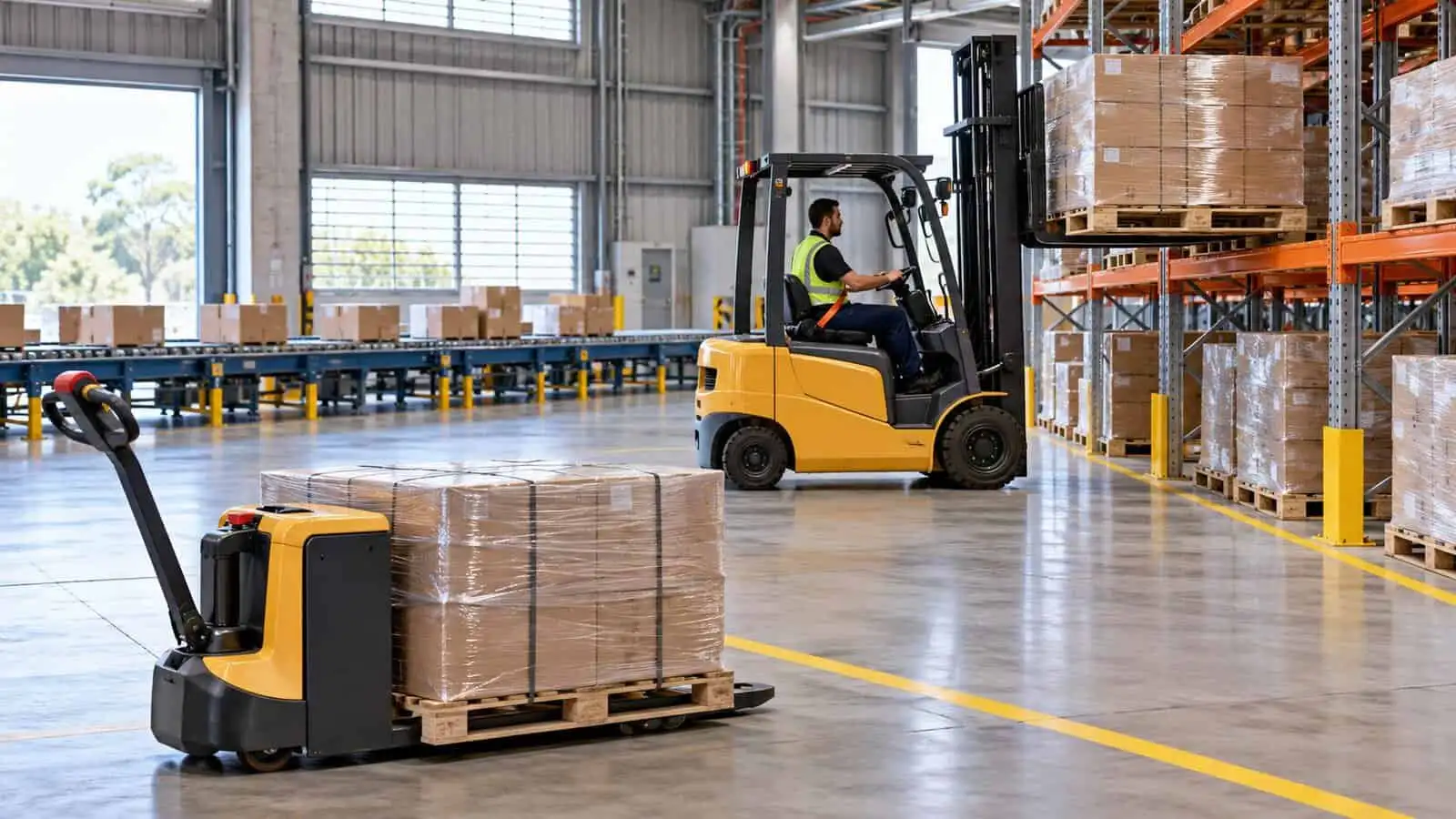
MHE stands for material handling equipment: the machines, tools and systems used to move, store, control and protect goods. Forklifts are the best-known MHE, but pallets, conveyors, cranes, racking and lift tables all count too. This guide explains what MHE means in a warehouse, the main types and what each is used for, and which equipment needs a licence to operate in Australia.
What does MHE stand for, and what does it mean in a warehouse?
MHE stands for material handling equipment, sometimes written as mechanical handling equipment. Wikipedia defines it as mechanical equipment used for the movement, storage, control and protection of materials, goods and products, across manufacturing, distribution, consumption and disposal.
In an Australian warehouse, MHE usually means the machines staff operate every day: forklifts, pallet jacks, walkie stackers and reach trucks. That is why job ads ask for “MHE experience”. In a full description of a site, though, the term also covers the pallets those machines carry, the racking they load and the conveyors that run alongside them.
Is MHE a forklift? A forklift is one type of MHE, not the whole category. Every forklift is material handling equipment, but most material handling equipment is not a forklift.
What are the main types of material handling equipment?
Material handling equipment falls into four main categories: unit load formation, transport, storage and positioning, with engineered systems as a fifth group for automated sites. The categories come from the way goods move: they are made into a load, moved, stored, then handled at a workstation.
| Category | What it does | Examples |
|---|---|---|
| Unit load formation | Holds goods together as one load | Pallets, skids, slipsheets, bins, crates |
| Transport | Moves goods from one place to another | Forklifts, pallet jacks, conveyors, cranes, AGVs |
| Storage | Holds goods until they are needed | Pallet racking, shelving, carousels |
| Positioning | Handles goods at one workstation | Lift tables, hoists, manipulators, robots |
| Engineered systems | Automates storage and retrieval | Automated storage and retrieval systems |
The sections below follow the same order goods travel through a site, because each category decides what the next one has to handle.
Unit load formation equipment: pallets, crates and bins
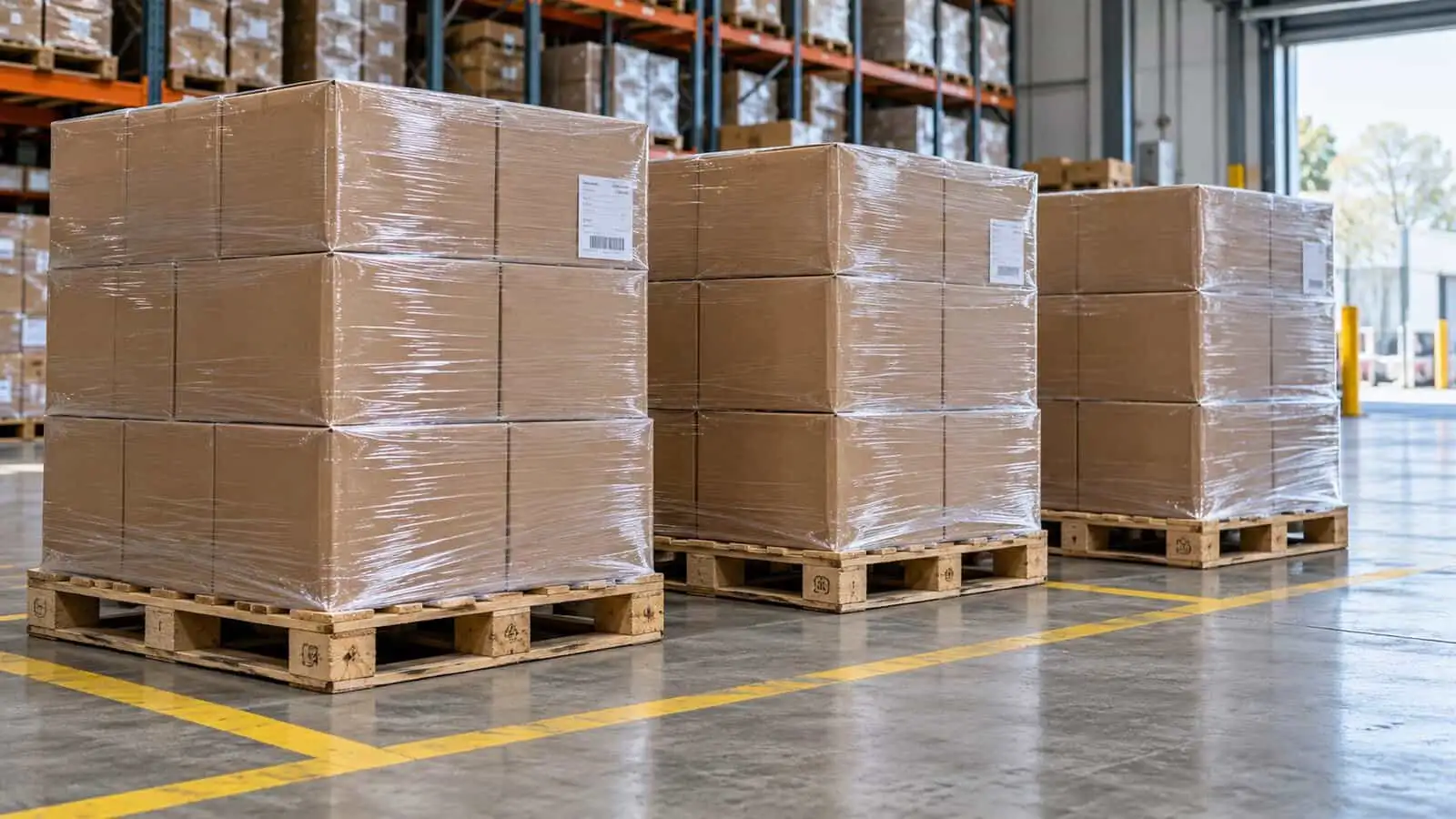
Unit load formation equipment holds goods together so they can be handled as one load instead of item by item. Wikipedia lists pallets, skids, slipsheets, tote pans, bins and baskets, cartons, bags and crates in this group. It is the least obvious type of MHE, and the one every other type depends on.
The pallet is the most important example in Australia. The standard pallet size in Australia is 1165 x 1165 mm under AS 4068, and that footprint decides the fork length, pallet jack width and racking depth a site needs. Choose the unit load first, because the transport and storage equipment has to fit it.
Transport equipment: forklifts, pallet jacks, conveyors and cranes
Transport equipment moves goods from one place to another, and it is the broadest category of MHE. Wikipedia splits it into three groups: industrial trucks, conveyors and cranes. Many warehouses rely mainly on industrial trucks, with conveyors and cranes added where the work calls for them.
Industrial trucks
Industrial trucks are wheeled machines that carry loads around a site, from simple hand trucks to powered forklifts. Wikipedia’s list includes hand trucks and dollies, pallet jacks, counterbalance lift trucks, narrow-aisle trucks, order pickers, automated guided vehicles (AGVs), tugs and trolleys.
Forklifts and pallet trucks do much of the lifting in Australian warehouses. A counterbalance forklift handles general loading and truck work, a reach truck works high racking, and an electric pallet jack moves pallets along the floor. Matching a machine to the job comes down to understanding the types of forklifts and the seven industry classes they fall into. Buy A Fork stocks used counterbalance forklifts and electric pallet jacks.
Conveyors
A conveyor moves goods along a fixed path without an operator driving a machine. Wikipedia lists roller, flat-belt, bucket, screw and sortation conveyors among the main types. Conveyors suit high volumes of goods that follow the same route every time, such as cartons moving from a picking area to a packing station.
The trade-off is flexibility. A forklift can go anywhere on site; a conveyor only goes where it is installed. Many sites use both, with conveyors handling cartons and forklifts handling full pallets, including at the loading dock.
Cranes and hoists
Cranes lift and move loads on a hook or sling rather than on forks. Wikipedia lists jib, bridge, gantry and stacker cranes. They suit heavy, awkward or long loads that a forklift cannot carry safely, such as steel, machinery or loads lifted over obstacles. Many crane types need their own high risk work licence, covered below.
Storage equipment: racking, shelving and carousels
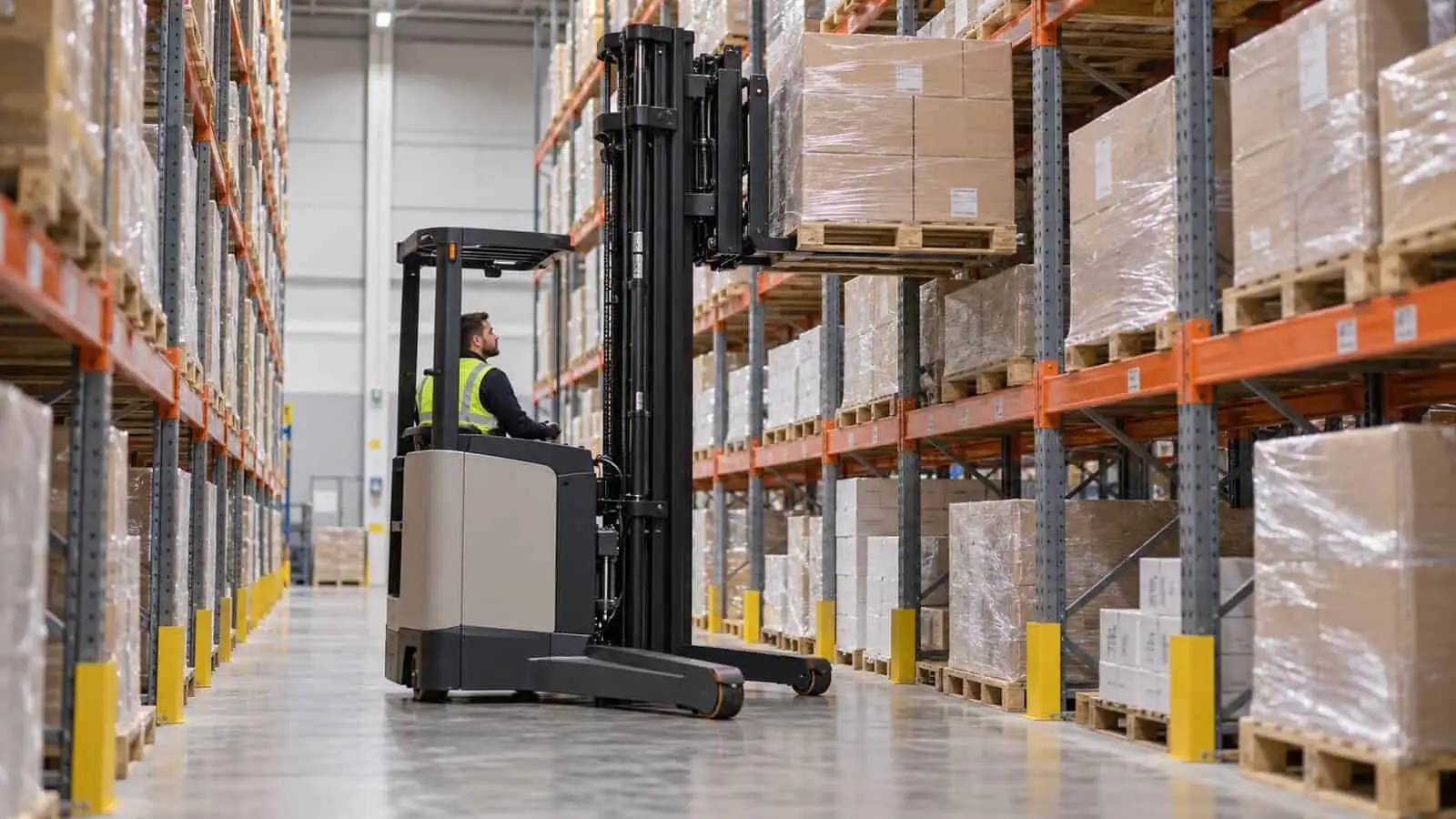
Storage equipment holds goods until they are needed, and it is chosen together with the machines that load it. Wikipedia lists single and double-deep racks, drive-in racks, push-back racks, pallet-flow racks, carton-flow racks, bin shelving, storage drawers and carousels.
Racking and transport equipment have to match. Racking height decides how high the forklift must lift, and aisle width decides which machine fits between the rows. A narrow, high warehouse usually points to reach trucks for high-bay racking, while wider aisles allow a counterbalance machine. Plan the racking and the forklift at the same time, not one after the other.
Positioning equipment: lift tables, hoists and manipulators
Positioning equipment handles a load at a single workstation, bringing it to the right height or angle for a person or machine. Wikipedia lists lift and tilt tables, turntables, hoists, balancers, manipulators and industrial robots in this group.
Its main job is reducing manual handling. A lift table that raises a pallet to waist height saves a worker bending to the bottom layer, and a manipulator takes the weight of a heavy part while someone guides it into place. Positioning equipment rarely moves goods far; it makes the work at one spot safer and quicker.
Engineered and automated systems
Engineered systems combine several types of MHE into an automated whole. Wikipedia names automated storage and retrieval systems (AS/RS), which store and fetch loads without an operator, and AGVs are often part of these setups. They are usually found in large distribution centres. Small and mid-size sites generally run on industrial trucks, racking and people.
Which material handling equipment needs a licence in Australia?
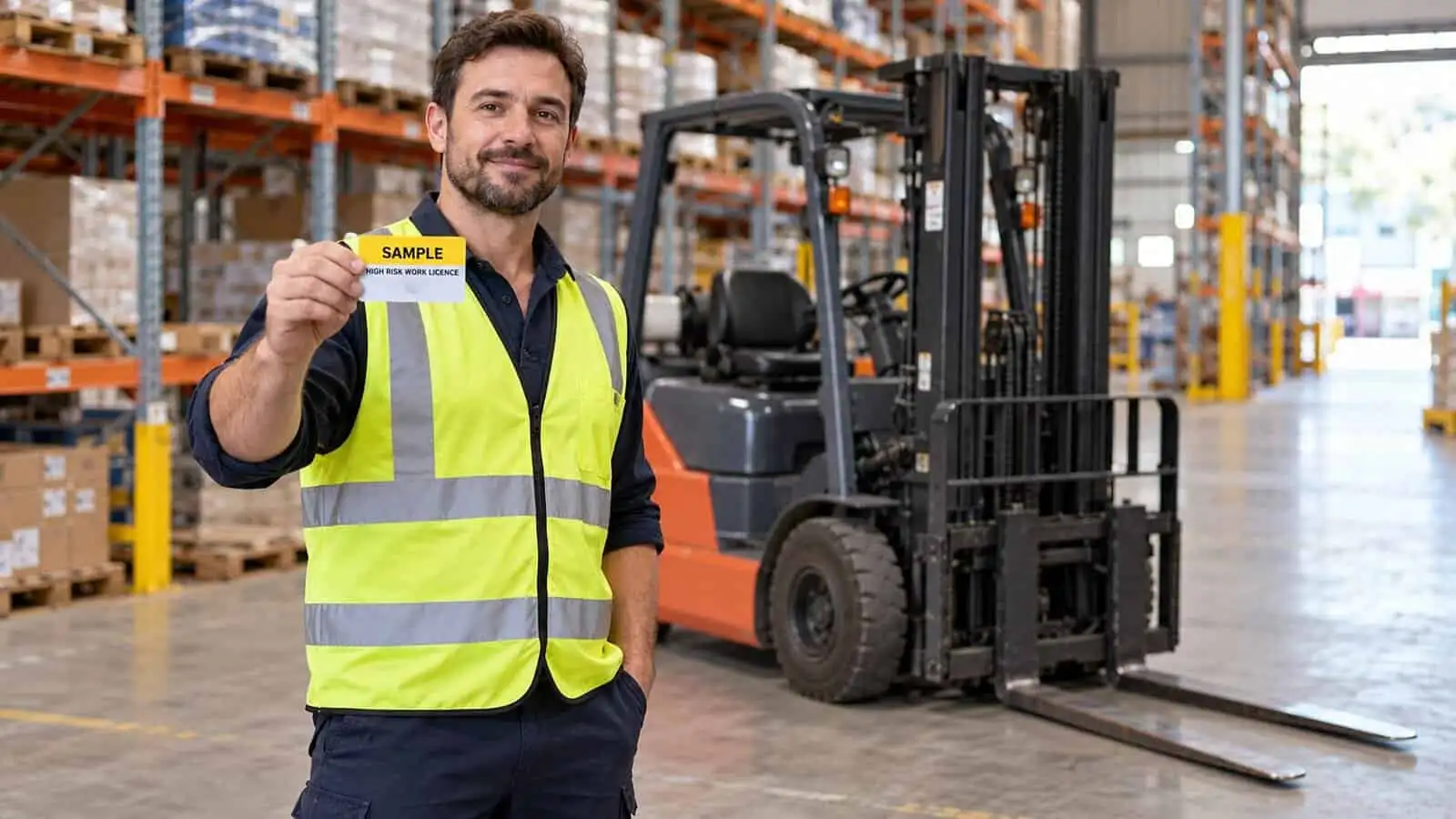
Forklifts, order pickers, many cranes and some hoists need a high risk work licence in Australia, while pallet jacks and walkie stackers do not. WorkSafe Victoria lists the licence classes, and the ones most relevant to warehouses and yards are below.
| Equipment | Licence class |
|---|---|
| Forklift truck | LF |
| Order-picking forklift truck | LO |
| Bridge and gantry crane | CB |
| Vehicle loading crane | CV |
| Non-slewing mobile crane | CN |
| Materials hoist (cantilever platform) | HM |
| Personnel and materials hoist | HP |
| Dogging (slinging loads for cranes) | DG |
The difference between the two forklift classes is explained in LF vs LO forklift licences. Pallet trucks sit outside the forklift licence: WorkSafe Queensland’s definition of a forklift truck for licensing excludes a pedestrian-operated truck or a pallet truck. That does not remove the need for training. WorkSafe WA requires operators of pedestrian-operated lift trucks to be trained or in training, and good forklift operator training applies to every machine on site.
Frequently asked questions
1. What does MHE stand for?
MHE stands for material handling equipment. It is sometimes expanded as mechanical handling equipment, and both mean the machines, tools and systems used to move, store, control and protect goods.
2. Is MHE a forklift?
A forklift is one type of MHE, not the whole category. MHE also includes pallets, pallet jacks, conveyors, cranes, racking, lift tables and automated systems.
3. What does MHE mean in a warehouse?
In a warehouse, MHE usually refers to the machines staff operate, such as forklifts, pallet jacks, walkie stackers and reach trucks. In a broader sense it also covers pallets, racking and conveyors.
4. What are the main types of material handling equipment?
The four main types are unit load formation equipment such as pallets, transport equipment such as forklifts and conveyors, storage equipment such as racking, and positioning equipment such as lift tables. Engineered systems such as AS/RS combine them in automated sites.
5. What does “MHE experience” mean on a job ad?
It generally means experience operating warehouse machines such as forklifts, pallet jacks or reach trucks. Check the listing for the specific licence it asks for, because a forklift role will require an LF licence.
6. Do you need a licence to operate MHE?
It depends on the equipment. Forklifts need an LF licence, order pickers need an LO licence and many cranes need a crane class licence, while pallet jacks and walkie stackers do not need a high risk work licence but still require training.