
Loading Dock Guide: Types, Equipment and Forklift Safety in Australia
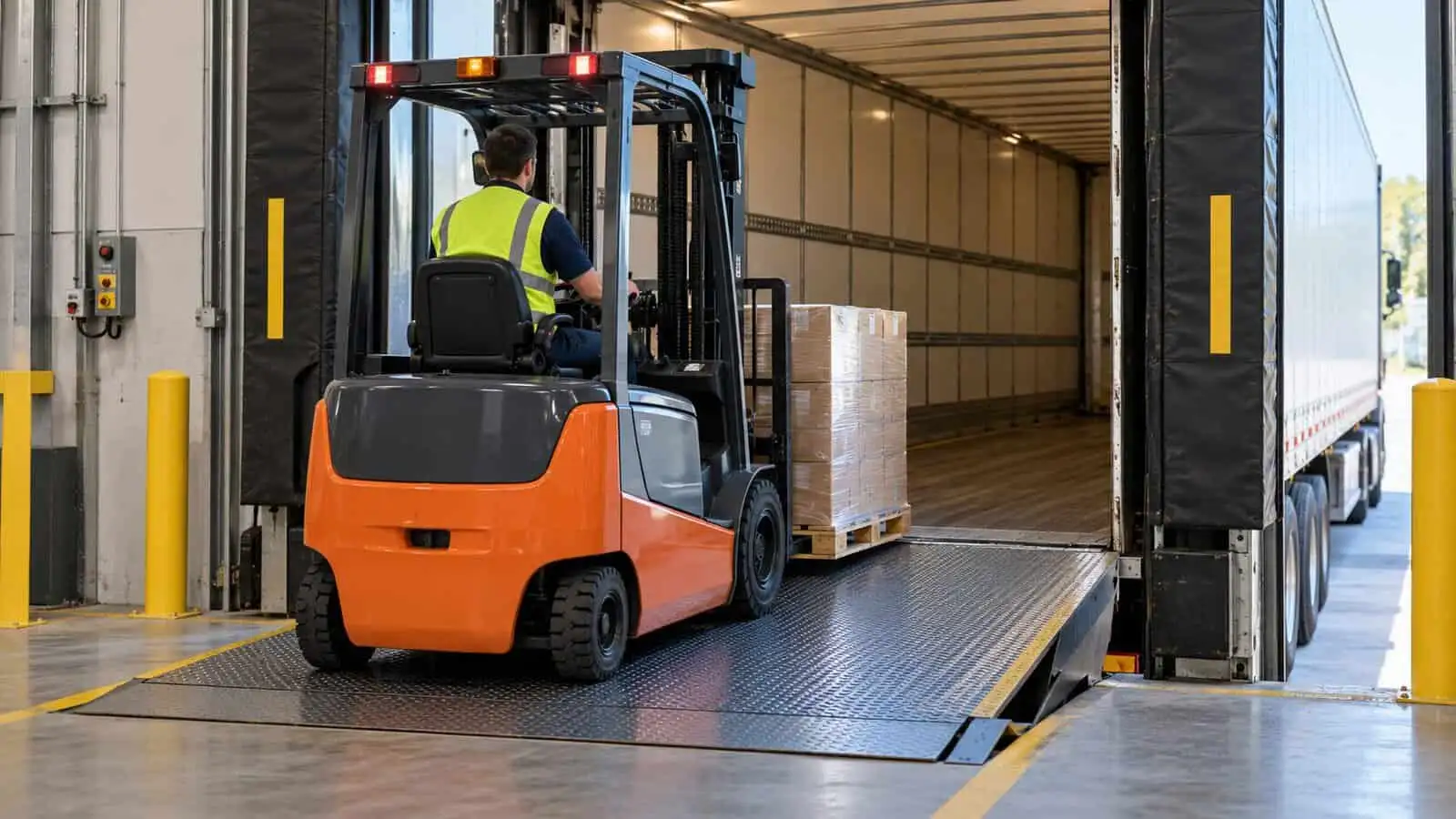
A loading dock is the part of a building where trucks are loaded and unloaded, usually a raised platform set at the height of a truck deck so goods move across on the level. It is also one of the busiest places on any site, because forklifts, trucks, drivers and pedestrians all work in the same small space. This guide covers the main dock types, the equipment a dock needs and the controls Australian regulators expect when forklifts work there.
What is a loading dock, and how is it different from a loading bay?
A loading dock is a raised platform built to truck deck height, while a loading bay is the broader term for any space set aside for vehicles to load and unload. The dock lets a forklift or pallet jack drive straight from the warehouse floor onto the truck, with a leveller or plate bridging the gap.
A loading bay can be a dock, but it can also be a ground-level area beside a building or a marked section of road. Wikipedia describes roadside loading zones as bays rather than building docks. In Australia the two terms are often used interchangeably, so check what a site actually has before planning equipment around it.
What are the main types of loading docks?
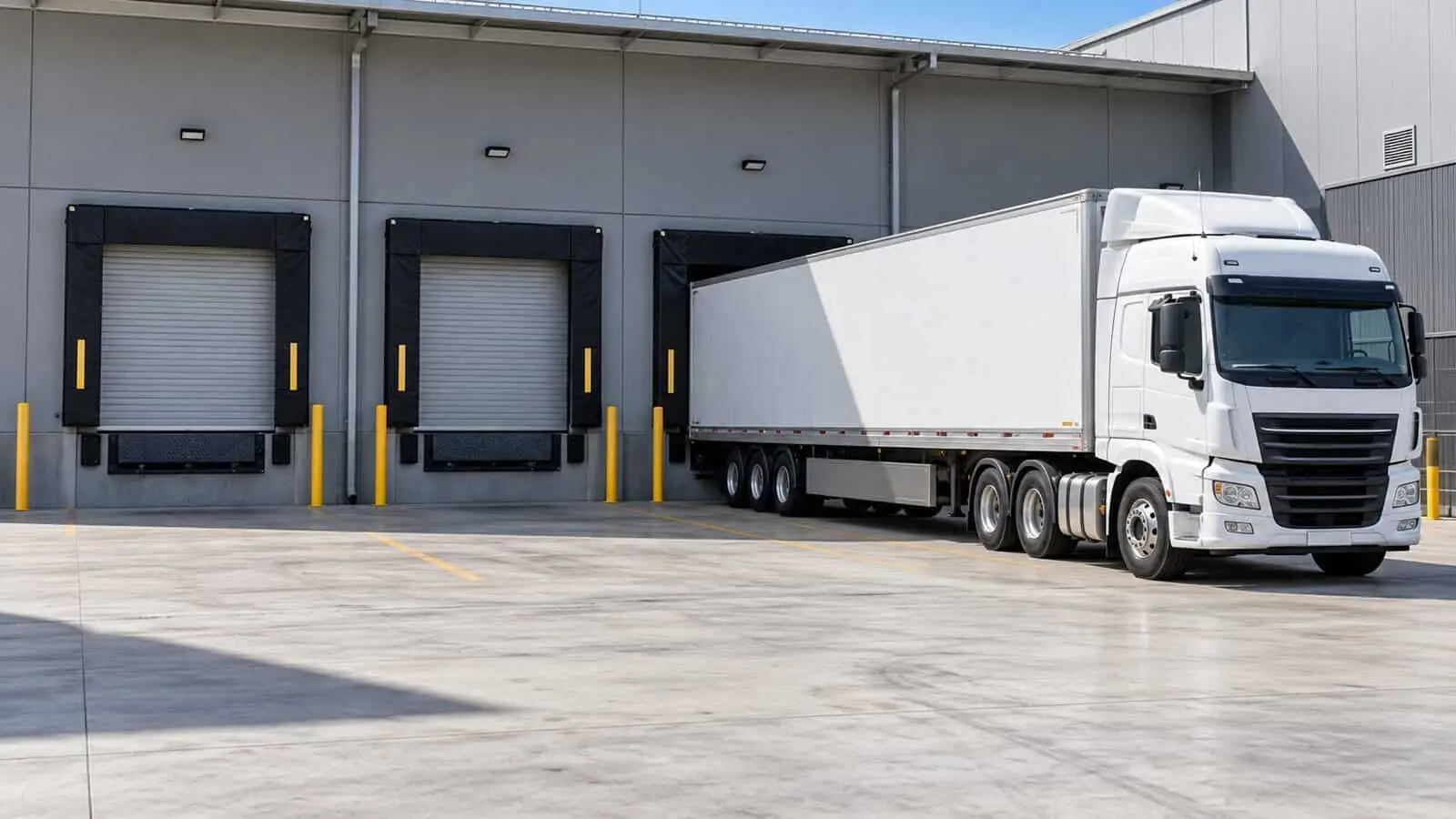
The five common dock designs are flush, enclosed, open, depressed and saw tooth, with portable yard ramps as the option where there is no permanent dock. The right one depends on the building, the climate, the space for trucks to manoeuvre and how often the dock is used.
| Dock type | How it works | Best suited to | Watch out for |
|---|---|---|---|
| Flush | Dock face sits level with the building wall | Most warehouses | Weather at the door unless sealed |
| Enclosed | Truck parks inside or under shelter | Climate control and security | Build cost and exhaust ventilation |
| Open | Platform sits outside the building | Lower-cost sites | Weather and theft exposure |
| Depressed | Driveway slopes down to the dock | Sites without a raised floor | Grade kept at or under 10% |
| Saw tooth | Bays set at an angle to the wall | Tight manoeuvring space | Uses more building frontage |
| Yard ramp | Portable ramp up to the truck deck | No permanent dock or temporary need | Must be secured to the truck |
Materials handling supplier Adaptalift describes the flush dock as the most common design, and recommends a canopy for open docks because of weather and pilferage. For depressed docks, it states the driveway grade should not exceed 10%, so the top of the truck clears the building and trucks can pull away in bad weather. An open or uncovered dock also brings a forklift hazard: WorkSafe WA notes that dock surfaces become slippery when wet.
What equipment does a loading dock need?
A working dock needs equipment to bridge the gap to the truck, hold the truck in place, protect the building and stop anything going over the edge. The table below matches each piece of equipment to the hazard it controls, which is the most useful way to decide what a dock is missing.
| Equipment | What it does | Hazard it controls |
|---|---|---|
| Dock leveller | Bridges the height difference and gap to the truck deck | Wheels dropping into the gap |
| Dock plate | A plate laid across the gap | Gap between dock and truck deck |
| Dock lift | Scissor platform with a wider height range | Height mismatch across a mixed fleet |
| Bumpers | Absorb truck impact and guide reversing | Damage to the dock and building |
| Seals and shelters | Close the gap around the trailer | Weather on the dock floor |
| Vehicle restraint or dock lock | Holds the trailer against the dock | Truck moving during loading |
| Edge barriers and gates | Block the open dock edge | Forklift going over the edge |
| Wheel chocks | Block the truck’s wheels | Truck rolling away |
WorkSafe Victoria’s forklift guidance shows loading docks fitted with fixed barriers and gates that close when the dock is not in use, which is the simplest way to stop a forklift reaching an empty dock edge.
Dock levellers
A dock leveller is a height-adjustable platform that bridges the dock and the truck deck, so a forklift can drive between them on a smooth transition. Wikipedia describes levellers powered by spring, hydraulic or air systems. Because truck deck heights vary, the leveller is what lets one dock serve different vehicles.
A leveller has a rated capacity, and that rating has to cover the forklift itself as well as the pallet. A forklift weighs considerably more than the load it lifts, so check the leveller’s rating against the machine’s weight from its data plate plus the heaviest load it carries. WorkSafe WA’s loading dock guidance asks whether the leveller is in position and how it is operated as part of the risk assessment.
Yard ramps and dock ramps
A yard ramp is a portable ramp that lets a forklift drive from the ground up onto a truck deck where there is no permanent dock. Wikipedia describes it as the alternative where a concrete dock is impractical or the need is temporary.
Safe Work Australia’s forklift information sheet states that portable yard ramps must be secured to the truck or trailer. The same sheet lists travelling down ramps with the load forward and turning sideways on ramps as tip-over risks, and SafeWork NSW’s guide for operators also warns against turning on slopes. The same technique applies to operating forklifts on slopes and ramps anywhere on site: travel straight, never turn on the incline.
How do you secure a truck at the loading dock?
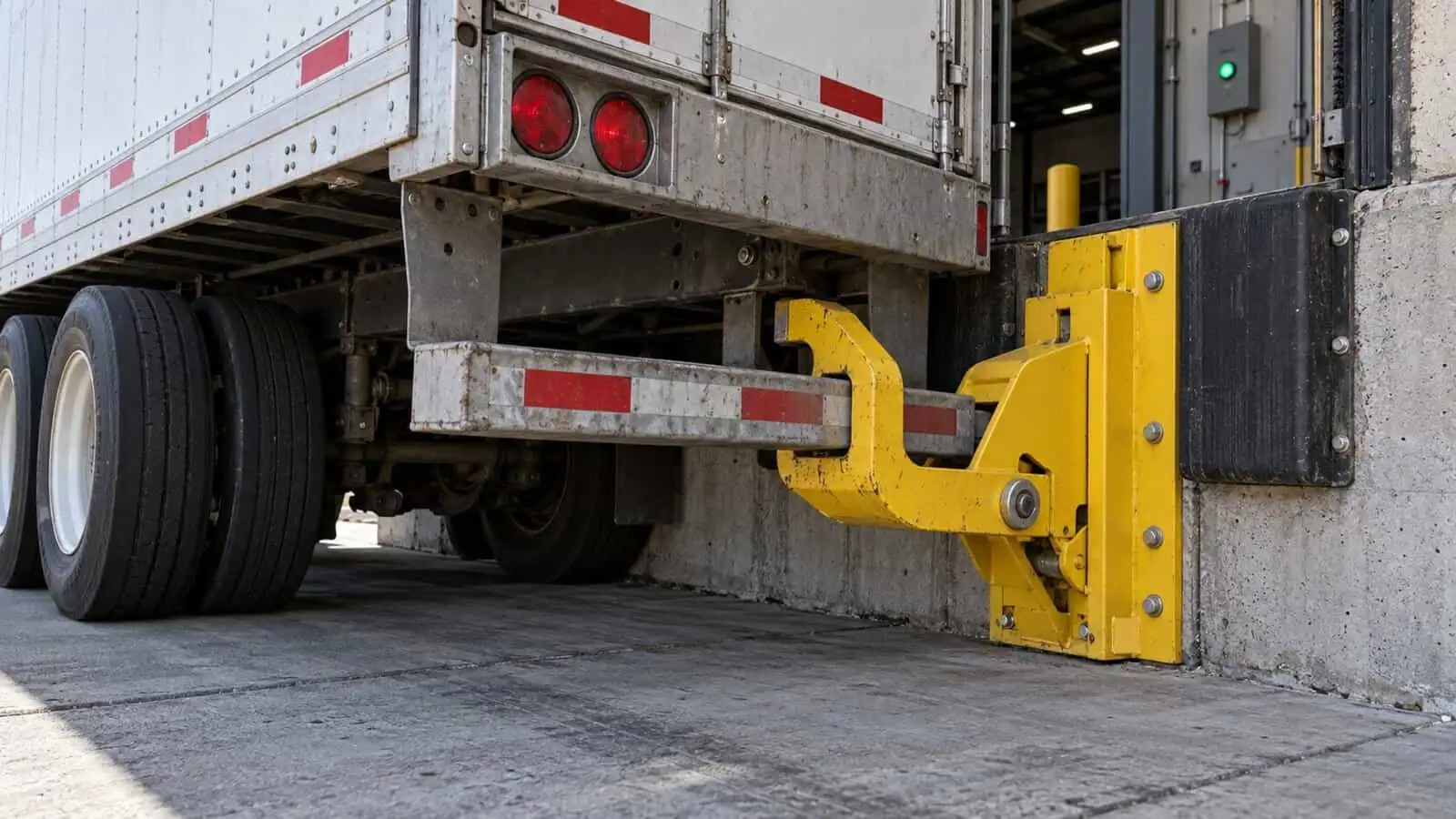
A truck must be stopped and secured at the dock before a forklift goes near it, because a truck that moves while the forklift is crossing the gap can drop the machine off the dock. Safe Work Australia states that trucks and trailers should be stopped and secured at the loading dock with the brakes set, and notes that jack stands may be needed to stop a trailer upending when the forklift drives onto it.
SafeWork NSW’s loading and unloading risk assessment lists the controls in more detail: dock locks, air-brake isolation interlock devices, barriers or stop signals, controls on access to the ignition keys and the cab, and a system that tells the driver when it is safe to leave. WorkSafe Victoria makes the same point from the other direction, telling sites to put controls in place so vehicles cannot leave the dock too soon.
Wheel chocks are the basic control, and vehicle restraints can replace or supplement them. Wikipedia describes a vehicle restraint as a strong metal hook mounted at the base of the dock that engages the trailer’s frame or bumper, operated manually, hydraulically or electrically. The best system is the one that cannot be skipped: a restraint linked to a signal light is harder to ignore than a chock left beside the door.
How do you protect the dock edge?
The dock edge needs a physical barrier wherever a forklift wheel could go over it, because a fall from a dock can be fatal. WorkSafe WA states that a dock edge is typically about 1.2 m above the ground, and that a forklift driven over an unprotected edge can kill or seriously injure the driver or others. It cites AS 2359.2, clause 5.12.2, which calls for physical barriers or other appropriate systems where a wheel may be driven over the edge.
There is no single specification. WorkSafe WA lists angle iron, engineered balustrades, removable bollards and a substantial barrier around a single-point loading bay as options, says protection height depends on the forklift’s wheel type and size, and leaves the final answer to the site’s risk assessment. WorkSafe Victoria’s guidance points the same way: fit raised edges and install physical barriers to stop forklifts driving off docks where reasonably practicable.
Which forklift suits loading dock work?
For most docks, a counterbalance forklift is the machine for truck work, because it carries the load out in front and can drive straight up to a truck tray without outrigger legs. Fuel follows the dock: gas and diesel suit open docks and yards, and electric suits enclosed docks where exhaust and noise matter. Buy A Fork carries counterbalance forklifts in both electric and gas.
If the site has low dock heights or no loading bay, a container mast forklift is the better fit. Its mast collapses low enough to drive inside a shipping container at ground level. Where a container is backed onto a dock at trailer height and worked from outside, a standard mast is usually enough, so container mast forklifts earn their cost on sites without a dock at trailer height.
For moving pallets off a truck deck and across to a staging area, an electric pallet jack does the job. It cannot stack, so it works alongside a forklift rather than replacing one. Electric pallet jacks are a common choice for docks that unload high volumes of standard pallets.
How should forklifts and people share a loading dock?
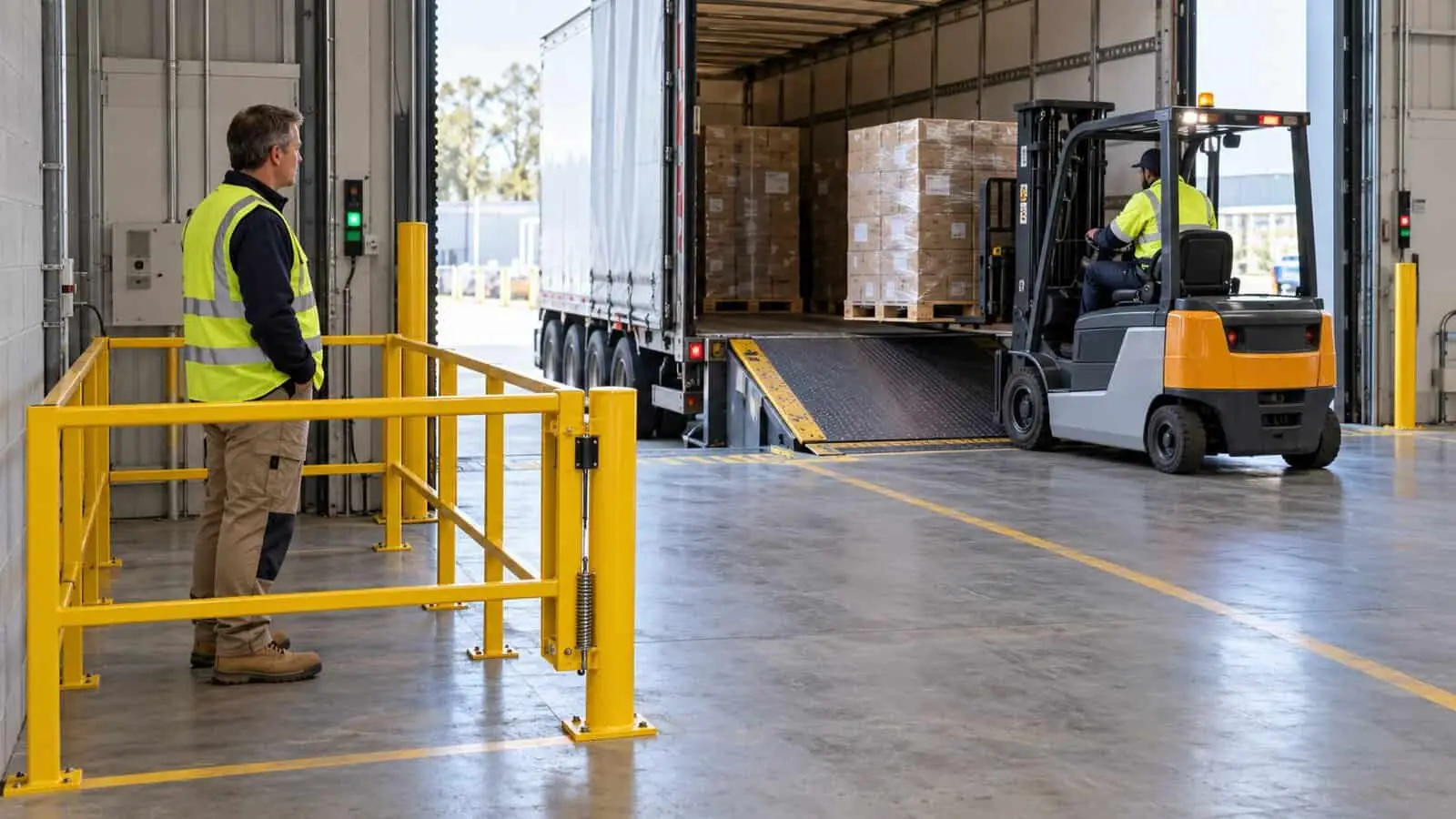
Forklifts and people should be kept apart at the dock, because Safe Work Australia notes that most forklift incidents involve pedestrians. The checks below follow the order the work happens, from the truck arriving to the truck leaving.
- Confirm the truck is correctly positioned before any forklift moves onto the dock.
- Secure the truck: brakes set, dock lock or restraint engaged, keys controlled.
- Move the driver into the driver safe zone, behind a sturdy barrier.
- Clear the exclusion zone, and let nobody enter without the operator’s approval.
- Check the leveller or yard ramp is in position and secured.
- Agree the communication method before loading starts, such as hand signals or two-way radios.
- Release the truck only when loading is finished and the forklift is clear.
These checks come from WorkSafe WA, Safe Work Australia and SafeWork NSW. SafeWork NSW’s loading and unloading guidance says loading should not begin until everyone is clear of the exclusion zone, and recommends signs, lights or alarms to show loading is in progress. Its guide for operators adds that delivery drivers should stay in their safety zone.
Every forklift operator at the dock needs a high risk work forklift licence, and Safe Work Australia states that training must be delivered through a Registered Training Organisation. Pedestrian-operated trucks such as walkie pallet jacks fall outside the forklift licence, but WorkSafe WA still requires their operators to be trained. Good forklift operator training is where dock rules become habits.
Frequently asked questions
1. What is a loading dock?
A loading dock is the part of a building where trucks are loaded and unloaded, usually a raised platform at truck deck height. It lets forklifts and pallet jacks move goods straight between the warehouse floor and the truck.
2. What is the difference between a loading dock and a loading bay?
A loading dock is a raised platform at truck deck height, while a loading bay is any space set aside for vehicles to load and unload. A bay can be a dock, a ground-level area or a marked section of road.
3. What are the safety standards for loading docks in Australia?
There is no single loading dock standard in Australia. Duties come from each state’s work health and safety law, and WorkSafe WA cites AS 2359.2, clause 5.12.2, which calls for physical barriers where a forklift wheel could go over a dock edge.
4. What is a dock leveller used for?
A dock leveller bridges the height difference and gap between the dock and the truck deck. It lets a forklift or pallet jack drive smoothly onto trucks of different deck heights, and its rated capacity must cover the loaded forklift.
5. What is the most common cause of injury at a loading dock?
Forklifts are central to the main dock hazards. WorkSafe WA highlights forklifts going over unprotected dock edges and collisions with pedestrians, and Safe Work Australia notes that most forklift incidents involve pedestrians.
6. Do you need a licence to use a forklift at a loading dock?
Yes. Operating a forklift at a loading dock requires a high risk work forklift licence, the same as anywhere else on site. Walkie pallet jacks fall outside the licence, but operators still need training.