
Toyota Forklift Model Numbers Explained: 8FG25, 32-8FG25, 62-8FD25 and 8FBE18 Decoded
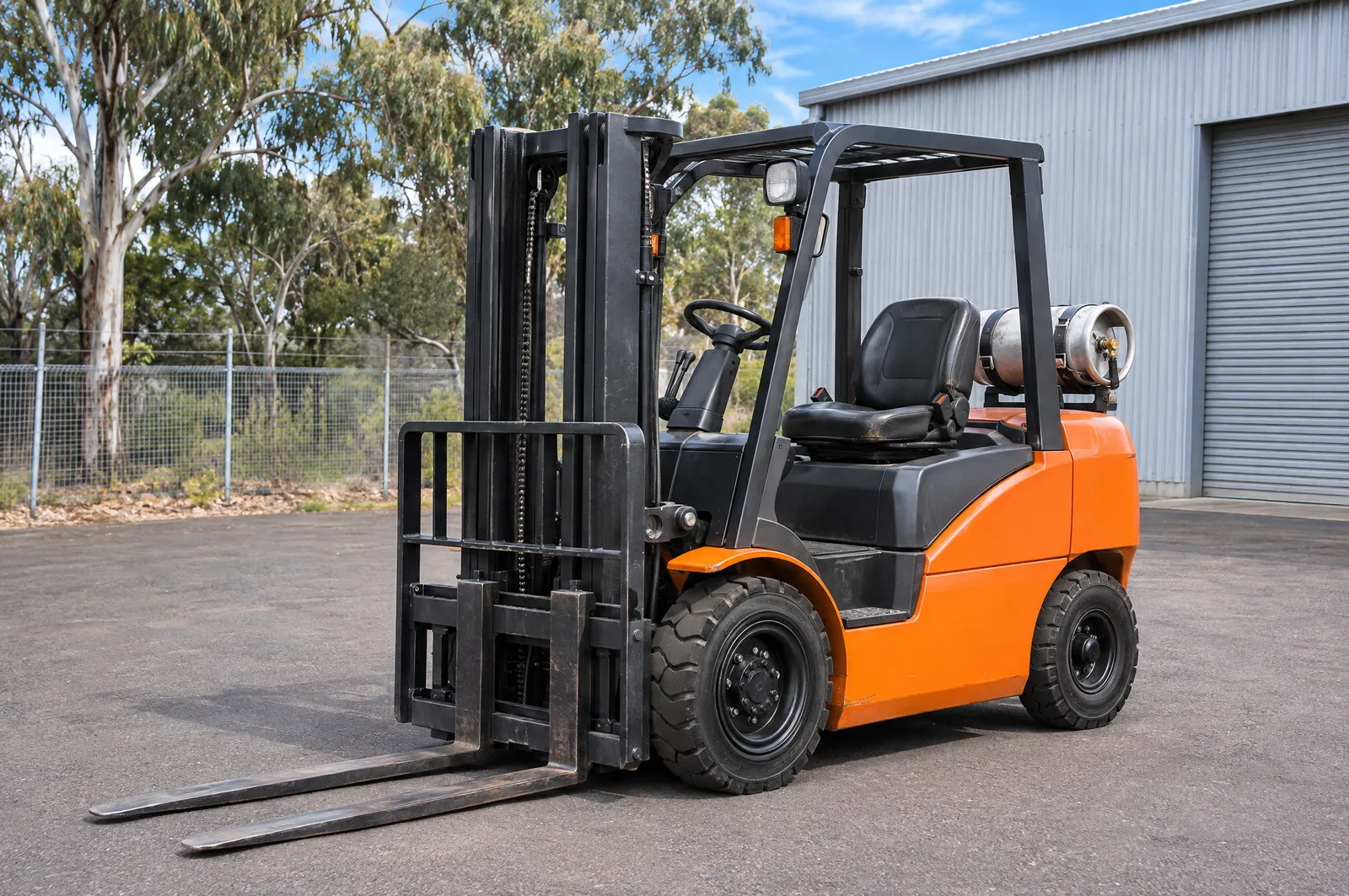
You're comparing two used Toyotas listed as a 32-8FG25 and a 62-8FD25, and the codes already tell you one runs on petrol or LPG and the other on diesel. Toyota forklift model numbers spell out the series, fuel, chassis and capacity class. In 8FG25, 8 is the 8 Series, F is forklift, G is petrol or LPG, and 25 is the 2.5 tonne class.
Toyota is the largest brand in Buy A Fork's mostly used stock, so these are codes you'll meet on many of the machines you compare.
How to Read a Toyota Forklift Model Number
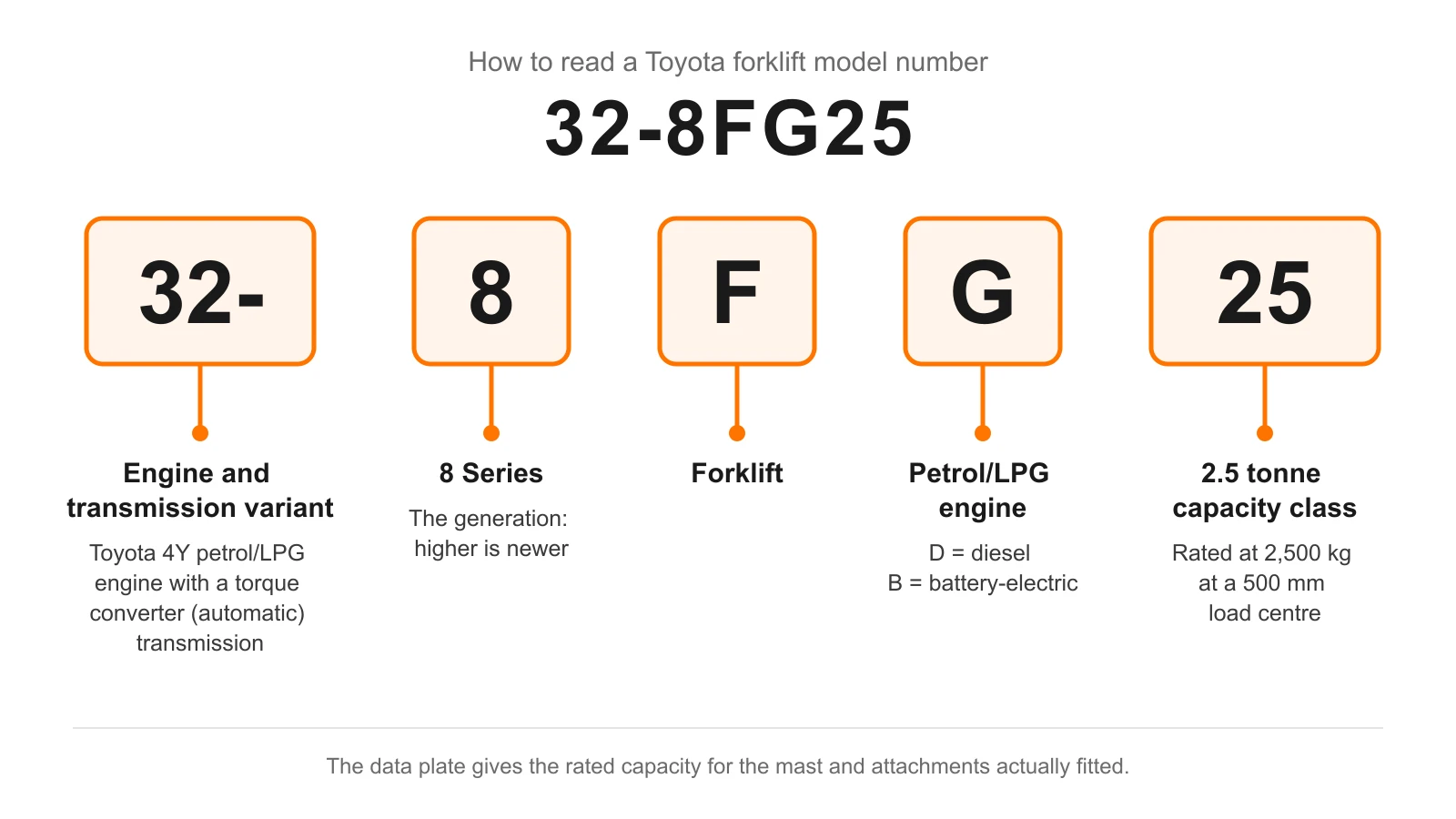
Read a Toyota counterbalance code from left to right: an optional prefix, the series number, F for forklift, the fuel letter, any chassis letters, then the capacity class. Here's 32-8FG25 broken down.
| Part of the Code | What It Means in 32-8FG25 |
|---|---|
| 32- | Engine and transmission variant: the Toyota 4Y petrol/LPG engine with a torque converter (automatic) transmission |
| 8 | 8 Series |
| F | Forklift |
| G | Petrol/LPG engine |
| 25 | 2.5 tonne capacity class, rated at 2,500 kg at a 500 mm load centre |
So a 32-8FG25 is an 8 Series, 2.5 tonne petrol/LPG forklift with an automatic-style transmission. The load centre is the distance from the fork face to the centre of the load, and Toyota rates each model's capacity at a set distance.
The same logic works on the other codes in the title. A 62-8FD25 is the 2.5 tonne diesel with Toyota's 1DZ-II engine and a torque converter. An 8FBE18 is a three-wheel battery-electric forklift in the 1.8 tonne class. Toyota's Australian 8FG/8FD catalogue uses the full prefixed codes itself, naming models such as the 32-8FG30 and 62-8FD25 in its engine notes.
What Each Letter and Number in the Code Means
Most Toyota counterbalance codes are built from the same parts, although not every model uses all of them.
| Code Part | Meaning | Example |
|---|---|---|
| Prefix before the hyphen | Engine and transmission variant on certain engine models | 32-8FG25, 62-8FD25 |
| First number | Series (generation); higher is newer | 8FG25, 7FBE18 |
| F | Forklift | 8FG25 |
| G | Petrol/LPG engine | 8FG25 |
| D | Diesel engine | 8FD25 |
| B | Battery-electric | 8FBE18 |
| E after B | Three-wheel electric | 8FBE18 |
| N | Part of the model-family name; its meaning varies by range | 8FBN25, 8FD50N |
| K | Compact version of certain models | 8FGK25 |
| J | The 3.5 tonne model in the 1.0 to 3.5 tonne range | 8FGJ35 |
| C | Cushion tyres (solid tyres pressed onto the wheel, for smooth floors) | 8FGCU25 |
| U | Built in the United States | 8FGU25 |
| Final digits | Capacity class | 8FG25 = 2,500 kg |
Electric warehouse equipment, larger forklifts and machines built for other markets can follow different rules. Toyota's US guide to its model numbers says the N on its electric rider trucks marks a narrow chassis, yet in Australia the same letter sits on the four-wheel 8FBN electric and the 5 tonne 8FD50N diesel. Treat a letter you can't place as part of the model name, and check the machine against its data plate.
Codes That Don't Follow the Pattern
Toyota Material Handling Australia also sells a 2.0 to 3.0 tonne FGZN/FDZN engine range whose codes don't start with a series number at all, and it notes the range isn't available in every location.
A prefix can also change meaning between ranges. On an 8 Series diesel, 70- marks the 2Z engine with a manual gearbox, but Toyota Australia lists the 70-8FBE as a 1.8 tonne three-wheel hydrogen fuel cell forklift.
Toyota BT and Raymond warehouse equipment, such as reach trucks, powered pallet trucks, order pickers and walkie stackers, uses its own naming systems. For those machines, go by the full model designation on the plate and the maker's documentation.
Why the Capacity Number Is Not Always Exact
The last two digits give the capacity class, not the exact rating. Toyota's Australian catalogue rates the 8FG18 at 1,750 kg at a 500 mm load centre, not 1,800 kg, even though it's sold as a 1.8 tonne forklift.
Imports add a second trap. Toyota's US site says the digits show base capacity in tons with one decimal place, so a US-built 8FGU25 is a 5,000 lb forklift, about 2,270 kg, rather than the 2,500 kg of an Australian 8FG25.
The code also only describes the truck as it left the factory. A taller mast, longer forks, a side-shift, a fork positioner or another attachment can reduce what it can safely lift, and the rating also falls as the load sits further out on the forks. That's what a forklift load capacity chart shows, and the forklift's data plate gives the rated capacity for the mast and attachments actually fitted. Go by the plate, not the model number.
What Do Toyota Forklift Prefixes Mean?
On Japanese-built 8 Series engine forklifts sold in Australia, the number before the hyphen identifies the engine and transmission combination.
| Prefix | Engine | Transmission |
|---|---|---|
| 30- | Toyota 4Y petrol/LPG, 2.2 L | Manual |
| 32- | Toyota 4Y petrol/LPG, 2.2 L | Torque converter (automatic) |
| 60- | Toyota 1DZ-II diesel, 2.5 L | Manual |
| 62- | Toyota 1DZ-II diesel, 2.5 L | Torque converter (automatic) |
| 70- | Toyota 2Z diesel, 3.5 L | Manual |
| 72- | Toyota 2Z diesel, 3.5 L | Torque converter (automatic) |
A torque converter transmission drives like an automatic, with no clutch pedal, while a manual has a clutch. So a 32-8FG18 is the 1.75 tonne 4Y petrol/LPG model with a torque converter, and a 60-8FD25 would be the 2.5 tonne diesel with a manual.
These prefixes are not universal across Toyota's range. Some older 7 Series forklifts carry an 02- prefix, and European-built models and forklifts supplied to other markets can use different systems. Confirm the engine and transmission on the forklift itself, using the full model number, the serial number and Toyota's documentation.
Toyota Forklift Series Explained: 7, 8 and 9
The first number is the generation, and a higher number is newer. The 5 and 6 Series are older generations now found only on the second-hand market.
7 Series: the earlier generation, still relevant on the Australian used market, with models such as the 7FG25 petrol/LPG forklift and the 7FBE18 three-wheel electric. Age alone doesn't decide condition. A well-maintained 7 Series with the right capacity and a documented service history can be a more practical buy than a newer machine with heavy wear or the wrong set-up.
8 Series: Toyota's current mainstream counterbalance range in Australia, covering engine models from 1.0 up to 8.0 tonnes (the 8FG and 8FD among them), the three-wheel 8FBE and the four-wheel 8FBN electrics. Toyota Material Handling Australia's announcement of the 8FBN range in 2012 claimed about five per cent more operating time than the equivalent 7FB models.
9 Series: in Australia, the 9 appears on the 6.0 to 8.0 tonne Traigo electric range (the 9FBM60T, 9FBM70T, 9FBM80T and 9FBH80T), which Toyota Material Handling Australia launched in 2020. A 9 on one range doesn't mean the rest of Toyota's line-up has moved past the 8 Series.
Popular Toyota Forklift Models and Specifications
These are Toyota's standard specifications for common codes; imported, modified or differently specified machines can differ, so the data plate always wins.
| Model | Rated Capacity (Load Centre) | Power | Wheels | Engine or Drive |
|---|---|---|---|---|
| 8FG18 | 1,750 kg (500 mm) | Petrol/LPG | 4 | Toyota 4Y, 2,237 cc |
| 8FG25 and 32-8FG25 | 2,500 kg (500 mm) | Petrol/LPG | 4 | Toyota 4Y, 2,237 cc |
| 8FD25 and 62-8FD25 | 2,500 kg (500 mm) | Diesel | 4 | Toyota 1DZ-II, 2,486 cc (2Z, 3,469 cc, on 72- models) |
| 8FD50N | 5,000 kg (600 mm) | Diesel | 4 | Toyota 14Z-II |
| 8FBE18 | 1,750 kg (500 mm) | Battery | 3 | AC electric motors |
| 8FBN25 | 2,500 kg (500 mm) | Battery | 4 | Electric |
| 7FBE18 | Check the data plate | Battery | 3 | Earlier-generation electric |
The 8FD50N is rated at a 600 mm load centre, not the 500 mm used on the smaller models, because it's built for bigger, deeper loads. Compare it with a 5 tonne forklift rated at 500 mm and you're not comparing like with like.
If you're choosing a model rather than decoding one, the Toyota counterbalance forklifts that suit warehouse work include the 8FBE15, 8FBN25 and 8FG30.
Toyota 8FG vs 8FD: What Is the Difference?
The 8FG and 8FD come in the same capacity steps on the same family of chassis; the difference is the engine. Toyota's catalogue lists them side by side from 1.0 to 3.5 tonnes.
The 8FG runs Toyota's 4Y petrol/LPG engine. The 8FD runs the 1DZ-II diesel, with the larger 2Z diesel also offered on the 2.0 tonne models and up. Both produce exhaust, so neither is chosen on fuel type alone.
LPG suits mixed indoor and outdoor work in well-ventilated areas, and diesel suits outdoor yards and heavier industrial sites. For enclosed warehouses, food handling and other sensitive indoor areas, an electric forklift is usually the better fit, because it produces no exhaust where it works.
Toyota 8FBE vs 8FBN: What Is the Difference?
Both are 8 Series battery-electric forklifts: the 8FBE has three wheels and the 8FBN has four. Toyota Australia lists the 8FBE from 1.0 to 2.0 tonnes and the 8FBN from 1.0 to 3.0 tonnes.
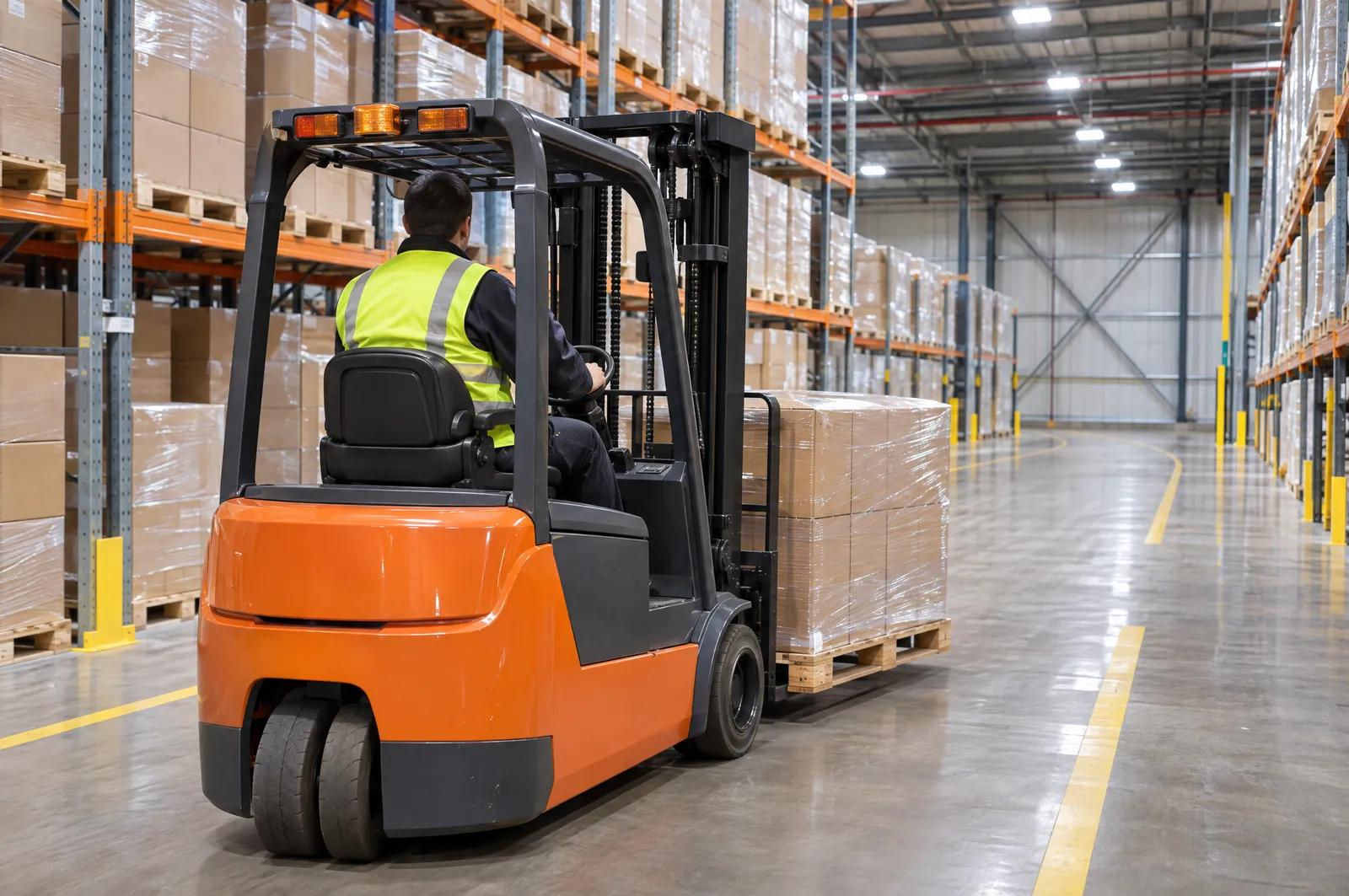
The three-wheel layout turns tighter, which suits narrow aisles and containers. Toyota's 8FBE product page lists a 1,980 mm headguard height for container and low-entrance access, lead-acid or lithium-ion batteries, and about 20% longer operating time than the 7FBE it replaced, measured on a 1.5 tonne truck with the same battery capacity.
The four-wheel 8FBN goes up to 3.0 tonnes and suits general warehouse and industrial handling where the extra capacity matters more than the tightest turn. Aisle width, load size, lift height and floor all decide which fits, and the trade-offs between three-wheel and four-wheel electric forklifts go beyond the turning circle.
When you weigh a used 7FBE18 against an 8FBE18, the series number is only one factor. Battery condition, hours, service records, mast height and overall condition usually say more about what you're buying.
Where to Find a Toyota Forklift Model and Serial Number
Both are on the forklift's data plate, usually in or near the operator's compartment, although the exact spot varies by model. Some forklifts also have the serial number stamped on the frame.
Toyota's guide to reading a forklift data plate says the plate also shows the capacity at each load centre, the maximum fork height, the attachments fitted and the truck's weight. That makes it the first thing to photograph when you're comparing listings.
Can a Toyota Forklift Serial Number Tell You the Year?
Not on its own. A Toyota serial number identifies one machine within its model range, and it isn't a date code you can decode with one universal formula. To confirm the year, give a Toyota dealer the full model and serial number, and check the original purchase documents and service history.
What to Check When Buying a Used Toyota Forklift
Decoding the model is the starting point; condition and fit decide whether the forklift is right for you.
- Confirm the full model number on the data plate, rather than relying on the listing title. An 8FG25 and an 8FD25 share a capacity class but need different fuel and servicing.
- Check the rated capacity against your heaviest load, at the load centre and lift height you need, with any attachment fitted. A forklift sold as a 2.5 tonne machine won't keep that rating at every height.
- Weigh the hours against the service history. A well-serviced truck with higher hours can be in better shape than a low-hours one that's been neglected, and it helps to know what counts as high hours on a used forklift before you compare prices.
- Inspect the mast, hydraulics, tyres, brakes, steering and forks, and on an electric, the battery and its charging history. A step-by-step used forklift inspection covers what to look for, and any serious defect should be assessed by a qualified forklift technician.
- Match the forklift to the job: door and overhead clearances, aisle width, ground conditions, indoor or outdoor work, and how you'll fuel or charge it.
Find the Right Toyota Forklift at Buy A Fork
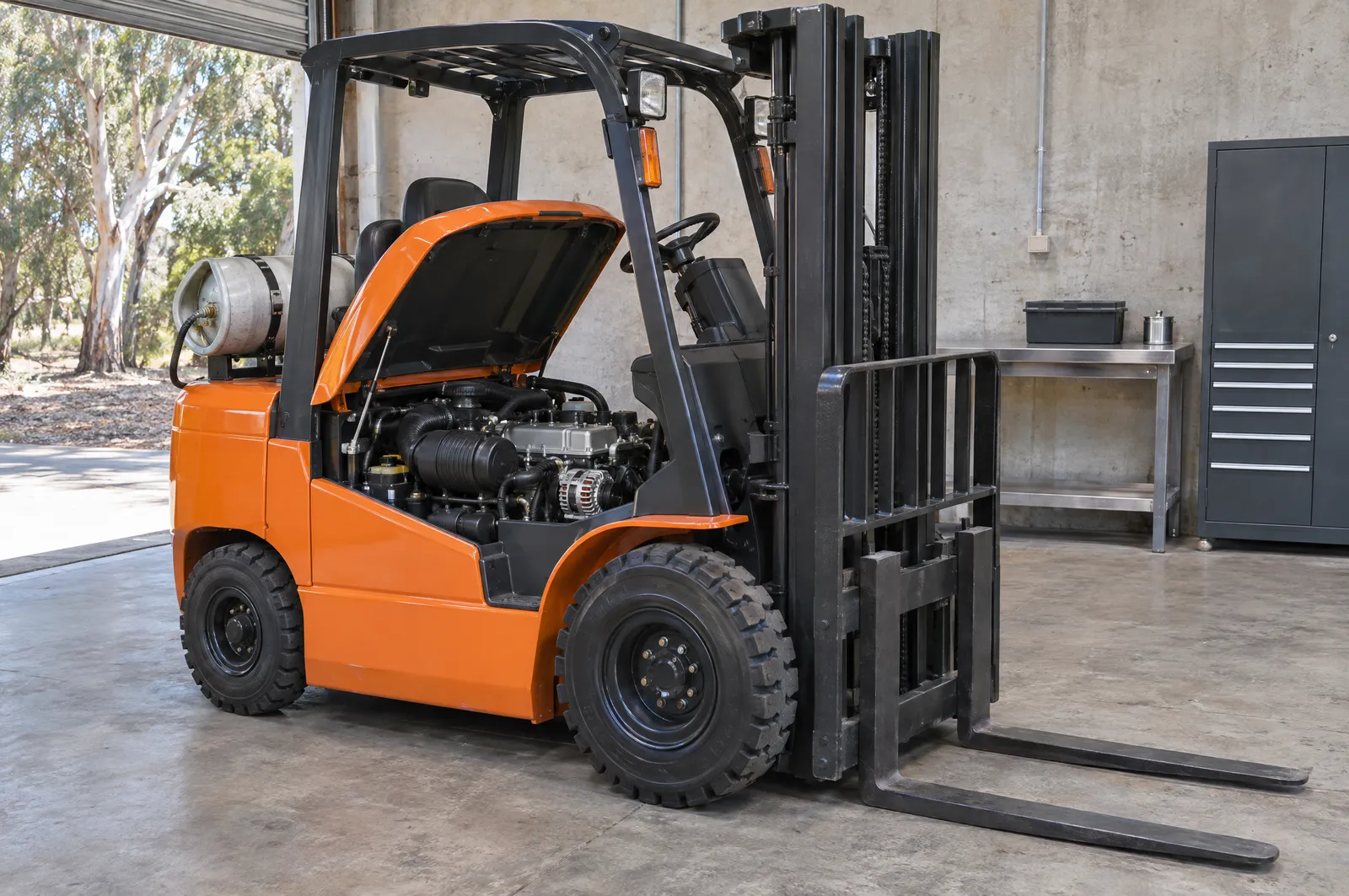
Buy A Fork's range of used Toyota forklifts covers LPG, diesel and electric models in different capacities and mast heights, with what's available depending on current stock. Extended warranty, trade-ins, finance and rent-to-own are all available, and local delivery is free within 10 km on selected forklifts bought at full price.
If you're trying to match a model code to your job, the team in Somerton can talk through capacity, mast and fuel type. Call 1300 057 880 with the code from the listing or the data plate.
Frequently Asked Questions
1. What Is a Toyota 8FGU25?
An 8 Series petrol/LPG forklift built in the United States. Toyota's US site says the 25 means 2.5 tons, or 5,000 lb (about 2,270 kg), and that a model without a C has pneumatic tyres. Check the data plate and parts compatibility before buying one that was imported.
2. What Engine Is in a Toyota 8FG25?
The Toyota 4Y petrol/LPG engine, at 2,237 cc. Toyota's Australian catalogue rates it at 40 kW at 2,400 rpm on the standard 1.0 to 3.5 tonne models.
3. What Lift Height Does a Toyota 8FG25 Have?
The model code doesn't tell you, because lift height depends on the mast fitted. Toyota lists its 1.0 to 3.5 tonne 8 Series range with lift heights of up to 7,000 mm, and the maximum fork height for a particular truck is on its data plate.
4. Who Builds Toyota Forklifts?
Toyota Industries Corporation, the Toyota group company named on Toyota's forklift catalogues. In Australia, new Toyota forklifts are sold and supported through Toyota Material Handling Australia.