
Forklift Hours Explained: What Counts as Low or High Hours on a Used Forklift
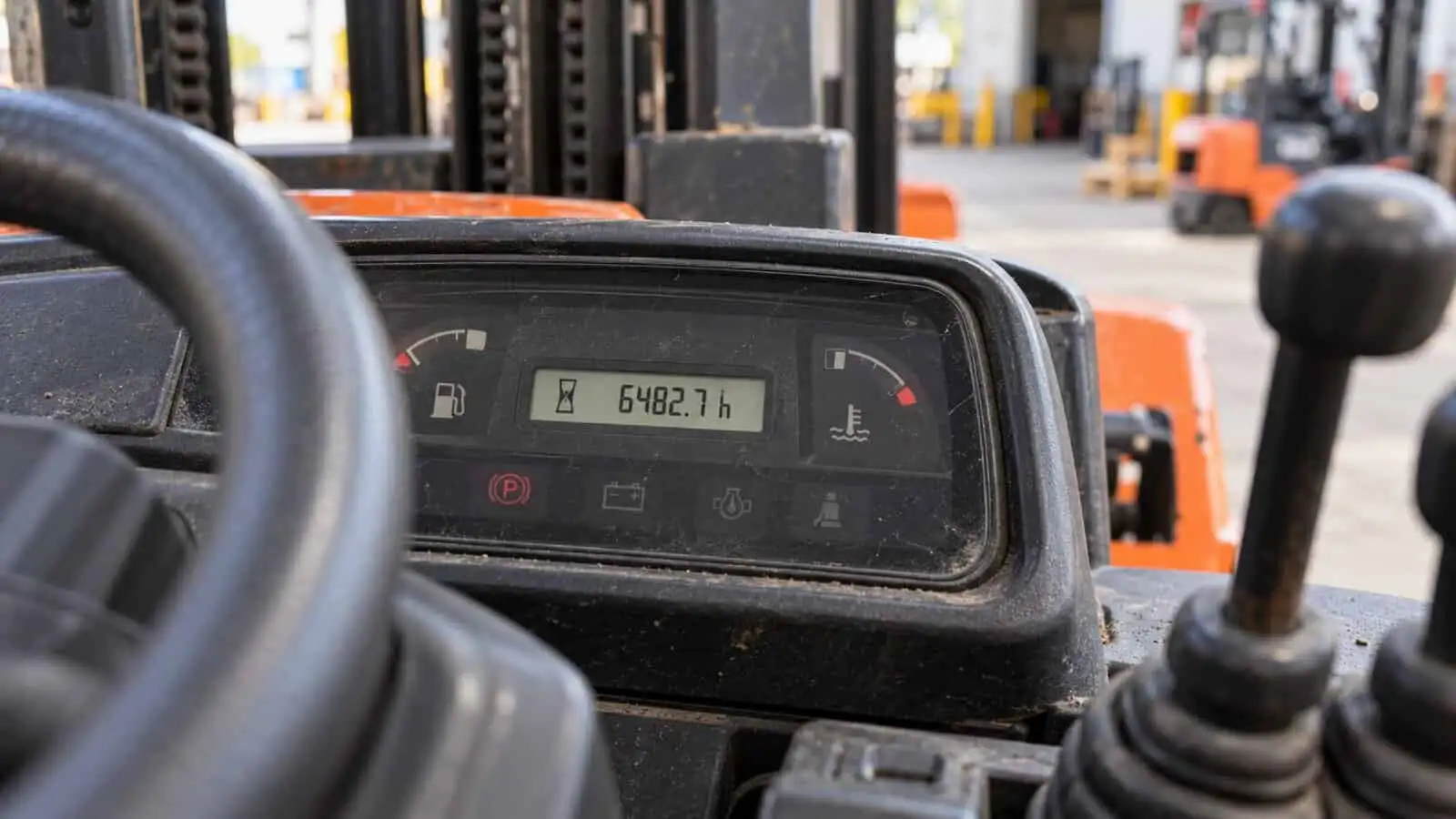
For an LPG or diesel counterbalance forklift, under 5,000 hours is generally considered low, 5,000 to 10,000 hours is average, 10,000 to 15,000 hours is high and anything over 15,000 hours is very high.
A forklift working one eight-hour shift, five days a week, records about 2,000 hours a year. At that rate, 10,000 hours represents roughly five years of full-time work
.Hours are a useful starting point, but they do not tell the whole story. A well-maintained forklift with 11,000 hours can be a better purchase than a neglected machine with 6,000 hours. Service history, operating conditions and the condition of the forks, chains, mast, tyres and battery give a more reliable picture of the work a forklift has left in it.
What Does a Forklift Hour Meter Record?
A forklift hour meter measures time, not distance. There is no industry standard for exactly which time it counts, so readings from different brands are not always directly comparable.
Depending on the make and model, the meter or dash display may record:
- Key-on hours: every hour the key is switched on, including time parked with the key left in. This is the least useful figure for judging wear.
- Operator-presence hours: time with an operator in the seat or on the platform, recorded by a seat or deadman switch. On electric forklifts, this is usually the better guide.
- Engine hours: the time the engine is running on LPG and diesel forklifts.
- Travel hours: the time the drive motor or transmission is working.
- Hydraulic or lift hours: the time the pump is lifting, tilting or running attachments.
Many modern forklifts store several of these counters, and a technician can read them from the dash menu or with a service tool. When comparing two forklifts, check which hours each listing quotes.
Older analogue meters often have only four digits and roll over to zero after 9,999 hours. An older forklift showing 2,300 hours may have actually completed 12,300.
How Many Hours Does a Forklift Do in a Year?
| How the forklift is used | Typical hours per year | Time to reach 10,000 hours |
| Light use, such as occasional loading in a small yard | Under 1,000 | More than 10 years |
| Medium use | 1,000 to 2,000 | 5 to 10 years |
| One full shift, five days a week | About 2,000 | About 5 years |
| Heavy use | 2,000 to 4,000 | 2.5 to 5 years |
| Two or three shifts | 4,000 to 6,000 | Under 2.5 years |
Dividing a forklift’s hours by its age shows how hard it has worked. A 2018 forklift with 4,000 hours has averaged about 500 hours a year, which is light use. The same 4,000 hours on a 2024 forklift suggests it has worked close to full-time.
Low, Average and High Hours on a Used Forklift
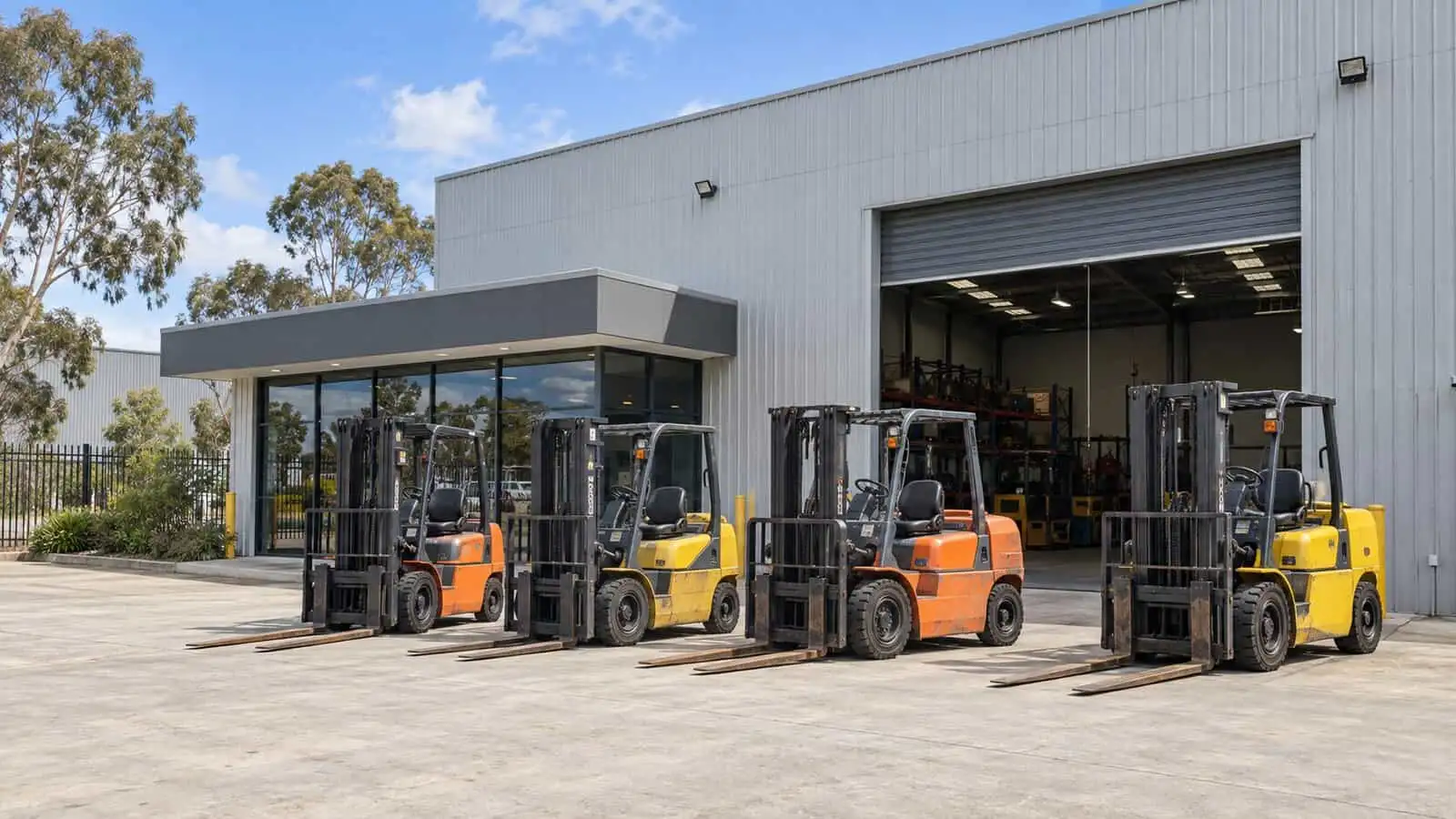
These bands apply to LPG and diesel counterbalance forklifts, the most common type on the used market.
| Hours | What it usually means | What to look at closely |
| Under 5,000 | Low. Less than about two and a half years of single-shift work. | Whether the meter is original, and signs the forklift sat idle or outdoors for long periods |
| 5,000 to 10,000 | Average. Plenty of working life left if it has been serviced regularly. | Service records, lift chain stretch, mast rollers, tyre wear and whether the wear matches the hours |
| 10,000 to 15,000 | High. Around the point where major components often need attention. | Engine, transmission and hydraulics, recent major repairs and complete service records |
| Over 15,000 | Very high. Can still be good value if major components have been rebuilt or replaced. | An independent inspection and the cost of likely repairs compared with the price |
There is no fixed point at which a forklift is worn out. Most fleets plan around 8,000 to 12,000 hours of economic life, and Toyota dealer Atlas Toyota puts the average at about 10,000 hours while noting that Toyota forklifts often exceed 20,000. Maintenance and operating conditions have more influence on how long a forklift lasts than the hour reading alone.
Hours on Electric Forklifts
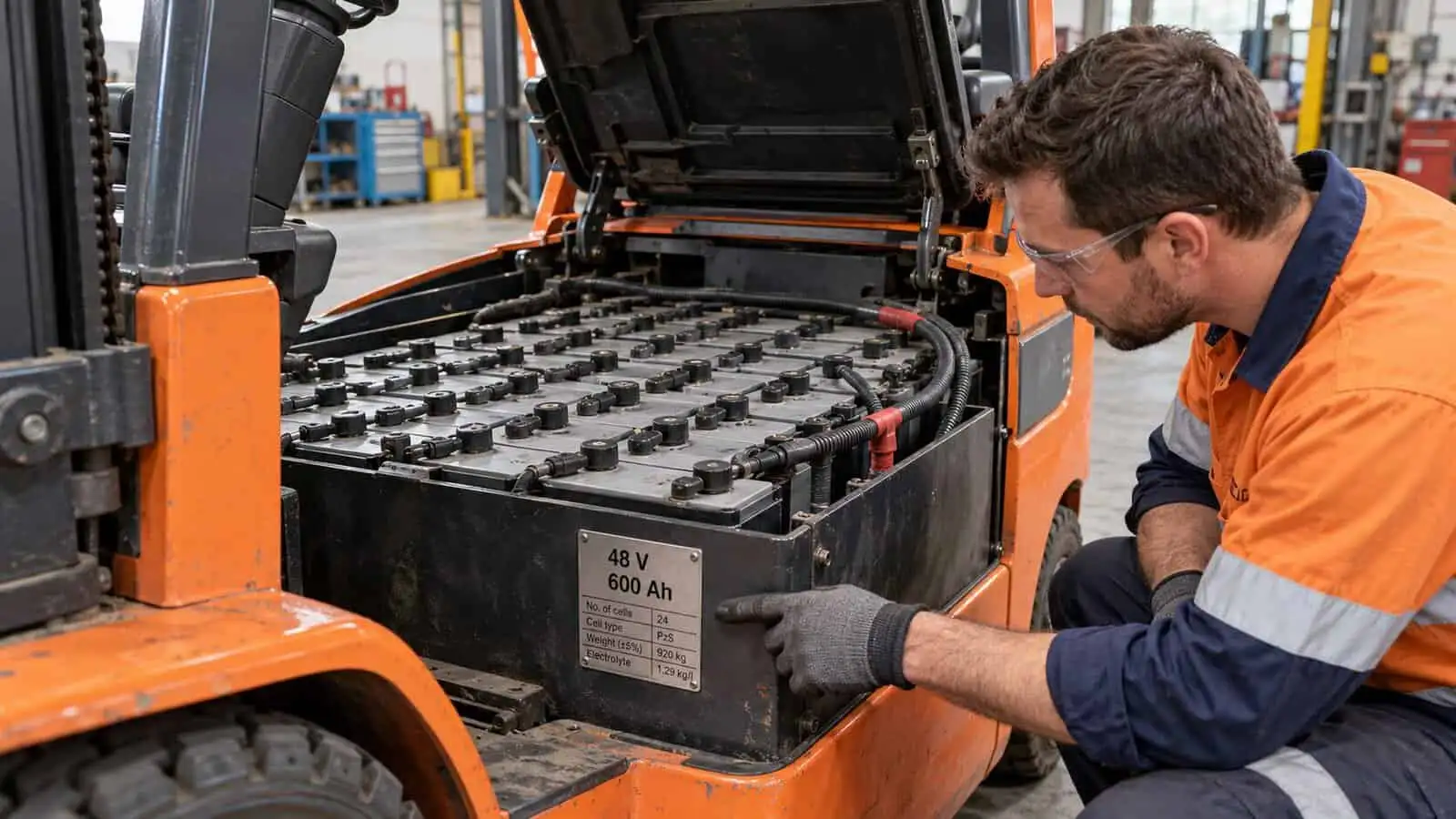
Electric forklifts have no engine, gearbox oil or exhaust system, so the truck itself often copes well with high hours. The traction battery is a different matter.
- A lead-acid traction battery typically lasts around 1,500 charge cycles, or about five years.
- On a used electric forklift, battery age and condition can matter more than the hour reading.
- Ask when the battery was manufactured or last replaced, and whether it has had a capacity test.
- Use operator-presence hours where available, because key-on hours over-read when the key is left on.
Hours on Walkie Stackers, Pallet Jacks and Reach Trucks
Warehouse equipment works in short bursts, so low readings are common and a few hundred hours on a walkie stacker is not unusual. These machines are best judged on the condition of the battery, the drive unit and the forks and mast.
Why Hours Alone Can Be Misleading
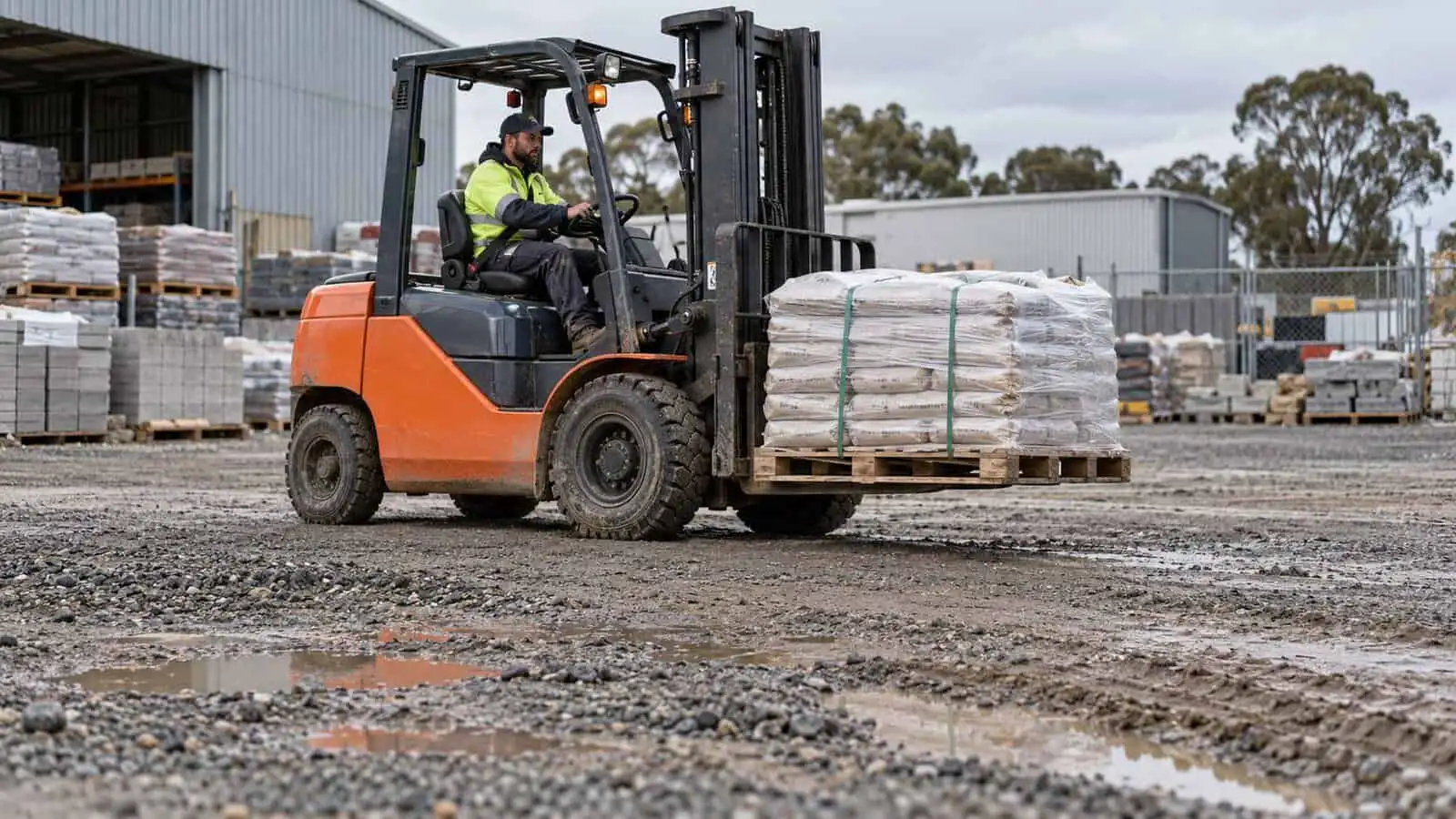
- Operating conditions. Container work, rough yards, cold stores and corrosive sites such as fertiliser and chemical plants wear a forklift faster than a clean warehouse floor. A 9,000-hour yard forklift can be more worn than a 9,000-hour warehouse forklift.
- Service history. Regular servicing at the manufacturer’s intervals matters more than the number on the meter. A 12,000-hour forklift with full records can be a safer purchase than a 6,000-hour machine with none.
- Low hours are not always good. A forklift that sat outdoors for years can have perished seals, corroded wiring and flat-spotted tyres despite a low reading.
- Hours are not kilometres. Published conversions put one hour at anywhere from about 25 to 40 km of travel, but they are rough estimates. Forklifts spend much of their time lifting, idling and manoeuvring, which is why the meter counts time.
Signs the Hour Reading May Not Be Accurate
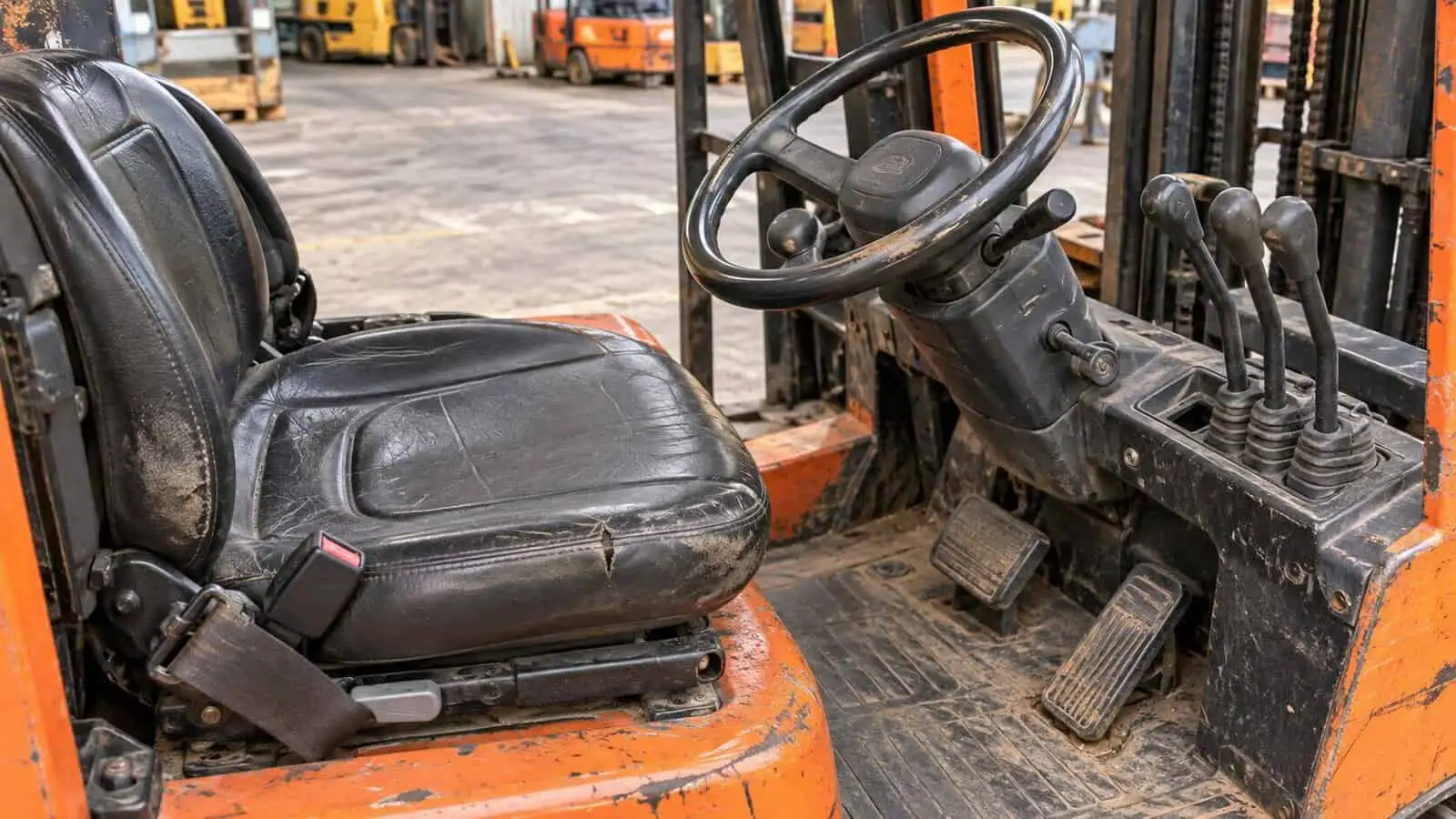
- The wear does not match the reading. A low-hour forklift with a worn-through seat, smooth pedal rubbers, a polished steering wheel, worn fork heels or stretched chains has probably done more work than the meter shows.
- The meter or display has been replaced. On some forklifts, the hour count resets when the controller or display is changed and a technician has to re-enter the hours. Ask for the repair paperwork.
- Service records do not line up. Service stickers and invoices usually record the hours at each visit. An invoice from two years ago showing more hours than the meter shows today needs an explanation.
- The forklift has a four-digit meter. Older analogue meters roll over after 9,999 hours.
What to Check on a Used Forklift Regardless of Hours
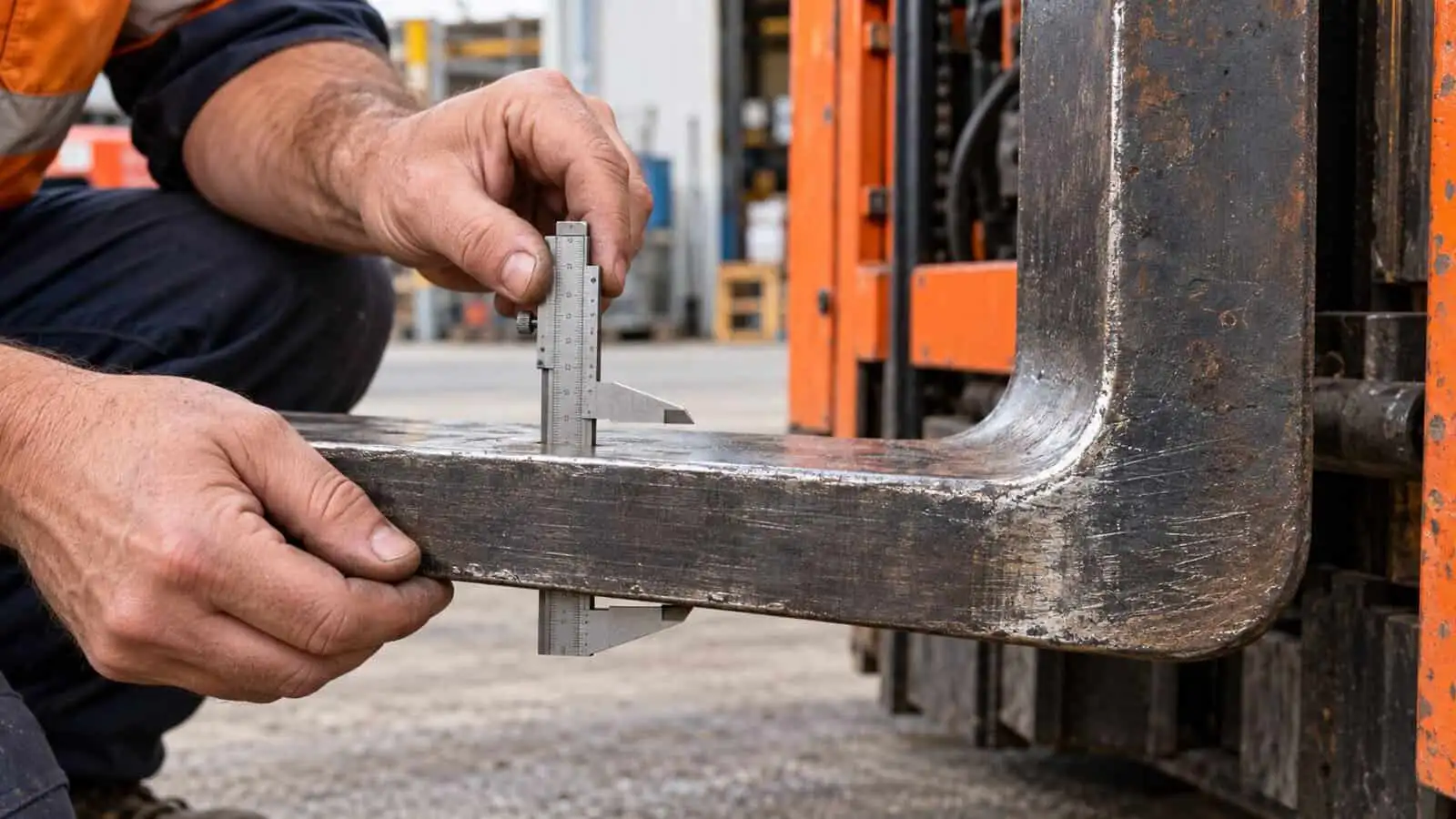
The condition of key wear components says more about remaining life than the hour reading. A thorough used forklift inspection should cover each of these.
| Component | What to look for | Common limit |
| Forks | Wear at the heel, where the blade meets the shank | Remove from service once the heel has worn by 10% of its original thickness. A 10% loss reduces capacity by about 20%. |
| Lift chains | Stretch or elongation | Replace at 3% elongation. Some manufacturers set the limit at 2%. |
| Mast and rollers | Uneven roller wear, play and scoring in the channels | No single figure. Have a technician assess it. |
| Tyres | Wear line, chunking and flat spots | Replace at the wear line moulded into the tyre |
| Engine on LPG or diesel models | Hard starting, smoke, oil leaks and blow-by | Have a technician assess it |
| Battery on electric models | Age, cell condition and run time on a full charge | Around 1,500 cycles, or about five years, for lead-acid batteries |
Once a forklift is in service, WorkSafe Victoria expects a pre-start inspection at the beginning of every shift and whenever the operator changes, maintenance by a competent technician, and records of inspections, defects and repairs. Those records also support the forklift’s value when it is sold or traded in.
Find a Used Forklift at Buy A Fork
Hours are one of several things to weigh up when comparing used forklifts, alongside capacity, mast height, fuel type and service history.
Buy A Fork sells used forklifts across a range of capacities and fuel types from its showroom in Somerton, Melbourne. Used forklifts include a free 6-month basic service and a warranty (T&Cs apply).
Browse the current range of used forklifts for sale or call 1300 057 880 to talk through a forklift’s hours, history and suitability for your work.
Frequently Asked Questions About Forklift Hours
1. Is 10,000 Hours a Lot for a Forklift?
For an LPG or diesel counterbalance forklift, 10,000 hours is high. It is roughly five years of single-shift work and close to the economic planning point many fleets use. It is not the end of the forklift’s life, as well-maintained forklifts often run well past 15,000 hours. Check the service history and major components, and expect the price to reflect the hours.
2. Is 5,000 Hours a Lot on a Used Forklift?
No. 5,000 hours is low to average, equal to about two and a half years of single-shift work.
3. How Many Hours Does a Forklift Last?
Most fleets plan around 8,000 to 12,000 hours of economic life, but well-maintained forklifts commonly reach 15,000 to 20,000 hours. Operating conditions and servicing make the biggest difference.
4. Can a Forklift Hour Meter Be Wound Back?
Hour meters can be replaced, can reset when a controller or display is changed, and older four-digit meters roll over after 9,999 hours. To check a reading, compare it with the forklift’s condition and the hours recorded in its service history.
5. What Matters More, Hours or Age?
Both matter. Divide the hours by the forklift’s age to see how hard it has worked each year, then check its condition and history. A young forklift with very high hours has probably worked multiple shifts, while an old forklift with very low hours may have sat idle for long periods.
6. How Many Kilometres Is One Forklift Hour?
There is no reliable conversion. Published estimates range from about 25 to 40 km per hour of operation, but forklifts spend much of their time lifting and manoeuvring rather than travelling.