
How Much Does a Forklift Cost in Australia? New & Used Price Guide
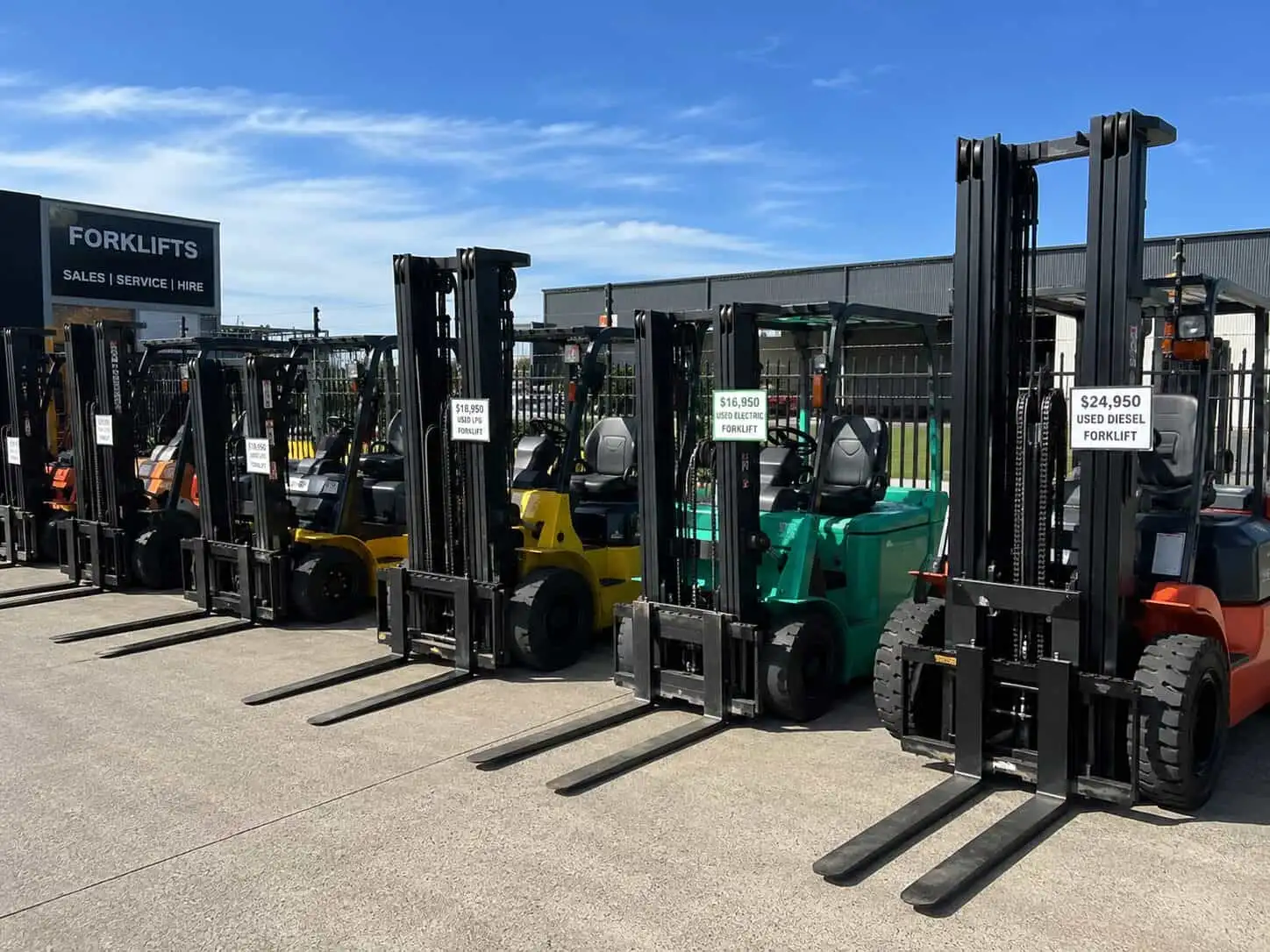
How much does a forklift cost in Australia? A used forklift sells for roughly $6,900 to $40,000, with most machines landing between $13,000 and $23,000, while a brand new diesel counterbalance starts at $47,990. Every figure in this guide comes from Buy A Fork’s live stock on 31 August 2026, checked across the electric, gas and diesel categories. Prices move as stock sells, so treat them as indicative and confirm the current figure on the listing.
This guide breaks the numbers down by fuel, type and lifting capacity, shows the actual machines behind each band, and explains what moves the price up or down, so you can set a budget before you enquire.
Forklift price snapshot (August 2026)
The bands below are the observed price ranges across Buy A Fork’s current catalogue. They exclude delivery beyond 10km, finance costs and any operator licensing.
| Type and condition | Indicative price (AUD) |
|---|---|
| Used electric pallet jack | From about $2,750 |
| Used walkie (pedestrian) stacker | About $6,900 |
| Used electric counterbalance | About $9,900 to $20,900 |
| Used LPG or gas counterbalance | About $12,000 to $32,900 |
| Used diesel counterbalance | About $14,900 to $39,900 |
| Used electric reach truck | About $16,900 to $22,900 |
| Used order picker | About $19,990 |
| Brand new diesel counterbalance | From about $47,990 |
How much does a forklift cost in Australia?
A forklift costs from about $2,750 for a used electric pallet jack to $47,990 for a brand new diesel counterbalance, and most used ride-on machines sit between $13,000 and $23,000. Six things set the figure: condition, forklift type, fuel, lifting capacity, age and hours, and service history.
Used machines make up the bulk of the market because they deliver far more capability per dollar. A well-kept unit with the right capacity, a sound mast and a healthy battery or engine handles the same daily work as a new one for a fraction of the outlay.
New forklifts cost more upfront and come with a full manufacturer warranty and zero hours, which suits operations running hard across multiple shifts. For an exact figure, set your specifications and request a quote against current stock.
Real forklift prices: actual machines and what they cost
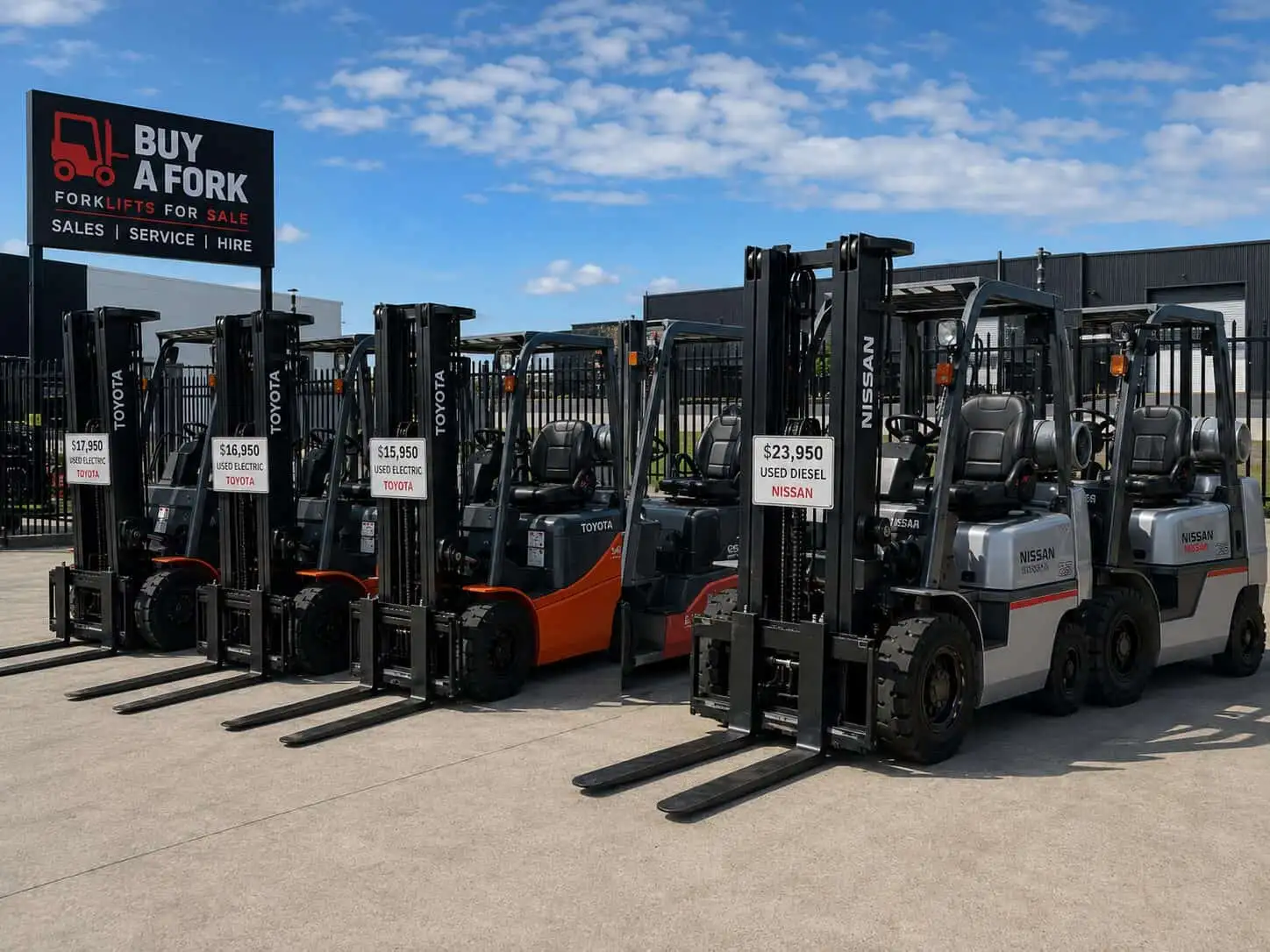
These are machines listed on Buy A Fork on 31 August 2026. They show what real stock costs rather than a generic market average. Availability changes daily, so check the listing before you budget against any single unit.
| Machine (year) | Type | Capacity | Fuel | Price |
|---|---|---|---|---|
| Toyota BT Walkie Stacker (2017) | Pedestrian stacker | 1.2t | Electric | $6,888 |
| Raymond Container Entry Stand Up (2014) | Counterbalance | 1.8t | Electric | $9,888 |
| Hyster Container Mast | Counterbalance | 2.5t | Gas | $11,990 |
| Jungheinrich Electric Container Mast (2018) | Counterbalance | 1.8t | Electric | $12,888 |
| Clarke GTS LPG (2016) | Counterbalance | 2.5t | Gas or LPG | $13,888 |
| Mitsubishi FD15N | Counterbalance | 1.5t | Diesel | $14,888 |
| Nissan DX 20 | Counterbalance | 2.0t | Diesel | $17,888 |
| Toyota Container Mast Gas (2019) | Counterbalance | 2.5t | Gas | $19,888 |
| Raymond 540-OPC30TT (2017) | Order picker | See data plate | Electric | $19,990 |
| Toyota BT Electric Reach Truck (2018) | Reach truck | 1.6t | Electric | $22,888 |
| Toyota Container Mast Gas (2020) | Counterbalance | 3.5t | Gas | $23,888 |
| Toyota 8FD4ON (2015) | Counterbalance | See data plate | Diesel | $29,888 |
| Toyota, 4m lift with side shift and fork positioner (2017) | Counterbalance | 4.5t | Diesel | $32,888 |
| Toyota 8FD50N | Counterbalance | See data plate | Diesel | $39,888 |
| Hangcha 4WD, 4.5m triplex mast, brand new | Counterbalance | See spec sheet | Diesel | $47,990 |
Every used machine includes a free six-month basic service, a minimum six-month warranty with extended options available, a free pallet jack and free local delivery within 10km. That package is worth counting against the sticker price when you compare dealers. The current full forklift range carries live pricing on every unit.
Why a bigger forklift is not always the dearer one
Price tracks type and complexity at least as closely as it tracks tonnage, which surprises most first-time buyers. A 1.6 tonne electric reach truck on the current list sells for $22,888, while a 3.0 tonne gas counterbalance sells for $19,888. The smaller machine costs more.
The reason is what the machine is built to do. Reach trucks, order pickers and container mast units carry taller multi-stage masts, tighter steering geometry and more hydraulics, and they are built for high-bay and narrow-aisle work where a standard counterbalance cannot operate. You pay for lift height, aisle performance and mast engineering, not for raw lifting capacity alone.
The practical consequence is that you should price by the job, not by the tonnage. If your pallets are heavy but your racking is low, a larger counterbalance is often the cheaper answer. If your racking is high and your aisles are tight, a reach truck will cost more than its capacity suggests, and it will be the only machine that does the work.
Forklift price by fuel type
Fuel sets both the purchase price and the running cost, so it is worth settling early. The bands below come from current stock.
| Fuel | Indicative used price | Best suited to |
|---|---|---|
| Electric | About $9,900 to $20,900 | Indoor work, lowest running cost, no exhaust |
| Gas or LPG | About $12,000 to $32,900 | Mixed indoor and outdoor use, quick refuelling |
| Diesel | About $14,900 to $39,900 | Heavy outdoor lifting and rough ground |
Electric forklifts have the lowest running cost and produce no exhaust, which makes them the default for enclosed warehouses and food-grade sites. Gas and LPG machines refuel in minutes and move between indoor and outdoor work without ventilation planning, which is why they dominate the current used catalogue. Diesel forklifts carry the highest pulling power and handle uneven yards, and they also reach the highest used prices because the heavy-capacity machines are almost all diesel. The full trade-off is set out in the comparison of electric versus diesel forklifts.
Forklift price by lifting capacity
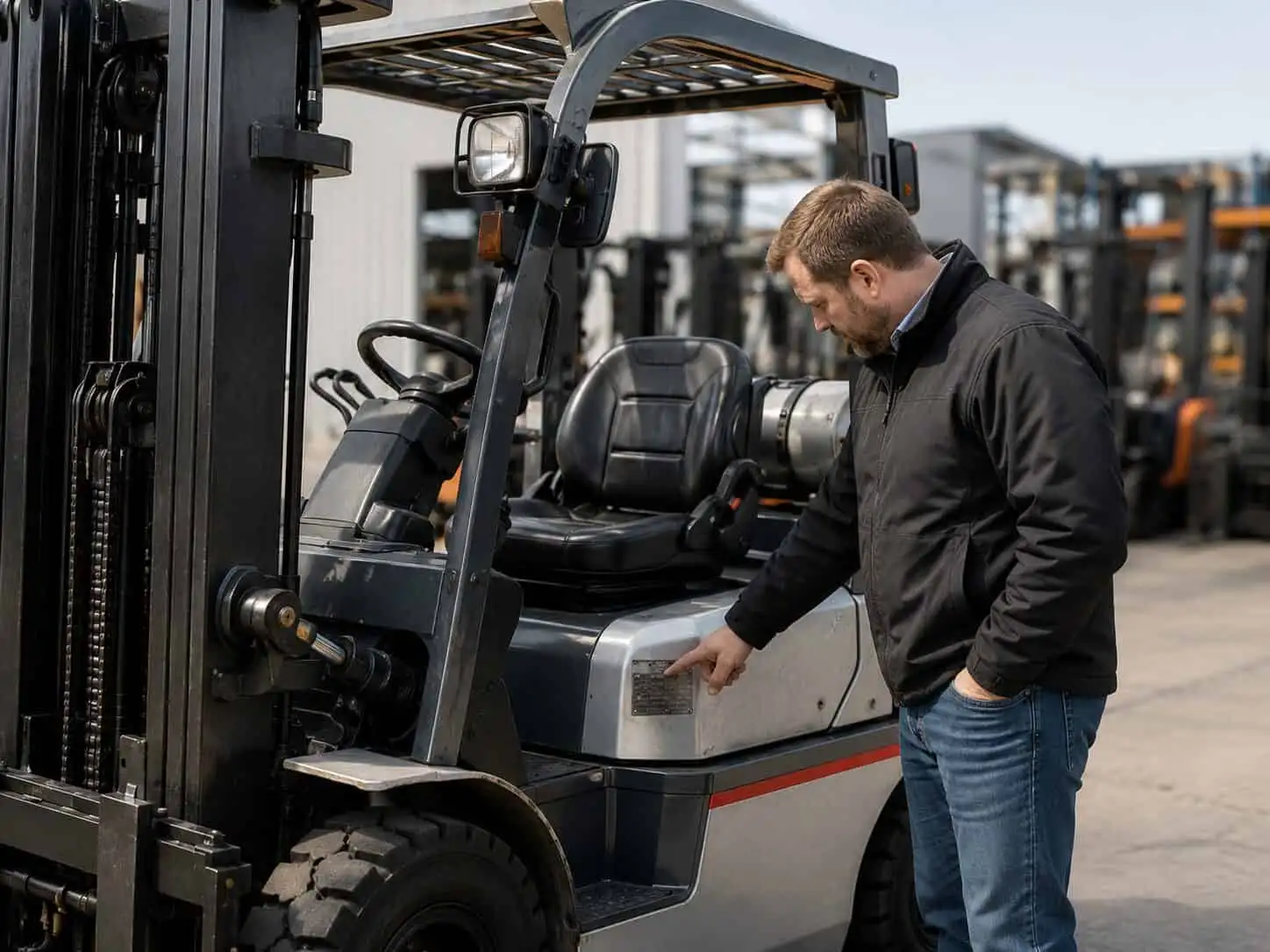
The table below shows observed price ranges by rated capacity, using only machines whose listing states the capacity. Ranges overlap because fuel, mast type and age all move the figure within a capacity class.
| Rated capacity | Indicative used price |
|---|---|
| 1.2t | About $6,900 |
| 1.5t | About $14,900 to $16,900 |
| 1.6t (reach truck) | About $21,900 to $22,900 |
| 1.8t | About $9,900 to $20,900 |
| 2.0t | About $16,900 to $20,900 |
| 2.5t | About $12,000 to $21,900 |
| 3.0t | About $19,900 |
| 3.5t | About $20,900 to $23,900 |
| 4.5t | About $32,900 |
| 5.0t | About $39,900 |
Size capacity to your heaviest real load with a margin, not to your average load, because rated capacity falls as the mast rises and as attachments move the load centre forward. Buying under your requirement is the most expensive mistake in this list, and it is not recoverable without replacing the machine.
New versus used forklift prices
Used forklifts give you more machine for the money. New forklifts give you zero hours and a full warranty. For most small and medium operations a quality used machine is the better value, because the saving is large and a well-serviced unit handles daily warehouse work reliably.
| Factor | New forklift | Used forklift |
|---|---|---|
| Upfront price | From about $47,990 | From about $6,900 |
| Warranty | Full manufacturer warranty | Minimum three months at Buy A Fork, extended options available |
| Hours and wear | Zero hours | Varies, so check the service history |
| Best for | Heavy, all-day or multi-shift use | Light to medium daily use and tighter budgets |
| Depreciation | Steeper in the first years | Already absorbed by the first owner |
One caveat on the new figure. The $47,990 unit is a single 4WD diesel machine with a 4.5m triplex mast, and 4WD adds cost that a standard warehouse forklift does not carry. Treat it as the current entry point for new stock at this dealer rather than a floor price for new forklifts generally. If you are weighing condition against budget, the used electric forklift buying guide covers what to inspect before you commit.
What moves a forklift’s price
Two machines of the same tonnage can be priced thousands apart. These are the factors that explain the gap.
- Hours more than year. A low-hour older unit often beats a high-hour newer one. Ask for the hour meter reading, not just the model year.
- Mast type. Container masts, triple-stage masts and free-lift masts add cost over a standard two-stage mast, and they change what the machine can do under a low door or inside a shipping container.
- Brand. Toyota, Crown and Linde hold resale value and sit at the higher end of their class. Budget brands land lower.
- Battery condition on electric machines. A tired battery is the single biggest hidden cost on a used electric forklift, which is covered in the guide to forklift battery replacement cost.
- Service history and compliance. A documented service record and a current compliance plate raise the price and lower your risk at the same time.
- Attachments. Side shift, fork positioners, non-marking tyres and rotators all add to the figure. The 4.5 tonne Toyota above carries side shift and a fork positioner, which is part of why it prices above the 4.0 tonne units.
Beyond the purchase price: what a forklift costs to run
The purchase price is one part of the total cost of ownership. Budget for the ongoing items before you decide between fuel types.
- Fuel or charging. Electric is cheapest to run, gas sits in the middle, diesel costs the most to fuel.
- Servicing and parts. Plan for scheduled servicing from the start. Buy A Fork includes a free six-month basic service on its used machines.
- Tyres and wear items. Replacement intervals depend on hours and floor condition.
- Battery replacement. A real future cost on electric machines and the main reason to inspect battery health before buying.
- Operator licensing. A separate cost from the machine, covered below.
Licensing and compliance in Australia
Forklifts used in an Australian workplace fall under the model Work Health and Safety laws published by Safe Work Australia and administered by state regulators such as WorkSafe Victoria. Powered industrial trucks are covered by Australian Standard AS 2359.
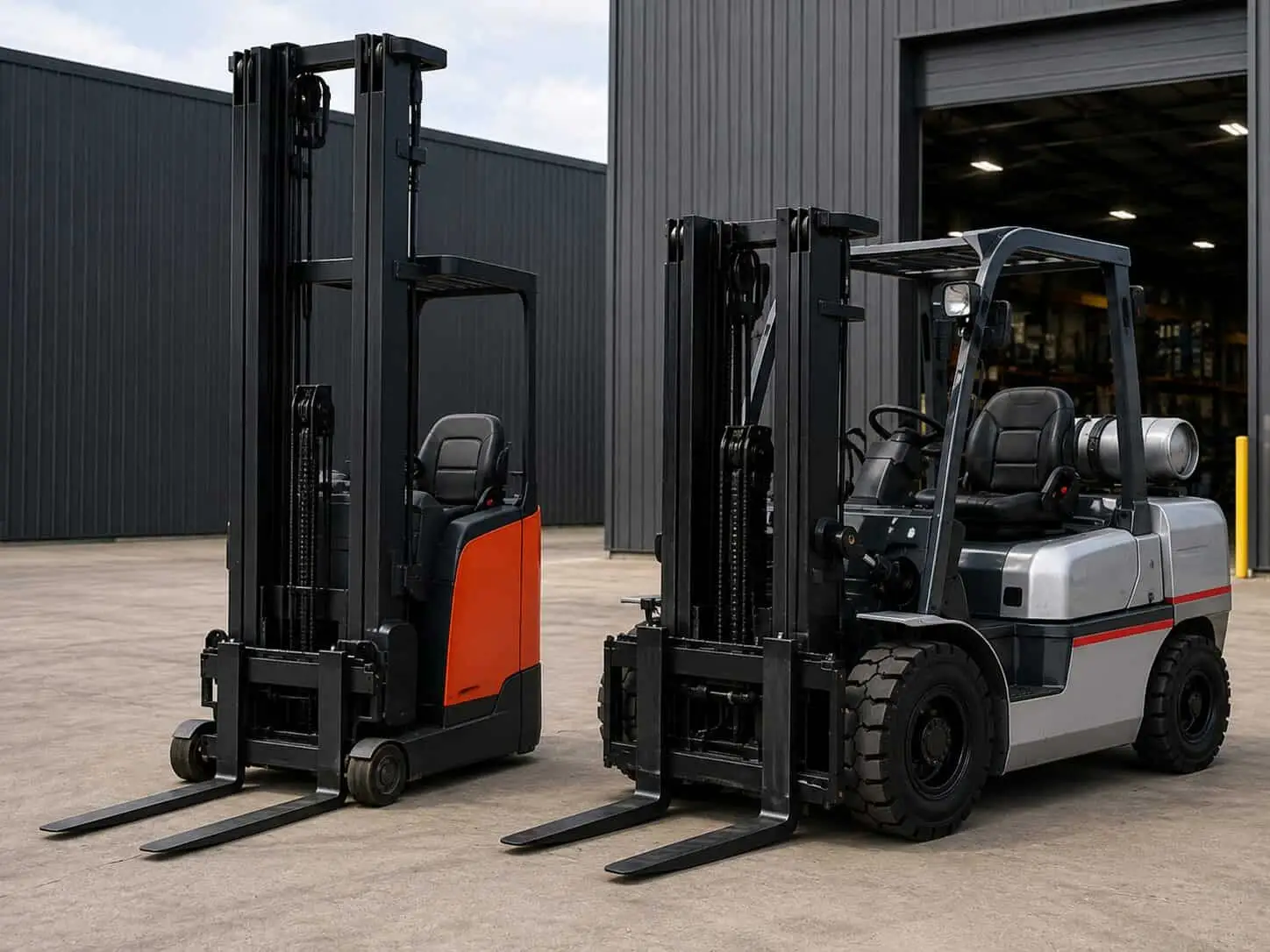
The licence class depends on the machine, not the tonnage. This catches buyers out, and it matters if you are pricing an order picker or a reach truck alongside a counterbalance.
- LF, forklift truck. Required for a ride-on counterbalance forklift, which covers most of the machines in the price tables above.
- LO, order picking forklift truck. Required where the operator is raised with the load, which covers order pickers such as the Raymond unit listed earlier. An LF licence does not cover an LO machine.
- Pedestrian machines. Walkie stackers and electric pallet jacks are treated differently again, so confirm the current requirement with your state regulator before you put someone on one.
Check the data and compliance plate on any used machine, and confirm the overhead guard, seatbelt, horn, lights and brakes all work. Ask for the service history and any recent safety inspection. The guide to getting a forklift licence in Australia sets out the pathway and what training involves.
Buy, finance or hire?
Buying outright gives the lowest total cost over time, finance spreads the cost while you keep the machine, and hire suits short projects where you do not want the asset on your books.
Buy A Fork offers finance through Ausloans, and the forklift leasing guide compares leasing against buying in detail. Short-term hire is handled by the Rent A Fork sister site, because Buy A Fork is sales-led.
How to get the best price on a forklift
- Buy quality used. A well-serviced used machine gives the most capability per dollar.
- Right-size the specifications. Match capacity, lift height, mast type and fuel to the actual work so you neither overpay nor under-buy.
- Price by the job, not the tonnage. Confirm whether you need reach and aisle performance or raw capacity, because they price very differently.
- Trade in old equipment. A trade-in lowers the net cost, and Buy A Fork accepts them.
- Use finance to spread the cost. Finance keeps working capital free while the machine earns.
- Count the included value. Factor in the free service, warranty, free pallet jack and free local delivery within 10km.
Get a forklift price for your operation
Tell us your capacity, lift height, aisle width, fuel preference and budget, and we will match you to new and used stock that fits. View the full forklift range and the current best sellers, or contact the Buy A Fork team for a quote, finance or a trade-in.
Frequently asked questions about forklift prices
1. How much does a forklift cost in Australia?
A used forklift costs from about $6,900 for a pedestrian stacker to about $40,000 for a 5.0 tonne diesel, with most used machines between $13,000 and $23,000. A brand new diesel counterbalance starts at $47,990. The figure depends on type, fuel, capacity, age and condition. All prices are from Buy A Fork stock on 31 August 2026.
2. How much is a brand new forklift?
The current entry point for a new forklift at Buy A Fork is $47,990 for a 4WD diesel counterbalance with a 4.5m triplex mast. New machines cost more than used but carry a full manufacturer warranty and zero hours. A standard two-wheel-drive warehouse machine prices differently, so request a quote for the specification you actually need.
3. How much does a used Toyota forklift cost?
A used Toyota at Buy A Fork ranges from about $6,900 for a BT walkie stacker to about $39,900 for a 5.0 tonne diesel counterbalance. Toyota holds resale value well, so it typically sits at the higher end of its capacity class. The Toyota range carries current pricing.
4. What is the cheapest type of forklift?
An electric pallet jack is the cheapest powered option, from about $2,750, followed by a pedestrian walkie stacker at about $6,900. Among ride-on machines, used electric and gas counterbalance forklifts start around $9,900 to $12,000. Match the type to the work, because a low price does not help if the machine cannot reach your racking.
5. Why are forklifts so expensive?
Forklifts are expensive because they lift tonnes safely, thousands of times a day, using heavy masts, hydraulics, drivetrains and safety systems built to an Australian Standard. Capacity, mast type, fuel, attachments and compliance all add to the cost. Buying used is the main way to get that engineering for less.
6. How many hours is too many on a used forklift?
There is no single cut-off, because hours matter alongside service history, application and fuel type. A machine with a complete service record and light duty can outlast a lower-hour unit that was run hard. Ask for the hour meter reading and the service history together, and treat either one on its own as incomplete.