
No Loading Dock? The Right Forklift for Unloading Trucks: Curtain-Siders, Flatbeds and Trailers
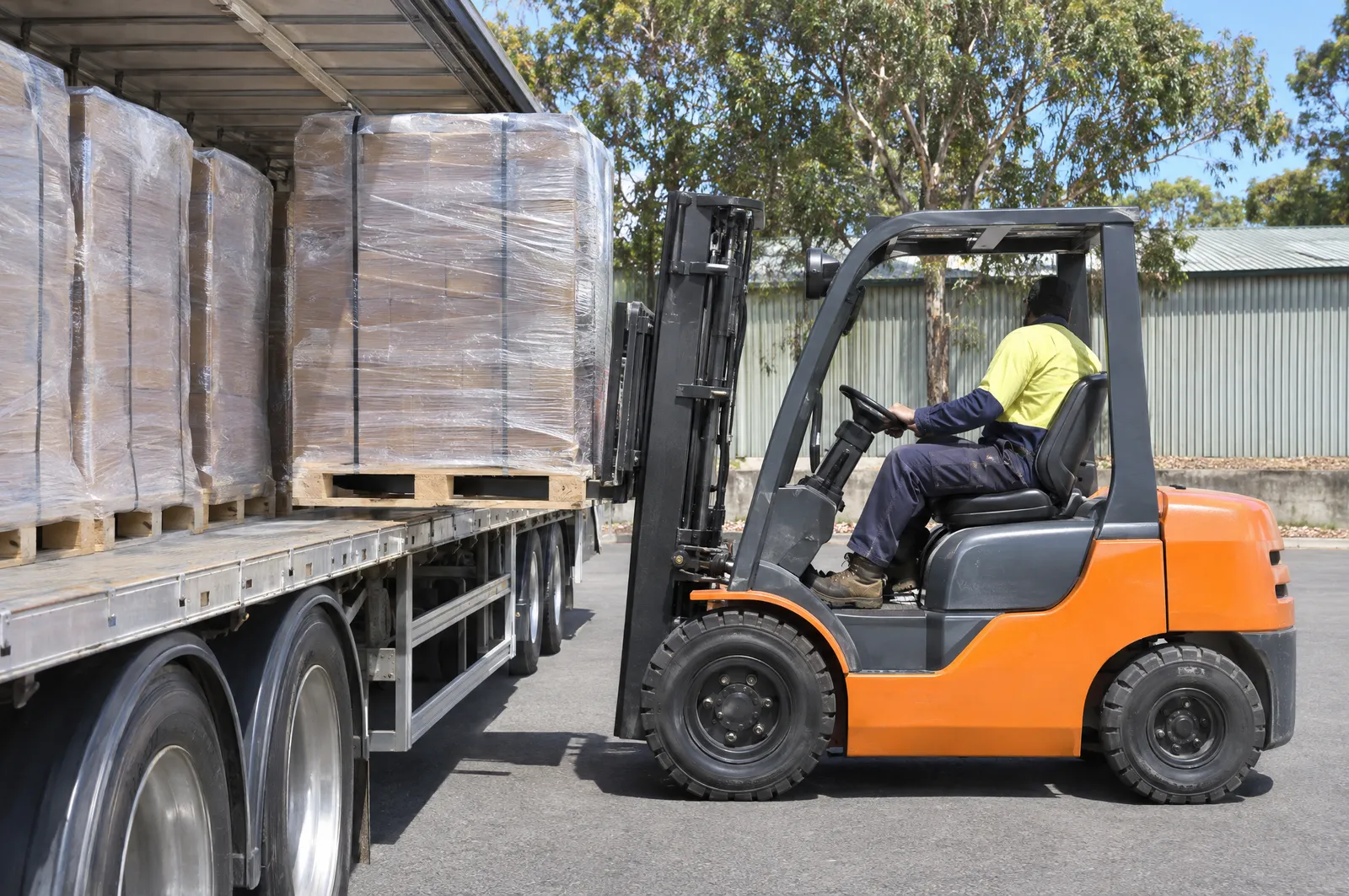
The truck backs into your yard, the curtains slide back, and there's no dock: every pallet comes off the side, from the ground. For that unloading job you want a counterbalance forklift rated for your heaviest pallet at its real load centre, forks that suit the pallets, side shift, yard tyres and LPG or diesel power. Then plan where the driver and everyone else stands.
Unloading a truck with a forklift from the ground is a different job from dock work, where a loading dock, leveller or yard ramp lets the forklift drive straight onto the deck. Buy A Fork sells mostly used forklifts and services all makes and models, so the checks below apply to any truck you're offered.
Unloading a Truck With a Forklift From the Ground: What Changes
From the ground, the forklift works side-on to the deck and lifts each pallet off it, instead of driving onto it. That changes what you need from the machine, and it changes where people can safely stand.
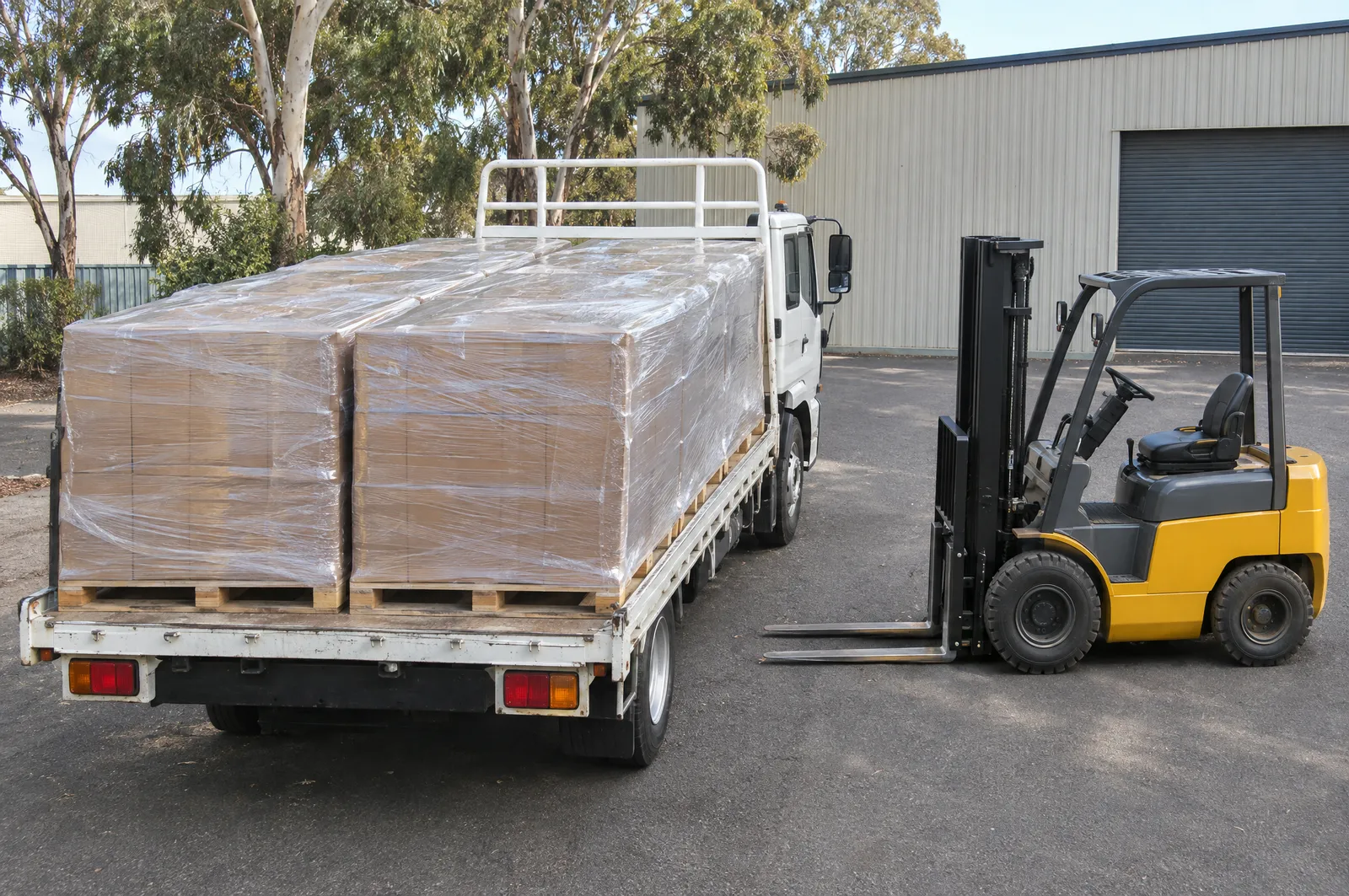
Truck width sets the layout. The National Heavy Vehicle Regulator's width limit for a heavy vehicle is 2.5 metres, with 2.55 metres allowed only for some new trucks with extra safety features. An Australian standard pallet is 1,165 mm square, so a deck carries two pallets side by side, about 2,330 mm across.
From one side, the near pallet sits on the forks normally. The far pallet is out of reach. Unload each side from its own side, which means you need clear, firm ground along both sides of the truck.
Reaching across is where things go wrong. WorkSafe Queensland's alert on a serious unloading incident, from a semi-trailer in a workplace carpark, lists the forklift pushing the load off the far side of the trailer among the risks.
Capacity: Rate the Forklift at the Load Centre You'll Actually Use
Choose the capacity for your heaviest pallet at its real load centre, not from the headline tonnage. The load centre is the distance from the face of the forks to the centre of the load's weight.
WorkSafe Victoria's guidance on forklift attachments says forklifts over one tonne in Australia are typically rated at a 600 mm load centre, which suits a standard 1,200 mm by 1,200 mm pallet. It also warns that capacity can be significantly reduced when attachments are fitted or the fork arms are changed for a greater load centre.
A 1,165 mm pallet sitting fully on the forks, with its weight spread evenly, has its centre about 583 mm out, inside that 600 mm. A pallet picked up on the fork tips, or a load that's heavier at the far end, moves the centre further out and the safe capacity down. Read the figure for that load centre off the forklift's information plate rather than assuming the rated capacity.
Fork Length: Long Enough for the Pallet, Not for the Far Side
Match the forks to the depth of your pallets, and don't buy longer forks or extensions just to reach the far side of the deck. The right forklift tyne length suits the deepest load you routinely carry; forks that run past the pallet can strike whatever sits behind it.
Fork extensions, often called slippers, slide over the forks to carry deeper loads. They push the load centre out, so the forklift lifts less. Treat them as an attachment: WorkSafe Victoria says an attachment must be listed on the forklift's information plate with its rated capacity, and if it isn't on the plate, it must not be used.
Long lengths such as steel, aluminium or timber are a separate problem. WorkSafe Queensland's alert involved packs of aluminium lengths, and it tells businesses to fit the forklift with lifting attachments suitable for the load being unloaded and to make sure workers know the weight of the stock.
Side Shift and Fork Positioners
Side shift lets the operator line up with a pallet without shuffling the forklift back and forth beside the deck. It moves the forks a short way left or right on the carriage. A fork positioner moves the forks apart or together hydraulically, which helps when pallet widths vary from truck to truck.
Both are attachments, so both can reduce capacity. WorkSafe Victoria says the information plate needs to show the forklift's rated capacity with specific attachments, and the supplier amends the plate, or adds a supplementary one, when an attachment is fitted. On a used forklift with side shift, check that the plate lists it. Use the side shift to line up, never to slide a pallet across the deck.
Tyres for Yard Work
Use pneumatic tyres for rough or uneven yards, solid pneumatic tyres where the truck moves between yard and floor, and leave cushion tyres for smooth indoor floors. Toyota's guide to forklift tyre types puts it this way:
| Tyre Type | Built For | Trade-Off |
|---|---|---|
| Air pneumatic | Outdoor work on uneven ground, gravel and rough pavement, with better traction and shock absorption | Can puncture |
| Solid pneumatic | Mixed indoor and outdoor work, where durability matters | A harder ride than air tyres on rough ground |
| Cushion (press-on) | Smooth warehouse floors and tight turning | Not built for rough outdoor surfaces |
Air-filled tyres have deep tread patterns for grip on rough outdoor surfaces, and pneumatic forklift tyres also come in solid form, which trades some ride comfort for durability. If the ground is unsealed gravel, grass or broken concrete, a rough terrain forklift may suit better than a standard counterbalance truck.
Weather changes the yard too. WorkSafe Victoria's guidance on forklift hazards and risk controls notes that outdoors, rain, strong wind and other weather change the surface and the visibility.
LPG or Diesel for an Outdoor Yard?
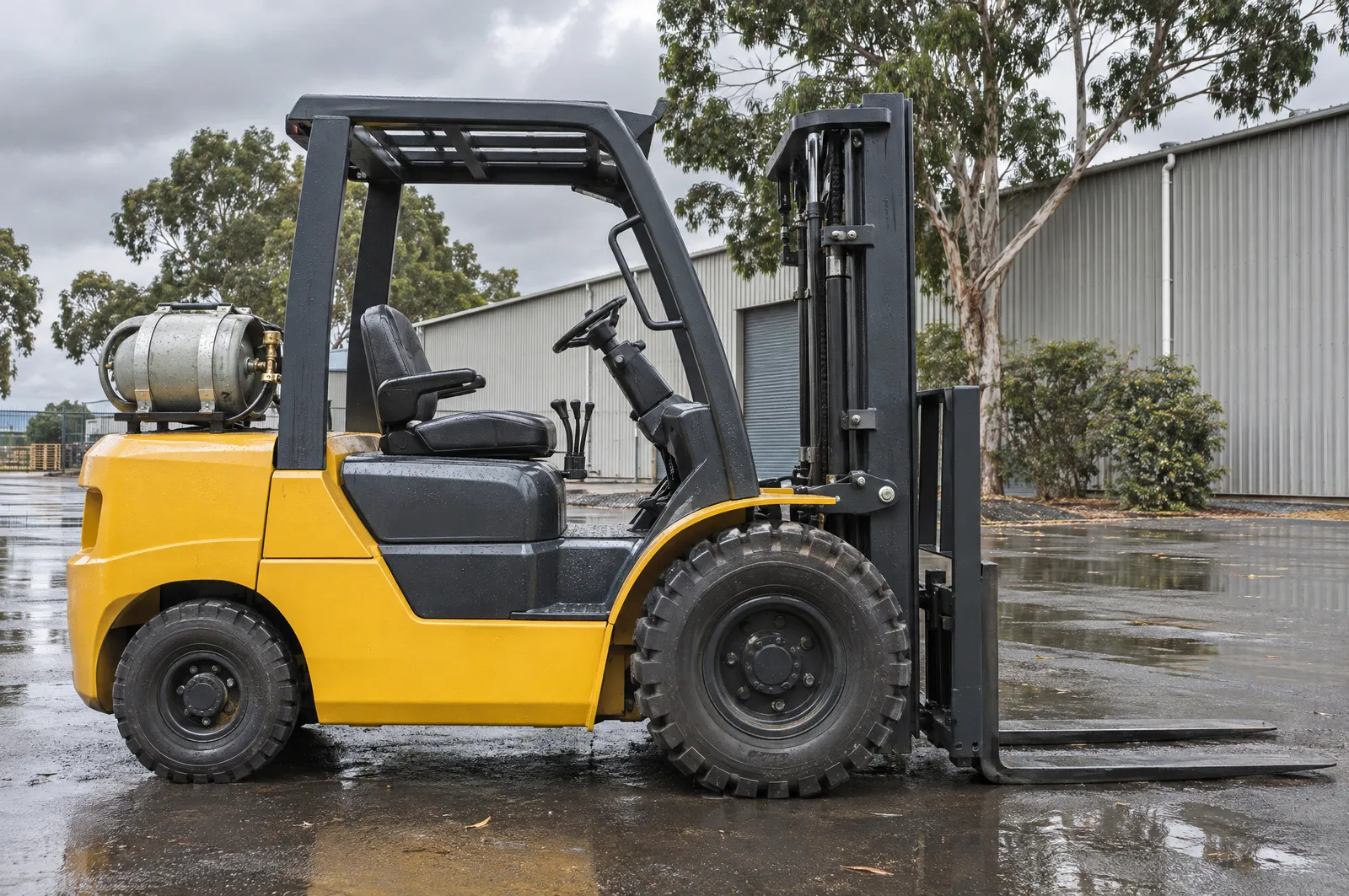
Both suit outdoor unloading, so let refuelling, capacity and indoor use decide. Toyota Material Handling Australia's comparison of forklift energy options lists its engine-powered counterbalance forklifts (LPG, petrol and diesel) for outdoor use, says they work well in unfavourable weather such as rain, and lists fast refuelling for LPG tanks.
| Fuel | Suits | Watch For |
|---|---|---|
| LPG | Yard work with quick refuelling by cylinder swap | Cylinders filled, exchanged and stored only in a set-aside area, by trained and authorised people |
| Diesel | Outdoor-only work | Exhaust, so keep it out of the building |
| Outdoor-rated electric | A truck that also works inside | Charging time, a charging spot and the truck's weather rating |
The LPG controls come from WorkSafe Victoria, which also notes that petrol, diesel or gas forklifts operating indoors can cause a build-up of fumes such as carbon monoxide. If the truck will spend part of its day inside, that's the deciding question. Toyota says its 8FBN electric counterbalance forklifts are IPX4 rated, which means they can work outside as well as inside.
Whichever fuel you pick, the capacity, fork and tyre checks above apply to used LPG forklifts and diesel forklifts alike.
Safety Around the Truck
Keep the driver and everyone else out of the unloading area, and check the load before the curtains open or the straps come off. WorkSafe Victoria's forklift guidance sets out the people side:
- Pedestrians out: operating procedures for loading and unloading areas keep pedestrians out of them.
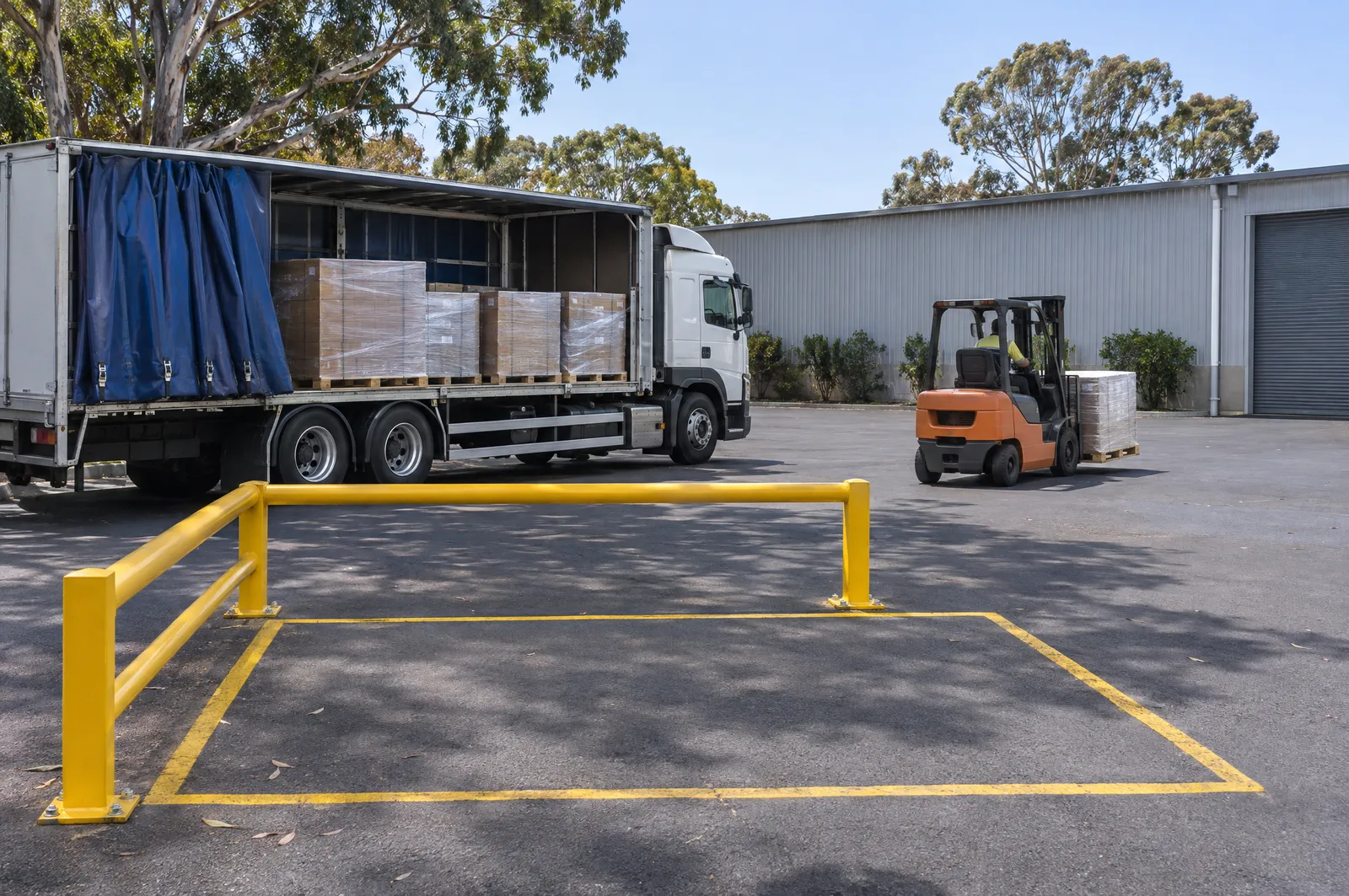
- Driver safety zone: give truck drivers a waiting area with fixed physical barriers, placed so they can see their truck being unloaded.
- Safe distance: keep truck drivers a safe distance from the truck and the forklift during unloading.
- Speed: where pedestrians may be present, limit forklift speed to walking pace, 5 to 7 km/h.
The load side matters as much. WorkSafe Queensland lists loads becoming unstable when tie-down straps or chains are removed, loads shifting during transport, and loads sliding off the tynes. It calls for a safe system of work and a traffic management plan whenever materials are unloaded from a truck.
Curtains are a trap on their own. The NHVR's loading guide for side curtains says loads behind unrated curtains should be restrained as if the curtains weren't there, and that load-rated curtains only restrain sideways when the manufacturer's instructions are followed. Its example shows a machine that broke its restraints and ended up leaning on the curtain. Look for a bulging curtain before anyone opens it, and stand clear of where the load would fall.
Spec Checklist for a No-Dock Forklift
- Rated capacity at a 600 mm load centre covers your heaviest pallet, with any attachments fitted.
- Forks suit the depth of your pallets, with no extensions unless they're on the information plate.
- Side shift, plus a fork positioner if pallet widths vary, listed on the plate.
- Pneumatic or solid pneumatic tyres to suit the yard surface.
- LPG or diesel for outdoor-only work, or an outdoor-rated electric if the truck also works inside.
- Lift height on the plate covers the deck height, with room to lift the pallet clear.
- Clear, firm ground along both sides of the truck, and a driver safety zone.
Frequently Asked Questions
1. Can You Unload a Truck From the Back Without a Dock?
Only if the forklift has a safe way up to the deck, such as a portable yard ramp rated for the loaded forklift and secured to the truck. Without one, curtain-siders and flatbeds are unloaded from the side, one side at a time.
Your Next Step
Buy A Fork's team in Somerton can match a used LPG or diesel counterbalance forklift to your heaviest pallet, your yard and the trucks you unload, and talk through trade-ins, finance and rent-to-own. Call 1300 057 880 with the heaviest pallet weight, the pallet size, the truck types and the yard surface.