
Forklift Ergonomics: Comfort Features That Matter
· Updated
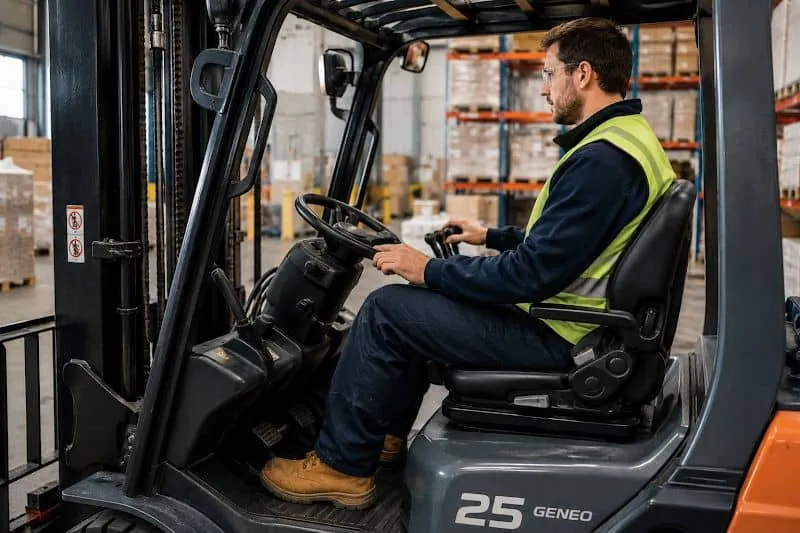
Forklift ergonomics is the design of the operator area so a driver can enter, sit, see, steer and operate the machine without unnecessary reaching, twisting, vibration or physical effort.
For operators who spend several hours on a forklift each day, comfort should be assessed as carefully as lift capacity, mast height and fuel type. The most useful features include an adjustable suspension seat, well-positioned controls, clear visibility, easy entry and exit, vibration reduction and suitable protection from noise and weather.
A forklift should also be tested by the people who will operate it. A feature list may look impressive, but a short test drive can reveal restricted legroom, poor control placement or visibility problems that are not obvious from the specifications.
What Makes a Forklift Ergonomic?
An ergonomic forklift allows different operators to maintain a supported posture, reach the controls comfortably, see the load and surrounding area clearly, and enter or leave the machine without awkward movement.
The main areas to assess are:
- Seat design and adjustment: The seat should support the operator while accommodating different heights and body sizes.
- Control position: Steering, pedals and hydraulic controls should be accessible without repeated stretching or twisting.
- Entry and exit: Steps, grab handles and floor height should allow operators to maintain stable contact with the forklift.
- Visibility: The mast, overhead guard and cab structure should not create avoidable blind spots.
- Vibration control: The seat, tyres, suspension and condition of the operating surface all affect the vibration reaching the driver.
- Noise: Engine, hydraulic and structural noise can affect comfort and communication.
- Climate protection: Roofs, windscreens, doors, fans, heaters or air conditioning may be important for outdoor, cold-store or hot-site work.
Capacity, aisle width, terrain and working hours still need to be considered when choosing the right forklift. A comfortable machine that cannot safely handle the required load or environment is not the right choice.
The Ergonomic Forklift Features That Matter Most
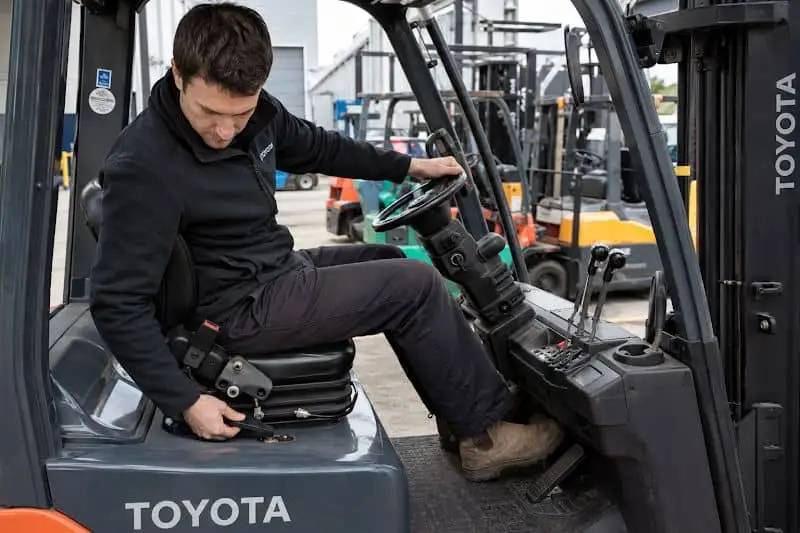
| Feature | Why it matters | What to check |
|---|---|---|
| Adjustable suspension seat | Supports different operators and helps isolate vibration | Fore-and-aft movement, backrest angle, weight adjustment, suspension response and lumbar support |
| Adjustable steering column | Helps the operator maintain a comfortable arm and shoulder position | Adjustment range and whether it locks securely |
| Well-positioned controls | Reduces repeated reaching and awkward wrist or shoulder positions | Control reach while sitting against the backrest |
| Low step and grab handles | Makes repeated entry and exit easier | Step height, grip position, foot clearance and slip resistance |
| Clear mast visibility | Reduces the need to lean or twist when placing loads | View of the fork tips, load and elevated racking |
| Reverse visibility | Helps reduce excessive neck and torso rotation | Rear window, counterweight shape, mirrors and optional camera systems |
| Vibration-damping components | Reduces shocks and vibration reaching the operator | Seat suspension, tyres, mounts and performance over the actual floor or yard surface |
| Low-effort pedals and steering | Reduces unnecessary leg and upper-body effort | Pedal angle, resistance, spacing and steering effort |
| Noise control | Supports communication and reduces operator discomfort | Engine, hydraulic, cab and structural noise during travel and lifting |
| Weather and climate protection | Helps operators remain comfortable in demanding environments | Cab sealing, ventilation, heating, cooling, roof and windscreen protection |
Seat and Suspension
Seat quality is one of the first features to assess because it affects the operator throughout the shift. A suitable seat should allow the driver to reach the pedals without sliding forward and use the controls while keeping their back supported.
Check whether the seat adjusts for:
- Operator weight.
- Distance from the pedals and steering wheel.
- Backrest angle.
- Lumbar support.
- Armrest position.
- Suspension response.
A suspension seat cannot compensate for damaged tyres, rough surfaces or excessive travel speed. It should form part of a wider approach to managing vibration.
Control Layout
Frequently used controls should sit within comfortable reach. The operator should not need to repeatedly lift their shoulder, bend their wrist sharply or lean away from the backrest to raise, tilt or sideshift a load.
Mini levers, fingertip controls and armrest-mounted controls can be comfortable for some operators, but the layout should still be tested. Control preference varies between drivers and forklift applications.
Even a well-designed control system cannot replace effective forklift operator training. Operators need to know how to adjust the seat and steering position, use the controls smoothly and maintain visibility without adopting unnecessary awkward postures.
Entry and Exit
Operators may enter and leave a forklift many times during a shift. High steps, narrow openings, damaged grab handles or limited foot space can make each movement more difficult.
Check that the operator can:
- Face the forklift while entering and exiting.
- Reach the grab points without stretching.
- Place each foot securely on the step.
- Move past the steering column and seat without twisting excessively.
- Avoid striking their knees, shoulders or head on the cab structure.
Steps and grab handles should also be checked for contamination, wear and damage.
Forward and Reverse Visibility
Operators should be able to see the fork tips, load and travel path without repeatedly leaning around the mast. Mast channels, hydraulic hoses and attachments can all affect the forward view.
When travelling in reverse, consider how far the operator must rotate their neck and upper body. Swivelling seats, rotating seat bases, rear grab handles, mirrors and camera systems may help in applications that involve frequent reverse travel.
Visibility must be checked with the attachments and loads the forklift will actually handle. An empty-fork demonstration may not reveal the restrictions created by a wide pallet, clamp or elevated load.
Vibration Damping
Whole-body vibration is vibration transferred through a supporting surface such as a seat or floor. It may include continuous vibration as well as shocks and jolts.
Safe Work Australia identifies long-term exposure as a risk factor for musculoskeletal problems affecting areas including the lower spine, neck and shoulders.
Vibration levels can be influenced by:
- Floor or yard condition.
- Travel speed.
- Tyre type and condition.
- Seat suspension.
- Vehicle maintenance.
- Forklift design.
- Operator technique.
- The suitability of the forklift for the surface.
Test the forklift over the real working surface where possible. A short drive on smooth showroom concrete will not show how the machine behaves across expansion joints, loading plates, rough yards or uneven transitions.
Noise and Climate Protection
Noise can come from the engine, hydraulic system, tyres, loose cab components or surrounding workplace. Compare forklifts while travelling, lifting and idling rather than judging noise while the machine is stationary.
Outdoor operators may need protection from sun, rain, wind or cold. Enclosed cabs, windscreens, doors, fans, heaters and air conditioning can improve comfort, but they should not restrict visibility or make communication difficult.
How to Assess Forklift Ergonomics on a 10-Minute Test Drive
A test drive should be completed in a controlled area by an appropriately authorised operator. Use the actual attachments and a representative load where safe and practical.
1. First Minute: Enter and Exit the Forklift
Use the steps and grab handles as the operator would during a normal shift.
Check for:
- High or awkward steps.
- Limited foot space.
- Slippery surfaces.
- Poorly positioned handles.
- Contact between the operator and the steering column, roof or cab frame.
Repeat the process more than once. A minor inconvenience can become more important when it is repeated throughout the day.
2. Minutes Two and Three: Adjust the Seat
Move the seat through its full adjustment range. Set the operator’s weight where the suspension system requires it.
The operator should be able to:
- Rest against the backrest.
- Reach the pedals without stretching.
- Keep a slight bend in the knees.
- Reach the steering wheel comfortably.
- Use the hydraulic controls without leaning forward.
- Fasten and wear the restraint correctly.
Do not assess only one driver when several people will share the forklift.
3. Fourth Minute: Check Steering, Pedals and Controls
Operate every frequently used control.
Look for:
- Excessive pedal effort.
- Pedals that are too close together.
- Awkward wrist angles.
- Controls positioned outside comfortable reach.
- A steering wheel that obstructs entry or legroom.
- Labels or displays that are difficult to see.
Controls should feel predictable and should return or respond correctly. Unusual stiffness may indicate wear or a maintenance issue rather than poor ergonomic design.
4. Minutes Five and Six: Assess Forward Visibility
Drive towards a pallet, engage the load and complete a controlled lift.
Check whether the operator can see:
- The fork tips.
- The pallet openings.
- The load edges.
- The path ahead.
- The racking at the intended lift height.
Watch whether the operator repeatedly leans sideways or forward to see past the mast.
5. Seventh Minute: Assess Reverse Travel
Travel in reverse along a representative route and complete controlled turns.
Ask the operator whether they can see comfortably without holding an extreme neck or torso position. Check how mirrors, handles, seat shape and the rear structure affect visibility.
6. Eighth Minute: Assess Vibration and Ride Quality
Drive over the surfaces the forklift will regularly use. Include safe examples of joints, ramps, dock plates or outdoor areas where relevant.
Pay attention to:
- Sharp jolts through the seat.
- Excessive cab movement.
- Seat suspension that bottoms out.
- Steering vibration.
- Rattling panels or doors.
- Tyre flat spots.
Prolonged vibration, sustained postures and awkward movement are recognised risk factors when assessing hazardous manual tasks.
7. Ninth Minute: Listen and Check the Climate
Operate the forklift while travelling, steering and lifting.
Consider:
- Engine and hydraulic noise.
- Cab rattles.
- Fan noise.
- Air movement.
- Heat around the operator area.
- Glare through the windscreen.
- Protection from outdoor conditions.
8. Final Minute: Record the Operator’s Feedback
Ask specific questions rather than simply asking whether the forklift is comfortable.
Useful questions include:
- Which control was hardest to reach?
- Could you see the fork tips clearly?
- Did you need to lean or twist?
- Did the seat absorb floor impacts?
- Was there enough leg and shoulder room?
- Would any issue become uncomfortable after several hours?
Compare the answers from operators of different heights and builds before selecting a model.
Ergonomics on Used Forklifts: What Can and Cannot Be Fixed?
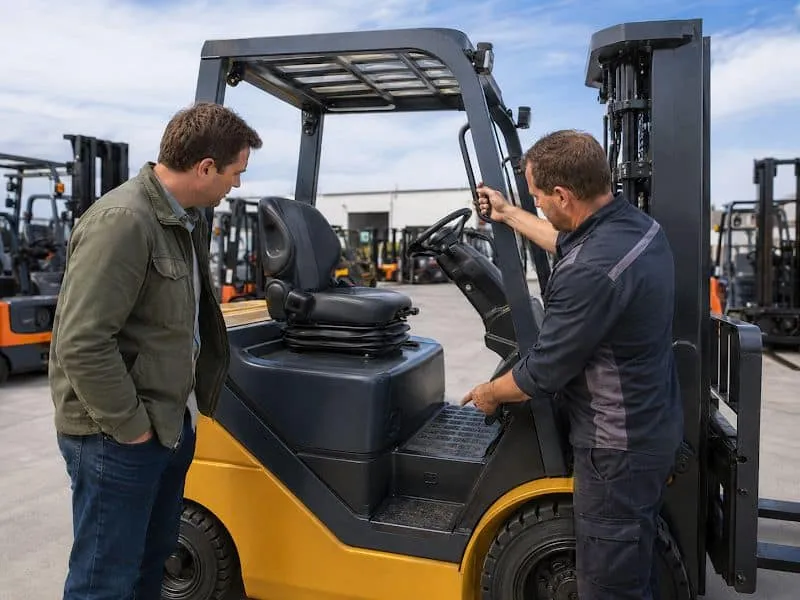
Ergonomics should be assessed alongside the mast, tyres, hydraulics, brakes and service history during a used forklift inspection.
Some comfort problems result from worn parts and can be corrected. Others are built into the forklift’s structure and are difficult or uneconomical to change.
| Usually fixable or improvable | Usually structural or difficult to change |
|---|---|
| Worn seat cushions | Mast design and forward visibility |
| Faulty seat suspension | Step and floor height |
| Damaged armrests | Cab dimensions |
| Missing or damaged grab handles | Pedal placement |
| Worn floor mats or pedal surfaces | Basic hydraulic control location |
| Damaged mirrors | Steering column adjustment range |
| Poor work lights | Overhead guard layout |
| Worn tyres or vibration mounts | Counterweight shape and rear visibility |
| Loose panels and door rattles | Inherent chassis or powertrain characteristics |
Replacement seats, cameras, mirrors and other equipment must be compatible with the forklift and professionally fitted. Modifications should not interfere with restraints, safety systems, visibility, capacity information or the manufacturer’s requirements.
Check the Condition, Not Just the Feature List
A used forklift may have an adjustable suspension seat, but the mechanism may be seized, loose or unable to support the operator correctly.
During inspection:
- Move every adjustment through its full range.
- Check whether the seat locks securely.
- Inspect the restraint and mounting points.
- Look for damaged cushions and exposed frames.
- Test armrests and control pods.
- Check steps and grab handles.
- Drive over a representative surface.
- Listen for rattles and excessive mechanical noise.
A simpler forklift in good condition may be more comfortable than a higher-specification model with worn seating, tyres or cab components.
Why Operator Comfort Pays for Itself
Operator comfort affects how easily a person can maintain a suitable posture, see the work area and use the controls consistently during a shift.
Safe Work Australia notes that awkward or sustained postures, long-duration tasks and vibration can contribute to musculoskeletal risk. The level of risk can increase when several factors occur together.
A well-matched forklift may support:
- More consistent operation across a long shift.
- Less unnecessary repositioning in the seat.
- Easier control access.
- Better visibility during load placement.
- Fewer complaints about avoidable discomfort.
- Greater acceptance of the equipment by regular operators.
Recurring back, neck, shoulder, hearing or fatigue concerns should be considered alongside the wider health risks faced by forklift operators.
Ergonomic features are not a complete risk control by themselves. Work surfaces, maintenance, shift design, task rotation, safe operating procedures and training also affect operator wellbeing. Forklift selection should form part of a broader workplace risk assessment.
Choose a Forklift Your Operators Can Work in Comfortably
Forklift ergonomics should be assessed through practical testing rather than specifications alone. Check the seat, control reach, visibility, access, vibration and noise under conditions that reflect the real workplace.
Some worn components on a used forklift can be repaired or replaced, but structural limitations are harder to correct after purchase. Involving regular operators in the test drive can reveal problems before the forklift enters service.
Buyers can compare cab layouts, seat designs and control arrangements across the full range of forklifts available from Buy A Fork before selecting a model for their workload and operators.
Frequently Asked Questions
1. Does Forklift Seat Quality Really Matter?
Yes. The seat supports the operator throughout the shift and can affect posture, control reach and exposure to vibration.
A suitable seat should adjust for the operator’s weight and height, provide stable back support and allow comfortable access to the pedals and controls. It must also be securely mounted and compatible with the forklift’s restraint and safety systems.
2. What Is Whole-Body Vibration on a Forklift?
Whole-body vibration is vibration transferred to the operator through the seat or floor. It may be caused by uneven surfaces, travel speed, tyre condition, forklift design or impacts such as crossing joints and dock plates.
Safe Work Australia advises that prolonged exposure can increase the risk of musculoskeletal and other health problems, particularly when vibration levels are high.
3. Are Electric Forklifts More Comfortable Than Diesel or LPG Models?
Electric forklifts are often quieter and produce less engine vibration than internal-combustion models. This can make them comfortable for indoor warehouse work.
Comfort still depends on the individual model, seat, tyres, suspension, surface and control layout. A poorly maintained electric forklift can be less comfortable than a well-designed and properly maintained diesel or LPG machine.
4. Can an Older Forklift Be Retrofitted With Ergonomic Features?
Some features can be added or replaced, including compatible suspension seats, mirrors, work lights and professionally installed camera systems.
Structural characteristics such as mast visibility, step height, pedal position and cab dimensions are much harder to change. Any retrofit should be approved for the forklift and must not interfere with its safety systems or rated capacity.
5. What Should Tall or Short Forklift Operators Check?
Operators should check whether the seat and steering column provide enough adjustment for them to reach the pedals, controls and restraint while keeping their back supported.
They should also check:
- Knee clearance.
- Headroom.
- Shoulder space.
- Pedal reach.
- Steering-wheel position.
- Control reach.
- Forward and reverse visibility.
- Ease of entry and exit.
Where several operators share a forklift, each person should test it before purchase.