
Buying a Used Reach Truck: What to Check on the Mast, Reach Carriage and Battery
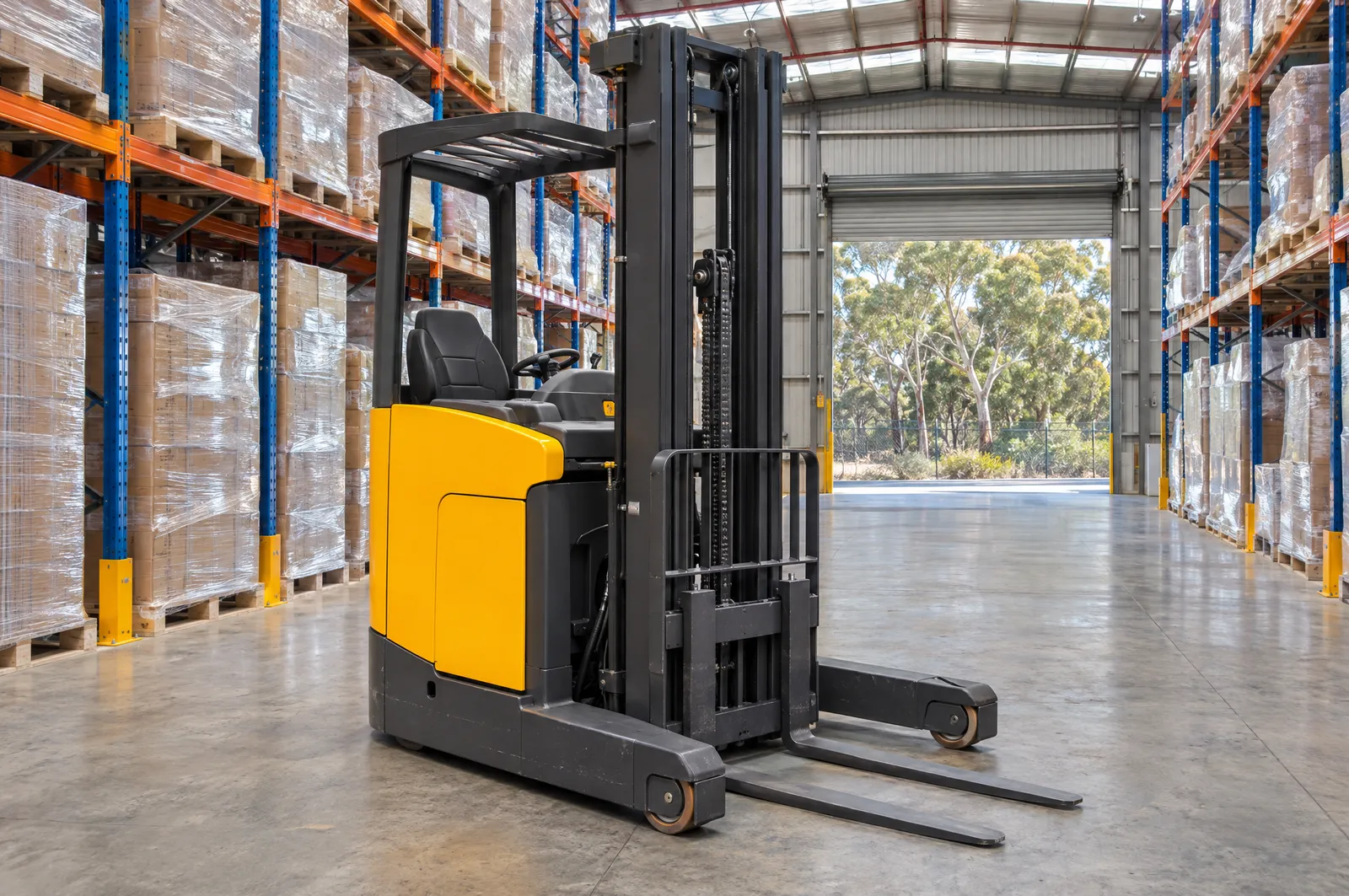
You've found a used reach truck with the right lift height at a fair price. Before you pay, check what a standard forklift inspection misses: the mast at full height with a load, the reach carriage going out and back, the capacity plate at your top beam, and the battery and charger. Those checks decide whether the truck does your job or needs an early mast, reach or battery repair.
Buy A Fork sells mostly used forklifts, reach trucks among them, and services all makes and models. The checks below apply to any second hand reach truck, wherever you buy it.
What's Different About Inspecting a Used Reach Truck?
A reach truck needs every check a counterbalance forklift gets, plus checks on the parts that let it lift high in a narrow aisle. The frame, forks, brakes, steering, hour meter and plates are all covered in this used forklift inspection checklist, so start there.
Then add the reach-specific checks. A reach truck carries its load between two outriggers (the front legs, with small load wheels at the ends), steers on a single drive wheel at the back, and moves the forks forward to pick a pallet from the rack. It also lifts much higher than most counterbalance forklifts, and loses capacity the higher it goes. Each of those parts wears in its own way.
Do the checks on a flat, level floor with a clear space to lift to full height. Use a test pallet close to the weight of your heaviest load, as long as it's within the truck's rated capacity at the height you test. If you're not confident judging a mast or a battery, WorkSafe Victoria's guidance on forklift maintenance and inspection says to engage a suitably competent forklift technician to maintain forklifts, and that's the right person for a pre-purchase inspection too.
Checking the Mast on a Used Reach Truck
Raise a loaded pallet to full height and watch the mast the whole way up and down, because most mast faults only show above head height. A reach truck mast often has three stages, and wear shows where one stage hands over to the next.
- Smooth travel: the load should rise and lower without jerks, knocks or a pause at each stage change.
- Sway and play: at full height, the mast shouldn't rock or shift sideways more than slightly when you stop or reach.
- Chains: both lift chains should be evenly tensioned, without kinks, rust or stiff links.
- Hoses and pulleys: the hydraulic hoses run up the mast over pulleys (sheaves). Look for cracked hoses, oil weeping at fittings and hoses rubbing on the steel.
- Channels and rollers: shiny gouges or uneven wear marks in the mast channels point to worn or seized rollers.
- Drift: hold the load raised for a few minutes, with everyone clear of it. If it creeps down, or the forks tilt forward on their own, the hydraulics need attention.
Then check the numbers. Measure your top beam and the clearance under doors, mezzanines and sprinklers, and compare them with the mast's maximum lift height and its lowered height. The capacity that matters is the one at your top beam, not the headline figure, so ask for the truck's residual capacity chart and check it covers your heaviest pallet at that height.
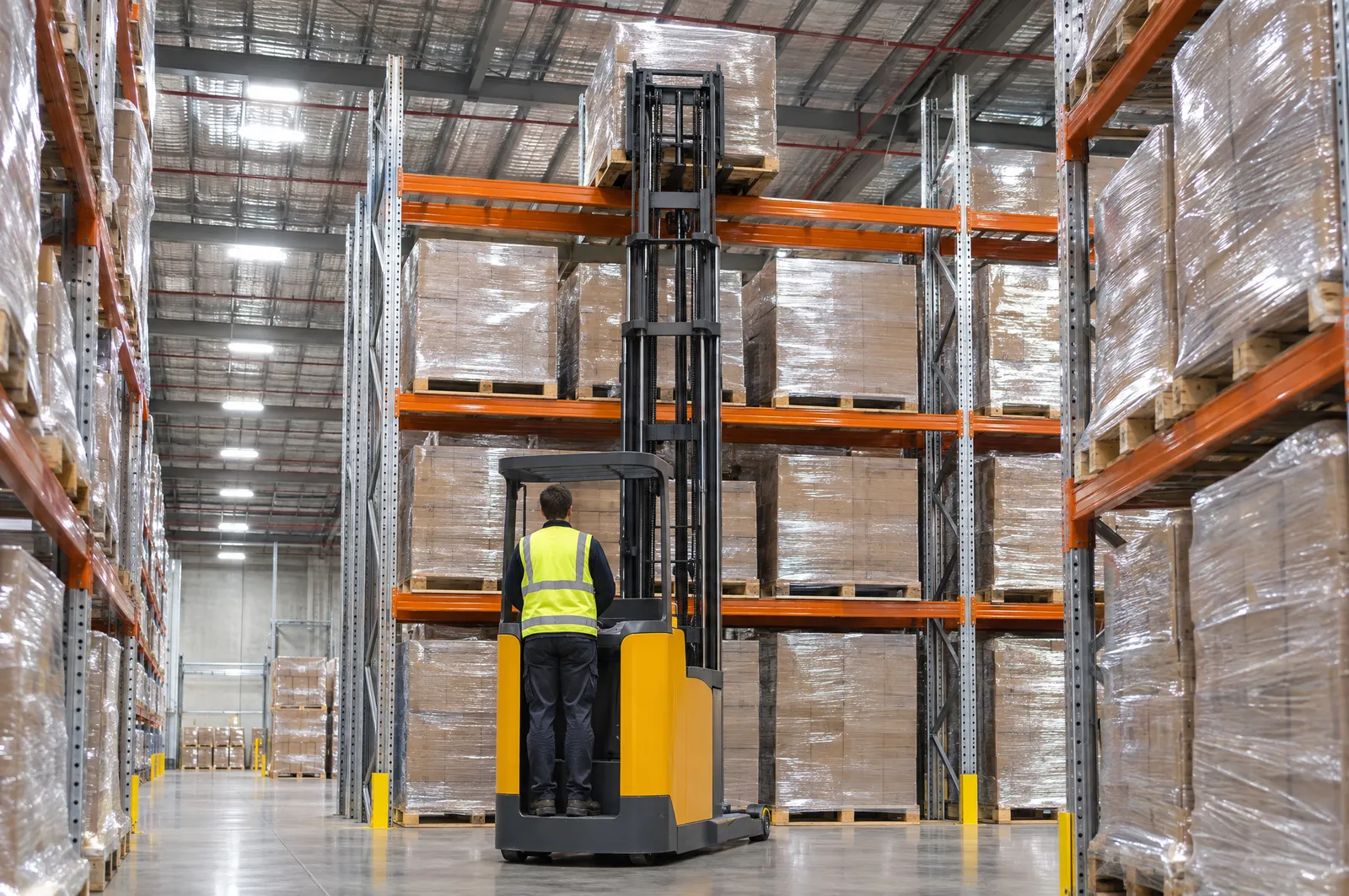
Checking the Reach Carriage
Run the reach out and back at ground level and again at full height: it should move smoothly, stop cleanly at both ends and hold its position. What else you check depends on how the truck reaches, so find out which type of reach truck it is first.
Pantograph (Scissor) Reach
A pantograph truck keeps the mast still and pushes the forks out on a set of scissor arms. Check:
- Pins and bushes: with the forks lowered, the reach part-way out and the truck switched off, rock the carriage by hand. Clunks or visible play mean worn pins and bushes.
- Welds and arms: look for cracks at the welds and bent arms, a sign the truck has hit the racking.
- Reach cylinder: oil on the cylinder or the scissor arms means a leaking seal.
Moving Mast Reach
A moving mast truck slides the whole mast forward along the outriggers. Check:
- Mast rollers and tracks: the rollers should run quietly, and the tracks on the outriggers shouldn't be grooved, flaked or badly worn.
- End stops: the mast should stop firmly at both ends without banging.
- Reach cylinder: as above, look for leaks and listen for a cylinder that hesitates or judders.
Tilt, Side Shift and Forks
On many reach trucks the forks tilt and shift sideways on the carriage. Work both through their full range, loaded, and watch for leaks at the small cylinders and hoses. Check the fork length suits your pallets, and that both forks are straight, level and free of cracks at the heel.
Extra Checks on a Double-Deep Reach Truck
A double-deep reach truck reaches two pallets into the rack, so the reach mechanism works harder and further, and it needs a closer look. Run the full reach stroke several times at height, loaded, and watch for any hesitation near full extension.
If the truck has a fork camera, laser or height indicator to help the operator place the back pallet, check it works. Then confirm the reach depth of the double-deep reach trucks you're comparing suits your racking and pallet size.
Checking the Reach Truck Battery and Charger
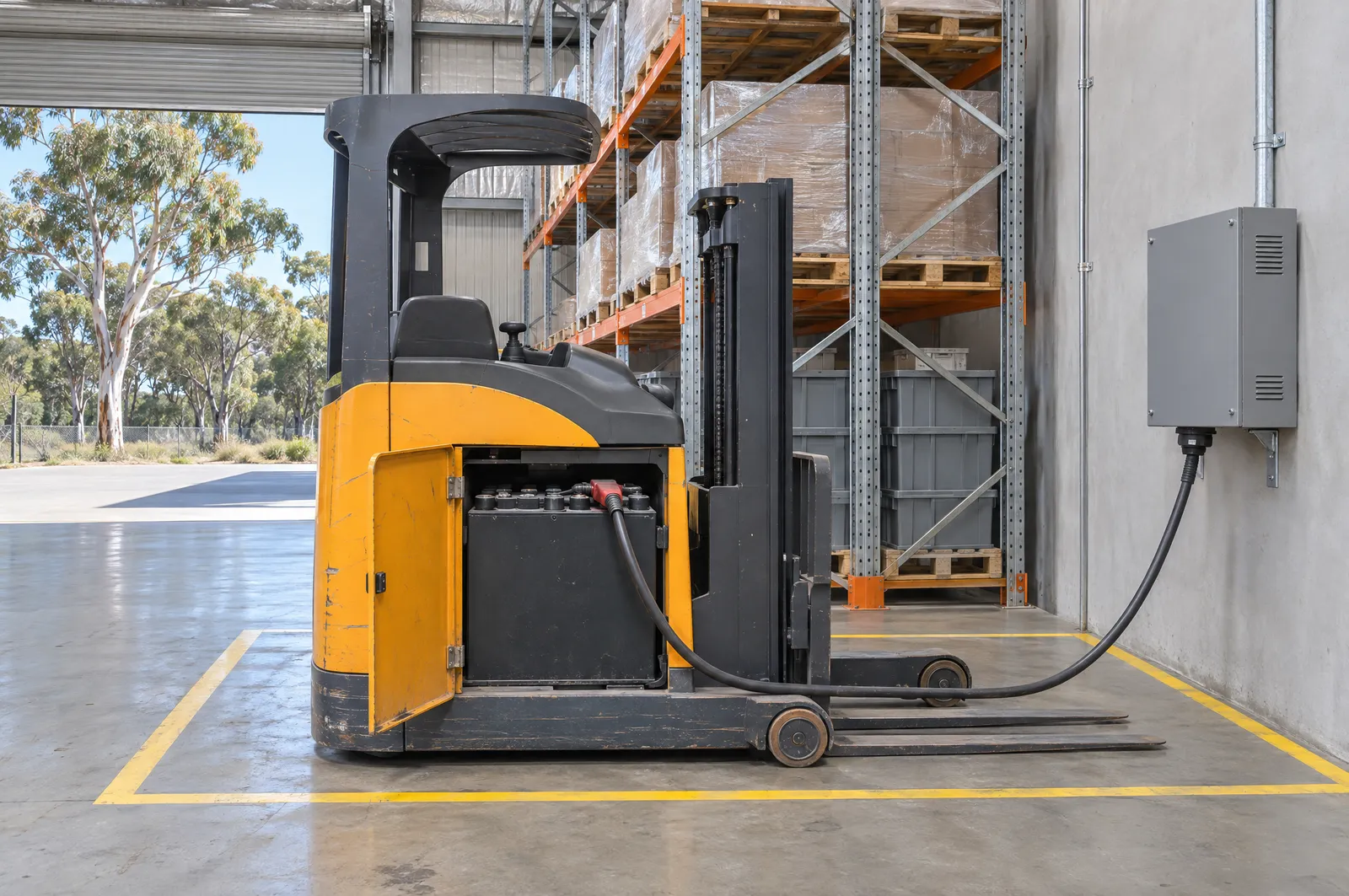
The battery is one of the dearest single parts of an electric reach truck, so judge its condition as carefully as the mast's. A battery near the end of its life means a replacement soon, and forklift battery prices vary with voltage, capacity and chemistry.
- Age: find the date it was made or fitted, on the battery's plate or the invoice. If the battery is newer than the truck, ask for its invoice.
- Fit: the voltage and capacity should match what the truck's plate calls for. On many electric trucks the battery is part of the counterweight, and the plate lists a minimum battery weight; a lighter battery reduces the truck's rated capacity.
- Condition: on lead-acid batteries, look for corrosion on the terminals, cracked cases, low electrolyte and acid residue in the battery compartment. Ask for the watering records.
- Performance: ask whether it still gets through a full shift, and for the results of a discharge test if one has been done. On lithium-ion batteries, ask for the battery management system's health reading and any warranty paperwork.
- Charger: check the charger is included, matches the battery's voltage and type, and charges it. Inspect the plug and cables for damage.
- Battery change: if you run more than one shift, check the battery can be changed the way your site needs, and that the battery stops or restraints are in place.
Wheels, Steering and Brakes
A reach truck rides on small, hard wheels, so wheel wear shows up quickly and changes how the truck handles at height.
- Load wheels: the small wheels in the outriggers shouldn't be chunked, flat-spotted or coming away from their hubs.
- Drive wheel: check for cuts, uneven wear and wear down to the hub.
- Steering: turn to full lock both ways. It should feel even, with no grinding, and the truck should track straight.
- Brakes: check the service brake stops the truck smoothly, and that letting go of the operator presence pedal or control stops it as the manufacturer intends. Test the park brake.
Controls, Display and Fault History
Ask the seller to read the truck's stored fault codes, because they show problems the truck had before you saw it. Many reach trucks keep a fault log that a technician can read with a service tool.
While you're at it, record the hour meter. Some trucks record separate hours for key-on time, travel and lifting, so ask for all of them. Test every control function, the horn, the lights and any travel speed limit that applies with the forks raised.
Paperwork and Fit to Your Site
A used reach truck is only a good buy if it fits your racking and floor, and the paperwork backs up its condition.
- Service records: dates, hours and work done, including any mast, reach or battery work.
- Plates: the data plate and capacity plate should be present, readable and match the truck.
- Aisle width: check the truck's specified aisle width against your narrowest aisle.
- Floor: reach trucks need a smooth, sound floor; cracks and joints that a counterbalance forklift rides over can unsettle a reach truck at height.
- Operators: find out if your operators have used this type of reach truck and its controls before.
Used Reach Truck Checklist
| Area | What to Check | Red Flag |
|---|---|---|
| Mast | Full-height lift with a test load, chains, hoses, rollers | Jerks at stage changes, leaks, a load that drifts down |
| Capacity | Residual capacity at your top beam | Chart missing, or it doesn't cover your heaviest pallet |
| Reach carriage | Full reach out and back, at the floor and at height | Play in pins, cracked welds, a juddering cylinder |
| Double-deep | Full reach stroke at height, camera or indicator | Hesitation near full reach, aids not working |
| Battery | Age, fit, condition, discharge test | No date, mismatched voltage, corrosion, short run time |
| Charger | Included, matching, charging | Missing, wrong voltage, damaged plug |
| Wheels | Load wheels and drive wheel | Chunking, flat spots, wear to the hub |
| Fault log | Stored codes read with a service tool | Repeated faults left unexplained |
| Paperwork | Service records, data plate, capacity plate | No records, missing or unreadable plates |
Find a Used Reach Truck That Suits Your Racking
The checks are easier when you start from a truck that already suits the job. The used reach truck range lists lift heights and capacities, and extended warranty, finance and rent-to-own are all available. The Somerton team can shortlist trucks from your top beam height, aisle width and heaviest pallet, or call 1300 057 880.
Frequently Asked Questions
1. How Many Hours Is Too Many on a Used Reach Truck?
There's no single cut-off. Judge the hours with the battery's condition, the state of the mast and reach, and the service records, because a well-serviced truck with higher hours can be a better buy than a neglected one with fewer.
2. Should I Buy a Used Reach Truck With an Old Battery?
It can still be a good buy if the price allows for a replacement. Ask how old the battery is and how long it runs on a charge, then compare the price with a similar truck that has a newer battery.
3. What Are the Main Parts of a Reach Truck Called?
The main parts are the mast, the fork carriage and forks, the reach mechanism (pantograph or moving mast), the outriggers with their load wheels, the drive wheel, the battery compartment, the overhead guard and the operator compartment. These are the parts a pre-purchase inspection works through.