
What Happens Before a Used Forklift Is Sold: Workshop Prep Checklist
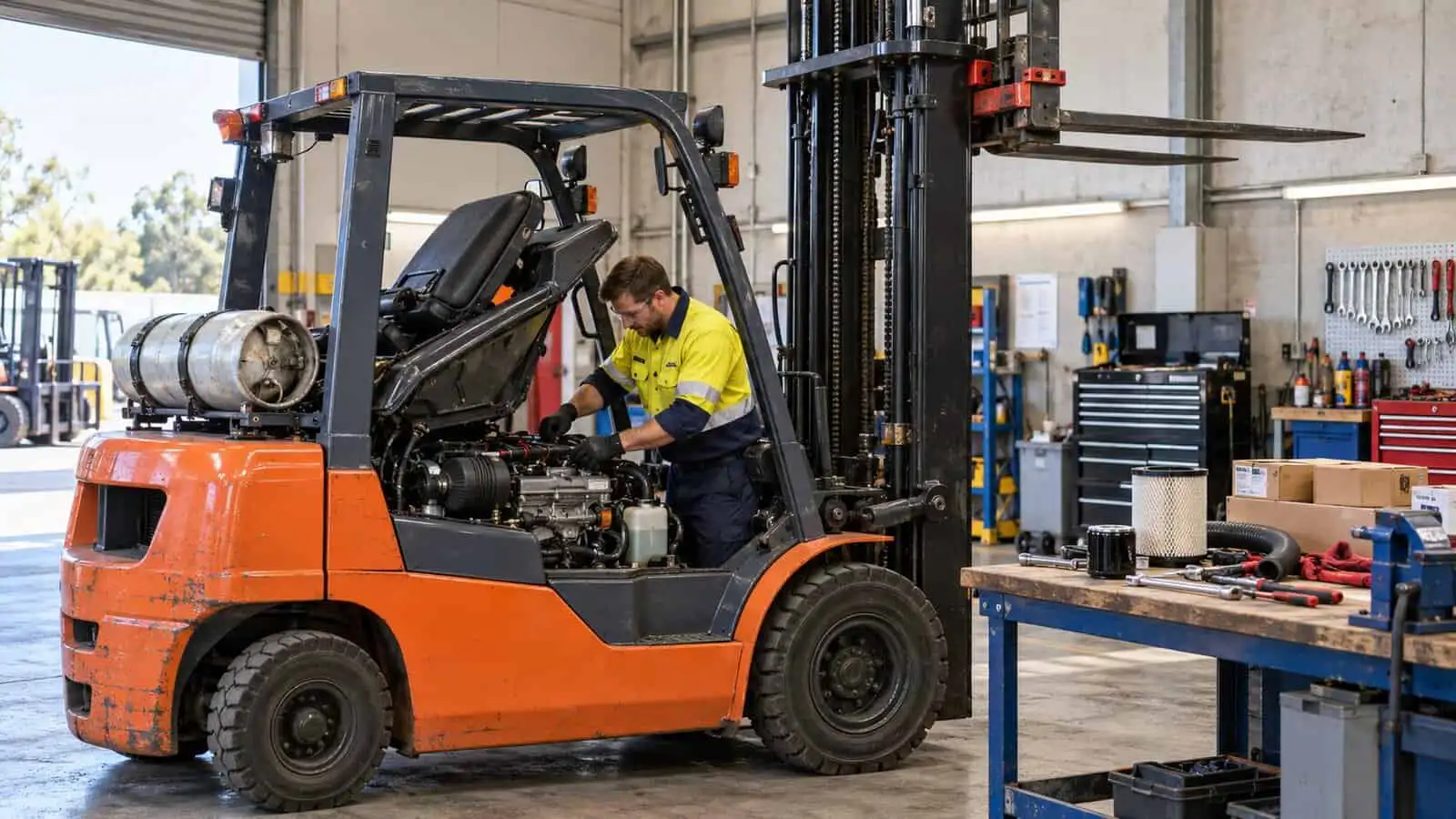
Before a used forklift is sold by a dealer, it should go through a workshop process that confirms its identity and history, inspects every major system against known wear limits, repairs or replaces worn parts, services the machine, tests it under load and records the results in writing.
That preparation is the main difference between a used forklift that is ready to work and one that has simply been cleaned for sale. Two forklifts with the same year, brand and hours can be very different machines depending on what was done in the workshop before they were sold.
Why Pre-Sale Workshop Prep Matters
A used forklift’s advertised year, capacity and hours say little about its mechanical condition. Workshop preparation is where worn chains, forks, tyres, brakes and hydraulic components are found and fixed before the forklift reaches a new site.
There is also a legal dimension. In Victoria, anyone who supplies used plant must, so far as reasonably practicable, ensure it is safe and must pass on any safe-use information and records they hold.
WorkSafe Victoria’s compliance code for plant says a supplier needs to identify unserviceable components and tell the buyer not to use the plant until they are fixed, preferably in writing. Plant sold for scrap must be identified as scrap in writing.
Used Forklift Workshop Prep Checklist
1. Identity, Paperwork and Finance Checks
- Record the make, model, serial number, year and hour reading.
- Check the data plate is fitted and legible, and that the rated capacity reflects the mast and any attachments fitted.
- Collect any service history supplied with the forklift.
- Search the Personal Property Securities Register (PPSR) to confirm there is no finance owing on the machine.
2. Full Mechanical Inspection
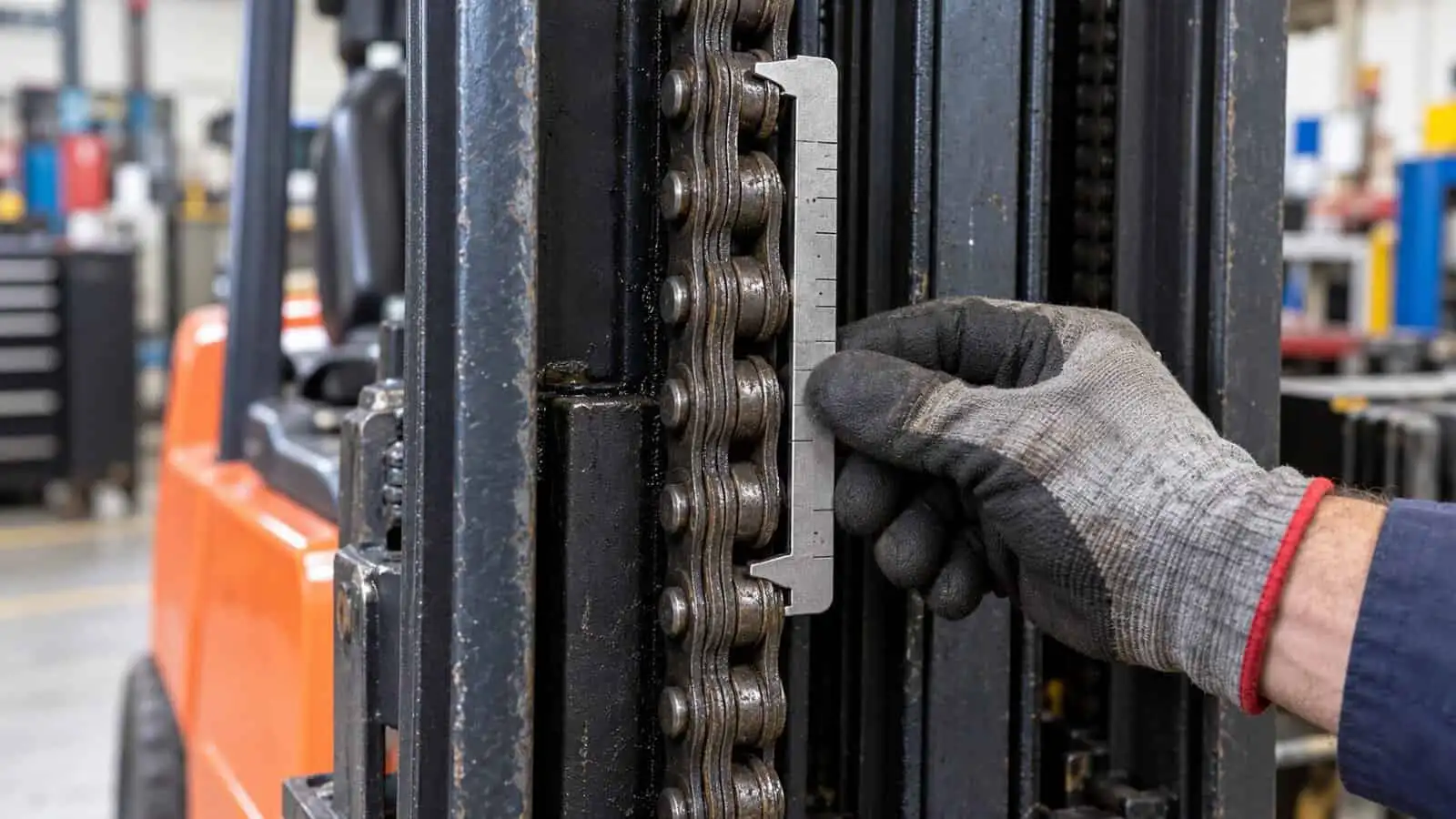
A thorough pre-delivery inspection checks every system that affects safety and reliability, using measured limits where they exist.
| Area | What is checked | Common limit or standard |
| Forks | Heel wear, cracks, bent tips and fork tip height | Remove from service once heel thickness has worn by 10%, which reduces capacity by about 20% (AS ISO 5057) |
| Lift chains | Elongation, measured with a chain gauge, plus wear and damage | Replace at 3% elongation, or 2% where the manufacturer specifies it |
| Mast and carriage | Channels, rollers, lift and tilt cylinders, side-shift | Technician assessment of play, scoring and leaks |
| Brakes and steering | Service and park brakes, steering play and steer axle | Manufacturer specifications |
| Tyres | Wear line, chunking and flat spots | Replace at the wear line moulded into the tyre |
| Hydraulics | Hoses, fittings, pump and control valve | No leaks, and lift and tilt hold under load |
| Electrical system and safety features | Lights, horn, instruments, seatbelt, overhead guard, beacon and reversing alarm | All working and fitted as specified |
| Engine on LPG and diesel models | Starting, smoke, oil leaks, cooling system and exhaust | Technician assessment |
| Battery on electric models | Age, cell condition and capacity | Lead-acid batteries typically last around 1,500 cycles, or about five years |
3. Repairs and Replacement Parts
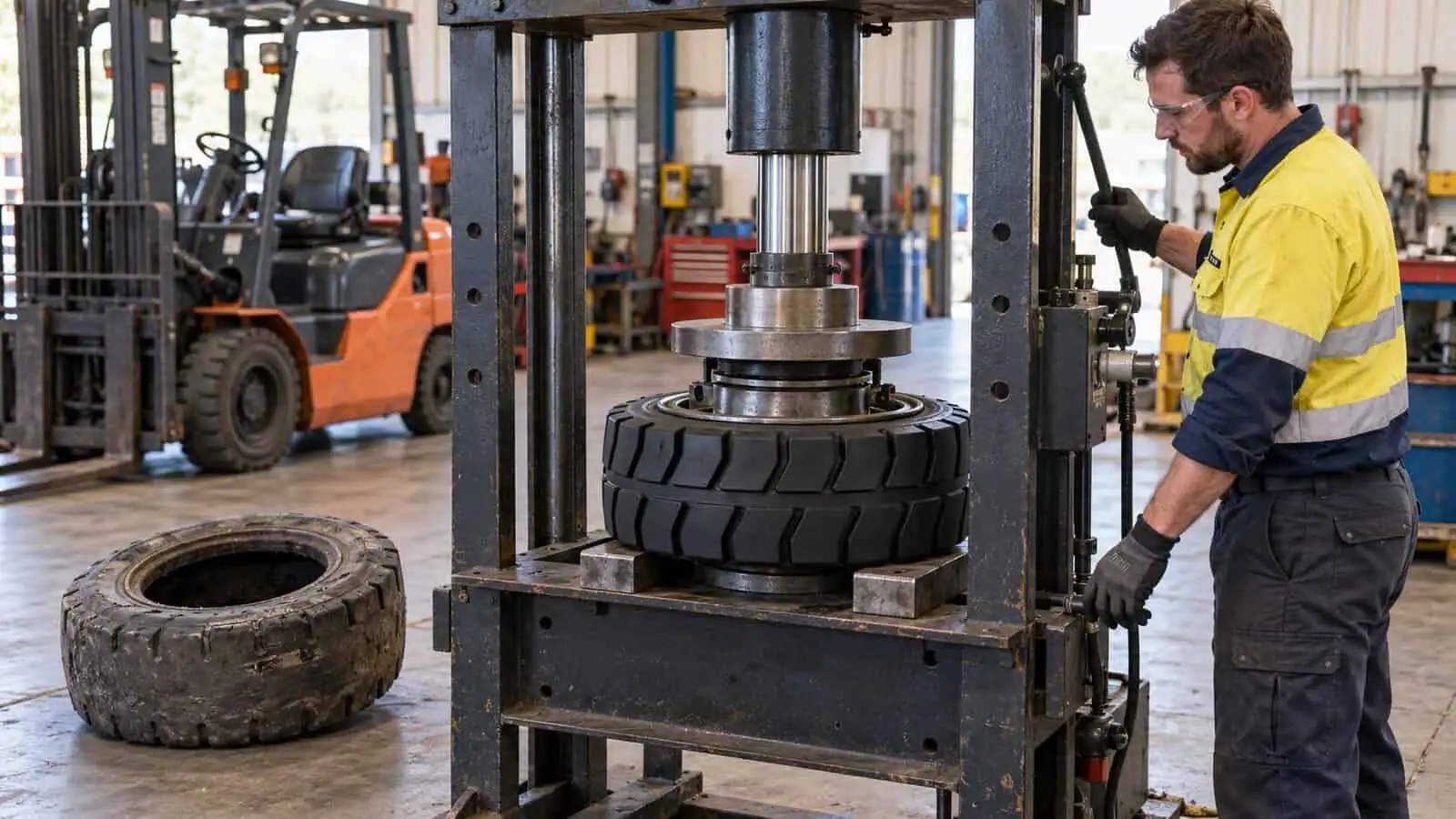
Anything that fails inspection should be repaired or replaced before sale rather than disclosed and left for the buyer. Common replacement items on used forklifts include lift chains, forks, tyres, seats, hydraulic hoses and brake components.
4. Servicing
A pre-sale service typically covers engine or motor oil and filters, hydraulic and transmission fluids, coolant, air and fuel filters and greasing. The service should be recorded with the date and hour reading, giving the new owner a clear starting point for future servicing.
5. Gas System and Battery Checks
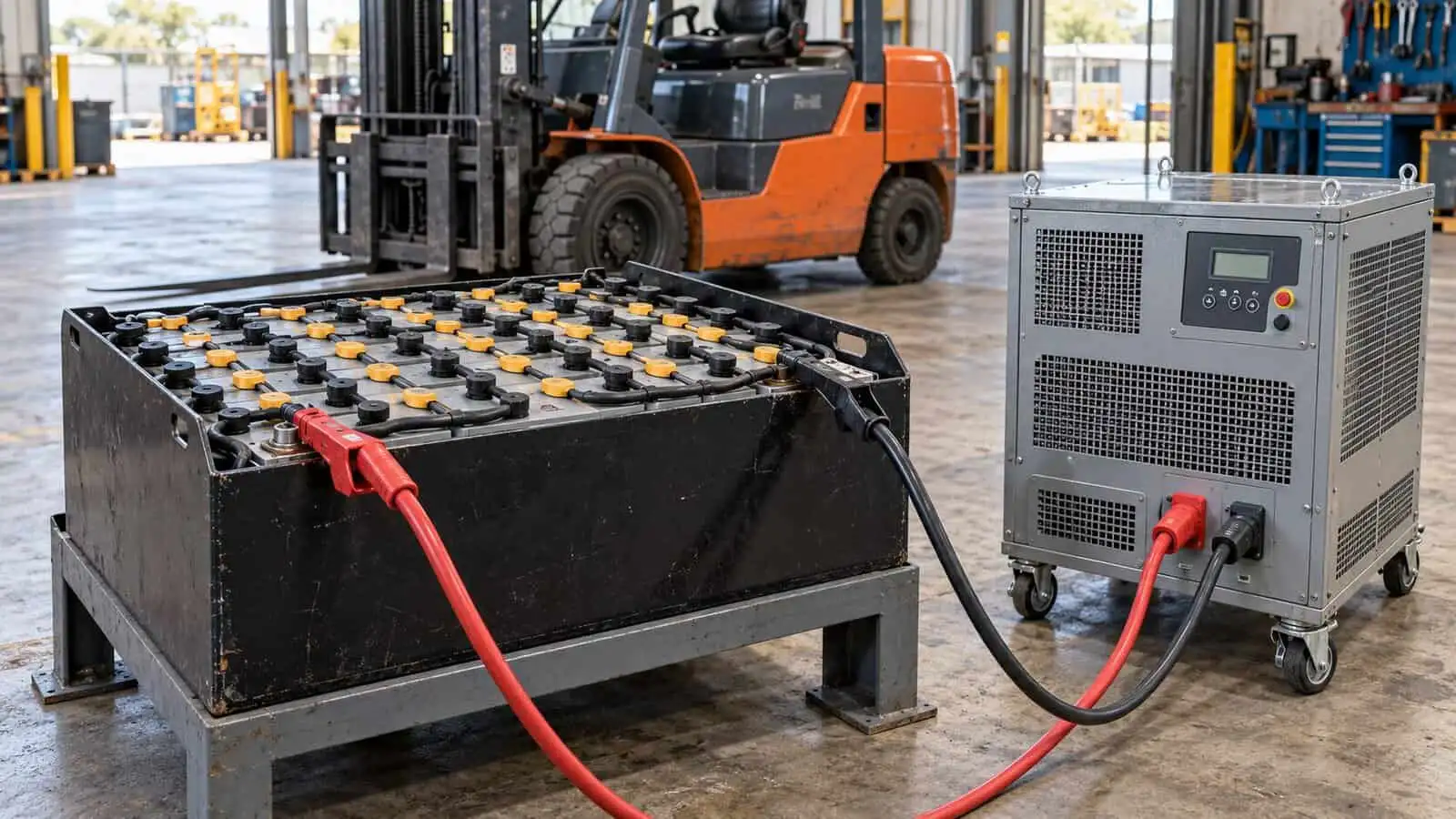
On LPG forklifts, the gas system should be leak-tested and the regulator, vaporiser and hoses inspected. A poorly tuned gas system increases gas use and carbon monoxide emissions. AS 4983 covers gas fuel systems for forklifts, including periodic inspection.
On electric forklifts, walkie stackers and reach trucks, the traction battery should be tested for capacity and cell condition, and the charger checked to confirm it suits the battery. A battery that cannot last a working shift should be replaced, or the buyer should be told before sale.
6. Load and Function Testing
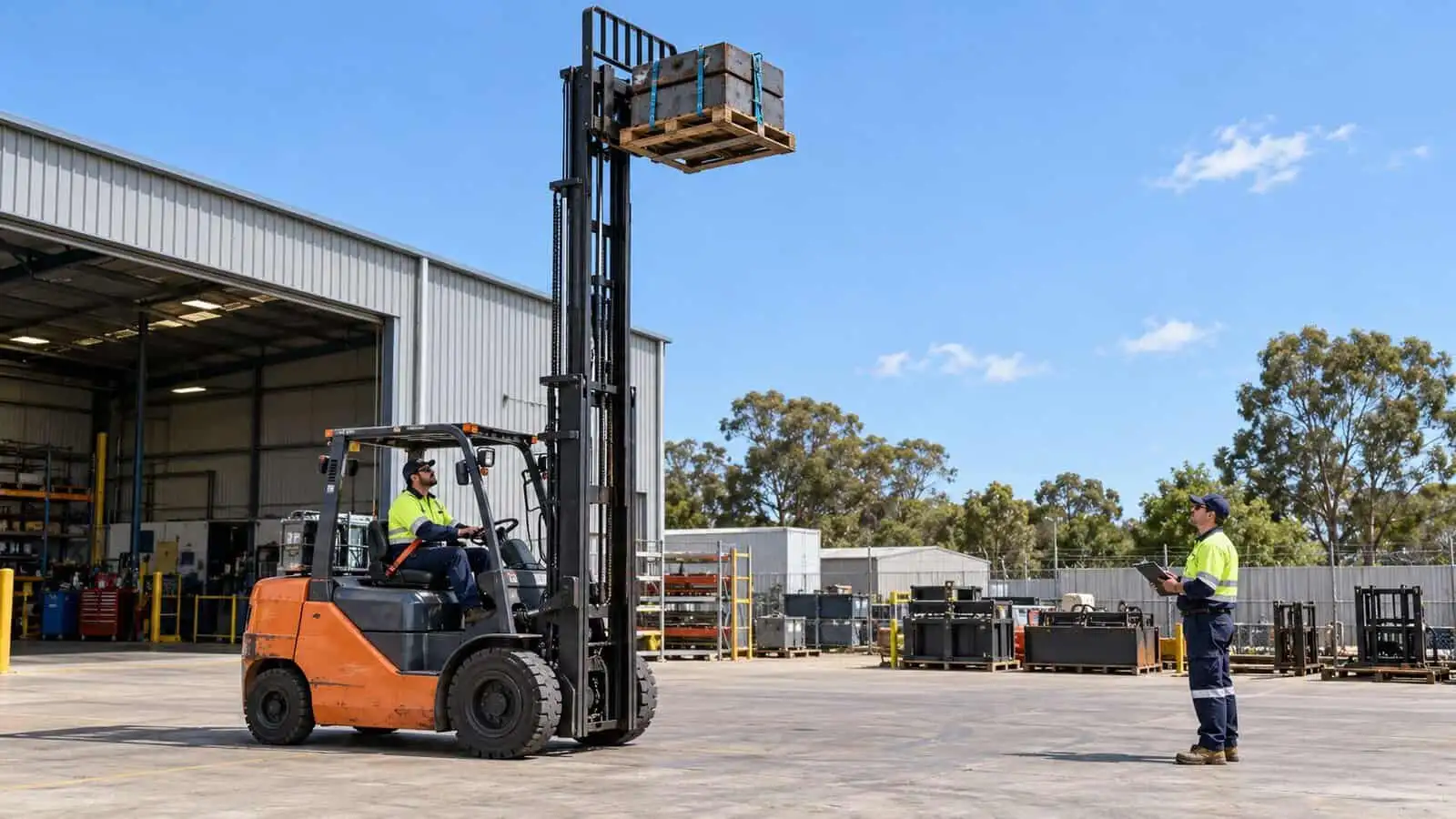
The forklift should be operated through its full range: driving, steering, braking, lifting to full height, tilting and running any attachments. A test lift with a load confirms the mast and hydraulics hold under weight without drifting.
7. Inspection Report and Handover
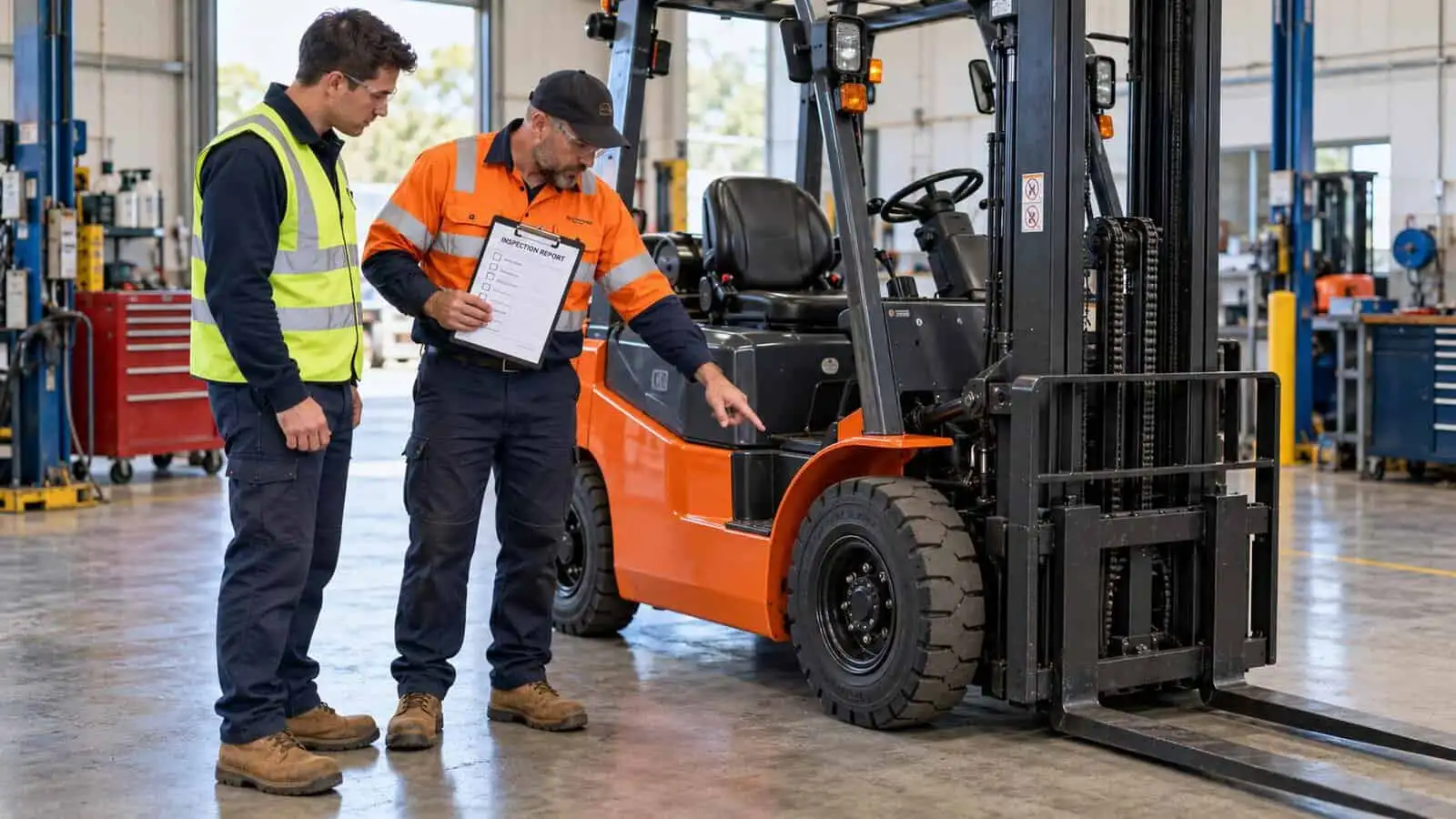
A written report should list what was checked, what was repaired or replaced and the hour reading at sale. At handover, the new operator should be shown the daily pre-start inspection, how to change the gas cylinder or charge the battery, and where the data plate and load chart are located.
WorkSafe Victoria expects forklift owners to keep records of inspections, defects and repairs, so the pre-sale report becomes the first entry in the forklift’s ongoing maintenance records.
What Workshop Prep Does Not Replace
Workshop preparation reduces risk, but buyers should still see the forklift, test it with a load similar to their own and review the paperwork. A buyer’s own used forklift inspection checks that the machine suits the job as well as its condition, including capacity at the required lift height, mast closed height, turning space and fuel type.
Forklifts bought at auction are a different case. Auction houses generally sell forklifts as is, without mechanical checks, and Pickles’ terms state that plant is not offered for workplace use. Any preparation is then the buyer’s responsibility before the forklift goes to work.
Questions to Ask Before Buying a Used Forklift
- What was done in the workshop before sale, and can I see it in writing?
- Were the forks and chains measured, and against what limits?
- When was the forklift last serviced, and at what hours?
- On an electric forklift, how old is the battery and has it been capacity tested?
- Has a PPSR search confirmed there is no finance owing?
- What warranty applies, and what does it cover?
The answers also make it easier to compare the value of a new or used forklift on equal terms.
Buying a Used Forklift From Buy A Fork
Buy A Fork sells used forklifts from its showroom at Factory 2/802 Cooper St, Somerton VIC 3062. Used forklifts include a free 6-month basic service, a warranty with extended warranty options of up to five years, a free pallet jack valued at $499 and free delivery within 10 km (T&Cs apply).
Browse the current range of used forklifts for sale or call 1300 057 880 to ask about the preparation and history of a specific forklift.
Frequently Asked Questions About Used Forklift Preparation
1. Should a Used Forklift Be Serviced Before Sale?
Yes. A dealer selling a used forklift for workplace use should service it, repair or replace worn parts and test it under load before sale. In Victoria, suppliers of used plant must also take reasonably practicable steps to ensure it is safe and pass on the information they hold.
2. What Is a Pre-Delivery Inspection on a Forklift?
A pre-delivery inspection is a full check of a forklift before it is handed to a buyer. It covers the forks, chains, mast, hydraulics, brakes, steering, tyres, safety equipment and the engine or battery, with worn parts measured against manufacturer or standard limits.
3. What Should a Used Forklift Inspection Report Include?
The report should list the forklift’s model, serial number and hours, each item checked, measurements such as fork heel wear and chain elongation, parts repaired or replaced, the service completed and any known issues.
4. Is a Forklift Bought at Auction Ready to Use?
Not necessarily. Auction houses generally sell forklifts as is without mechanical checks, and Pickles’ terms state that plant is not offered for workplace use. The buyer should arrange a technician’s inspection and any repairs before the forklift goes to work.
5. What Wear Limits Apply to Forklift Forks and Chains?
Forks should be removed from service once heel thickness has worn by 10%, which reduces capacity by about 20%. Lift chains are generally replaced at 3% elongation, or 2% where the manufacturer specifies it.