
LPG Forklift Gas Usage per Hour (and How Long a Bottle Lasts)
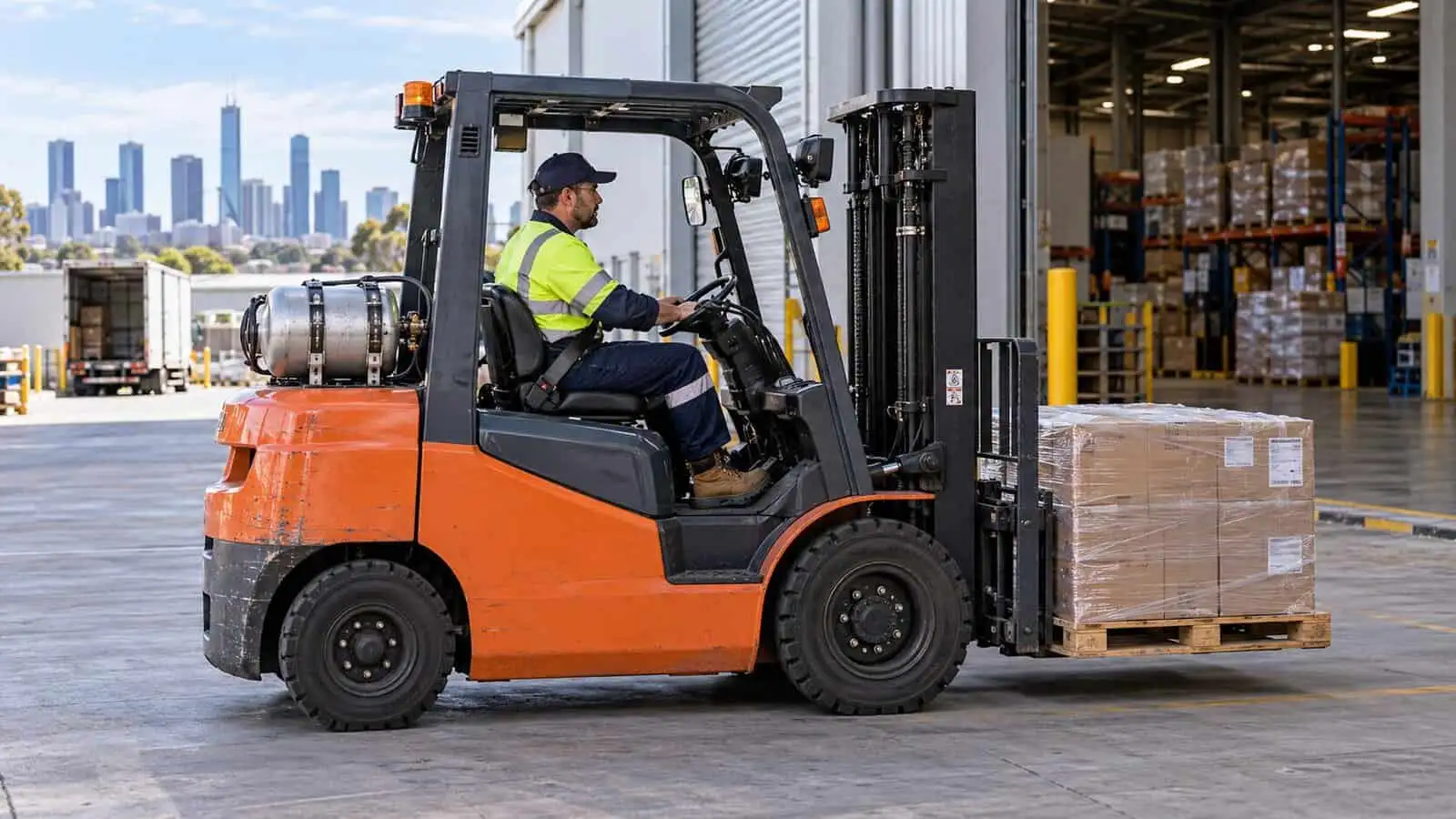
A typical 2 to 2.5 tonne LPG forklift uses about 2 to 3.5 kg of gas per hour of engine running. At that rate, a standard 15 kg forklift cylinder lasts about 4.5 to 7.5 hours and an 18 kg cylinder lasts about 5 to 9 hours.
LPG supplier Elgas puts a typical figure at 6 to 8 hours per cylinder, depending on engine size. Larger forklifts, heavy loads, ramps, idling and a poorly tuned gas system all increase consumption.
LPG Usage by Forklift Capacity
Manufacturers publish gas consumption measured on a standard test cycle, such as EN 16796 or VDI 2198. These cycles involve continuous driving and lifting, so the figures sit at the upper end of what most forklifts use over a working shift.
| Forklift | Capacity | Test-cycle gas use |
| Toyota Tonero (06-8FG, 4Y engine) | 1.5 t | 2.6 kg/h |
| Toyota Tonero | 1.8 t | 2.9 kg/h |
| Toyota Tonero | 2.0 t | 3.0 kg/h |
| Toyota Tonero | 2.5 t | 3.4 kg/h |
| Toyota Tonero | 3.0 t | 3.7 kg/h |
| Toyota Tonero | 3.5 t | 4.0 kg/h |
| Hyster H2.0A to H3.5A (electronic transmission) | 2.0 to 3.5 t | 2.0 to 3.1 kg/h |
| Linde H20 to H35 (Deutz 2.2 L LPG engine) | 2.0 to 3.5 t | 2.3 to 2.9 kg/h |
| Linde H35 to H50 | 3.5 to 5.0 t | 3.7 to 4.2 kg/h |
Real work includes waiting, short trips and lighter loads, so average consumption over a shift is usually lower than these test figures.
How Long a Forklift Gas Bottle Lasts
The following planning estimates are based on the manufacturer figures above and supplier guidance. The upper usage figure reflects busy, continuous work and the lower figure reflects lighter, stop-start work. Hours refer to engine hours on the hour meter.
| Capacity | Typical gas use | 15 kg cylinder lasts | 18 kg cylinder lasts | Gas cost per engine hour |
| 1.5 to 1.8 t | 1.8 to 2.9 kg/h | 5 to 8 hours | 6 to 10 hours | $10 to $16 |
| 2.0 to 2.5 t | 2.0 to 3.4 kg/h | 4.5 to 7.5 hours | 5 to 9 hours | $11 to $19 |
| 3.0 to 3.5 t | 2.5 to 4.0 kg/h | 4 to 6 hours | 4.5 to 7 hours | $14 to $22 |
| 4.0 to 5.0 t | 3.0 to 4.2 kg/h | 3.5 to 5 hours | 4 to 6 hours | $17 to $23 |
Gas costs assume $5.50 per kg including GST, the middle of the retail cylinder exchange prices found in October 2026. Business supply contracts are often cheaper, so use the price on your own invoice where possible.
How to Measure Your Forklift’s Gas Usage
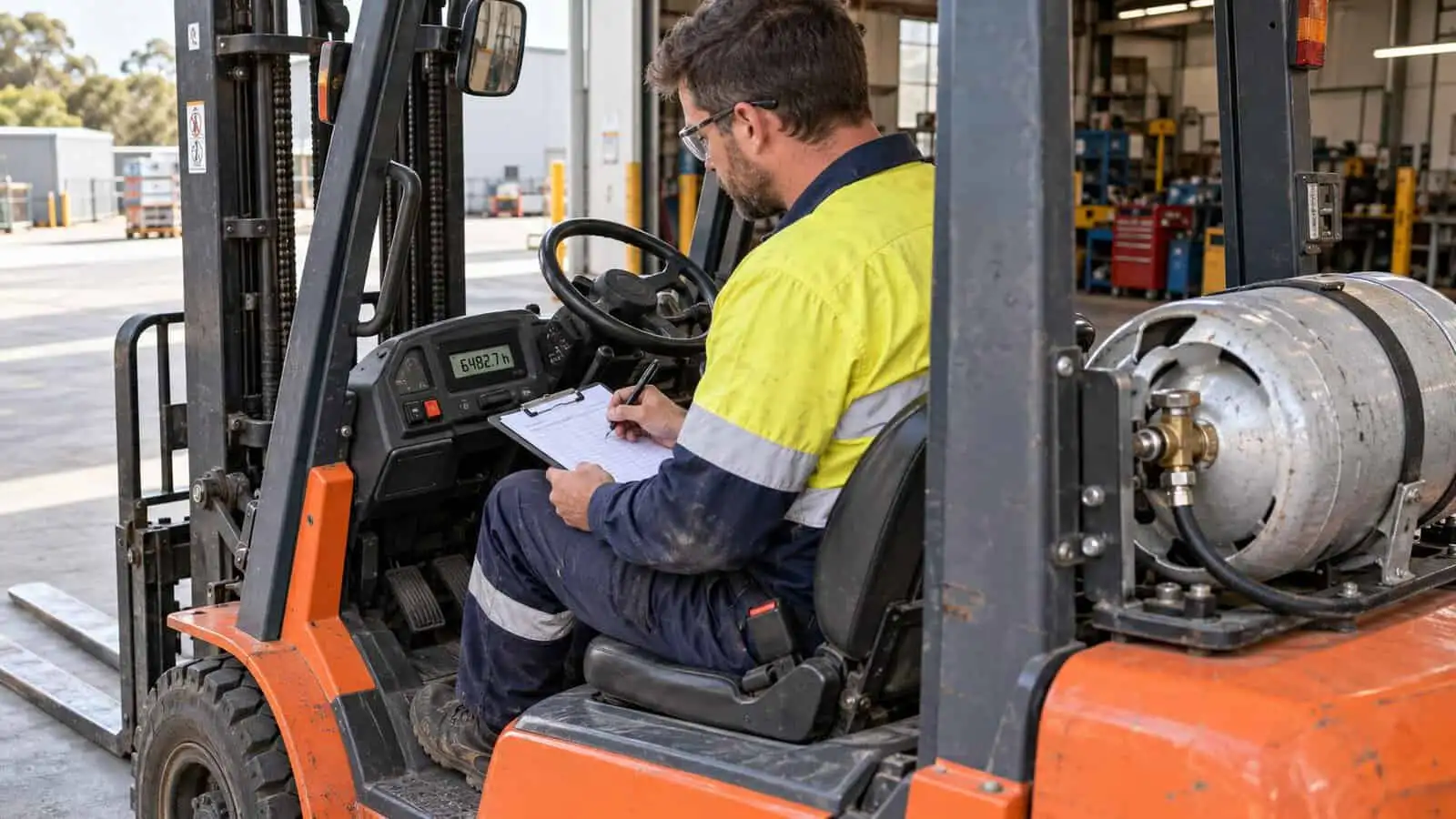
The most accurate figure is the one from your own forklift, and it takes only one cylinder to measure:
- Record the hour meter reading when you fit a full cylinder.
- Record the reading again when the cylinder runs empty.
- Divide the cylinder size by the hours used.
For example, a 15 kg cylinder fitted at 4,210.0 hours that runs empty at 4,216.5 hours has lasted 6.5 hours. That forklift uses 15 ÷ 6.5 = 2.3 kg per hour.
Repeat the measurement over three or four cylinders for a reliable average. A sudden drop in the hours each cylinder lasts is an early sign that something has changed.
How Much Does It Cost to Run an LPG Forklift?
Gas cost per hour equals kilograms used per hour multiplied by the price per kilogram.
Retail forklift cylinder exchange prices found in October 2026 ranged from about $70 to $110 per cylinder, or roughly $4.40 to $7.30 per kg including GST. Suppliers such as Elgas, Supagas and Origin price business accounts by quote, and cylinder rental fees usually apply on top of the gas price.
A 2.5 t forklift averaging 2.5 kg per hour over 1,000 engine hours a year uses about 2,500 kg of LPG, or roughly 170 cylinders of 15 kg. At $5.50 per kg, that is about $13,750 a year in gas.
When comparing power sources, gas cost is one part of a wider calculation that includes purchase price, servicing, refuelling or charging time and where the forklift will work. The trade-offs between electric, LPG and diesel forklifts are worth weighing alongside the fuel use of a diesel forklift and the electricity an electric forklift uses.
15 kg vs 18 kg Forklift Gas Cylinders
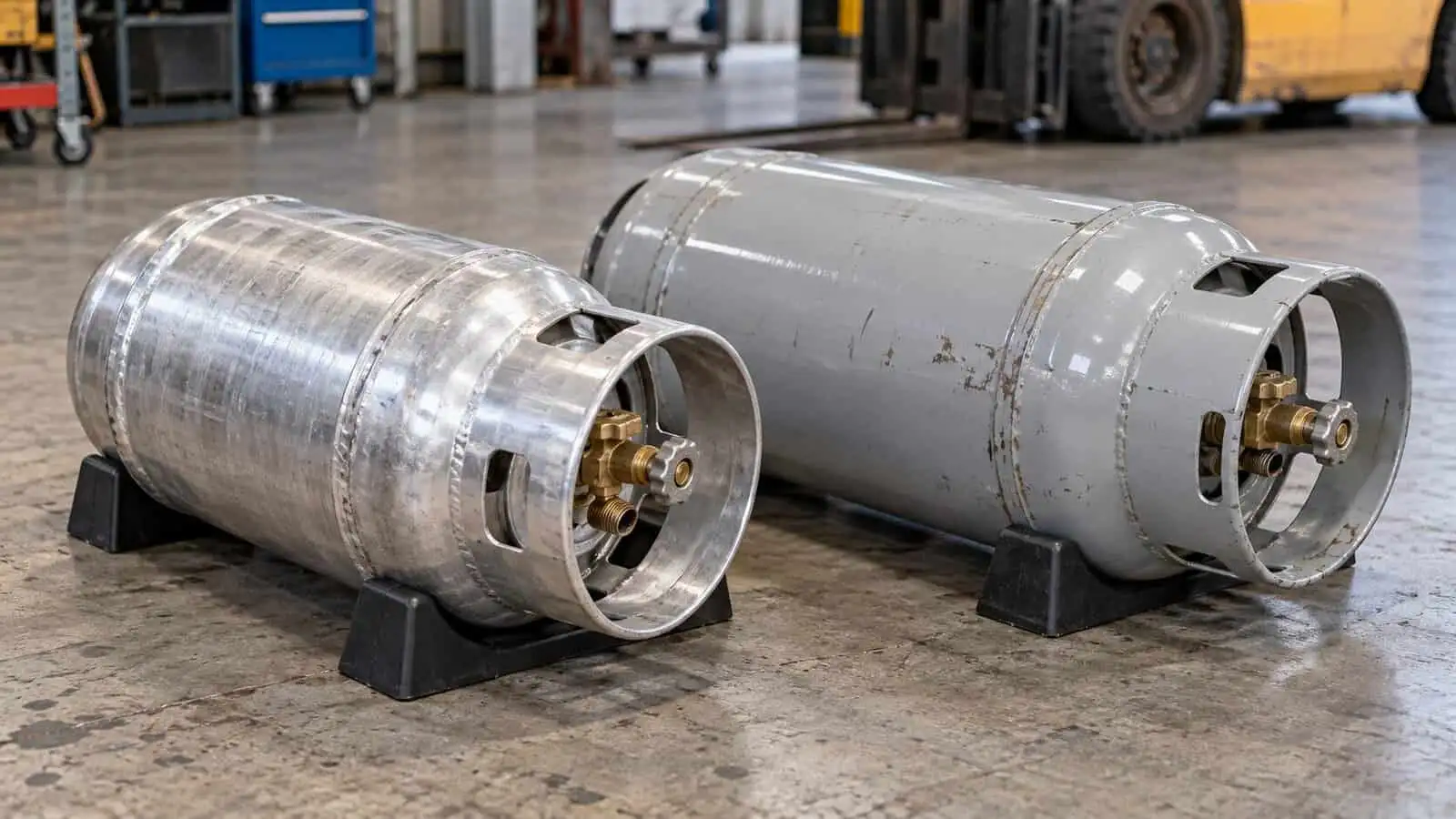
Most Australian LPG forklifts run on one of two cylinder sizes.
| Cylinder | Material | Gas capacity | Approximate full weight | LPG volume |
| 15 kg | Aluminium | 15 kg | 24.7 kg | 29.4 L |
| 18 kg | Steel | 18 kg | 36 kg | 35.3 L |
The 18 kg cylinder holds 20% more gas, so it runs about 20% longer, but it is considerably heavier to lift on and off the forklift. Forklift cylinders are designed for liquid withdrawal and mount horizontally, so they are not interchangeable with 9 kg barbecue cylinders. Cylinder sizes, suppliers and exchange options are covered in more detail in this explanation of forklift gas bottles.
What Makes an LPG Forklift Use More Gas
- Idling. Toyota Material Handling Australia recommends switching off if the forklift will be waiting for more than about a minute.
- Driving style. Harsh acceleration and braking use more gas than smooth driving.
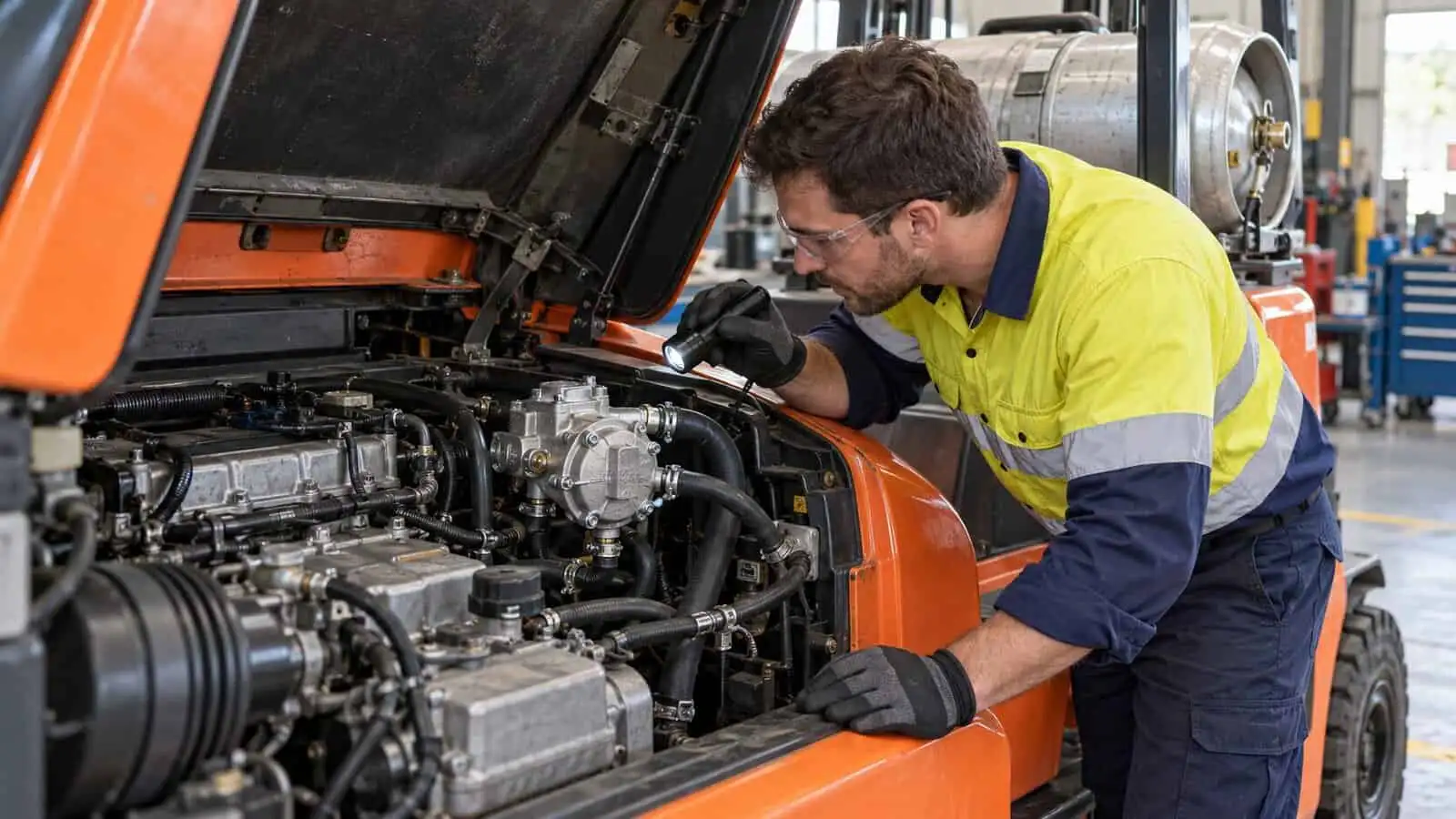
- Missed servicing. Dirty air filters, worn spark plugs, old oil and a poorly tuned gas system, including the regulator, vaporiser and mixer, all increase consumption. A well-tuned LPG engine also produces far less carbon monoxide.
- Tyres. Worn or damaged tyres and under-inflated pneumatic tyres make the engine work harder.
- Loads, ramps and travel distance. Heavy loads, ramps and long trips between racking and loading bays add up over a shift.
- An oversized forklift. A 3.5 t forklift doing work suited to a 1.8 t machine uses more gas than necessary.
- Changing cylinders early. Gas left in a returned cylinder goes back to the supplier, so run cylinders until they are empty.
Signs a Gas Bottle Is Running Low or Something Is Wrong
- Running low. The engine starts to stutter and lose power as the cylinder empties. To check how much gas is left, weigh the cylinder and subtract the tare weight stamped on the collar.
- Using too much. Cylinders run out noticeably faster than they used to, or faster than the planning estimates above.
- Possible leak. A smell of gas, frost on fittings, or bubbles when soapy water is brushed over the connection after a changeover.
If any of these appear, stop using the forklift and have the gas system checked by a licensed gas fitter or forklift technician.
LPG Forklift Safety: Changeovers, Storage and Indoor Use
Changing a Forklift Gas Cylinder
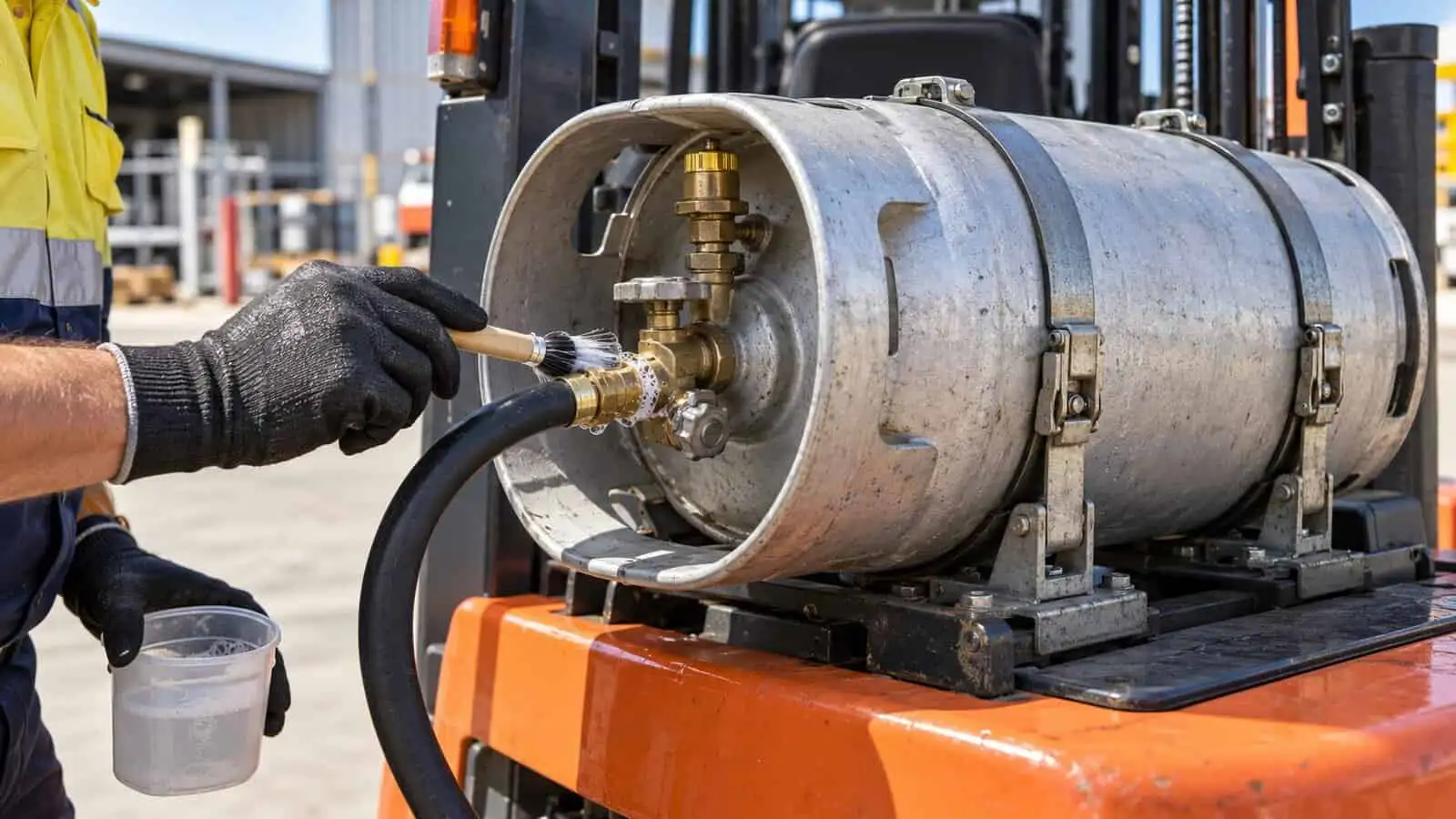
Elgas’s forklift cylinder exchange procedure sets out these steps:
- Park on level ground with the handbrake on and the engine off.
- Wear gloves and eye protection, and keep ignition sources away.
- Close the cylinder valve before disconnecting.
- Fit the full cylinder with its relief valve at the 12 o’clock position and tighten the straps.
- Leak-test the connection with soapy water.
Storing Forklift Gas Cylinders
Store cylinders in a ventilated cage outdoors, away from drains, pits and ignition sources. Follow AS/NZS 1596, which was revised in 2026, together with your gas supplier’s guidance.
Carbon Monoxide and Indoor Use
LPG engines produce carbon monoxide. Safe Work Australia’s exposure standard for carbon monoxide is 30 ppm averaged over an eight-hour day. New workplace exposure limits take effect on 1 December 2026, so check for any change before relying on that figure.
WorkSafe Victoria’s guidance for LPG-powered equipment includes good ventilation, maintenance by a qualified gas fitter, emission controls and considering electric equipment for enclosed areas. Ventilation, ceiling height and the type of work all affect whether LPG forklifts can be used indoors safely.
What to Check on a Used LPG Forklift
The gas system is one of the first things to inspect on a used LPG forklift. Look for:
- hoses that are not cracked or perished
- a regulator and vaporiser that do not leak or frost up
- a secure cylinder bracket and straps in good condition
- an engine that starts easily and idles smoothly
Find an LPG Forklift at Buy A Fork
Gas usage depends heavily on matching the forklift’s capacity to the work. A forklift that is larger than the job requires will use more gas every hour it runs.
Buy A Fork sells LPG forklifts across a range of capacities from its showroom in Somerton, Melbourne. Call 1300 057 880 to discuss the capacity, mast height and fuel type that suit your loads and site.
Frequently Asked Questions About LPG Forklift Gas Usage
1. How Much LPG Does a Forklift Use per Hour?
A typical 2 to 2.5 t LPG forklift uses about 2 to 3.5 kg of gas per hour of engine running. Smaller forklifts use less, while 4 to 5 t forklifts can use about 4 kg per hour or more on busy work.
2. How Long Does a 15 kg Forklift Gas Bottle Last?
On a 2 to 2.5 t forklift, a 15 kg cylinder usually lasts about 4.5 to 7.5 hours of engine running. It lasts closer to 7 hours on light, stop-start work and closer to 4.5 hours on busy, continuous work.
3. How Long Does an 18 kg Forklift Gas Bottle Last?
On a 2 to 2.5 t forklift, an 18 kg cylinder usually lasts about 5 to 9 hours of engine running. It holds 20% more gas than a 15 kg cylinder.
4. How Much Does It Cost to Run an LPG Forklift per Hour?
At $5.50 per kg, a 2 to 2.5 t forklift costs about $11 to $19 per engine hour in gas. Multiply your own kilograms per hour by the price on your gas invoice for an exact figure.
5. Why Is My Forklift Using More Gas Than Usual?
Common causes include a gas system that needs tuning or has a leak, missed servicing, worn tyres, extra idling or heavier work than before. If consumption increases suddenly, have the gas system checked.
6. Can I Use a BBQ Gas Bottle on a Forklift?
No. Forklift cylinders are designed for liquid withdrawal and mount horizontally. Barbecue cylinders are vapour-withdrawal cylinders designed to stand upright.