
The Benefits of Forklift Telemetry and Remote Monitoring
· Updated
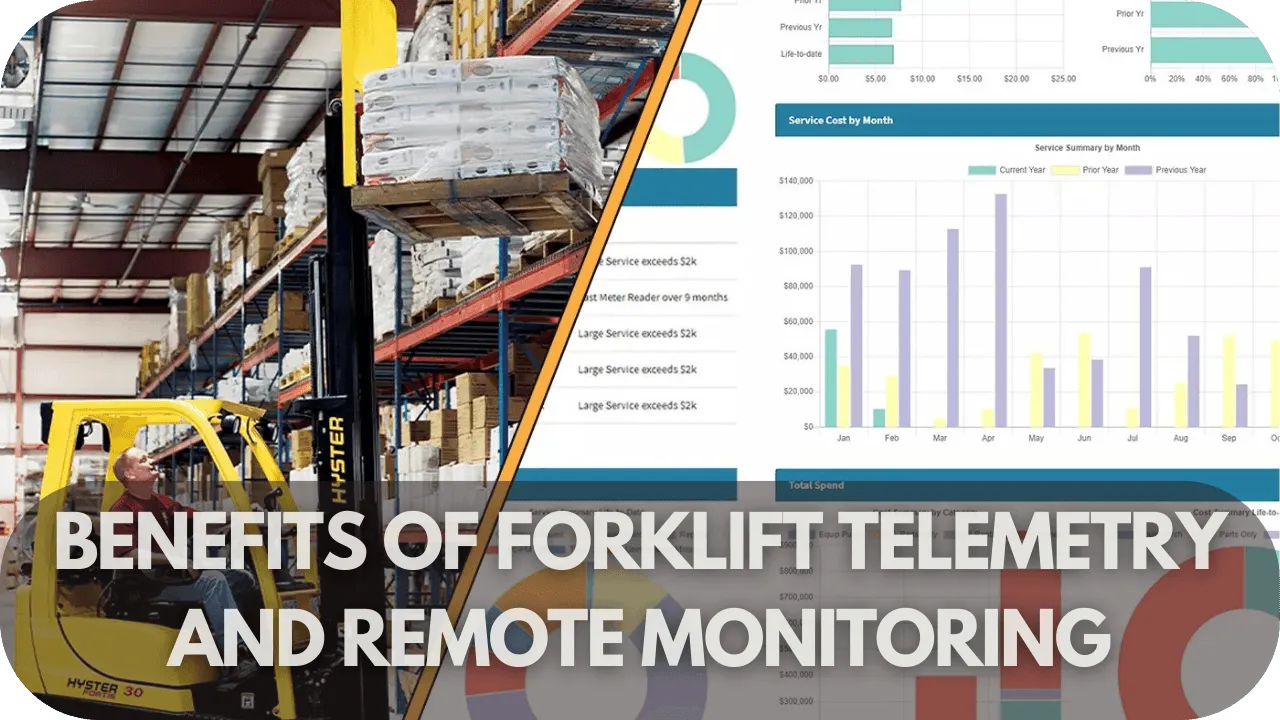
Forklifts are the backbone of many industries, helping move heavy loads and keep operations running smoothly. But what happens when these machines become smarter? Forklift telemetry and remote monitoring systems are transforming the way businesses manage their fleets.
These technologies allow real-time tracking and data collection, improving safety, efficiency, and cost savings. If you’re looking to boost productivity and sustainability, it’s time to learn how forklift telemetry can make a significant difference in your operation.
What is Forklift Telemetry and Remote Monitoring?
Forklift telemetry and remote monitoring are technologies that allow businesses to gather and analyse data from their forklifts in real time.
Telemetry involves using sensors and GPS technology to track the performance of forklifts, including metrics like speed, fuel consumption, battery charge, location, and maintenance needs.
Remote monitoring goes hand-in-hand, enabling managers to view this data from anywhere, typically via a cloud-based system or dedicated software.
These tools provide businesses with the ability to make informed decisions on fleet management, maintenance scheduling, safety compliance, and overall operational efficiency.
In essence, forklift telemetry and remote monitoring systems offer a smart way to keep track of machinery, ensuring optimal performance while reducing downtime and maintenance costs.
With these systems, businesses no longer need to rely on manual checks or guesswork to manage their forklift fleets. Instead, they can access accurate, real-time data to improve daily operations.
How Does Forklift Telemetry and Remote Monitoring Work?
Forklift telemetry systems work by collecting data through sensors installed on the forklift itself. These sensors monitor various aspects of the machine, such as its speed, fuel usage, engine performance, load handling, and even the operator’s driving behaviour.
The data gathered is sent via a wireless connection to a central system, typically using cellular or Wi-Fi networks. This real-time data is processed and displayed on dashboards, where fleet managers can view it instantly.
For instance, managers can track the location of each forklift in the fleet, see how efficiently they’re being operated, and even receive alerts when maintenance is needed. By analysing these data points, businesses can detect any performance issues early on and schedule repairs before a breakdown occurs.
The ability to monitor multiple forklifts simultaneously and remotely is a game-changer for businesses managing large fleets, as it reduces the need for manual inspections and improves the overall management process.
Key Benefits of Forklift Telemetry and Remote Monitoring
See how forklift telemetry and remote monitoring can enhance your fleet’s efficiency, safety, and overall performance.
1. Improved Fleet Management
With real-time tracking of each forklift’s performance, fleet managers can optimise their operations like never before. They can monitor the location, status, and usage of every forklift in the fleet, ensuring that machines are being used efficiently.
By tracking idle times and managing the workload of each forklift, managers can reduce unnecessary delays and improve overall productivity.
Fleet management becomes more streamlined, allowing managers to better allocate resources and plan for maintenance needs in advance, thus preventing costly downtime.
2. Enhanced Safety and Compliance
Safety is a top priority in any warehouse or industrial setting. Forklift telemetry helps ensure that forklifts are being operated according to safety standards by monitoring operator behaviour, such as excessive speed or improper load handling.
If any unsafe actions are detected, managers receive instant alerts, allowing them to intervene before accidents occur. Additionally, remote monitoring helps businesses stay compliant with safety regulations, ensuring that regular maintenance checks are completed on time and that forklifts are always ready for safe operation.
3. Reduced Downtime and Maintenance Costs
One of the standout benefits of forklift telemetry is predictive maintenance. By continuously monitoring the health of the forklifts, businesses can detect potential issues before they lead to major breakdowns.
For example, if a forklift shows signs of engine stress or a low battery, the system will send an alert, allowing for proactive repairs. This significantly reduces unexpected downtime and cuts down on repair costs.
As forklifts are maintained at optimal performance levels, the lifespan of the machines is extended, offering further savings in the long run.
4. Increased Operational Efficiency
Forklift telemetry systems enable businesses to make data-driven decisions that enhance operational efficiency. By analysing data on fuel consumption, driving behaviour, and equipment usage, businesses can identify areas for improvement.
Fleet managers can optimise driving routes and reduce fuel consumption by adjusting the operation of forklifts to be more energy-efficient. The data also helps in better scheduling, ensuring that forklifts are available when needed and that their usage is optimised throughout the day.
5. Better Decision-Making with Data Insights
Telematics and remote monitoring offer businesses access to a wealth of data that can be used for better decision-making. Managers can assess forklift performance, operator productivity, fuel efficiency, and more.
With this valuable information, companies can identify patterns, plan fleet upgrades, and fine-tune operational strategies to achieve better results.
Instead of relying on assumptions or guesswork, businesses now have a clear view of what’s working and where improvements can be made, leading to more effective management.
6. Cost Savings on Fuel and Energy Consumption
Fuel costs can quickly add up, especially with a large forklift fleet. By monitoring fuel consumption and operator behaviours through telemetry, businesses can spot areas where they are wasting fuel and make adjustments.
If forklifts are idling for too long, managers can instruct operators to turn off the engines, reducing unnecessary fuel consumption. Additionally, for electric forklifts, remote monitoring ensures that battery charging schedules are optimised, extending battery life and cutting energy costs.
7. Improved Operator Performance and Training
Telemetry systems allow fleet managers to track individual operator performance. They can assess factors like speed, lifting practices, and adherence to safety protocols.
This data can be used to identify areas where operators need additional training or coaching, ultimately improving the overall performance of the team.
By using the data from the system, operators can receive feedback and training specific to their needs, leading to enhanced skills, better safety habits, and greater operational efficiency.
8. Environmental Impact Reduction
In today’s world, sustainability is a key concern for businesses across industries. Forklift telemetry helps reduce the environmental footprint of operations by promoting more energy-efficient practices.
By optimising fuel consumption, reducing idle times, and implementing smart charging strategies for electric forklifts, businesses can significantly lower emissions and their overall environmental impact.
Additionally, by extending the lifespan of forklifts through predictive maintenance, companies can reduce the need for frequent replacements, contributing to a reduction in waste.
How to Implement Forklift Telemetry and Remote Monitoring
Implementing forklift telemetry and remote monitoring systems can seem daunting, but with the right approach, it can significantly improve your fleet’s efficiency. Here’s how you can get started:
- Choose the Right System: Select a system that fits the size of your fleet, the types of forklifts you use, and your business’s specific needs. Consider factors like system compatibility, scalability, and ease of use.
- Install the Necessary Hardware: Once the system is selected, install the required sensors and telematics devices on each forklift. This includes GPS trackers, fuel or battery monitors, and performance sensors.
- Train Your Team: Proper training is crucial for effective use. Ensure that fleet managers and operators are familiar with the system’s features, dashboards, and reporting tools. Training will help them make informed decisions based on real-time data.
- Monitor and Review Performance: After installation, continuously monitor the system’s performance. Review data regularly to identify trends and areas for improvement. Make adjustments as necessary to maximise the system’s potential.
- Optimise Over Time: Periodically assess how the system is performing and make changes based on new business needs or emerging technologies. Regular optimisation ensures that the system evolves with your business.
Challenges and Considerations
While forklift telemetry and remote monitoring offer numerous advantages, there are challenges that businesses must address to fully optimise these systems.
- Initial Investment Costs: Implementing telemetry systems involves upfront expenses for hardware, software, and integration. Smaller operations might find these costs prohibitive, even when balanced against long-term savings.
- Data Management Complexity: Telemetry generates vast amounts of data that require efficient processing, storage, and interpretation. Without the right analytics tools or expertise, businesses risk being overwhelmed by raw data rather than actionable insights.
- Integration With Existing Systems: Older fleets or legacy equipment may not easily support telemetry solutions, requiring upgrades or customisation to ensure compatibility.
- Employee Adoption: Resistance to new technologies is common among staff, especially when systems track productivity and operational habits. Proper training and clear communication are vital to addressing concerns about monitoring and privacy.
- Cybersecurity Risks: With data being transmitted remotely, the risk of cyberattacks or unauthorised access increases. Ensuring robust cybersecurity protocols and secure networks is critical to protecting sensitive operational data.
- Maintenance and Updates: Like any technology, telemetry systems require regular updates and maintenance to remain effective. Neglecting this can lead to outdated systems, reducing efficiency or causing compatibility issues over time.
Conclusion
Forklift telemetry and remote monitoring offer invaluable benefits to businesses, including improved fleet management, enhanced safety, and reduced operational costs.
Ready to take the next step? Get in touch with us today to learn how forklift telemetry and remote monitoring can transform your fleet management. Let’s optimise your operations for greater efficiency and sustainability!