
Forklift Sizes and Dimensions: A Guide by Capacity Class
· Updated
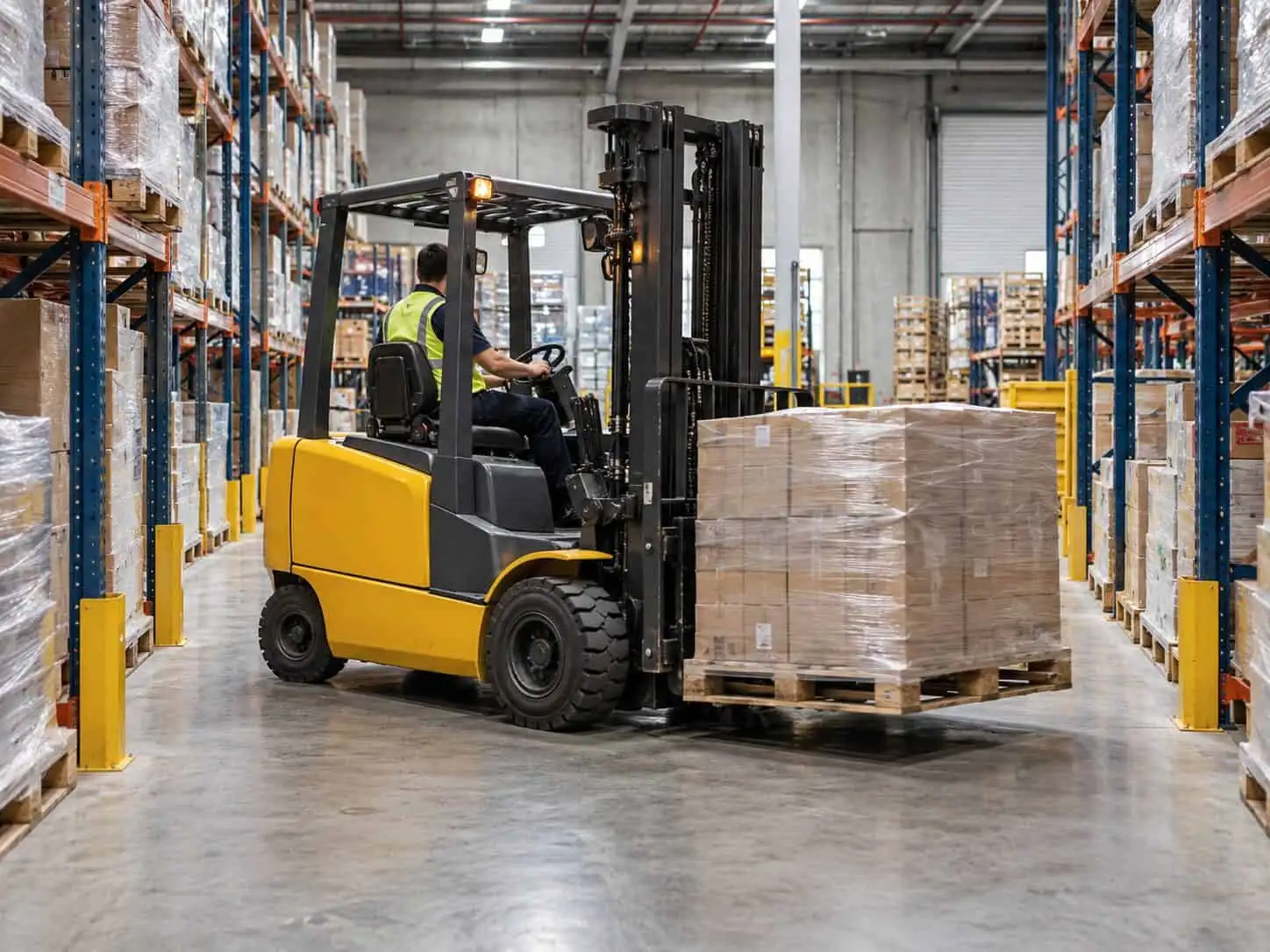
Forklift sizes are usually described in tonnes, which tells you what a machine lifts and nothing at all about whether it fits. The person standing in a warehouse with a tape measure needs millimetres.
This guide gives them: dimensions by capacity class from published manufacturer specifications, the aisle width each machine type actually needs, and the clearances that decide whether a forklift gets through your roller door or into a shipping container.
The order you work in matters more than most buyers expect. Start from the constraint and work inward, rather than starting from the load weight and working outward, and the shortlist gets short quickly.
What Size Is a Standard Forklift?
The most common forklift in Australian warehouses is a 2.5 tonne counterbalance, and on the Toyota 8FG25 that machine is 1,150mm wide, 2,620mm long to the fork face, and 2,110mm to the top of the overhead guard, with a minimum outside turning radius of 2,280mm.
Those four numbers answer most of the questions people arrive with. Width decides whether it fits between racking, length and turning radius decide the aisle it needs, and overhead guard height decides whether it clears your doorways.
Size scales with capacity, but not evenly. Moving from 1.0 tonne to 3.5 tonne adds about 245mm of width and 605mm of length, while the turning radius grows by 580mm. The machine gets longer faster than it gets wider, which is why length and turning radius, rather than width, are usually what stops a bigger forklift working in an existing building.
Forklift Dimensions by Capacity Class
The figures below are from the Toyota 8FG and 8FD series, which covers 1.0 to 3.5 tonne in both petrol or LPG and diesel. It is a fair reference point for the engine-powered counterbalance class generally, though every manufacturer differs by a margin and mast options change the height figures.
|
Model |
Capacity |
Load centre |
Overall width |
Length to fork face |
Overhead guard height |
Turning radius |
|
8FG10 / 8FD10 |
1,000kg |
500mm |
1,045mm |
2,240mm |
2,080mm |
1,910mm |
|
8FG15 / 8FD15 |
1,500kg |
500mm |
1,070mm |
2,285mm |
2,080mm |
1,990mm |
|
8FG18 / 8FD18 |
1,750kg |
500mm |
1,070mm |
2,310mm |
2,080mm |
2,010mm |
|
8FG20 / 8FD20 |
2,000kg |
500mm |
1,150mm |
2,550mm |
2,110mm |
2,200mm |
|
8FG25 / 8FD25 |
2,500kg |
500mm |
1,150mm |
2,620mm |
2,110mm |
2,280mm |
|
8FG30 / 8FD30 |
3,000kg |
500mm |
1,240mm |
2,775mm |
2,170mm |
2,430mm |
|
8FGJ35 / 8FDJ35 |
3,500kg |
500mm |
1,290mm |
2,845mm |
2,180mm |
2,490mm |
Source: Toyota Material Handling International, 8FG/8FD 1.0 to 3.5 ton Series catalogue. Figures vary by mast and tyre configuration. Check the specification for the exact machine before committing to a layout.
Two things in that table are worth reading twice. The 1.5 tonne and 1.75 tonne machines share a width, and so do the 2.0 tonne and 2.5 tonne machines. If width is your binding constraint, you can often step up a capacity class without losing anything.
The overhead guard height barely moves across the whole range, from 2,080mm to 2,180mm. That is a hundred millimetres across three and a half tonnes of capacity difference, and it means the doorway question is largely settled before you pick a size.
How Much Aisle Width Does a Forklift Need?
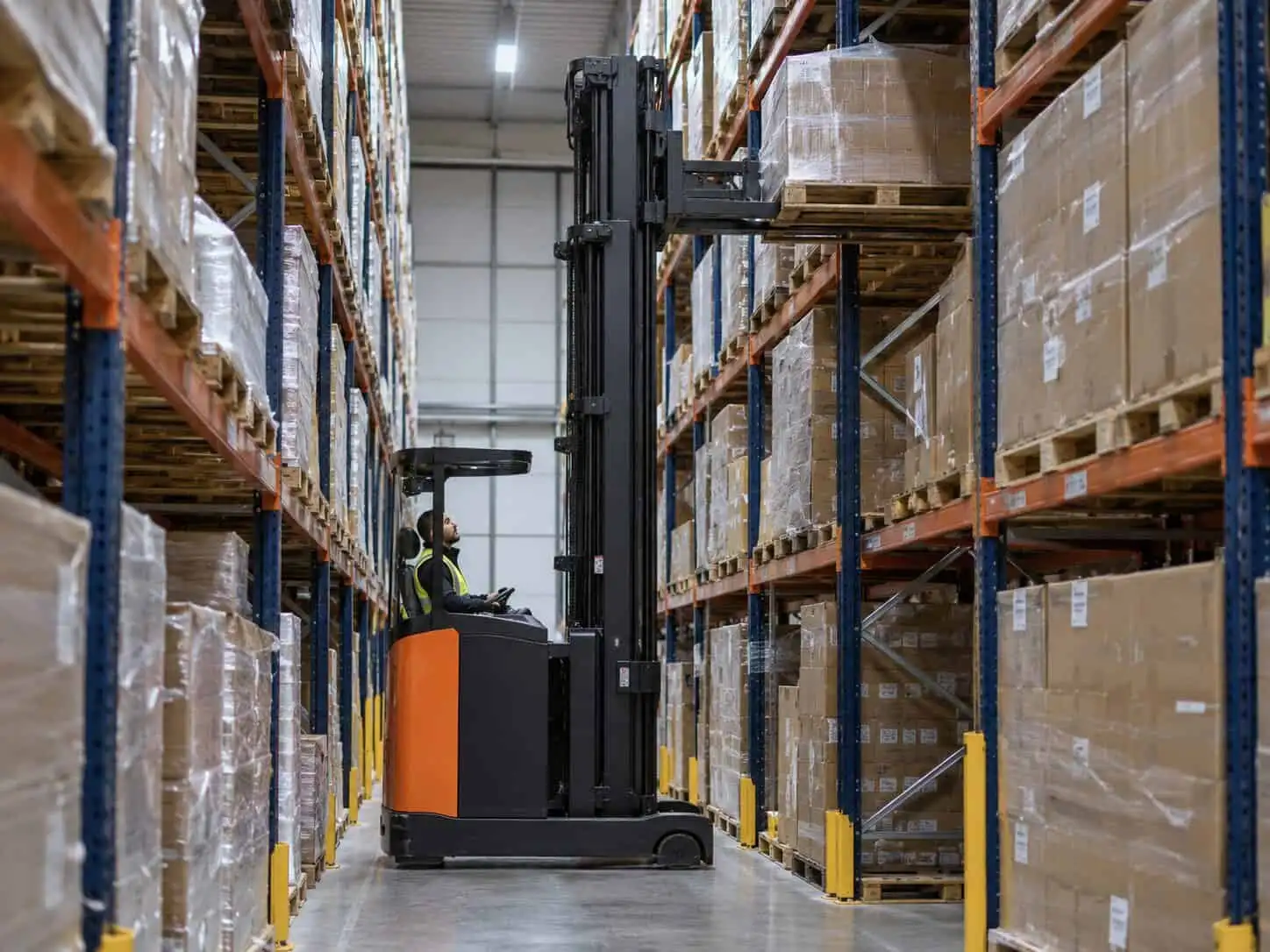
The number you need is not the forklift’s width. It is the right-angle stacking aisle, which is the space the machine needs to turn ninety degrees and place a pallet square into the rack. That figure is always substantially larger than the machine.
It is built from the turning radius, plus the length from the axle to the fork face, plus the depth of the load, plus a working clearance at both ends. Manufacturers publish it for a nominated pallet size, and it changes the moment your pallet changes. Ask for the figure against the pallet you actually run.
Where the machine types separate is stark. Toyota publishes an aisle width of 3,550mm for its 8FB battery counterbalance range and 2,640mm for its 8-Series stand-up reach forklift. Crown’s ESR 5200 moving mast reach truck sits between roughly 2,522mm and 3,013mm depending on pallet and battery, and the SP 3500 high-level order picker needs a minimum aisle of just 1,270mm.
That spread, from 3,550mm down to 1,270mm, is the whole argument for warehouse-specific equipment. A counterbalance needs nearly three times the aisle of an order picker, and every millimetre of aisle is floor area you are paying rent on and not storing anything in.
One practical warning. The published aisle figure is a minimum measured under ideal conditions with a square pallet and an unhurried operator. A working aisle should be wider than the specification, because real pallets overhang, real operators work at pace, and a layout designed to the exact minimum produces damaged racking within a year. Where a counterbalance stops being viable, the answer is a different machine rather than a tighter tolerance.
Will a Forklift Fit Through Your Door, Container or Truck?
This is the question that costs money when it is answered late, and it comes down to overhead guard height on the machine against clear opening height on the obstacle.
- Shipping containers. A standard 20ft and 40ft container has a door opening of 2,280mm wide by 2,260mm high, and an internal height of 2,350mm. A Toyota 8FG25 at 1,150mm wide and 2,110mm to the overhead guard clears that aperture with about 150mm to spare on height.
- 40ft high cube containers. The door opening rises to 2,560mm and the internal height to 2,650mm, which removes the height pressure entirely.
- Larger machines into containers. An 8FG30 at 2,170mm and an 8FGJ35 at 2,180mm leave under 100mm of clearance at a standard container door. That is workable on level ground and marginal on a ramp or an uneven yard.
- Roller doors and internal openings. Measure the clear opening, not the nominal size, and measure at the lowest point including any bottom rail or seal. Anything under about 2,250mm needs checking against the specific machine.
- Mast lowered height. The overhead guard is usually the tallest point on a standard mast, but a machine fitted with a taller mast can exceed it. A container mast is built precisely to keep lowered height low enough to work inside a container.
Container figures from published standard container dimension tables. Confirm against the actual containers you handle, since specifications vary between builders and generations.
If container work is a regular part of the operation, the mast is the specification that decides whether the machine is usable, not the capacity. That is why container mast machines exist as a distinct configuration rather than an option.
Choosing a Forklift Size for Your Warehouse
Most buyers work this problem backwards. They start with the weight they need to lift, choose a capacity class, and then discover the machine will not turn in the aisle or clear the roller door. By that point the money is spent.
Work from the constraint inward instead. Start with the narrowest aisle the machine has to operate in, because that eliminates whole categories of equipment before you consider anything else. Then take the lowest clear opening on its route, which sets the maximum lowered height. Then the top beam of your racking, which sets the mast. Only then bring in the load weight, and check the capacity you need at the height you need it rather than at ground level.
Working in that order produces a shortlist rather than a single answer, and the shortlist is usually smaller than people expect. It also surfaces the real trade-off early, which is nearly always between aisle width and machine cost: the tighter the aisle, the more specialised and expensive the equipment that will work in it.
One more variable belongs in the sizing decision. If the racking is going in at the same time as the machine, the two should be designed together. Widening the aisle by 300mm to allow a counterbalance instead of a reach truck can be cheaper than the equipment difference, or considerably more expensive, depending on how much floor you have.
Are There Really Seven Classes of Forklift?
You will see a seven-class system referenced often, and it is worth knowing that it is American. It comes from the United States occupational safety framework and it groups machines by power source and application: electric rider trucks, electric narrow aisle trucks, electric hand trucks, internal combustion cushion tyre, internal combustion pneumatic tyre, electric and internal combustion tow tractors, and rough terrain machines.
It is a reasonable taxonomy and it is not how equipment is specified in Australia. Here, machines are described by capacity in tonnes and by power type, so a buyer asks for a 2.5 tonne electric counterbalance or a 3.0 tonne diesel rather than a Class IV or Class V.
If you are reading American specifications, translating the class into capacity and power type will get you further than trying to apply the class system locally. What matters here is the tonnage, the fuel, the mast and the aisle.
Compact and Narrow Aisle Machines When Space Is Tight
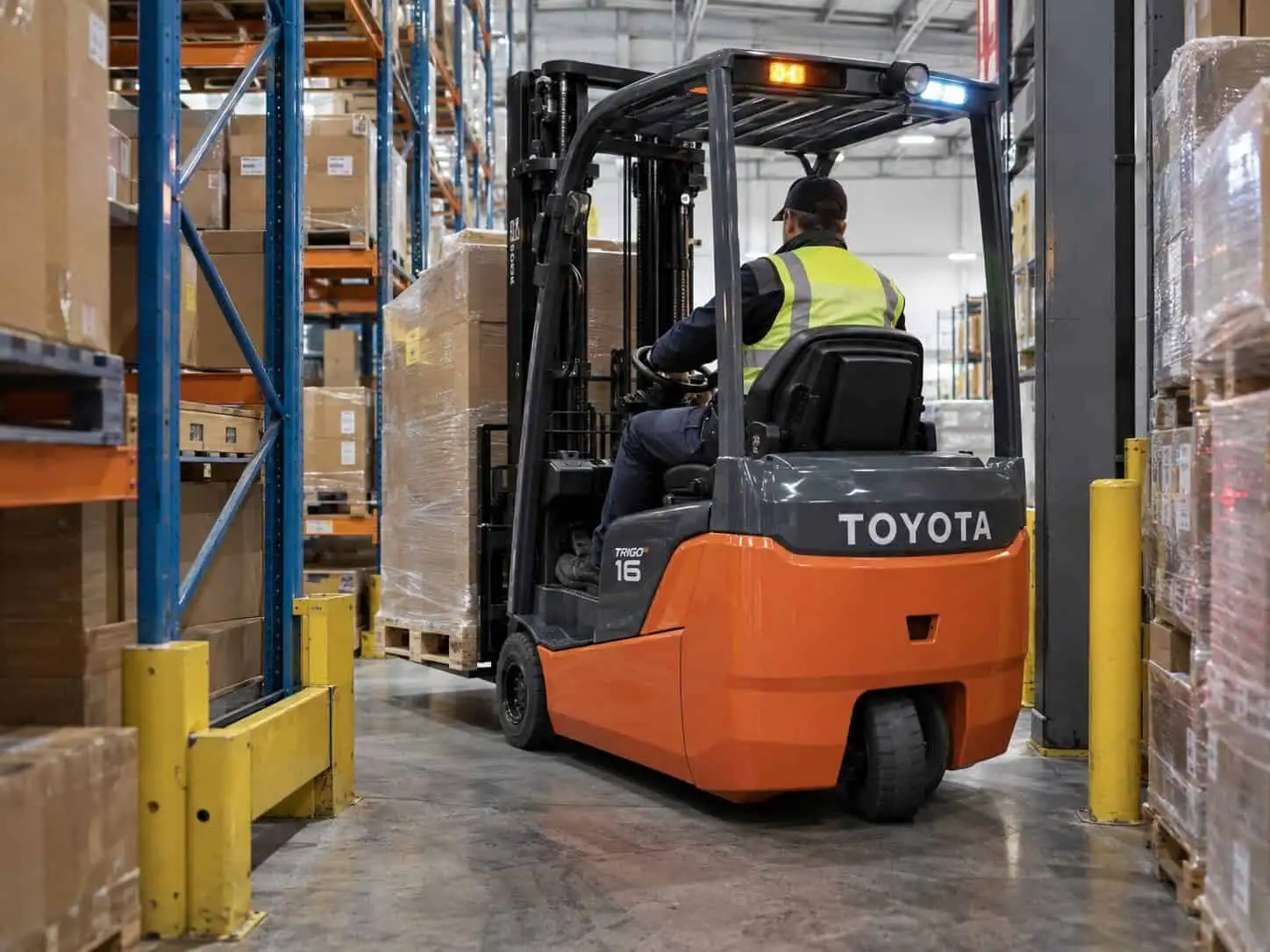
When the dimensions above will not work, the answer is a different machine type rather than a smaller version of the same one.
A three-wheel electric counterbalance gives up some lateral stability to gain a tighter turning circle, which suits tight corners and short runs. The three-wheel and four-wheel decision comes down to how much of the work is turning and how much is travelling with a load.
A reach truck takes a different approach. Rather than turning the whole machine to place a pallet, it extends the mast forward beyond the wheelbase, which is how it gets an aisle figure a counterbalance cannot approach. Whether a reach truck, a pallet stacker or a counterbalance suits the work depends on lift height and pallet volume as much as on the aisle.
Below that again sit pallet stackers and order pickers, which trade capacity and travel speed for a footprint measured in the low thousands of millimetres. The Crown SP 3500 order picker’s 1,270mm minimum aisle is roughly the width of the pallet it is picking from.
Getting the Measurements Right Before You Commit
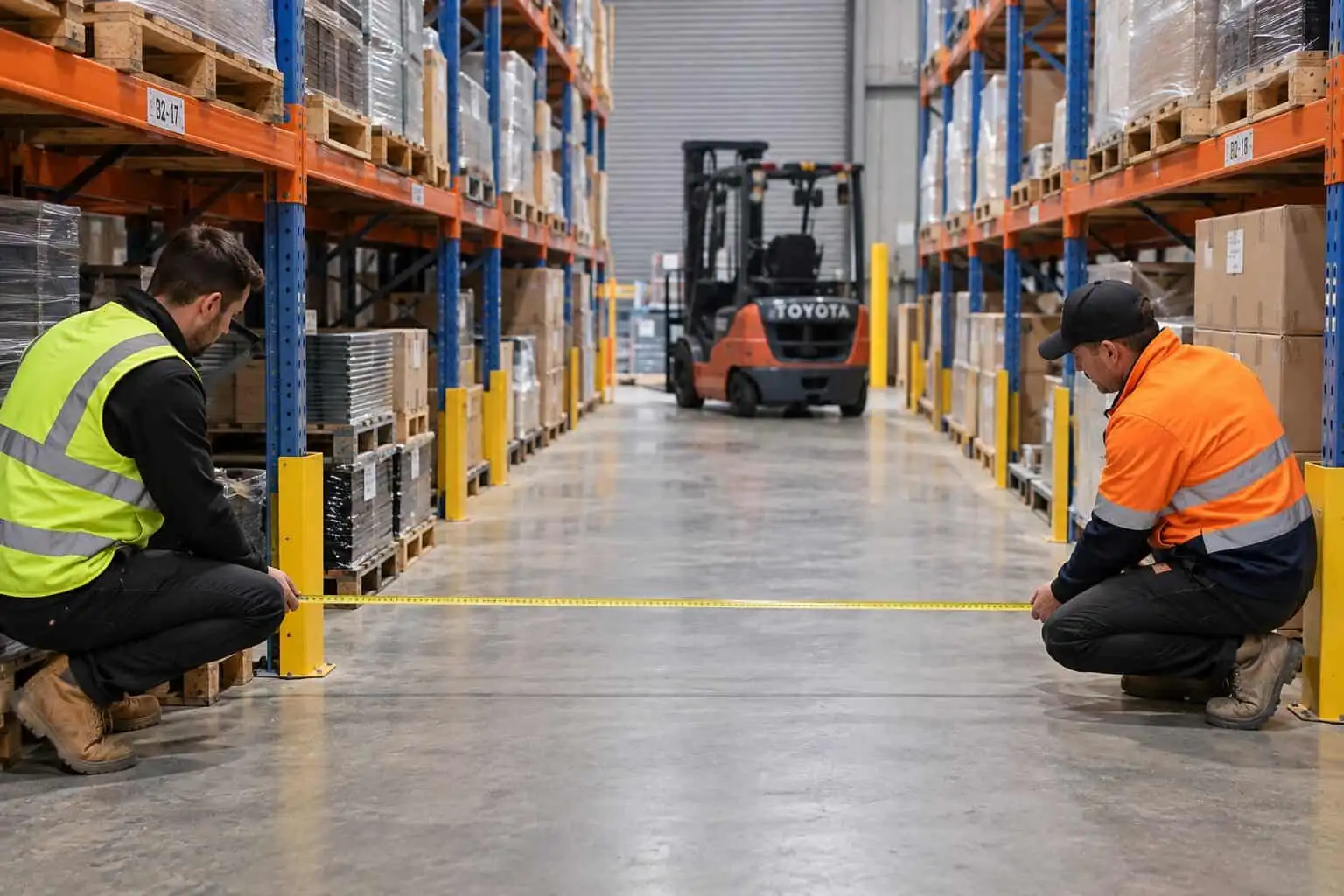
Four measurements settle most forklift sizing decisions: the narrowest working aisle, the lowest clear opening on the machine’s route, the top beam height of the racking, and the heaviest load going to that top beam. Take those before you shortlist anything.
If you have those numbers, we can tell you which capacity classes will physically work in your building and which will not, including where a reach truck or a container mast machine solves a problem that no counterbalance size will. Our counterbalance range and electric warehouse equipment cover most of the configurations that come up, and it is a short conversation once the measurements exist.
Frequently Asked Questions
1. What sizes do forklifts come in?
Standard counterbalance forklifts run from about 1.0 tonne to 3.5 tonne in the common warehouse and yard range, with heavy-duty machines continuing well beyond that. Across that range, overall width goes from roughly 1,045mm to 1,290mm and length to fork face from 2,240mm to 2,845mm on the Toyota 8FG and 8FD series.
2. What is the typical size of a 2.5 tonne forklift?
A Toyota 8FG25 or 8FD25 is 1,150mm wide, 2,620mm long to the fork face, 2,110mm to the top of the overhead guard, with a minimum outside turning radius of 2,280mm. Other manufacturers vary by a margin, and mast choice changes the height, but that is a fair working set of figures for the class.
3. What are the seven classes of forklifts?
The seven-class system is an American classification covering electric rider trucks, electric narrow aisle trucks, electric hand trucks, internal combustion cushion tyre machines, internal combustion pneumatic tyre machines, tow tractors and rough terrain machines. Australian buyers specify by capacity in tonnes and power type instead.
4. How wide does an aisle need to be for a forklift?
Toyota publishes 3,550mm for its 8FB battery counterbalance range and 2,640mm for its 8-Series stand-up reach forklift. A moving mast reach truck such as the Crown ESR 5200 needs roughly 2,522mm to 3,013mm depending on pallet and battery, and a high-level order picker can work in as little as 1,270mm. Build in more than the published minimum for a working aisle.
5. How tall is a forklift with the mast down?
On the Toyota 8FG and 8FD range the overhead guard sits between 2,080mm and 2,180mm across the whole 1.0 to 3.5 tonne span. A taller mast can exceed that, so check the specific mast fitted rather than assuming the overhead guard is the highest point.
6. Will a forklift fit inside a shipping container?
A standard 20ft or 40ft container has a door opening of 2,280mm by 2,260mm and an internal height of 2,350mm. A machine up to about 2,110mm to the overhead guard, which covers the 1.0 to 2.5 tonne classes on the Toyota range, will enter with clearance. Larger machines and taller masts need a container mast configuration.