
Forklift Proximity Warning Systems: Types, Costs and Whether You Need One
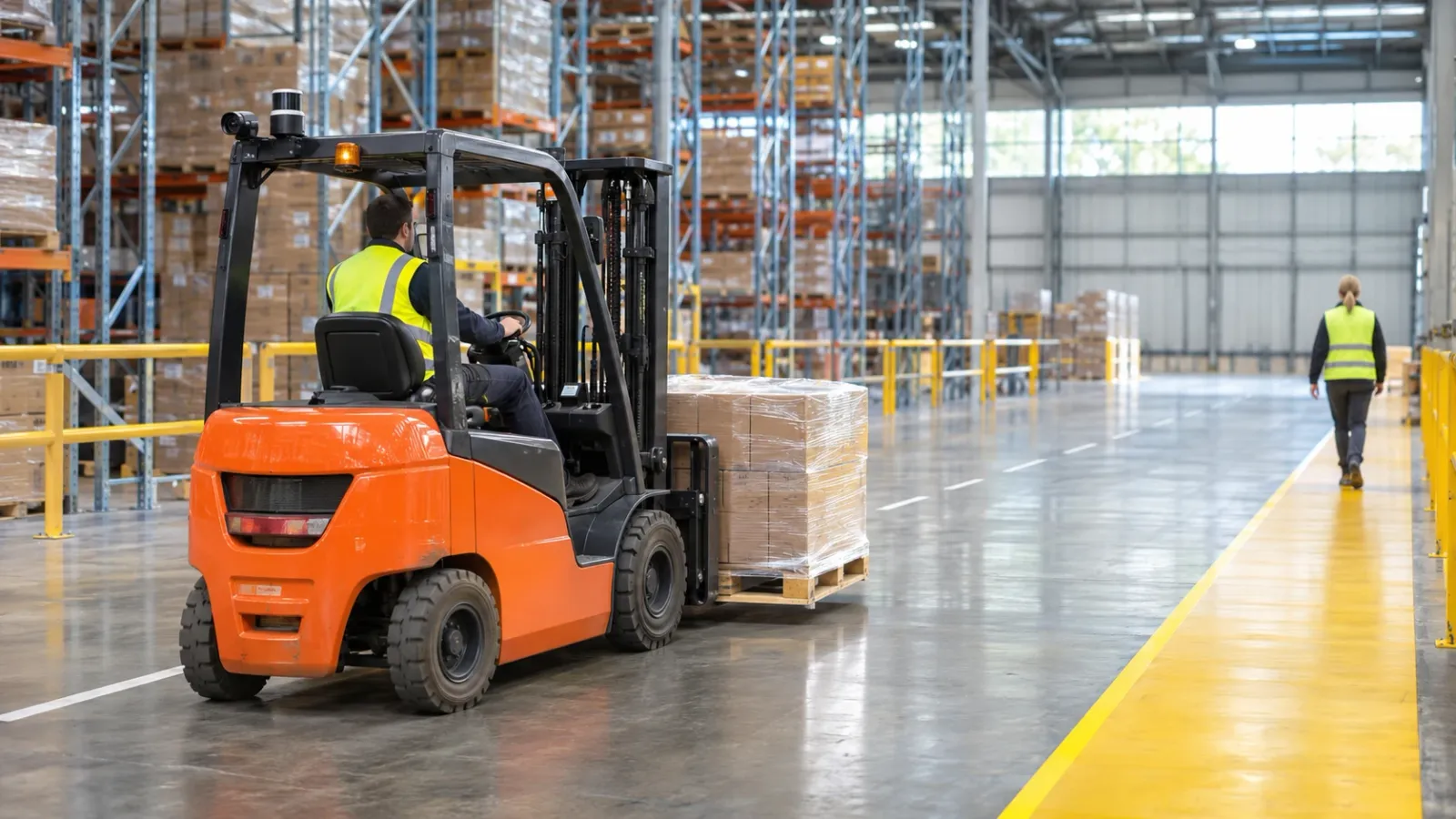
Pedestrians make up almost half of all people injured by forklifts, according to WorkSafe Victoria. A forklift proximity warning system detects a person near the truck and warns the operator, the pedestrian or both; some also slow the forklift down. It works best as a backup to barriers and walkways, so the right type depends on how your site already keeps people and trucks apart.
Buy A Fork sells used forklifts from Somerton in Melbourne's north and services them across Victoria, so this guide looks at these systems from the truck side: what each type detects, what pushes the price up, and what to check on a forklift you're buying.
What Is a Forklift Proximity Warning System?
A forklift proximity warning system is electronic equipment that senses when a person comes within a set distance of a forklift and raises an alarm. It has something that detects (a tag reader, a sensor or a camera) and something that warns, such as a buzzer or screen in the cab or a tag that vibrates on the pedestrian. Some systems also connect to the truck's controls and cut its speed.
That last option is the one WorkSafe Victoria singles out. Its 2024 forklift guidance encourages employers to consider retrofitting relatively low-cost safety technology, including proximity devices that detect pedestrians and automatically slow the plant to low speed.
A proximity system does a different job from forklift safety lights. A blue spot or red zone light warns people that a forklift is coming, but it has no idea whether anyone is there. A proximity warning system reacts to the person, which is why it can warn the operator too.
Types of Forklift Proximity Warning Systems
Forklift safety systems that detect people come in four main types: tag-based, sensor, camera and fixed zone systems. They differ in what they can detect, who they warn and how often they raise a false alarm.
| Type | How It Detects People | Who Gets Warned | Main Limitation |
|---|---|---|---|
| Tag-based (RFID or UWB) | Pedestrians wear a tag and a reader on the forklift senses it inside a set zone | The operator and the tagged pedestrian | Only detects people wearing a working tag |
| Radar or ultrasonic sensors | Sensors on the truck pick up objects in a zone, usually behind it | The operator | Simple sensors react to any object, not only people |
| Camera with pedestrian detection | Image-recognition software picks out human shapes in the camera view | The operator, sometimes with an external alarm | Needs a clear view; dirt, glare and the truck itself leave gaps |
| Fixed zone or intersection | Sensors at a blind corner or doorway detect a forklift and a person approaching | Both, through lights or signs at that spot | Only covers the places where it's installed |
Tag-Based Systems: RFID and UWB
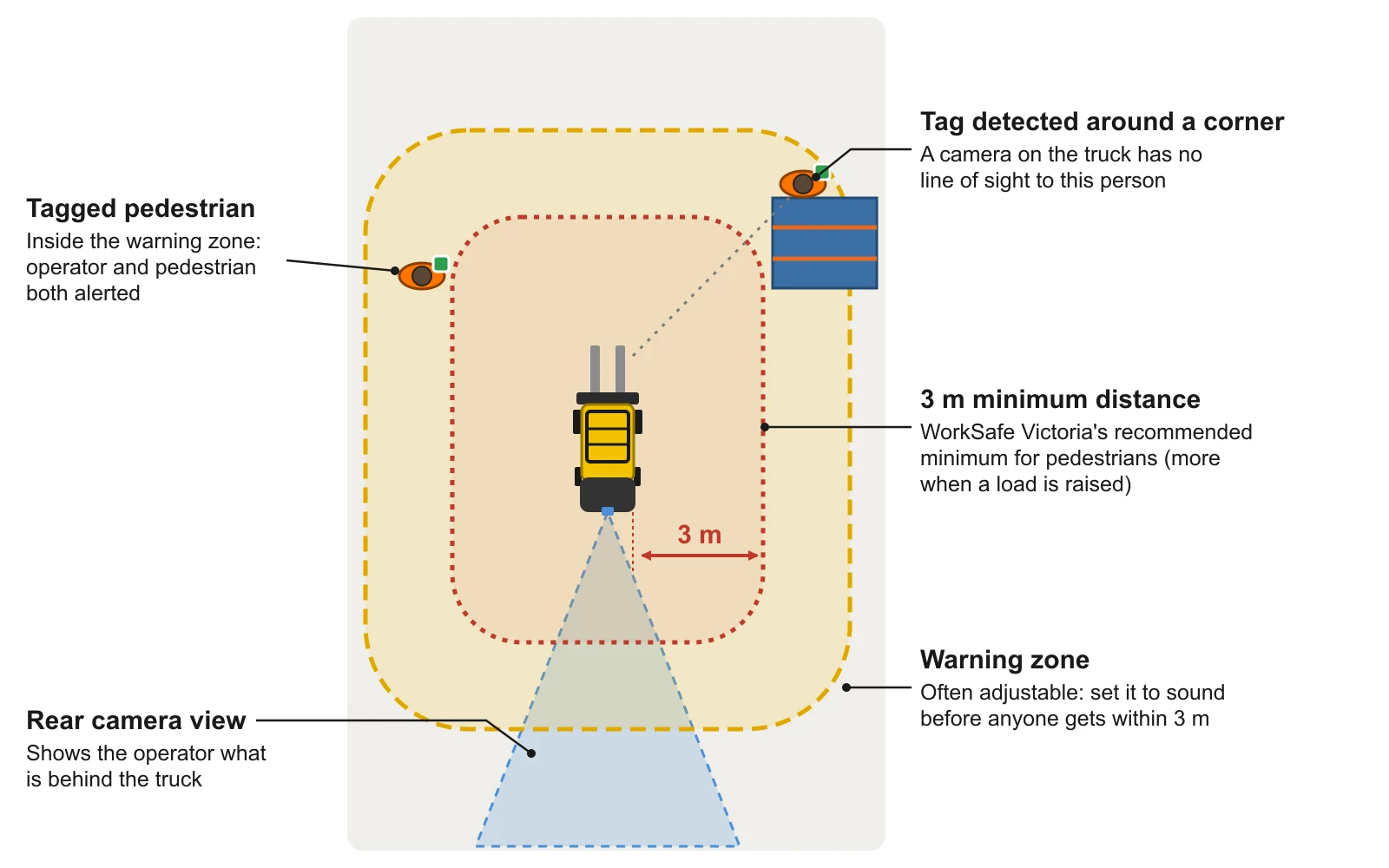
Every pedestrian wears a small tag, usually clipped to a vest or lanyard, and each forklift carries a reader. When a tag comes inside the zone, the operator gets an alarm and the tag buzzes or flashes, so both people know at the same moment.
RFID (radio-frequency identification) tags cover a wide zone, while UWB (ultra-wideband) tags measure distance more precisely, which helps in tight aisles. Because the signal doesn't need line of sight, a tag can be picked up at a blind racking corner before either person sees the other.
The catch is coverage. A tag system only knows about people wearing a charged, working tag, so visitors, contractors and truck drivers who climb down from the cab are invisible unless every one of them is issued a tag at the gate.
Radar and Ultrasonic Sensors
Sensor systems mount radar or ultrasonic units on the truck, usually at the rear, and sound an alarm when something enters the zone. They need no tags, so they cover everyone.
The trade-off is that simple sensors can't tell a person from a pallet, a racking upright or a wall. In a busy aisle they can alarm all shift, and an alarm that sounds all shift soon gets ignored.
Forklift Camera Systems
A forklift camera system comes in two very different forms. A plain reversing camera feeds a screen in the cab, so it only helps when the operator is looking at it. A camera with pedestrian detection adds software that recognises a human shape and sounds the alarm on its own, which makes it a true proximity warning system with no tags to manage.
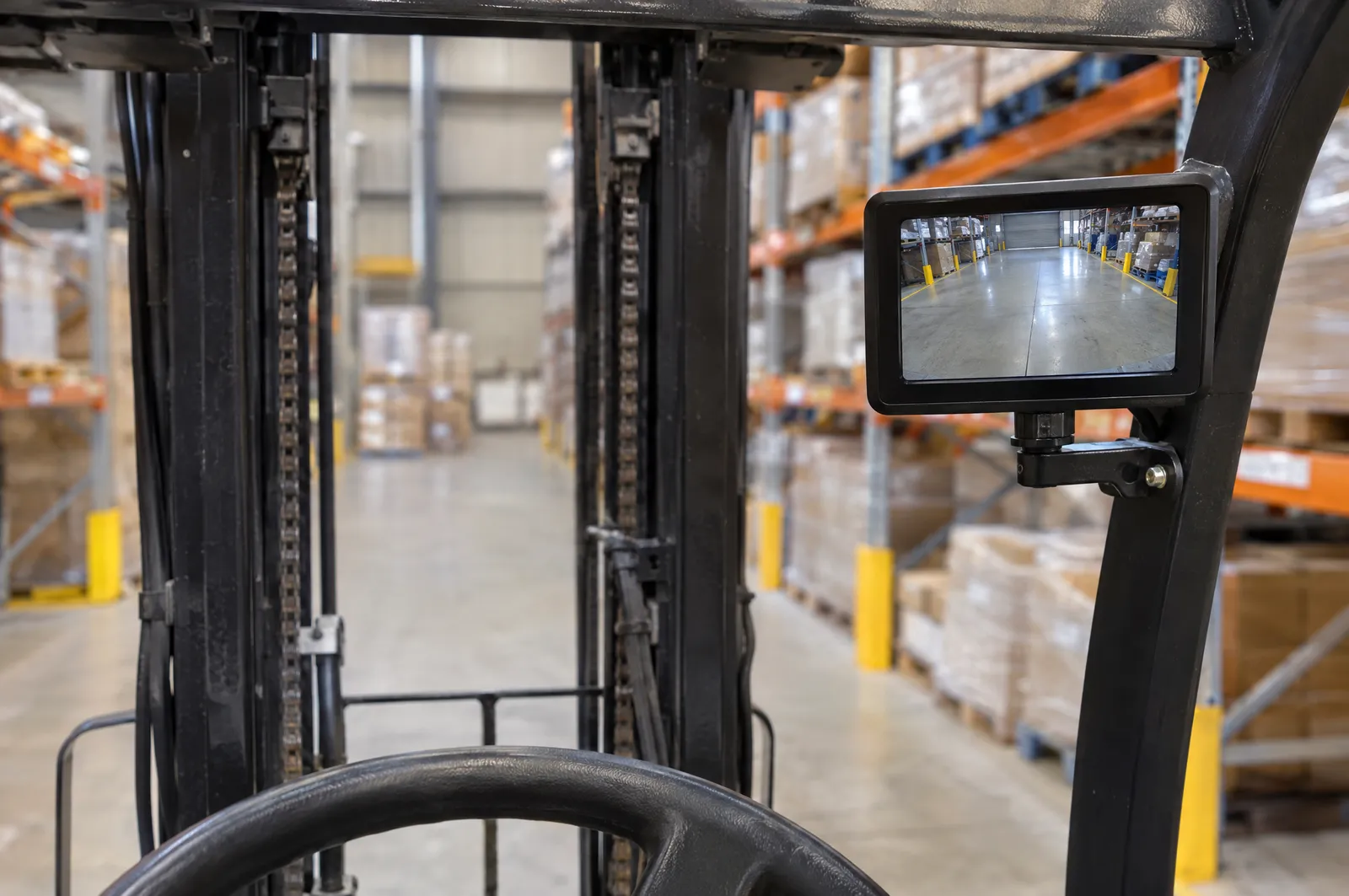
Either kind of forklift camera needs a clear view. A dirty lens, glare at a roller door, low light or the truck's own mast and load can all leave gaps, so ask the supplier to show you where the blind spots sit on your model of truck.
Fixed Zone and Intersection Systems
Some systems sit in the building rather than on the truck. Sensors at a blind intersection, a doorway or the end of a racking aisle detect a forklift and a person approaching at the same time and trigger warning lights or signs at that spot. They suit a site with a handful of known danger points, and they protect anyone walking through, tag or no tag.
Warning Only or Speed Control?
The bigger choice is whether the system only warns or also acts. A warning-only system leaves the decision with the operator. A system linked to the truck can drop it to a slow speed inside a zone, and WorkSafe Victoria lists these automatic speed reduction zones among forklift safety-enhancing features.
Linking a system to the controls means working on the truck's wiring, so it's a job for the system supplier together with the forklift's manufacturer or supplier.
Do You Need a Forklift Proximity Warning System?
WorkSafe Victoria doesn't list a proximity warning system as compulsory, but its guidance puts pedestrian detection among the stronger controls. Employers must eliminate forklift risks so far as is reasonably practicable, or reduce them where they can't, and WorkSafe's forklift hazards and risk controls page ranks the options:
- Eliminate the hazard: take forklifts out of the task altogether.
- Reduce the risk: substitution, isolation and engineering controls, which include exclusion zones, fixed barriers and gates, driver safety zones, perimeter zone warning lights, pedestrian detection systems, speed limiters and sequential seatbelts.
- Administrative controls: procedures, training, floor markings, mirrors, signs and scheduling, which WorkSafe describes as a low level of protection.
So a pedestrian detection system sits in the same tier as barriers and exclusion zones, above floor markings and convex mirrors. Treat it as cover for the places where people and trucks still meet once the barriers are in, not as a replacement for them. The cheapest fix is often in the warehouse layout itself: a walkway moved behind a barrier removes a conflict that a sensor could only warn about.
A system earns its place where separation can't be complete:
- Shared aisles: order pickers on foot work the same aisles as forklifts.
- Blind intersections and doorways: racking ends, roller doors and corners where neither person can see the other coming.
- Loading docks: truck drivers, dock staff and forklifts working in a small area under time pressure.
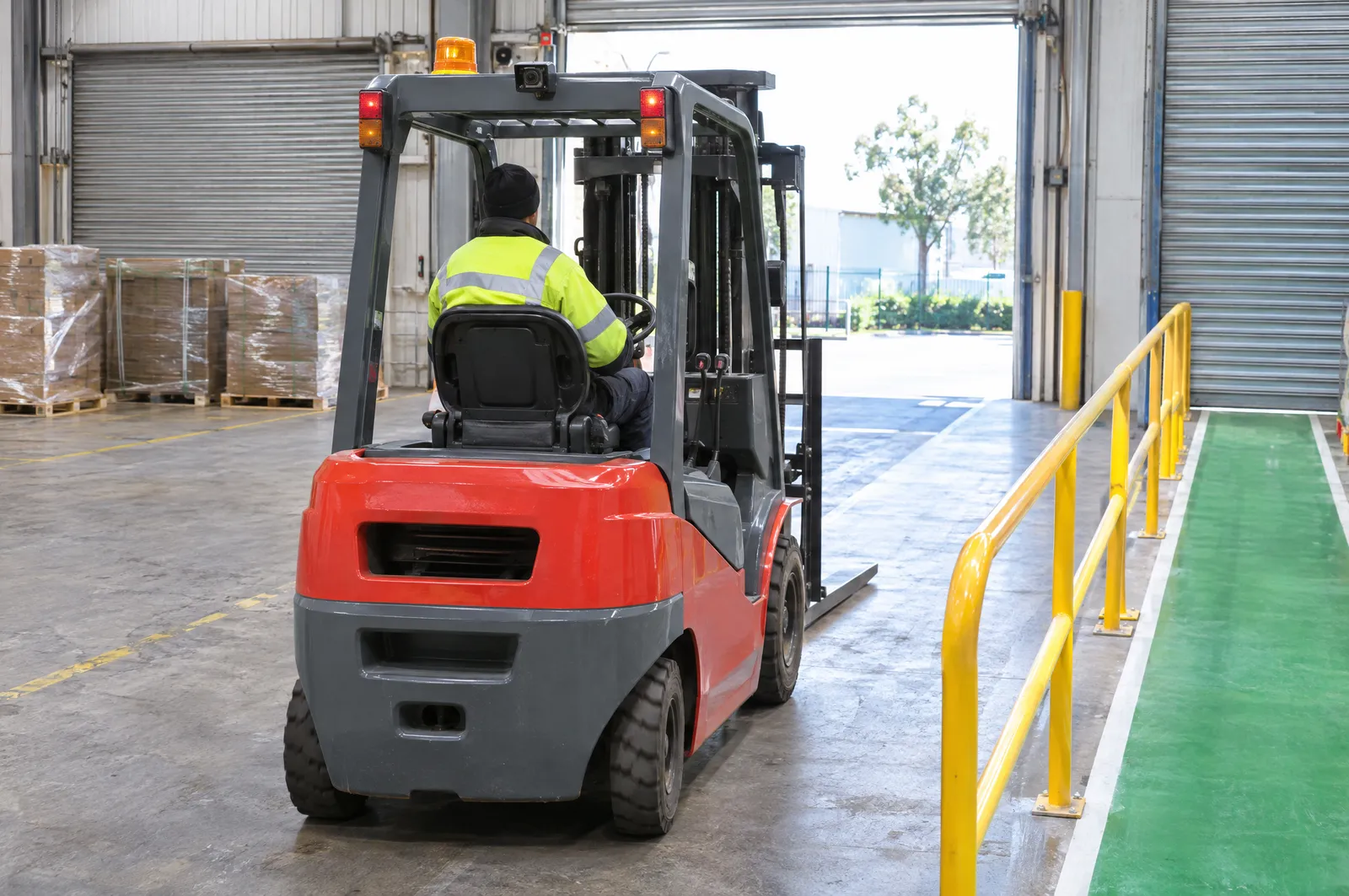
- Reversing in confined spaces: dispatch and staging areas where forklifts reverse across a space people also use.
Distance matters when you set the zone. WorkSafe Victoria's safety alert on forklift deaths recommends that pedestrians keep at least 3 m from a forklift, and more where a load is raised: the height of the load and mast plus 3 m. Start the warning zone from that distance, so the alarm sounds before someone is inside it.
What Does a Forklift Proximity Warning System Cost?
There's no standard price, because the quote depends on how many trucks and people you're covering and how far the system goes beyond a buzzer. WorkSafe Victoria calls this kind of retrofit relatively low-cost technology, but a site's total is built from several parts:
| Cost Driver | Why It Changes the Price |
|---|---|
| Number of forklifts | Each truck needs its own reader, sensors or camera, plus a warning device or screen in the cab |
| Tags and chargers | Tag systems need a tag for every person on foot, spares for visitors and a place to charge them |
| Fixed units | Sensors at intersections or doorways are priced per location, plus power and mounting |
| Speed control | Linking the system to the truck's controls adds installation work and may need the manufacturer's input |
| Software and reporting | Systems that record alarms and near misses may carry ongoing software costs |
| Fitting and downtime | Each truck is off the floor while the system is fitted and tested |
| Upkeep | Lenses need cleaning, tags need charging and the system needs checking like any other safety device |
Ask each supplier for a price per truck that includes fitting, the cost of tags or extra cameras, and any ongoing fees, so you're comparing like with like.
How to Choose a Forklift Pedestrian Detection System
Start from who walks your floor and where they meet the trucks, then match the detection method to that.
- Who's on foot: if visitors, contractors or truck drivers walk the floor, a tag-only system won't see them. Cameras, sensors or fixed zone units cover everyone.
- Your layout: tall racking with blind corners suits tags, which can pick up a person around a corner. Open yards and docks suit cameras and rear sensors.
- Conditions: cold stores, wash-down areas, dust and outdoor glare are hard on cameras and sensors, so ask what conditions the system is rated for and see it running on a site like yours.
- False alarms: ask how the system tells a person from racking and pallets, then trial it through your busiest shift before you fit the whole fleet.
- Your trucks: check the system suits each machine's power supply and mounting points, and ask whether fitting it affects any manufacturer warranty.
Be careful with standards claims. Some suppliers quote ISO 21815, but that series covers collision warning and avoidance for earth-moving machinery, underground mining machines and road construction machinery, not forklifts, and it states that responsibility for safe operation stays with the operator. Ask what testing backs the detection claims on forklifts specifically.
Buying a Used Forklift With a Proximity System Fitted
A used forklift can arrive with a camera, sensor or tag reader left on from its last fleet. That can be a bonus, but only if the whole system came with it and still works. If you're shortlisting used forklifts for a site where people and trucks share the floor, run through these checks:
- Test it: power the truck up and walk a person into the zone, with a tag if it's a tag system.
- Find the missing pieces: tags, chargers, the cab display or the software account may have stayed with the old owner, and a tag system is no use without the tags.
- Check the fitting: cables clear of the mast and hydraulic hoses, brackets solid, and no screen or camera blocking the operator's view.
- Check any speed link: if the system slows the truck, find out who fitted it and test it in a safe area.
WorkSafe Victoria notes that retrofitting safety features can introduce new hazards, and suggests consulting the manufacturer or supplier when you do it. Whatever is fitted, add it to the daily pre-start so a dead camera or a flat tag is picked up before the shift, the same way a forklift safety inspection covers the horn and brakes.
Choosing a Forklift for a Site Where People and Trucks Mix
Buy A Fork sells mostly used forklifts, with Toyota the largest brand in the range, and services and repairs forklifts on site across Victoria. If your forklifts share the floor with people on foot, the Buy A Fork team can talk through which machine suits the work. Call 1300 057 880 or send through the details of your site.
Frequently Asked Questions
1. Are Forklift Proximity Warning Systems Mandatory in Australia?
WorkSafe Victoria doesn't list one as compulsory. Employers must eliminate or reduce forklift risks so far as is reasonably practicable, and WorkSafe's guidance places pedestrian detection systems among the stronger controls, above floor markings and signs. Each state has its own regulator, so check the guidance where you operate.
2. Can You Fit a Proximity Warning System to an Older Forklift?
Usually, yes. Many systems are sold as retrofit kits, and WorkSafe Victoria encourages employers to consider retrofitting proximity devices. Talk to the forklift's manufacturer or supplier first, especially if the system will slow the truck, because a retrofit can introduce new hazards.
3. Is a Reversing Camera Enough?
Not on its own where people work close to forklifts. A plain reversing camera only helps when the operator looks at the screen, and it warns no one. A camera with pedestrian detection, or a tag or sensor system, raises the alarm without relying on the operator spotting the person first.
4. How Far Away Should a Proximity System Warn?
Set it from your exclusion distance, not the other way round. WorkSafe Victoria recommends that pedestrians stay at least 3 m from a forklift, or the height of a raised load and mast plus 3 m. Many systems have an adjustable zone, so set it to warn before someone reaches that distance and test it at your normal travel speeds.