
What to Check During Forklift Safety Inspections
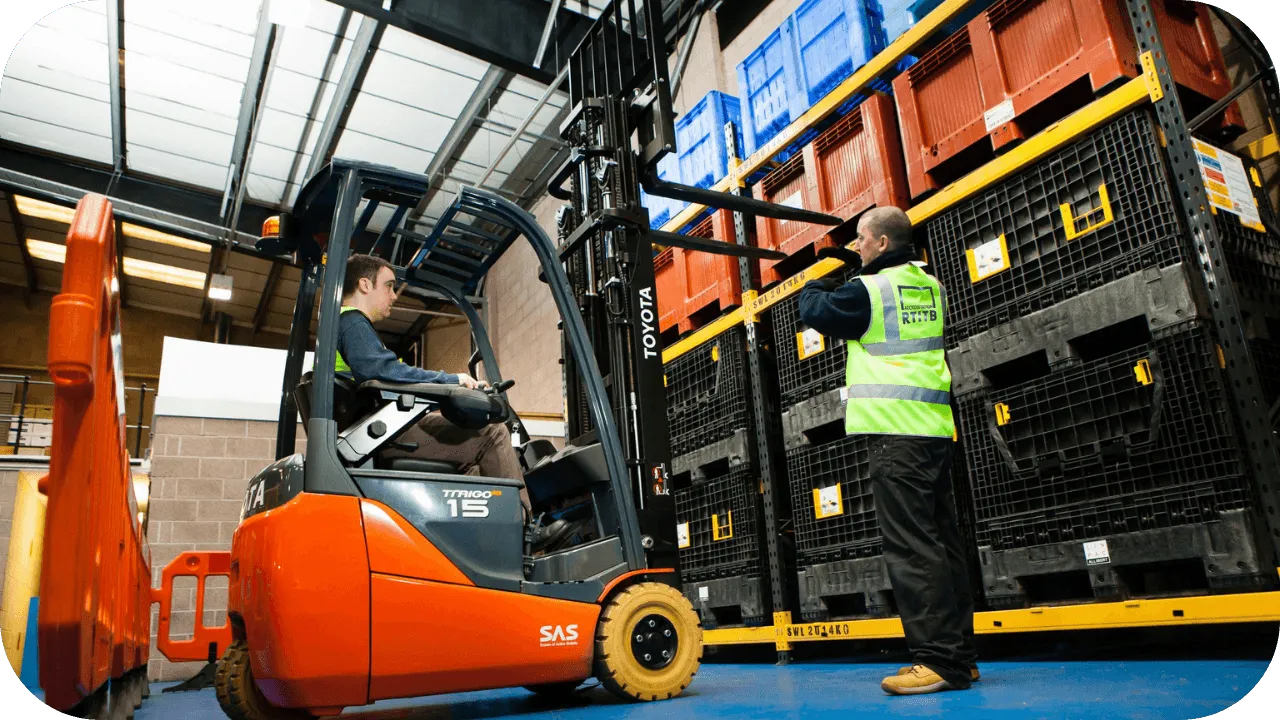
Ensuring your forklift is safe to operate is essential for productivity and workplace safety. But how do you know if it’s in top condition? This guide will walk you through the key areas to check during forklift safety inspections.
We’ve covered you, from inspecting the forks and tyres to testing the brake system and fluid levels. Stay ahead of potential issues and ensure your forklift remains safe, efficient, and ready for any task. Let’s learn inspecting safety tips!
1. Visual Inspection: Checking Forklift Components
A detailed visual inspection helps identify potential issues early, preventing accidents and costly repairs. Here’s what to check:
Inspecting the Forks for Damage
Forks are critical for any forklift, as they carry and support the loads. Inspect for cracks, bends, or signs of excessive wear. If the forks are misaligned or damaged, they can result in load instability and accidents.
Always ensure the forks are securely attached to the carriage and that their tips are not excessively worn, which can affect lifting performance.
Examining the Tyres for Safety
Tires impact a forklift’s stability and handling. Check for punctures, cuts, or any visible damage that could cause a flat. Inspect tread depth and ensure even wear. Uneven wear often indicates issues with load distribution or suspension.
Damaged or under-inflated tyres can result in accidents or reduced manoeuvrability, so replace tyres promptly if necessary.
Inspecting the Mast and Lift Mechanism
The mast and lift mechanism must operate smoothly for safe handling. Check for any obstructions, rust, or damage that could hinder movement.
Ensure the mast is corrosion-free and the lift chains are in good condition, with no slack or damage.
A properly functioning mast ensures safe lifting and tilting, and any issues should be addressed immediately to prevent equipment failure.
2. Fluid Levels and Leak Checks
Regular fluid checks are essential for maintaining forklift performance and safety. Here’s what to inspect:
Hydraulic Fluid Levels and Condition
Ensure that hydraulic fluid levels are adequate, as this fluid powers the forklift’s lift and tilt functions. Check for leaks around hoses, cylinders, and connections, as a leak can reduce performance or cause system failure.
Also, inspect the fluid’s condition. Dirty or contaminated fluid can damage the hydraulic system and reduce efficiency. Change hydraulic oil regularly to maintain optimal performance and prevent system failure.
Fuel and Battery Inspection
Check the fuel levels for fuel-powered forklifts to ensure they are sufficient for operation. Inspect the fuel lines for fuel leaks or cracks, as these pose serious safety risks. For electric forklifts, verify that the battery charge is sufficient.
Examine battery terminals for signs of corrosion or loose connections, which can lead to operational issues.
Engine Oil and Other Fluid Inspections
Check engine oil levels to ensure the forklift is adequately lubricated, which is essential for engine performance. Inspect for oil leaks around the engine or hydraulic components, as they can cause mechanical failure.
Also, check the coolant levels to prevent the engine from overheating and verify other essential fluids, such as transmission or brake fluid, to ensure they are at the correct levels.
3. Mechanical Safety: Ensuring Functional Components
Mechanical safety checks are essential for ensuring safe and efficient forklift operation. Here’s what to inspect:
Brake System Testing
The brake system is crucial for safe forklift operation. Test the foot and hand brakes to ensure they engage smoothly and effectively stop the forklift.
During testing, check for signs of brake wear or unusual sounds. Parking brakes should hold the forklift securely when stationary. Any issues with braking performance should be addressed immediately to prevent accidents.
Lift Mechanism and Control Testing
Test the lift mechanism by raising and lowering the forks to ensure smooth operation without jerks or delays. Inspect the hydraulic system for leaks or faults that could affect performance.
Verify that the load capacity and tilt function work as expected, ensuring proper alignment and stability when handling loads. This ensures safe lifting operations and prevents equipment damage.
Steering and Control System Check
Test the steering for smooth responsiveness, free of stiffness or unusual resistance. Listen for abnormal sounds, such as grinding or squeaking, which may indicate mechanical wear.
Control levers and pedals should move freely without sticking. Any issues with the steering or control systems can significantly impact the forklift’s manoeuvrability and safety, requiring immediate attention to avoid accidents.
4. Operational Test: Verifying Functionality
The operational test is key in confirming that all forklift components function correctly.
Start by testing both forward and reverse movements, ensuring smooth acceleration and deceleration. The forklift should respond promptly to controls without hesitation. Check the brakes during operation to ensure they engage smoothly and stop the forklift effectively.
Test the lift and tilt functions to confirm the forklift can safely handle its load capacity. The steering should also be responsive, with no unusual resistance or noise. Ensure the forklift operates quietly, without any jerky or erratic movements.
Verify that all warning devices (horn, lights, and backup alarms) work correctly. These are critical for safe operation, especially in busy or low-visibility environments.
5. Warning Devices and Lights Inspection
Visibility is key when operating a forklift. Properly functioning warning devices and lights are essential for safety in busy environments. Here’s what to check:
Check Forklift Lights
Ensure all forklift lights, including headlights, taillights, and hazard lights, function correctly. Test each light to confirm it is bright and clear, as these are essential for visibility in low-light or outdoor environments.
Inspect lenses for cracks or dirt that could reduce their effectiveness. Properly working lights are vital for safe operation, especially in busy or poorly lit areas.
Test the Horn and Other Warning Signals
Test the horn to make sure it is loud and clear. The horn is crucial for alerting others to the forklift’s presence in noisy environments.
Check backup alarms and other warning devices to ensure they activate when necessary. These signals help prevent accidents and ensure the forklift’s movements are easily detected in high-traffic or confined spaces.
6. Load Handling and Stability Check
Ensuring load stability is crucial for safe forklift operation. Inspect the load backrest to ensure it is securely attached and free from damage. The backrest should prevent the load from falling off the forks during transport.
Check the forks for proper alignment, ensuring they are spaced correctly and fully inserted under the load. Verify the forklift’s load capacity to avoid overloading, which can cause tipping.
When lifting, ensure the load is evenly distributed and does not exceed the forklift’s maximum weight limit.
Regularly inspecting load-handling components ensures safe operations, reduces the risk of accidents, and maintains the forklift’s longevity.
Conclusion
Regular forklift safety inspections are vital for maintaining efficiency and preventing accidents. You can ensure safe operations and avoid costly repairs by checking critical components.
Contact Buy A Fork, a reliable forklift dealer, for expert guidance and high-quality equipment. Schedule your safety inspection now to keep your forklift in top condition and your workplace safe.