Forklift Insurance in Australia: What It Covers and Costs
· Updated
Forklift insurance is rarely one product. It is assembled from public liability, machinery damage, theft, third party property and road risk cover, and most operators find out which piece they were missing after something has already gone wrong.
This page sets out how that cover is structured in Australia, what actually moves a premium, whether the machine is already covered under a business policy you hold, and what changes the moment it crosses a public road.
Buy A Fork sells and services forklifts. We are not an insurance broker and nothing here is financial or insurance advice. The point of this page is to help you ask a licensed broker the right questions.
Do You Need Forklift Insurance in Australia?
There is generally no standalone law that says a business must insure a forklift used entirely on its own private property. Most Australian operators carry cover anyway, and the reasons have less to do with legal compulsion than with what happens when something goes wrong.
Three things push it from optional to effectively unavoidable. A forklift incident that injures someone brings workers compensation and public liability exposure that a business pack may not fully answer. Many sites, landlords and head contractors make evidence of cover a condition of access. And the machine itself is a substantial capital asset that is easy to damage and not difficult to steal.
The picture changes if the machine leaves your property. A forklift that crosses or travels on a public road, or works on a customer’s site, sits in a different position, and that is covered further down.
Your safety duties are separate from insurance and are not discharged by holding a policy. Safe Work Australia sets the model framework and WorkSafe Victoria administers it here, and both require plant to be safe and operators to be trained and licensed regardless of what cover you hold.
What Forklift Insurance Covers
Forklift cover in Australia is generally assembled from several distinct types rather than sold as one product. Understanding the categories is what lets you work out whether you are actually covered or only feel covered.
|
Type of cover |
What it protects |
When it matters |
What to check |
|
Public liability |
Injury to third parties and damage to their property |
A visitor, contractor or member of the public is hurt, or someone else’s property is damaged |
Whether mobile plant is included, and whether cover extends off your own premises |
|
Plant and machinery damage |
The forklift itself against accidental damage |
Collision, rollover, dropped load, fire or flood damage to the machine |
Agreed value or market value, and whether it covers the machine in transit |
|
Theft |
Loss of the machine or its components |
The unit is taken from the yard, or the battery is stripped |
Security conditions attached to the policy, and whether attachments are listed |
|
Third party property damage |
Damage the forklift causes to property that is not yours |
Racking, a customer’s building, a delivery vehicle |
Whether it applies on other people’s sites |
|
Road risk cover |
Use of the machine on or across a public road |
Any travel outside your property boundary |
Whether the machine is registered and what the policy requires for road use |
Workers compensation sits alongside all of these rather than inside them. It is a separate, compulsory scheme covering your own employees, administered in Victoria by WorkSafe, and it is not a substitute for the cover above.
The gap most operators discover late is the one between liability cover and machine cover. A policy that protects you when a forklift injures someone may do nothing when the forklift itself is written off, and the reverse is also common.
What Forklift Insurance Costs and What Moves the Premium
We are not going to publish a premium figure, because a number pulled from nowhere is worse than no number and because the spread across operators is very wide. What is useful is knowing what an underwriter is actually pricing.
The machine drives the first part of the calculation. Its value, its capacity, its age and whether cover is written on agreed value or market value all feed in, and agreed value on an older machine usually costs more because the insurer is accepting a fixed figure rather than a depreciating one.
Where and how it works drives the second part. A machine that never leaves a sealed indoor warehouse presents differently to one working an unsealed yard, and differently again to one that crosses a road or travels between customer sites. Proximity to pedestrians matters, and so does whether the site runs separated traffic routes.
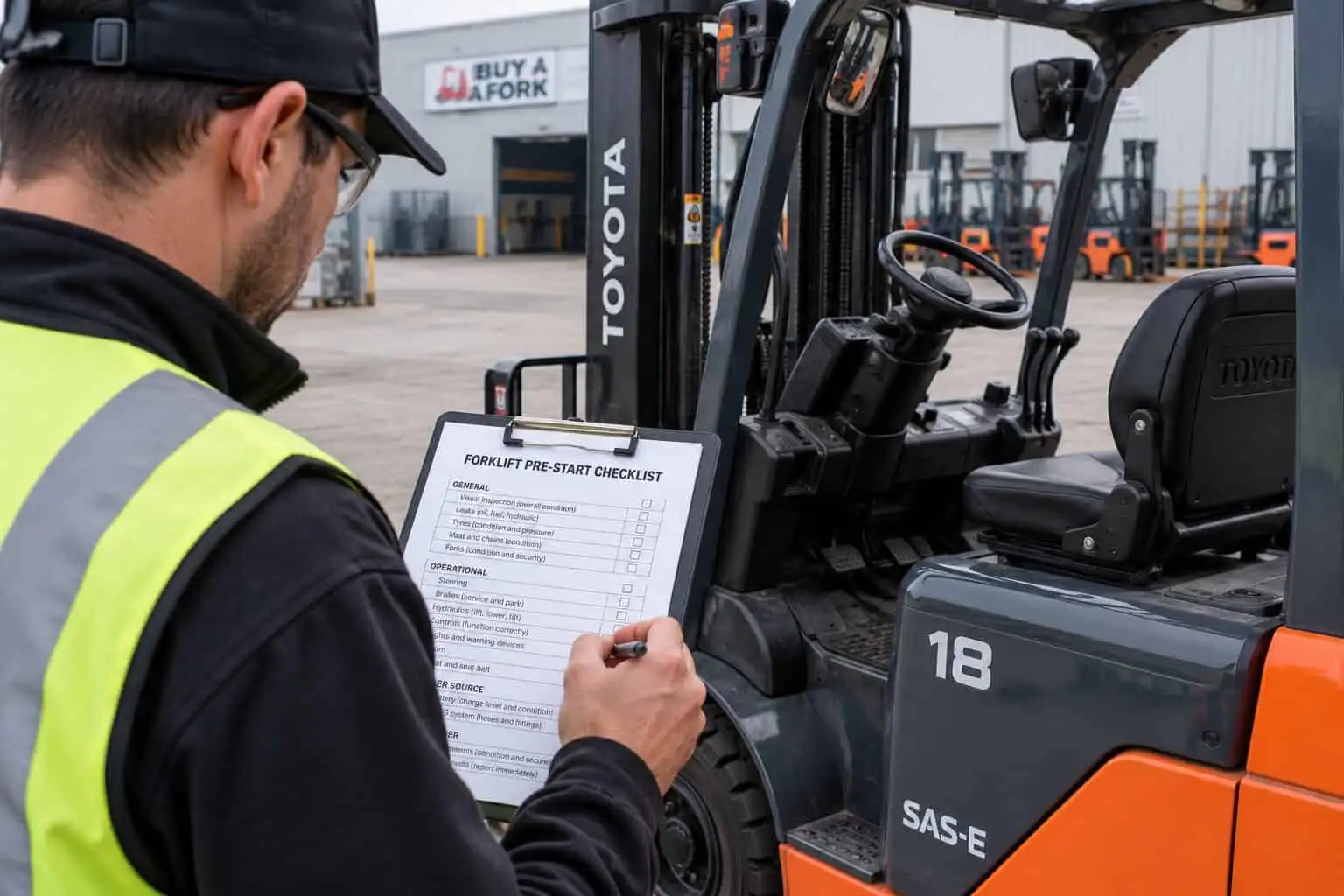
The third part is about you rather than the machine. Claims history is the obvious one. Beyond that, underwriters look for evidence that operators hold current licences, that training is documented, and that the business runs a maintenance and inspection regime it can show records for. A documented pre-start inspection routine is one of the few things in this list you can improve quickly, and it also happens to be what supports a claim later.
Get quotes from more than one broker. The range on identical risks in this class is wide enough that a single quote tells you very little.
Is a Forklift Covered by Your Existing Business Insurance?
This is the assumption most operators arrive with and it is worth testing rather than trusting. A business pack often covers contents and general liability without extending properly to mobile plant, and a forklift is mobile plant.
Three boundaries commonly catch people out. The first is location: cover that applies inside the shed may stop at the yard gate. The second is the machine itself: a policy may cover your liability if the forklift injures someone while not covering the forklift when it is damaged. The third is off-site work, where a machine taken to a customer’s premises can fall outside the terms entirely.
The practical step is to take your current policy schedule to your broker and ask three direct questions. Is the forklift listed as an insured item, is it covered anywhere it operates rather than only at the nominated address, and does the liability section carve out mobile plant. Ask for the answers in writing.
Forklifts on Public Roads: Where the Position Changes
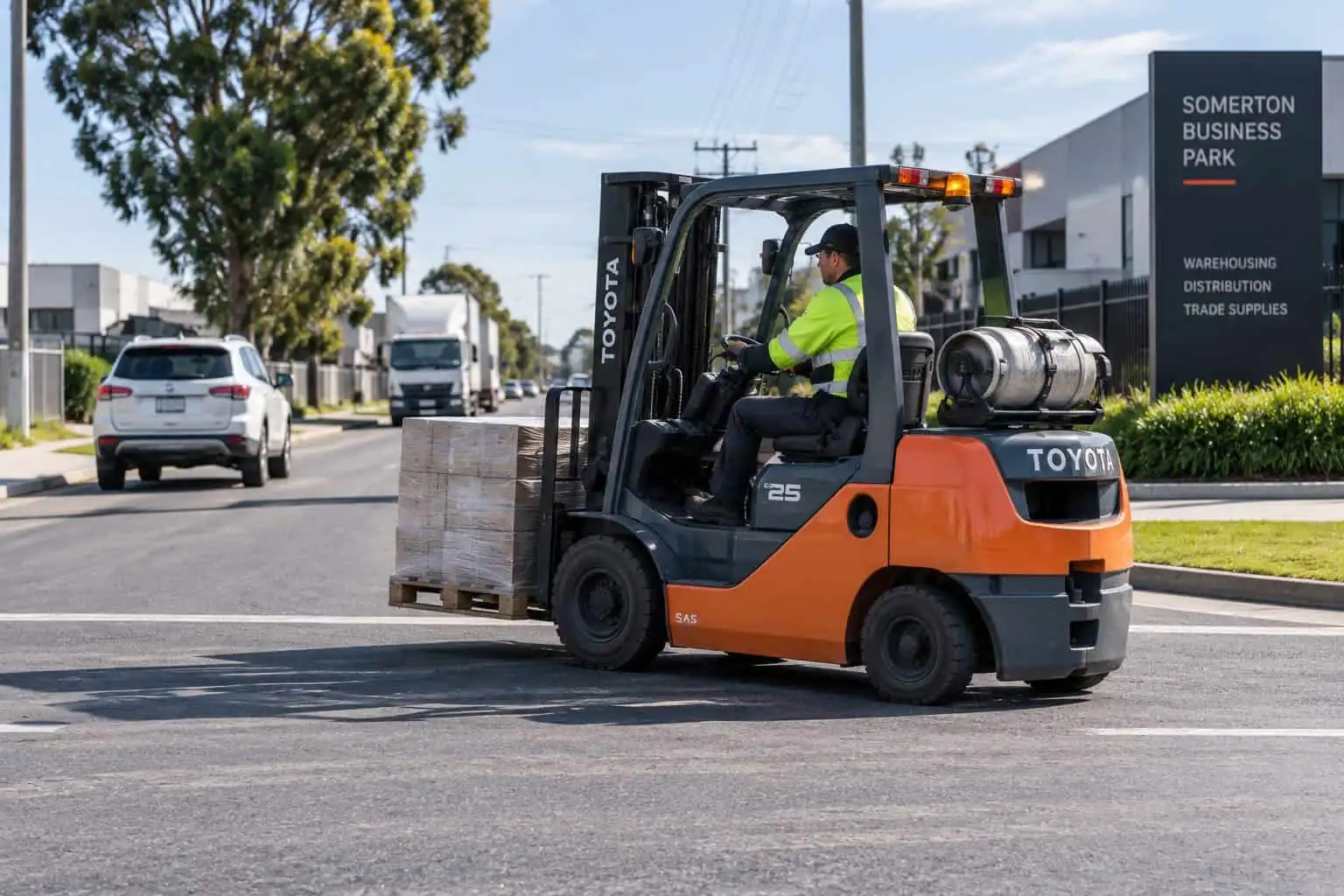
A forklift that stays inside a property boundary and one that crosses a public road are different propositions to an insurer, and this is the area where general advice is least reliable.
Road use raises questions about registration and about compulsory third party arrangements, and those requirements are set state by state rather than nationally. A rule that applies in one state does not necessarily carry across the border, which is a common source of confusion for businesses operating in more than one.
We are not going to state the Victorian requirement here, because we could not verify it from a primary source at the time of writing and a wrong answer on this point is worse than no answer. If any part of your operation involves the machine leaving your property, even to cross a laneway between two of your own buildings, confirm the position directly with VicRoads and tell your broker exactly what the machine does.
The point worth taking away is that “we only cross the road” is not a small detail. It is often the fact that decides whether an incident is covered.
Insuring a Used Forklift
Older machines raise two questions an insurer will ask and a buyer often has not considered.
The first is how the machine is valued. Market value on a fifteen year old forklift can be low enough that a total loss leaves you well short of replacement cost, while agreed value fixes the figure but costs more in premium. Which suits depends on how quickly you would need to replace the machine to keep operating.
The second is documentation. An insurer assessing an older machine wants to see that it has been maintained, that the data plate matches the configuration, and that any attachment fitted is accounted for. Service history and documentation are what answer that question, and a machine without them is harder to insure on reasonable terms as well as harder to sell later.
One practical advantage of buying through a dealer is that the paperwork an insurer asks for tends to already exist. Pre-owned machines that come with a service record and a current inspection are straightforward to place, where a private sale with no history can be a slow conversation.
What to Have Ready Before You Get a Quote
Brokers ask for much the same information, and having it assembled turns a multi-day back and forth into a single call.
- Machine details: make, model, serial number, year of manufacture and rated capacity, all of which are on the data plate.
- Attachments fitted: listed individually, since an attachment changes both the value and the risk.
- Purchase price and date, or a current valuation if the machine has been owned for some years.
- Where it operates: the address, whether it works indoors or outdoors, and whether it ever leaves the property.
- Operator licences: the number of operators and their current high risk work licence details.
- Maintenance and inspection records: your servicing schedule and your pre-start inspection process.
- Claims history for the business over the last five years.
Operator licensing is worth getting straight before you ask for a quote rather than after. An operator’s licence class has to match the machine they are on, and an unlicensed operator is a problem for a claim as well as a breach of your safety duties.
Getting the Machine Right in the First Place
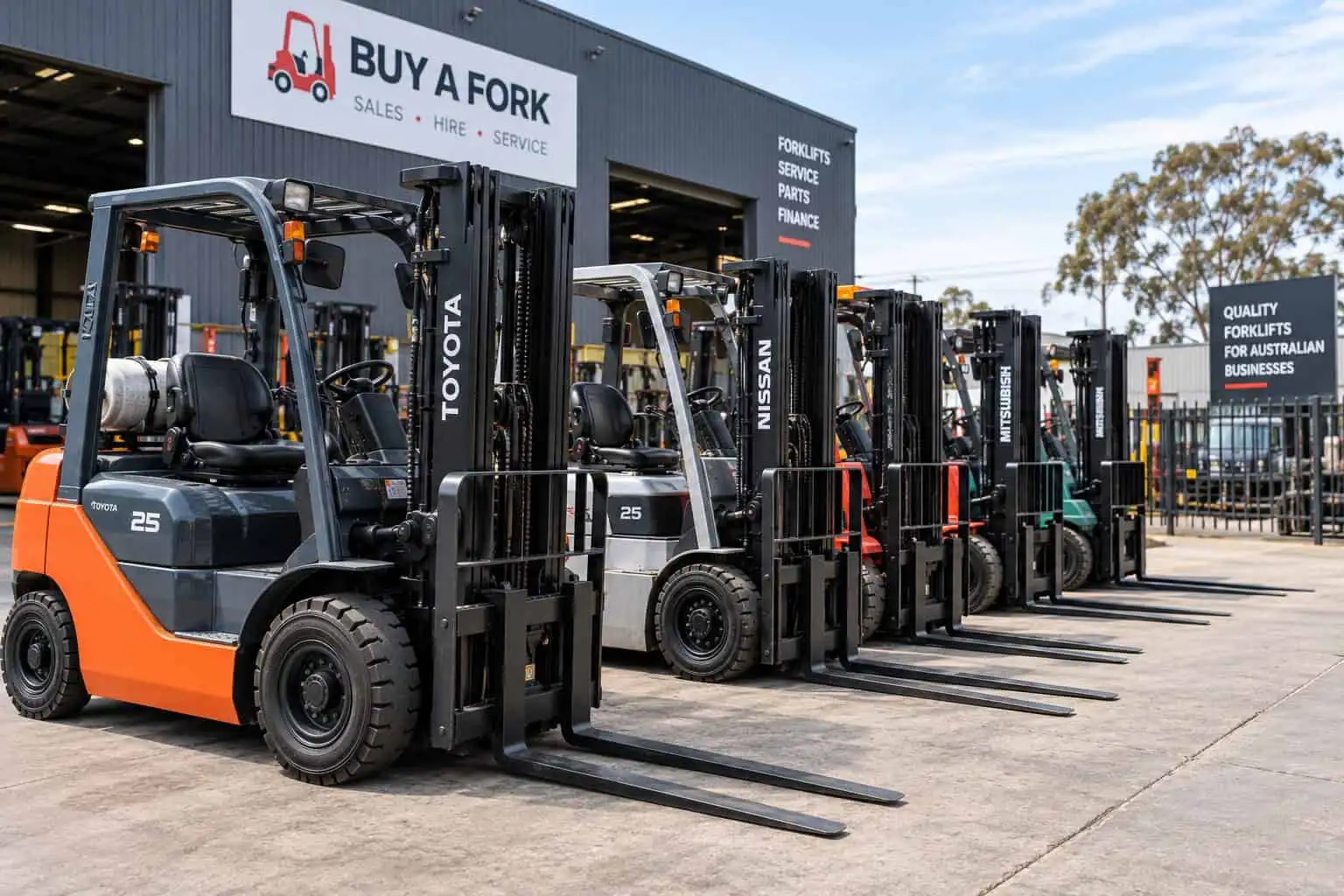
Most of what makes a forklift straightforward to insure is decided before the policy is written: a machine matched to the work, a correct and current data plate, licensed operators, and a maintenance record that exists.
We cannot arrange your cover, but we can make sure the machine you buy comes with the documentation your broker will ask for. If you are working out what to buy and what it will cost to run, that conversation is worth having before the insurance one.
Frequently Asked Questions
1. Is forklift insurance a legal requirement in Australia?
There is generally no standalone legal requirement to insure a forklift used only on private property, though workers compensation is compulsory and separate. The position changes if the machine uses a public road, and site access conditions imposed by landlords and head contractors frequently make cover mandatory in practice. Confirm your own situation with a licensed broker.
2. How much does forklift insurance cost?
Premiums vary too widely to quote a useful figure. What moves the number is the machine’s value and capacity, its age, whether cover is agreed or market value, where and how it operates, whether it goes on a road, your operators’ licensing and training records, and your claims history. Get quotes from more than one broker.
3. Does public liability insurance cover a forklift?
Sometimes, and not always in the way people expect. A public liability policy may cover injury or third party property damage caused by the machine while excluding damage to the machine itself, and it may be limited to a nominated address. Check whether mobile plant is included and whether cover follows the machine off-site.
4. Do I need insurance for a forklift used only on private property?
It is generally not compulsory in its own right, but most operators carry it. The machine is a significant asset, an incident involving a visitor or contractor creates liability exposure, and many sites require evidence of cover before allowing access.
5. Who is liable if an unlicensed operator has an accident?
The business carries the duty to ensure operators are licensed and competent, so liability generally sits with the employer rather than only with the individual. An unlicensed operator can also affect a claim, since insurers commonly attach conditions about licensing and training. This is a question for your broker and, if an incident has occurred, for a lawyer.
6. Does fitting an attachment affect my forklift insurance?
It can. An attachment adds value, changes the machine’s rated capacity and alters the risk profile, and the data plate has to be revised to reflect the new configuration. Tell your broker about any attachment fitted and make sure it is listed.