
Best Forklifts for Warehouses: Top Models for Small and Medium Operations
· Updated
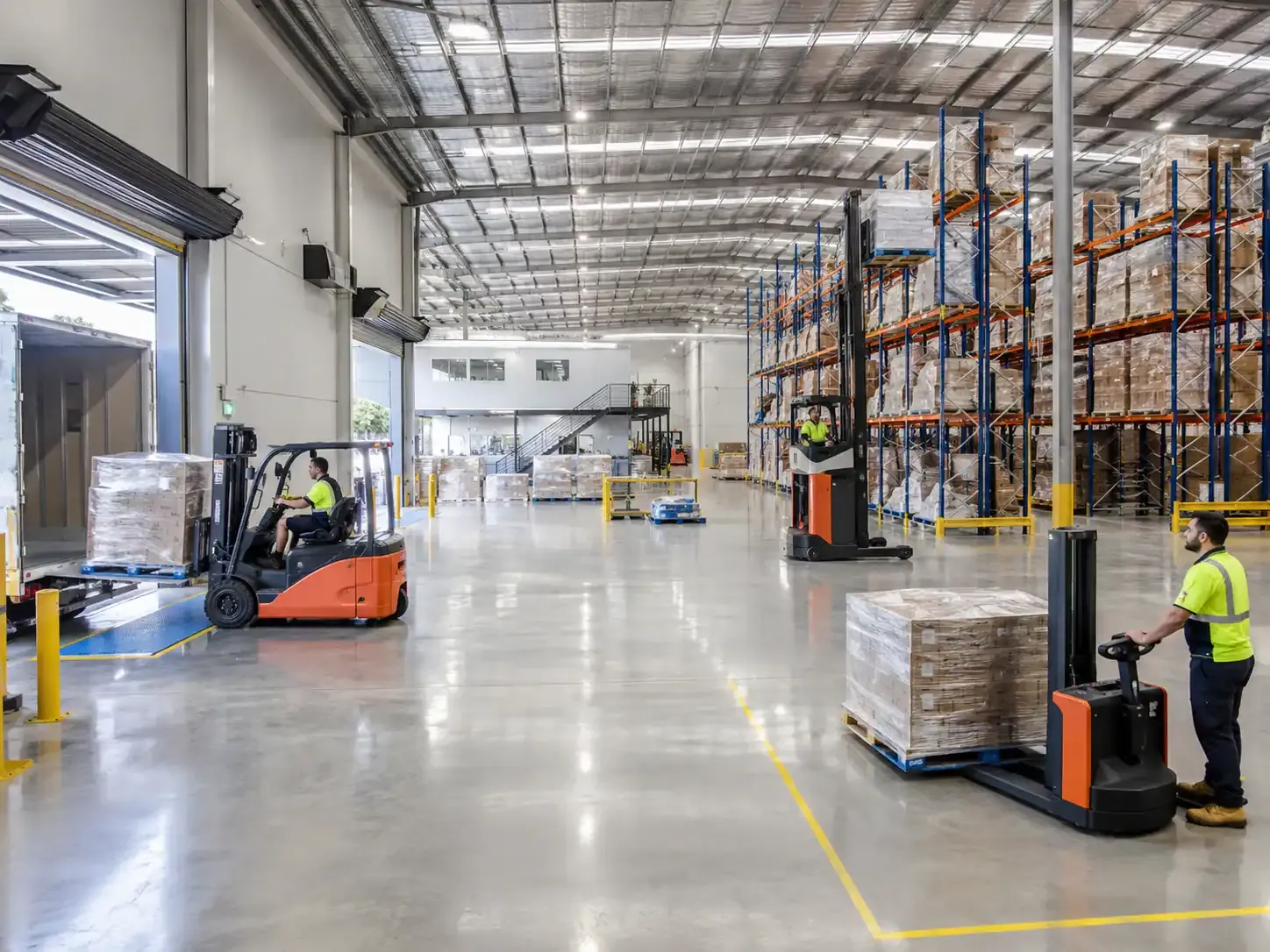
The best forklift for a warehouse is the machine that fits its aisles, reaches its highest racking and safely handles its heaviest load without slowing daily operations. For most small and medium warehouses, the strongest options are electric counterbalance forklifts, reach trucks, pallet stackers and electric pallet trucks.
A compact electric counterbalance forklift is usually the best all-round option. Reach trucks suit narrow aisles and tall racking, while pallet stackers and pallet trucks provide a practical alternative for lighter or less frequent handling.
The right choice can increase pallet movements, make better use of storage space and reduce operator fatigue. The wrong forklift can create blocked aisles, damaged stock, unnecessary downtime and expensive layout changes.
Best Forklifts for a Warehouse: Quick Answer
For a small warehouse, the best forklift is often a compact three-wheel electric counterbalance model or an electric walkie stacker. These machines are easy to manoeuvre, suitable for indoor floors and capable of handling common palletised loads without occupying excessive space.
For a medium warehouse, an electric counterbalance forklift combined with a reach truck usually provides the best coverage. The counterbalance forklift handles receiving, despatch and general movement, while the reach truck accesses higher racking in narrower aisles.
Best Options for Small Warehouses
- Electric walkie stacker: Best for light to moderate loads, lower racking and intermittent pallet stacking.
- Electric pallet truck: Best for moving pallets horizontally between receiving, storage and despatch areas.
- Three-wheel electric counterbalance forklift: Best for businesses that need one compact machine for unloading, transporting and stacking.
- Small reach truck: Best for compact warehouses with tall racking and smooth floors.
Best Options for Medium Warehouses
- Electric counterbalance forklift: Best for general pallet handling, loading docks and mixed warehouse duties.
- Reach truck: Best for tall racking, narrow aisles and high-density pallet storage.
- Double-deep reach truck: Best for warehouses using double-deep racking to increase pallet density.
- Ride-on electric pallet truck: Best for frequent horizontal transport over longer warehouse distances.
- Pallet stacker: Best as a lower-cost support machine for moderate-height stacking.
Toyota, Linde, Crown, Raymond, BT and Baoli all manufacture warehouse equipment across these categories. Buy A Fork’s current range includes electric counterbalance forklifts, reach trucks, pallet stackers and pallet movers from several of these brands, although individual stock changes as machines are sold.
Top Warehouse Forklift Models for Small and Medium Operations
The following models and model families are practical options to shortlist. The best one will depend on the individual machine’s capacity plate, lift height, battery condition, dimensions and attachment configuration.
| Forklift model or family | Equipment type | Best warehouse application | Why it is worth considering |
| Toyota 8FBE Series | Three-wheel electric counterbalance | Small warehouses, tight turning areas and general pallet handling | Compact design with counterbalance versatility for loading, movement and stacking |
| Toyota 8FBN Series | Four-wheel electric counterbalance | Medium warehouses, loading bays and frequent pallet movement | Stable all-round warehouse option for indoor counterbalance work |
| Linde E16-E20 Series | Electric counterbalance | Small and medium warehouses requiring precise indoor handling | Compact electric configuration with a strong reputation for control and operator ergonomics |
| Baoli KBE 15 | Compact electric counterbalance | Small businesses handling standard light-to-medium pallets | Straightforward electric option for general indoor use |
| Linde R14-R20 Series | Reach truck | Narrow aisles and tall warehouse racking | Designed to place pallets at height while using less aisle space than a counterbalance forklift |
| Crown RR 5700 Series | Reach truck | Medium warehouses with frequent high-rack handling | Narrow-aisle design suited to repetitive pallet storage and retrieval |
| Raymond reach truck | Reach or double-deep reach truck | High-density and double-deep racking layouts | Suitable where storage density and precise high-level pallet placement are priorities |
| Toyota BT walkie stacker | Electric pallet stacker | Small warehouses, workshops and moderate stacking | Compact footprint and lower entry cost than a ride-on forklift |
| Crown SH, SHR or SHC Series | Heavy-duty walkie stacker | Tight indoor spaces requiring a more capable stacker | Manoeuvrable design for moving and stacking loads in confined areas |
| Toyota BT Levio LPE Series | Electric pallet truck | Frequent horizontal pallet movement | Designed for efficient pallet transport between warehouse zones |
Toyota describes reach forklifts as warehouse machines designed for pallet movement at height, while Crown positions its reach trucks for narrow-aisle storage and its walkie stackers for manoeuvrability in tight applications. Toyota’s electric pallet truck range also includes pedestrian and ride-on models for different indoor transport demands.
Best All-Rounder: Electric Counterbalance Forklift
An electric counterbalance forklift is the strongest general-purpose choice when one machine must unload delivery vehicles, move pallets across the floor and place stock into racking.
Unlike a reach truck, it does not have support legs extending around the load. This makes it easier to approach different pallet types, work around loading areas and handle loads away from the racking.
Compact three-wheel models suit tighter warehouses. Four-wheel models generally provide a more conventional driving position and may suit frequent loading or heavier general handling.
Businesses comparing current machines can review Buy A Fork’s electric counterbalance forklifts before checking each unit’s lift height, capacity, battery and turning requirements.
Best for Tall Racking: Reach Truck
A reach truck is usually the best warehouse forklift when the main priority is placing pallets into tall racking while keeping aisles relatively narrow.
The mast or fork carriage reaches forward to collect and place pallets. The truck can then retract the load within its wheelbase, helping it operate more efficiently in storage aisles than a conventional counterbalance forklift.
Reach trucks perform best on smooth, level indoor floors. They are less suitable for rough yards, damaged surfaces and general outdoor work.
A medium warehouse with frequent pallet movement may benefit from using both a reach truck and an electric counterbalance forklift. The counterbalance machine handles receiving and despatch, while the reach truck remains in the storage aisles.
Best for a Small Warehouse: Electric Walkie Stacker
An electric walkie stacker is a practical choice when a small warehouse needs to lift pallets but does not require the speed, height or capacity of a ride-on reach truck.
It can suit:
- Light to moderate daily use
- Lower or medium-height racking
- Retail storage areas
- Workshops
- Small distribution facilities
- Operations with limited floor space
- Businesses moving a modest number of pallets per shift
A stacker is not automatically a replacement for a forklift. Its capacity, stability, operating speed, lift height and floor requirements may be more limited.
The decision between a reach truck and a pallet stacker should be based on rack height, pallet weight, aisle space and how frequently the equipment will operate.
Best for Horizontal Transport: Electric Pallet Truck
An electric pallet truck is designed primarily to move pallets across the floor rather than place them into high racking.
It can improve efficiency where staff regularly move stock between:
- Loading docks
- Staging areas
- Production zones
- Cold rooms
- Storage aisles
- Despatch areas
Pedestrian models suit shorter movements and lighter usage. Ride-on or centre-rider models are better suited to longer travel distances and higher pallet volumes.
Warehouse Size to Forklift Type Guide
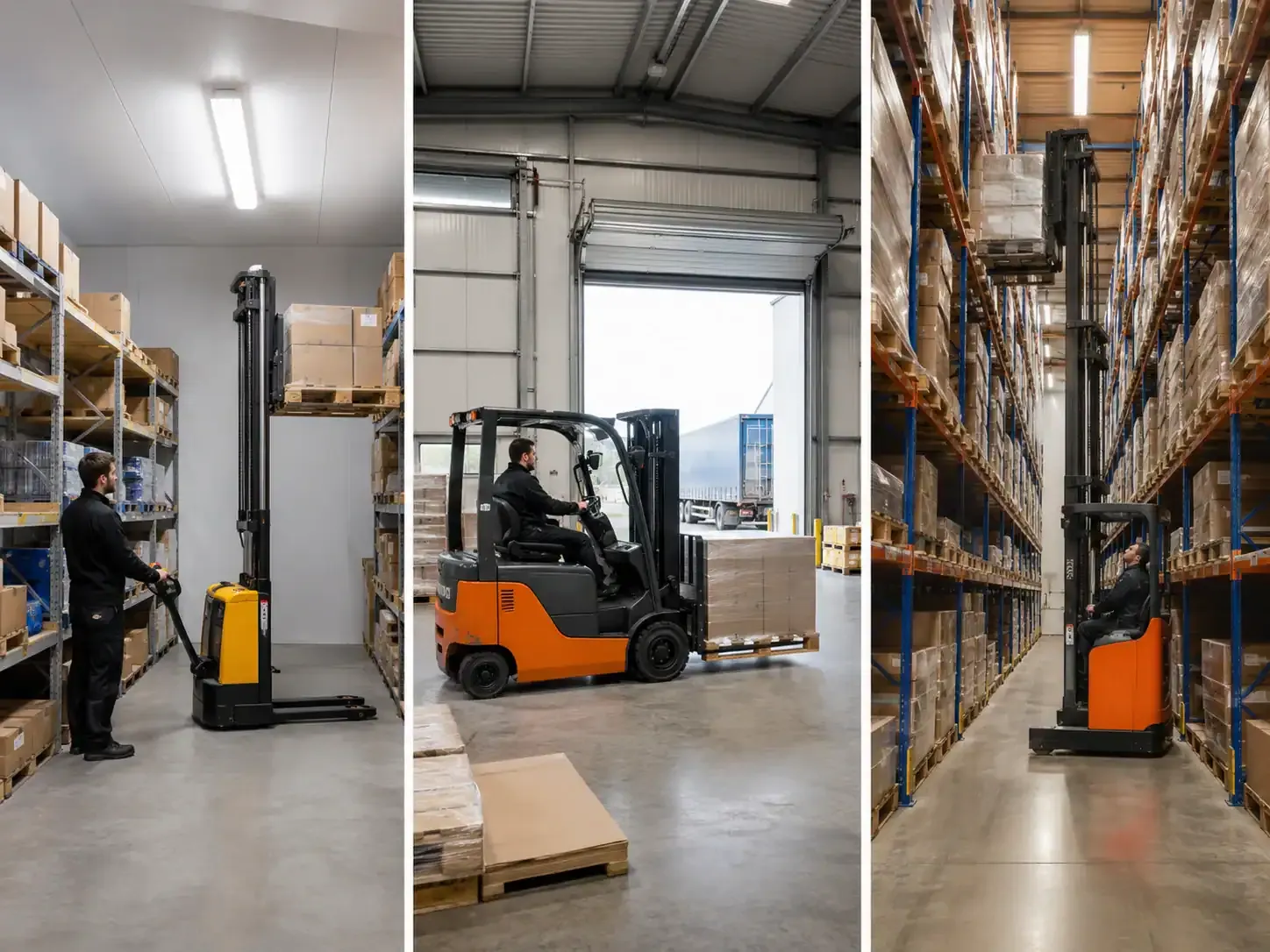
Warehouse size alone does not determine the correct forklift. A small warehouse can still have tall racking and heavy loads, while a larger warehouse may only need low-level pallet movement.
Use this table as a starting point.
| Warehouse situation | Recommended forklift type | Why it fits |
| Small warehouse with low racking | Walkie stacker | Compact and practical for moderate stacking |
| Small warehouse with mixed loading and stacking | Three-wheel electric counterbalance | One machine can handle several common duties |
| Small warehouse with tall racking | Compact reach truck | Supports higher storage while conserving aisle space |
| Medium warehouse with wide aisles | Electric counterbalance | Versatile for loading, movement and rack placement |
| Medium warehouse with narrow aisles | Reach truck | Designed for tighter storage aisles and higher racking |
| Medium warehouse with double-deep racking | Double-deep reach truck | Reaches the second pallet position within the rack |
| Warehouse with long internal travel distances | Ride-on electric pallet truck | Reduces walking and improves horizontal transport speed |
| Warehouse with indoor and outdoor handling | Counterbalance forklift selected for both environments | Better suited to loading areas and mixed surfaces than most reach trucks |
| Low-volume operation with limited budget | Used stacker or electric counterbalance forklift | Can provide the required capability without the cost of unnecessary specifications |
What Makes a High-Performing Warehouse Forklift?
A high-performing warehouse forklift is not simply the fastest or most powerful machine. It is a forklift that can complete the required work safely, consistently and with minimal wasted movement.
Correct Load Capacity
Identify the heaviest pallet the forklift will handle, including the pallet, packaging and any lifting attachment.
Do not choose a machine with a rated capacity that only just matches the load. Capacity may reduce when:
- The load centre increases
- The load is raised higher
- Longer forks are fitted
- A side shift or clamp is added
- The load is uneven
- The mast configuration changes
Use the capacity shown on the individual forklift’s data plate rather than relying only on the model’s advertised base capacity.
Suitable Lift Height
Measure the highest rack position and include the clearance needed to place the pallet safely above the beam.
A mast that is too short makes the forklift unsuitable. A mast that is unnecessarily tall may increase cost and create clearance problems around doors, containers, mezzanines or low ceilings.
Check both:
- Maximum fork height
- Overall mast height when lowered and extended
Turning Radius and Aisle Requirement
A forklift must have enough room to enter an aisle, turn with the load and place the pallet into the rack without repeatedly repositioning.
The required aisle width depends on:
- Forklift length
- Turning radius
- Load length and width
- Pallet orientation
- Rack clearance
- Attachment dimensions
- Manufacturer right-angle stacking specification
Do not buy a forklift using a generic aisle estimate. Compare the measured warehouse aisle with the specification for the exact model and load.
Appropriate Tyres
The floor and operating area determine the most suitable tyre type.
- Cushion or press-on tyres: Common on compact indoor equipment operating on smooth floors.
- Solid tyres: Durable and puncture-resistant for demanding surfaces.
- Pneumatic tyres: Provide more cushioning on uneven ground but require suitable maintenance.
Reach trucks and stackers normally require smooth, level floors. A warehouse forklift that regularly enters an outdoor loading yard may need a counterbalance design and tyres suited to both areas.
Suitable Power Source
Electric power is generally preferred for enclosed warehouse work because it provides quiet operation and avoids combustion exhaust at the point of use.
LPG may suit mixed indoor and outdoor operations where ventilation and site controls are appropriate. Diesel is normally better suited to outdoor or well-ventilated heavy-duty applications than enclosed warehouse aisles.
Operator Visibility
The operator should be able to see:
- Fork tips
- Pallet openings
- Rack beams
- Pedestrians
- Intersections
- Travel direction
- The area behind the machine
Mast design, overhead guards, load backrests, cameras and mirrors can affect visibility. A machine that matches the task but leaves major blind spots can reduce productivity and increase risk.
Ergonomics and Controls
Operator comfort affects performance across a full shift.
Look for:
- Easy entry and exit
- Supportive seating
- Clear instruments
- Predictable steering
- Comfortable control placement
- Low vibration
- Suitable pedal arrangement
- Good visibility without excessive twisting
Comfort is especially important for high-cycle warehouses where operators repeatedly travel, turn, lift and reverse.
Serviceability and Uptime
A warehouse forklift only improves productivity when it remains available.
Before buying, consider:
- Local technician support
- Parts availability
- Service history
- Battery or engine condition
- Remaining tyre life
- Hydraulic condition
- Fault codes
- Service intervals
- Warranty coverage
- Access to diagnostic equipment
A cheaper machine that is frequently unavailable can cost more through lost warehouse output than a properly selected, well-supported forklift.
How the Right Forklift Improves Warehouse Efficiency
The right warehouse forklift improves efficiency by reducing unnecessary travel, increasing storage access and helping operators complete each pallet movement with fewer adjustments.
Faster Pallet Throughput
A correctly sized forklift can approach, lift and place loads without repeated repositioning. Suitable acceleration, lift speed and control response also reduce cycle time across repetitive tasks.
Speed alone is not the objective. The goal is consistent pallet movement without product damage, unstable loads or excessive operator effort.
Better Aisle Utilisation
Reach trucks and compact electric forklifts can operate in less space than oversized counterbalance machines.
Reducing the aisle space required by material handling equipment may allow a warehouse to:
- Add more rack positions
- Increase pallet density
- Improve traffic flow
- Reduce blocked access
- Separate storage and movement zones more clearly
Any layout change should still preserve safe operating clearances and pedestrian separation.
More Effective Use of Vertical Space
A forklift that safely reaches higher rack levels can make better use of warehouse height.
However, the maximum mast height is not the only factor. Capacity can reduce at height, so the machine must be rated to handle the actual pallet at the highest required position.
Reduced Product Damage
Precise steering, good visibility and smooth hydraulic controls help operators place pallets without striking racks, packaging or nearby stock.
The benefit can be especially significant when handling:
- Fragile products
- Food and beverage stock
- Appliances
- Long loads
- High-value goods
- Unstable or irregular pallets
Less Downtime
Selecting a forklift with suitable durability, available parts and local service support can reduce interruptions.
Preventive maintenance also becomes easier when the machine is common enough for technicians to access parts, manuals and diagnostic information.
Improved Operator Comfort
A forklift suited to the operator and task can reduce fatigue caused by excessive steering effort, vibration, awkward visibility and repeated repositioning.
Comfort supports consistent control during long shifts, particularly in high-volume receiving, replenishment and despatch work.
Safer Traffic Flow
Warehouse efficiency and safety should support each other.
WorkSafe Victoria advises workplaces to manage travel paths, visibility and pedestrian safety around forklifts. It also recommends keeping pedestrians out of loading and unloading areas through suitable operating procedures and traffic management controls.
A suitable warehouse forklift should form part of a broader traffic plan that includes:
- Physical separation where reasonably practicable
- Marked forklift routes
- Pedestrian walkways
- Controlled intersections
- Speed limits
- Warning systems
- Clear loading zones
- Suitable lighting and visibility
Match the Forklift to Your Warehouse
Before comparing brands or prices, document how the forklift will actually be used.
1. Measure the Aisles
Record the narrowest operating aisle, turning areas, rack clearances and intersections.
Include any columns, barriers, building supports or stock that reduce usable space.
2. Measure the Racking
Record:
- Highest pallet position
- Lowest overhead obstruction
- Rack beam clearances
- Pallet depth
- Single-deep or double-deep configuration
- Available approach distance
3. Confirm the Load Profile
Identify:
- Maximum pallet weight
- Normal pallet weight
- Pallet dimensions
- Load centre
- Irregular loads
- Fragile products
- Required attachments
- Daily pallet volume
4. Inspect the Floor
Check whether the forklift will operate on:
- Smooth concrete
- Damaged concrete
- Expansion joints
- Ramps
- Loading plates
- Wet surfaces
- Outdoor asphalt
- Uneven yards
A reach truck that performs well on smooth warehouse concrete may not suit a damaged yard or steep loading area.
5. Map the Workflow
Follow a normal pallet from arrival to final storage or despatch.
Look for:
- Long travel distances
- Frequent turns
- Congested staging areas
- High-level replenishment
- Loading-dock delays
- Pedestrian crossings
- Areas where more than one equipment type may be useful
This process makes it easier to understand how to choose the right forklift for the whole operation rather than one isolated task.
Electric, LPG or Diesel for Indoor Warehouse Work
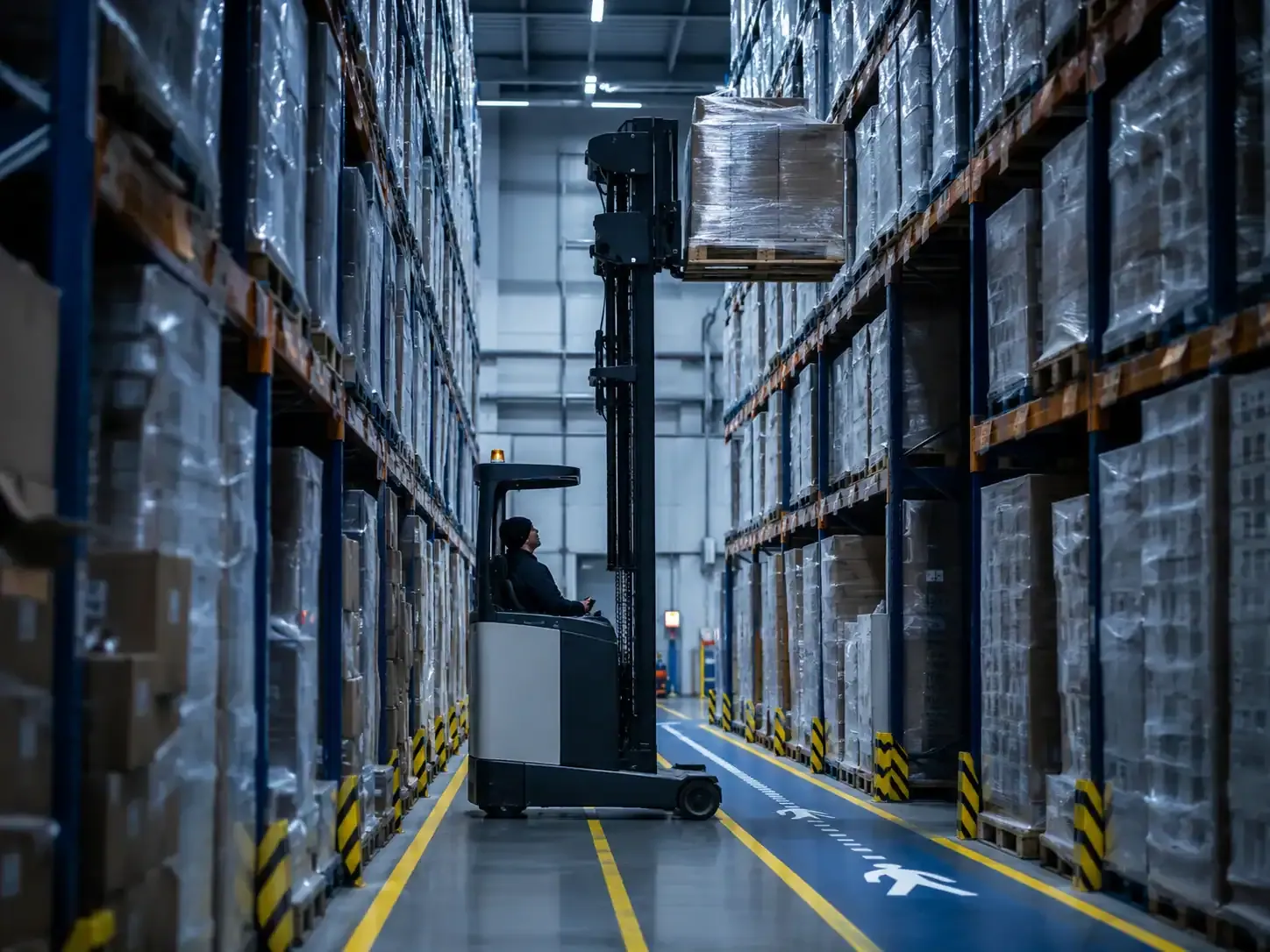
Electric forklifts are usually the best choice for enclosed warehouse operations. They are quiet, produce no tailpipe exhaust during use and are available as counterbalance forklifts, reach trucks, stackers, order pickers and pallet trucks.
Toyota’s Australian electric range includes counterbalance forklifts, reach trucks, stackers, order pickers and narrow-aisle equipment for warehouse applications.
Choose Electric When:
- Most work is indoors
- Floors are smooth and level
- Noise needs to be controlled
- The business can provide suitable charging facilities
- The forklift works near food, packaging or staff
- Predictable daily shifts allow charging to be planned
Consider LPG When:
- The forklift works both indoors and outdoors
- Suitable ventilation and operating controls are in place
- Rapid cylinder changes are more practical than battery charging
- The machine regularly handles loading-bay or yard work
Consider Diesel When:
- Most work is outdoors
- Loads or surfaces require a heavy-duty counterbalance machine
- The forklift operates in a properly ventilated environment
- Indoor warehouse use is limited
Businesses comparing indoor equipment can review the top electric forklifts for indoor operations before deciding which category best suits the warehouse.
New vs Used Forklifts for a Warehouse Fit-Out
A used forklift can be a strong option for a small or medium warehouse when the machine has been properly inspected and its specifications match the operation.
Used equipment may provide:
- A lower purchase price
- Faster availability
- Access to a premium brand within a limited budget
- Lower initial depreciation
- A practical option for light or single-shift use
A new forklift may be more suitable when the warehouse needs:
- A specific mast and attachment configuration
- The latest safety or telematics features
- A comprehensive manufacturer warranty
- High daily utilisation
- Multi-shift reliability
- A long planned ownership period
The condition of a used forklift matters more than its age alone. Review its operating hours, battery or engine condition, tyre wear, mast and chain condition, service history and warranty.
The comparison between used and new forklifts should account for the purchase price, availability, maintenance requirements and expected daily workload.
Buying a Warehouse Forklift in Melbourne and Somerton
Warehouse managers in Victoria can inspect Buy A Fork’s machines at its Somerton showroom before selecting a forklift for their layout and load requirements.
The business lists premium new and pre-owned forklifts, trade-ins, flexible finance and fast delivery from Factory 2/802 Cooper Street, Somerton. Current warranty, delivery and promotional inclusions should be confirmed for the individual machine before purchase.
Businesses researching local options can compare the best warehouse forklifts in Melbourne or review available warehouse forklifts in Somerton before arranging an inspection.
When visiting the showroom, bring:
- Maximum load weights
- Pallet dimensions
- Aisle measurements
- Rack heights
- Door and ceiling clearances
- Floor details
- Required attachments
- Expected daily operating hours
- Charging or fuel requirements
These details allow the forklift to be assessed against the real warehouse rather than selected from capacity alone.
Choose the Forklift Around the Work
The best warehouse forklift is not necessarily the largest, newest or most expensive model. It is the machine that fits the available space, handles the real loads and supports the required pallet flow without introducing avoidable downtime or safety problems.
Small warehouses often benefit from a compact electric counterbalance forklift or pallet stacker. Medium warehouses with tall racking usually need a reach truck, often supported by a counterbalance forklift or electric pallet mover.
Measure the aisles, racking, loads and workflow before shortlisting equipment. Once those requirements are clear, you can browse the full forklift range and compare machines that genuinely fit the operation.
Frequently Asked Questions
1. What Forklift Is Best for a Small Warehouse?
A compact three-wheel electric counterbalance forklift is usually the best all-round choice for a small warehouse because it can unload, transport and stack pallets.
An electric walkie stacker may be more cost-effective when loads are lighter, racking is lower and daily use is limited. A reach truck may be better when the warehouse is small but uses tall, narrow-aisle racking.
2. What Forklift Capacity Do I Need for a Warehouse?
Choose a forklift that can safely handle your heaviest complete load at the required load centre and maximum lift height.
Include the weight of the pallet, packaging and attachment. Do not assume a forklift can lift its advertised base capacity to every height or with every load.
3. How Wide Do Warehouse Aisles Need to Be for a Forklift?
The required aisle width depends on the forklift’s turning radius, overall dimensions, load size, pallet orientation and right-angle stacking specification.
Reach trucks normally require less operating space than conventional counterbalance forklifts, but the exact aisle must be checked against the specification for the selected machine and load.
4. Is an Electric Forklift Better for Indoor Warehouse Use?
An electric forklift is usually better for enclosed warehouse work because it is quiet and does not produce tailpipe exhaust while operating.
It also provides options across counterbalance forklifts, reach trucks, stackers and pallet movers. The warehouse must still have a suitable battery-charging plan and charging area.
5. Should I Choose a Reach Truck or Counterbalance Forklift?
Choose a reach truck for tall racking, narrow aisles and high-density indoor storage.
Choose a counterbalance forklift when the machine must unload vehicles, handle different pallet types, work away from the racking or move between indoor and outdoor areas. Many medium warehouses use both.
6. Can a Pallet Stacker Replace a Forklift?
A pallet stacker can replace a forklift for some light or moderate warehouse tasks, especially where pallets are moved over short distances and stacked at modest heights.
It may not provide the capacity, lift height, speed or versatility needed for frequent loading, high racking or intensive operations.
7. How Much Does a Warehouse Forklift Cost?
Warehouse forklift prices vary according to the equipment type, brand, age, operating hours, capacity, lift height, battery or engine condition and warranty.
A pallet stacker usually requires a lower investment than a reach truck or counterbalance forklift. Used equipment can reduce the initial cost, but the machine’s condition and suitability should take priority over price alone.