
Stand-Up Forklifts: How They Work, Pros and Cons, and Who They Suit
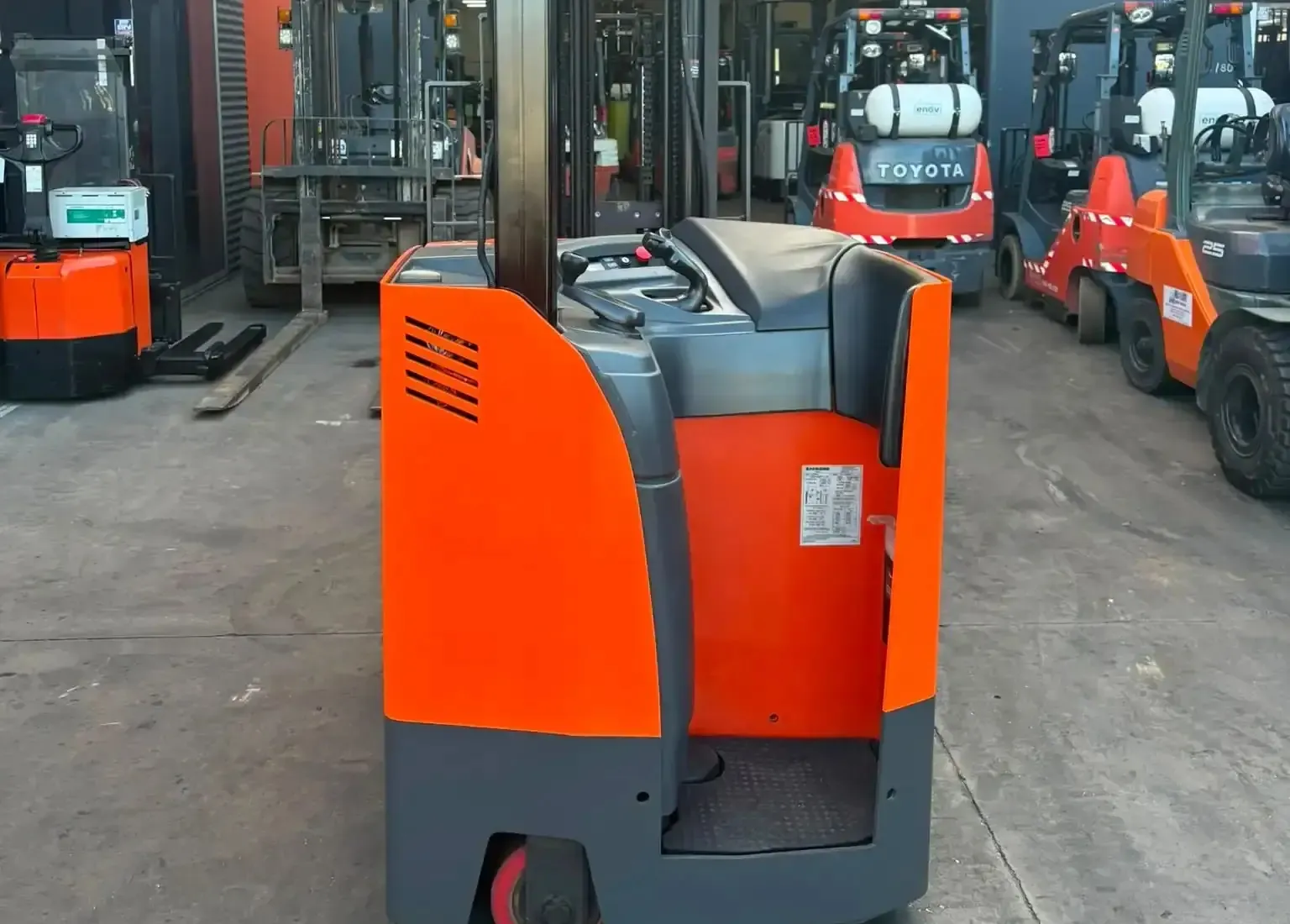
A stand-up forklift is a compact electric forklift driven from a standing compartment instead of a seat. Operators step on and off it quickly, which suits dock work, loading trailers and jobs where the driver gets off the machine often. The name covers two different machines in Australia: the stand-up counterbalance forklift and the stand-up reach truck, so it pays to know which one a listing means before you compare prices.
Buy A Fork lists stand-up counterbalance forklifts at its Somerton yard in Melbourne, and the examples in this guide come from those machines.
What Is a Stand-Up Forklift?
A stand-up forklift is an electric lift truck where the operator stands in a compartment at the rear and drives with hand controls and foot pedals. Manufacturers use different names for the same idea: Crown calls its RC Series a stand-up counterbalance forklift, while Toyota Material Handling Australia uses "stand up forklift" for its 8-Series 8FBR stand-up reach forklifts.
The two work differently. A stand-up counterbalance forklift carries the load out in front, balanced by a counterweight at the rear, just as a seated counterbalance forklift does. A stand-up reach truck has legs under the load and forks that reach forward into racking, built for narrow warehouse aisles.
Stand-Up vs Sit-Down Forklifts
A stand-up forklift trades seated comfort for quick entry and exit and a compact footprint, while a sit-down forklift suits longer drives and outdoor yard work. Crown describes its stand-up RC Series as a compact, manoeuvrable machine that moves between trailer loading, dock work, transport and retrieval in the aisle.
| What you are comparing | Stand-up counterbalance forklift | Sit-down counterbalance forklift |
|---|---|---|
| Operator position | Standing in a rear compartment | Seated, usually with a seatbelt |
| Getting on and off | Step on and off | Climb into and out of the seat |
| Fuel | Electric | Electric, LPG or diesel |
| Typical work | Docks, trailers, short runs, frequent stops | Longer runs, yards, outdoor and mixed work |
| Size | Compact, for tighter spaces | Larger, with more choice of capacity |
The deciding question is how often the driver gets off the forklift. If they step off many times an hour to check paperwork, open a trailer or move stock by hand, a stand-up saves time; if they drive for long stretches, a seated forklift may be the better fit.
Stand-Up Forklift or Reach Truck?
Choose a stand-up counterbalance forklift for docks and trailers, and a reach truck for high racking in narrow aisles. A counterbalance machine can drive into a trailer and pick a pallet off the floor, while a reach truck is built to stack and retrieve at height inside the warehouse.
Where the load sits is the main difference between a reach truck and a forklift: out in front on a counterbalance machine, and between the legs on a reach truck. If floor space is tight but the driver needs a seat, a three-wheel electric forklift is the other compact option to put beside a stand-up.
Which Jobs Suit a Stand-Up Forklift?
Stand-up forklifts suit work with short travel distances and frequent stops, in spaces where a larger seated forklift is awkward to manoeuvre. Typical jobs include:
- Dock work: loading and unloading trucks at a dock, where the driver steps off between pallets.
- Container and trailer entry: some models are built low enough to drive into a shipping container.
- Short warehouse runs: moving pallets between staging, dispatch and storage areas.
- Tight sites: small warehouses and back rooms where turning space is limited.
Whatever the machine, the operator still needs the right high risk work licence and familiarisation training on that specific forklift, as WorkSafe Victoria's guidance on forklift training and competency sets out. WorkSafe Victoria points out that forklift designs differ between manufacturers and even between models, and a stand-up's controls differ from a seated forklift's.
What to Check on a Used Stand-Up Forklift
On a used stand-up forklift, the battery, charger and operator controls matter most, because these are electric machines that work hard in short bursts. Check the hour meter against the service records, then look at:
- Battery: its age, how long it holds a charge, and the details on its label.
- Charger: that it matches the battery's voltage and works reliably.
- Operator controls and pedals: that the presence and brake pedals respond as they should. Crown's RC Series, for example, applies the brake automatically when the operator's left foot leaves the brake pedal.
- Mast, chains and forks: for wear, as on any forklift.
- Platform and step: for damage or worn non-slip surfaces.
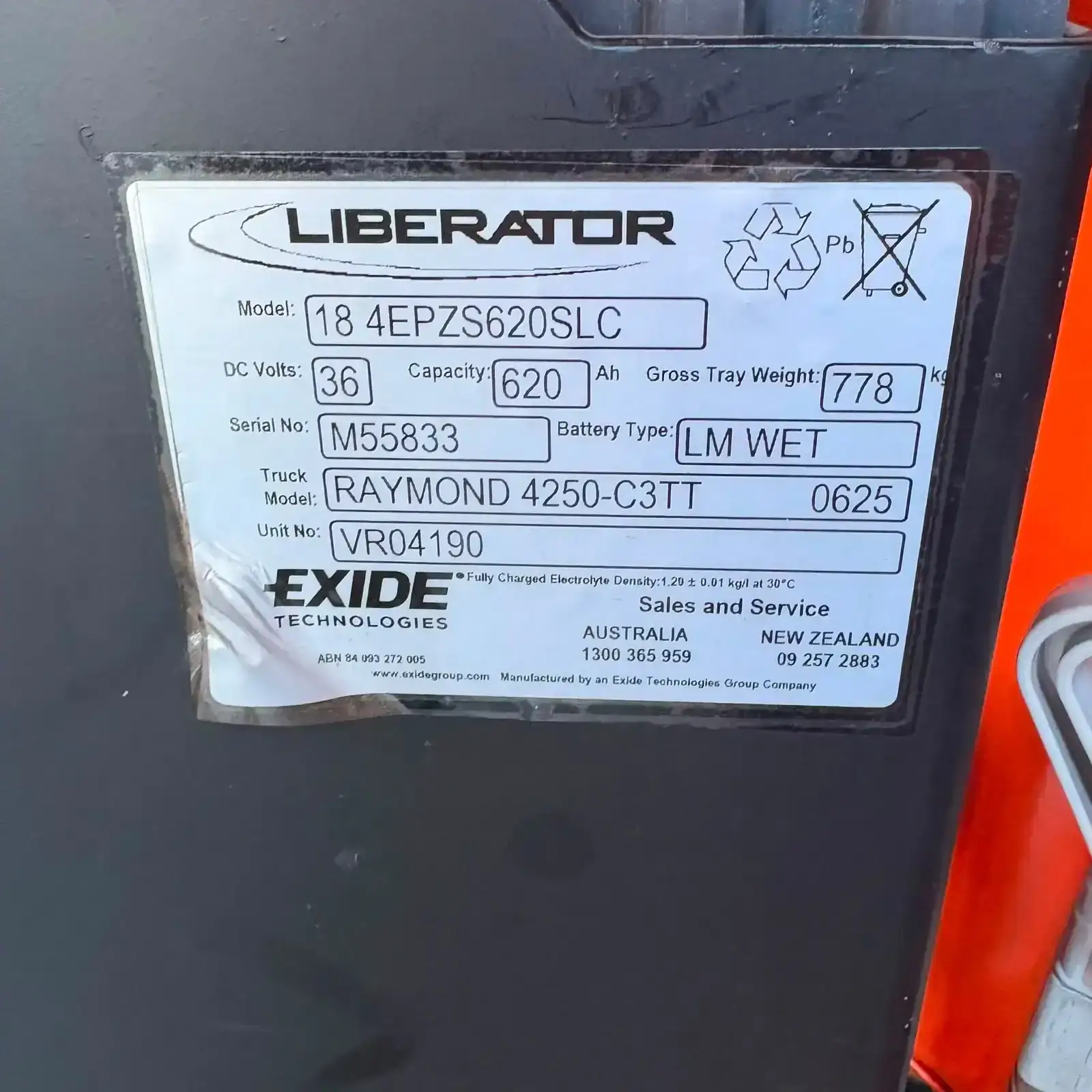
The battery label is the place to start. On this Raymond 4250, it shows a 36 volt battery with a capacity of 620 Ah, its serial number and its weight, which lets you match the charger and check the battery's history. Read the hour meter alongside the service records too, because high hours on a used forklift matter far less when the records show regular care.
Stand-Up Forklifts We List
On 23 November 2026, Buy A Fork listed three Raymond stand-up electric counterbalance forklifts, all 1.8 tonne machines built in 2014. They sit in our Raymond range alongside the brand's reach trucks and order pickers.
| Listing | Capacity | Lift height | Listed price (ex GST) |
|---|---|---|---|
| 2014 Raymond stand-up counterbalance, container entry | 1,800 kg | 4,700 mm | $9,888 |
| 2014 Raymond stand-up, container mast with side shift | 1,800 kg | 4,800 mm | $14,888 |
| 2014 Raymond stand-up counterbalance | 1,800 kg | 5,900 mm | $13,888 |
Stock changes every week, so check the listing for current availability and price.
Frequently Asked Questions
What is a stand-up forklift called?
It goes by several names: stand-up counterbalance forklift, stand-up rider or stand-up forklift. Toyota also uses "stand up" for its stand-up reach forklifts, which are a different machine.
How much does a stand-up forklift cost?
It depends on age, capacity, lift height and condition. The three used Raymond stand-up forklifts Buy A Fork listed on 23 November 2026 ranged from $9,888 to $14,888 ex GST.
Do you need a licence to drive a stand-up forklift?
Yes. A stand-up forklift is a forklift, so in Victoria the operator needs the appropriate high risk work licence, plus training on that specific machine.
If a stand-up suits your site, it is worth comparing against the seated electric counterbalance forklifts we have in stock before you choose.