
What Is The Difference Between A Pallet Stacker And A Reach Truck?
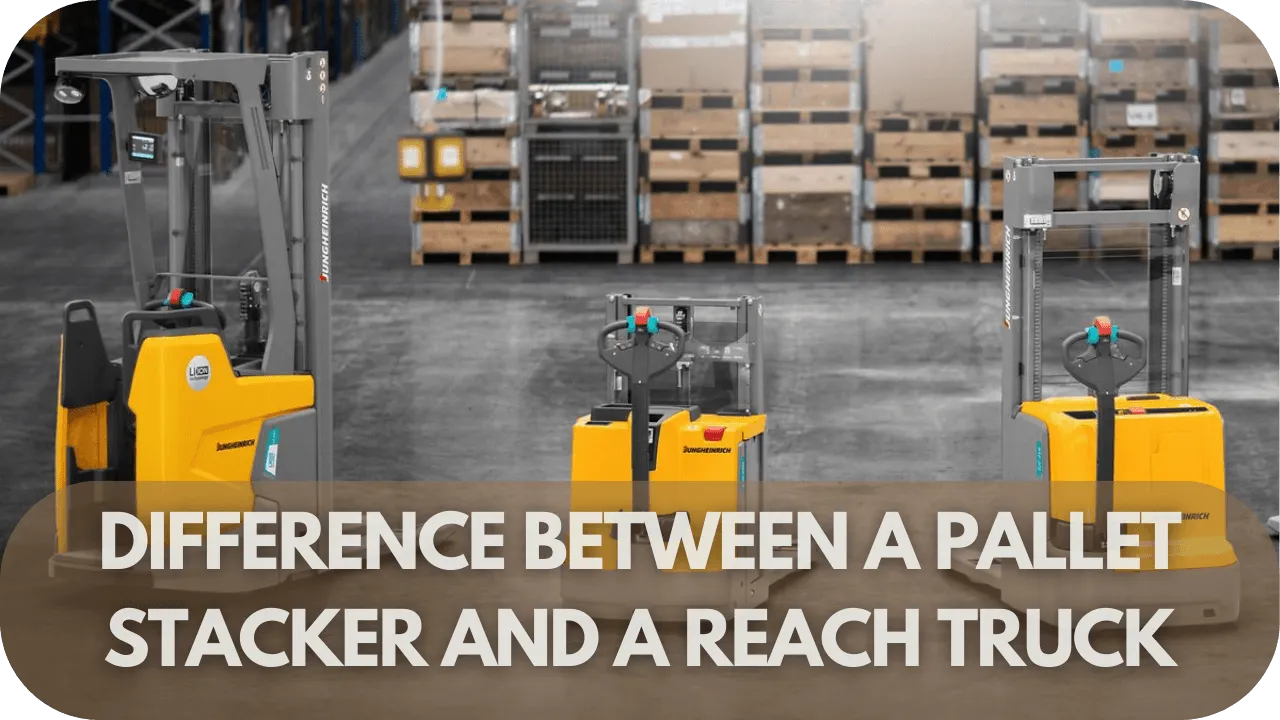
Choosing the right material handling equipment can be challenging when faced with options like pallet stackers and reach trucks. Each machine has a unique purpose and understanding their differences can save businesses time and money.
Whether you’re managing a small warehouse or a large distribution centre, selecting the right tool can improve efficiency and safety. Let’s break down the differences between a pallet stacker and a reach truck, helping you make the best choice for your needs.
What Is the Difference Between a Pallet Stacker and a Reach Truck?
A pallet stacker is a compact lifting tool suitable for low-height storage and lighter loads, while a reach truck is a powered vehicle designed for lifting heavier pallets to high-racking systems. Pallet stackers are cost-effective and easier to use, while reach trucks offer superior height reach and load capacity, ideal for large warehouses with vertical storage needs.
What Are Pallet Stackers and Reach Trucks?
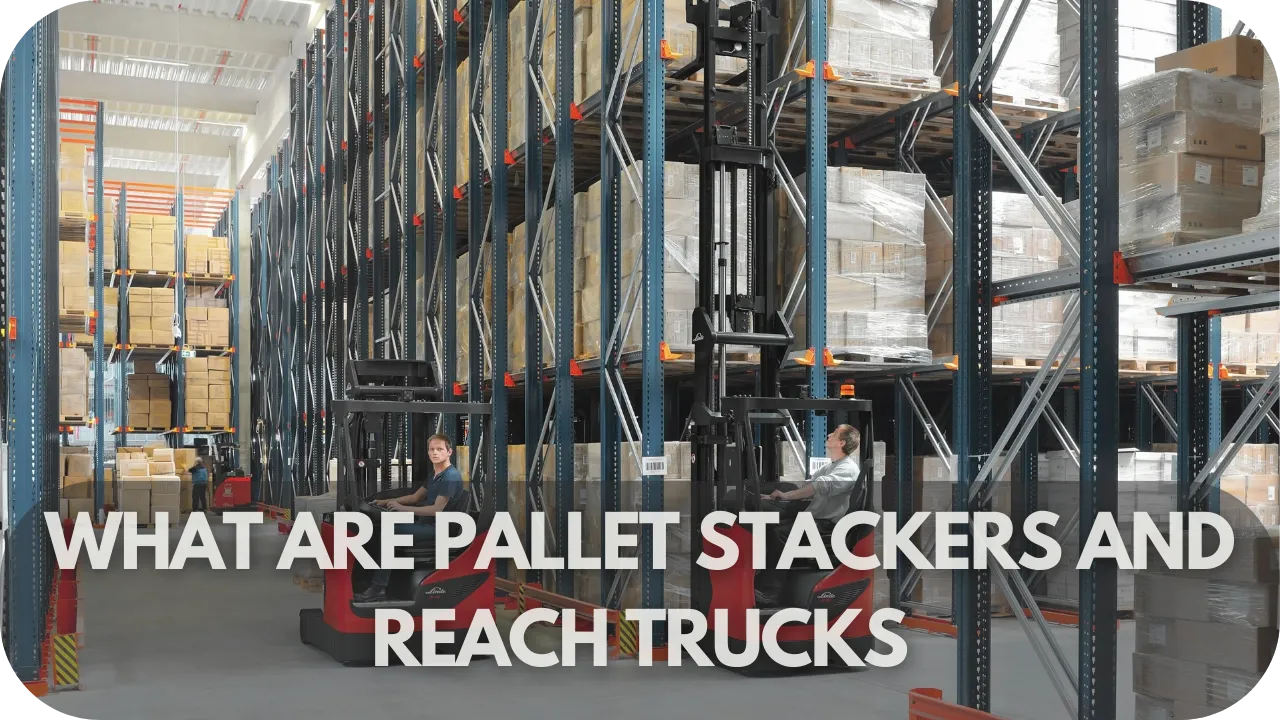
A pallet stacker is a compact tool designed for lifting and stacking pallets. It’s ideal for smaller warehouses, retail backrooms, and areas with limited space. Pallet stackers are available in manual and electric models, with the latter being easier to operate for frequent tasks.
A reach truck, on the other hand, is a powered warehouse vehicle designed for lifting pallets to high storage racks. It features an extendable mast, making it ideal for vertical storage in large warehouses. Reach trucks are fully electric and require trained operators due to their complexity and height capabilities.
Key Differences Between a Pallet Stacker and a Reach Truck
Each piece of equipment is designed for specific tasks, and choosing the wrong one could impact efficiency, safety, and cost management. Here’s a detailed breakdown of how they compare:
1. Design and Structure
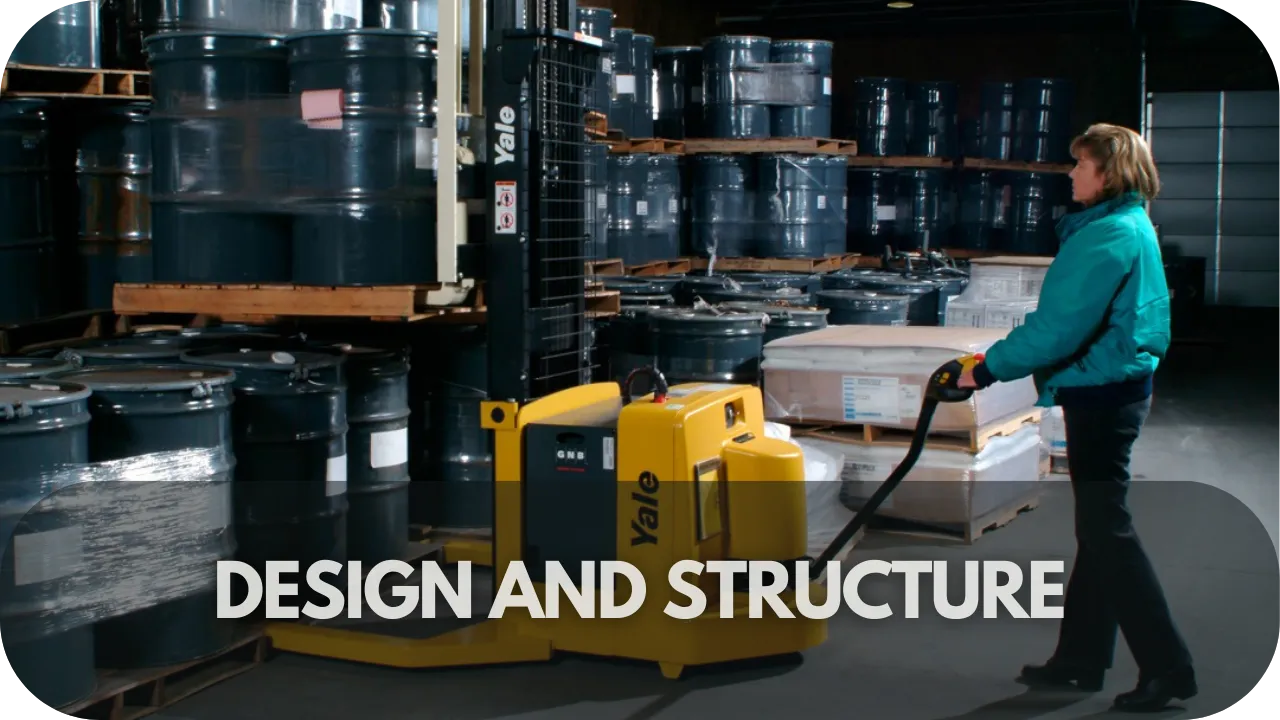
Pallet stackers have a simple, compact frame with a basic lifting mechanism. They are designed for straightforward pallet handling in low to medium-height storage setups. The smaller frame makes it easier to navigate in confined spaces.
Reach trucks, however, have a more complex design with an extendable mast that allows the forks to reach deeper into racking systems. They also feature a counterbalance system that provides stability when lifting heavy loads to significant heights.
This advanced design makes reach trucks better suited for tall warehouse racking but also adds to their complexity and size.
2. Lifting Capacity and Height
Pallet stackers are designed for lower lifting tasks, typically handling lighter loads up to 4 metres. They are ideal for environments where vertical storage is limited.
Reach trucks, on the other hand, excel in both height and load capacity. They can lift heavier pallets over 10 metres, making them ideal for high-racking systems often seen in large warehouses and distribution centres. If your inventory requires high stacking, a reach truck is the better choice.
3. Maneuverability and Space Requirements
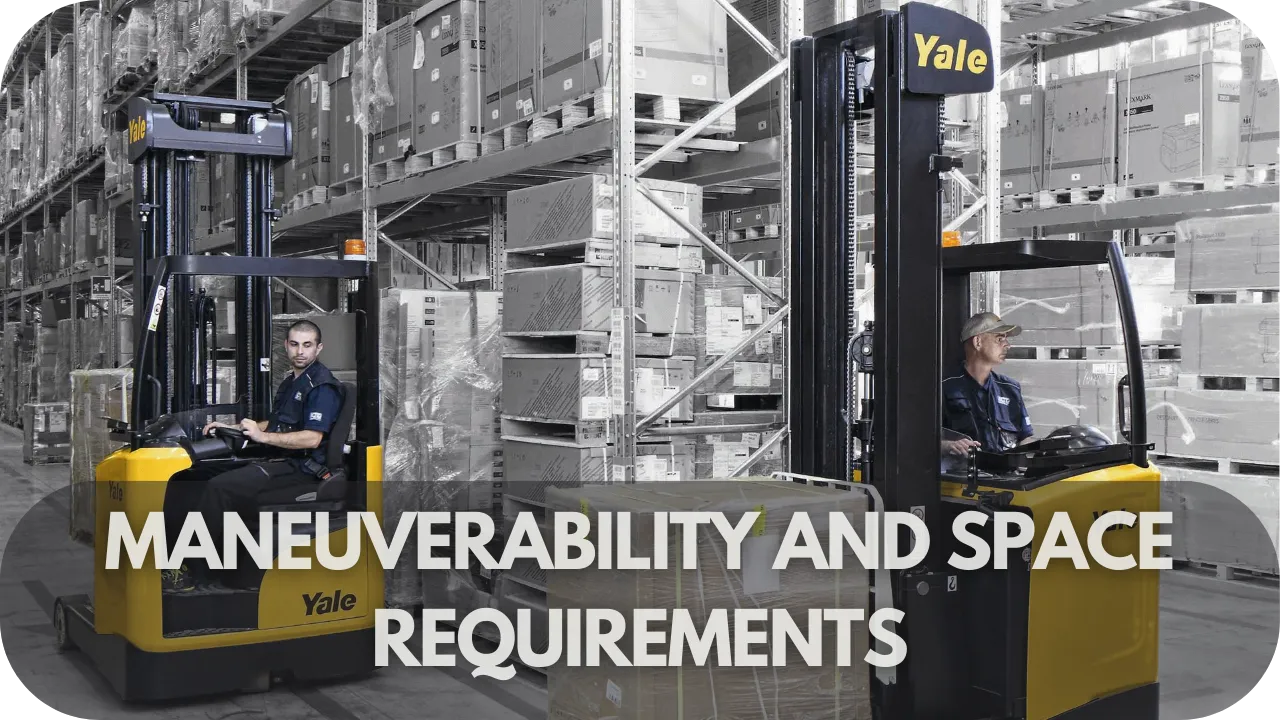
Pallet stackers shine in tight spaces due to their smaller size. They are perfect for small warehouses, retail backrooms, and areas with lower storage heights where space is limited.
Reach trucks, while designed for narrow aisles, have a larger frame and turning radius compared to stackers. They require more operational space to function effectively, which makes them better suited for larger warehouses where tall vertical storage is a priority.
4. Power Source and Operation
Pallet stackers offer flexibility with manual, semi-electric, and fully electric options. Manual models work well for light, occasional use, while electric versions are better suited for frequent operations.
Reach trucks are fully electric and designed for continuous, heavy-duty use. Their electric power allows for smooth lifting and reaching tall storage spaces, but their advanced controls require more operational knowledge compared to pallet stackers.
5. Operator Skill Level
Pallet stackers are generally user-friendly and require minimal training to operate. They are suitable for smaller warehouses where the tasks involve basic pallet movement and stacking.
Reach trucks, however, require professional certification and training. Their complex lifting capabilities, height handling, and safety considerations make them more suitable for experienced operators in high-volume environments.
6. Cost Considerations
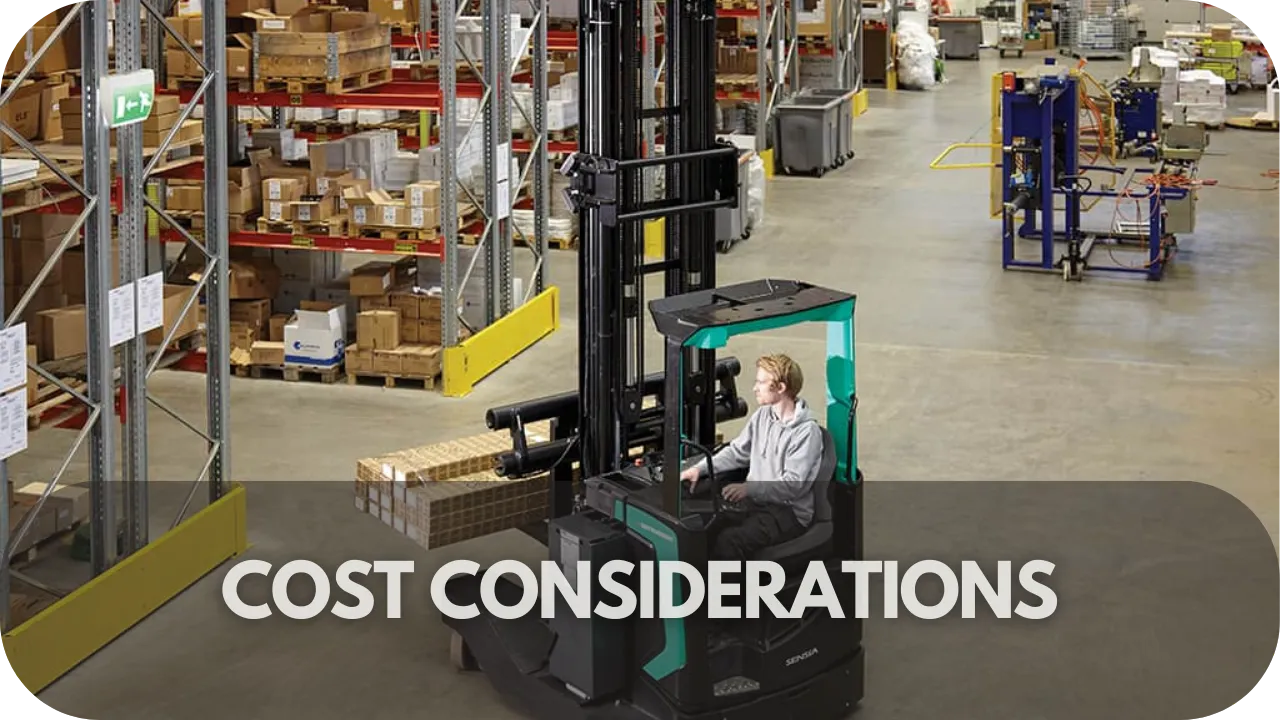
Pallet stackers are more budget-friendly, both in terms of purchase price and maintenance costs. Their simple design results in lower operational expenses, making them ideal for smaller businesses or facilities with lighter operational demands.
Reach trucks come with a higher upfront investment due to their advanced mechanisms, greater lifting capacity, and specialised design. Ongoing maintenance costs are also higher, but their efficiency in high-volume storage environments often justifies the expense.
7. Safety Features and Stability
Pallet stackers, particularly manual models, have limited safety features. They are stable for low-level lifting but may lack advanced features like load sensors or tilt protection.
Reach trucks are designed for high-lift operations and often come equipped with enhanced safety features, such as height stability control, load sensors, and automatic braking systems to prevent tipping during tall lifting tasks.
8. Speed and Efficiency
Pallet stackers are suitable for low-speed operations where tasks involve lighter loads and occasional use.
Reach trucks are built for high-speed, high-volume tasks, making them ideal for fast-paced warehouse environments where time efficiency and heavy load handling are crucial.
Which One Should You Choose?
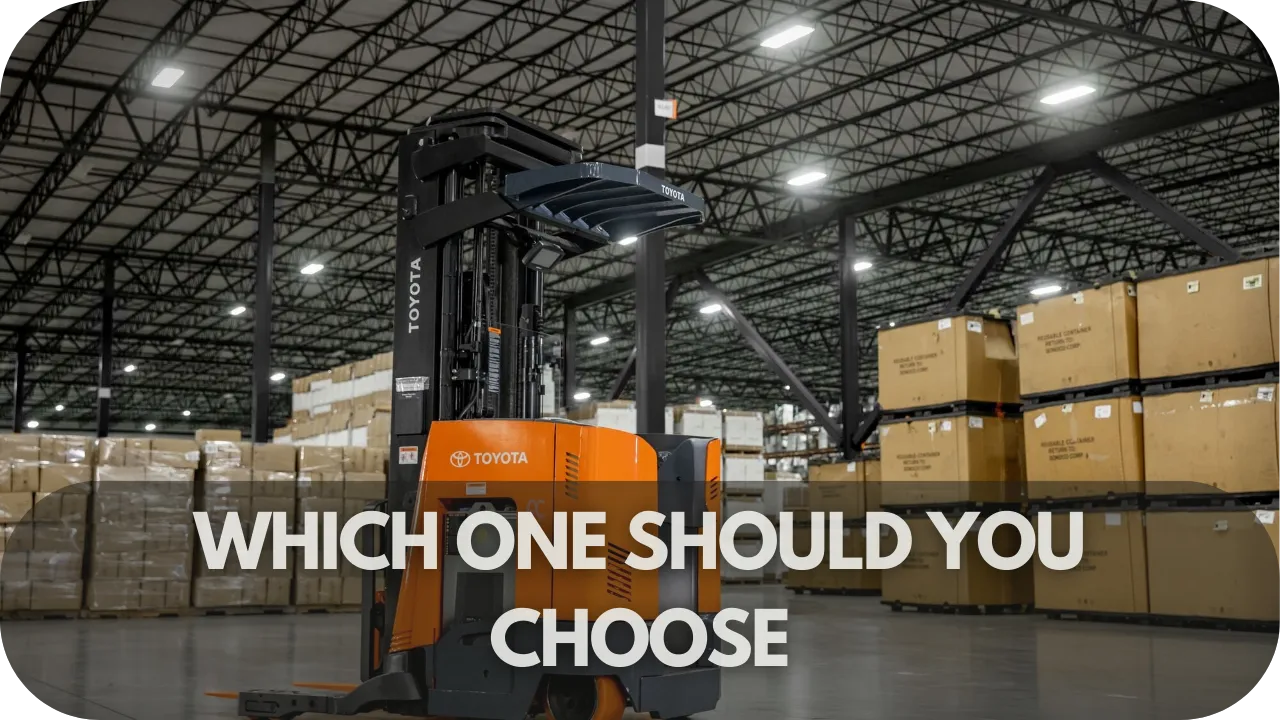
The choice between a pallet stacker and a reach truck depends largely on your warehouse operations, load requirements, and available space. Each piece of equipment serves different needs, and selecting the right one can significantly impact efficiency and cost-effectiveness.
A pallet stacker is ideal for smaller spaces with low racking (up to 4 metres) and lighter loads. It’s a budget-friendly choice for low to medium-volume operations where height and heavy lifting are not priorities.
A reach truck, however, suits larger warehouses with tall racking (up to 10 metres) and heavier loads. It’s designed for narrow aisles and high-volume storage but requires trained operators and a higher investment.
The decision comes down to your warehouse size, load weight, budget, and storage requirements. Investing in the right equipment can improve operational flow and safety while meeting your storage demands effectively.
Conclusion
Pallet stackers and reach trucks each serve specific warehouse needs. Pallet stackers are ideal for smaller operations with limited storage heights and lighter loads. Reach trucks excel in large warehouses where high racking and heavier loads are involved.
Choosing the right equipment depends on your warehouse size, load requirements, and budget. Investing in the correct tools can greatly improve your warehouse’s efficiency and safety. Need help selecting the right equipment? Contact us today for expert advice and tailored solutions.