
When to Use a High-Reach Forklift for Narrow Aisles
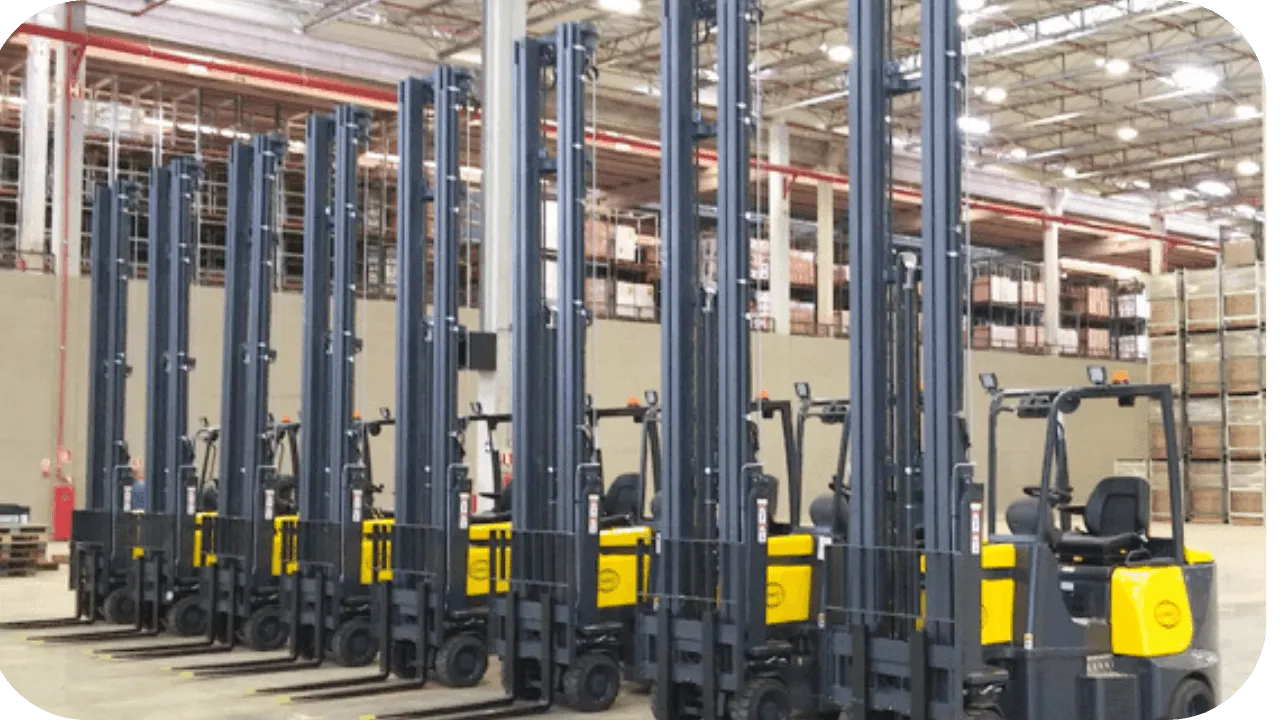
Warehouses are running out of space—fast. With 75% of warehouses struggling to optimise storage, navigating narrow aisles with standard forklifts feels like threading a needle.
Every inch matters. Are the aisles too tight? Productivity slows. Stock inaccessible? Orders delay. The wrong forklift isn’t just inconvenient—it’s costly!
Enter high-reach forklifts engineered for precision in tight spaces. They maximise vertical storage and keep operations seamless. This guide will explain when and why you should use them and how they can transform your warehouse efficiency!
High-Reach Forklifts
A high-reach forklift is a specialised warehouse vehicle designed to navigate narrow aisles while lifting loads to impressive heights. Unlike standard forklifts, these machines feature an extended mast, deep reach capability, and superior manoeuvrability, making them ideal for optimising vertical storage in confined spaces.
Equipped with stabilising outriggers and tilt control, high-reach forklifts ensure safer lifting and precise load placement. Their tight turning radius allows operators to work efficiently in warehouses with limited space, reducing the risk of accidents or damage. Most electric-powered models offer a quieter, more eco-friendly alternative to traditional forklifts.
Commonly used in high-density storage facilities, retail warehouses, and distribution centres, high-reach forklifts maximise available space while improving workflow efficiency. Whether stacking pallets at extreme heights or retrieving stock from hard-to-reach areas, they provide a cost-effective and space-saving solution for modern warehousing.
When to Use a High-Reach Forklift in Narrow Aisles
High-reach forklifts are a game-changer in warehouses where limited space and vertical storage are essential. Here’s when they are the best choice:
1. Limited Aisle Space
A high-reach forklift becomes essential when warehouse aisles are too narrow for standard forklifts. Designed for tight manoeuvres, these forklifts operate efficiently in spaces where traditional models would struggle.
Their compact structure and superior handling allow operators to lift and transport goods without excessive turning space, making them perfect for high-density storage environments where every centimetre counts.
2. Maximising Vertical Storage
High-reach forklifts are ideal for warehouses that need to maximise their vertical space. Extended mast heights allow businesses to stack pallets higher, increasing storage capacity without expanding the warehouse footprint.
This is especially useful in industries that handle large volumes of inventory. It ensures that every available space is fully utilised while maintaining accessibility to goods stored at extreme heights.
3. Improving Picking Efficiency
Warehouse efficiency relies on quick and safe product retrieval. High-reach forklifts streamline order picking, allowing operators to access stock from higher shelves easily.
Their precise controls and advanced lifting mechanisms reduce downtime, ensuring that goods are moved swiftly from storage to dispatch. This results in a smoother workflow, reducing congestion in narrow aisles and improving overall productivity in fast-paced warehouse environments.
4. Enhancing Warehouse Safety
Operating a forklift in tight spaces increases the risk of accidents, but high-reach forklifts are built explicitly for stability and control.
Equipped with load stabilisation, tilt control, and clear visibility, they minimise the chances of tipping or collisions. Their ability to lift and place pallets precisely reduces errors, protecting the operator and stored inventory while maintaining a safe working environment in confined warehouse aisles.
5. Reducing Warehouse Costs
Optimising storage space with high-reach forklifts can significantly cut warehousing costs. By stacking goods higher and using narrow aisles, businesses can store more inventory without expanding their premises. This reduces the need for additional storage facilities, lowering rental or construction expenses.
Additionally, electric-powered models help decrease fuel and maintenance costs, making high-reach forklifts a wise investment for long-term warehouse efficiency and cost-effectiveness.
Key Benefits of Using a High-Reach Forklift
High-reach forklifts maximise space, boost efficiency, and enhance safety in narrow aisles. But what makes them essential for warehouses? Let’s explore the key benefits that set them apart in tight storage spaces!
- Maximises Warehouse Space: High-reach forklifts allow businesses to stack goods vertically, using available storage height. This reduces the need for wider aisles, enabling warehouses to store more products within the same footprint.
- Improves Manoeuvrability in Tight Spaces: Designed for narrow aisles, high-reach forklifts have a compact frame and a tight turning radius. This allows operators to easily navigate confined spaces, reducing the risk of collisions and improving efficiency.
- Enhances Safety in High-Risk Areas: With advanced stabilisation features and load control, high-reach forklifts minimise the chances of tipping over. Their precise handling ensures the safe lifting and placing of heavy loads, protecting operators and inventory.
- Increases Productivity and Efficiency: Faster lifting speeds and smooth operation enable quicker stock retrieval and storage. This reduces downtime and improves workflow, allowing warehouses to handle more inventory in less time.
- Reduces Damage to Goods and Equipment: The precision controls of high-reach forklifts prevent abrupt movements and accidental impacts, helping maintain product integrity, reduce damage to goods, and minimise repair costs for racking and equipment.
- Lower Long-Term Operating Costs: Most high-reach forklifts are electric-powered, which reduces fuel expenses compared to conventional forklifts. Their efficient design also reduces maintenance costs, making them a cost-effective solution for long-term warehouse operations.
Choosing the Right High-Reach Forklift for Your Business
Selecting the right high-reach forklift for your business requires careful consideration of your warehouse layout, load requirements, and operational needs.
Assess aisle width and turning radius to ensure smooth navigation in tight spaces. A forklift that fits your warehouse dimensions prevents bottlenecks and enhances efficiency.
Next, determine your maximum lift height and load capacity. High-reach forklifts vary in mast height and weight limits, so choosing a model that meets your storage demands is crucial. Overloading can compromise safety, while insufficient lift height can limit storage potential.
Consider the power source—electric models are popular due to their low maintenance, quiet operation, and environmental benefits. Additionally, look for advanced safety features such as load stabilisation, cameras, and ergonomic controls to reduce accidents and operator fatigue.
Finally, long-term costs, including energy consumption and maintenance, are factored in. Investing in the right forklift improves productivity while reducing operational expenses.!
Safety Tips for Operating High-Reach Forklifts in Narrow Aisles
Safety is everything when operating high-reach forklifts in narrow aisles. One mistake can lead to costly accidents! Follow these essential tips to keep your warehouse operations smooth, secure, and efficient.
- Ensure Proper Operator Training: Only trained and certified operators should handle high-reach forklifts to prevent accidents. Regular training sessions improve skills, ensuring safe and efficient manoeuvring in narrow aisles.
- Maintain Load Stability: Always check that loads are evenly distributed within the forklift’s weight limit. An unbalanced load increases the risk of tipping, especially when lifting to high shelves.
- Keep Aisles Clear: Obstructions in narrow aisles can lead to collisions and slow down operations. Regularly inspect pathways to ensure they remain free of pallets, debris, or misplaced stock.
- Use Slow and Controlled Movements: Sudden stops or sharp turns can destabilise the forklift and the load. Moving at a steady pace improves precision and minimises the risk of accidents.
- Check Equipment Before Each Use: Daily inspections help identify issues with brakes, hydraulics, and lift mechanisms before they cause failures. Preventative maintenance ensures forklifts operate safely and efficiently.
- Maximise Visibility with Safety Features: Mirrors, cameras, and warning signals can improve visibility in tight spaces. Proper lighting and clear sightlines also help operators navigate safely and avoid collisions.
Conclusion
Efficiency starts with the right equipment. High-reach forklifts make navigating narrow aisles effortless, maximising storage and productivity. Don’t let tight spaces slow you down—upgrade your fleet today! Buy A Fork has the perfect high-reach forklift for your needs. Contact us now to take your warehouse operations to the next level!