
The Environmental Impact of Forklifts: Sustainable Choices for Your Business
· Updated
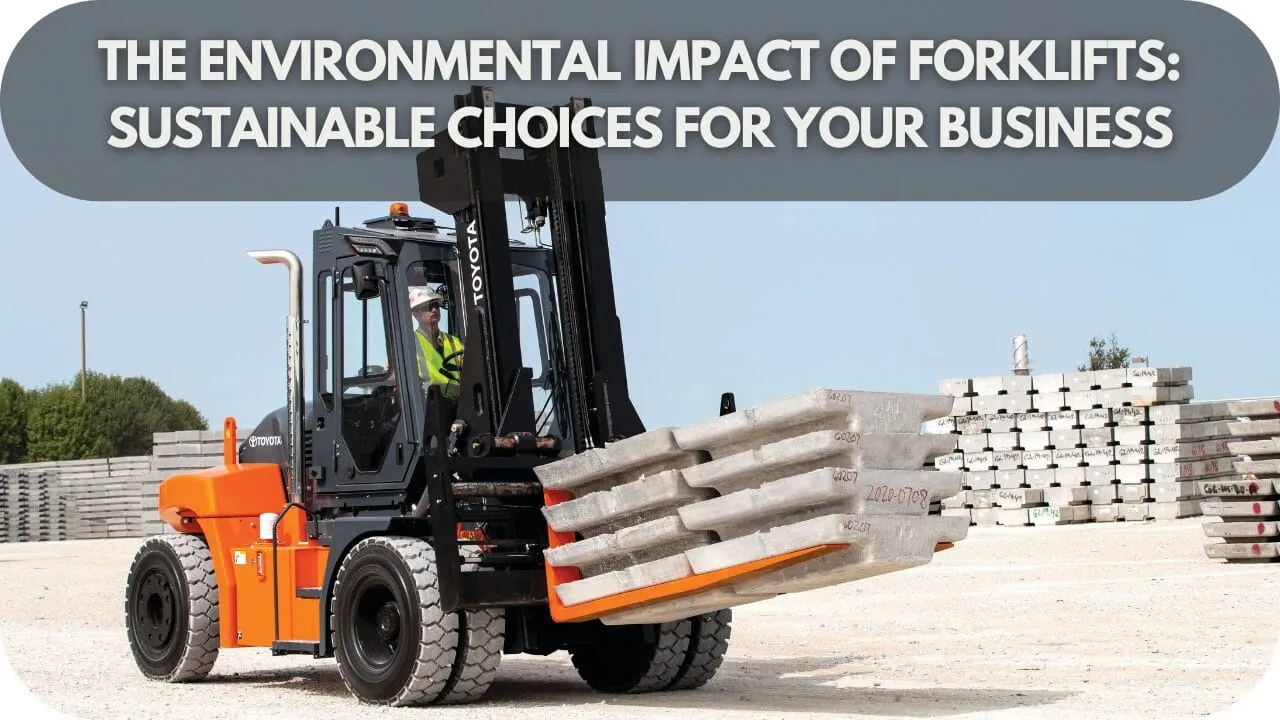
Forklifts are the unsung heroes of warehouses and industrial operations, but have you ever stopped to think about their environmental footprint? From roaring diesel engines to energy-guzzling operations, traditional forklifts are leaving a mark that’s anything but green.
But here’s the good news: sustainable alternatives are revolutionizing the industry, giving businesses a chance to cut costs and emissions while staying ahead of the curve.
Whether you’re curious about greener options or ready to transform your fleet, this guide will show you how forklifts can drive your business toward a more sustainable future!
Environmental Impact of Forklifts
Forklifts are indispensable in warehouses and industrial operations, but their environmental footprint often goes unnoticed. From emissions to resource consumption, understanding their impact is the first step toward sustainable choices.
1. Carbon Emissions
Forklifts powered by internal combustion engines emit significant amounts of carbon dioxide (CO2) and other greenhouse gases. Diesel and gas-powered models are particularly problematic, contributing to climate change and air pollution.
Businesses relying on such forklifts inadvertently increase their carbon footprint, impacting the environment and potentially facing regulatory penalties in regions with strict emissions laws. Transitioning to low-emission or electric alternatives can drastically reduce these emissions.
2. Air Pollution
Traditional forklifts release pollutants such as nitrogen oxides (NOx) and particulate matter (PM) into the air, affecting both outdoor and indoor air quality. This is especially concerning in enclosed spaces like warehouses, where poor ventilation can cause health issues for workers.
The persistent use of polluting forklifts undermines efforts to maintain a healthy and safe work environment, emphasizing the need for cleaner alternatives.
3. Energy Inefficiency
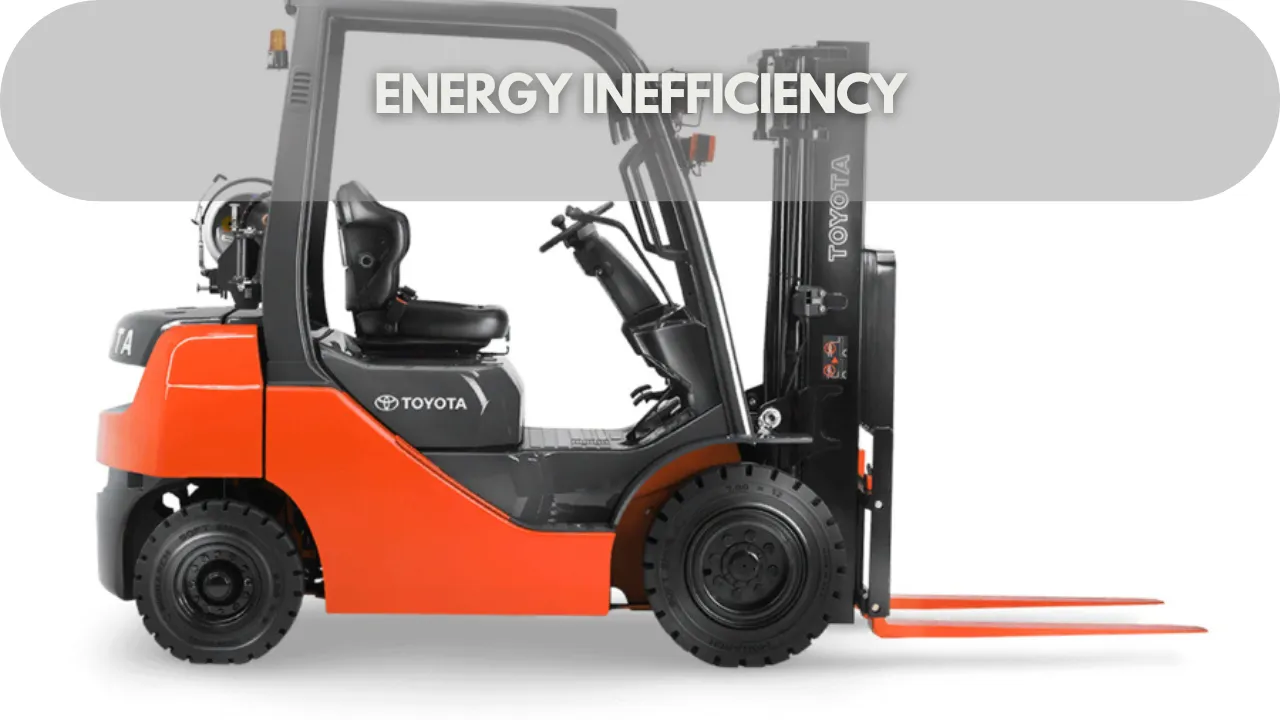
Forklifts powered by fossil fuels are often less energy-efficient than their electric counterparts, requiring more fuel to perform the same tasks.
This inefficiency not only increases operational costs but also depletes non-renewable energy resources. By investing in energy-efficient models, businesses can lower their environmental impact while saving on fuel expenses.
4. Noise Pollution
Combustion engine forklifts produce significant noise, contributing to noise pollution in industrial areas. This can disrupt local ecosystems, disturb nearby communities, and negatively impact worker productivity and well-being.
Electric forklifts, on the other hand, operate much more quietly, offering a more sustainable solution to this issue.
5. Resource-Intensive Manufacturing
The production of forklifts involves extracting and processing raw materials like steel and aluminium, consuming large amounts of energy and water.
Additionally, the manufacturing process generates waste and emissions, adding to the environmental burden. Businesses can mitigate this by choosing suppliers who adopt sustainable manufacturing practices.
6. Battery Waste
While electric forklifts are more environmentally friendly during operation, improper disposal of their batteries can cause significant environmental harm.
Lead-acid and lithium-ion batteries, if not recycled properly, can leach toxic substances into the soil and water, posing risks to ecosystems and human health. Establishing robust recycling programs is essential to address this issue.
7. End-of-Life Challenges
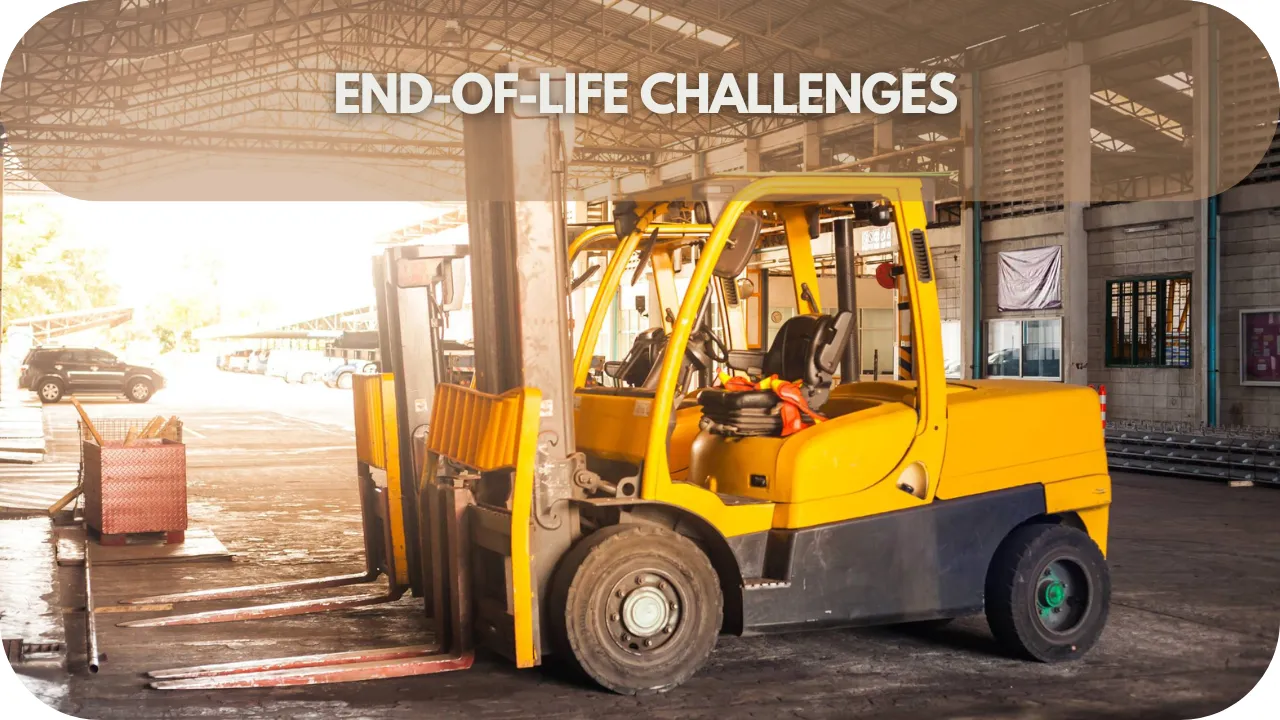
When forklifts reach the end of their operational life, improper disposal contributes to landfill waste and environmental degradation. Many components, such as hydraulic fluids and rubber tyres, are non-biodegradable and require specialized recycling methods.
Companies can reduce this impact by opting for refurbished forklifts or implementing circular economy principles in their operations.
8. Soil Contamination
Improper handling or spillage of hydraulic fluids and lubricants from forklifts can lead to soil contamination.
These substances contain harmful chemicals that can seep into the ground, impacting local ecosystems and potentially affecting water supplies. Regular maintenance and proper waste management are essential to mitigate this risk.
9. Water Pollution
Forklifts used in outdoor operations near water bodies pose risks of water pollution. Hydraulic fluid leaks, battery acid spills, and improper waste disposal can harm aquatic ecosystems and disrupt marine life.
Employing eco-friendly forklifts and adopting strict spill-prevention measures are crucial for protecting water resources.
10. Greenhouse Gas Lifecycle
Beyond direct emissions, forklifts contribute to greenhouse gas emissions throughout their lifecycle— from raw material extraction to manufacturing, transportation, and disposal.
Opting for forklifts designed with sustainable materials and renewable energy sources can significantly reduce their overall carbon footprint.
Sustainable Forklift Options
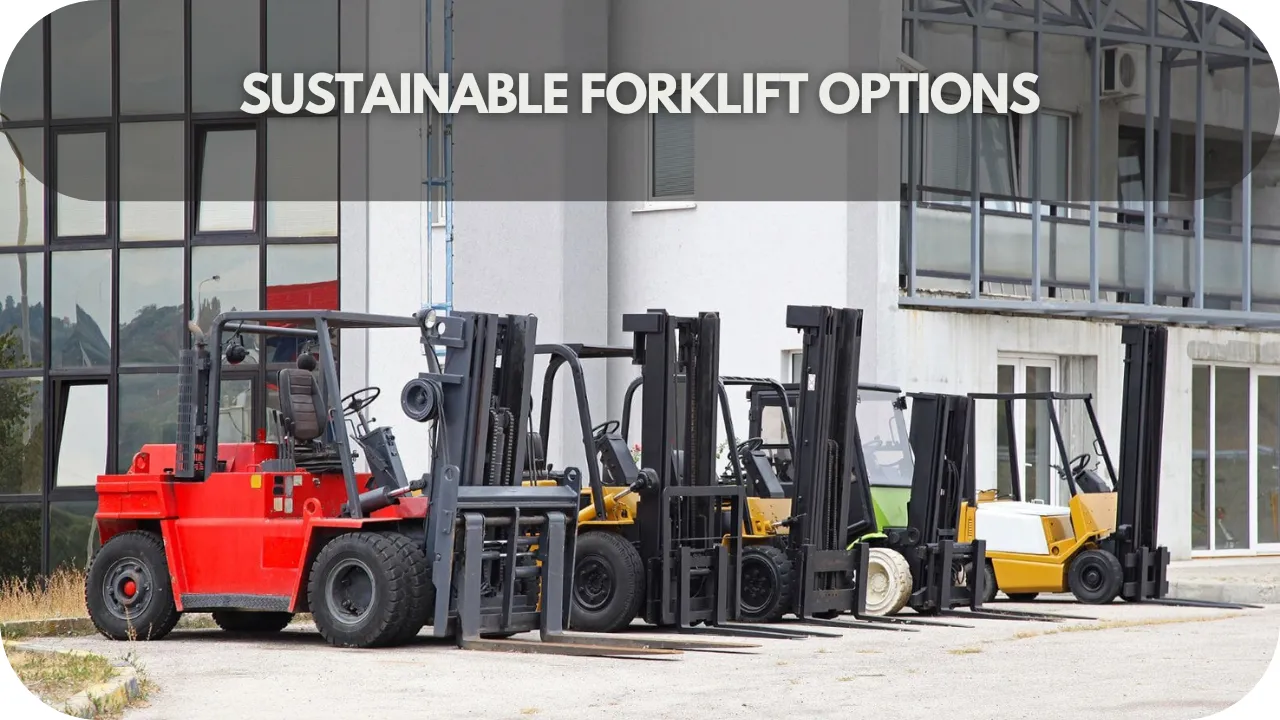
Switching to sustainable forklift options is not just an environmental necessity—it’s a smart business move. Find out how innovative solutions can transform your operations while reducing your carbon footprint.
1. Electric Forklifts
Electric forklifts have become a popular sustainable option for businesses aiming to reduce their carbon footprint. Powered by rechargeable batteries, these forklifts emit zero emissions during operation, making them ideal for indoor use and environments where air quality is critical.
Additionally, they require less maintenance compared to their combustion-engine counterparts, which helps reduce long-term operating costs.
For example, the Toyota 7FBE18 electric forklift offers efficient performance with a 1.8-tonne capacity, suitable for various material handling tasks.
2. Hybrid Forklifts
Hybrid forklifts offer a balance between power and sustainability by combining an internal combustion engine with an electric motor.
These forklifts are particularly useful in industries that require both indoor and outdoor operations, as they can switch between electric power for emission-free indoor tasks and fuel-based power for heavy-duty outdoor tasks.
For instance, the Toyota 32-8FG18 Dual Fuel (LPG/Petrol) forklift provides flexibility and reduced fuel consumption while maintaining high performance in demanding environments.
3. LPG Forklifts
LPG forklifts provide a cleaner-burning alternative to traditional diesel or petrol models. They emit lower levels of harmful pollutants, making them a more environmentally friendly option for businesses that require robust performance in both indoor and outdoor settings.
These forklifts are known for their consistent power output and quick refuelling times, making them ideal for operations requiring minimal downtime.
An example is the Nissan DX 15 LPG forklift, which offers a 1.5-tonne capacity and is designed to deliver reliable performance while minimising environmental impact. citeturn0search1
Implementing Sustainable Practices in Your Business
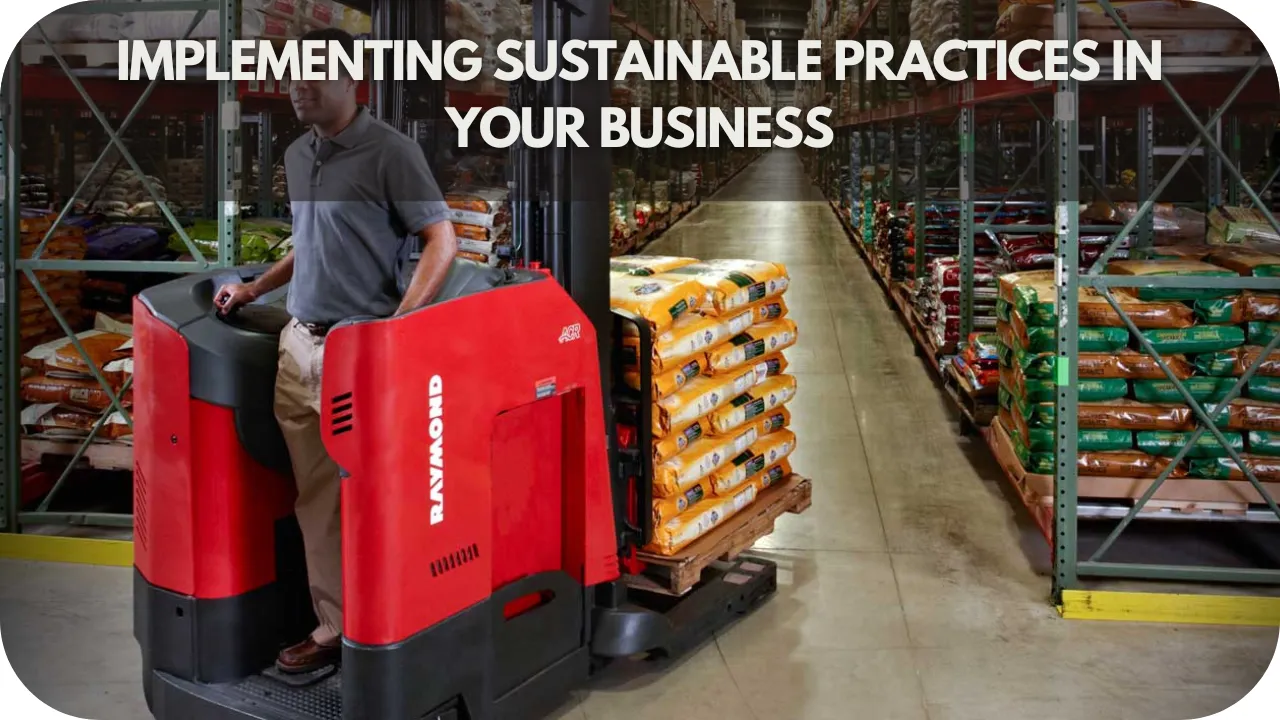
Sustainability in forklift operations goes beyond choosing eco-friendly equipment—it requires an integrated approach. By adopting sustainable practices, businesses can optimize operations, reduce environmental impact, and improve cost-efficiency:
- Upgrade to Energy-Efficient Forklifts: Replacing outdated models with electric or hybrid forklifts significantly cuts emissions. Retrofitting existing forklifts with emission-reduction tech offers a cost-effective alternative.
- Optimise Forklift Usage: Proper operator training reduces energy consumption and wear. Fleet management systems help track usage and improve efficiency.
- Preventative Maintenance: Routine checks on tyres, batteries, and hydraulics improve energy efficiency, extend lifespan, and reduce emissions.
- Use Renewable Energy for Charging: Solar-powered chargers lower costs and reliance on non-renewable energy.
- Responsible Disposal & Recycling: Partner with certified recyclers for proper battery disposal. Many manufacturers offer recycling programs.
- Eco-Friendly Suppliers: Choose suppliers with sustainable practices, including refurbished forklifts that support the circular economy.
- Track Sustainability Efforts: Use data tools to monitor energy use, emissions, and progress toward sustainability targets.
- Circular Economy Practices: Refurbish or lease forklifts to extend their lifecycle, conserving resources and limiting waste.
- Employee Engagement: Foster a culture of sustainability by involving employees in eco-friendly initiatives and encouraging ideas for improvement.
Conclusion
Looking to make your business more sustainable without compromising efficiency? Choose eco-conscious forklift solutions that help reduce your environmental impact.
From electric models to fuel-saving alternatives, Buy A Fork in Australia provides reliable options tailored to your needs.
Make the switch to greener equipment today and enhance both your operations and your commitment to sustainability—visit Buy A Fork and find the right forklift for your business!