
Forklift Attachments: Types, Uses and Safety Rules
· Updated
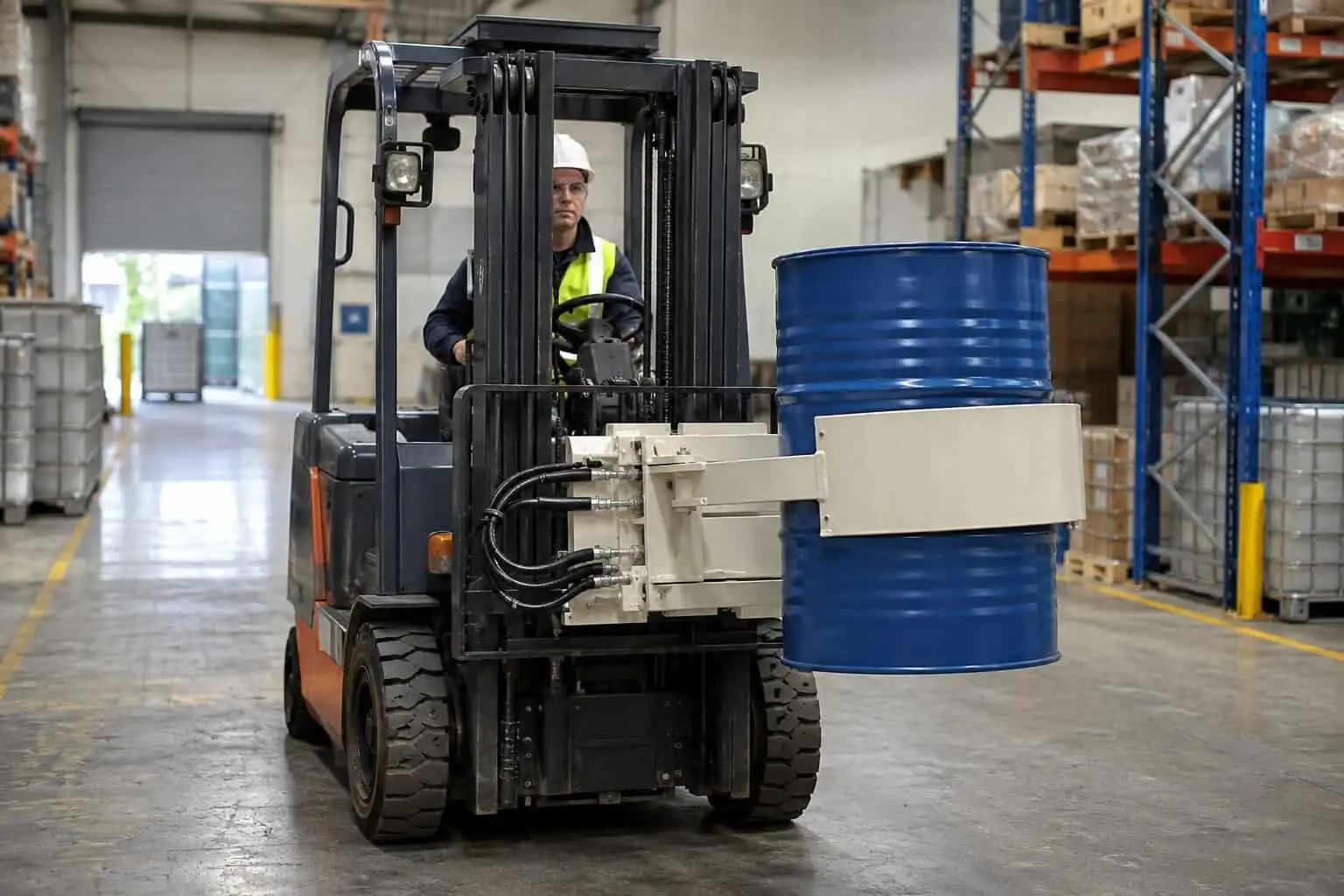
Forklift attachments let one machine handle loads that standard forks cannot: drums, bales, rolls, bins, long steel, awkward shapes.
Fitting one changes what the forklift can do. It also changes what the forklift can safely lift, which is the part most buyers find out too late.
This guide covers which attachment suits which job, how each one affects your rated capacity, what your forklift needs hydraulically to run it, and what Australian workplace law requires once an attachment is fitted.
What Are Forklift Attachments?
A forklift attachment is a device fitted to the carriage or the forks that changes how the machine holds or handles a load.
Some slip over the existing forks and need nothing from the machine. Others mount to the carriage and are driven by the forklift’s hydraulics, which means the machine has to have the hydraulic functions available to run them.
One rule applies to all of them, without exception: fitting an attachment reduces the forklift’s safe rated capacity. The attachment adds weight, and it almost always pushes the load further from the mast.
Which Forklift Attachment Do You Need? Match the Job to the Tool
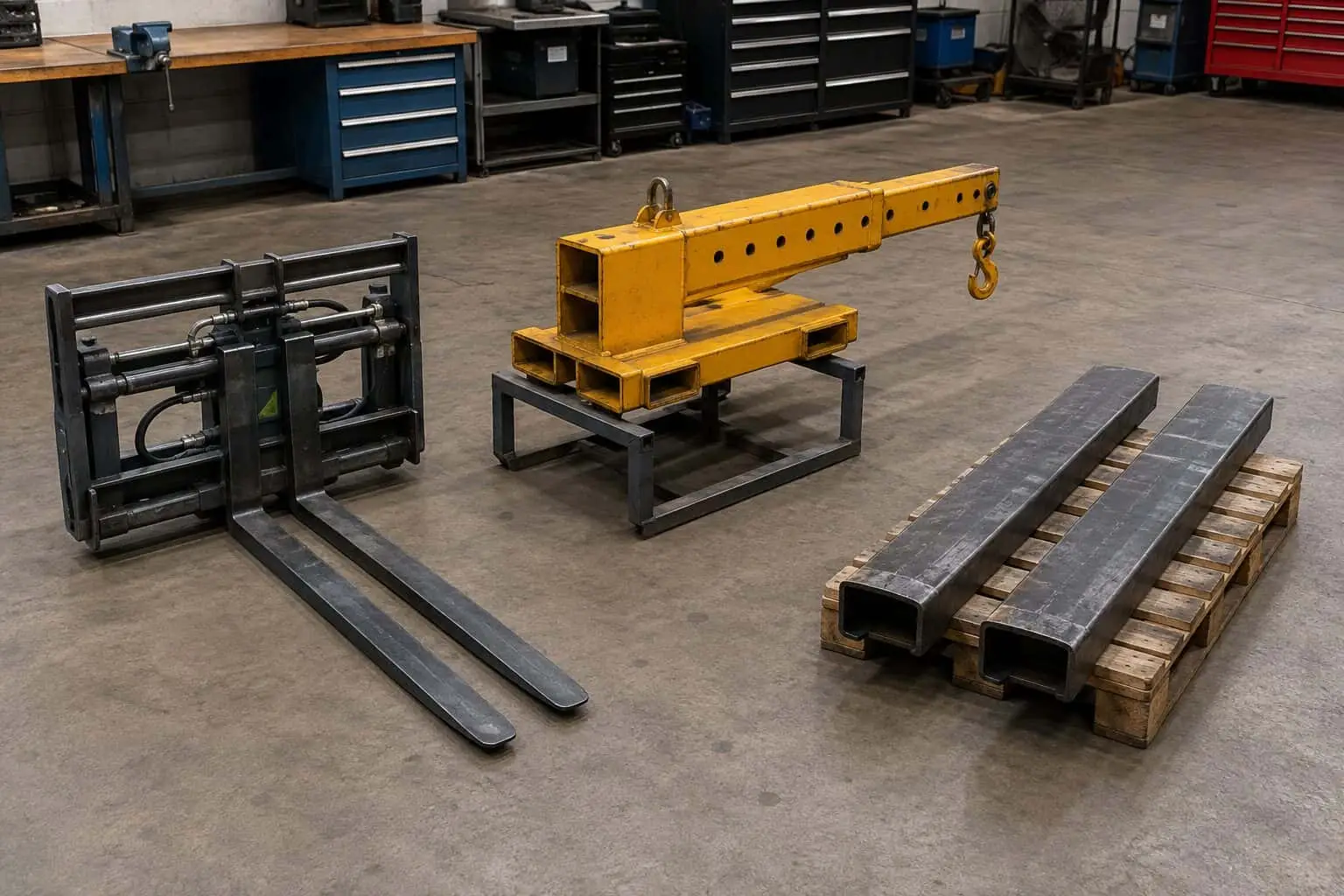
Most people searching for an attachment describe the problem rather than the product, because the category names are not obvious.
The table below translates the job into the attachment that does it, and tells you what the forklift needs to run it.
|
What you are moving |
Attachment that does it |
What the forklift needs |
|---|---|---|
|
Pallets of different widths, all shift |
Fork positioner |
Hydraulic function |
|
Loads that need lining up without repositioning the truck |
Side shift |
Hydraulic function |
|
Cartons, appliances, bales, unpalletised boxes |
Clamp (carton, bale or appliance) |
Hydraulic function and capacity headroom |
|
Drums, kegs, cylinders |
Drum clamp or drum handler |
Hydraulic function |
|
Carpet, paper, textile or plastic rolls |
Roll clamp or pole attachment |
Hydraulic function and significant capacity headroom |
|
Loads that need tipping or emptying |
Rotator |
Hydraulic function and significant capacity headroom |
|
Loads lifted from above with a sling or chain |
Jib, boom or lifting hook |
Often slip-on; check rating carefully |
|
Long or oversized pallets |
Fork extensions or telescopic forks |
Slip-on or hydraulic; major load centre effect |
|
Bins, skips or bulk waste |
Tipping bin or bin tipper |
Usually a self-contained unit on the forks |
|
Loose material, sand, gravel |
Bucket, blade or scoop attachment |
Slip-on or hydraulic depending on type |
|
Yard sweeping or snow clearing |
Sweeper or plough attachment |
Varies by unit |
|
Lifting people to height |
Work platform or man cage |
Heavily restricted; see the compliance section below |
The Main Types of Forklift Attachment
1. Side shift
A side shift lets the carriage move laterally so the operator can line up with a pallet without repositioning the whole truck.
It is the most commonly fitted attachment on any site doing repetitive pallet work, because the time saved on every pick adds up quickly. It is often factory-fitted rather than added later.
2. Fork positioner
A fork positioner moves the forks apart and together hydraulically from the operator’s seat.
On a site handling pallets of several different widths, it removes a genuine manual handling risk as well as saving time.
3. Fork extensions and telescopic forks
Fork extensions slip over the existing tynes to handle longer loads. Telescopic forks do the same job hydraulically and retract when not needed.
Both have a significant effect on capacity, because they move the load centre well forward of where the machine was rated.
This is the attachment most often fitted without recalculating capacity, and it is the one where that omission matters most.
4. Clamps
Clamps grip a load from the sides instead of supporting it from underneath, which lets a forklift handle anything that does not sit on a pallet.
Carton clamps handle appliances and boxed goods, bale clamps handle compressed material, drum clamps handle steel and plastic drums, and roll clamps handle carpet, paper and film.
Clamps are heavy, they sit forward of the carriage, and they reduce rated capacity substantially.
5. Rotators
A rotator turns the load, usually to empty a bin or invert a container. It is common in food production, waste handling and manufacturing.
Like clamps, a rotator is heavy and mounts forward, so the capacity effect is significant.
6. Jibs, booms and lifting hooks
These convert the forklift into a limited crane, lifting from a single point with a sling or chain rather than supporting the load on forks.
They are widely available as slip-on units, which makes them easy to fit and easy to misuse.
The rated capacity of a jib reduces as the load moves out along the boom, and that rating is separate from the forklift’s own rating. Both have to be satisfied.
7. Blade, bucket and scoop attachments
Used for loose material, spoil and bulk handling, available as slip-on units and as carriage-mounted hydraulic versions.
These are the attachment most likely to be improvised on site, which is exactly where the compliance risk sits.
8. Tipping bins and bin tippers
Self-contained bins that sit on the forks and tip via a release, or attachments that pick up and invert a standard wheelie bin.
Common in manufacturing and waste handling.
9. Work platforms and man cages
Lifting people on a forklift is tightly controlled in Australia and is not a matter of buying a cage and using it.
There are specific requirements covering the platform itself, how it is secured, the machine it is fitted to, and the circumstances in which it may be used at all.
Do not treat a work platform as a general-purpose attachment. Check the current requirements with WorkSafe Victoria or your state regulator, and look first at whether an elevating work platform is the right machine instead.
How Attachments Affect Forklift Capacity
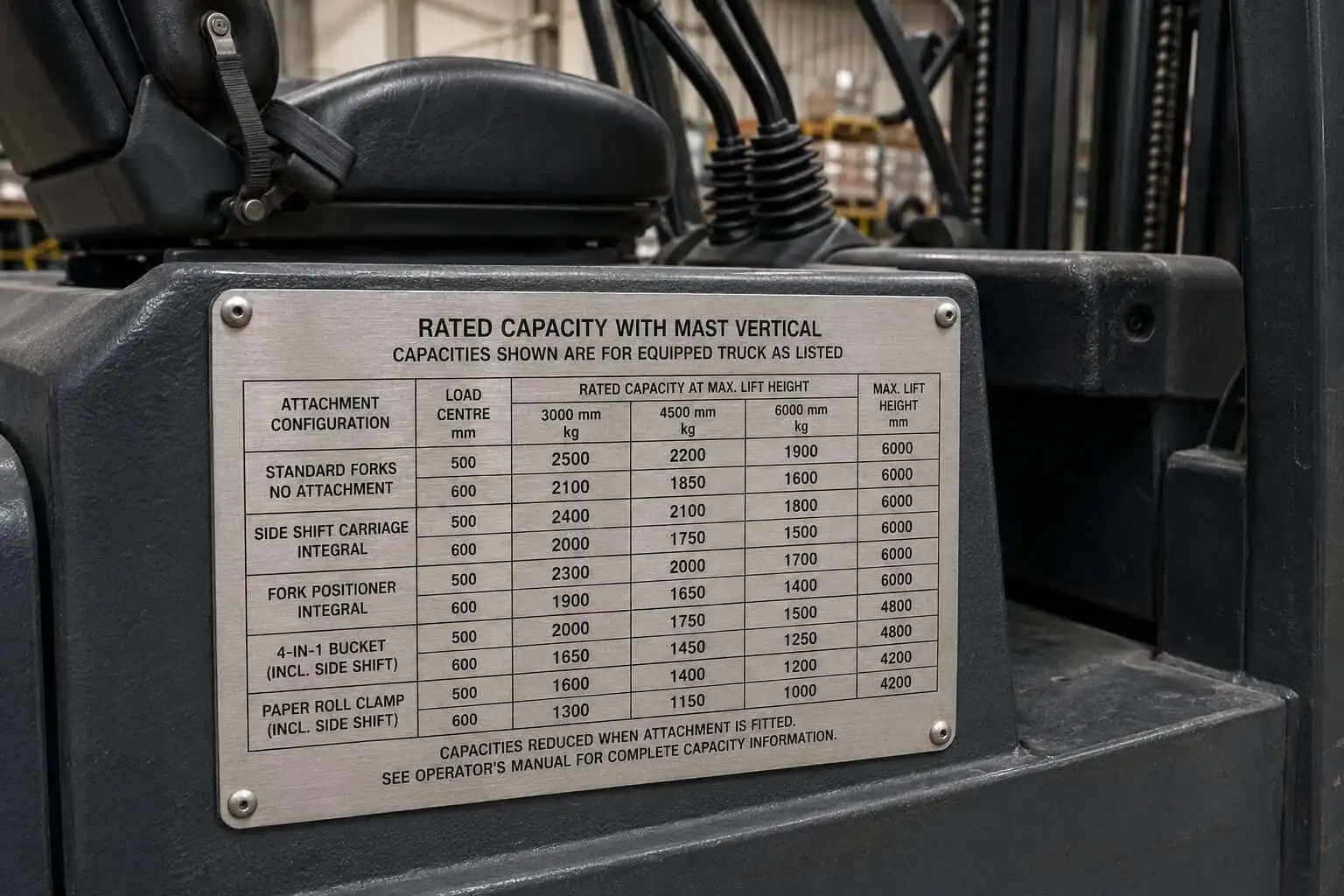
This is the section that matters most, and the one no supplier catalogue covers.
Two things happen when you fit an attachment. First, the attachment has its own weight, and that weight sits on the carriage where the load would be, so it consumes part of the machine’s lifting capacity before you pick anything up.
Second, most attachments hold the load further forward than plain forks do, which moves the load centre out and reduces what the machine can safely carry at any given weight.
The two effects compound. A heavy attachment that also pushes the load forward can reduce usable capacity by a meaningful margin, and the reduction is larger than most operators assume.
A forklift rated comfortably above your load on bare forks may not be rated for the same load with a clamp fitted. Getting that wrong is how most overload incidents start, and they rarely start with an operator knowingly taking a risk.
The way to get it right is not to estimate. The manufacturer of the attachment and the manufacturer of the forklift both publish derating information, and the combination has to be assessed for your specific machine.
Once it is, the forklift’s capacity information needs to reflect the attachment in use.
What Does Australian Law Require When You Fit a Forklift Attachment?
Fitting an attachment is a change to the plant, and it brings duties with it.
The obligations sit with the person conducting the business or undertaking, and in broad terms they cover four things.
- Capacity information must reflect the attachment fitted. The rated capacity displayed on the machine needs to cover the configuration actually in use, not the configuration it left the factory in.
- The attachment must be suitable and rated for the machine and the load. That means matched to the carriage class, within the machine’s hydraulic capability, and rated for what it is being asked to lift.
- Operators must be trained on the attachment. A licence to operate a forklift is not the same as competence with a rotator or a clamp, and the handling characteristics change materially.
- Pre-operational inspection must include the attachment. The daily check needs to cover the attachment, its mounting and its hydraulic connections, not just the machine.
WorkSafe Victoria publishes specific guidance on forklift attachments, and it is the correct primary source for Victorian operators. For the general plant duties, Safe Work Australia is the reference.
Buyers specifying a machine that will carry attachments should also be reading the safety standards that apply at purchase, because some of this is easier to get right before the machine arrives than after.
The fourth obligation is the one most often missed in practice. Adding the attachment to the daily pre-start check takes seconds and is the control an inspector will ask about first.
Does Your Forklift Have the Hydraulics to Run It?
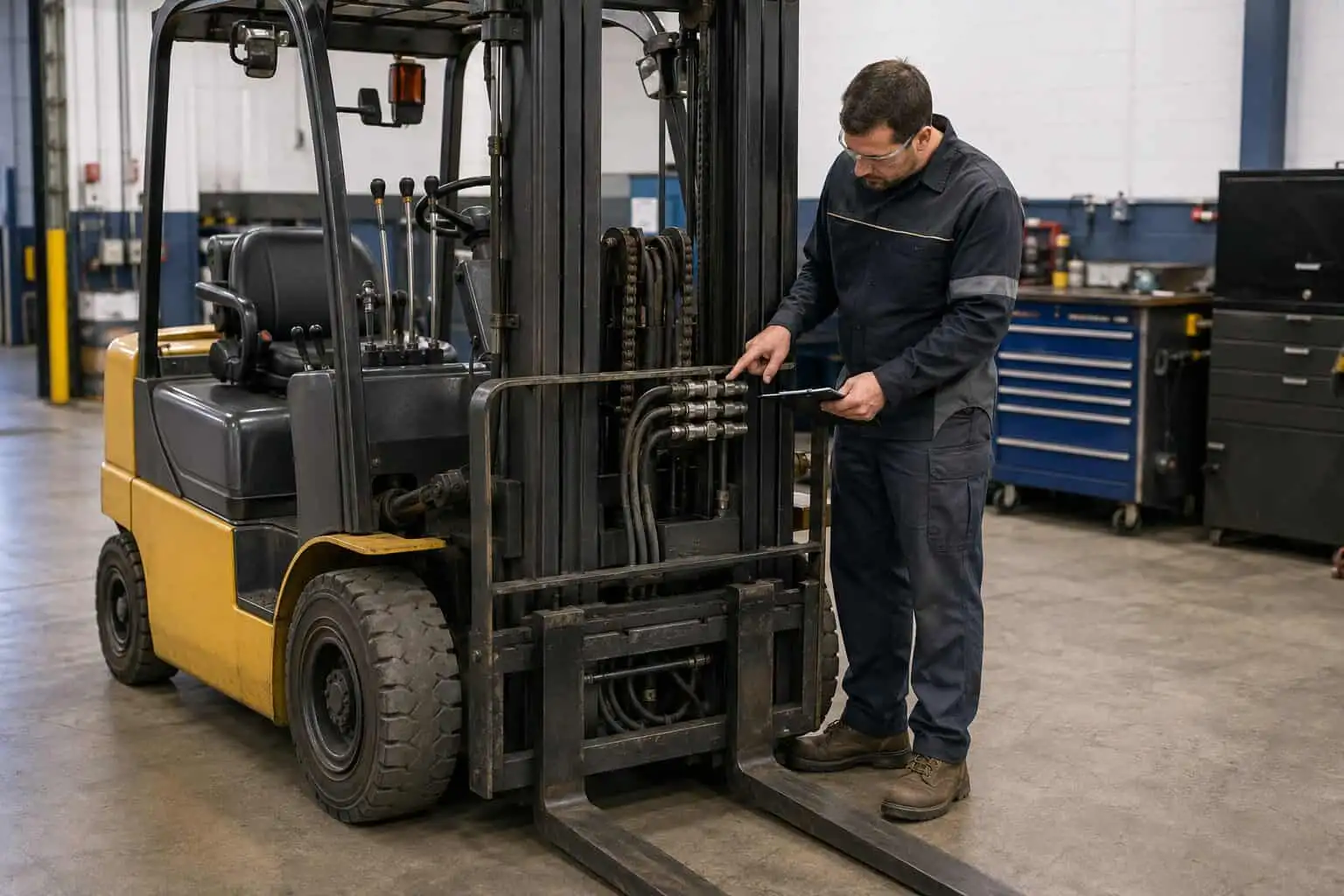
A standard forklift has two hydraulic functions: lift and tilt.
Every hydraulically driven attachment needs at least one more, and some need two. Buyers regularly order an attachment their machine physically cannot operate.
|
Attachment |
Typical hydraulic requirement |
|---|---|
|
Fork extensions, slip-on jibs, tipping bins |
None; they use lift and tilt only |
|
Side shift |
One additional function |
|
Fork positioner |
One additional function |
|
Single-function clamp |
One additional function |
|
Rotator |
One additional function |
|
Clamp with rotation, or positioner combined with side shift |
Two additional functions |
Retrofitting an additional hydraulic function to an existing forklift is possible, and it adds cost and lead time.
The sensible order of operations is to decide on the attachment before you buy the machine, so the hydraulics are specified from the start. If you are buying used, check the existing functions before you commit.
Which Attachments Suit Which Forklift Type?
Counterbalance forklifts take the widest range of attachments, because they have the carriage, the hydraulic capacity and the capacity headroom to run them.
If your site needs clamps, rotators or anything heavy, a counterbalance machine is almost certainly the right base to build on.
Reach trucks accept a narrower range, mainly side shift, fork positioners and specialist pallet handling attachments, because their design is optimised for putting standard pallets into racking rather than for general handling.
Anything that adds significant forward weight fights the outrigger geometry.
Pallet stackers and pallet jacks take very little. Some specialist fork configurations exist, but these machines are built for one job and adding to them rarely works well.
If you are trying to fit an attachment to a pallet jack, the honest answer is usually that you need a different machine.
Buying, Hiring or Retrofitting an Attachment
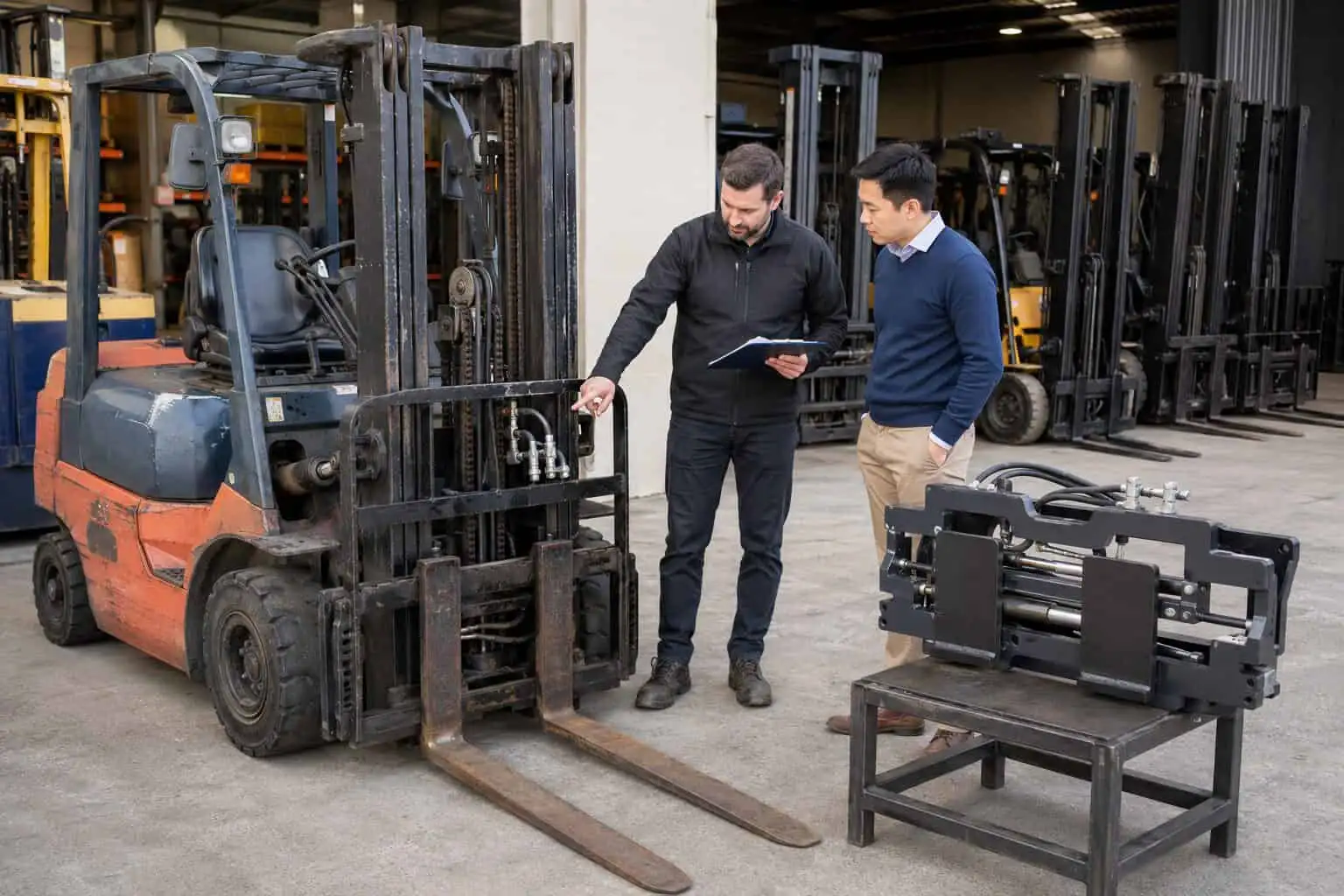
Whether you buy or hire depends on frequency. An attachment used weekly is worth owning; one needed for a single job is usually better hired, and our sister business rentafork.com.au handles hire.
If you are buying, three things need confirming before you order: the carriage class the attachment mounts to, the hydraulic functions available on your machine, and the derated capacity with the attachment fitted.
Getting any of those wrong turns a useful tool into an expensive shelf item.
The cleanest approach is to specify the attachment and the machine together, which is easier while you are still choosing from the full forklift range than after a machine is already in the yard.
Tell the team at our Somerton yard what you are handling, and they will work out whether the machine you are looking at can run the attachment you need, and what it will actually lift once it is fitted.
Frequently Asked Questions
1. What are the most common forklift attachments?
Side shift and fork positioners are the most widely fitted, because they speed up ordinary pallet work on almost any site.
After those, clamps, rotators, fork extensions and jibs are the most common, and which one you need depends on whether your loads sit on pallets at all.
2. Do forklift attachments reduce lifting capacity?
Yes, always. An attachment adds its own weight and usually moves the load centre forward, and both effects reduce the safe rated capacity.
The reduction has to be calculated for the specific combination of machine and attachment, and the machine’s capacity information must reflect the configuration in use.
3. When can attachments be used on a forklift?
An attachment can be used when it is rated and suitable for the machine and the load, the machine’s capacity information reflects it, the operator has been trained on it, and it is included in the pre-operational inspection.
Confirm the specific requirements with your state work health and safety regulator.
4. What is a fork positioner?
A fork positioner is an attachment that moves the forks apart and together hydraulically from the operator’s seat.
It suits sites handling pallets of several different widths, and it removes the need for anyone to shift forks by hand.
5. What is a side shift attachment?
A side shift lets the carriage move sideways so the operator can align with a load without repositioning the forklift.
It is one of the most commonly fitted attachments and is often supplied as standard.
6. Can you fit an attachment to any forklift?
No. The attachment has to match the carriage class, the machine needs the hydraulic functions to run it if it is hydraulically driven, and the resulting derated capacity has to still cover the load.
Check all three before ordering.
7. Do I need a jib or a crane?
A forklift jib suits occasional lifting from a single point where a forklift is already on site.
If lifting from above is a regular part of the work, a crane designed for the job will be safer and more productive. A jib is a compromise, and its rated capacity reduces as the load moves out along the boom.