
Cross Docking Explained: How It Works and the Equipment You Need
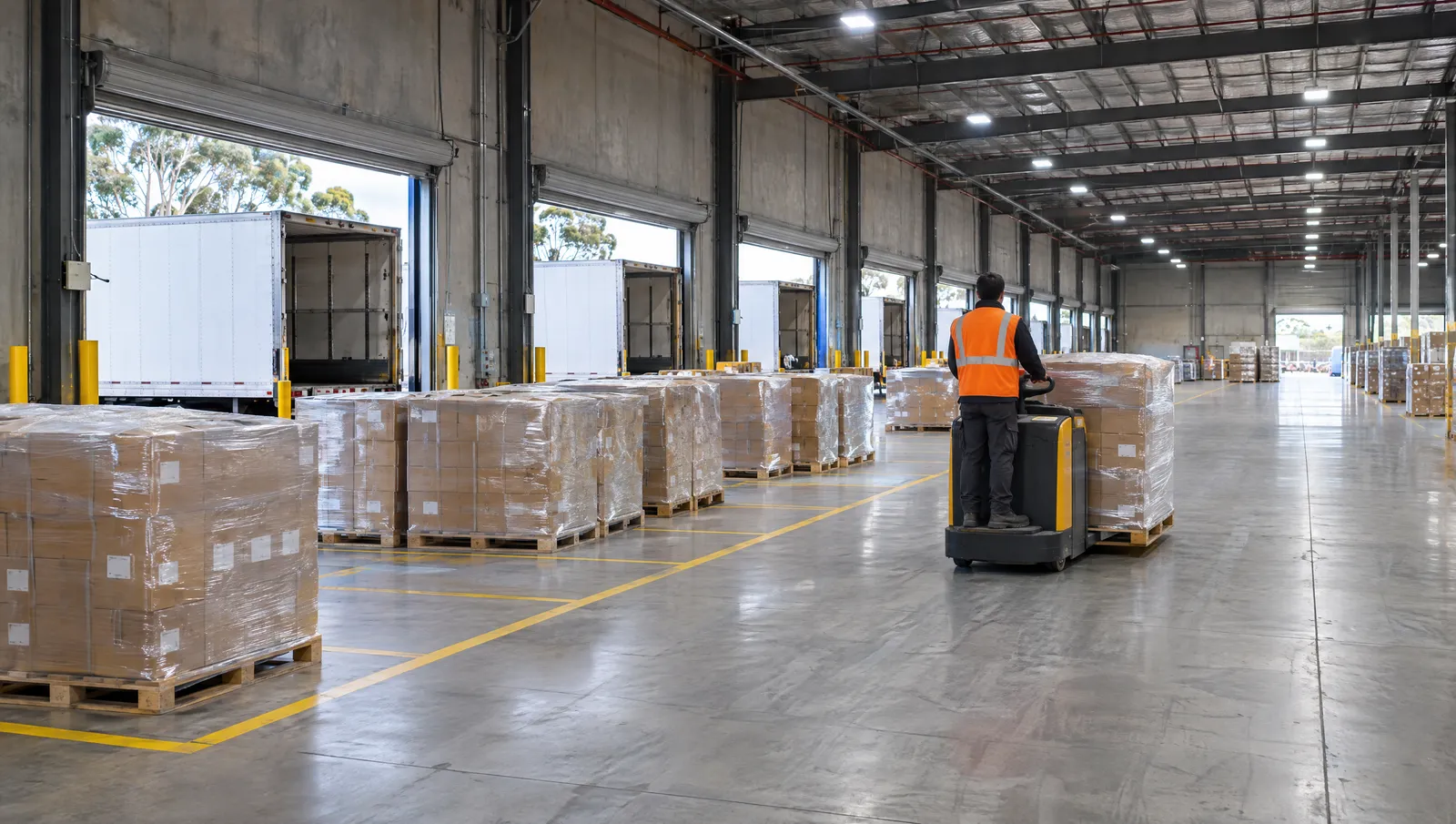
In a cross dock, a pallet that sits still is running late. Cross docking means unloading freight from an inbound truck and moving it straight to an outbound truck, sorted by destination, with little or no time in storage. It works when trucks run on time and the dock is set up for speed: the right doors, clear staging lanes and enough pallet jacks and forklifts for the peak.
What Is Cross Docking?
Cross docking is a distribution method where inbound freight is unloaded, sorted and loaded onto outbound trucks without being put away into storage. A cross dock (also written crossdock) is the building, or the part of a building, where that happens.
Most of a cross dock's floor is doors and staging lanes (marked spaces in front of each outbound door where pallets wait for their truck) rather than racking. Freight arrives already bound for particular stores, customers or regions, so the dock's job is to sort it and get it moving again.
Here's how that compares with a conventional warehouse:
| Factor | Cross dock | Traditional warehouse |
|---|---|---|
| Main job | Sort freight and transfer it between trucks | Store stock, then pick it to order |
| Time on site | Usually hours, often less than a day | Days, weeks or months |
| Floor space | Mostly doors and staging lanes | Mostly racking |
| Busiest machine | Electric pallet jacks running dock to dock | Forklifts and reach trucks working the racking |
Buy A Fork sells used forklifts and electric pallet jacks from Somerton in Melbourne's north, so the rest of this guide focuses on the machine side: dock flow, which trucks to run, how many you need and how to keep them clear of people.
How Does Cross Docking Work?
Cross docking runs in a straight line: unload, check, sort, stage and load, with freight moving forward at every step.
- Advance notice: before the truck arrives, the dock knows what's on it and where each pallet is going, usually from the supplier's shipping notice or the warehouse management system, so doors and lanes can be allocated in advance.
- Unload: the truck backs onto an inbound door, or parks beside the dock for side unloading, and pallets come off by pallet jack or forklift.
- Check and label: pallets are counted, scanned, checked for damage and labelled for their outbound truck.
- Sort: full pallets for one destination go straight across. Mixed pallets are broken down and rebuilt by destination, which takes more people and floor space.
- Stage: pallets go into the lane for their outbound door, in loading order.
- Load: the outbound truck is loaded so the first drop is easiest to reach, then it leaves.
Pre-Distribution and Post-Distribution Cross Docking
In pre-distribution cross docking, the supplier already knows where everything is going and labels or sorts it before it ships, so the dock simply transfers it. In post-distribution cross docking, the destination is decided at the dock, and the team allocates and sorts freight as it arrives.
Post-distribution is more flexible but needs more labour, more floor space and better information on the day, so getting suppliers to pre-label is often one of the easiest ways to speed up a new cross dock.
Cross Dock Warehouse Layout and Flow
A good cross dock warehouse layout moves freight one way, from inbound doors to outbound doors, over the shortest possible distance. Every extra metre a pallet jack travels is repeated on every pallet, every shift.
Purpose-built cross docks are most often I, L or T shaped, with inbound doors down one long side and outbound doors down the other. A 2004 study by John Bartholdi and Kevin Gue found that the right shape depends on the dock's size and freight flow, and that many large cross docks are badly shaped, which adds labour cost.
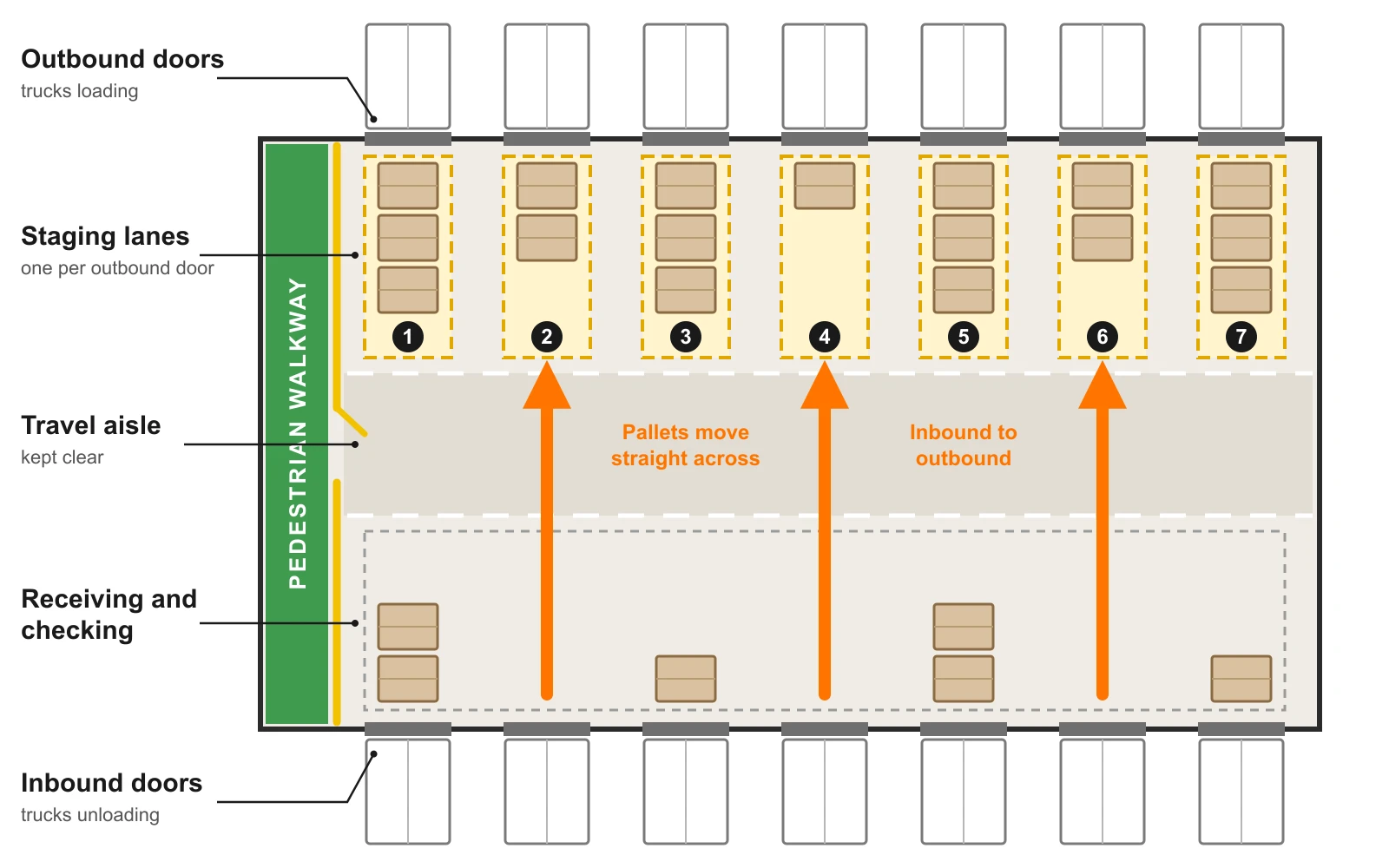
Plenty of smaller sites cross dock out of an ordinary warehouse instead, often using the same doors for inbound and outbound loads. That works if you plan the flow:
- Pair the busiest doors: put the inbound and outbound doors that swap the most freight closest together.
- Give every outbound door its own lane: mark staging lanes on the floor, sized to hold a full truckload, so pallets never spill into the travel aisle.
- Keep the main aisle open: nothing gets parked or sorted in the route pallet jacks use to cross the dock.
- Split shared doors by time: if doors have to do both jobs, run inbound in one window and outbound in another so trucks aren't queuing for the same door.
- Sort out the dock gear: the dock levellers and yard ramps you have decide which machines can drive into a trailer and which trucks have to be unloaded from the side.
If cross docking shares the building with storage and picking, plan the dock zone as part of the wider warehouse layout so cross dock traffic doesn't cut through the racking aisles.
What Equipment Do You Need for Cross Docking?
Most cross docks run on electric pallet jacks for the dock-to-dock moves, with one or two counterbalance forklifts for the jobs a pallet jack can't do. A reach truck only earns a place if you also keep stock in racking.
| Machine | What it does on a cross dock | Where it struggles |
|---|---|---|
| Walk-behind electric pallet jack | Short moves, unloading trailers at dock height, smaller docks | Walking pace, so slow and tiring on long runs |
| Ride-on electric pallet jack | Long dock-to-dock runs and high pallet counts | Longer chassis needs more room to turn in trailers and lanes |
| Counterbalance forklift | Side-unloading curtainsiders and flat tops, double-stacked pallets, yard work | Wider turning circle and more weight on dock levellers |
| Reach truck | Putting away and retrieving buffer stock in racking | Built for smooth indoor floors and racking aisles, not trailers or yards |
Electric Pallet Jacks Do Most of the Work
On a cross dock, most pallets only move across the floor, not up into racking. Electric pallet jacks suit that job: they're compact enough to drive into a trailer over a dock leveller and don't need a forklift's turning space.
The real choice with used electric pallet jacks is walk-behind or ride-on. If the run between doors is short and volumes are modest, a walk-behind does the job. Once operators are walking long distances back and forth all shift, a ride-on model moves pallets faster and saves their legs.
Some sites also run double pallet jacks, with long forks that carry two pallets end to end, to cut the number of trips on long runs.
Counterbalance Forklifts for Side Loading, Stacking and the Yard
A pallet jack can't lift, so it can't unload a curtainsider or flat-top trailer from the side, break down a double stack or work on rough ground outside. That's the job of a counterbalance forklift, and many cross docks keep one for these jobs even if it's only busy for part of the shift.
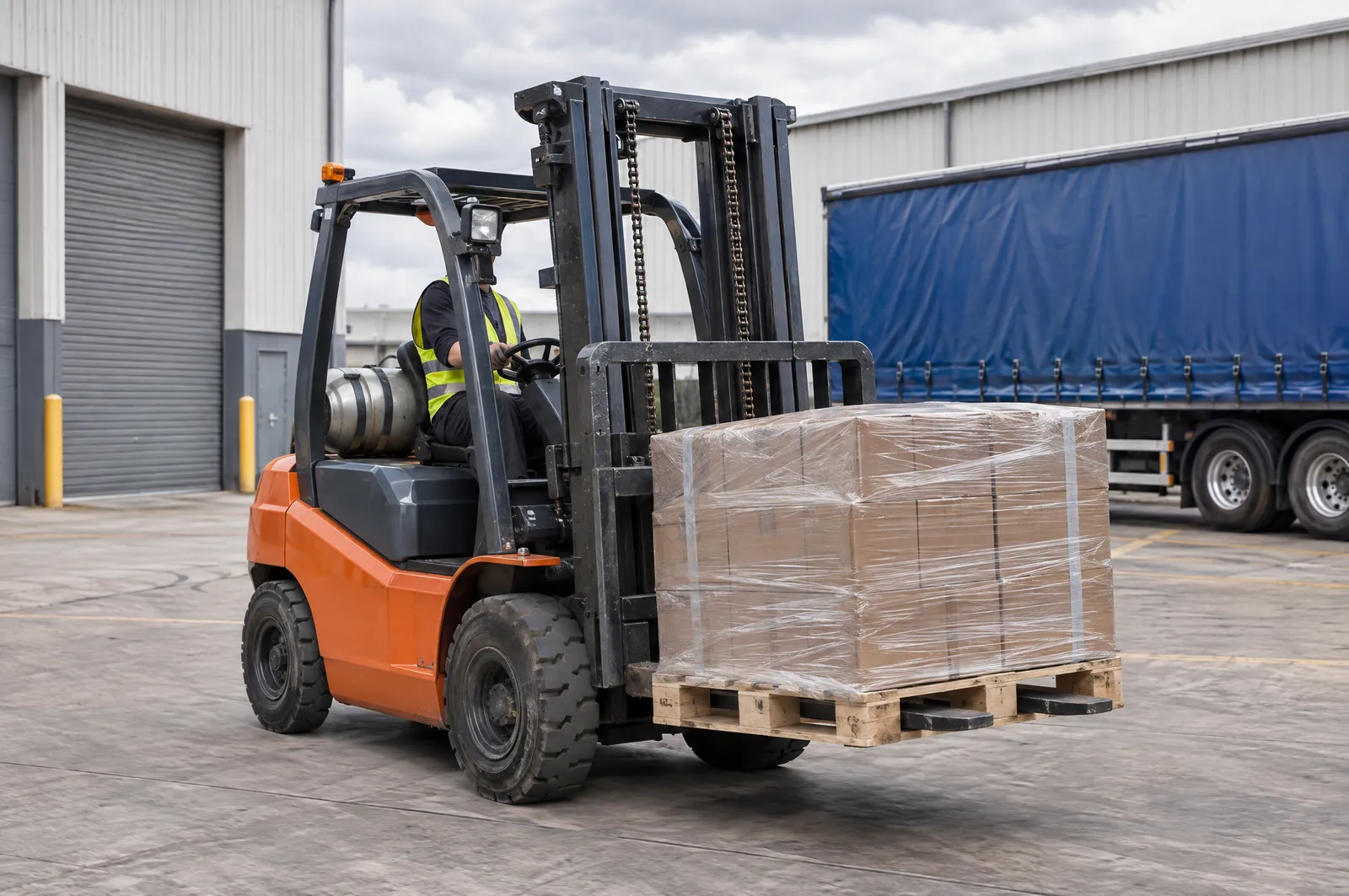
Electric or LPG comes down to where the truck spends its day. Electric forklifts suit an enclosed dock because they produce no exhaust. An LPG forklift refuels with a quick cylinder swap, which suits a truck that works mostly in the yard. Before any forklift drives into a trailer, confirm the dock leveller is rated for the forklift's own weight plus its load.
Reach Trucks Only If You Hold Buffer Stock
A pure cross dock has little or no racking, so it rarely needs a reach truck. If you also hold overflow pallets, a buffer for late trucks or slower lines in racking, a reach truck lifts higher in narrower aisles than a counterbalance can. Keep it in the racking: reach trucks are built for smooth indoor floors, not trailer decks and dock plates.
If your site stores and picks more than it transfers, it's working as a distribution centre, and the forklifts that suit distribution centres lean further towards racking work.
How Many Machines Do You Need? Planning Cross Dock Throughput
Cross dock throughput is the number of pallets your dock can move from inbound to outbound in an hour, and the size of your fleet follows from it. You can work it out with a stopwatch and four steps:
- Find your peak, not your average: count the pallets that have to cross the dock in your busiest window, such as the early-morning rush before outbound trucks leave.
- Time a real round trip: follow one pallet from the inbound door to its outbound lane and back, including the stop to scan it.
- Work out pallets per machine: divide 60 minutes by the round-trip time to get pallets per machine per hour.
- Divide and add slack: peak pallets per hour divided by pallets per machine gives the bare minimum. Add at least one machine for waiting, battery changes and congestion.
Here's how it plays out. Say 120 pallets have to cross the dock between 5 and 7 am, which is 60 an hour. If a round trip takes three minutes, one pallet jack moves about 20 pallets an hour, so three machines only just cope if nothing goes wrong. Something always does: a truck turns up late, a pallet needs rewrapping, or two jacks meet at a door. Plan for four.
The mistake we see most is sizing the fleet to the daily average. A cross dock lives or dies on its busiest hour.
If the numbers don't stack up, cut travel time before adding machines. Then check the batteries: on a multi-shift dock, ask whether each battery suits charging in short breaks, because a flat truck at the peak is a missing machine.
Cross Dock Safety and Traffic Management
A cross dock squeezes trucks, forklifts, pallet jacks and people into a small area under time pressure, so it needs a written traffic management plan built around the dock. WorkSafe Victoria says a forklift traffic management plan that separates forklifts from pedestrians can reduce the risk of deaths and injuries.
On a cross dock, these controls do the most work:
- One-way routes: WorkSafe's guidance includes one-way routes that remove the need to reverse. On a dock, that's a loop from the inbound doors through sorting to the outbound lanes and back.
- Barriers and gated crossings: walkways separated from forklift routes, with barrier gates wherever people have to cross.
- Fixed spots for people: put checking, labelling and wrapping at the ends of lanes or behind barriers, so nobody stands in the path of a pallet jack with a scanner in hand.
- Speed limits and floor markings: signed limits and marked lanes, plus speed-limiting devices where the plan calls for them.
- Driver safety zones: WorkSafe Victoria says loading and unloading shouldn't start until the truck driver is inside a driver safety zone, a barriered area free of mobile plant, and that drivers stay there until the plant has stopped. With several trucks on the dock at once, size the zone for every driver who might be waiting.
- No early departures: WorkSafe Victoria's guidance on forklift work practices calls for controls that stop transport vehicles leaving the dock too soon, and physical barriers where a forklift could drive off a dock edge.
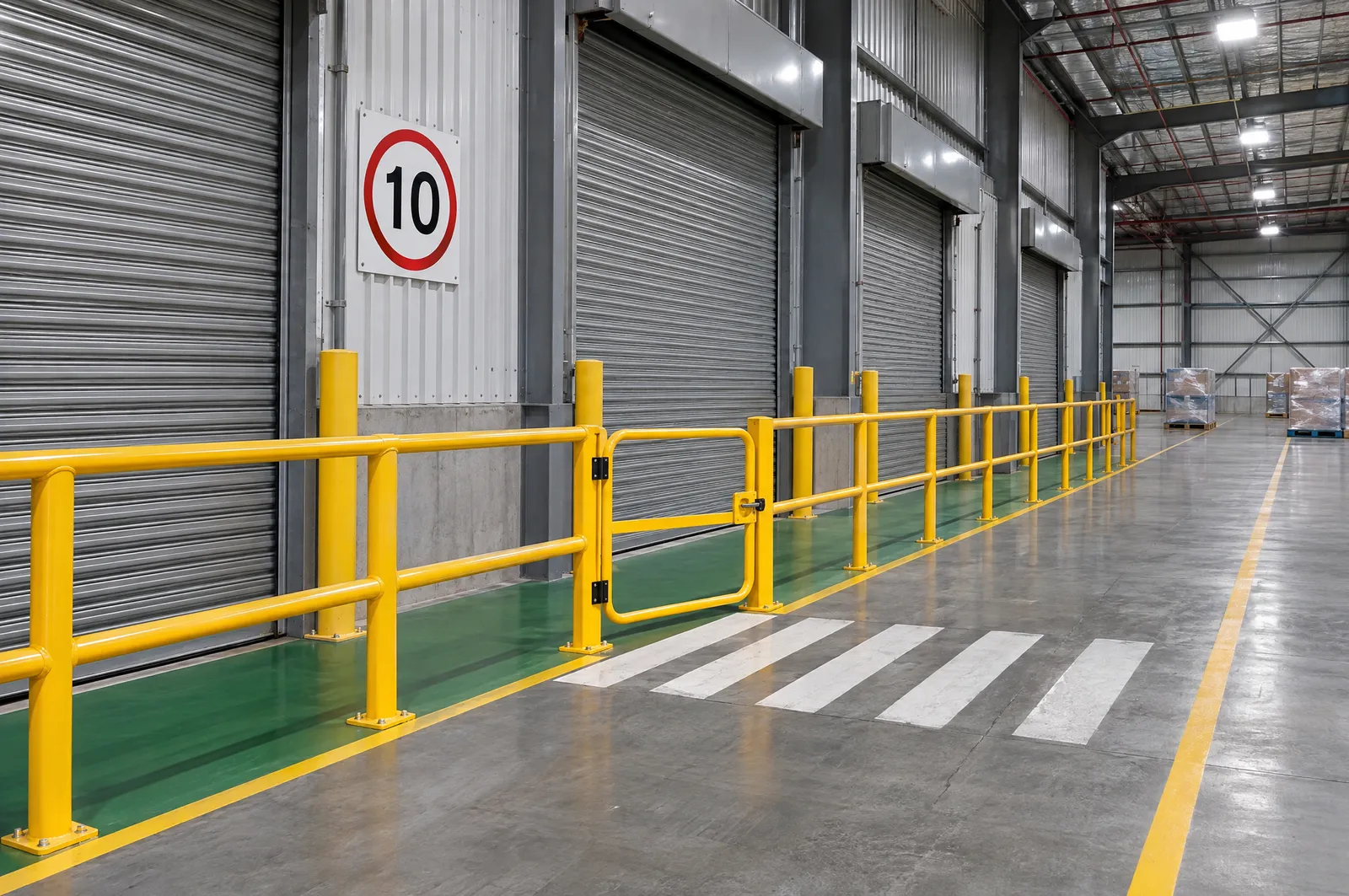
WorkSafe also says the plan needs reviewing whenever work practices or the workplace layout change. On a cross dock, where lanes and door allocations shift with the season, make that review routine.
Get the Right Machines for Your Cross Dock
If you're setting up a cross dock or reworking one, the fleet starts with two numbers: your peak pallets per hour and the trailer types you unload. Buy A Fork sells mostly used forklifts, with Toyota the largest brand in the range, and offers servicing, trade-ins, finance and rent-to-own. Send those numbers and your dock setup to the Buy A Fork team or call 1300 057 880, and they'll come back with options.
Frequently Asked Questions
1. What Is an Example of Cross Docking?
A retail distribution centre is a common example. Suppliers deliver full pallets of a single product, the dock splits them by store, and each store's truck leaves with a mix of products, often on the same day. Parcel depots do the same thing with cartons instead of pallets.
2. What Are the Disadvantages of Cross Docking?
It depends on freight arriving on time and as described. A late or mislabelled inbound load holds up every outbound truck waiting on it, and there's little stock on hand to cover the gap. It also needs plenty of doors and staging space for the volume it handles.
3. When Does Cross Docking Make Sense?
It makes sense for freight that's already sold or allocated and needs to keep moving: perishable food, retail stock bound for stores, parts for just-in-time manufacturing and online orders. If stock has to wait for orders, a conventional warehouse with racking usually suits it better.