
Best Forklifts for Cold Storage Facilities and Cold Rooms
· Updated
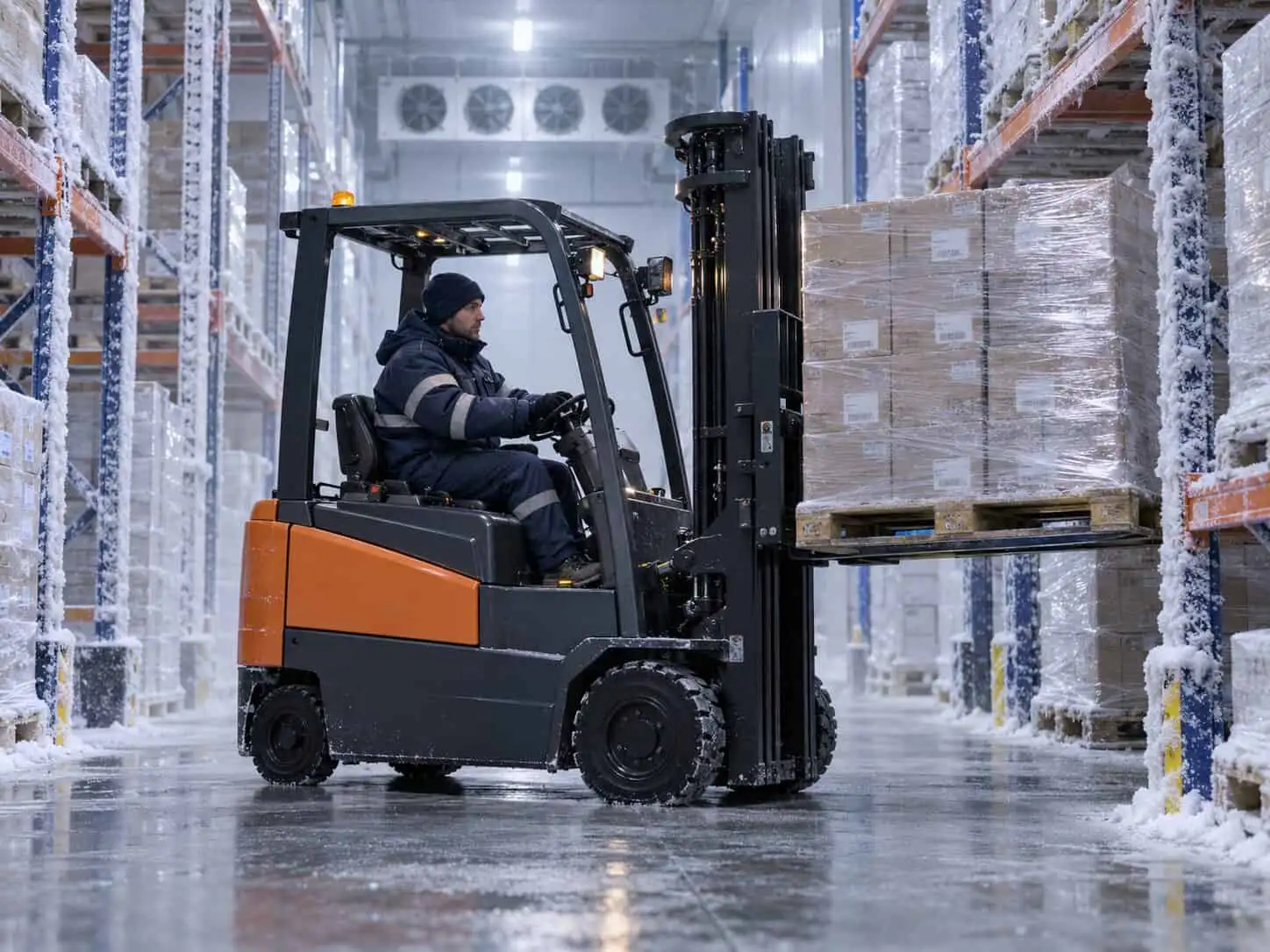
The best forklift for cold storage is an electric forklift, and for anything below freezing it should be an electric unit fitted with a cold store package. A standard electric counterbalance or pallet stacker handles a cold room that stays above zero. A freezer running at minus 18°C or colder needs low-temperature hydraulic oil, cold-rated seals and hoses, protected electrics and, for long shifts, a heated cabin.
LPG and diesel forklifts belong on the loading dock, not inside an enclosed cold store, because of exhaust fumes and cold-start problems. This guide explains which cold storage forklift suits each temperature zone, why electric wins, what a cold store package actually changes, how to manage batteries and condensation, and what to check before buying a used unit for cold work.
Buy A Fork supplies new and pre-owned electric forklifts, reach trucks and stackers from Somerton in Melbourne, with free local delivery within 10 km and a free six-month basic service on every purchase (terms apply).
Need a forklift for a cold room or freezer?
Tell us the temperature, the lift height and the pallet weight and we will match a unit from current stock. Call the team, request a quote or browse electric forklifts in stock now. Finance is available through Ausloans and trade-ins are welcome.
Which forklift is best for cold storage?
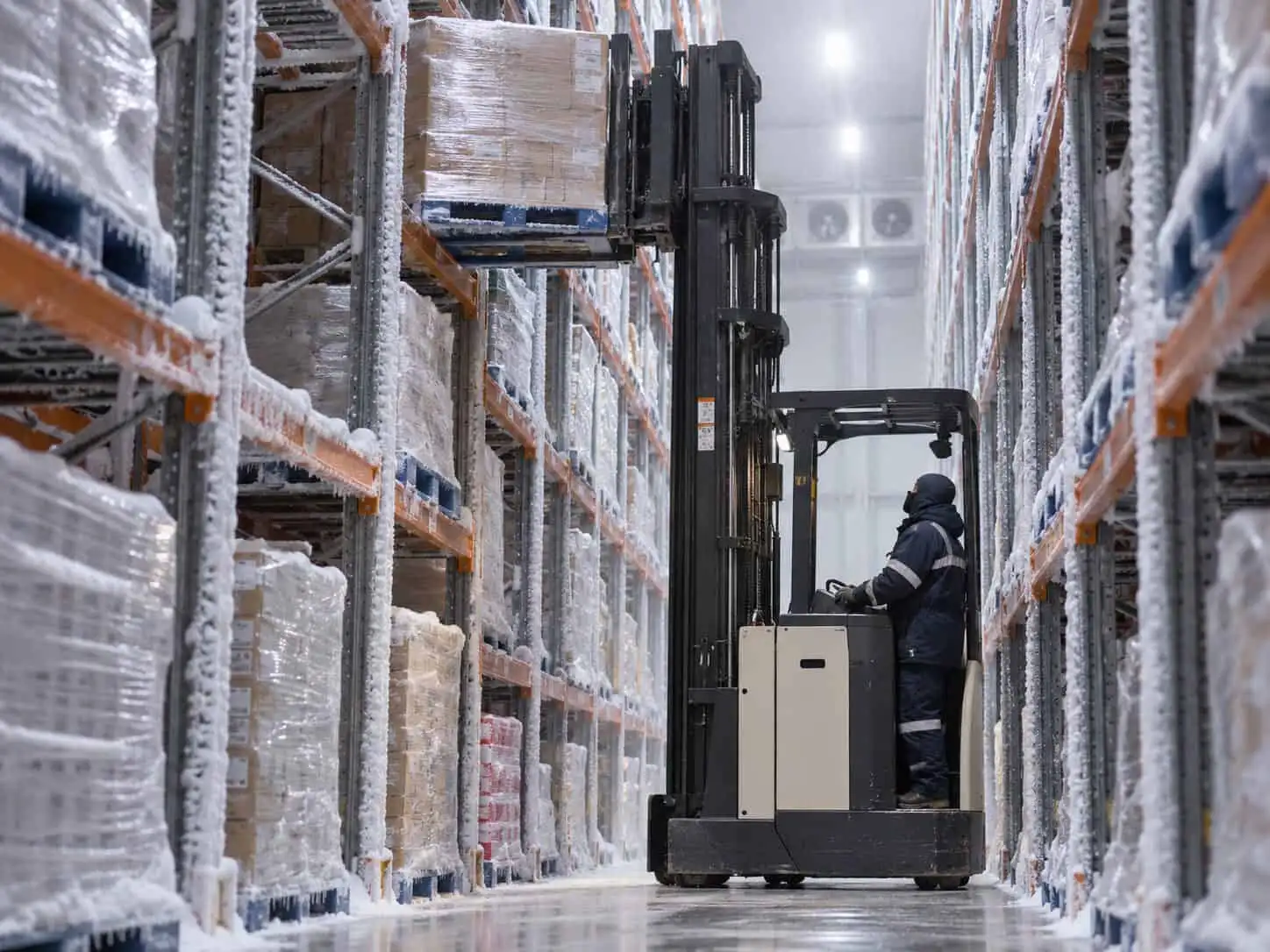
Electric is the right choice for every enclosed cold storage area, and the colder the room, the more the specification matters. An electric motor produces no exhaust, so it can run all shift inside a sealed, refrigerated space without ventilation problems. The trade-off is that batteries lose capacity as they get colder, so freezer work needs a charging and rotation plan.
For cold rooms and chillers above zero, a standard electric counterbalance forklift, electric stacker or electric pallet jack does the job without modification. For freezers, ask for a cold store package: the same electric truck built or retrofitted with components that stay flexible and sealed at sub-zero temperatures. Reach trucks are the usual pick where a freezer uses high, narrow racking to make the most of expensive refrigerated floor space.
Cold room, chiller or freezer: match the forklift to the temperature
The temperature of the space decides the specification, not the size of the load. Use the table below as a starting point, then confirm the exact operating range with the manufacturer before you buy. Temperature bands are typical industry ranges, not certified limits.
|
Zone |
Typical temperature |
Recommended forklift |
Must-have changes |
Watch-outs |
|---|---|---|---|---|
|
Cold room |
0°C to 5°C |
Standard electric counterbalance, stacker or pallet jack |
None beyond normal spec; check tyre grip on wet floors |
Condensation when moving in and out |
|
Chiller |
0°C to minus 10°C |
Electric counterbalance or reach truck |
Low-temperature hydraulic oil, cold-rated hoses and seals |
Battery capacity drops; plan charging outside the chiller |
|
Freezer |
Minus 18°C to minus 25°C |
Electric counterbalance or reach truck with a cold store package |
Full cold store package, heated cabin for long shifts, sealed electrics |
Frost on masts and chains; limit in-and-out cycling |
|
Blast freezer |
Colder than minus 25°C |
Cold store package only, confirmed by the manufacturer for the range |
Manufacturer-rated components throughout |
Short duty cycles; dwell time to thaw and dry |
If your site has more than one zone, buy for the coldest zone the truck will enter. A freezer-rated unit works fine in a cold room; the reverse is not true.
Electric or LPG for cold storage?
Electric, every time the truck works inside the cold store. LPG forklifts produce carbon monoxide and other exhaust gases, and an enclosed refrigerated room has little or no fresh air exchange. Safe Work Australia and WorkSafe Victoria both treat exhaust from internal combustion forklifts in enclosed spaces as a hazard that needs controlling, and the simplest control is not to run one in there. LPG engines are also harder to start and run rough at sub-zero temperatures.
|
Factor |
Electric |
LPG |
|---|---|---|
|
Exhaust in an enclosed cold store |
None |
Carbon monoxide and other gases, needs ventilation |
|
Cold-start reliability |
Starts normally; battery capacity reduces in the cold |
Harder starting and rough running below zero |
|
Running cost inside the site |
Lower per shift on electricity |
Gas bottle changes, cylinder storage |
|
Where it fits |
Cold rooms, chillers, freezers |
Ambient loading docks, yards, outdoor transfer |
LPG still has a place on the same site. A gas counterbalance forklift unloading trucks on an open dock and handing pallets to an electric unit at the cold store door is a common and sensible split. For a fuller comparison of fuel types, see our guide to electric versus diesel forklifts.
What a cold store forklift package includes
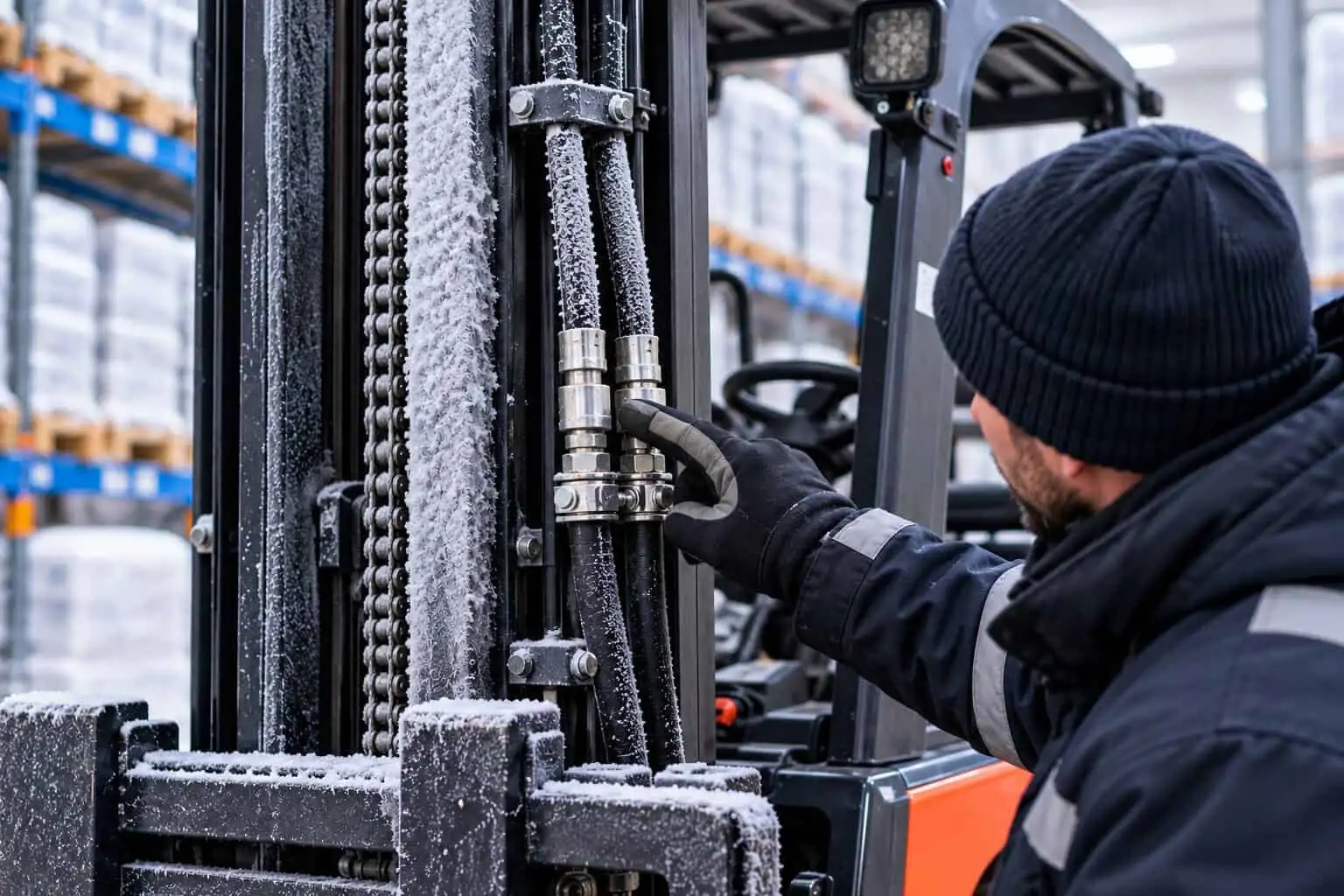
A cold store package is a set of component changes that let a standard electric forklift operate reliably below freezing. The exact list varies by manufacturer, so treat the following as what to ask for, not a guarantee of what a given unit has.
- Low-temperature hydraulic oil: standard oil thickens in the cold, which slows lifting and strains the pump.
- Cold-rated hoses and seals: rubber that stays flexible below zero, so lines and cylinders do not crack or weep.
- Sealed or heated electrics: connectors, controllers and displays protected from frost and the condensation that forms when the truck warms up.
- Heated cabin or cab option: for operators spending long periods in a freezer, a heated enclosed cab is the difference between a full shift and short rotations.
- Cold-rated lubricants and greases: on mast channels, chains and bearings, so the mast does not stick.
- Tyre choice: wet and icy floors call for a compound and tread that keeps grip, not the smooth cushion tyre that suits a dry warehouse.
Ask the seller which of these a specific unit carries and for the manufacturer’s stated operating temperature range. If the answer is vague, assume the truck is standard spec.
Managing batteries and condensation in freezer work
The two things that shorten a forklift’s life in a freezer are cold batteries and repeated condensation, and both are managed by routine rather than equipment. Cold reduces the usable capacity of any forklift battery, and every trip from the freezer into warm air coats the truck in moisture that then refreezes on the next trip in.
- Limit in-and-out cycling. Keep the freezer truck in the freezer and let a second unit handle the dock. Constant temperature swings do more damage than steady cold.
- Charge outside the cold zone. Batteries charge poorly when cold. Bring the truck out, let it reach ambient temperature and charge in a dry, ventilated area.
- Allow dwell time to dry. When a truck leaves the freezer for a break or a charge, give it time to thaw and dry before it goes back in, so moisture does not refreeze on the electrics.
- Rotate batteries or trucks on long shifts. A freezer shift may need a spare battery or a second truck to cover reduced run time.
- Inspect daily for frost and corrosion. Chains, mast rollers, connectors and the battery compartment show the first signs of trouble.
Lead-acid and lithium batteries both lose capacity in the cold. Lithium units generally tolerate opportunity charging better and hold voltage more evenly, but confirm the battery manufacturer’s rated operating range for any specific unit rather than assuming.
Reach trucks for cold store racking
Reach trucks suit freezers because refrigerated floor space is expensive and high, narrow racking makes the most of it. A reach truck extends its forks forward to place pallets in deep racking from a narrow aisle, and a double reach truck reaches two pallets deep. That density matters more in a freezer than in an ambient warehouse, because every square metre is being cooled.
Most reach trucks are stand-up electric units, which suits short freezer rotations but is cold on the operator over a long shift. For all-day freezer work, ask about a cabin option or plan shorter rotations. Our guide to reach trucks for high-bay racking covers lift heights and aisle widths in more detail, and you can view reach trucks and double reach trucks in stock.
Buying a used forklift for cold storage: what to check
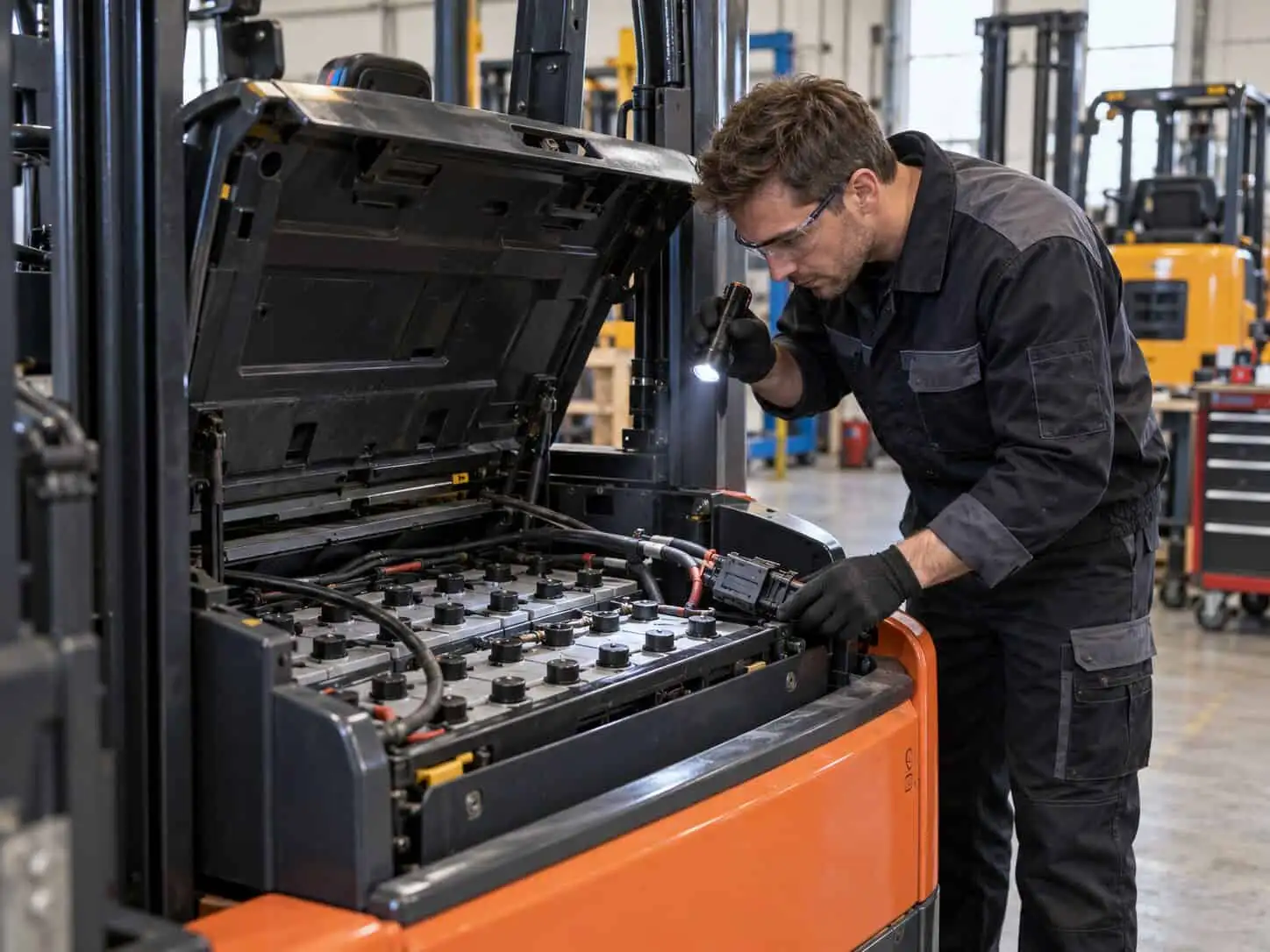
A used electric forklift can be a sound buy for cold work if you check for the damage cold causes, not just hours and general condition. Cold storage is hard on seals, electrics and frames, and a truck that has spent its life in a freezer can look tidy while hiding problems.
- Service history in cold work. Ask whether the unit ran in a cold store and what package it carries. A standard-spec truck that has done freezer time without one is a risk.
- Hydraulic oil and hose condition. Confirm the oil grade and look for weeping fittings, cracked hoses and slow lift.
- Seals and cylinders. Check the mast and tilt cylinders for leaks after the truck has warmed up.
- Corrosion on the frame and electrics. Look under the battery compartment, around connectors and along the chassis for rust from repeated thaw cycles.
- Battery test results. Ask for a load test, not just a charge reading. Cold work ages batteries faster.
- Mast chains and rollers. Frost and grit wear them; check for stiff or noisy movement through the full lift.
- Tyres. Confirm the compound suits wet or icy floors.
For the general checks that apply to any pre-owned electric unit, read our used electric forklift buying guide. Every forklift sold by Buy A Fork comes with a free six-month basic service, which covers the early period when a cold store truck is most likely to show a fault (terms apply).
Cold storage forklifts at Buy A Fork, Somerton
Buy A Fork stocks new and pre-owned electric counterbalance forklifts, reach trucks, stackers and pallet jacks suited to cold rooms, chillers and freezers, and can source cold store package units on request. Stock changes weekly, so rather than list units here, tell us your temperature zone, lift height and pallet weight and we will send current options with photos and inspection notes.
Browse electric counterbalance forklifts, electric stackers or the full range. We offer free local delivery within 10 km of Somerton, a free six-month basic service, trade-ins on your current truck and finance through Ausloans (terms and conditions apply).
Get a cold storage forklift quote
Call the Buy A Fork team or send an enquiry with your cold store temperature, racking height and typical load. We will come back with matched units from stock, delivery timing and finance options.
Frequently asked questions
1. Can you use a normal forklift in a freezer?
Not for regular work. A standard electric forklift copes with a cold room above zero, but in a freezer its hydraulic oil thickens, seals stiffen and condensation attacks the electrics. Occasional short trips are survivable; daily freezer shifts need a cold store package.
2. Do electric forklift batteries work in cold storage?
Yes, with reduced run time. Cold lowers the usable capacity of lead-acid and lithium batteries alike, so freezer trucks need a charging plan: charge outside the cold zone, let the truck warm up first, and keep a spare battery or second truck for long shifts.
3. Can LPG forklifts be used in cold rooms?
Avoid it. LPG engines produce carbon monoxide and other exhaust gases, and a sealed refrigerated room has little fresh air. Regulators including Safe Work Australia and WorkSafe Victoria treat forklift exhaust in enclosed spaces as a hazard to control. Keep LPG units on the open dock and use electric inside.
4. What is a cold store forklift?
A cold store forklift is an electric forklift built or modified to run reliably below freezing. The package usually includes low-temperature hydraulic oil, cold-rated hoses and seals, protected electrics, cold-rated lubricants and often a heated cabin. The exact contents vary by manufacturer.
5. How cold can a forklift operate?
It depends on the unit and its package, so check the manufacturer’s stated operating range. Standard electric trucks are generally fine in cold rooms above zero. Freezer work at minus 18°C and below calls for a cold store package rated for that range.
6. Do I need a heated cabin for freezer forklift work?
For long shifts, yes. A heated enclosed cab keeps the operator productive and safe through a full freezer shift. For short rotations in and out of the freezer, an open stand-up reach truck with proper freezer clothing is common.
7. Is a reach truck or a counterbalance better for a freezer?
A reach truck if the freezer uses high, narrow racking; a counterbalance if it is a low, open floor with pallets moved in and out through a dock. Many freezers run both: a reach truck for put-away and a counterbalance or pallet jack for dock transfer.