
Warehouse Automation: Types, Costs and When Forklifts Still Make Sense
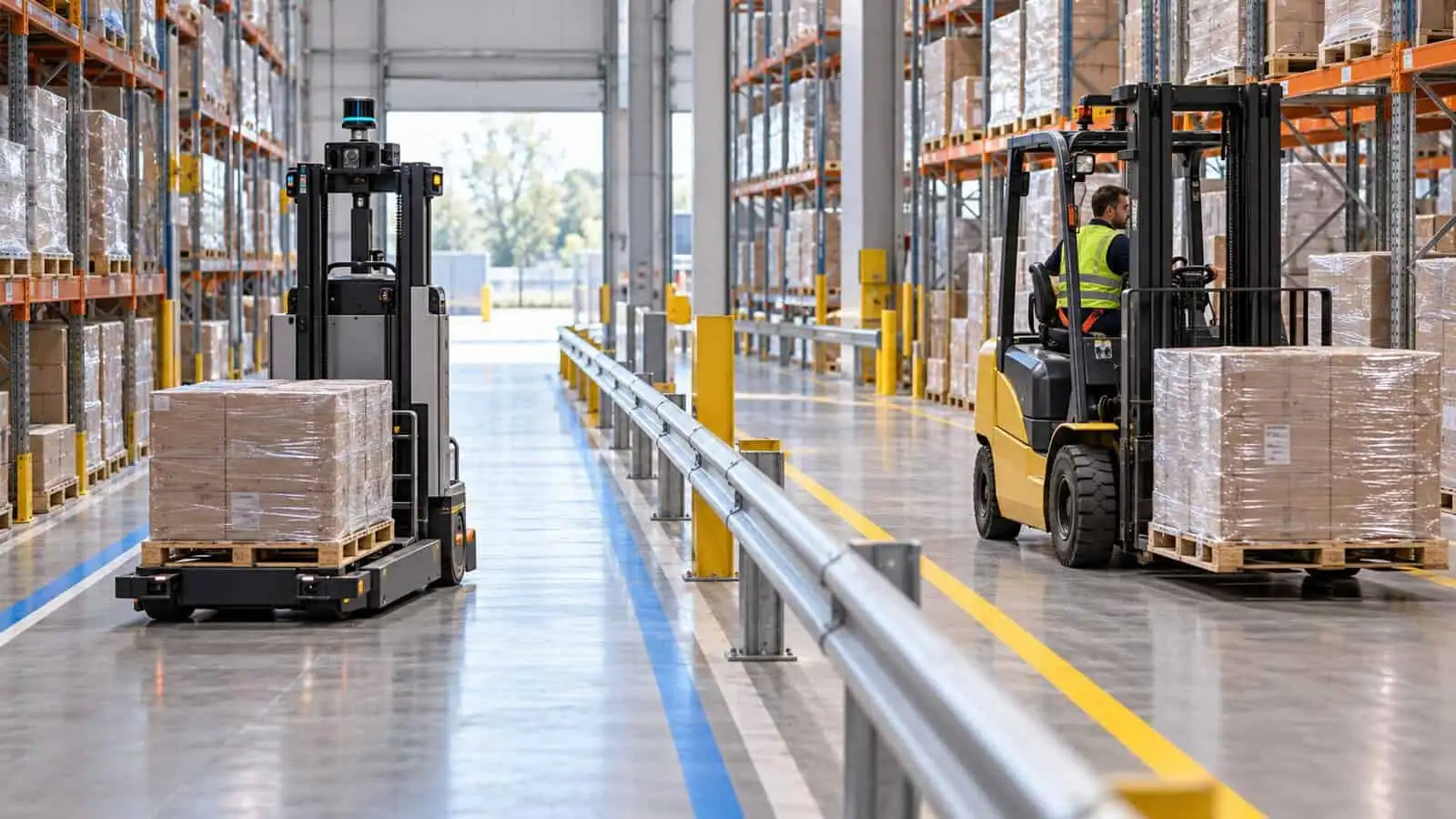
Warehouse automation is the use of machines, robots and software to move, store and track goods with less manual handling. It ranges from a single conveyor or driverless forklift to a fully automated storage system. Automation suits some sites very well and others not at all, so this guide covers the main types, what drives the cost, and the situations where a forklift fleet is still the better investment.
What is warehouse automation?
Warehouse automation means handing repeatable tasks, such as moving pallets, storing stock or sorting cartons, to equipment that runs with little or no operator input. It can automate a single task or an entire site.
Automating a task is the common starting point: a conveyor between picking and packing, or an automated forklift moving pallets from production to dispatch. Automating a whole site means systems that store, retrieve and route stock with people working mainly at stations. Many sites start with the first, and some never need the second.
Toyota Material Handling Australia’s case study on Bega Dairy and Drinks at Wetherill Park, NSW is a working local example. Bega replaced an entirely manual materials handling fleet with Toyota automated guided vehicles to move finished product out of the plant. Bega staff quoted in the article describe sending out about 20 B-double loads a day.
What are the main types of warehouse automation?
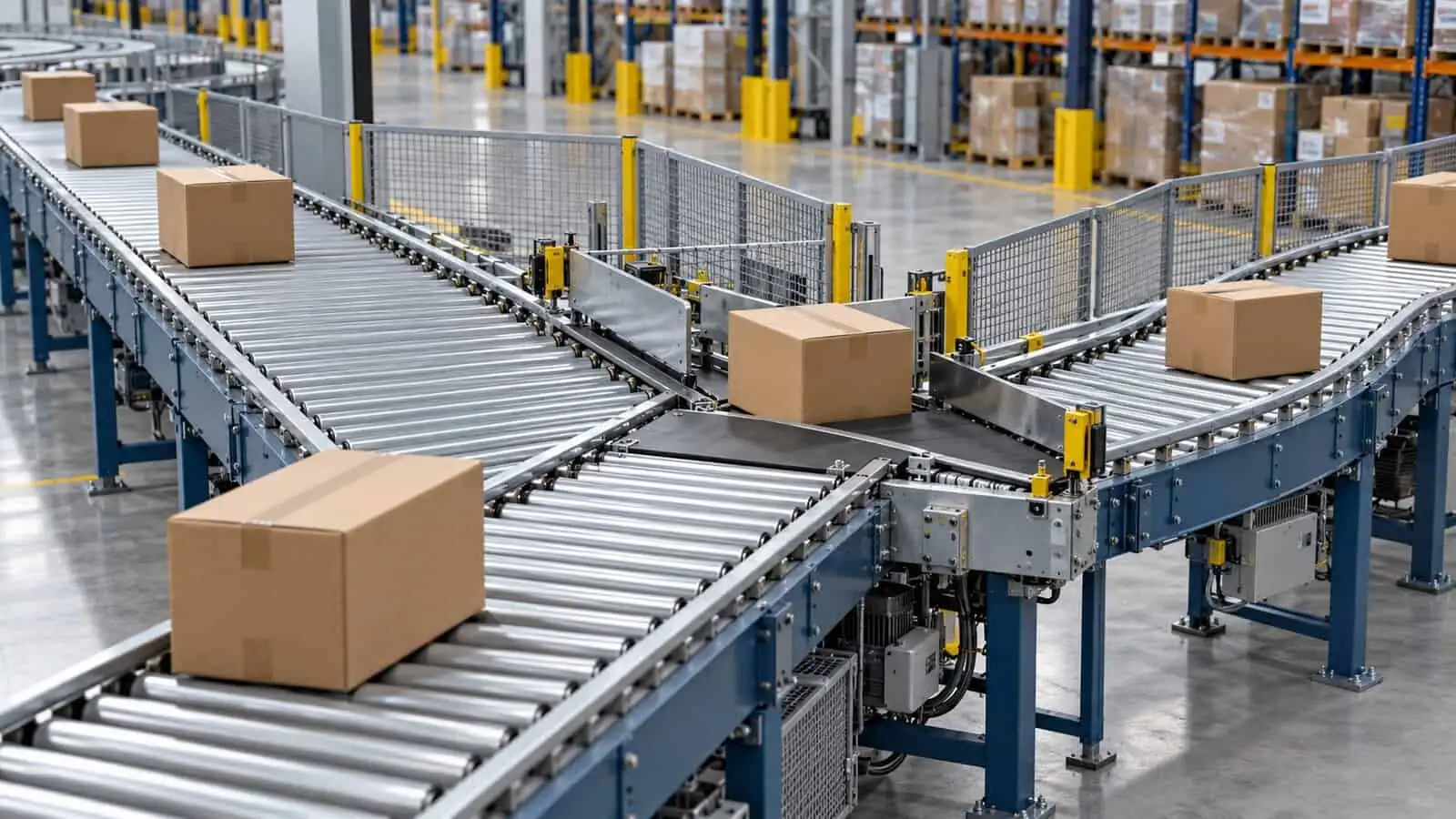
The main types of warehouse automation are conveyors and sortation, automated guided vehicles (AGVs), autonomous mobile robots (AMRs), automated forklifts, automated storage and retrieval systems (AS/RS), goods-to-person systems and warehouse management software. They run from simple to complex in roughly that order.
| Technology | What it does | Best suited to |
|---|---|---|
| Conveyors and sortation | Move cartons along a fixed path and divert them | High carton volumes on set routes |
| AGVs | Driverless vehicles on fixed routes | Repetitive pallet moves |
| AMRs | Driverless robots that navigate around obstacles | Changing routes and mixed traffic |
| Automated forklifts | Lift and move pallets without a driver | Pallet transport and racking at steady volume |
| AS/RS | Store and retrieve loads automatically | High-density, high-volume storage |
| Goods-to-person systems | Bring stock to a picker at a station | High-volume order picking |
| Warehouse management software | Directs stock, people and machines | Any site, usually the first step |
Three of these matter most to a business that currently runs forklifts.
Automated forklifts and AGVs
An automated forklift is a forklift fitted with navigation and safety systems so it can lift and move pallets without a driver. Toyota Material Handling Australia describes its Staxio SAE160 as based on a standard forklift design with a fully integrated navigation and safety system, connected to the warehouse management system and guided by laser navigation and sensors.
Many automated forklifts are hybrids. In the Bega case study, Toyota explains that its RAE Autopilot, available in 1.6, 2 and 2.5 tonne models with a lift height of up to 10 metres, can be taken over by an operator for non-conforming pallets or loads. Toyota also states that 90 to 95 per cent of the components of its AGVs are shared with its manual forklifts, which keeps servicing familiar.
AMRs versus AGVs
The difference is the route: AGVs follow fixed, repetitive routes, while AMRs navigate flexible routes and work around temporary obstacles. That is how Hyundai Material Handling Australia frames the choice. An AGV suits a predictable move repeated all day, such as production line to dispatch. An AMR suits a busier floor where routes change and people and pallets get in the way.
Automated storage and retrieval systems
An automated storage and retrieval system (AS/RS) stores and fetches loads without an operator, usually in high-density racking served by cranes or shuttles. It is the most automated option and the most tied to the building, which makes it a long-term commitment rather than a fleet decision.
How much does warehouse automation cost?
There is no standard price for warehouse automation, because the cost depends on how much of the operation is automated, and the machine itself is only one part of the bill. Automation suppliers rarely publish prices, so treat any figure you read as indicative until a supplier has assessed your site.
The cost of an automation project is usually made up of:
- Equipment: the vehicles, conveyors, racking or storage system themselves.
- Integration: connecting the equipment to your warehouse management system and other software.
- Site setup: mapping, navigation infrastructure and commissioning.
- Software: licences and ongoing updates, often charged as a subscription.
- Training: for operators, supervisors and maintenance staff.
- Maintenance: ongoing servicing and support for sensors, software and machines.
- Building changes: floor flatness, racking alterations, charging areas and traffic lanes.
For a sense of scale, Qviro, an overseas automation marketplace, lists automated forklift AGVs at roughly 75,000 to 200,000 dollars each in its 2025 pricing guide. The page does not state the currency or how the figures were gathered, so treat them as indicative overseas pricing, not an Australian quote. At the large end, UK fulfilment provider THG Ingenuity says goods-to-person robotics at scale starts at several million pounds, and puts the payback horizon at two to five years for the right operation.
When do forklifts still make sense?
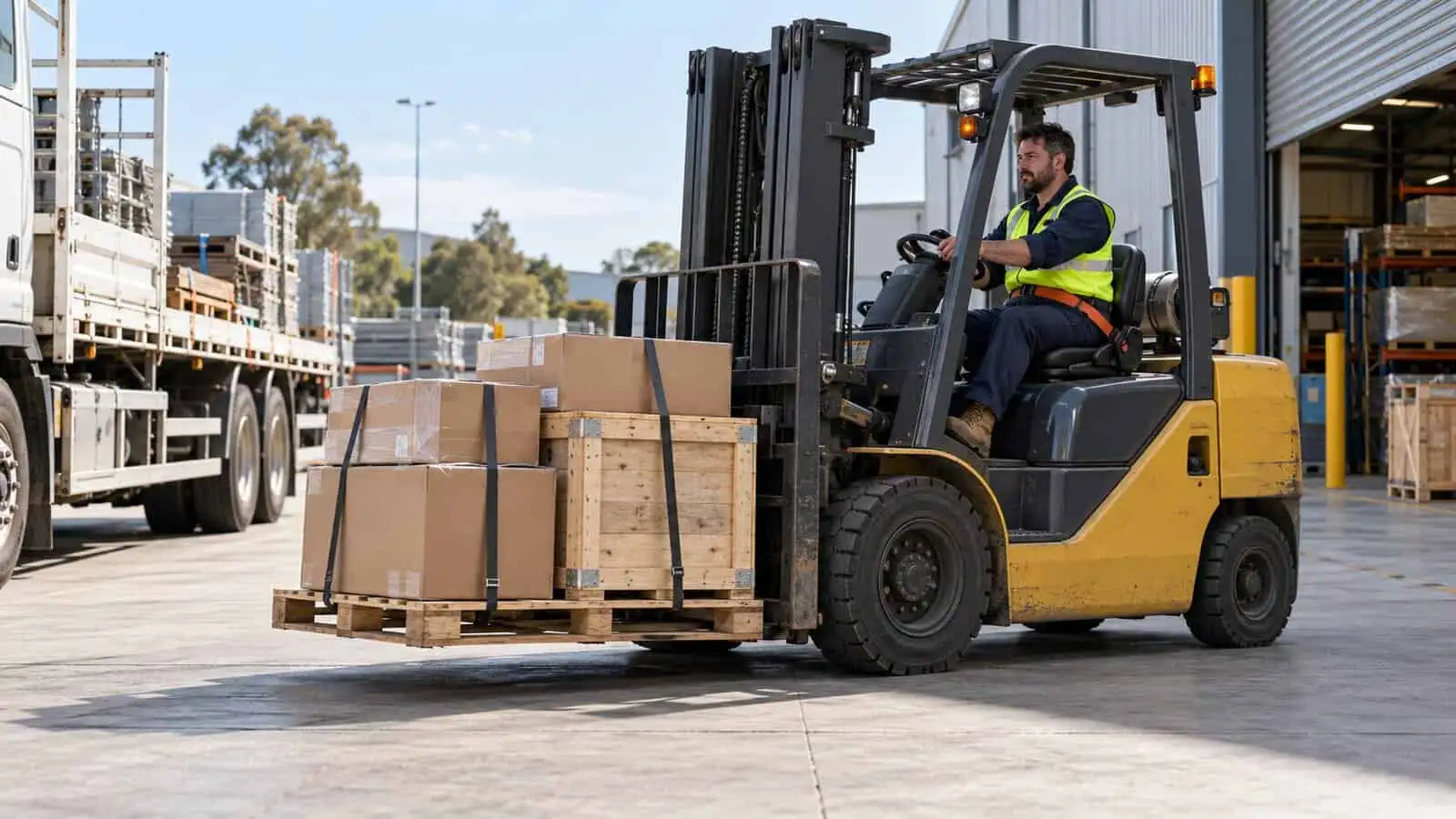
Forklifts still make sense when volume is variable, loads are mixed, work moves between indoors and the yard, or the site and budget will not support a long payback. Automation pays back when the same move happens all day, every day, on standard loads, in a building the business will occupy for years. Most of the factors that decide it can be read straight off your own operation.
| Factor | Points to automation | Points to forklifts |
|---|---|---|
| Volume | High and steady | Low, seasonal or growing unpredictably |
| Loads | Standard pallets, consistent sizes | Mixed, oversized or non-standard loads |
| Routes | Same moves, every shift | Varied tasks, yard and indoor work |
| Building | Owned, flat floors, long-term site | Leased, uneven floors, likely to move |
| Shifts | Two or three shifts a day | Single shift |
| Budget and timeframe | Capital available, multi-year payback acceptable | Need equipment working now, limited capital |
Flexibility is the forklift’s real advantage. One operator and one machine can unload a truck, move stock across a yard, load racking and handle an awkward delivery in the same hour. Automated equipment does one job very consistently, and anything outside that job still needs a person and a machine. Even Toyota’s automated forklifts are designed so an operator can take over for loads the system cannot handle.
If your operation sits mostly in the right-hand column, a well-matched fleet from the full forklift range will usually do more for the business than an automation project. Counterbalance forklifts cover the widest spread of tasks, and choosing between the types of forklifts is usually a better first step than choosing between automation vendors. There are also practical ways that forklifts improve warehouse efficiency without automating anything.
How do you automate a warehouse in stages?
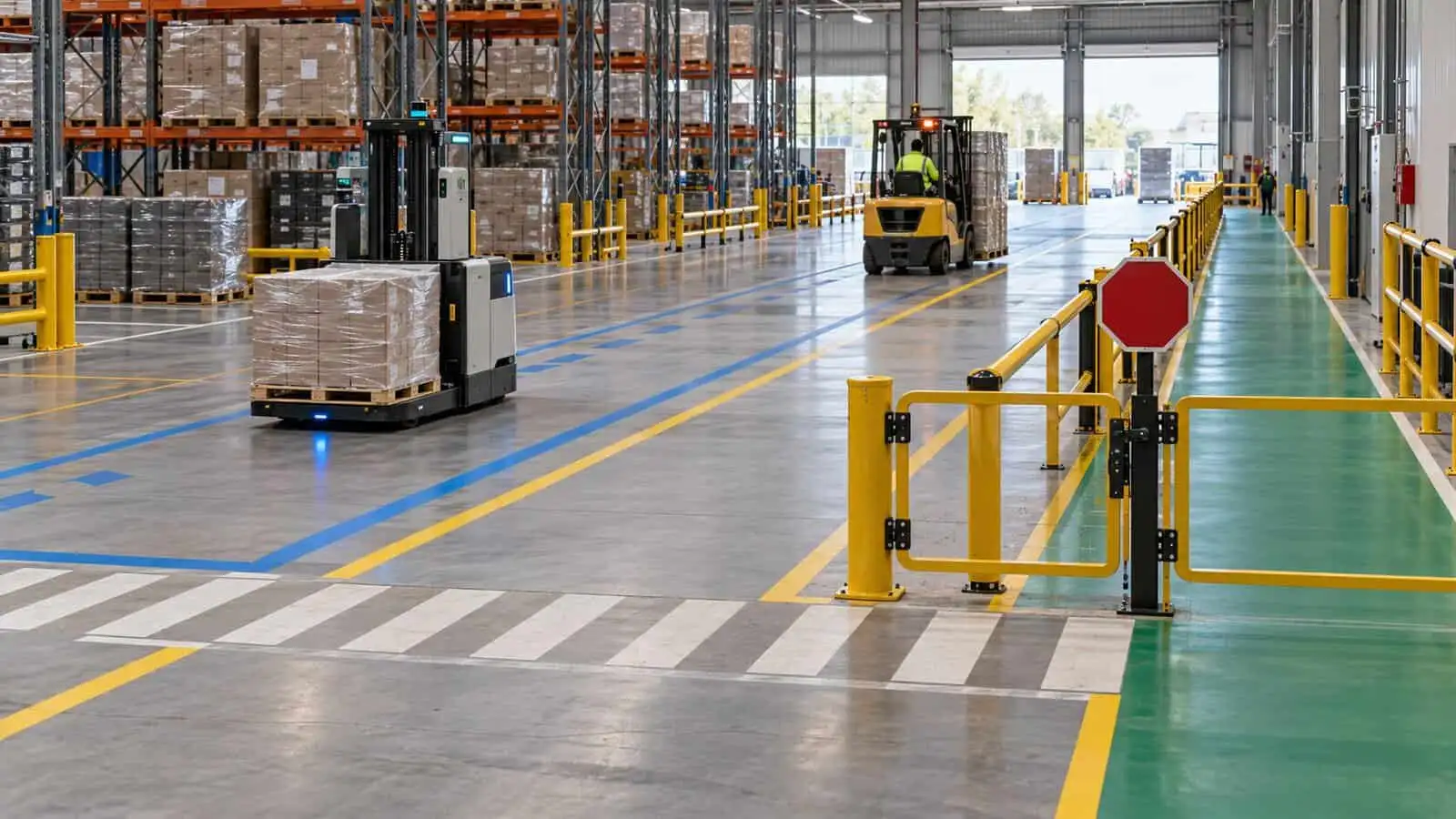
The safest way to automate is in stages: fix the process and the data first, automate the single most repetitive move next, and expand only once that step is paying its way. Hyundai Material Handling Australia makes the point directly: automation applied to an unsupported process only moves the problem rather than solving it.
Warehouse management software is usually the first step, because automated equipment needs accurate data to work from. The first physical step is often pallet transport on a fixed route, such as production to dispatch, which is exactly the job Bega handed to automated forklifts.
Plan for a mixed fleet from day one. Hyundai raises the question of what happens when an automated truck meets a manual forklift in a tight aisle, and advises asking it before signing an automation contract. Separate lanes, clear crossing rules and a traffic management plan matter more, not less, once some machines have no driver. For sites moving that way, a modern electric counterbalance forklift keeps the manual side of the fleet indoor-friendly while the automated side is built up.
Frequently asked questions
1. What is warehouse automation?
Warehouse automation is the use of machines, robots and software to move, store and track goods with less manual handling. It ranges from a single conveyor or automated forklift to fully automated storage and retrieval systems.
2. What is an example of warehouse automation?
An automated forklift moving pallets from production to dispatch is a common example. Toyota Material Handling Australia’s case study describes Bega Dairy and Drinks replacing its manual fleet at Wetherill Park, NSW, with Toyota automated guided vehicles.
3. How much does it cost to automate a warehouse?
There is no standard price, because the cost depends on how much is automated. Equipment, integration, software, training, maintenance and building changes all add to the bill, and overseas marketplace Qviro lists automated forklift AGVs at roughly 75,000 to 200,000 dollars each, currency not stated.
4. What is the difference between an AGV and an AMR?
An AGV follows fixed, repetitive routes, while an AMR navigates flexible routes and works around temporary obstacles. AGVs suit predictable pallet moves; AMRs suit busier floors where routes change.
5. Can an automated forklift still be driven manually?
Many can. Toyota’s RAE Autopilot is designed so an operator can take over for non-conforming pallets or loads, and the Bega case study describes hybrid machines that can run manually if needed.
6. Is warehouse automation worth it for a small warehouse?
Often not as a first step. Automation pays back on high, steady volumes of standard loads in a long-term site, while small warehouses with varied work and a single shift usually get more value from the right forklift fleet and better processes.