
Raymond vs Crown Reach Trucks: Which to Buy Used in Australia
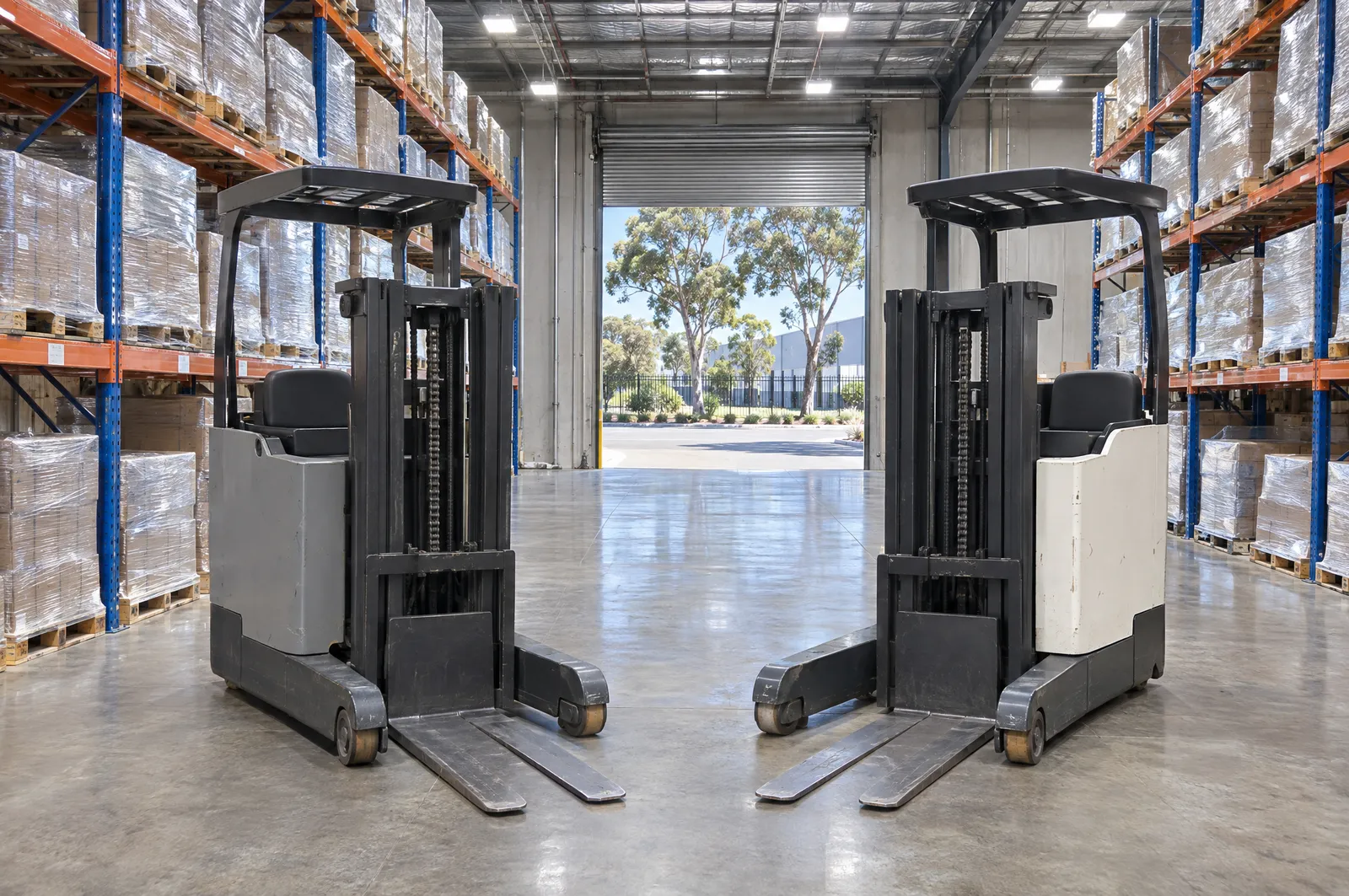
You're shortlisting used reach trucks, and the two names that keep coming up are Raymond and Crown. Neither badge is the better buy on its own: both build single and double-deep reach trucks for similar loads and lift heights. What decides it is the truck in front of you, how your operators like to stand, the battery voltage your chargers run, and who will support that model near you.
Buy A Fork stocks both brands in its mostly used range and services all makes and models, so this Raymond vs Crown reach truck comparison sticks to what the makers publish and what to check on a used truck.
Raymond vs Crown Reach Trucks at a Glance
On current published specs, the two ranges overlap closely on capacity, lift height and double-deep models; they differ more in operator stance, battery voltage and how each is sold and supported in Australia. The table uses the makers' current ranges, checked in November 2026. A used truck may be an earlier series, so read its own data plate.
| Raymond | Crown | |
|---|---|---|
| Who makes it | The Raymond Corporation, part of the Toyota Industries group since Toyota acquired it in 2000 | Crown Equipment Corporation, founded in New Bremen, Ohio, in 1945 |
| New trucks in Australia | Raymond's 7000 Series, sold by Toyota Material Handling Australia under the Toyota name | Crown's own Australian business, operating here since 1966 |
| Current reach range in Australia | Toyota 7000 Series: 1,451 to 2,041 kg, lift heights to 13,767 mm | RR/RD, RM/RMD and ESR Series: up to 2,000 kg, lift heights to 13,560 mm |
| Double-deep models | 7000 Series Deep-Reach: 3,200 lb (about 1,450 kg) on Raymond's US specs | RD 5700, RD 5700S, RMD 6000 and RMD 6000S: 1,450 kg |
| Operator positions | Stand-up 7500 (universal stance or dockstance) and sit/stand 7700 | Stand-up RR/RD 5700 and RM/RMD 6000, plus sit-down "S" models |
| Battery voltage | 36 V on the 7500, 7700 and Deep-Reach; 24 V on the smaller 7200 (Raymond US specs) | 24 V on the RR 5700; 36 V on the RD 5700, the 5700S models and the RM/RMD 6000 |
Who Makes Them and Who Supports Them in Australia
The two brands reach Australian buyers in different ways, and that shapes where a used truck's parts and service come from.
Raymond has been part of Toyota since 2000, and the two keep separate brands. In Australia, Toyota Material Handling Australia (TMHA) sells the range new as the Toyota 7000 Series reach forklift, and its 2012 launch of the range named Raymond's stand-up 7500 and sit/stand 7700. So a used truck from this family may wear a Raymond badge or a Toyota one. TMHA says it runs 18 branches across every state and territory and services all forklift brands.
Crown sells and supports its own trucks. It has operated in Australia since 1966, runs a regional headquarters here, and says on its RR/RD Series page that those trucks use motors Crown designs and manufactures, and Crown-built controllers.
For a used buyer, the practical question is the same for either badge: who will service this exact model near you, and how quickly can they get parts? Note the serial number from the data plate, because parts are easiest to source against it. Buy A Fork offers servicing and repairs for all makes and models, Raymond and Crown included.
Operator Stance and Controls
This is where the two brands feel most different, so let your operators try both before you decide.
- Raymond 7500 universal stance: Raymond says it lets the operator look straight up while storing and retrieving loads, and face either the forks or the direction of travel.
- Raymond 7500 dockstance: a sideways stance with several lean points, for operators who already work that way.
- Raymond 7700 sit/stand: a cushioned seat that flips up so the operator can sit or stand.
- Crown RR/RD 5700 and RM/RMD 6000: stand-up rider reach trucks.
- Crown "S" models: an adjustable seat and backrest that let the operator sit, stand or lean.
Controls also differ between brands, and between series from the same brand. An operator who has spent years on one layout can take time to settle into the other. If your fleet already runs one brand, staying with it keeps the controls familiar.
Capacity and Lift Height on a Used Truck
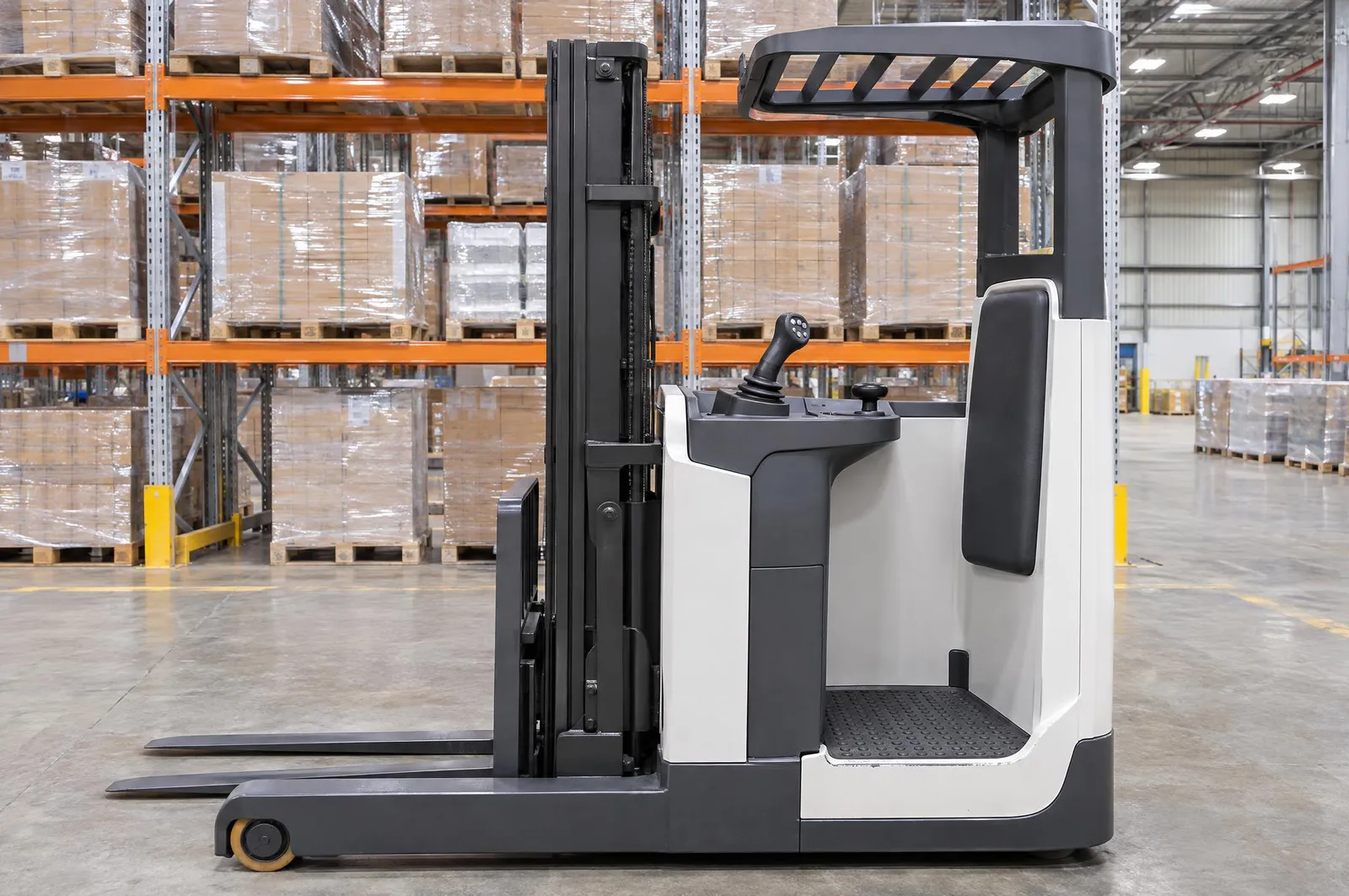
On paper the ranges are close: both top out at about 2,000 kg and lift above 13 metres in their current Australian line-ups. On a used truck, the published maximums matter less than the mast that's fitted and what it carries at your top beam.
Every reach truck loses capacity as it lifts higher. Before you compare a Raymond and a Crown, get the residual capacity chart for each truck's mast and check it covers your heaviest pallet at your top beam. Two trucks with the same headline capacity can differ a lot at height.
Older used trucks may come from earlier series. TMHA's 2012 launch, for example, says the Raymond 7500 and 7700 superseded the 7400 and 7600. Read the model on the data plate and ask for that model's specifications.
Raymond vs Crown Double-Deep Reach Trucks
Both brands make double-deep reach trucks rated at about 1,450 kg, so the choice comes down to the individual truck. Crown lists 1,450 kg for its RD 5700, RD 5700S, RMD 6000 and RMD 6000S. Raymond lists 3,200 lb (about 1,450 kg) for its 7000 Series Deep-Reach.
That's lower than each brand's single-reach trucks, which go up to about 2,000 kg, because the forks have to reach further into the rack. If you're shortlisting double-deep reach trucks, check the reach depth suits your racking and pallets, and run the full reach stroke at height before you buy.
Batteries and Charging
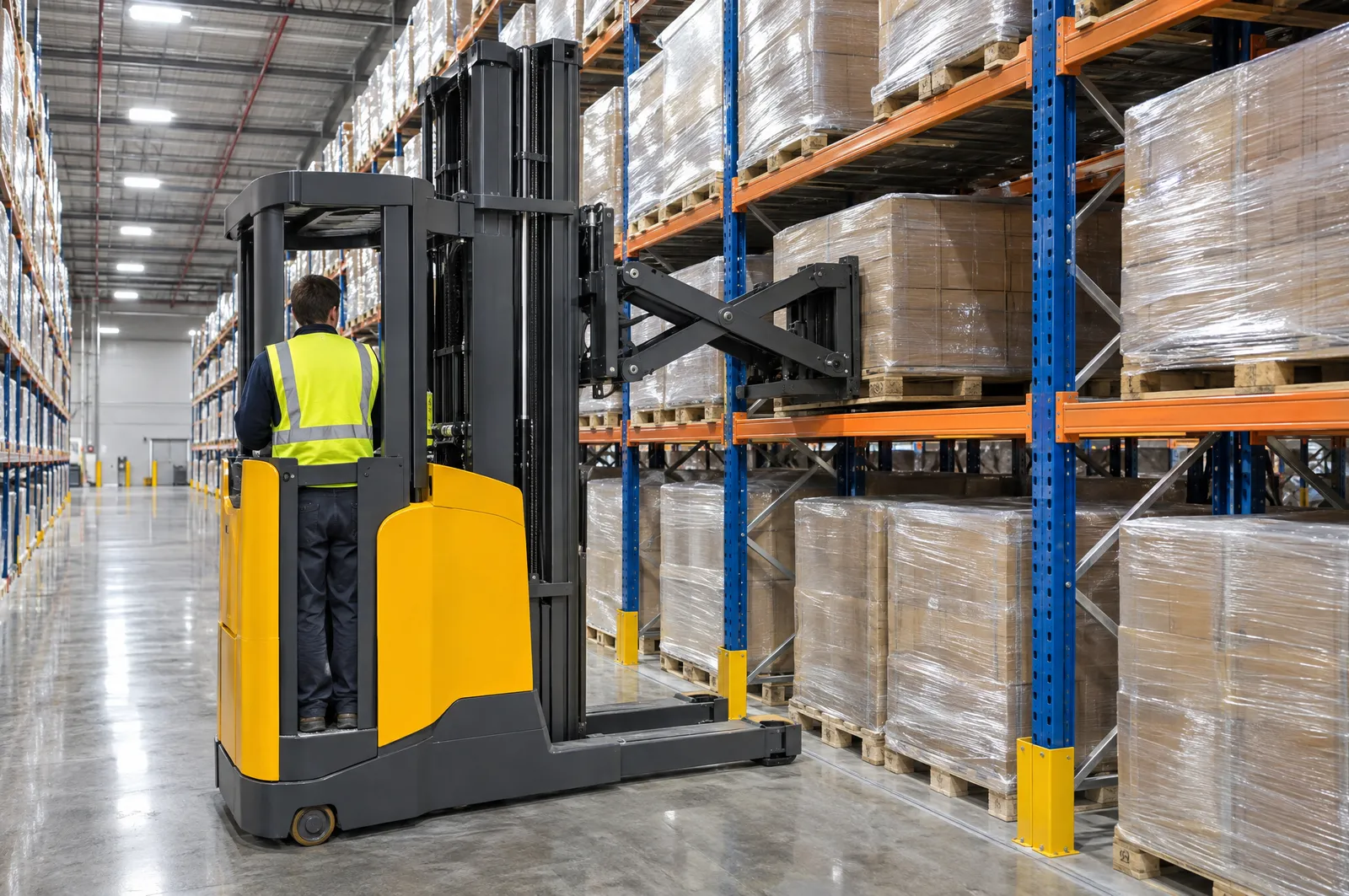
Check the battery voltage before you buy, because it decides which chargers and spare batteries the truck can use. Crown lists the RR 5700 at 24 V, and the RD 5700, the RR and RD 5700S and the RM/RMD 6000 at 36 V. Raymond lists 36 V for the 7500, 7700 and Deep-Reach, and 24 V for the smaller 7200.
If your site already runs chargers or spare batteries, a truck that matches their voltage saves buying new ones. TMHA lists the current 7000 Series in lithium-ion and lead-acid versions, so a newer used truck may come with either. Whatever the brand, check the battery's age, its run time on a charge and that the matching charger comes with the truck.
Which Should You Buy Used?
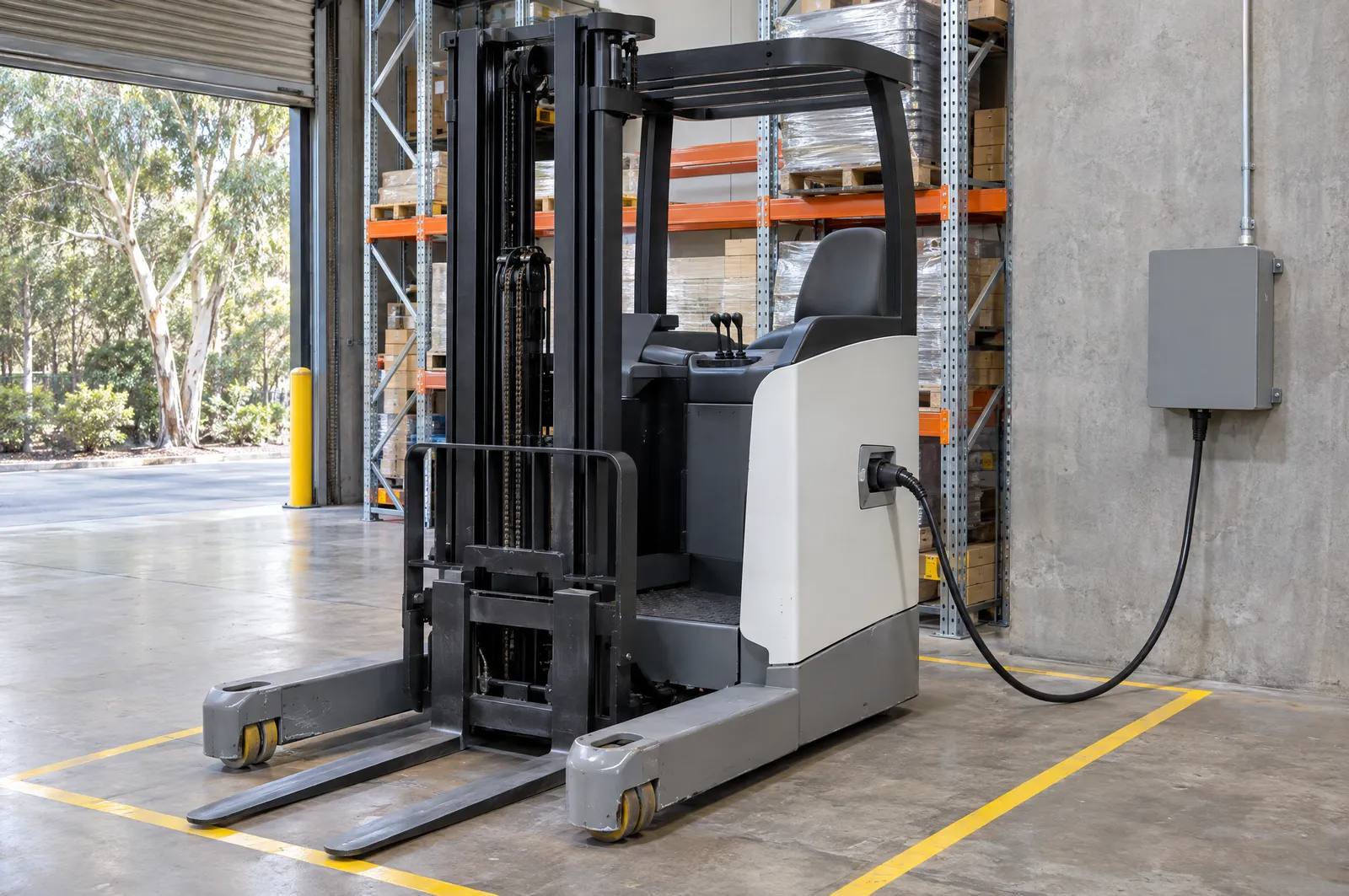
Choose on the truck and your site, not the badge. These are the points that usually settle it:
- Your fleet: if you already run one brand, the same brand keeps controls, chargers and parts familiar.
- Your operators: the stance they prefer, after trying both, is a fair tiebreaker.
- Your chargers: a truck that matches your existing voltage costs less to set up.
- Your racking: single or double-deep, top beam height and the capacity you need at that height.
- Local support: who will service that model near you, and how parts are sourced.
- The truck itself: hours, battery condition, mast and reach condition, and service records matter more than the brand on the mast.
Compare Used Raymond and Crown Reach Trucks
The quickest way to compare is side by side. The used Raymond range and the used Crown range both include reach trucks, and the full reach truck range shows lift heights and capacities across every brand. Extended warranty, finance and rent-to-own are available, and the team in Somerton can talk you through both brands on 1300 057 880.
Frequently Asked Questions
1. Who Makes Raymond Forklifts?
The Raymond Corporation, which Toyota acquired in 2000. Its parent today is Toyota Industries Corporation, and Raymond keeps its own brand. In Australia, Toyota Material Handling Australia sells Raymond's 7000 Series reach trucks under the Toyota name.
2. Who Owns the Crown Forklift Company?
Crown Equipment Corporation was founded in New Bremen, Ohio, in 1945 by brothers Carl H. and Allen A. Dicke, and the Dicke family has led it through five generations. Crown has operated in Australia since 1966.
3. Can a Raymond and a Crown Reach Truck Share a Charger?
Only if the charger suits each battery's voltage, chemistry and capacity, and the connectors match. A 24 V Crown RR 5700 and a 36 V Raymond 7500 can't share one, so check the charger's plate against each battery first.