
Manual vs Electric Pallet Jack: When Is a Powered Jack Worth Paying For?
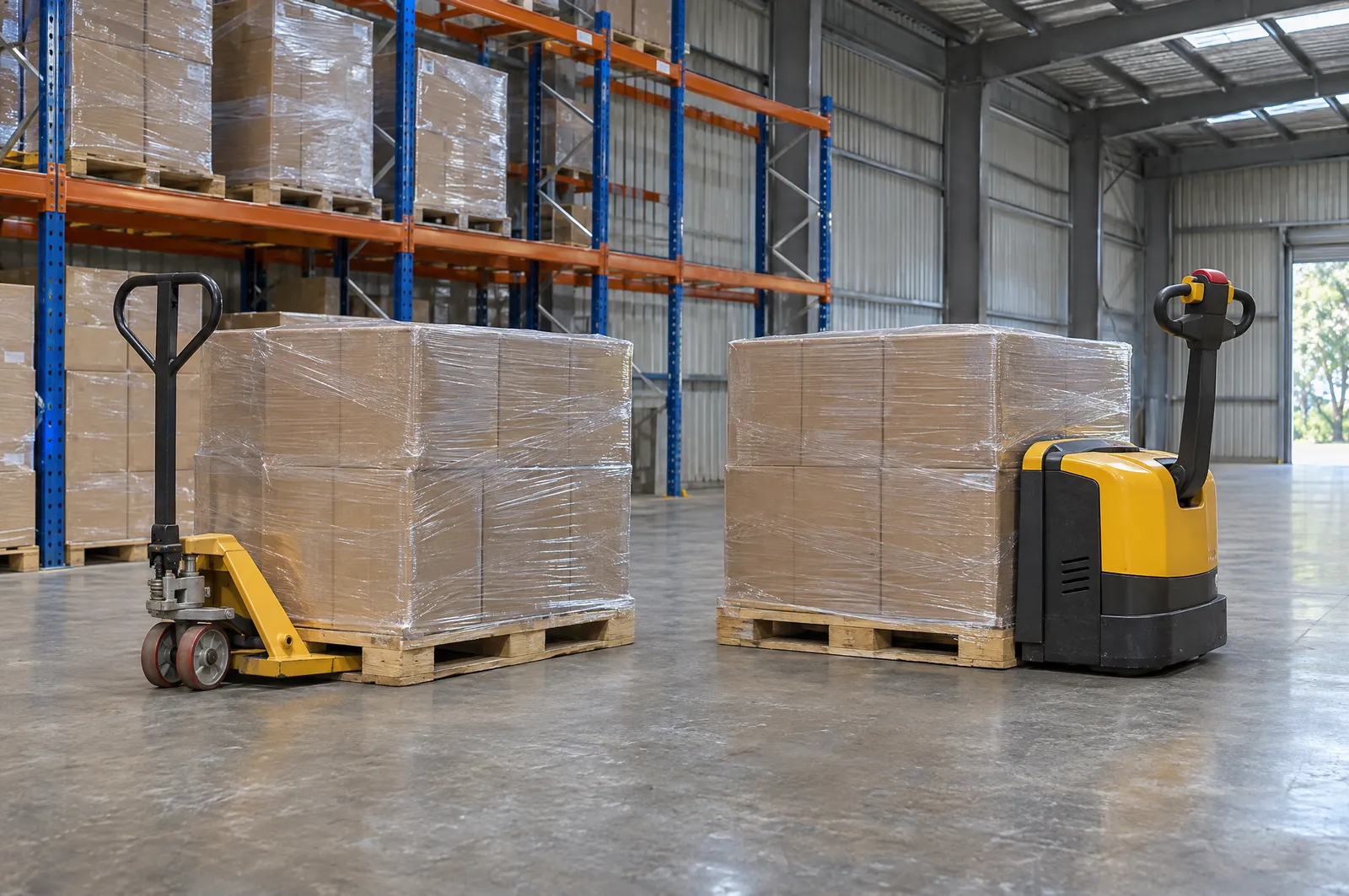
Your team pushes a hand pallet jack dozens of times a shift, and you're wondering whether a powered jack would pay for itself. WorkSafe Victoria's guidance answers most of it: a manual pallet jack suits runs up to 35 metres and up to 200 uses in an eight-hour shift, on flat, smooth floors. Go electric when distance, frequency, heavy loads or a ramp push you past those limits.
Buy A Fork's mostly used range includes electric pallet jacks, and these are the checks worth running before you buy one or stick with a hand jack.
Electric Pallet Jack vs Manual Pallet Jack: The Limits That Decide It
WorkSafe Victoria publishes practical limits for each machine, and they make a sound buying rule. Its guidance on choosing and using trolleys sets these maximums:
| Machine | Maximum Transport Distance | Maximum Uses in an 8-Hour Shift |
|---|---|---|
| Hand pallet jack | 35 m | 200 |
| Electric pallet jack, at rated load | 100 m | 400 |
| Powered ride-on pallet mover | 400 m | 400 |
If your longest regular run or a worker's daily count sits above the hand pallet jack row, a powered pallet jack is the safer buy. If the runs go past 100 metres, you're into ride-on territory, which is a different machine again.
None of this means a manual jack is the wrong tool. For a few pallets a day over short, flat runs, it's cheap, needs no charging and does the job.
Distance: How Far Does Each Pallet Travel?
Measure the longest run a loaded pallet makes regularly, not the average one. WorkSafe Victoria's guidance for hand pallet jacks is to limit travel distance to 35 metres, on a path at least 1.3 metres wide and free of obstacles.
Walk the real routes: dock to racking, receiving to dispatch, the production line to the wrapper. One long run can decide it on its own, even on a compact site. If it's over 35 metres and happens every day, power it.
Frequency: How Many Pallet Moves Does One Person Make?
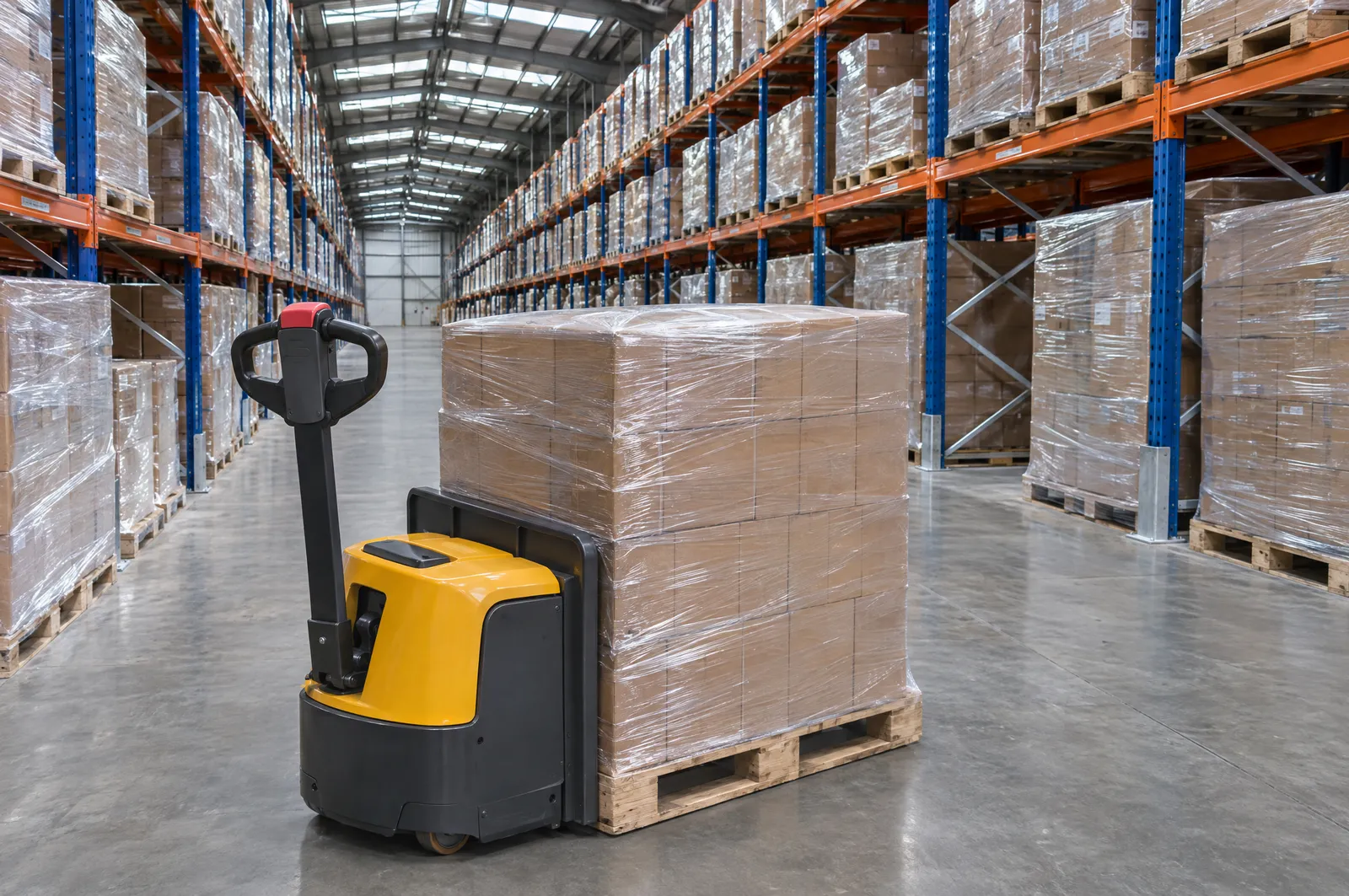
Count the moves per person per shift, because the limit applies to the operator, not the machine. WorkSafe Victoria says employees should not use hand pallet jacks more than 200 times per day. Its table allows 400 uses a shift for an electric pallet jack.
If one person handles every pallet on a busy receiving dock, count their moves for a day before you decide. Over 200, you have two choices: share the work across more people, or give the main operator a powered pallet jack.
Load: Rated Capacity Isn't the Same as a Safe Push
A manual jack's rated capacity tells you what its hydraulics can lift, not what a person can safely push. Crown's PTH hand pallet truck, for example, is rated at 2,300 kg. Pushing anything close to that weight across a floor is another matter.
WorkSafe Victoria gives the push limits for a hand pallet jack in kilogram-force (kg-f, roughly the effort needed to hold up that many kilograms):
- Starting force: keep it to 17 to 21 kg-f or less to get the jack moving.
- Rolling force: no more than 12 kg-f to keep it moving, if the jack is pushed more than 3 metres.
- Stopping force: no more than 36 kg-f to stop it within 1 metre in an emergency.
Heavier pallets need more force at every stage, and the stopping force matters most when someone steps into the path. If your heavy pallets are hard to get moving, hard to keep moving or hard to stop, they belong on a powered jack.
Check the Electric Jack's Capacity Too
Entry-level electric pallet jacks can be rated lower than a manual one. Toyota's LWE130 electric pallet jack is rated up to 1,300 kg, well under that manual Crown. Match the rated capacity to your heaviest regular pallet before you buy.
Ramps and Floors: Where Manual Jacks Struggle Most
A ramp can push a manual jack past its limits even with a modest load. WorkSafe Victoria's figures show that a slope of 1 in 20 adds 5 kg-f of push force for every 100 kg of laden weight (the pallet plus the jack).
Its own example is a 150 kg trolley that needs 3 kg-f on the flat and 10.5 kg-f up a 1 in 20 slope. Run the same sum on a 500 kg laden weight and the slope adds 25 kg-f, more than twice the 12 kg-f rolling limit before you add the force needed on the flat.
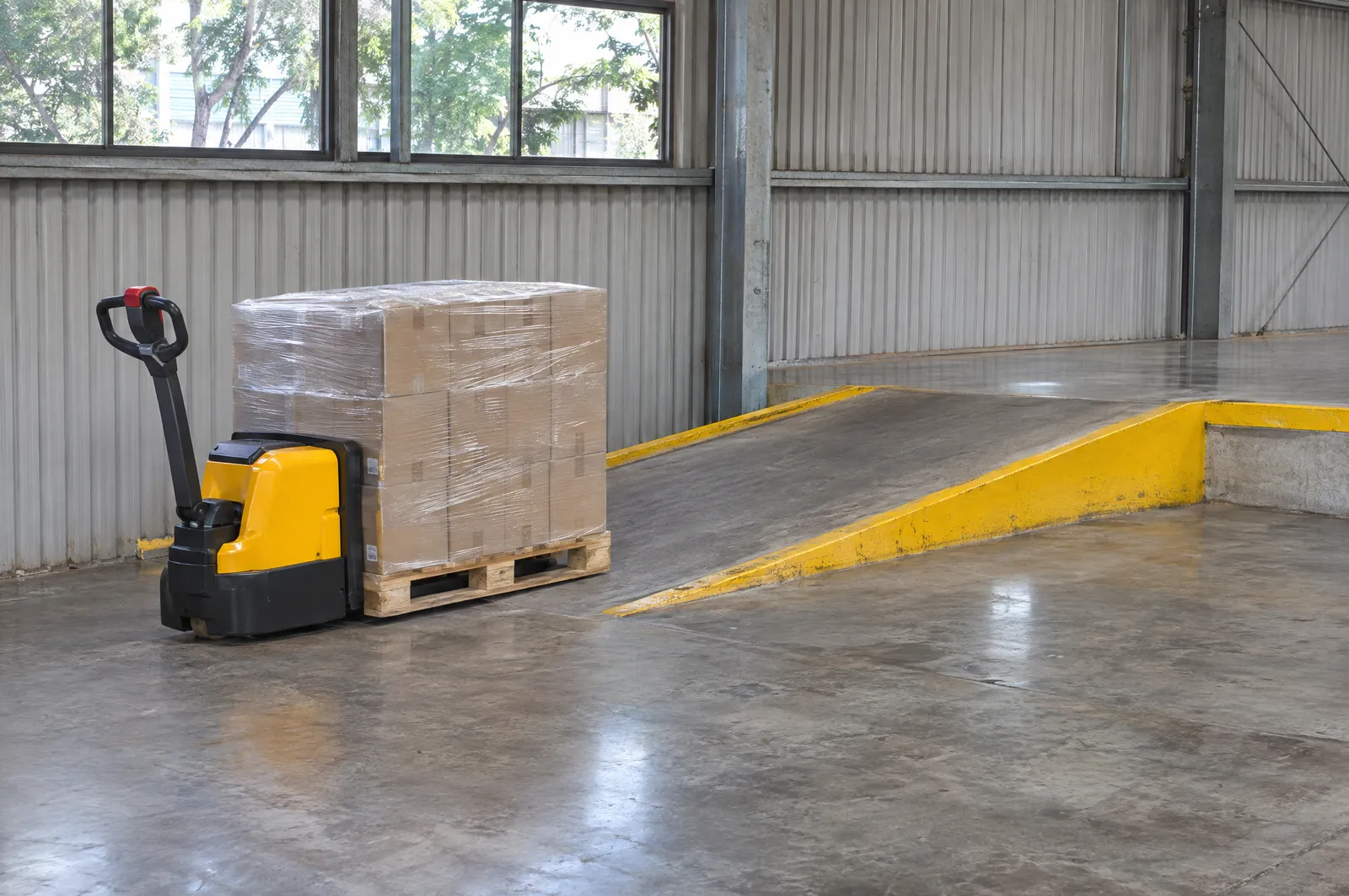
WorkSafe Victoria's advice for hand pallet jacks on slopes:
- Load: reduce the load when pushing up a slope, to stay within the rolling force limit.
- Brakes: use a jack fitted with brakes if it has to stop on a ramp or is used on one regularly.
- Direction: keep the jack in front of you going down an incline, and don't walk backwards except going up a ramp.
- Surface: don't use a hand pallet jack on gravel, damaged or uneven surfaces.
A powered jack takes the push force off the operator, but it still has limits. Check the rated gradient on the spec sheet, with and without a load, and look for ramp features: Toyota lists gradeability and anti roll-back among the LWE130's features.
The Cost of an Injury Against the Cost of a Powered Jack
Often the stronger case for a powered jack is the injury it helps prevent, not the time it saves. WorkSafe Victoria says hazardous manual handling is the biggest cause of workplace injuries in Victoria, with 48,355 injury claims accepted since 2021 and more than 60% of them musculoskeletal disorders such as sprains, strains and back injuries.
An injury costs the business more than the claim. There's the time the worker is off, the cost of covering their shift and, in Victoria, the premium. WorkSafe Victoria factors claims into your WorkCover premium once your rateable remuneration is over $200,000, and a claims record worse than your industry's average brings a loading on top of the industry rate.
WorkSafe's trolley guidance also lists motorised push and pull equipment, electric pallet jacks included, among the ways to control the risk. That makes a powered jack a recognised control, not a luxury.
What a Powered Pallet Jack Costs to Run
The extra running costs are a battery, a charger and servicing. A manual jack needs little beyond clean wheels and a working hydraulic pump.
- Battery: electric pallet jacks come with lead-acid or lithium-ion batteries; Toyota offers the LWE130 in both. Flooded lead-acid batteries need regular watering, and lithium costs more up front.
- Charging: you need a charger and a safe place to charge it, out of walkways.
- Servicing: the drive, brakes, wheels and battery all need checking, and routine care for an electric pallet jack is mostly keeping the wheels clear and the battery charged correctly.
- Wheels: drive and load wheels wear and need replacing over time on either machine.
A good used electric pallet jack cuts the purchase price, as long as the battery is healthy. Once the numbers point to powered, sizing an electric pallet jack comes down to capacity, fork length, fork width and the battery.
Semi-Electric: The Middle Option
A semi electric pallet jack powers one half of the job. On most models sold under that name, the drive is electric and the lift is pumped by hand, but some sellers use the term the other way round, so check which half is powered. A semi-electric jack with powered drive takes the pushing off the operator, while the lift stays manual.
Do You Need a Licence for a Pallet Jack?
In Victoria, no forklift licence is needed for a walk-behind pallet jack, but training still is. WorkSafe Victoria's introduction to forklift health and safety says the forklift definition for licensing does not include a pedestrian-operated industrial truck, or a pallet truck that cannot, by design, raise its forks 900 mm or more above the ground.
Training is a separate duty. WorkSafe Victoria's hazardous manual handling guidance tells employers to train workers in how to use mechanical aids safely and to supervise them, particularly young workers. Its trolley guidance adds two rules for hand jacks: always wear safety footwear, and never ride on one. Outside Victoria, confirm the position with your state regulator.
Quick Decision Checklist
Work down the list. If none of the first five apply, a manual pallet jack is the right buy.
- Is the longest regular loaded run over 35 metres?
- Does any one person make more than 200 pallet moves a shift?
- Are the heavy pallets hard to start, keep rolling or stop?
- Is there a ramp, slope or dock plate on a regular route?
- Is the same person pushing pallets for most of the shift?
- Are some runs longer than 100 metres? If yes, look at a ride-on model.
- Do any of the pallets need to go up onto racking? If yes, compare an electric pallet jack with a walkie stacker.
Frequently Asked Questions
1. What Is a Manual Pallet Jack?
A manual pallet jack, also called a hand pallet jack or hand pallet truck, is a pallet mover with no motor. You pump the handle to raise the forks just clear of the floor, then push or pull the load by hand. Crown's PTH, for example, lifts to 202 mm.
2. How Much Does a Manual Pallet Jack Cost?
Prices vary with rated capacity, fork length and width, and extras such as a hand brake or built-in scales. Compare jacks with the same rated capacity and fork size, and add a brake if the jack will be used on a ramp.
Your Next Step
Buy A Fork's team in Somerton can match a used electric pallet jack to your runs and loads, and talk through trade-ins, finance and rent-to-own. Call 1300 057 880 with your longest run, the moves per shift, the heaviest pallet and whether there's a ramp.