
How to Choose the Right Order Picking Forklift for Your Business
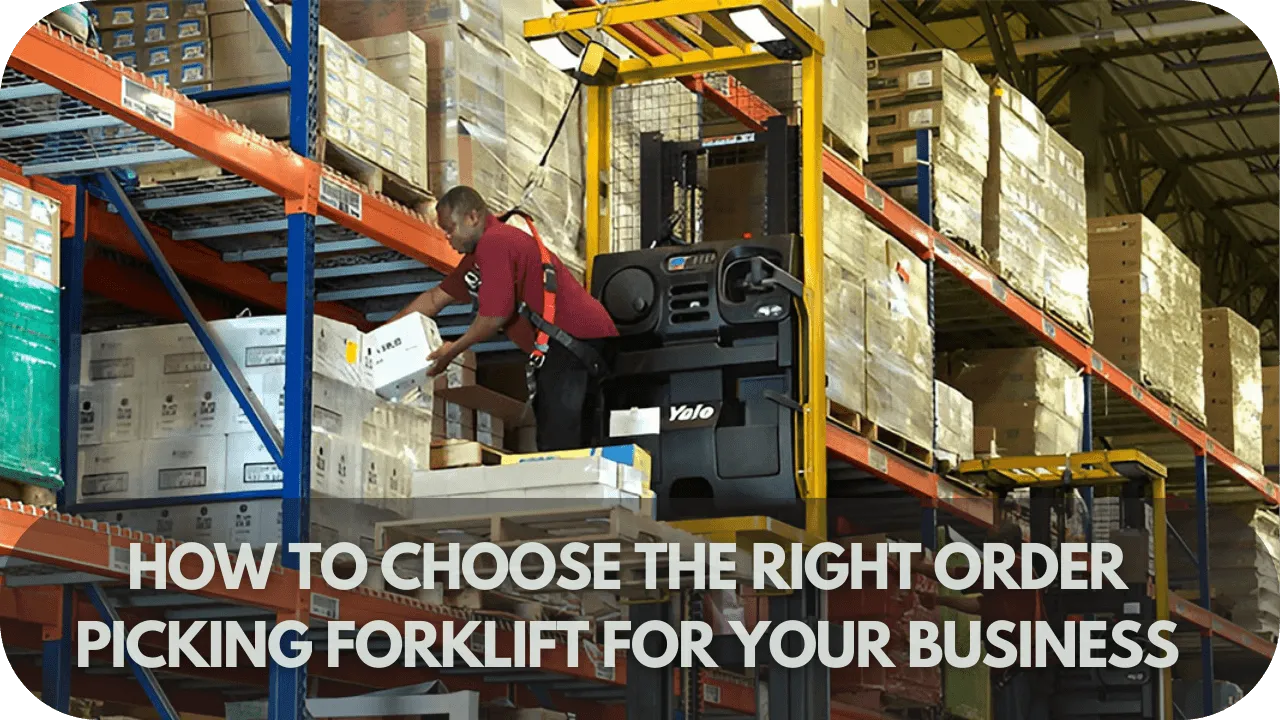
Choosing The right order-picking forklift can make a big difference to your business. The right one helps you move goods faster, reduce mistakes, and keep workers safe. But with so many options, how do you know which forklift is best?
Every detail matters, from height and load capacity to manoeuvrability. This guide explains each step, making your decision simple. Whether you run a small warehouse or a large distribution centre, picking the right forklift will save you time and money.
Let’s get started and find the best fit for your business needs!
Order Picking Forklifts
Order-picking forklifts are crucial for warehouses, retail, and distribution centres. They ensure fast and efficient stock retrieval. Unlike standard forklifts, order-picking forklifts are built for precision, speed, and safety, helping businesses streamline operations.
Different models cater to various needs, from low-level picking to high-rack retrieval. The right choice depends on aisle width, warehouse height, and load capacity. Using the correct forklift reduces manual strain, improves efficiency, and lowers labour costs.
Key considerations include height requirements, power source, and safety features. Investing in the right model leads to better workflow, fewer errors, and long-term savings. Whether you need a low-, medium-, or high-level order picker, choosing wisely boosts productivity and operational success.
Key Factors to Consider When Choosing an Order Picking Forklift
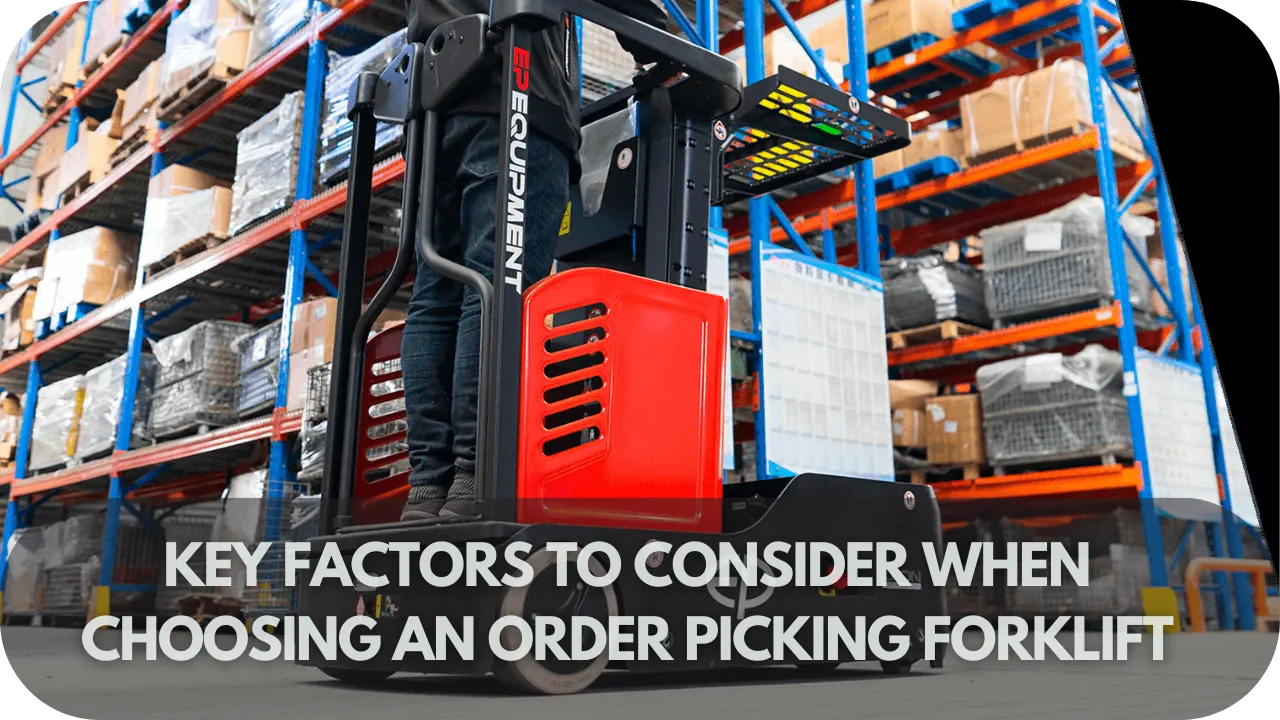
Choosing the right forklift means considering several factors that affect efficiency and safety. Here are the key aspects to focus on:
1. Height Requirements
The height your forklift needs to reach depends on your warehouse shelving. Low-level pickers are suitable for picking from ground-level shelves, while high-level order pickers can reach up to 10 metres or more. If your warehouse has tall racks, investing in a high-level order picker ensures better access and efficiency.
Always consider the maximum height your forklift can safely reach without compromising stability.
Some models have adjustable platforms to help operators safely reach higher areas. Choosing the right height capacity improves workflow, reduces strain on workers, and prevents accidents caused by overreaching.
2. Load Capacity
Different order pickers have varying weight limits. The load capacity determines how much weight the forklift can handle without tipping or reducing performance. Smaller models may lift 500kg to 1,000kg, while larger ones can manage heavier loads efficiently.
Overloading a forklift can cause safety risks, mechanical issues, and damage to goods. Ensure the model you choose meets your daily load-handling needs.
Consider the type and size of goods stored in your warehouse. A forklift with a higher load capacity is beneficial for handling bulky and heavy inventory, while a lower capacity suits lightweight stock.
3. Aisle Width and Manoeuvrability
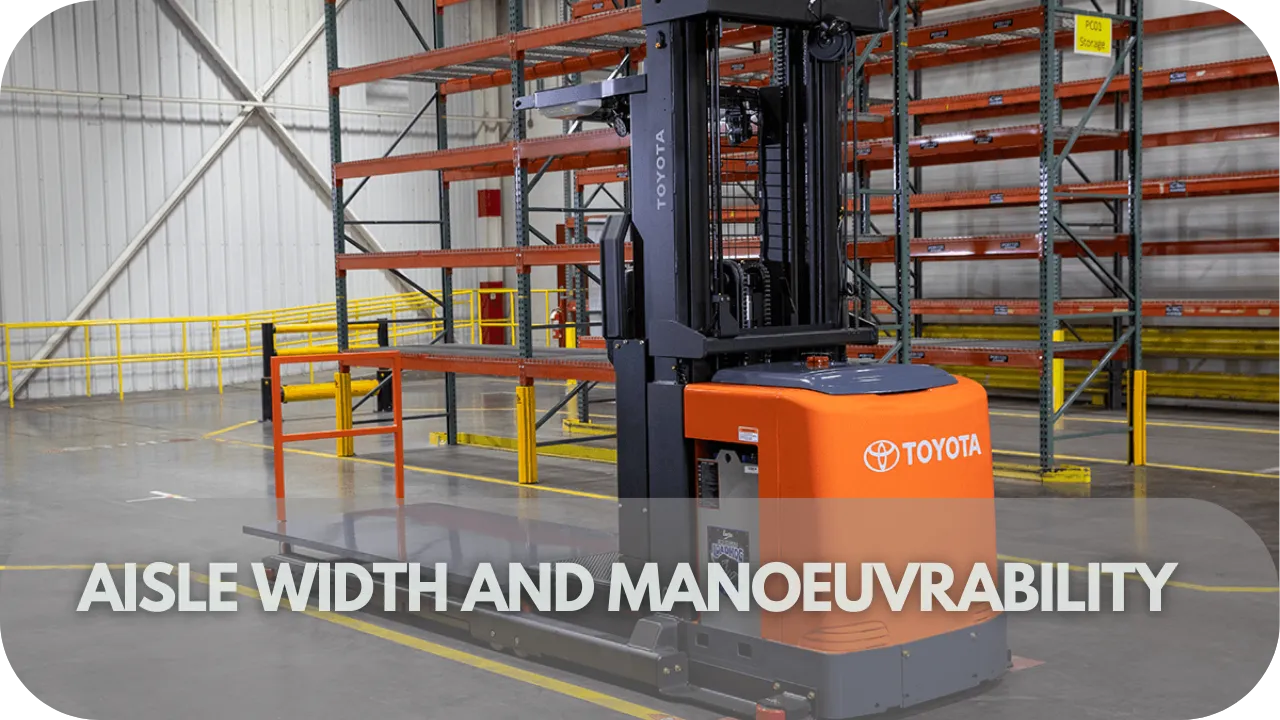
Warehouse aisle width plays a crucial role in choosing the right forklift. Narrow aisle warehouses require forklifts with excellent turning ability, while wider aisles offer more flexibility for larger models.
Manoeuvrability affects how efficiently a forklift moves between racks and shelves. If your space is limited, a compact order picker ensures smooth operation without disrupting workflow. Some forklifts have advanced steering systems that allow them to turn in tight spaces.
Choosing a model that fits your warehouse layout helps reduce collisions, speed up order fulfilment, and improve worker safety. A forklift designed for narrow aisles ensures better space utilisation and increased storage capacity.
4. Battery Type and Power Source
Forklifts run on different power sources, with electric, diesel, and LPG being the most common. Electric forklifts are quiet, energy-efficient, and ideal for indoor warehouses. They produce zero emissions, making them an eco-friendly option.
Diesel and LPG models provide higher power output but may emit fumes, requiring proper ventilation. Battery life is also a factor—longer life means less downtime and higher efficiency. If your warehouse has a high-demand workflow, choosing a forklift with fast-charging lithium-ion batteries ensures continuous operation.
Selecting the right power source reduces running costs and supports long-term sustainability.
5. Ergonomics and Safety Features
Operator comfort and safety are essential for workplace productivity. Ergonomic order pickers come with adjustable controls, cushioned platforms, and safety harnesses to reduce strain and fatigue.
Safety features such as anti-slip platforms, emergency brakes, and stability control prevent workplace accidents. Some advanced models include sensor-based safety systems that detect obstacles and automatically slow down.
Ensuring the forklift meets safety regulations protects workers from injuries and reduces liability risks. Choosing a model with proper ergonomics and built-in safety mechanisms ensures a comfortable working environment, leading to higher efficiency and reduced operator fatigue.
Types of Order Picking Forklifts
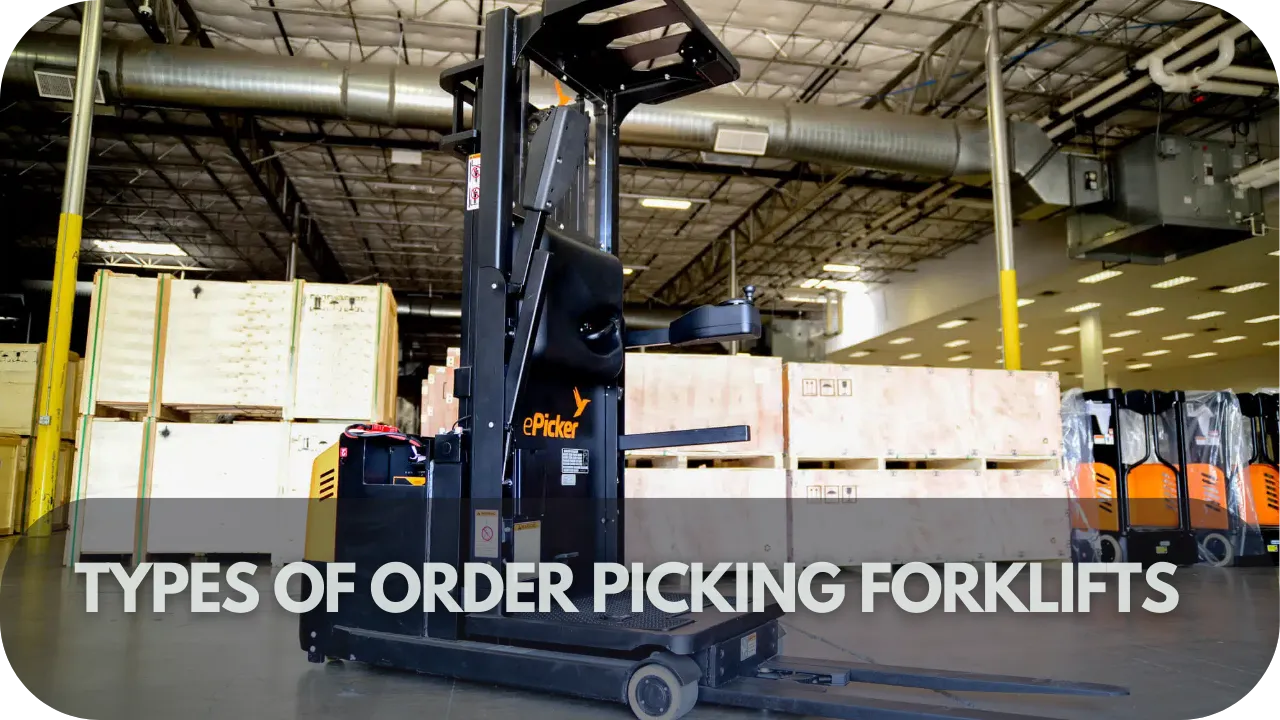
Different businesses require different forklifts depending on picking height and warehouse layout. Here are the main types available:
1. Low-Level Order Pickers
Low-level order pickers are designed for ground and first-level shelves, usually reaching up to 1.5 metres. They are ideal for fast-moving consumer goods (FMCG), retail stock, and small warehouses.
These forklifts allow operators to pick up multiple orders efficiently without excessive climbing. They also have platforms for quick shelf access, reducing strain and improving productivity. Businesses handling high volumes of tiny items benefit most from low-level pickers.
With smooth acceleration and easy manoeuvrability, these forklifts enhance picking speed while maintaining safety. A low-level order picker is an efficient and cost-effective solution if your warehouse focuses on frequent order fulfilment.
2. Medium-Level Order Pickers
Medium-level order pickers are suitable for warehouses with 1.5 to 6 metres high shelves. They are also used in e-commerce, distribution centres, and industrial storage.
These forklifts feature elevating platforms, allowing operators to pick directly from higher shelves without ladders. They also have enhanced stability features, ensuring safe operation at mid-level heights.
Businesses handling mixed inventory sizes benefit from medium-level order pickers, as they combine reach, efficiency, and flexibility. A medium-level forklift improves workflow while maintaining safety if your warehouse stores bulkier items or requires frequent restocking.
3. High-Level Order Pickers
High-level order pickers reach up to 10 metres or more, making them essential for large warehouses with tall racking systems. They are widely used in logistics, manufacturing, and large-scale distribution.
These forklifts have advanced lifting mechanisms, enclosed cabins, and safety harnesses to protect operators at higher elevations. They also feature precise controls for improved stability.
High-level pickers benefit businesses that store palletised goods, heavy inventory, or bulk storage. Their ability to reach top shelves safely and efficiently makes them a must-have for high-density warehouses.
Benefits of Choosing the Right Order Picker Forklift
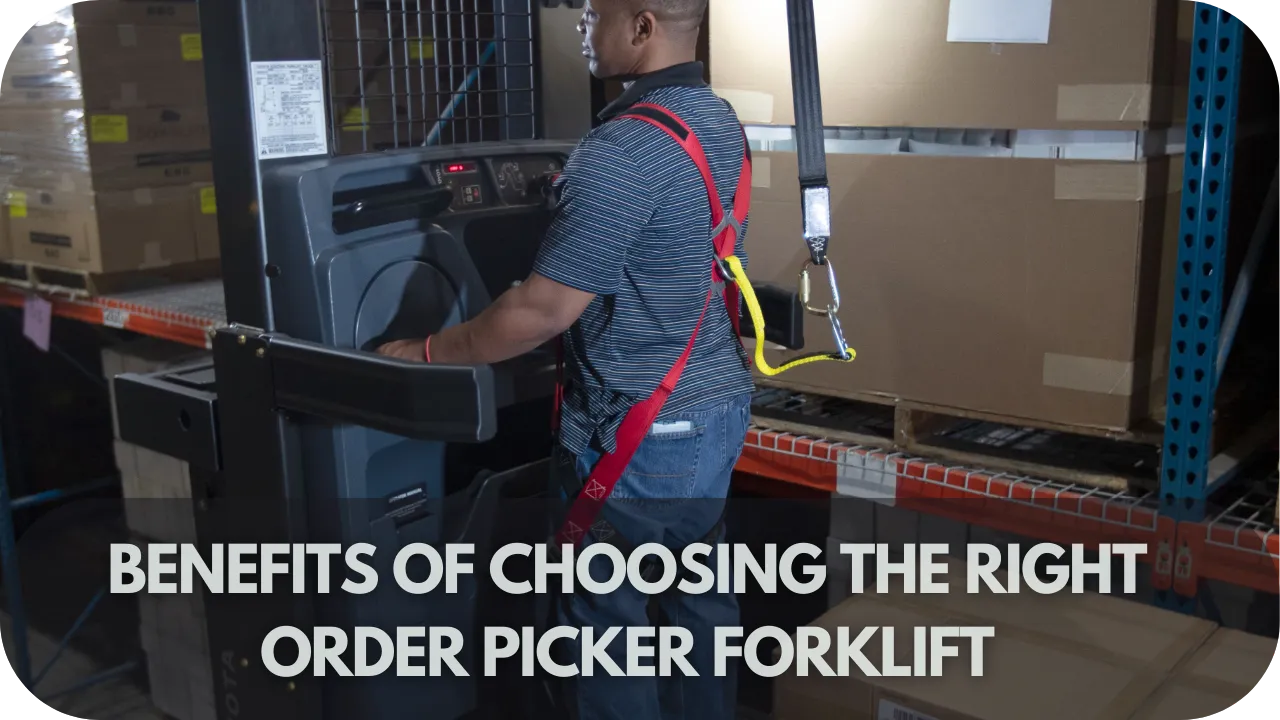
Investing in the right forklift improves efficiency, reduces costs, and enhances worker safety. Here’s why:
- Increased Productivity: Faster order fulfilment reduces delays and improves workflow, ensuring goods move swiftly from shelves to dispatch.
- Better Space Utilisation: Compact models maximise storage efficiency, allowing businesses to operate in narrow aisles without sacrificing accessibility.
- Enhanced Safety: Built-in safety features minimise risks of falls, collisions, and operator strain, keeping employees secure.
- Cost Efficiency: The right forklift lowers labour costs and reduces operational downtime, leading to long-term savings.
- Eco-Friendly Options: Electric models offer a greener alternative, cutting emissions and promoting sustainability.
Should You Buy or Hire an Order Picking Forklift?
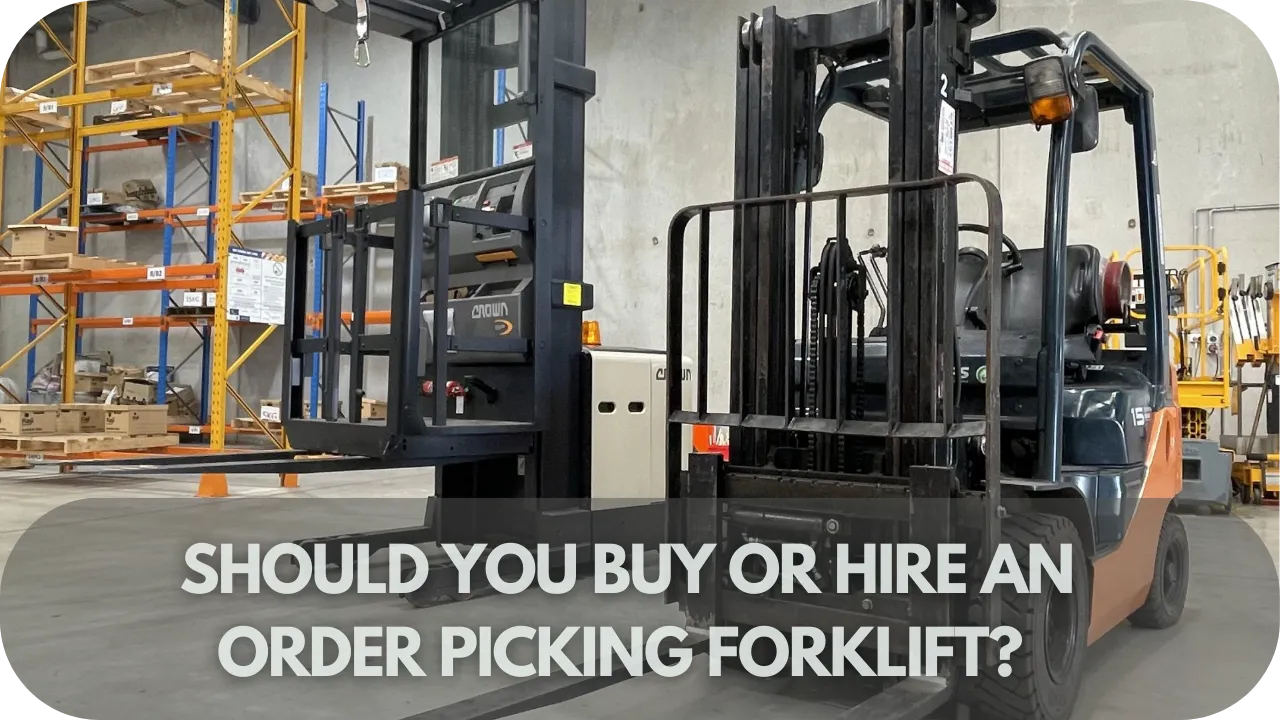
Buying an order picker forklift is best for businesses with long-term, high-demand needs. It offers cost savings over time, full ownership, and flexibility to customise the equipment. However, it requires upfront investment and ongoing maintenance.
Hiring is ideal for short-term projects, seasonal demands, or businesses testing different models. It provides lower initial costs, flexibility, and maintenance coverage. However, it involves rental fees and limited customisation.
If your business needs consistent forklift usage, buying is cost-effective. If you require flexibility or temporary solutions, hiring is the better option.
Conclusion
Finding the right order-picking forklift boosts efficiency, safety, and productivity. The right choice keeps your business running smoothly.
Buy A Fork offers expert advice and top-quality forklifts to match your needs. Don’t settle for less—choose the best equipment for your business today. Visit Buy A Fork and get the perfect forklift for your operations!