Forklift Finance Australia: Chattel Mortgage, Lease & Low Doc Options
· Updated
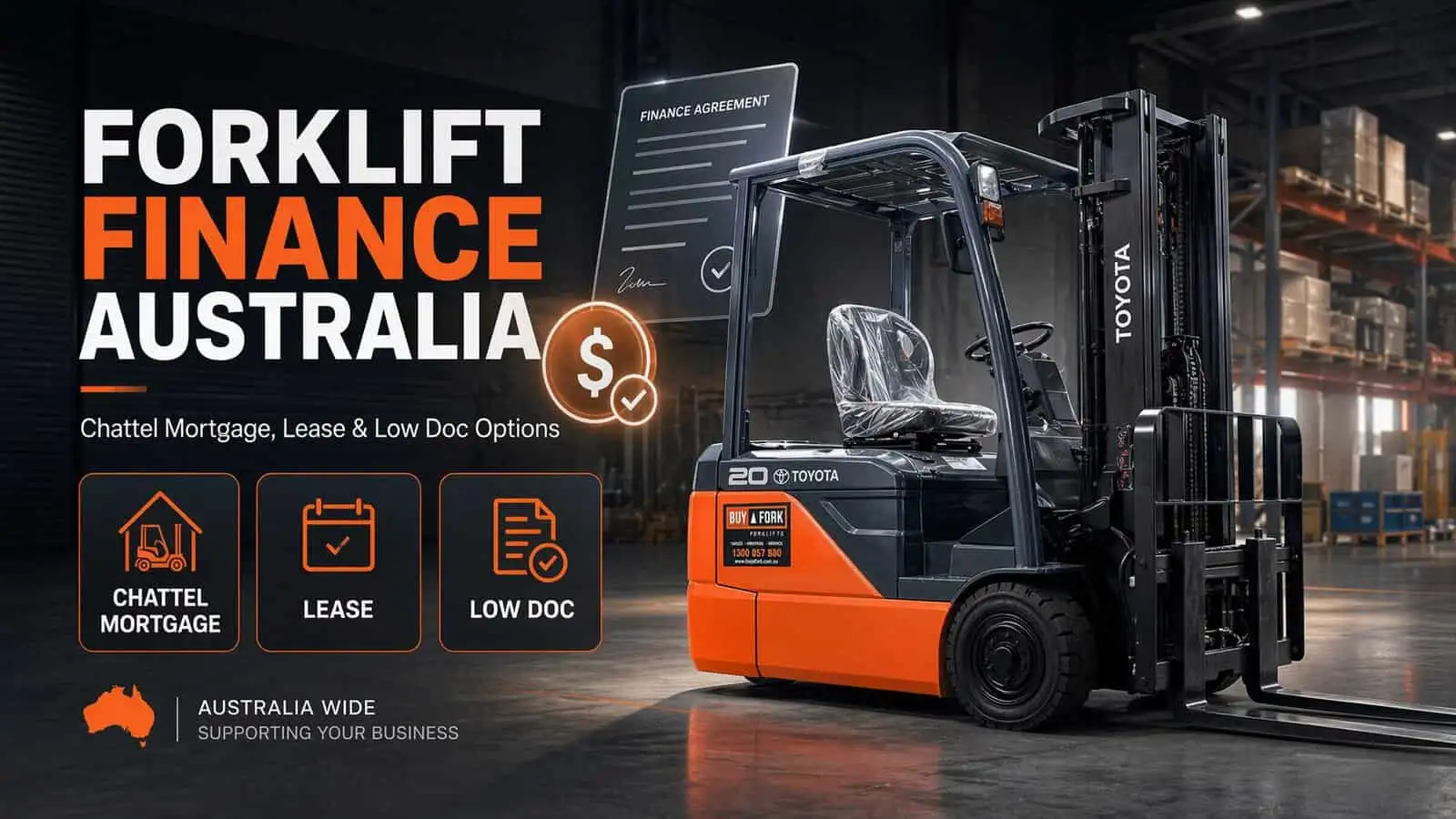
A new forklift can run anywhere from $25,000 to $80,000, and even a quality pre-owned unit will set most small businesses back $15,000 to $30,000. For most operators, tying up that kind of capital in a single piece of equipment is not realistic, which is why the majority of forklifts sold in Australia are financed rather than bought outright.
There are three main ways to finance a forklift in Australia. A chattel mortgage is the most popular structure, where you own the forklift from day one and claim GST and depreciation as usual. A finance or operating lease keeps ownership with the lender, with lower upfront cost and simpler tax treatment. Low doc finance suits sole traders, tradies and newer ABN holders who cannot provide two years of full financials.
At Buy A Fork, we arrange finance through Ausloans Finance Group, which gives our customers access to a panel of more than 70 Australian lenders without the back-and-forth of shopping individual banks.
Forklift finance options at a glance
| Factor | Chattel mortgage | Finance lease | Operating lease | Rental | Low doc |
| Who owns the forklift | You, from day one | Lender | Lender | Lender | You, from day one |
| Typical term | 2 to 7 years | 2 to 5 years | 2 to 5 years | Weekly to 24 months | 2 to 5 years |
| Upfront deposit | 0 to 20 percent | Usually nil | Usually nil | First month | 0 to 20 percent |
| GST claim on purchase | Yes, upfront | No, claimed on repayments | No, claimed on repayments | Claimed on repayments | Yes, upfront |
| Depreciation claim | Yes, you claim | No, lender claims | No, lender claims | No | Yes, you claim |
| Residual or balloon | Optional balloon | Residual required | Residual required | Not applicable | Optional balloon |
| Financials required | Full doc | Full doc | Full doc | Minimal | 6 to 12 months ABN, GST rego |
| Best suited to | Established businesses wanting ownership | Businesses wanting off-balance-sheet treatment | Businesses replacing fleets regularly | Short-term or seasonal needs | Sole traders, tradies, newer ABNs |
Rates, terms and eligibility vary by lender and by applicant profile. Through our finance partner Ausloans, Buy A Fork customers get quoted across a panel of more than 70 Australian lenders, which means the rate you are offered reflects genuine market competition rather than a single bank’s internal pricing. Checking your rate does not affect your credit score.
Chattel mortgage explained
A chattel mortgage is the most common way Australian businesses finance a forklift. The lender advances the funds, you buy the forklift outright, and the lender takes a security interest over the asset until the loan is paid off. You own the forklift from day one, and the lender simply has a registered claim over it through the PPSR (Personal Property Securities Register).
The appeal comes down to tax and GST treatment. Because you own the asset, you claim the full GST credit on the purchase price in your next BAS, rather than spreading it across repayments. You also claim depreciation on the forklift as a business asset, which for most small businesses under the instant asset write-off threshold means a significant deduction in the year of purchase. Check the current ATO thresholds before you buy, because these figures change each financial year.
Terms typically run 2 to 7 years, with most buyers choosing 3 to 5 years on a used forklift and 5 to 7 years on a new unit. Deposits range from nothing to 20 percent depending on the lender, your trading history and the forklift itself. A balloon payment at the end of the term is optional but popular, because it keeps monthly repayments down and leaves a single lump sum to refinance, pay out or roll into the next purchase.
Chattel mortgage rates on forklift finance currently sit in a broad range, with excellent-credit applicants accessing rates from around 6 percent p.a. and applicants with weaker credit profiles landing closer to 11 percent p.a. Through the Ausloans panel, Buy A Fork customers get quoted across multiple lenders at once, so the rate offered reflects where you genuinely sit on the market rather than a single bank’s view.
Finance lease and operating lease explained
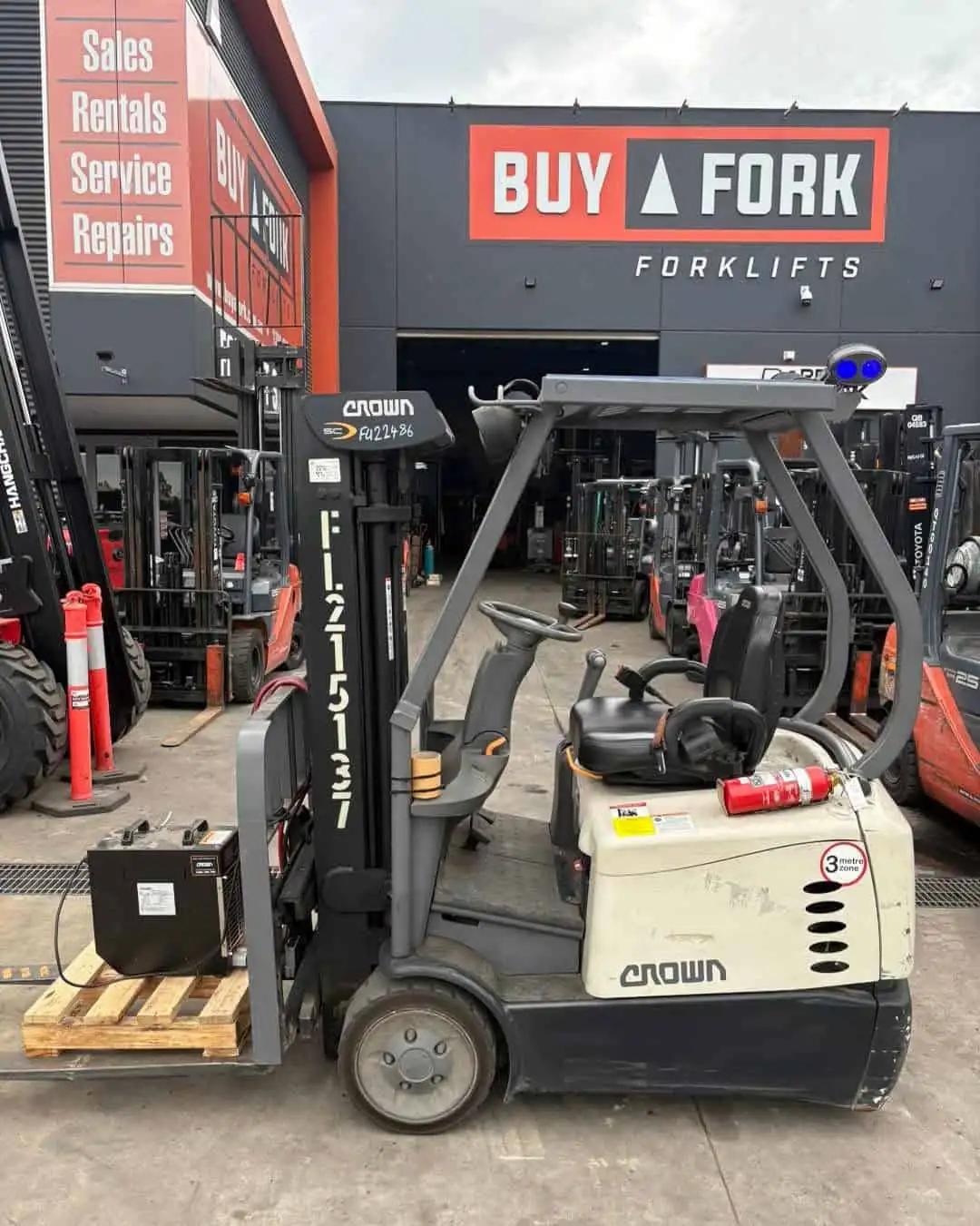
A lease flips the ownership question. Instead of buying the forklift with borrowed money, you pay the lender to use the forklift for a set term while they retain ownership. The two main lease structures in Australia work differently enough that it is worth understanding both before you sign.
A finance lease is the closer cousin to a chattel mortgage. The lender owns the forklift on paper, but you carry the operating risk, the maintenance cost, and a guaranteed residual value at the end of the term. Repayments are tax-deductible as an operating expense, and GST is claimed on each repayment rather than upfront. At the end of the term you can pay out the residual and take ownership, refinance the residual, or return the forklift.
An operating lease is a true rental-style arrangement. The lender owns the forklift, carries the residual risk, and usually covers scheduled maintenance as part of the contract. Repayments are fully tax-deductible, and the forklift sits off your balance sheet entirely, which can help businesses managing borrowing capacity or preparing for an audit. At the end of the term you hand the unit back.
Leasing makes most sense when cash flow matters more than ownership, when you replace forklifts every 3 to 5 years anyway, or when your accountant has advised that off-balance-sheet treatment suits your structure. For businesses that plan to run a forklift for its full working life, a chattel mortgage is usually the better financial outcome.
Rental: when it makes sense
Rental is rarely the cheapest long-term option, but it is the right answer in three specific situations. The first is seasonal peak work, where you need an extra forklift for two to four months a year and cannot justify owning one year-round. The second is project-based operations, like a short construction job or a one-off stock relocation, where the forklift is needed for weeks rather than years. The third is when a business is testing a new site, a new product line, or a new operation, and does not yet know whether the forklift requirement will stick.
Rental repayments are fully tax-deductible. For rental enquiries, Buy A Fork partners with Rent A Fork, offering flexible daily, weekly and monthly hire across LPG, diesel, petrol and electric forklifts from 1 to 20 tonnes.
Low doc forklift finance
Low doc finance exists for the large slice of Australian business buyers who cannot provide the two years of tax returns and financials that traditional lenders ask for. Sole traders in their first year of trading, tradies who run their business through an ABN without formal accounting, and newer companies scaling fast all end up here when a bank or full doc lender knocks them back.
The structure of the loan itself is usually a chattel mortgage. You own the forklift from day one, claim the GST on purchase, and claim depreciation as normal. What changes is the paperwork required to get approved. Instead of two years of full financials, most low doc lenders ask for:
- An active ABN, usually held for at least 6 to 12 months
- GST registration
- A clean personal credit file
- Property ownership, or a guarantor who owns property (for larger loan sizes)
- Six months of recent bank statements or BAS lodgements
Loan sizes under low doc terms typically cap at $150,000 to $250,000 without full financials, which covers virtually every single forklift purchase and most two-unit fleet buys. Above that, you usually need to provide full documentation.
Indicative rates on low doc forklift finance usually sit 1 to 3 percent above full doc, reflecting the reduced information the lender is working from. That puts most low doc applicants in the 8 to 12 percent p.a. range, depending on credit profile. Ausloans works with specialist lenders like Liberty, Pepper Money and Plenti alongside the major banks, which means a low doc applicant often gets quoted a sharper rate through the panel than through a direct bank application.
A worked example: financing a $25,000 used forklift
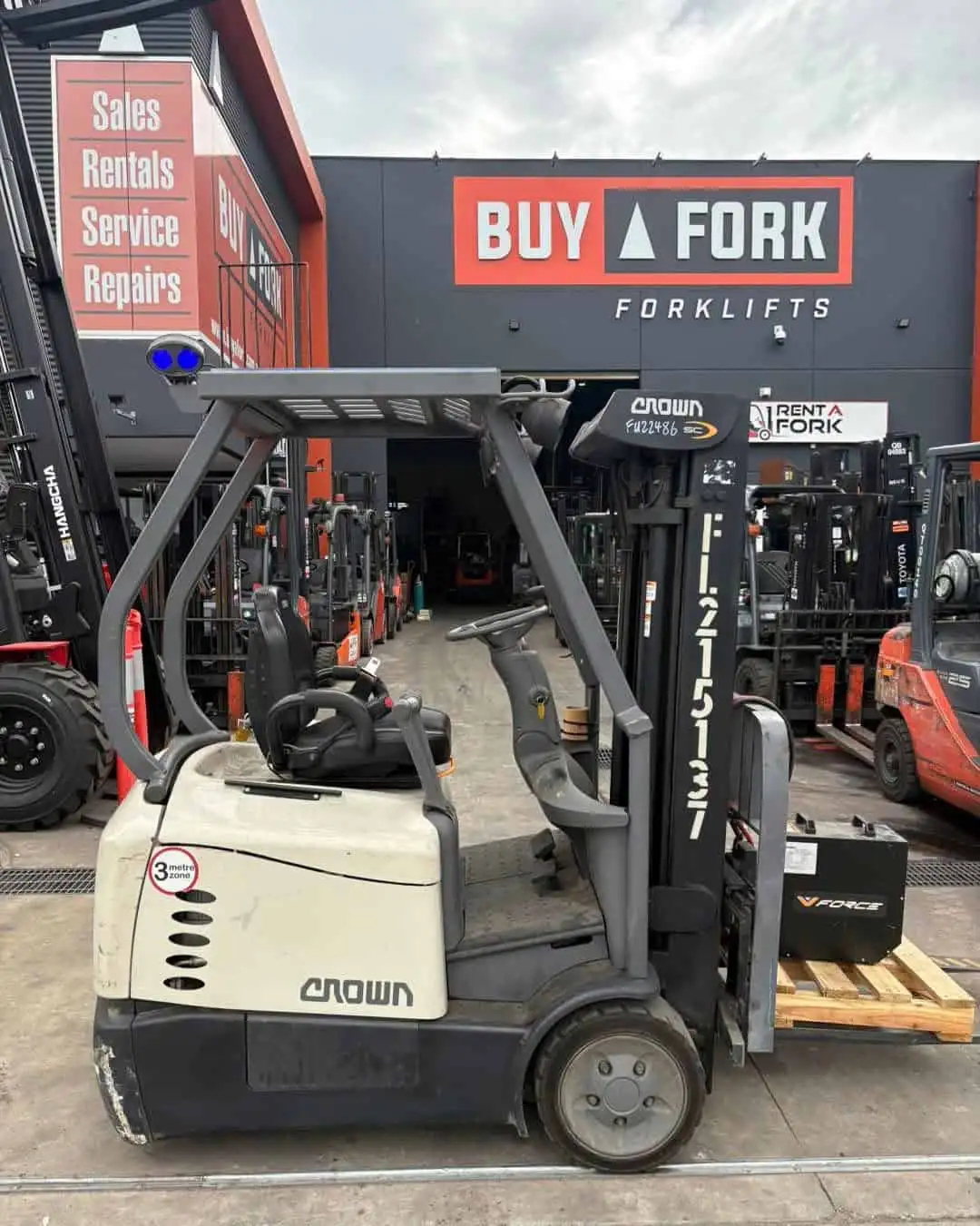
Numbers make this easier than theory. Say you are buying a 3-year-old Toyota 8FG25 from our Somerton yard for $25,000 plus GST, a common purchase profile for a Melbourne warehouse.
Option 1: Chattel mortgage, 60-month term, 8 percent indicative rate, no deposit, 20 percent balloon. Monthly repayment sits around $405, or roughly $94 a week. You claim the full GST of $2,500 on your next BAS, and you depreciate the forklift as a business asset. At the end of the 60 months, you pay out a $5,000 balloon to own the unit outright, or refinance it into the next purchase.
Option 2: Finance lease, 60-month term, 8 percent indicative rate, 20 percent residual. Monthly repayment sits around $420, or roughly $97 a week. GST is claimed on each repayment rather than upfront. At the end of the term you pay the $5,000 residual to take ownership, refinance it, or return the forklift and step into a newer unit.
Option 3: Low doc chattel mortgage, 60-month term, 10 percent indicative rate, 10 percent deposit, 20 percent balloon. Monthly repayment sits around $430 on the financed $22,500, or roughly $99 a week. You still claim GST upfront and depreciate as normal. The slightly higher rate reflects the reduced paperwork required for approval.
These figures are indicative. Actual repayments depend on which Ausloans panel lender approves your application, your trading profile, and the specific forklift. For a real quote across our 70+ lender panel, without any impact on your credit score, call 1300 057 880 or browse our current range.
Which finance option suits your situation
The right structure comes down to your business stage, your cash flow, and how long you plan to keep the forklift. Here is how the options usually line up.
Established business buying for the long term. Chattel mortgage almost always wins. You own the asset, claim the GST and depreciation, and build equity against a forklift you plan to run for 8 to 12 years. This is the default for most Buy A Fork customers.
Sole traders and tradies without two years of financials. Low doc is built for you. Same chattel mortgage structure, same tax treatment, with paperwork requirements that match how sole traders actually operate. Most applicants with a clean credit file and an active ABN over 12 months get approved.
Businesses replacing fleets every 3 to 5 years. An operating lease usually works out better. You hand the forklift back at the end of the term, the lender carries the residual risk, and you step into a newer unit without trade-in hassle.
Seasonal operators and project-based businesses. Rental is the right call. Paying for a forklift year-round when you only need it four months of the year is a poor use of capital. Talk to us about short-term rental options.
Businesses managing borrowing capacity for other growth. An operating lease keeps the forklift off your balance sheet, which preserves your borrowing power for property, stock or other capital purchases. Worth a conversation with your accountant before committing.
End of financial year buyers. A chattel mortgage on a used forklift before 30 June, combined with the current instant asset write-off threshold, often produces a meaningful tax deduction in the same financial year. Timing matters here, so decide before the last fortnight of June.
How to apply through Buy A Fork
We keep the finance process simple. Pick the forklift you want from our current range, or call us on 1300 057 880 to talk through what suits your operation. Applications go through our finance partner Ausloans, who quote your rate across a panel of more than 70 Australian lenders, including NAB, ANZ, Westpac, Suncorp, Liberty, Pepper Money, Plenti and Prospa.
The process runs in four steps:
- Apply online. A short form takes a few minutes to complete. Checking your rate does not affect your credit score.
- Upload documents. Driver’s licence and basic business details for most applications, plus bank statements or a BAS for larger loans.
- Get your personalised rate. Ausloans quotes you across multiple lenders at once, so the offer reflects genuine market pricing rather than a single bank’s internal rate.
- Get approved. Indicative approvals typically come back within a business day, and most full approvals land within 24 to 48 hours.
For a straightforward full doc application, you will usually need your ABN and GST registration, driver’s licence, and two years of financials. For low doc applications, six months of bank statements or a recent BAS will usually stand in for full financials.
Once approved, we deliver your forklift with our free 6-month service warranty, free extended warranty, free pallet jack and free local delivery within 10 kilometres of Somerton. Australia-wide delivery is available on request.
Frequently asked questions
1. Is forklift finance tax-deductible in Australia?
Yes, in most structures. On a chattel mortgage, the interest portion of your repayments is tax-deductible and you claim depreciation on the forklift as a business asset. On a finance lease or operating lease, the full repayment is usually deductible as an operating expense. Always confirm with your accountant, as treatment depends on your business structure and how the forklift is used.
2. Can I claim GST on a financed forklift?
Yes. On a chattel mortgage you claim the full GST on the purchase price in the BAS period of purchase. On a lease or rental, you claim GST on each repayment as it falls due. Either way, the GST is recoverable for GST-registered businesses.
3. What is the instant asset write-off threshold for forklifts?
The threshold changes each financial year and depends on your business turnover. A used forklift purchased through a chattel mortgage is eligible if it falls under the current threshold and the forklift is installed ready for use before 30 June. Check the latest ATO instant asset write-off rules before you buy.
4. Do I need a deposit to finance a forklift?
Not always. Many chattel mortgages are written with zero deposit, particularly for established businesses with good trading history. Low doc applications often require 10 to 20 percent down. Putting in a deposit usually reduces your interest rate and weekly repayment.
5. Can I finance a used forklift?
Yes. Used forklifts are financed through the same chattel mortgage, lease and low doc structures as new units. Rates are usually 1 to 2 percent higher on used equipment, and terms are typically capped so the loan finishes before the forklift is more than 10 to 12 years old.